

The Layering Fallacy: Why More Isn’t Better For Tall Men

The Myth Of Additive Warmth
You want to feel safe. So you pile on layers like armor. But here’s what nobody says: more fabric doesn’t equal more warmth for tall men because your surface area to insulation ratio doesn’t scale the way marketing assumes it does. You’re fighting physics, not just cold. The real problem is that each layer traps dead air, but tall frames create more vertical distance for that air to move through, which means convection currents strip heat faster than a shorter person experiences. Three mediocre layers on a six foot four frame waste your money and restrict your movement on steep terrain.
The common advice says layer everything. That’s incomplete. Tall men need fewer, better layers because you generate heat through movement and exertion. Stacking thin synthetics or cotton creates bulk without benefit. You need strategic density in the torso, moderate insulation in extremities, and unrestricted limb mobility. Start with a fitted base that moves moisture away from skin fast, add one serious mid-layer that handles your core temperature, then add shell protection only when conditions demand it. This cuts weight and eliminates the dead space that turns layers into ballast.
Adaptation Over Accumulation

Thermoregulation works like a biological thermostat, not a static shield. Your body doesn’t need constant maximum insulation during a hike because your exertion rate changes. When you climb, you generate enough metabolic heat to cut insulation needs dramatically. When you stop to navigate or rest, you cool fast. Tall men face a specific problem here: your limbs have more surface area exposed to wind, so you lose heat faster during passive periods than shorter hikers do, but you also overheat faster during hard effort because you have more muscle mass generating warmth.
The mechanism is simple: wear a base layer and mid-layer you can shed or add in under sixty seconds. Your shell stays on. When you’re moving hard, strip the mid-layer. When you stop, put it back on before your sweat chills you. Never wear maximum insulation while climbing, and never hike stripped down when stationary. Tall men especially need this rhythm because your limb-to-torso ratio means you can’t rely on one fixed setup. Check your core temperature every fifteen minutes of intense effort by touching your collarbone. If you’re sweating there, you’re over-insulated and your base layer will trap moisture. That’s your protocol.

The Kinetic Thermal Regulation Protocol

Where Sweat Becomes Your Enemy
You want base layers that don’t make you look like you’re wearing a trash bag under your jacket. Here’s what actually matters: sweat management beats insulation at the base layer because movement generates heat faster than static cold can steal it. Thermoregulation in physiology works on vapor pressure gradients, not wishful thinking. A tall frame generates heat across more surface area but loses it just as fast if moisture stays trapped against your skin.
Cotton holds water. Merino wool and synthetic blends shed it. The mechanism is simple: capillary action pulls sweat away from skin into the fiber structure where air can evaporate it. On a winter hike, you’re constantly moving between exertion and rest. Your base layer needs to dump moisture during climbs and insulate during stops. A tight fit matters more than thickness. Loose fabric creates dead air pockets that trap sweat instead of moving it out.
Heat Retention Through Strategic Layering
Mid-layers aren’t about thickness. Military cold weather doctrine calls this “active insulation,” and it applies directly to hiking in winter: your mid-layer’s job is to trap the heat you generate, not create heat for you. Most hikers buy puffy jackets and wear them constantly, which overheats them during exertion and wastes the insulation’s potential.
A fleece or wool mid-layer works as a thermal buffer. Wear it during ascents, remove it during descents. The mechanism protects you without forcing a constant thermostat adjustment. Tall men need longer torsos to cover, so check actual garment measurements, not size labels. Layering works only if each piece does its singular job: base layer moves moisture, mid-layer traps heat your body creates, outer shell blocks wind and rain. Stack them wrong and you’re cold and wet at the same time.
Outerwear As Armor: The Elements Of A Bulletproof Shell

Hard Shells Versus Soft Shells
You want the right jacket because you’re terrified of being cold and looking foolish in one breath. The real mechanism is this: hard shells and soft shells solve different problems, and most people buy the wrong tool because they conflate waterproofing with windproofing. Hard shells use rigid membranes like Gore-Tex to block both water and wind completely. Soft shells trade some waterproof capacity for breathability and mobility, accepting light precipitation in exchange for not turning into a sweat box under exertion.
For tall men, this distinction matters more than most realize. A hard shell keeps you dry in sleet and sustained rain but restricts arm movement on steep climbs where a 6’2″ frame needs full range. Soft shells let you move without constraint but fail in heavy downpour. Pick hard shell for exposed ridge lines where weather hits fast. Pick soft shell for sustained climbing through mixed conditions where you’ll generate heat and need it to escape.
Material Resilience And Real Durability
The textile industry measures durability through denier weight and abrasion cycles, not marketing language. This matters because tall men need longer fabric panels, which means more total surface area exposed to brush, rock, and sharp edges. A 100-denier nylon exterior lasts differently than 300-denier, and neither tells you the full story without knowing the weave structure. Higher denier means thicker, tougher fibers that resist tearing. Durability isn’t about the shell membrane alone; it’s about the fabric wrapped around it.
Most jackets fail at seams and stretch panels first, not the main shell. For tall men in winter conditions, you need external seam tape on high-stress zones like shoulders and elbows. Pit zips matter less than reinforced cuffs and hem construction. Check the hem on the back panel specifically: if it’s just stitched, not bonded, it will separate within two seasons of winter use. Test the fabric by pulling hard at corners and creases before purchase; if the weave shifts, the jacket won’t hold up.
Footwear: Your Foundation Against Frostbite And Fatigue

Insulation Ratings Matter More Than Bulk
You’re worried a boot won’t keep your feet warm enough, so you pick the thickest insulation available. That’s the trap. Thermal resistance works like electrical engineering: R-value measures how much heat your boot stops from escaping, not how much material fills the space. A 400-gram insulated boot with superior materials outperforms a 1000-gram boot stuffed with cheap foam. Tall men especially need this distinction because bulk adds weight that travels the farthest from your core, multiplying fatigue over miles.
Manufacturers rate insulation in grams, but grams don’t tell the full story. Thinsulate, PrimaLoft, and down each deliver R-value differently. Down compresses under pressure, losing effectiveness when your foot presses into the boot. Synthetic alternatives maintain loft better but weigh slightly more. Your boot choice depends on whether you’re stationary or moving, how wet your terrain gets, and how long you stay exposed. Test any boot in actual winter conditions before committing to a full hike.
The Sock Layer You’re Overlooking
Most hikers treat socks as afterthought and then wonder why their feet hurt. Your sock does the actual temperature regulation your boot simply can’t do alone. Merino wool or synthetic blends pull moisture away from skin faster than cotton, which absorbs sweat and holds it against your foot, cooling you rapidly. Tall men with longer legs generate more sweat traveling downhill, so sock choice becomes critical, not optional. Wear the wrong sock and a quality boot becomes useless.
Thickness matters, but density matters more. A dense midweight sock (around 200 to 400 grams per pair) creates airflow pockets that trap warmth without compressing your foot into the boot’s rigid shell. Compression reduces circulation, which defeats the purpose entirely. Buy socks slightly loose and change them if they get damp during your hike, even if it means stopping for five minutes. Wet socks against skin drop foot temperature faster than any external cold.
Accessorize With Intent: Head, Hands, And Neck Defense

The Hat Problem Nobody Admits
You want to look normal on the trail. That’s the real reason this section matters to you. But looking normal while tall means your head is higher up, exposed to wind and radiant heat loss that shorter hikers never encounter. Thermodynamics doesn’t care about vanity. Your skull radiates 40 percent of your body’s heat when uncovered. Stop wearing baseball caps to winter hikes. They leave your ears and the back of your neck exposed.
Tall men need hats with actual rear coverage. Beanies work. So do balaclava hoods that double as neck protection. The key is fit: a hat that slides down over your ears without bunching at the crown. Most hats are designed for average head proportions. You need to measure your head circumference and go one size up from standard adult sizing, then verify the hat sits low enough to protect your ears while staying above your eyebrows so you can see.
Gloves That Don’t Sacrifice Function
The common advice is to pick warmth or dexterity. That’s incomplete. The real trade-off is insulation versus wind protection, and most hikers get this backwards by choosing thick mittens that trap sweat and become useless when wet. Tall men hiking in wind encounter higher velocity air currents at head and hand level. You need gloves with a windproof shell and moderate insulation, not maximum bulk.
Start with a thin, touchscreen-compatible glove liner under a textured outer glove with a woven nylon face. This layering system lets you remove the outer glove for precision tasks without exposing bare skin. Keep a pair of heavier mittens in your pack for rest breaks. On the trail, you move constantly. Your hands generate heat. Don’t trap moisture by overdressing them at the start.
Beyond The Label: Decoding Fabric Performance
What Wool Actually Does Versus What Marketing Says
You want to know which fabric won’t fail you on the mountain because admitting you don’t understand the difference feels stupid. The mechanism is thermodynamics: wool retains insulation when wet because its fibers absorb moisture without losing structural integrity, while synthetics shed water but conduct cold through contact. Wool’s crimp structure traps dead air space that stays effective even at 60 percent saturation.
Synthetics like polyester and nylon move sweat away from skin faster than wool, which matters for sustained effort in dry cold. But wool’s hygroscopic property means it can absorb 30 percent of its weight in moisture without feeling clammy, buying you time if you miscalculate exertion levels. For tall men working harder to move their mass uphill, this margin matters more than marketing about breathability.
The Real Waterproofing Stack
Waterproofing isn’t one technology, it’s a chain of barriers that fail independently if you don’t understand how they work. Think of this like defensive layers in military strategy: each layer serves a specific pressure point, and a single breach compromises the whole position.
- DWR (Durable Water Repellent): Factory coating on fabric surface that beads water and prevents saturation of the shell itself. Wears off in 20-50 hours of hard use, forcing reapplication. Necessary but temporary.
- Gore-Tex (ePTFE membrane): Laminated layer with pores small enough to block water droplets but large enough to transmit water vapor. Works only if outer shell DWR remains functional. Fails gradually as pores clog with sweat residue.
- Hardshell alternatives (PU laminates): Polyurethane coating between fabric layers that blocks water mechanically rather than through pore size. Less breathable than Gore-Tex but more durable and cheaper. Adequate for stop-and-go hiking.
- Sealed seams: All waterproofing fails at stitched seams unless taped with adhesive strips. This is where most jackets leak first, not the main panels. Non-negotiable for winter conditions.
- Fit closure integration: Waterproofing means nothing if snow works up from your collar or cuffs. Tall men need jackets with extended cuffs that overlap gloves and high necklines that seal against your chin.
Gore-Tex jackets cost more because the membrane lasts longer and breathes better, but only if DWR stays intact. Tall men sweat harder going uphill, saturating outer fabric faster, which kills breathability regardless of the membrane underneath. A hardshell with fresh DWR often outperforms neglected Gore-Tex. Reapply DWR before every winter season, not when leaking starts.
Tall Man Specifics: Adapting Standard Gear For Optimal Fit
Where Your Torso Ends And Cold Wins
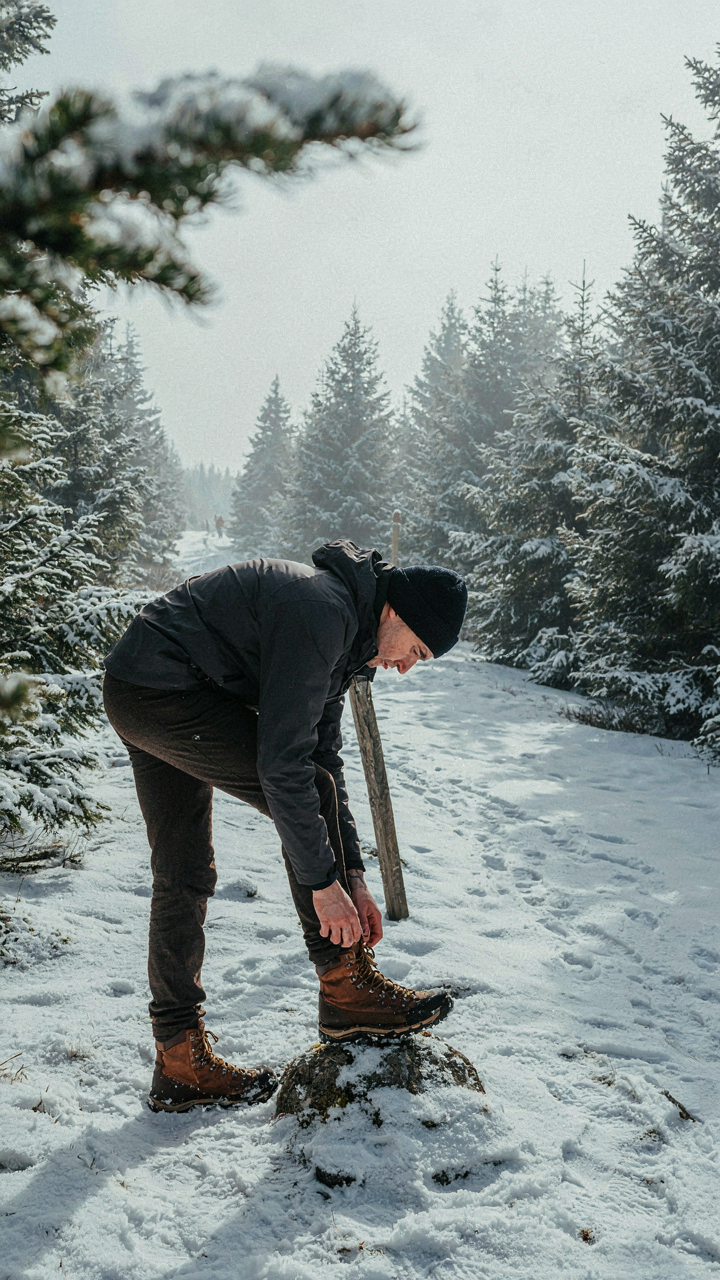
You want the right gear to look intentional, not like you’re wearing something borrowed. The real problem: standard winter hiking layers assume average torso proportions, leaving your lower back exposed when you bend forward on a climb. Think of thermal coverage like load distribution in structural engineering—concentrate protection where stress concentrates, not where it looks balanced. Most tall men buy oversized jackets to cover their length, which creates dead fabric at the shoulders and traps air that doesn’t insulate effectively.
The fix is counterintuitive: buy jackets designed for your actual torso length, then add a separate base layer that extends lower. Merino wool base layers come in extended lengths from brands that cater to taller frames. Your midlayer should sit at your natural waist, not your hip, so it doesn’t ride up when you hike. A second layer of coverage at the lower back—whether a long fleece or wool—seals the cold spot that kills your core efficiency. Layer longer pieces underneath shorter pieces; this prevents gaps and maintains loft where it matters.
Sleeves And Inseams Stop Being Optional
Generic winter hiking advice tells you to “just roll with what fits,” which is lazy and wrong. Your wrists and ankles are extremities that lose heat fast, and exposed skin there undermines everything else you’re wearing. Most tall men end up with sleeves two inches too short, turning their wrists into heat valves. Inseams that hit above the top of your boot create a gap where wind tunnels directly into your sock line.
Buy base layers and mid-weight tops in tall or long sizes from brands like Smartwool, Icebreaker, or Patagonia that offer extended dimensions. Your sleeves should reach your wrist bone when your arm hangs straight. For bottoms, measure your inseam before purchasing—most standard sizing runs 28 to 32 inches, and tall men need 32 to 34. A gaiter worn over your boot top solves minor inseam gaps, but the real solution is buying pants sized correctly from the start. When your layers fit without gaps, cold air can’t find an entry point.
The Economic Strategy: Invest In Performance, Not Proximity

Durability Compounds Over Time
You’re worried about dropping cash on gear you’ll use maybe a dozen times a year. That fear is honest, but it’s also the mechanism that keeps you broke on outdoor equipment. Think of durability economics the same way venture capitalists think about runway: every season a piece of gear survives without failure is a dividend you collect. A $300 insulated winter parka from a technical brand lasts five to seven seasons for tall men when cared for. A $80 retail parka fails in two winters because the stitching separates and the synthetic fill compresses into clumps.
The math is stark. Cost per use on the expensive parka drops below $10 per outing by year three. The cheap one hits $20 per use before it’s garbage. Tall men face a specific trap here: cheap brands cut sleeves short and taper torsos, forcing replacements faster. Technical gear from companies that actually size for length holds together because the engineering matches your frame’s actual stress points. Stop treating winter gear as consumable. Treat it as infrastructure.
Spend Where Your Body Fails First
The common advice says distribute budget evenly across layers. Wrong. Your body has heat loss hierarchy, and tall men have a different one than average-sized hikers. Prioritize the outer shell and base layer before anything else, because those two items determine whether moisture and wind actually reach your core. A tall man hiking in winter loses heat fastest through exposed neck, wrist, and ankle gaps that standard sizing never covers properly.
Allocate roughly 40 percent of your budget to a fitted outer shell with tall sizing. Put 30 percent toward base layers that extend past your wrists and ankles. Spend 20 percent on a quality insulated mid layer. Use the remaining 10 percent for accessories like gloves, hat, and neck gaiter. This sequence cuts the gap between your reach and your clothing’s reach, which is where tall men hemorrhage heat and money on replacements.
The Real Obstacle Isn’t The Cold Or Your Height; It’s Your Adherence To Conventional Wisdom
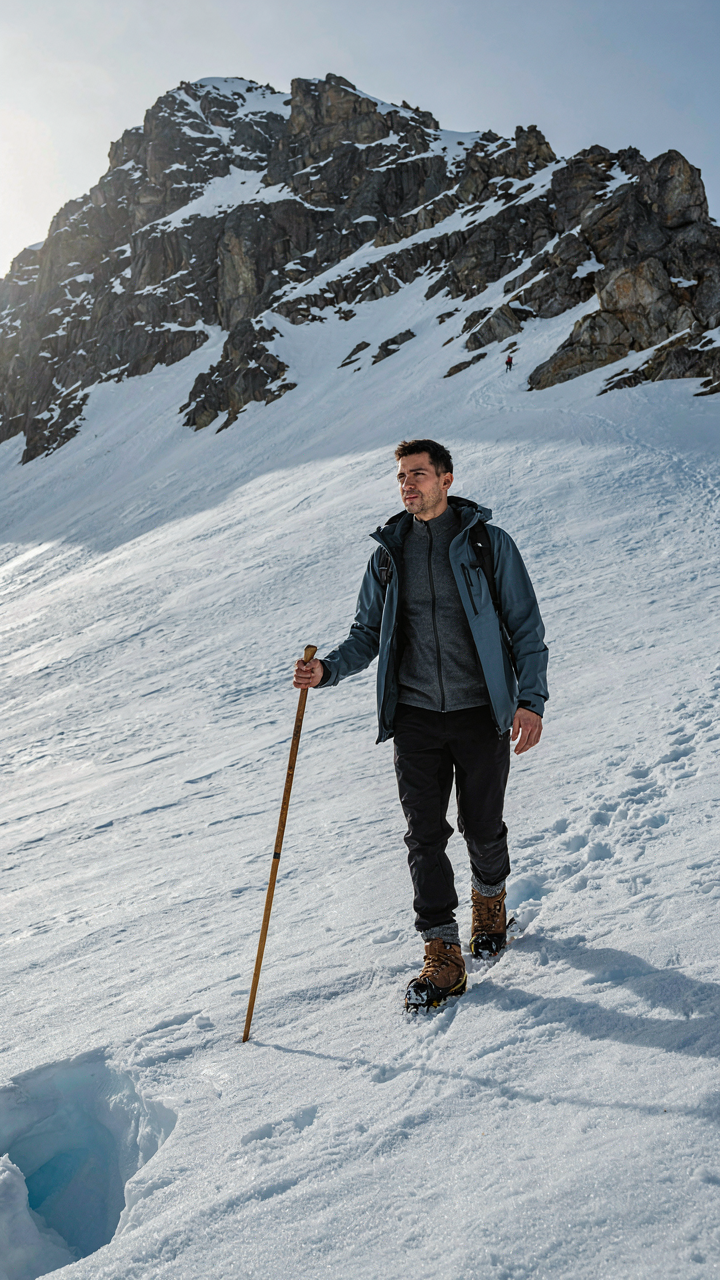
You’ve been told tall men can’t find gear that fits. You believed it. So you bought oversized jackets and baggy layers that trap cold air instead of your body heat. Stop waiting for brands to fix this. Go to a store today and try on pieces designed for your actual frame, not some imaginary average. The mountains don’t care about your height. Your willingness to look stupid shopping does.