
Beyond The Checklist: The Winter Camping Gear Deception

What Actually Matters In Your Pack
You want the gear list because you think it proves you’re prepared. The mechanism that actually works is constraint. Winter camping gear selection mirrors inventory economics: high-value items occupy minimal space while low-value items bloat your load. The difference between surviving and suffering isn’t the count of items you own. It’s ruthless elimination of redundancy.
Most people pack what brands marketed to them, not what the environment demands. A sleeping bag rated for minus twenty degrees does one job. A down jacket does another. A foam pad does a third. Each solves a specific heat loss vector. The mistake is treating gear lists like shopping carts instead of system design. You need insulation layers, moisture management, and wind protection. Everything else is noise that adds weight without function.
The Real Separator Between Hype And Necessity
The consensus advice says you need four seasons of gear, insulated boots, and a battery pack. That’s incomplete. The actual separator is down versus synthetic insulation. Down compresses tighter and performs better in dry conditions, which winter camping typically delivers. Synthetic performs when wet, which happens during active movement or poor layering. The hype cycle pushes both as equally viable. They’re not. Down saves weight and pack space if you manage moisture. Synthetic costs you two pounds in your bag for redundant safety you likely won’t need.
Build your setup around a minus ten to minus twenty sleeping bag because that’s the functional range for most winter conditions below three thousand feet. Pair it with an insulated pad rated R-value four or higher. Add a moisture barrier layer, a wind shell, and one insulating mid-layer. Stop there. Everything beyond this is optimization for edge cases or comfort, not survival. Test your system at thirty degrees before you commit to extreme cold.

The Thermal Regulation Protocol: Mastering Cold Weather Camping

Layering Dynamics: Sweat Is The Enemy
You’re reading this because you want to survive the cold without looking like you don’t know what you’re doing. Here’s the mechanism nobody states plainly: your body generates heat through metabolic work, but sweat kills that heat transfer the moment it wicks away from your skin. The goal isn’t to stay warm—it’s to manage moisture while maintaining airflow between layers.
Most advice says “wear wool” and calls it done. That’s incomplete. You need three distinct layers doing three separate jobs: base layer pulls moisture off skin, mid-layer traps dead air for insulation, outer layer blocks wind and precipitation. Cotton fails as a base layer because it absorbs and holds moisture against your skin instead of moving it outward. Merino wool and synthetic materials move moisture faster, preventing the evaporative cooling that drops core temperature even when you feel warm.
Microclimates: Using Terrain For Warmth
Microclimate strategy comes from military operational design: position yourself where the environment does half the thermal work for you. A depression in terrain, a dense tree stand, or a rock outcrop blocks wind differently than flat ground. Wind speed drops exponentially closer to the surface and behind obstacles. Camp placement isn’t about aesthetics—it’s about reducing the energy your body must expend to maintain core temperature.
Cold air flows downhill and pools in valleys like water. Set camp on a slight rise or midslope where cold air drains away but you avoid exposed ridges. Dense evergreen clusters reduce radiant cooling by trapping heat loss. Stone or rock faces reflect and hold residual warmth from the day. These positions cut the wind speed your tent and body face by 30 to 50 percent compared to open ground, meaning your sleeping bag works harder only when you force it to.
Winter Camping Hacks: The Art Of Resource Amplification

How Snow Becomes Your Shelter
You want this section because you’re afraid of dying cold and broke. Good. Fear drives precision. Winter camping shelters work on physics principles identical to building insulation: trapping dead air space stops heat transfer. Snow does this better than most materials because it’s already 90 percent air. The mechanism is R-value per inch. Regular insulation gets 3.5 R-value per inch. Snow gets 1 R-value per inch, which sounds worse until you layer it eight inches thick around your tent or dig into a snow bank. Density matters. Wind-packed snow insulates better than fresh powder because the air cells are smaller and less mobile.
Most people build snow shelters wrong because they treat them as decoration instead of thermal barriers. The real play is positioning. A snow wall on the windward side of your tent kills wind velocity by 70 percent within three feet. This matters more than the shelter’s own insulation because wind strips heat faster than any static cold can. You’re not building a fort. You’re creating dead air zones. Orient your tent so one long side faces away from prevailing wind, then build a four-to-five-foot wall perpendicular to the wind direction using compacted snow blocks or a trench. Snow shelters fail when people underestimate how much heat loss comes from ground contact, not air temperature. Insulate underneath first, then the walls.
Burning Fuel Efficiently Without Motion Waste
Your metabolism is a furnace with a thermostat and a fuel tank. Winter camping either starves the furnace or wastes fuel through unnecessary motion. The biology here is straightforward: your body produces heat through digestion and muscle contraction. Shivering burns calories fast but generates minimal usable warmth because the body wastes energy fighting itself. The mechanism is thermogenesis. Cold activates two pathways: shivering thermogenesis and non-shivering thermogenesis. Non-shivering uses brown fat to burn fuel cleanly into heat without the muscular waste. You trigger this by staying warm enough to avoid shivering in the first place.
Stop the common advice about “moving around to stay warm.” Movement burns fuel and opens your body to windchill. You stay warm by layering correctly, eliminating drafts, and eating high-calorie food before sleep. Pre-sleep nutrition matters because digestion generates internal heat for six to eight hours. Eat fat and protein, not carbs. A 500-calorie meal of nuts and cheese before bed keeps your core temperature stable and reduces the amount of muscle contractions your body needs to maintain it. The protocol: consume calories within two hours of sleep, layer your sleeping bag with insulation beneath it on a closed-cell foam pad, and stay inside the bag during the day when resting. Your sleeping bag is a fuel-to-heat converter. Using it efficiently is the difference between a sustainable trip and an exhausting one.
The Psychology Of Survival: How To Survive Winter Camping

Your Mindset Determines Physical Outcome
You want to read this section because you think willpower alone gets you through the cold. It doesn’t. Survival psychology operates on a basic principle: your mental state directly controls your physical responses through the autonomic nervous system. Panic constricts blood vessels and accelerates heat loss. Calm preserves core temperature. The mechanism is physiological, not motivational.
This is why trained winter campers survive situations that kill panicked amateurs in identical conditions. Your job is to recognize the gap between perceived danger and actual threat, then act accordingly. This recognition happens before the cold hits your skin. Build it now through deliberate exposure and scenario planning, not through motivational speeches on the trail.
Cold Distorts How You Think
Military research on hypothermia reveals a brutal fact: the common advice to “stay positive” misses the real problem entirely. Cognitive impairment begins before you feel cold. Shivering, confusion, and poor judgment appear at core temperatures where you still feel capable of making decisions. You are wrong. This is paradoxical undressing territory—people strip layers while dying of hypothermia because their brain no longer recognizes the signal.
The fix is not better thinking in the moment. It’s pre-committing to protocols you execute regardless of what your deteriorating brain tells you. Set alarms on your watch to eat every hour, even if you’re not hungry. Drink warm fluids on schedule, not when thirsty. Check your extremities every 30 minutes. These aren’t suggestions—they’re the only defense against a cognitive system actively working against you in cold conditions.
Winter Camp Checklist: The Strategic Packing List
Weight Vs. Necessity Trade Off
You’re afraid you’ll freeze to death, so you overpack. That fear drives most winter camping failures—not cold itself, but the dead weight that exhausts you before the real test starts. Winter packing uses the same logic as supply chain management: eliminate redundancy, prioritize by consequence, and accept that something will hurt. The items that prevent death rank differently than items that prevent discomfort.
- Sleep system (bag and pad combined): Non-negotiable. A 0°F rated bag without insulation beneath you fails catastrophically. Your body needs barrier above and below or you lose all heat to ground transfer.
- Shelter (tent or bivvy): Wind stops heat loss faster than anything else. A three-season tent in winter kills you. A four-season tent or proper snow shelter shifts survival odds dramatically.
- Stove and fuel: You need hot water for warmth, hydration, and morale. A broken stove means raw food, no heat, and rapid core temperature drop. Test it before departure.
- Insulation layers (synthetic or down): Down compresses smaller but loses function when wet. Synthetic retains warmth wet but weighs more. Pick one system and master it instead of compromising both.
- Navigation tools (map, compass, GPS): Whiteout erases landmarks instantly. Disorientation burns calories and forces bad decisions. Electronic devices fail in cold, so paper maps stay primary.
Weight multiplies suffering in winter because you move slower on snow, your metabolism demands more calories, and fatigue kills faster than cold does. Drop items that address hypothetical problems. Keep only what addresses real failure modes: inadequate insulation, exposure to wind, dehydration, caloric deficit, and navigation error. Everything else is noise.
Gear That Works Double Duty
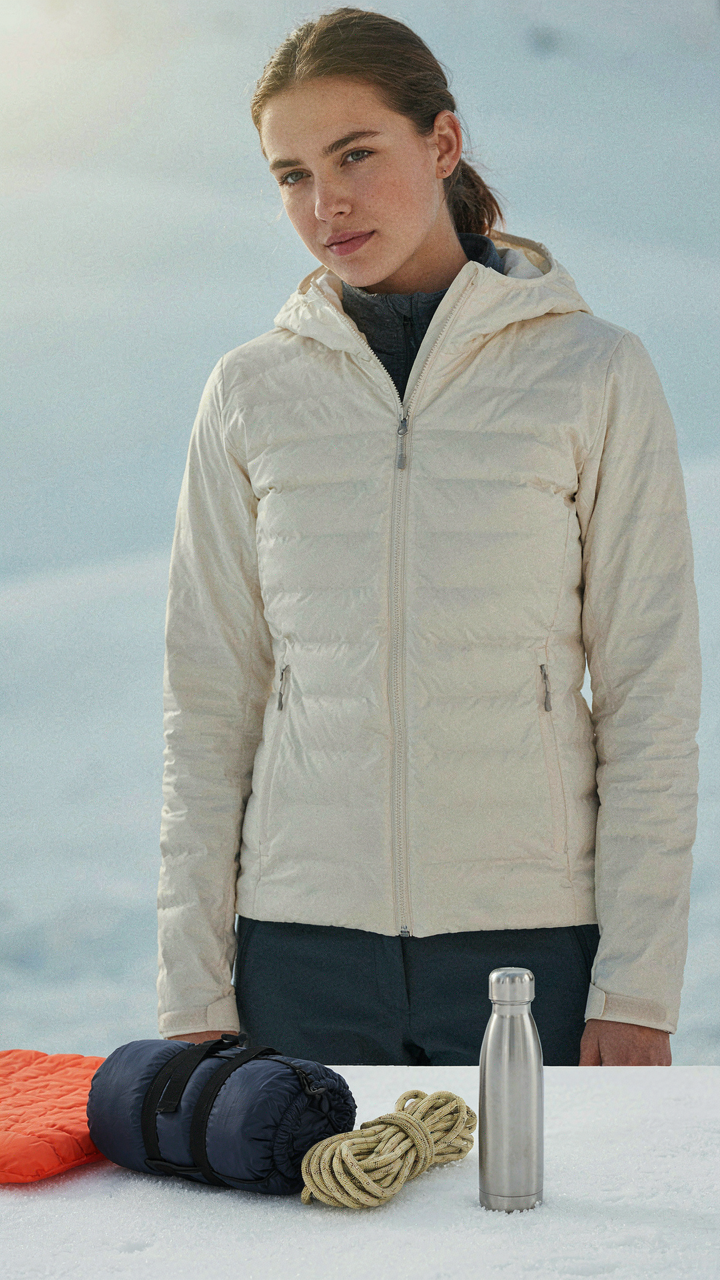
Multi-use gear isn’t clever packing—it’s the difference between moving fast enough to stay warm and moving slow enough to freeze. The mechanism here is workload. Carrying one 40-pound pack that does five jobs beats carrying five 10-pound packs that each do one job, because your calorie burn and sweat production drop dramatically with lower total load. Sweat becomes your enemy in winter faster than cold does.
Your insulated water bottle isn’t just hydration. It’s a heat source you can hold while resting, a tent warmer at night, and a calorie delivery system. Your rope serves as avalanche cord, gear lashing, emergency shelter support, and repair material. Your synthetic base layer works as sleep layer, active layer, and emergency insulation when main layers fail. The goal isn’t cuteness—it’s reducing the decision load and physical burden so you stay in the cognitive and physical zone where winter doesn’t kill you.
Beyond The Campfire: Unconventional Heat Sources
Your Body Is The Only Heat Source That Matters
You want to believe a stove or fire will save you. It won’t. Thermodynamics says heat moves from hot to cold, and in winter camping, you’re the furnace. Your core temperature dropping is the actual problem. Everything else is peripheral. Your body generates heat through metabolic rate, and winter camping demands you maximize caloric burn before you sleep and manage heat retention while you rest.
Eat carbohydrates and fat before bed, not protein. Carbs digest quickly and spike metabolic heat. Your muscles generate warmth through shivering, but controlled movement works better. Do jumping jacks or isometric holds inside your sleeping bag before sleep. This primes your core temperature higher, giving you a buffer against the night’s heat loss. The common advice to “stay dry and insulated” is incomplete. You need active heat generation first, then insulation to trap it.
Southern Exposure Beats Equipment Upgrades
Passive solar gain operates on albedo and thermal mass, borrowed directly from architecture. In winter camping, your camp placement functions as thermal mass. A south-facing slope with rock outcrops behind you captures and radiates daytime heat for hours after sunset. This is measurable physics, not preference.
Position your tent where morning sun hits the entrance directly. Rock or dense vegetation on the northern side blocks wind and reflects heat back toward your camp. Clear snow away from the south face of your tent to expose darker soil or rock underneath. This raises ambient temperature near your shelter by 5 to 15 degrees through radiation alone. Strategic placement eliminates the need to upgrade your sleeping system by one full rating.
The Biomechanics Of Winter Camping: Optimize Your Movement
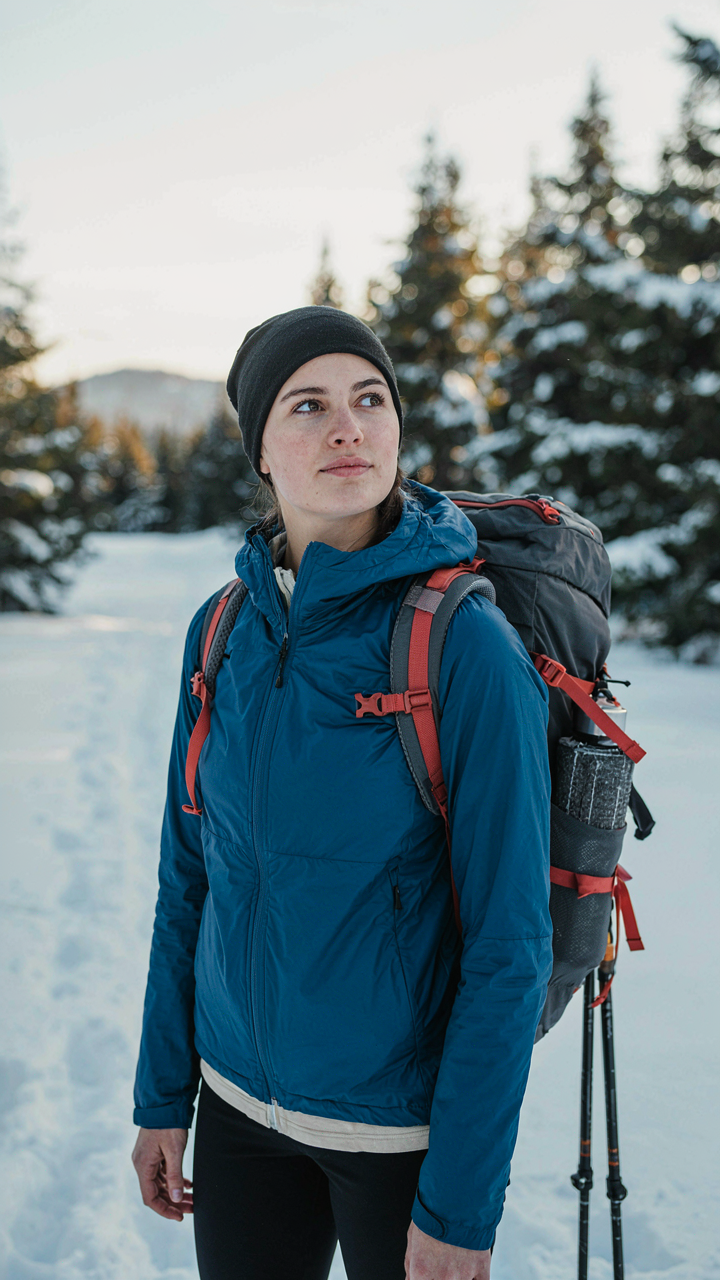
Why Your Movement Economy Fails In Cold
You want to stay warm without exhausting yourself. The real problem is you’re burning calories inefficiently because nobody teaches you the actual mechanism. Economics has a concept called production efficiency: output relative to input. In winter camping, your body is the factory. Every unnecessary step, every wasted muscle contraction, every redundant layer shift drains your caloric reserves faster than the cold can extract them.
Your metabolism in winter doesn’t care about willpower. It responds to workload. The moment you arrive at your campsite, your body has already spent energy breaking trail, hauling gear, and fighting wind resistance. If your movement is sloppy, you’ll have depleted your glycogen stores before you even build your shelter. Efficient movement means fewer calories burned per task completed. This directly extends how long you can stay warm and functional. Strip away excess motion. Every step should serve shelter, fire, or food. Compress your workflow to reduce total movement on site.
Load Distribution And Endurance
Physics teaches load distribution: force spread across multiple points reduces strain on any single point. Winter camping gear forces you to carry weight uphill, through snow, often in darkness. Unbalanced loads—too much in one pack corner, too heavy at the top—create muscular compensation. Your body recruits stabilizer muscles that burn extra calories just to keep you upright.
Pack your heaviest items close to your spine, centered between your shoulders and hips. This is the body’s natural weight-bearing axis. Snow adds unpredictability to every step, so a balanced pack lets your legs absorb shock without your core working overtime. Distribute weight left to right symmetrically. Test your loaded pack on flat ground before the winter trip. If you’re limping toward camp, your load architecture failed. The endurance difference between a well-distributed 50-pound pack and a poorly distributed one can mean the difference between arriving capable and arriving exhausted.
Winter Camping Essentials: Redefining The Non Negotiables
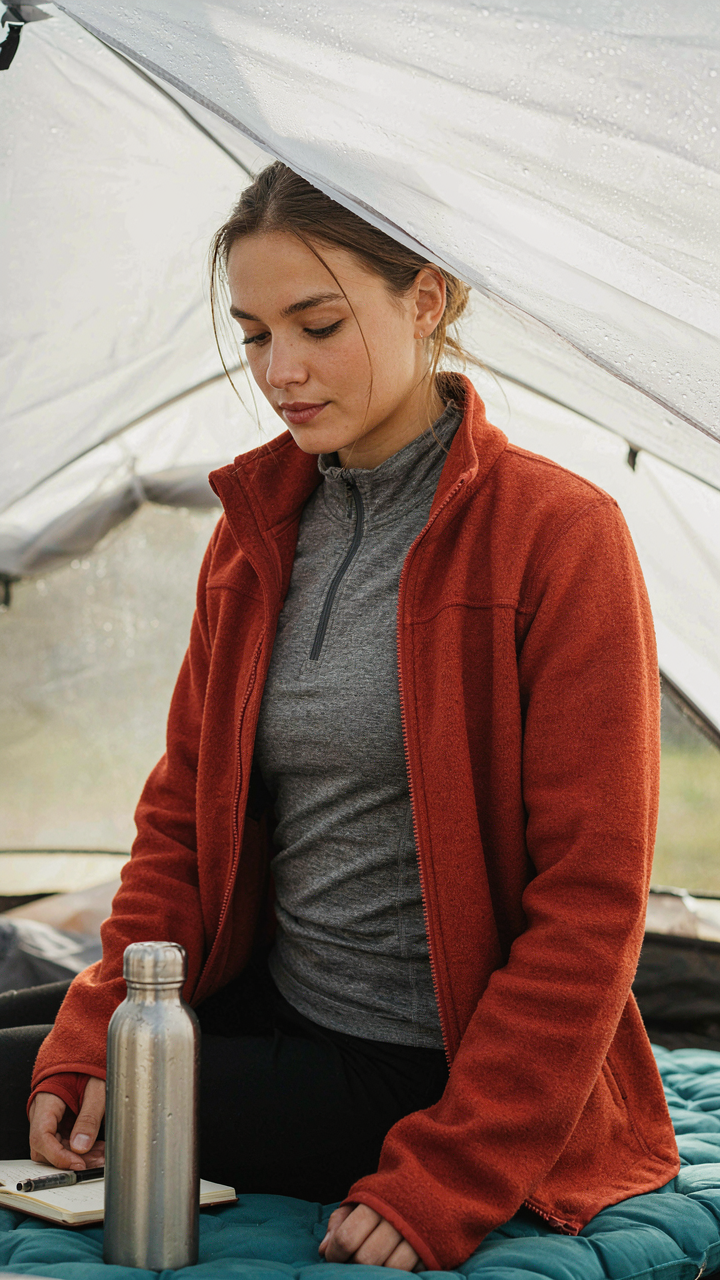
Shelter: Maximizing Passive Insulation
You want your shelter to work while you sleep. That’s the real question here—not gear flex, but whether your body heat stays trapped or bleeds into the void. Shelter in winter camping operates on the thermodynamics principle of thermal resistance: R-value measures how effectively a material blocks heat transfer. Your tent walls don’t generate warmth; they create a dead air space that your body’s 98.6 degrees fills. Walls that reduce convection (wind stripping heat away) matter more than walls that look “warm.”
Most winter campers treat their tent like summer shelter with thicker fabric. Wrong. The mechanism isn’t thickness—it’s eliminating air leaks and condensation management. A four-season tent with a full inner fly (not partial) prevents wind from moving air across your skin inside the shelter. Double-wall construction traps dead air between layers. Floor insulation matters more than ceiling insulation because ground contact drains heat faster than air above. Ventilation seems counterintuitive in winter, but moisture from breathing condenses and freezes on inner walls, destroying insulation. A small vent at the peak or a design that channels moist air outward keeps your sleeping bag dry. Your shelter is the first barrier between 98.6 degrees and minus twenty. Seal the gaps and manage the moisture.
Hydration Strategies In Freezing Temperatures
Water freezes before you drink it, so conventional bottles fail outright in winter camping. The standard advice—”just insulate your bottle”—misses the core problem: frozen water provides zero hydration. Drinking triggers metabolic heat production through thermoregulation, and dehydration accelerates hypothermia. Your body can’t generate enough internal warmth if it’s dehydrated, making liquid intake non-optional even when you don’t feel thirsty.
- Insulated sleeves or neoprene wraps: Keep water bottles at body temperature inside your sleeping bag or worn against your core. Commercial insulated sleeves reduce freezing time significantly compared to bare bottles exposed to ambient cold.
- Wide-mouth containers: Narrower openings freeze over faster and trap ice inside. Wide-mouth bottles allow you to drink directly and break surface ice more easily during refills.
- Hot water before sleep: Fill your bottle with boiling water and seal it. Place it in your sleeping bag’s foot box. The residual heat lasts hours and provides drinkable water when you wake. Refill from melted snow or ice as needed.
- Thermos bottles with insulation: Dedicated vacuum-insulated bottles maintain water temperature longer than wrapped conventional bottles. The trade-off is weight, but they’re non-negotiable for trips over three days.
- Mouth breathing avoidance: Breathe through your nose near water sources. Mouth breathing introduces cold air that freezes liquid on contact, making drinking harder and increasing heat loss through respiration.
Dehydration in winter is silent because thirst signals drop in cold. You drink less, your core temperature falls faster, and your judgment deteriorates before you notice. The protocol is mechanical: drink 200-300 milliliters every two hours while awake, whether thirsty or not. Keep the bottle insulated between drinks and consume warm water, not cold.
The Real Obstacle Isn’t The Cold; It’s Your Inability To Confront Discomfort And Adapt

Winter camping exposes what comfort has hidden: your resistance to friction. Every uncomfortable moment in the cold teaches you something about yourself that warm beds never will. Stop waiting for the perfect conditions. Pick a night next week, grab your gear, and sleep outside when it’s freezing. The cold doesn’t care about your excuses. Neither should you.