
The Novice Myth: Why “Easy” Whitewater Rafting Is A Trap
You’re Not A Passenger
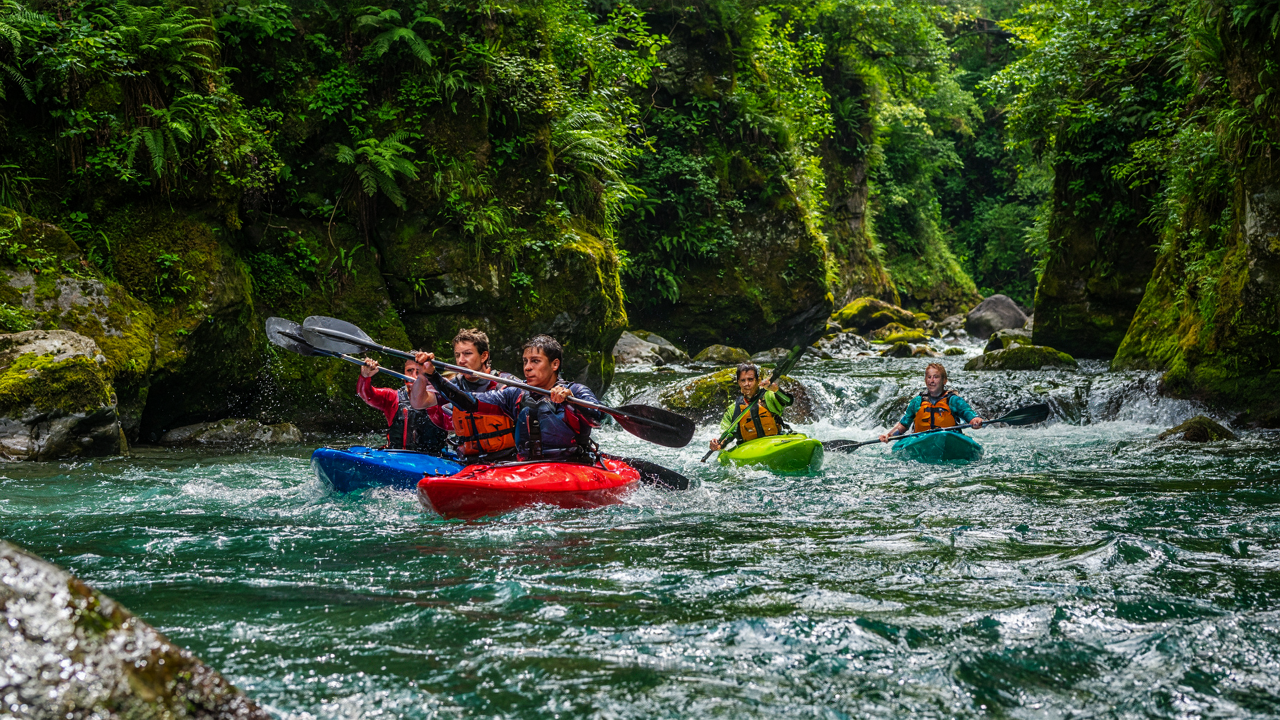
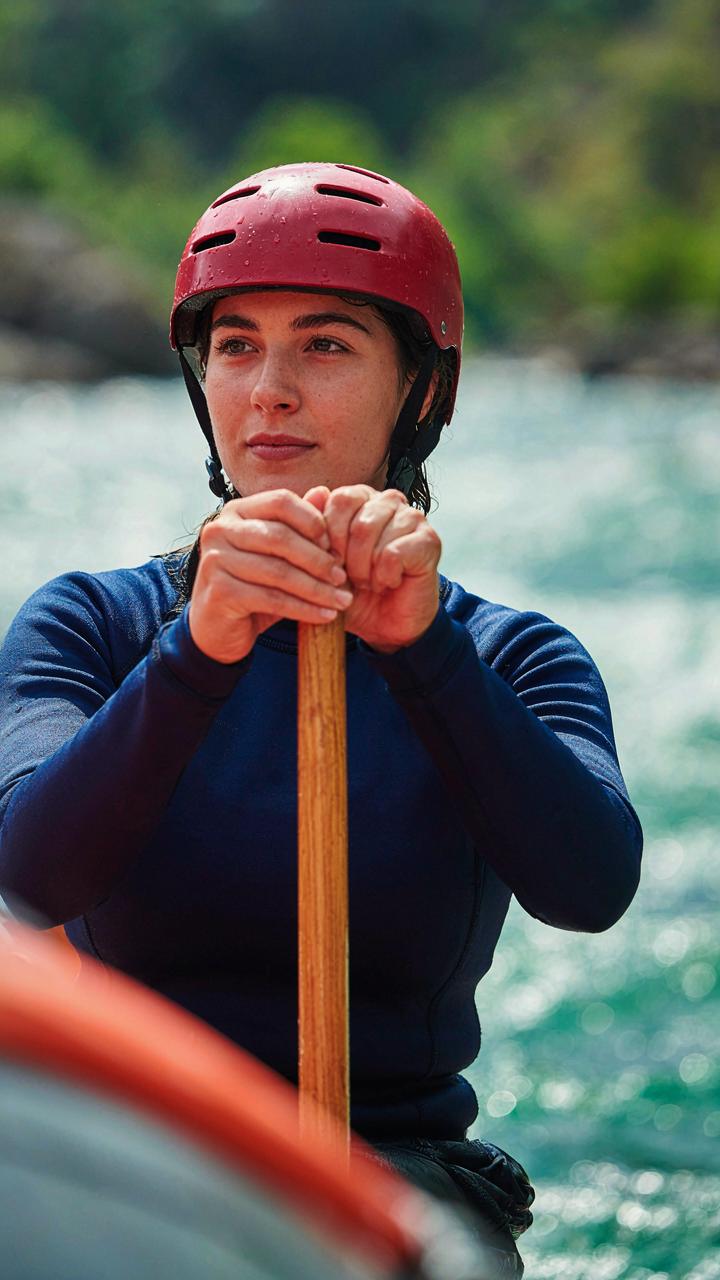
You want to believe beginner rapids are passive. They’re not. You show up expecting the guide to handle it while you sit there and feel brave. The mechanism is simple: rivers don’t care about your comfort level. A Class II rapid demands actual paddle work from every person in the boat. The current moves at a fixed speed. Rocks are fixed. Your job is fixed. When you don’t paddle on command, the boat slows, angles wrong, and either pins or flips. The guide can’t override physics.
Beginner trips market themselves as “safe and easy” because that sells. What they mean is forgiving, not passive. A Class II rapid has room for error. It doesn’t have room for non-participation. The difference matters. You will get tired. Your shoulders will burn after thirty minutes of paddling. Your grip will weaken. The guide will call “forward paddle” four more times after you’re already gassed, and you’ll paddle anyway because stopping means the boat doesn’t move where it needs to. That’s the contract you sign up for.
The Anxiety Architecture Before You Launch

Psychology calls this priming. The moment you step into a raft, your nervous system starts calculating threat level based on what it sees: water moving fast, rocks in the water, people you just met holding you responsible for staying in a boat. Your rational brain knows Class II is beginner terrain. Your limbic system doesn’t care about class ratings. It reads movement and depth and registers danger. Most beginner guides know this and deliberately don’t explain the mechanics of what’s about to happen. They think mystery reduces anxiety. It does the opposite.
The real anxiety killer is specificity. You need to know exactly what happens in the section you’re about to run before you’re in the boat. Not the Instagram version. The actual sequence: where the current accelerates, which side gets pushed where, what the guide’s paddling calls mean and why, how the boat angles to avoid the rocks. When you understand the mechanism, your nervous system stops treating it as random. You move from defensive to tactical. Before launch, ask your guide to walk you through two specific rapids verbally. Have him name the exact paddle strokes and their purpose. Then get in the boat with a plan instead of with hope.

The Adrenaline Economy: Investing In Skill, Not Just Speed

Building The Engine Before The Rush
You want to feel invincible on the water without the actual risk. That’s not weakness—it’s the mechanism working as designed. Your nervous system responds to controlled danger, not actual danger. The gap between those two states is skill. Most beginners skip this part and wonder why they panic instead of perform.
Physical conditioning for whitewater rafting means grip strength, core stability, and paddling endurance. You’re not training for a marathon. You’re training for explosive output in 30-second intervals while soaking wet and unbalanced. A beginner’s forearm fails before their legs do. Grip work now means clarity later. Mental conditioning is simpler: run through failure scenarios before you hit the water. Visualize flipping. Visualize recovering. Visualize staying calm when your paddle hits a rock. Your brain learns the script before reality tests it.
Leverage Through Equipment Selection
Gear functions as force multiplier in physics—the same principle applies here: better equipment reduces the energy you waste fighting the river and redirects it toward control and reaction time.
- Personal Flotation Device (PFD): Not negotiable. A properly fitted PFD with waist straps keeps you upright in the water, not horizontal. This alone cuts panic response by half.
- Paddle Weight And Blade Design: Lighter paddles reduce fatigue over multiple rapids. Asymmetrical blades catch water more efficiently than symmetrical ones for beginners executing correction strokes.
- Raft Construction: Multichamber rafts with reinforced seams handle punctures without sinking. Budget-grade rafts fail when you need them most. Construction quality directly affects how long your paddle remains effective.
- Helmet Fit And Coverage: Helmets rated for water sports protect your temple, not just your crown. A loose helmet is worse than no helmet—it impairs vision and hearing when you need both.
- River Shoes With Ankle Support: Rocks shift under your feet when you’re re-entering the raft after a flip. Ankle support prevents sprains that end your season before it starts.
The equipment hierarchy matters because each piece solves a specific failure mode. Don’t buy the cheapest option and upgrade later. Buy correctly the first time, because mistakes in class II and III rapids teach expensive lessons. Your gear either amplifies your skill or exposes your gaps—choose accordingly.
The Flow State Protocol: Mastering River Rafting Dynamics

Reading The Water
You want to feel in control on a river you’ve never seen before. That feeling comes from recognizing patterns, not from luck. The mechanism is simple: water moves in predictable ways based on terrain, and you decode terrain by watching the surface.
Rapids aren’t random chaos. They form where the riverbed shallows or narrows, forcing water to accelerate and compress. Smooth, glassy water signals deep channels where the current runs slow. Eddies form behind rocks or bends, creating dead zones where water circles backward. Spotting the difference between a safe eddy and a dangerous hydraulic comes down to one thing: understanding that whitewater behaves like a liquid topographic map. The surface tells you what’s underneath.
Precision Over Power
Most beginners think paddling harder means more control. It doesn’t. Paddle strokes work like leverage in physics: the right angle and timing multiply your force output while wasting no energy. A small correction stroke at the right moment moves the raft more than three power strokes in the wrong direction.
- Draw Stroke: Pulls the raft sideways toward your blade, essential for positioning before hitting a rapid. Keep the blade vertical and close to the hull for maximum mechanical advantage.
- Pry Stroke: Pushes the raft away from your side using the gunwale as a fulcrum. Generates lateral movement with minimal power expenditure when timed with the current.
- Forward Stroke: The foundation move for building momentum into rapids. Plant the blade fully and pull in a straight line along the raft’s centerline to avoid wasting effort.
- Rudder Stroke: Trails the blade behind you to steer the raft downriver. Works best in faster current and requires almost no additional energy once the raft’s moving.
- Duffek Stroke: A steering technique that catches the water at an angle to spin the raft while slowing it. Advanced but teaches how positioning and blade angle control direction without raw power.
Timing beats effort every time. Your guide calls commands based on where the raft needs to be three seconds from now, not where it is now. You execute those commands before panic sets in, which means small adjustments with precision, not desperate thrashing.
The Calculus Of Chaos: Risk Assessment From Military Strategy
Reading The River Before It Reads You
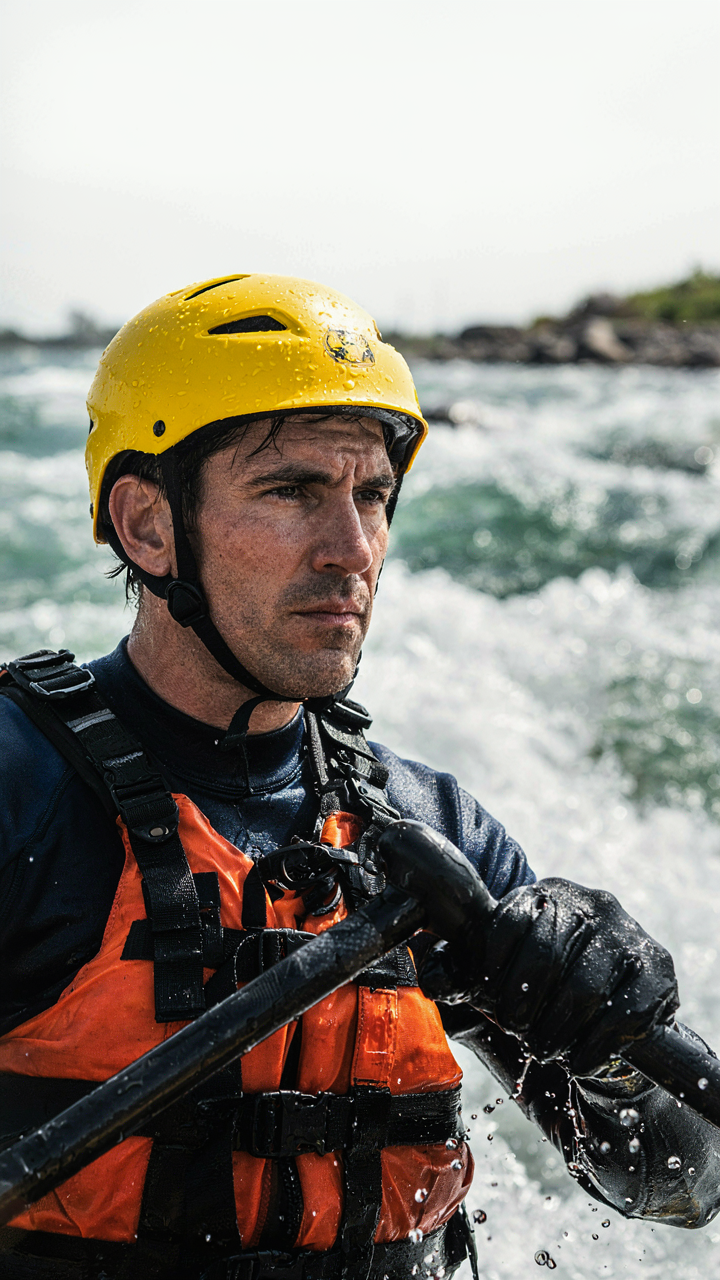
You want this section because you’re afraid you’ll miss something that kills you, and admitting that makes you look unprepared. The real mechanism is simpler: your guide doesn’t see the river the way you do. You see water. Your guide sees a decision tree. Military strategy calls this “situational awareness” and it transfers directly to rapids. A combat pilot doesn’t watch clouds. He watches wind patterns, fuel burn rate, and exit routes simultaneously. Your guide watches water color, eddy formations, and crowd positioning at the same time.
The mechanics work because the river reveals itself in layers, not all at once. Surface chop hides subsurface rocks. A calm pool upstream conceals a pour-over below. Your eyes track one feature at a time. Your guide’s eyes track the sequence. Before you enter a rapid, he’s already identified where the current pushes hardest, where swimmers cluster, and where the raft slows enough to correct. This isn’t intuition. It’s pattern recognition built from running the same section fifty times. You learn to do this by asking your guide to narrate what he sees before entering each rapid, not after.
The Loop That Breaks Panic
The OODA loop comes from fighter pilot John Boyd, and it’s the rhythm that separates swimmers from rowers. OODA stands for Observe, Orient, Decide, Act. In a rapid, you don’t have time to think your way through it. You have time to notice, adjust your mental model, choose, and move. Most beginners get stuck between Observe and Orient, freezing because their frame of reference doesn’t match what’s happening.
Your guide runs this loop three times per rapid. He observes the water state. He orients based on boat weight and wind. He decides which line to take. He acts by calling paddle commands. You’re copying his Act phase without understanding his first three phases. The protocol is concrete: before launch, ask your guide to walk you through his decision cycle on one beginner rapid. Have him narrate Observe (what he sees), Orient (what it means for your boat), Decide (which direction), and Act (what he’ll yell). Then watch for it in real time. The loop repeats every eight to twelve seconds. Knowing it exists lets you stop fighting the rhythm and start syncing with it.
Unlocking The White Water Rafting Adventure: Advanced Beginner Mindset
Discomfort As The Actual Skill
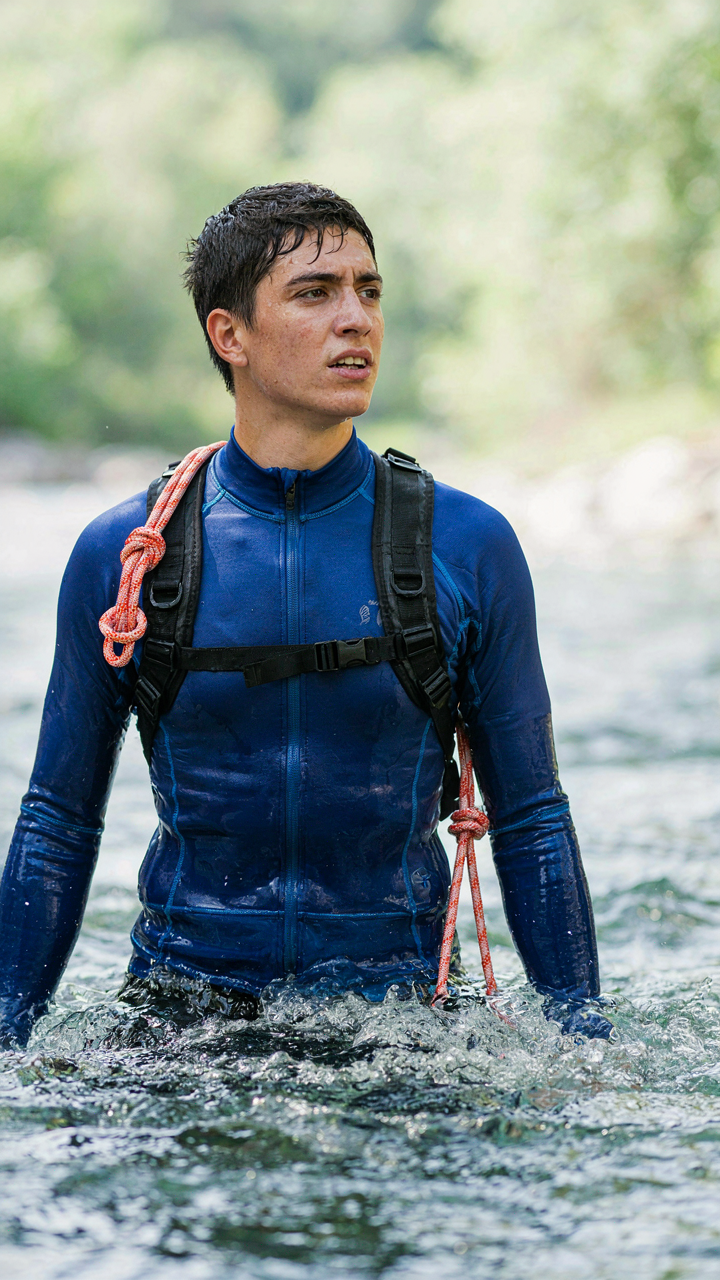
You want the rush without admitting you’re scared of looking incompetent in front of strangers. That’s the real thing happening. The mechanism is simple: your nervous system treats physical discomfort and social embarrassment identically. Both trigger the same fight-flight response. Whitewater rafting exploits this by forcing both simultaneously. You learn to separate the two only through repetition in that specific environment.
The common advice says “embrace the fear.” That’s lazy. What actually works is naming the discomfort precisely. Cold water on your face isn’t dangerous. Your guide has run this rapid hundreds of times. The boat won’t flip on a Class II rapid with proper technique. Once you disconnect the social anxiety from the physical sensation, the discomfort stops being a threat signal and becomes just data. Your body stops flooding cortisol and adrenaline indiscriminately.
River Progression: Match The Challenge To Your Threshold
Progression in whitewater follows the same law as progressive overload in strength training. You add stress incrementally, never jumping two levels at once. Class I rivers teach boat handling and wet exit drills without genuine hazard. Class II introduces current reading and positioning without consequence. Class III demands real decision-making under pressure. Skip Class II and you’ve trained nothing except fear tolerance, which doesn’t transfer to actual skill.
Most beginners either repeat the same river or jump to something that triggers panic, which erases what they learned. The protocol is: run your chosen river three times minimum before moving up. First trip handles the unknown. Second trip builds muscle memory. Third trip reveals what you actually missed. Only then move to the next class level. This isn’t arbitrary caution. It’s how your nervous system consolidates new motor patterns under stress.
The Rafting Aesthetic: Why Style Beats Speed For Lasting Satisfaction

Reading The Water Like A Tactician
You want to look competent on the river because competence is status, and status is why you’re really here. The mechanism is simple: guides who move through rapids with precision read the water like military strategists read terrain. They identify the channel, spot the rocks, and position the raft before committing to the line. This isn’t speed. It’s positioning.
The difference between a beginner and a guide isn’t reaction time. It’s prediction. Guides scan fifty meters ahead for the V-shape of current that signals the safe passage through rocks. They watch for holes, which are depressions where water drops and recirculates. They spot pillows, the bulges of water pushing up against submerged boulders. You learn this by sitting in the raft and asking the guide to name what they’re seeing before you hit it. Repetition teaches your eye to work faster than your brain. After three to four trips, you stop just surviving the rapids and start reading them.
What The River Actually Gives You
Everyone says whitewater is about adrenaline. That’s incomplete. The real pull is the sensory overload that forces you fully present. You can’t think about email or status or failure when your core is engaged, your hands grip the paddle, and cold water crashes over you. The environment doesn’t care about your narrative.
Most beginners miss this because guides market the thrill, not the clarity. The natural environment strips away the noise your brain uses to stay in control. On bigger rivers, you notice things: the smell of wet stone, the vibration of current through the paddle, the way light breaks on whitewater. These details aren’t poetic. They’re the mechanism that makes the experience stick in memory better than any photo or story. You go back because your nervous system remembers the reset, not because you survived a Class III rapid.
Best Places For Rafting: Curating Your First True Test
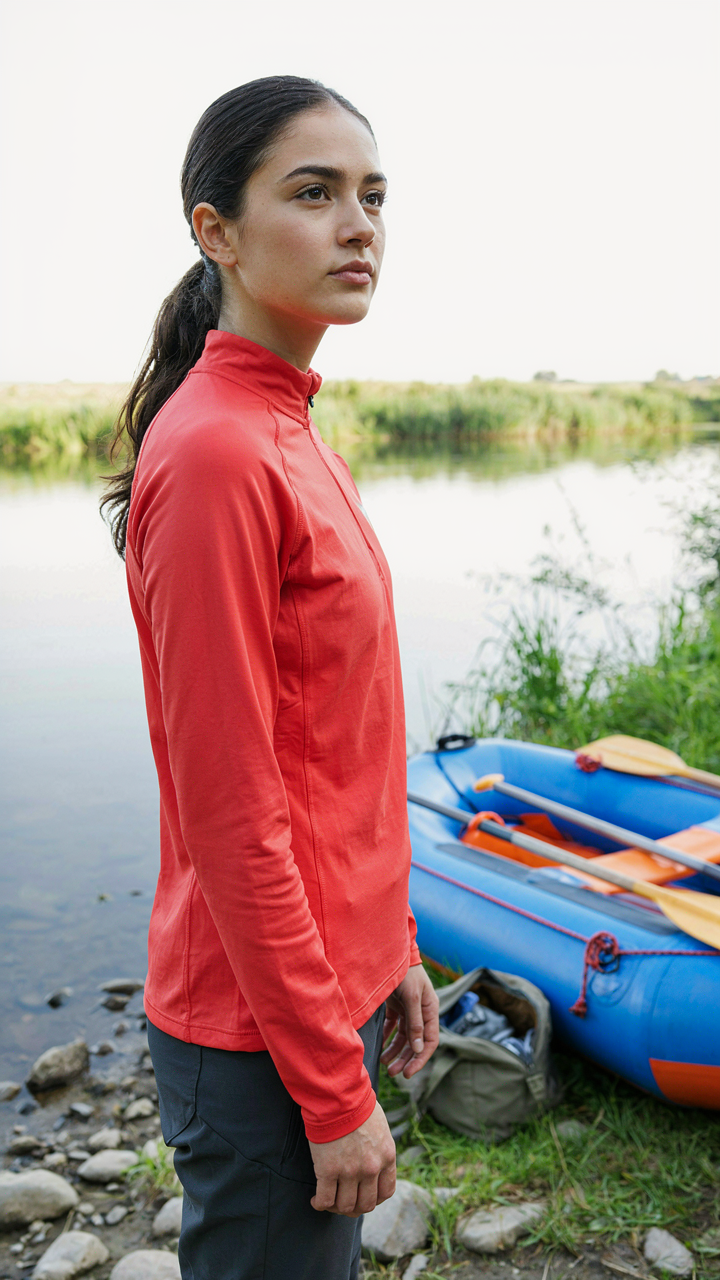
Match The River To Your Actual Capacity
You want the story more than you want the experience. That’s why most beginners pick rivers based on YouTube footage instead of honest self-assessment. The mechanism is simple: river difficulty scales with consequence, and consequence scales with what your body can actually handle under stress. A Class II river demands different things than a Class III. Class II requires basic paddle coordination and the ability to stay seated through minor turbulence. Class III demands active upper body strength, quick decision-making, and comfort with water entering the boat.
The mistake isn’t choosing a hard river. It’s choosing one that matches your image of yourself instead of your current state. Start with a Class II in a region with professional outfitters who run that section year-round. Consistency matters because guides who run the same stretch 200 times know exactly where someone panics, where rocks shift seasonally, and where a beginner typically loses their paddle. Water levels, seasonal variation, and guide experience matter more than the river’s brand name. Pick based on operator track record, not Instagram aesthetics.
Guides Who Push, Not Just Paddle
The common take is that you want a “nice” guide who makes you feel safe. That’s backwards. You want a guide who creates pressure in controlled doses because that’s how competence actually builds. Borrow from athletic coaching: a guide operates as your performance coach, not your tour operator. They’re managing your load progression, not maximizing your comfort.
A real guide reads your fear response in real time and calibrates instructions accordingly. They point out what you did wrong on the previous rapid before you hit the next one. They ask you to lead strokes you’ve done before but in higher water. They don’t narrate geology or tell stories during the critical sections. When debriefing an outfitter, ask specifically what their guides do when someone freezes mid-rapid, not how many years they’ve been guiding. The best ones have a protocol for escalation, not improvisation.
Beyond The River Rafting Trip Ideas: Integrating The Lessons

River Discipline Transfers To Everything Else
You want to know this works because it sounds like personal transformation on the cheap. The mechanism is simple: whitewater rafting strips away your ability to bullshit yourself about risk tolerance and decision-making speed. On the water, hesitation kills. You learn to read conditions, commit to a line, and execute. That same framework works in business calls, difficult conversations, and situations where delay compounds the problem.
The river teaches compressed feedback loops. You make a bad call and know instantly whether it worked or destroyed the run. Life rarely offers that clarity, so most people stay frozen in ambiguity. Once you’ve felt real consequences arrive in seconds instead of months, your nervous system recalibrates. You stop overthinking low-stakes decisions because your body remembers what actual stakes feel like.
Calculated Risk Returns Compound Over Time
Common advice says “push your comfort zone gradually.” That’s incomplete because it ignores how risk perception actually works in economics and neuroscience. The compounding effect isn’t linear—it’s about recalibration. A class 2 rapid feels dangerous until you’ve navigated it twice. By run three, your brain has new data. You can now access class 3 without freezing. The risk didn’t decrease. Your accurate risk assessment did.
Each successful calculated risk earns you a lower baseline of false fear. You stop filtering opportunities through phantom dangers. Start with appropriately guided beginner rapids, progress only after your guide confirms competence, and document what you learned about your own decision-making speed. The compounding happens when you apply that recalibrated judgment to career moves, investments, or conversations you’d normally avoid. The mechanism: repeated small wins against real obstacles reprogram your cost-benefit analysis permanently.
The River Reveals: Your Capacity For Calculated Chaos Is Your Only Limit
Most people confuse fear with inability. The river doesn’t care about your excuses. What separates the person who books a beginner trip from the person who watches YouTube videos forever is this: you stop waiting for perfect conditions and accept that discomfort is the price of expansion. Call an outfitter today. Pick a date. Show up wet and alive instead of dry and wondering. Your adrenaline isn’t a luxury—it’s a message that you’re still capable of growing.