
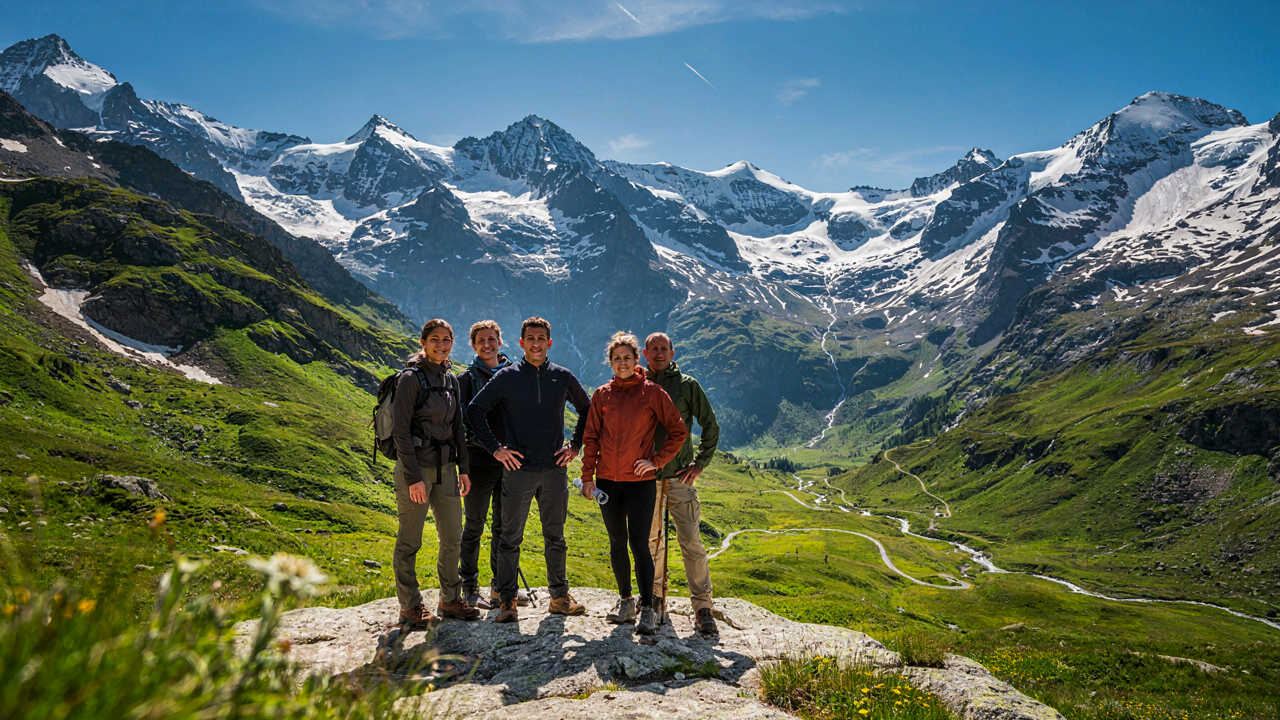
Beyond The Postcard: Deconstructing Your Swiss Alps Motivation

Why Generic Travel Advice Fails You
You care about this section because you don’t want to waste money on a trip that feels empty once you’re there. Generic travel advice fails because it treats the Swiss Alps as a checklist destination instead of a mechanism for what you actually need. The real problem: most guides prescribe activities without diagnosing why you’re going. They tell you where to stand for photos but never ask what standing there solves for you. You end up following someone else’s itinerary instead of building one that matches your actual gap.
The Alps didn’t become famous because they’re objectively the most beautiful mountains on Earth. They became famous because early Victorian travelers packaged them as proof of refinement and taste. That framing stuck. Now you inherit the assumption that visiting means consuming the canonical experience: Interlaken, Jungfrau, the Matterhorn. But canonical experiences exist because they’re easy to market, not because they’re calibrated to your specific constraints, budget, or what you’re running from or toward. Before you book anything, you need to name your actual driver.
What You’re Really Buying

Status visits look identical to transcendence visits from the outside, but they require opposite strategies. The status play is straightforward: maximize recognizable moments, hit the major peaks, collect the photos, return to your network with proof. You’re buying the signal. Transcendence, by contrast, requires friction and time spent away from optimal photo angles. It means choosing an obscure valley over Zermatt, spending three days in one place instead of rotating through five, or timing your visit around weather nobody considers “peak season.” The mechanism is simple: status scales with audience size; transcendence scales with solitude and duration.
Most people don’t admit which one they want, so they end up with neither. They chase status moves but feel hollow because they never committed to the schedule transcendence requires. Then they blame the Alps. The real work is honest diagnosis: What would disappoint you more? Missing the iconic shot or spending money on a quiet hike nobody sees? Your answer determines whether you book the Jungfrau Railway or rent a cottage in the Valais and walk for five days. Choose the wrong track and you’ve already lost.

The Alps Calibration: Pre Trip Mental Conditioning

Your Comfort Baseline Will Betray You
You think you want a vacation. What you actually want is proof that you’re the type of person who does hard things. The Alps expose this gap fast. Most visitors arrive expecting alpine hiking to feel like a treadmill at elevation. It doesn’t. Your body will work harder at 8,000 feet than you’ve trained for, and pretending otherwise wastes the first three days to soreness and resentment.
The common advice says “just acclimate gradually.” Wrong. Acclimation takes weeks for real physiological adaptation. What actually matters is recalibrating your expectations before you land. The Alps aren’t a backdrop. They’re a work environment with specific demands: thin air, steep terrain, weather that changes in minutes, and trail conditions that demand foot placement discipline. Your comfort at sea level has zero relevance here.
Discomfort As Your Operating System
Think of the Alps like a training protocol in exercise physiology: progressive overload. You don’t build capacity by staying in your existing range. You build it by exceeding it in controlled increments. The Alps demand you apply this to altitude, physical exertion, and navigation uncertainty simultaneously. Visitors who treat mild breathlessness and burning quads as failures quit early. Visitors who expect these signals and interpret them as feedback adjust pace, take breaks, and finish stronger.
The mechanism is simple. Your nervous system categorizes unfamiliar sensations as threats unless you reframe them first. Pre trip, name the specific discomforts you’ll encounter: labored breathing at 9,000 feet, muscle fatigue on descent, navigating with a map in poor visibility, sleeping in thin air. Not as suffering. As data. This mental shift changes your response from resistance to information gathering, which changes your entire trip output. Start this work now, not on day one.
The Alpine Ascent Protocol: Planning A Swiss Alps Trip For Impact

Route Selection Beyond The Postcard
You want to tell people you did something most tourists missed, which means you’ll waste time chasing recommendations that sound exclusive but deliver crowds. The real mechanism is constraint-based routing: the Alps operate on a capacity model where altitude and trailhead access naturally filter crowds. High-altitude routes above 2,500 meters thin out visitors fast because most people stop at the scenic overlook at 2,000 meters. Routes that require actual navigation or boot-fitting rather than cable cars eliminate 80 percent of foot traffic instantly.
Your route should solve for two variables before you pick a destination: rail access and water source proximity. The Valais region offers direct access from Geneva and abundant mountain lakes for camp resupply, meaning fewer logistical dead zones. The Appenzell Alps in the northeast require more ground transport but reward you with maintained ridge trails that Alpine clubs keep less publicized than the Matterhorn corridor. Choose routes by infrastructure first, views second.
Weather Windows And Elevation Timing
This section requires physics thinking: temperature gradients determine your operational window with total precision. The Swiss Alps cool roughly 1 degree Celsius per 100 meters of elevation gain, so the difference between a safe route at 2,300 meters and a dangerous one at 3,100 meters is roughly 8 degrees and the difference between hiking in July versus August can be a 14-day weather stability window. Late July through early August delivers the most consistent weather because the jet stream sits north of the Alps during this band. June still has snow above 2,600 meters in most valleys, and September brings unpredictable afternoon storms.
Data from the Swiss Meteorological Institute shows that conditions at Jungfraujoch (3,466 meters) stabilize most between 10:00 AM and 2:00 PM in mid-summer. You don’t plan around the weather forecast you see on Tuesday. You plan around elevation-specific climate patterns that repeat yearly, then cross-reference your chosen route’s altitude against historical precipitation and wind data for your travel month. This means starting your descent from any peak by 1:00 PM without exception, regardless of conditions.
Logistical Leverage: Mastering Swiss Alps Travel Itinerary
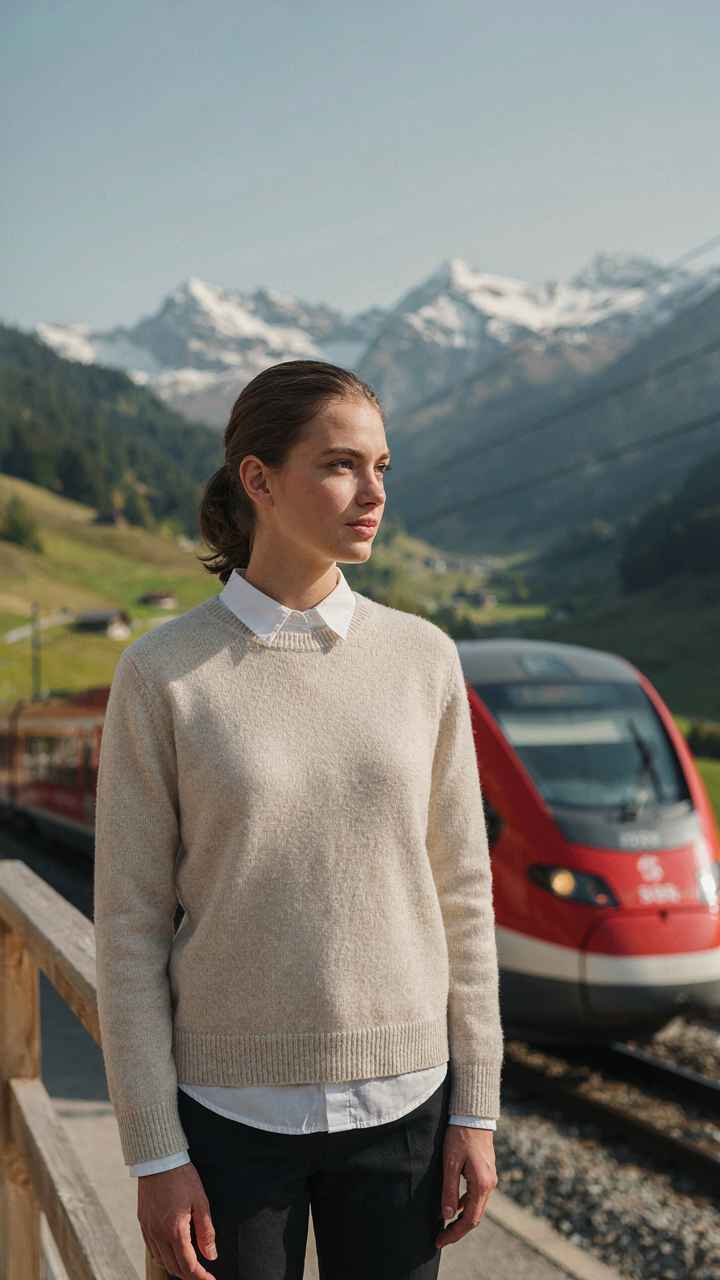
The Transit Network That Determines Everything
You care about this because bad logistics destroy a trip faster than bad weather, and you’ll waste days figuring it out on the ground. Economics teaches us about supply chains and bottleneck theory. In the Alps, the rail network is your supply chain and the valley towns are your bottlenecks. The Jungfrau Railways, Gornergrat railways, and the broader Swiss Federal Railways system exist specifically to move volume through tight terrain. You don’t fight this system. You route around it by traveling in shoulder seasons (May, September, early October) when trains run full but towns don’t move at tourist gridlock speed.
The real cost isn’t the ticket price. It’s the time you burn waiting for the next departure or sitting in overcrowded cars. A point-to-point itinerary beats a hub-and-spoke approach because trains run hourly on major lines but you’ll wait longer if you backtrack. Build your route north to south or south to north, stopping at one valley town every two days. This compounds your leverage: one train ticket gets you from base to trailhead, another gets you back by evening, zero wasted hours relocating.
The Base Camp Location That Controls Your Day
You’ll read that you should stay in famous towns like Zermatt or Interlaken. That’s incomplete advice. Military strategy calls this the principle of the defensive position. Your accommodation must sit near the valley floor where transport hubs connect, not on a mountaintop where you’re isolated. Zermatt works because the train station sits at the base. Grindelwald works for the same reason. Kleine Scheidegg doesn’t, despite the views, because getting there requires specific trains and you’re locked into schedules.
The mechanism is simple: a base camp controls your energy expenditure and optionality. Stay in a town with rail access, two restaurants you can walk to, and a grocery store. This removes friction from logistics and preserves cognitive energy for actual hiking. Stay at three different locations across a ten-day trip instead of moving daily. Each town becomes a hub for two days of different routes. The trade-off is clear: less variety of scenery, more depth in each valley, zero time spent packing and unpacking.
The Unseen Switzerland Travel: Harnessing Micro Experiences
Where The Crowds Aren’t Looking
You want permission to skip Matterhorn because it feels safer to follow the herd. That’s the real reason this section matters. In attention economics, scarcity works backward in tourism: the best experiences aren’t rare because they’re hidden, they’re overlooked because they require a decision. Most visitors optimize for Instagram geometry rather than actual engagement. The Appenzell Alps, Säntis massif, and the limestone formations around Appenzell hold technical complexity and visual depth that Zermatt abandoned decades ago. You find these by rejecting the assumption that famous equals full.
The mechanism is simple: tourist infrastructure follows demand, not quality. Where infrastructure is light, your attention density increases. A two-hour hike in Säntis offers more sensory variation per hour than a famous trail packed with 200 people. You’re not discovering hidden gems. You’re recognizing that attention is the limiting resource, not access. Book a guide in Appenzell who works with locals, not tour operators. Walk a ridge section most hikers skip because it’s not on the postcard route.
Detours Become The Route
The common advice is wrong: detours aren’t setbacks you tolerate. In military logistics, a forced reroute reveals supply line vulnerabilities that planners missed. Apply that to visiting Swiss Alps directly. When weather, closures, or timing derail your plan, you’re forced into villages and valleys that scheduled visitors never enter. Kandersteg’s southern passes flood seasonal access, pushing visitors toward the Oeschinen Lake region most tourists miss entirely. Delays create information advantage.
Use weather forecasts to stay two valleys ahead of the crowd. When a pass closes, don’t retreat to a crowded alternative. Move lateral instead. The Bernese Oberland has four distinct ecosystems stacked vertically within 15 kilometers. A route change from Grindelwald to Meiringen doesn’t lose you elevation gain or alpine terrain, it relocates you to working alpine communities where restaurants serve food meant for locals who work there daily, not tourists stopping between photo ops. Your detour becomes your actual itinerary.
Gear As An Extension: Your Swiss Alps Adventure Arsenal
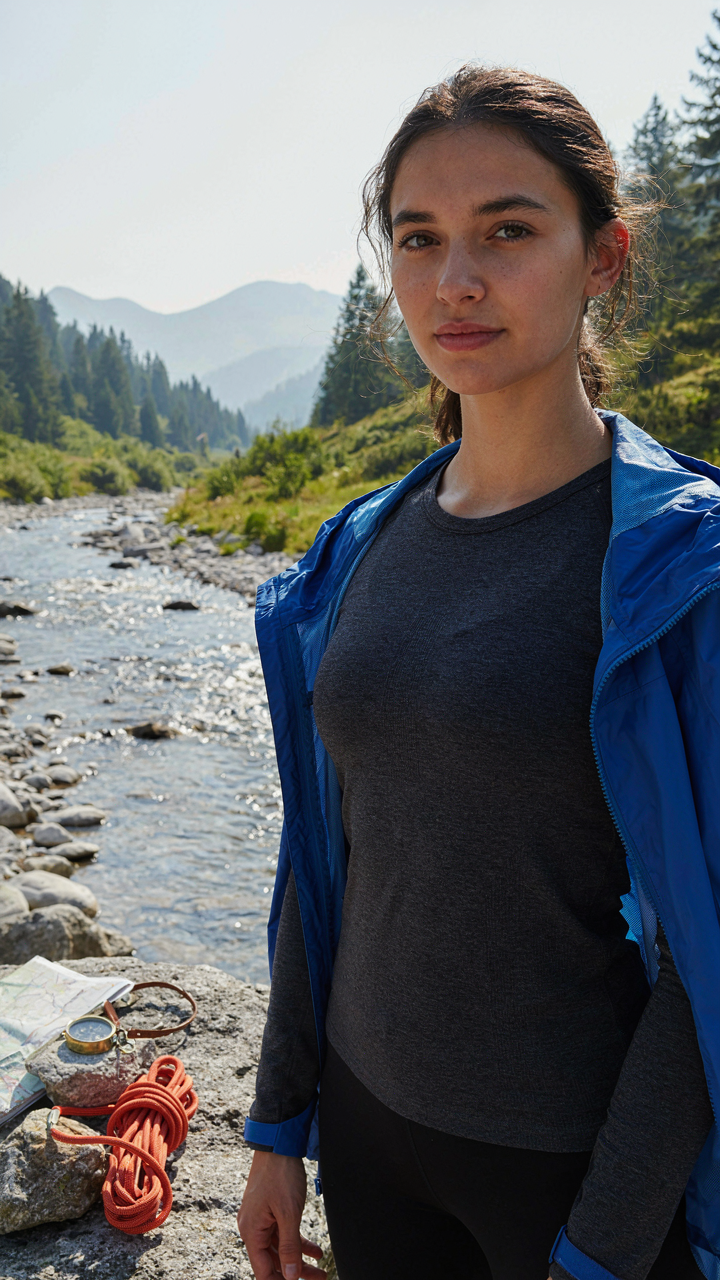
Pack Light Or Regret Every Step
You want to look prepared without admitting you’re terrified of getting it wrong. Here’s the mechanism: carrying excess weight doesn’t make you safer—it makes you slower, which actually increases risk. The Alps punish inefficiency. Military doctrine calls this “load discipline.” Every gram you carry past Interlaken is a gram working against your agility on uneven terrain.
Most hikers pack for a worst-case scenario that never happens. You don’t need backup layers for backup layers. The Alps demand you commit: choose your system, trust it, move fast. Speed through exposure is better than slow deliberation.
- Merino wool base layer: Regulates temperature without bulk, dries faster than synthetic alternatives, resists odor across multi-day treks, and compresses to minimal pack volume.
- Shell jacket with pit zips: Allows ventilation without removing the full layer, critical for managing sweat on steep ascents where overheating kills efficiency.
- Lightweight hiking boots broken in beforehand: Swiss trails demand ankle support on loose scree, but new boots cause blisters that end treks prematurely.
- Minimal first aid kit: Blister treatment, pain relief, and gauze. The Alps have rescue infrastructure; you’re not surviving a wilderness scenario alone.
- Navigation tools: Physical map and compass. Phone batteries die. Swiss trails are marked, but you still need backup for route-finding off standard paths.
The weight math is simple: under 15kg for day hikes, under 20kg for overnight trips. Everything else is psychology masquerading as preparation. Strip it down until you question whether you really need each item. If you hesitate, leave it behind.
Form Follows Function, Not Instagram
Gear marketing sells you identity. Function sells you results. Visiting Swiss Alps exposes the gap immediately because the terrain doesn’t care about brand names or color coordination.
Your boots matter more than your jacket because you’re on your feet for eight hours and sitting idle for two. Your pack comfort matters more than its aesthetic because a bad hip belt destroys your hips by kilometer three. Socks matter more than most gear because blisters compound pain across every step forward. Swiss conditions are too variable for single-purpose items—everything needs to solve multiple problems or stay home.
The Alps enforce this ruthlessly. A jacket that looks sleek but funnel moisture to your pack straps becomes a liability. Pants with inadequate thigh pockets force you to manage maps poorly. Gaiters aren’t fashion—they’re mandatory for scree fields where ankle-level dust accumulates inside your boots. Pick gear that works first, looks intentional second.
Cultivating Resilience: A Vacation Switzerland Mindset
Weather Shifts Demand Real Adaptation
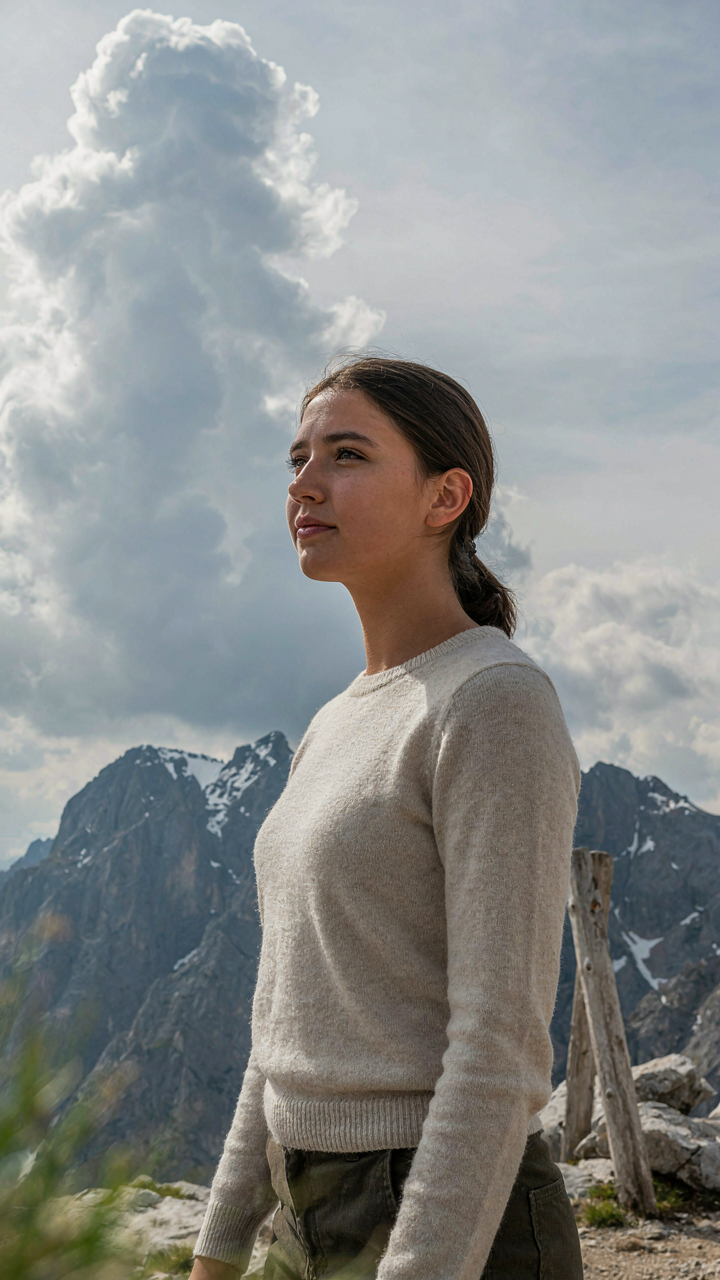
You want to feel in control during your trip, which is why weather unpredictability bothers you. The Alps operate on convection dynamics—warm air rises, cools, condenses into storms in minutes. This isn’t mood or chance. Temperature drops 3.5 degrees Fahrenheit per thousand feet of elevation. Afternoon thunderstorms form daily in summer because valley heat triggers updrafts. You adapt by starting hikes before 7 AM and descending by 2 PM, not by hoping conditions improve.
The common advice says pack layers. True but incomplete. Layers only work if you deploy them strategically. Carry your rain jacket at elevation even on clear mornings. Remove it during exertion, replace it during rest stops. Monitor cloud formation over ridgelines—if clouds build vertically, descend. The mechanism is simple: respect the altitude timeline, execute the descent protocol before conditions deteriorate, and you control the experience instead of reacting to it.
Oxygen Scarcity Changes Everything
High-altitude performance isn’t metaphorical. Your body processes oxygen differently above 8,000 feet. The Jungfrau sits at 13,642 feet. Your heart rate climbs 30 to 40 percent higher than sea level for the same effort. Acclimatization takes three to five days. Most visitors skip this and suffer. Breathlessness, headaches, and poor judgment follow. Altitude doesn’t negotiate.
Spend your first days below 6,500 feet. Hike moderate routes. Sleep at lower elevations. Only on day three or four push toward higher passes. This isn’t caution, it’s physics compliance. Your red blood cell count needs time to increase oxygen-carrying capacity. Skip acclimatization and your mind gets foggy exactly when you need clarity for navigation and descent decisions. The protocol is non-negotiable if you want to actually enjoy the mountains instead of survive them.
Post Alps Integration: Translating Mountain Lessons

The Pressure Test For Real Change
You want this section to prove the trip wasn’t just expensive tourism. You need validation that you’ll actually be different. Here’s the mechanism: the Alps impose physical constraints that force decision-making without committee approval. Altitude strips away options. Weather closes routes. You adapt or fail. Back home, you’ll face the same pressure but won’t recognize it because it arrives as email, not elevation.
The Alps operate like a pressure cooker in thermodynamics. Heat and constraint force molecules into new configurations. You experienced this when a storm forced you off a trail or altitude demanded you move faster. That wasn’t hardship. That was your nervous system recalibrating what “necessary” means. Most people return home and immediately let options multiply again, drowning choice in comfort.
The Alpine Mindset Without The Altitude
Generic advice says “remember the mountains.” That’s useless. You won’t. Instead, identify the one specific decision you made in the Alps that you’d never make at home, then build a system that forces you to make it again. If you moved fast on a trail without overthinking every step, create a work protocol where you commit to decisions without three rounds of feedback. If you managed resources under scarcity, maintain that constraint artificially by working with a fixed budget.
The mindset doesn’t stick through nostalgia. It sticks through structure. When you were climbing, your environment enforced discipline. Your daily life won’t do that by default. You must engineer it. Pick one non-negotiable rule from your time there, write it down, and tie it to a recurring trigger. The Alps taught you something about pace, priority, or presence. Make that teaching structural, not aspirational, or you’ll forget it within three weeks.
Your Alpine Legacy: Beyond The Instagram Feed
What You’ll Actually Remember
You want proof that the trip mattered, that you weren’t just burning money on scenery. The real mechanism isn’t the photos—it’s the gap between what you expected to feel and what your body learned when it had to move through actual terrain at altitude. The Alps don’t validate you. They rewire your tolerance for discomfort and distance. That’s the asset nobody posts about.
Most Alps visitors chase the moment-to-moment experience, which evaporates the moment they leave. What sticks is the proprioceptive memory: how your legs felt on the Eiger Trail descent, how your lungs adapted on day four, how silence sounds different above 2,500 meters. These aren’t emotional luxuries—they’re neural patterns you carry home and apply to everything harder than it was before.
The Cost Of Earned Altitude
Earning a view through effort creates a different class of memory than arriving at it by cable car. This isn’t sentimentality—it’s neuroscience. Effort tags experiences with stronger encoding in long-term memory. The Lauterbrunnen Valley looks identical whether you hike to it or ride the train, but the hiker’s brain encoded the journey as significant data worth storing.
When you return to your life, these earned experiences become reference points for what you’re actually capable of handling. You’ve walked 15 kilometers in thin air. You’ve navigated a route with no trail markings. You’ve sustained effort when fatigue suggested stopping. Those aren’t vacation stories—they’re evidence you can do hard things. Document this with a simple journal entry each day noting one physical challenge you overcame, not the scenery you saw.
The Real Obstacle Isn’t The Altitude; It’s Your Expectation Of Effortless Reward

Most people visit the Swiss Alps waiting for the mountains to change them. They hike expecting transcendence. They photograph expecting validation. The Alps don’t work that way. You have to show up willing to suffer a little, move your body hard, sit with discomfort. That’s where the actual transformation lives. Stop planning the perfect trip. Book a train ticket to Zermatt today and spend one full day walking without a destination. Your phone stays in your pocket. The mountains don’t care about your Instagram caption; they only care if you actually came.