
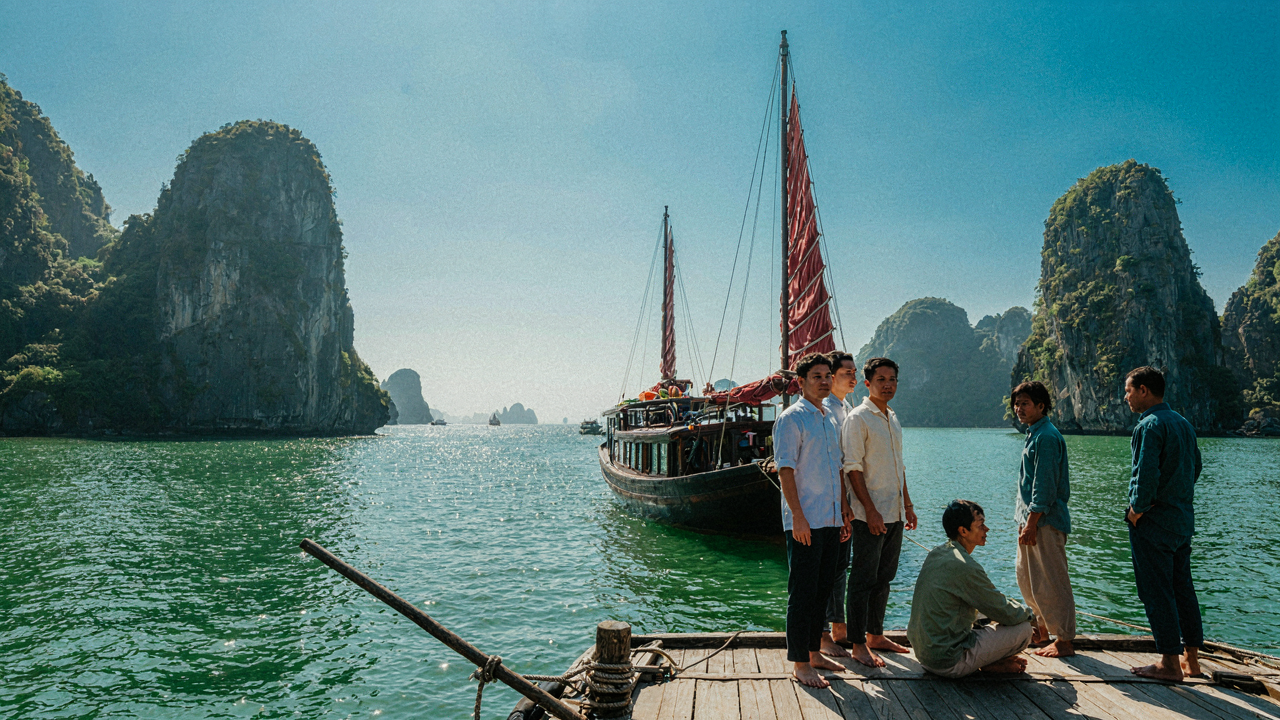
The Ha Long Bay Tourist Trap: A Deconstruction

Where The Money Actually Goes
You’re reading this because you’re afraid of looking stupid. You don’t want to overpay or get scammed, which means you’re already halfway to missing the real problem. In economics, this is called information asymmetry. The tour operator knows the true cost of fuel, boat maintenance, and labor. You don’t. They use that gap to extract margin through what looks like a fixed price but isn’t.
The standard Ha Long Bay cruise costs between 50 and 300 USD depending on duration and boat class. That range exists because operators price based on what tourists will pay, not what the service costs to deliver. A one-night budget cruise at 50 USD means the operator makes money on volume and ancillary sales, not the ticket itself. A luxury overnight at 300 USD means they’re betting you won’t notice the markup because the experience feels premium.
The Upgrade Machine

The upsell doesn’t happen at booking. It happens during the tour through small decisions that feel optional but compounds into 30 to 50 percent above your stated price. You board the boat and encounter a casual mention of cave entry fees not included in your package, a lunch upgrade from basic to seafood, speedboat transfers to floating villages, or group photos sold at inflated rates. None of these were mandatory when you booked.
The mechanism is temporal. Operators separate the purchase decision from the actual spending. You commit to a low-advertised price when decision-making is careful and comparative. Then, surrounded by other tourists, on a boat in the middle of the bay with no exit, you encounter the true cost revealed in small increments. Each individual add-on seems reasonable in isolation. The cumulative effect is what matters. Verify what’s included before boarding by requesting a written itinerary with all costs listed separately.

Beyond The Junk Boat: Crafting Your Own Ha Long Odyssey

Where The Real Operators Hide
You want to feel like you discovered something nobody else found. That’s the real reason you’re reading this. Here’s what matters: most visitors book through hotel concierges or online marketplaces that take a 40-50% cut and funnel you toward the same five overcrowded junks. Those operators use an economics principle called margin extraction. They maximize profit per booking, not per experience. The mechanism is simple. Middlemen own the customer relationship, so they push volume over differentiation.
Direct operators in Ha Long Bay work differently. You contact them without a booking platform between you. Cat Ba Island has a cluster of smaller outfitters who run 1-3 boats instead of 20. Cat Ba Town specifically holds most of these shops. They undercut the middlemen because they don’t pay commission. Their boats leave less crowded and stop where tourists aren’t funneled. The trade is transparency for price. You lose the convenience of one-click booking and gain actual control over your itinerary.
Private Charters Eliminate The Coordination Problem
Most travel advice says private charters are a luxury. They’re not. They’re a logistics solution. When you book a shared junk, you coordinate with 15-40 strangers. The boat leaves when a quota fills. Stops happen on a fixed schedule. Meals arrive at set times. Pacing deteriorates because one person always moves slower than the group. Private charters eliminate this friction entirely.
A private charter through operators like Sails Tours or directly through Cat Ba captains costs between $150-300 per person when split among 4-6 people. Group junks run $80-120 per person but include 30-50 hours of compromise. The mechanism that matters: private charters let you start early to beat crowds at Surprise Cave, skip tourist-trap stops, and spend actual time in Lan Ha Bay where water clarity remains high. Your boat captain becomes your strategist, not a schedule enforcer.
The Unseen Halong Bay: How To Explore Halong Bay’s Secluded Gems

Where The Limestone Really Hides
You want the Instagram moment without the crowds. That’s not a flaw. It’s the real reason you’re reading this. The mechanism is simple: most visitors follow the same three-day cruise route, which means 80 percent of Halong Bay stays empty. Think of it like supply and demand in reverse—abundant geography, concentrated foot traffic. The karst formations extending beyond the main tourist corridor contain the same geological drama, just with zero people.
Mapping these areas requires abandoning the standard itinerary logic entirely. Skip the packaged tours and hire a private longtail boat captain in Cat Ba Town or Bai Chay. The best operators know which limestone formations hold caves, which ones have safe anchorages, and which areas see tourists maybe twice a month. Ask specifically for routes toward Lan Ha Bay’s eastern edge or the northern reaches near Cai Bai—these zones have identical karst density but operate outside the cruise ship radius. Bring detailed marine charts or download offline maps before departure.
Secret Beaches Without The Boat Tours
The common advice says all Halong Bay beaches require boat access. Wrong. Several accessible coves exist along Cat Ba Island’s eastern coastline and the Bai Chay fringe that most visitors never reach because they’re booking organized excursions instead. The transportation mechanism here is direct: rent a motorbike, drive to less-advertised parking areas, and hike down. This takes two hours instead of eight, costs a tenth of the price, and puts you alone on sand.
Specific locations: Cannon Fort Beach sits near Cat Ba’s old French military installation—parking is adjacent, the hike is forty minutes downhill. Monkey Island’s western shore has minimal infrastructure but direct access via a paid boatman from Cat Ba’s harbor (negotiate hard on price). The beach at Gia Luan Village on Cat Ba’s south side has no tourism infrastructure whatsoever, which is exactly why it works. Time your visits for weekday mornings. The mechanism that matters: show up when tour operators can’t fill boats profitably, and the place becomes yours.
The Kayaking In Halong Bay Protocol: Mastering The Waters

Grip, Posture, And The Stroke Sequence
You want to look competent on the water without capsizing. Here’s what matters: the mechanism is leverage through body position, not arm strength. Most guides tell you to paddle harder. Wrong. Kayaking power comes from your core rotation and hip drive, which means your posture determines whether you waste energy or move efficiently.
Sit upright with your back against the seat and feet braced on the footrest. Keep your shoulders relaxed. The stroke begins with rotation, not arm pull. Rotate your torso, let your paddle follow. Your grip stays loose at the top of the paddle, firm at the shaft. This reduces fatigue and gives you control in Halong Bay’s limestone-studded channels where sudden turns matter.
Reading Currents Like A Vector Problem
Physics frames current navigation as a vector problem: two forces acting on your kayak simultaneously. Halong Bay’s tides move roughly two knots during peak flow, and limestone walls funnel water unpredictably. The current isn’t a flat obstacle. It’s a force field with direction and magnitude that changes between limestone towers.
Never paddle directly into a current you didn’t plan for. Before launching, ask your guide about tidal timing and channel flow. Watch the water surface for ripples and lines indicating current boundaries. Paddle at angles to currents rather than head-on, which exhausts you. Time your kayak departures around slack tide, when current weakens. Your guide knows these windows. Use them strategically instead of fighting water that moves whether you’re ready or not.
Authentic Immersion: What To Do In Ha Long Bay Beyond The Tour
Meeting The Fishermen On The Water
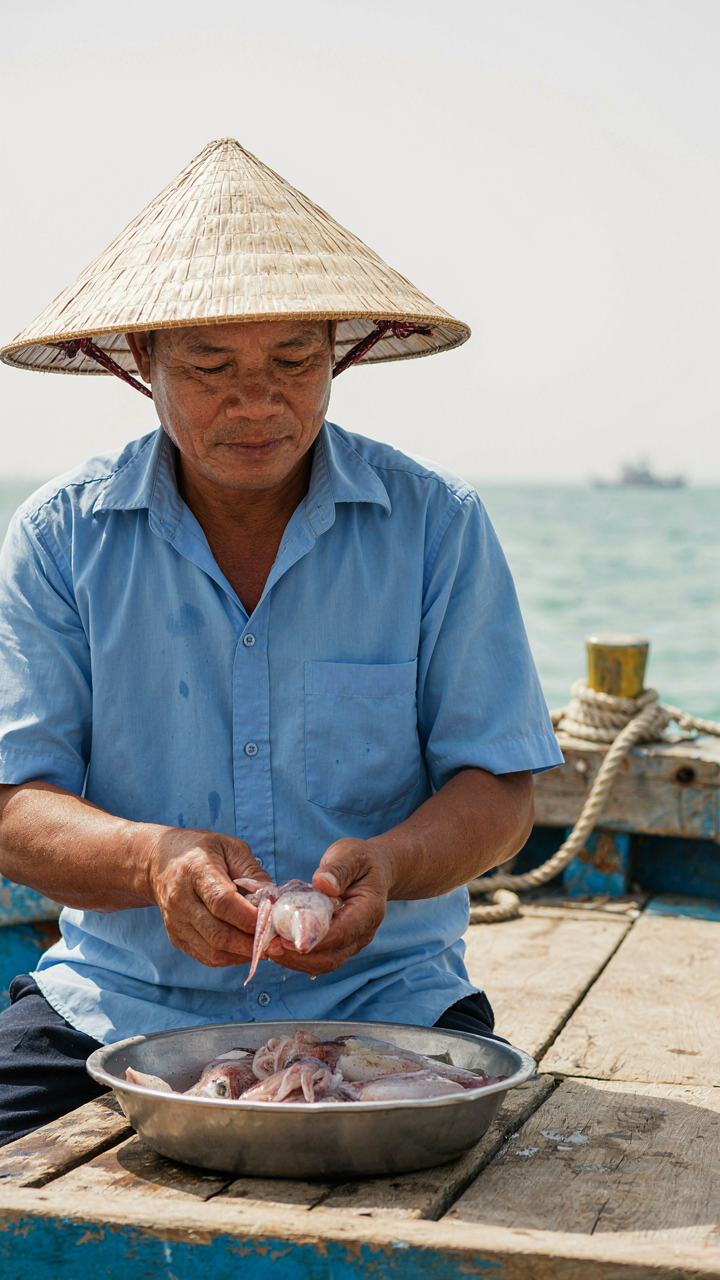
You want the story you can tell at dinner, the one that proves you went deeper than the cruise ship crowd. Here’s the mechanism: most visitors never access fishing communities because tour operators profit from keeping you separated from them. Fishermen work dawn to mid-morning, then return to floating villages. You need to hire a private longtail boat early, before 6 AM, and navigate to Cát Bà Island’s eastern side where active fishing happens. The cost runs 400,000 to 600,000 Vietnamese Dong for a half-day boat.
The interaction works because fishermen recognize transaction over tourism. Bring cash in small denominations. Watch them sort squid and grouper. Ask how long they’ve fished that area, not how they feel about tourists. Most speak minimal English, which forces you to observe instead of interrogate. This matters: observation teaches you the actual daily rhythm that tour guides compress into narrative. Spend the final hour buying fresh catch directly. They’ll cook it at a nearby floating shack for a fraction of restaurant markup.
Eating Where Locals Order
The common advice says find the restaurant with no English menu and zero tourists. That’s incomplete. Restaurants without English menus often cater to tour groups from one region, not locals. The real filter is time-of-day and repeat customers. You need to eat lunch between 11:30 AM and 1 PM at places on Cát Bà Island’s main street where the same faces show up daily. Skip the waterfront entirely. Walk inland. Fishermen’s wives run the best operations from residential streets near Cát Bà Town center.
Order by pointing or photographing other tables. The dishes rotate based on that morning’s catch. Crab with turmeric costs 80,000 to 150,000 Dong and tastes nothing like resort versions. Grilled squid stuffed with pork runs similar. You’ll pay 40 to 60 percent less than touristy spots because rent is lower and volume matters more than margin. Eat standing at a counter if tables are full. Locals do. Sit down only after you’ve watched the operation for five minutes and confirmed it’s functioning at capacity.
Logistics Decoded: How To Visit Halong Bay Vietnam With Precision

Getting From Hanoi To The Bay
You want a plan that doesn’t waste your time or money, and the real friction point is that most travelers assume Hanoi to Halong Bay is simpler than it actually is. Think of this as a supply chain problem: you need to move from point A to point B with minimal waste and maximum control over variables. Hanoi sits 165 kilometers southeast of Halong Bay. Direct routes exist, but the method you choose determines whether you arrive rested or depleted.
Most travelers use a tour operator who handles transport, but this locks you into their schedule and adds markup. The alternative is self-directed movement: hire a private driver through a hotel concierge or book a minibus through reputable services like Futa Bus or Thaco. The drive takes four to five hours depending on road conditions. Leave Hanoi early, around 6 AM, to avoid Hanoi traffic and arrive at your port with daylight remaining. Bring water and cash for tolls.
Gear Selection For Actual Conditions
You’re packing to look prepared, but what matters is matching your gear to limestone humidity and rapid weather shifts. Ha Long Bay sits in a subtropical zone where humidity stays above 80 percent and temperature swings between 15°C and 35°C depending on season. Your packing strategy should eliminate choice paralysis by matching items to actual conditions, not assumptions.
Lightweight, moisture-wicking clothing wins here because cotton holds sweat and breeds mold. Bring one waterproof layer that compresses small, not a bulky rain jacket. Wear closed-toe water shoes for limestone terrain, not sandals that slip. Apply sunscreen every two hours on the boat; reflection off limestone and water amplifies UV exposure. Store medications and phone chargers in waterproof bags before boarding. Bring cash in small denominations for crew tips, which runs between 100,000 and 200,000 VND per person for multi-day cruises.
The Halong Bay Accommodation Matrix: Where To Actually Stay

Island Stays: What You’re Really Paying For
You want the Instagram version of yourself, the one who woke up surrounded by limestone. Here’s the mechanism: island resorts charge a premium specifically because you can’t leave easily, and that isolation feels exclusive even though hundreds of other tourists paid the same premium that week. Cat Ba Island and Tuan Chau Island dominate the market. Both offer resort infrastructure—pools, restaurants, guided tours—but both trap you in a confined space with limited dining variety and inflated prices on everything consumed onsite.
The actual advantage of staying on an island isn’t romance. It’s logistical. You dock directly at your accommodation, skip the transport shuffle from Halong City port, and your boat tours depart from your backyard. The disadvantage is real: you pay 30 to 50 percent more for the same room quality you’d get onshore, and your dining and activity options narrow to what the resort controls. Island stays work if you commit to the resort’s package structure. They fail if you want flexibility or competitive pricing.
Onshore Versus Onboard: The Real Trade
Economics frames this as a capital allocation problem: onshore lodging is variable cost spending, onboard is fixed cost spending. Onshore hotels cluster in Halong City give you pricing competition, restaurant variety, and the option to book tours à la carte with different operators. Onboard stays—cruise ships and floating hotels—bundle everything: meals, cabin, tour guide, activities. You eliminate haggling but sacrifice negotiating power.
Onboard stays appeal to travelers who want simplicity and social structure. You share meals with other passengers, follow a preset itinerary, and never renegotiate. Onshore stays appeal to people who want control and cost efficiency. Most travelers underestimate how much they’ll value autonomy once they arrive. Pick onboard if you travel solo or want the social aspect. Pick onshore if you value walking to five different restaurants at 7 PM and choosing based on mood and crowd size.
Budget Arbitrage: Maximizing Value In Ha Long Bay

The Real Price Of Tours
You want to feel like you got a deal. That’s the real reason you’re reading this. The mechanism at work is anchoring: tour operators quote inflated prices first, you negotiate down, both parties feel satisfied. The anchor is arbitrary, but it sticks.
Most Ha Long Bay tours operate on thin margins. Operators know Western tourists expect negotiation. Prices listed online or at hotel desks are starting points, not final offers. The actual cost structure is simple: fuel, staff wages, and boat maintenance. Everything else is negotiation space. Your leverage exists because tours compete heavily for the same customer base, especially during shoulder seasons.
- Book directly with operators, not hotels: Hotels add 20-30% markup. Walk to the harbor, talk to boat captains. They’ll quote lower rates immediately and pocket the difference themselves.
- Compare multiple operators on the same day: Get quotes from three different boats before committing. Operators know you’ll shop around. Price variation is high because standardization is low.
- Negotiate during low-season months: May through August brings fewer tourists. Boat owners need cash flow more than margin. Your negotiating position strengthens when occupancy drops.
- Bundle services into one conversation: Food, overnight stay, activity guides, and transfers. Package deals are easier to discount than itemized services. Operators have more flexibility when bundling.
- Ask about group discounts explicitly: Even a party of three or four triggers group rates. Operators structure pricing this way to move volume. Make them state the group threshold upfront.
The real win isn’t the percentage off the asking price. It’s avoiding the premium markup that hotels and tourist agencies impose. Tour operators have thin margins because there are too many operators. Their goal is to fill boats. You’re the inventory problem they need to solve.
Where Money Actually Disappears
People think Ha Long Bay is cheap because Vietnam is cheap. It’s not. You’ll spend 40-60% more per day in the bay than in Hanoi because you’re buying a captive experience. Once you’re on water, you can’t shop elsewhere.
The financial pitfalls are predictable: paying for activities not included in your tour price, buying overpriced food on the boat, tipping heavily because you feel obligated, and booking premium cabins when standard ones are identical. The first major leak is activity fees. Tours quote a base price, then charge separately for kayaking, cave visits, or swimming stops. Ask for the full itemized cost upfront, including every activity. The second leak is food markup. Boats charge 2-3x Hanoi restaurant prices for seafood and drinks. Bring snacks and water from Halong City. The third leak is tipping culture. Vietnamese staff expect tips, but the amount matters less than consistency. Tip once at the end of the tour, not repeatedly throughout. The fourth leak is cabin upgrades. Deluxe cabins have identical layouts to standard ones. The upgrade covers linens and marginally better views. Save the money.
The Vietnam Travel Guide To Bay Etiquette: Unwritten Rules

Respecting Local Customs And Traditions
You want to feel like an insider, not a tourist who breaks things. The mechanism is simple: locals notice what you do before they notice who you are, and their treatment of you shifts accordingly. On boats and in villages around Ha Long, three behaviors mark you as someone paying attention. Never point at people or monks with one finger. Use your whole hand, palm up. Don’t touch someone’s head or pass objects over it. These aren’t quaint superstitions—they’re embedded in Vietnamese Buddhist practice, and violating them reads as contempt, not ignorance.
Photography requires explicit permission in temple spaces and around working fishermen. Many guides will ask for you, but the real move is asking directly yourself. Dress modestly when visiting religious sites—shoulders covered, knees covered. This costs nothing and signals respect. When boarding tour boats, remove shoes before entering the cabin unless the crew signals otherwise. Watch what locals do and mirror it exactly. The Vietnamese don’t announce their expectations; they demonstrate them and judge you based on whether you absorbed the signal.
Sustainable Tourism Practices For Ha Long
The common advice here is worthless: “just be mindful” and “leave no trace.” That’s not actionable and ignores the real problem—Ha Long Bay’s carrying capacity is already exceeded. Think in terms of resource depletion: every visitor consumes limestone erosion, fuel combustion, and waste management. Your actual job is reducing your friction on these three vectors, not feeling good about your choices.
Concrete steps: take a tour operator certified by the Vietnam National Administration of Tourism. They have dock allocation limits and enforce them. Bring your own water bottle and refill it—the bay doesn’t need more plastic bottles in its water. Don’t buy shells, corals, or wildlife souvenirs. Don’t feed fish or monkeys. These creatures lose natural foraging instincts and become dependent on tourist food, which destabilizes the ecosystem. Request your boat operator use shore excursions to fewer, more established sites rather than pushing toward isolated beaches. The money you save on cheap operators gets redirected to environmental degradation you’ll never see until it’s permanent.
Halong Bay: From Spectator To Strategist

Build Your Own Pattern Recognition System
You want this section because you’re tired of following tourist scripts and looking for permission to trust your own judgment. The mechanism is simple: most visitors to Ha Long Bay treat exploration as passive consumption, moving through predetermined stops without building a mental model of how the landscape actually works. The limestone karst formations follow geological logic. The cave systems reveal themselves through water flow and erosion patterns. The fishing villages cluster where currents deliver resources. Learning to see these patterns transforms you from someone who takes photos to someone who understands what you’re looking at.
Start by studying the bay’s geography before arrival. Trace the water routes between limestone peaks on a map. Notice how tourist boats cluster around three main areas while vast sections remain empty. Identify which villages sit on major waterways versus which ones the guides rarely mention. This framework costs nothing but attention. When you arrive, you’re no longer following a guide’s narrative. You’re testing hypotheses you built yourself. You spot the fishing nets positioned at specific tidal points. You notice which caves flood at certain times. You understand why certain viewpoints exist in certain locations. This is how you move from spectator to strategist in any landscape.
Apply Competitive Intelligence To Your Visit
Military strategists analyze terrain by identifying chokepoints, supply lines, and positions of advantage. Apply that framework to visiting Ha Long Bay Vietnam: your chokepoints are timing and boat logistics, your supply lines are information sources, and your positions of advantage are knowledge gaps nobody else fills. Most travelers book cruises through travel agencies that push identical itineraries. They arrive at the same caves, eat at the same restaurants, photograph the same viewpoints. The real leverage sits in the information asymmetry. Research which boat operators actually maintain their vessels versus which ones cut corners. Find which caves open only during specific weather windows. Identify which fishing villages welcome genuine visitors versus performing for tourists.
Gather intelligence like a strategist would: talk to local operators directly, not travel agency middlemen. Ask them where they actually take their families, not where commission structures send groups. Request recent photos of caves and beaches from different seasons, not marketing materials. Cross-reference multiple sources on tide schedules and seasonal closures. Visit Ha Long Bay during shoulder seasons when crowds thin and operators reveal their actual capabilities. Document what you learn so the next trip compounds your knowledge. The mechanism is asymmetric information converted into tactical advantage through systematic reconnaissance before you arrive.
Your Greatest Obstacle In Ha Long Bay Isn’t Logistics, It’s Your Desire For Passive Consumption

Most travelers visit Ha Long Bay to check a box. They sit on a boat, snap photos, then scroll through their phones while limestone cliffs rise around them. You won’t remember that trip. The real experience happens when you stop consuming the scenery and start interrogating it. Ask your guide about the fishermen. Swim in the water at sunset instead of watching from the deck. Talk to locals in villages. Your obstacle isn’t finding Ha Long Bay. It’s choosing to actually show up when you get there.