
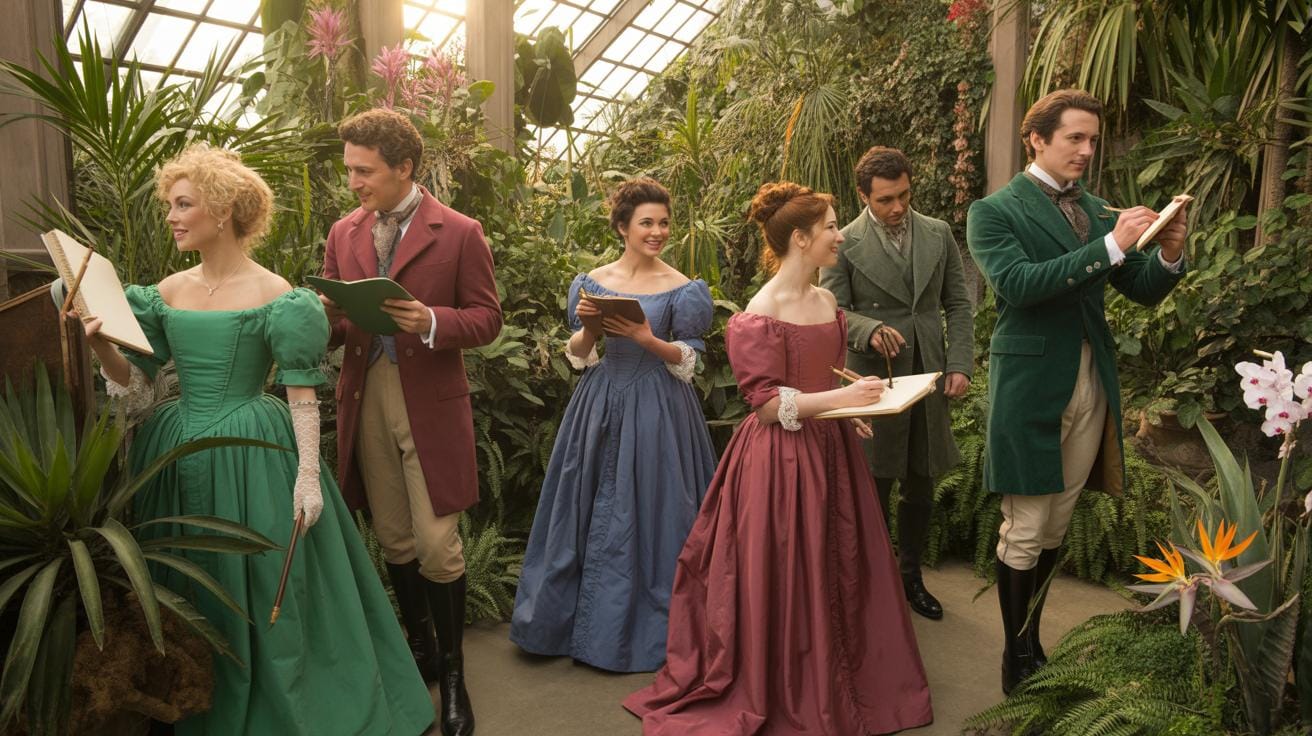
The Golden Age Of Victorian Plant Hunting An Overview
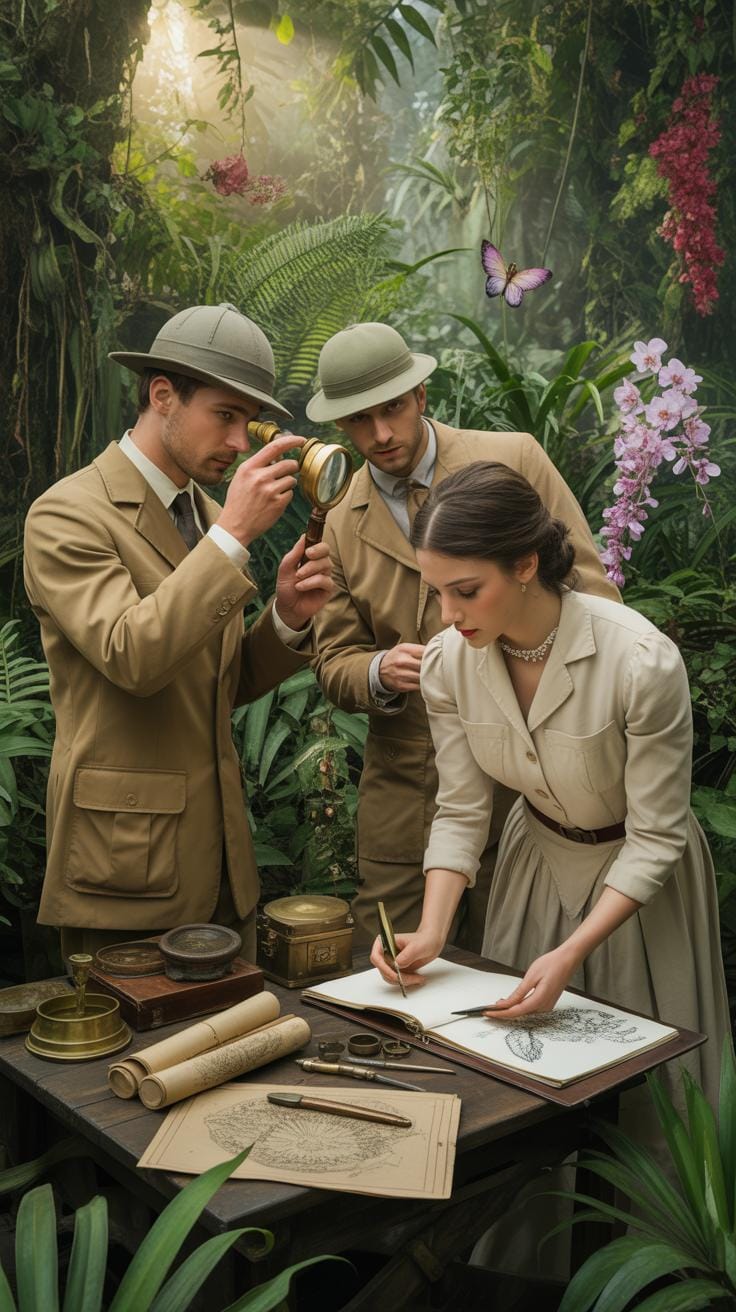
The Rise Of The Professional Plant Hunter
The nineteenth century witnessed an unprecedented transformation in botanical exploration as industrial expansion and maritime advancement created unprecedented opportunities for scientific discovery. Victorian plant hunting evolved from gentlemanly pursuits into organized, commercially-driven expeditions sponsored by wealthy patrons, botanical institutions, and nurseries seeking novel specimens. These professional plant hunters ventured into remote jungles, mountains, and deserts across Asia, Africa, South America, and the Pacific Islands. Their expeditions combined scientific rigor with genuine peril, navigating treacherous terrain while documenting unfamiliar flora. The professionalization of Victorian plant hunting turned exploration into a respected vocation, attracting adventurous botanists who became celebrated figures in their era.

These intrepid explorers faced extraordinary challenges including disease, hostile environments, and the logistical nightmare of preserving delicate specimens during months-long voyages home. Plant hunters developed sophisticated techniques for transporting living plants across oceans, utilizing specially designed Wardian cases that revolutionized specimen transport. Their discoveries fundamentally expanded European understanding of global plant diversity, introducing thousands of species previously unknown to Western cultivation. Many Victorian plant hunters published detailed accounts of their expeditions, becoming literary celebrities whose adventures captivated armchair gardeners. Their contributions established the foundation for modern botany and horticulture.
Societal Status And Botanical Collecting
Exotic plant ownership became a powerful symbol of wealth, refinement, and cosmopolitan sophistication among Victorian aristocracy and upper-middle classes. Possessing rare botanical specimens demonstrated both financial resources and access to exclusive collecting networks, establishing horticultural display as a crucial status marker. Elaborate greenhouses and conservatories became architectural statements on country estates, showcasing remarkable plant collections to envious peers. Victorian plant hunting directly supplied this insatiable demand for novelty and rarity among the social elite. Orchids, ferns, palms, and tropical flowering plants commanded astronomical prices, making serious collectors into patrons who sponsored major expeditions.

The competitive nature of botanical collecting among Victorian high society created dynamic markets and prestige hierarchies based on specimen rarity and quality. Gardeners and estate owners cultivated reputations through their horticultural achievements, with plant collections rivaling art collections in perceived cultural importance. Entertaining visitors through garden tours became essential social entertainment, allowing hosts to display their refined taste and extensive resources. This culture of botanical aspiration transformed Victorian plant hunting from mere hobby into serious enterprise, establishing standards of excellence that influenced garden design and horticultural practice for generations.
section-divider
Essential Tools Of The Trade The Wardian Case And Beyond
Nathaniel Bagshaw Ward And His Revolution
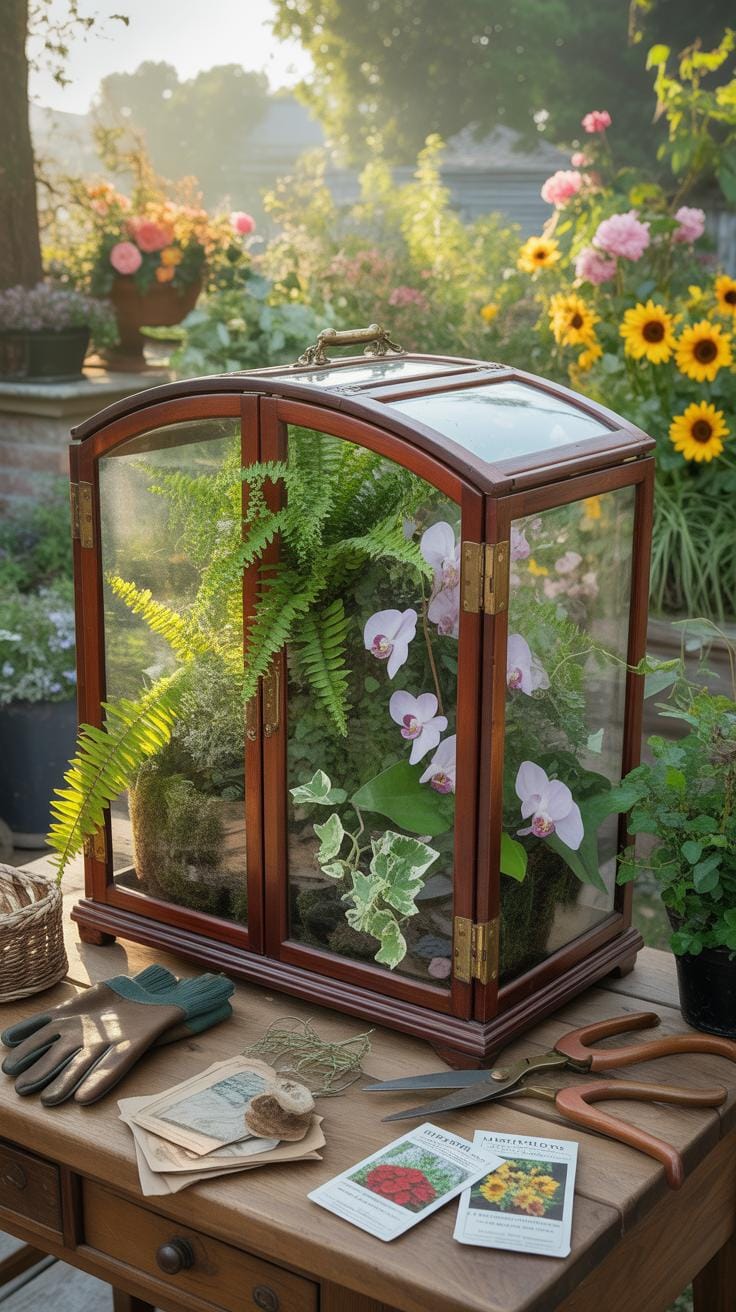
In the 1820s, Nathaniel Bagshaw Ward, a London physician and plant enthusiast, made a discovery that would transform Victorian plant hunting forever. Observing a fern sprouting within a sealed glass bottle, Ward recognized the potential of creating a self-contained environment for plant transportation. His invention, patented in 1829, became known as the Wardian case—essentially a miniature greenhouse with glass panels and a wooden frame. This ingenious terrarium dramatically increased survival rates for delicate botanical specimens during lengthy ocean voyages, revolutionizing how plants traveled from remote expeditions to European collections.
The Wardian case became indispensable to Victorian plant hunting expeditions across continents. Collectors could now safely transport orchids from tropical rainforests, tender ferns from exotic islands, and rare flowering plants without exposing them to salt spray, temperature fluctuations, or depleted moisture. The sealed environment maintained consistent humidity and temperature, creating what botanists termed a “plant’s traveling companion.” By the mid-nineteenth century, these glass cases were standard equipment aboard vessels, enabling the unprecedented global plant trade that fed Victorian society’s insatiable appetite for exotic botanical specimens and ornamental indoor gardens.
Keeping A Field Journal In The Wilds
Victorian plant hunters understood that careful documentation was as valuable as the specimens themselves. Field journals became meticulous records of discovery, containing detailed written observations about habitat, growing conditions, soil composition, and plant behavior in native environments. Collectors sketched botanical illustrations with remarkable precision, capturing leaf formations, flower structures, and growth patterns. Many pressed actual flowers and leaves directly into their journals, creating pressed botanical specimens that preserved color and form for later study. These journals transformed raw exploration into scientific knowledge, enabling horticulturists back home to successfully cultivate newfound plants.
The discipline of maintaining comprehensive field documentation required dedication and skill during arduous expeditions through challenging terrain and climates. Plant hunters carried specialized materials including waterproof notebooks, botanical presses with blotting paper, pencils, and fine brushes for detailed artwork. These journals served multiple purposes: scientific records for botanical institutions, personal memoirs of discovery, and practical guides for future collectors. The meticulous nature of Victorian plant hunting documentation meant that even specimens that perished during transport could contribute valuable information through detailed illustrations and written descriptions, cementing their place in horticultural history and scientific understanding.
Iconic Figures Famous Explorers Of The Victorian Era
David Douglas And The Search For Conifers
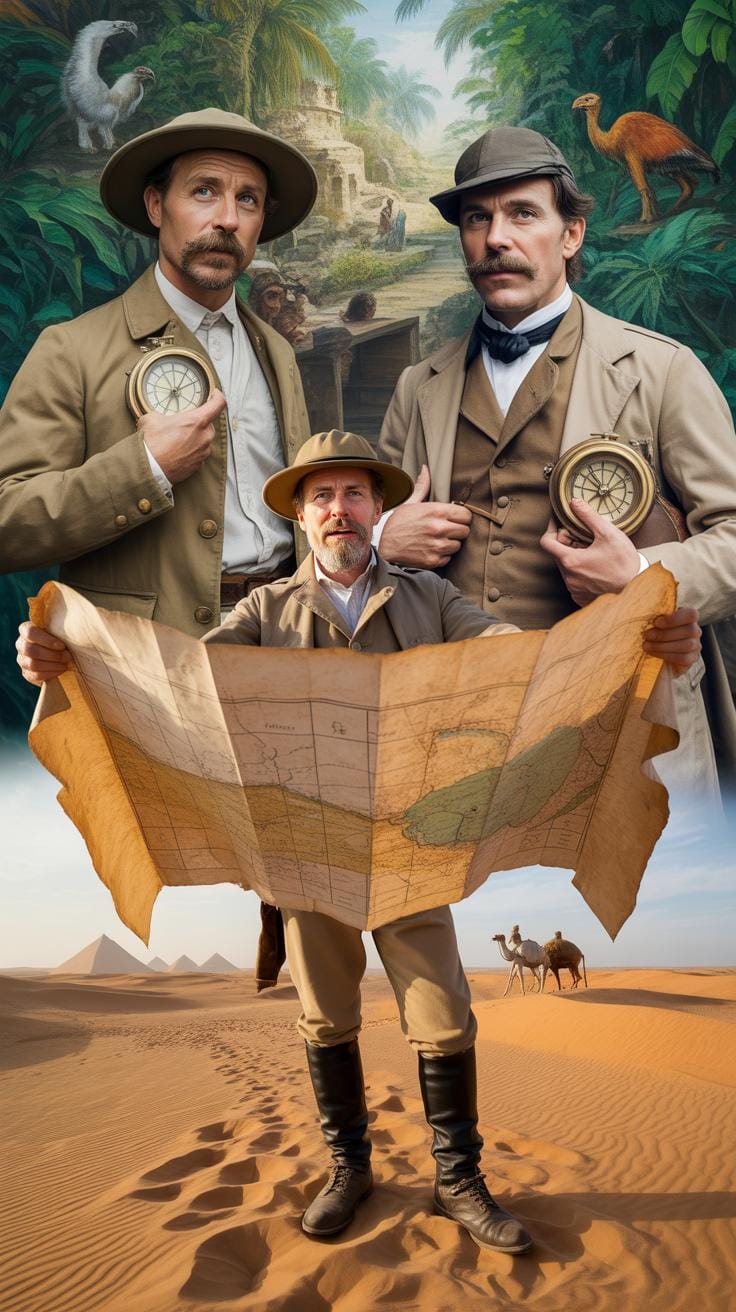
David Douglas, a Scottish botanist and explorer, fundamentally transformed Victorian plant hunting through his expeditions across North America. Between 1823 and 1834, Douglas traveled extensively through the Pacific Northwest, collecting specimens that would revolutionize British gardens and landscapes. His meticulous journaling documented thousands of plant species, establishing him as one of the era’s most prolific botanical collectors. The specimens he gathered became treasured additions to Victorian estates, introducing exotic beauty to the British landscape.
Douglas’s most celebrated discovery was the Douglas fir, a towering conifer that bears his name to this day. Beyond this iconic tree, he introduced numerous ornamental plants including flowering currants, lupines, and vibrant manzanita species. His collections arrived in Britain via ship, carefully preserved for the journey across treacherous seas. Victorian gardeners eagerly cultivated these North American treasures, and Douglas’s contributions established new standards for botanical exploration. His legacy demonstrated how systematic Victorian plant hunting could connect distant continents through living specimens and careful scientific documentation.
Robert Fortune And The Great Tea Heist
Robert Fortune’s expeditions between 1843 and 1859 represent one of Victorian plant hunting’s most dramatic chapters, combining botanical expertise with espionage-like adventure. The British government and East India Company commissioned Fortune to penetrate China’s interior and acquire tea plant specimens, breaking the Chinese monopoly. Disguising himself in Chinese clothing and adopting local customs, Fortune navigated dangerous territories while collecting seeds and plants. His bold strategy involved establishing nurseries in China and carefully shipping specimens to India, fundamentally altering global tea production.
Fortune’s work transformed India’s tea industry by successfully cultivating Chinese tea plants in Darjeeling and Assam, creating the foundation for India’s celebrated tea heritage. His journals documented not only botanical details but also cultural observations and the considerable dangers he faced during his missions. The specimens he procured were meticulously preserved, representing years of careful horticultural development. Fortune’s achievements exemplified how Victorian plant hunting extended beyond aesthetic pursuits into commercial and geopolitical spheres, demonstrating the era’s intersection of scientific discovery, imperial ambition, and botanical passion.
The Perils Of The Expedition Risks And Rewards

Navigating Hostile Terrain And Unknown Climates
Victorian plant hunting expeditions ventured into genuinely perilous landscapes where European explorers faced unfamiliar tropical diseases, treacherous mountain passes, and unpredictable weather systems. Malaria, dengue fever, and yellow fever claimed numerous collectors who pursued rare specimens in equatorial regions. The physical toll extended beyond illness—exhaustion from hacking through dense jungle vegetation, altitude sickness in mountainous terrain, and the constant threat of dangerous wildlife made every expedition a test of human endurance and determination.
The remote locations that harbored the most coveted botanical specimens demanded extraordinary resilience from Victorian plant hunters. Porters and local guides were essential to navigating uncharted territories, yet communication barriers and unfamiliar ecosystems created constant uncertainty. Many collectors documented their struggles through journals and letters, revealing the psychological strain of isolation combined with physical hardship. Despite these formidable obstacles, the promise of discovering extraordinary plants drove adventurers to accept risks that would seem unconscionable by modern standards.
The High Financial Stakes For Botanical Backers
Wealthy aristocrats and commercial nurseries invested substantial fortunes into Victorian plant hunting expeditions, expecting exclusive rights to newly discovered species in return. These financial arrangements represented enormous gambles—many voyages failed entirely, with collectors lost to disease or unable to transport living specimens home. Nursery owners like those operating prestigious establishments across England competed fiercely for access to exotic plants, as successful introductions commanded premium prices among elite gardeners and collectors seeking to distinguish their estates.
The economic model of Victorian plant hunting created a complex web of patronage, risk, and reward that shaped horticultural history. Sponsors demanded documented proof of discovery and often required hunters to remain under contract for extended periods in remote locations. Successful expeditions yielded remarkable returns, as rare species became status symbols among the Victorian upper classes. This financial framework, while occasionally exploitative, ultimately funded the exploration that brought countless botanical treasures from distant continents into European gardens, transforming Victorian horticulture forever.
Documenting Flora In The Regency Style Art Meets Science
The Tradition Of Botanical Illustration
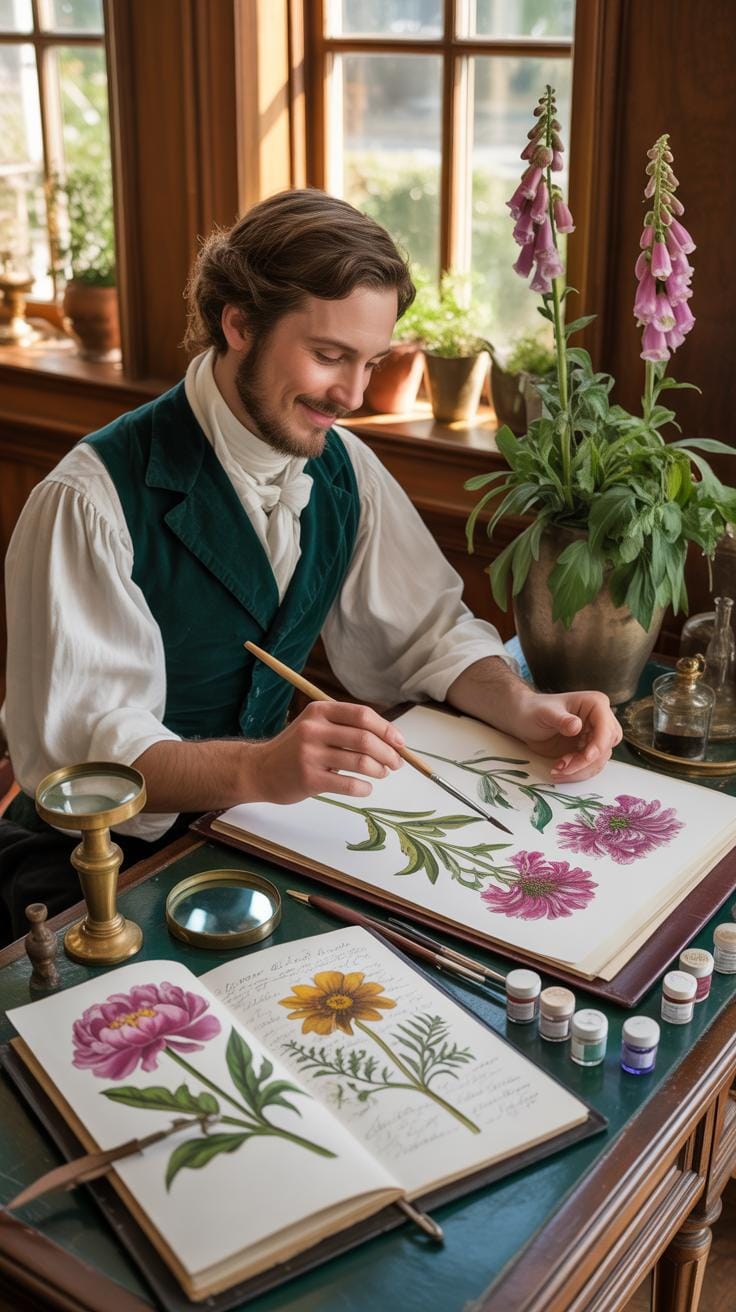
Victorian plant hunting expeditions relied entirely upon hand-drawn botanical illustrations, as photography remained impractical for field documentation. Artists accompanying plant hunters developed extraordinary precision, capturing minute details of leaves, stamens, and root structures with meticulous accuracy. These sketches served scientific purposes, enabling specimens to be identified, catalogued, and studied by botanists who never left their institutions. The tradition demanded intimate observation—hunters spent hours examining each plant’s characteristics, understanding that their drawings would become the permanent record of discovery.
The techniques employed in Victorian botanical illustration combined artistic skill with scientific rigor. Illustrators used watercolors, pen and ink, and graphite pencils to create layered, detailed renderings. Their work established visual standards that allowed specimens to be recognized across continents and contributed to botanical taxonomy. These illustrations transformed Victorian plant hunting from mere collection into legitimate scientific endeavor, with artists serving as essential partners to explorers and naturalists seeking to expand European understanding of global flora.
Writing Elegance: Sentimentality In Journaling
Victorian plant hunters infused their field journals with Romantic-era sensibilities, blending scientific observation with deeply personal reflection and poetic language. Entries described not merely botanical facts but emotional responses to discoveries—the wonder of encountering rare species in remote landscapes, the hardship of expeditions, and philosophical musings on nature’s mysteries. This approach distinguished Victorian plant hunting documentation from purely clinical records. Hunters viewed their journals as literary works deserving elegance and emotional authenticity alongside factual accuracy.
The journaling style reflected Victorian culture’s reverence for sentiment and nature study as moral pursuits. Plant hunters employed metaphorical language, referenced classical literature, and recorded their expeditions as spiritual journeys of enlightenment. Margins filled with pressed flowers, sketches, and handwritten annotations created intimate documents merging art, science, and autobiography. These journals captured the essence of the Victorian era’s fascination with botanical knowledge, presenting plant hunting not as commercial enterprise but as romantic quest for understanding Earth’s botanical treasures and humanity’s place within nature’s grand design.
Flora Favorites Popular Plants Introduced To Britain
Orchid Delirium: The Victorian Obsession
The Victorian era witnessed an unprecedented fervor for orchids, a phenomenon known as Orchidomania that gripped British society with remarkable intensity. Wealthy collectors and botanical enthusiasts pursued rare tropical orchids with single-minded determination, commissioning expensive expeditions to remote corners of the globe. Victorian plant hunting became synonymous with orchid acquisition, as prestigious estates competed to display the most exotic specimens in their conservatories and greenhouses.
Plant hunters braved treacherous jungle conditions, disease, and political instability to secure prized orchid specimens for their patrons back home. The lengths these adventurers traveled reflected the extraordinary value placed on orchids—some specimens commanded prices equivalent to small houses. Orchid shows became fashionable social events where collectors displayed their treasures, and successful Victorian plant hunting expeditions often centered entirely on locating undiscovered orchid species:
- Cattleyas, prized for their large, showy blooms
- Paphiopedilums, exotic Lady’s Slipper varieties
- Dendrobiums, delicate and intricately patterned
- Odontoglossums, known for their fragrant flowers
- Phalaenopsis, the elegant Moth Orchids
The orchid craze reflected deeper Victorian values: the pursuit of rare beauty, the desire to dominate nature, and the status associated with horticultural exclusivity. Collectors invested fortunes in specialized orchid houses with precisely controlled temperature and humidity, transforming their estates into botanical laboratories dedicated to these demanding plants.
Rhododendrons And The Transformation Of English Estates
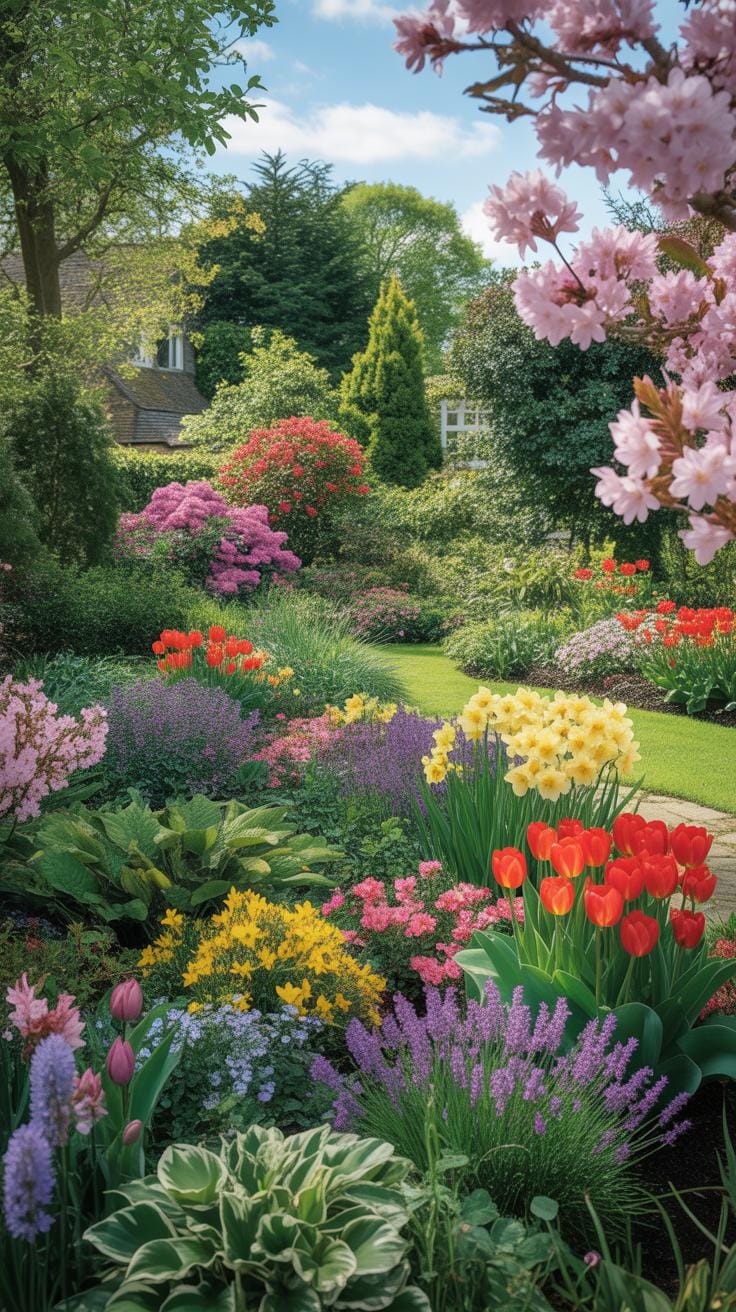
Joseph Hooker’s legendary expeditions to the Himalayas during the mid-nineteenth century fundamentally altered the British landscape by introducing hundreds of rhododendron species. His plant hunting ventures yielded specimens with vibrant crimson, pink, purple, and white flowers previously unseen in British gardens. These discoveries sparked a rhododendron renaissance, as Victorian plant hunting shifted focus toward these magnificent flowering shrubs that could transform entire estates into spectacular displays.
Rhododendrons proved better suited to British climate conditions than many tropical specimens, flourishing in the acidic soils of established estates and woodlands. Gardeners discovered these plants created dramatic seasonal spectacles when planted en masse, leading to the development of extensive rhododendron collections throughout England. Victorian plant hunting achievements in the Himalayan regions provided the botanical material that reshaped the aesthetic character of countless country house gardens, establishing rhododendrons as essential features of the British horticultural landscape for generations to come.
The Influence On Landscape Design And Architecture
Building Glass Cathedrals: The Crystal Palace Era
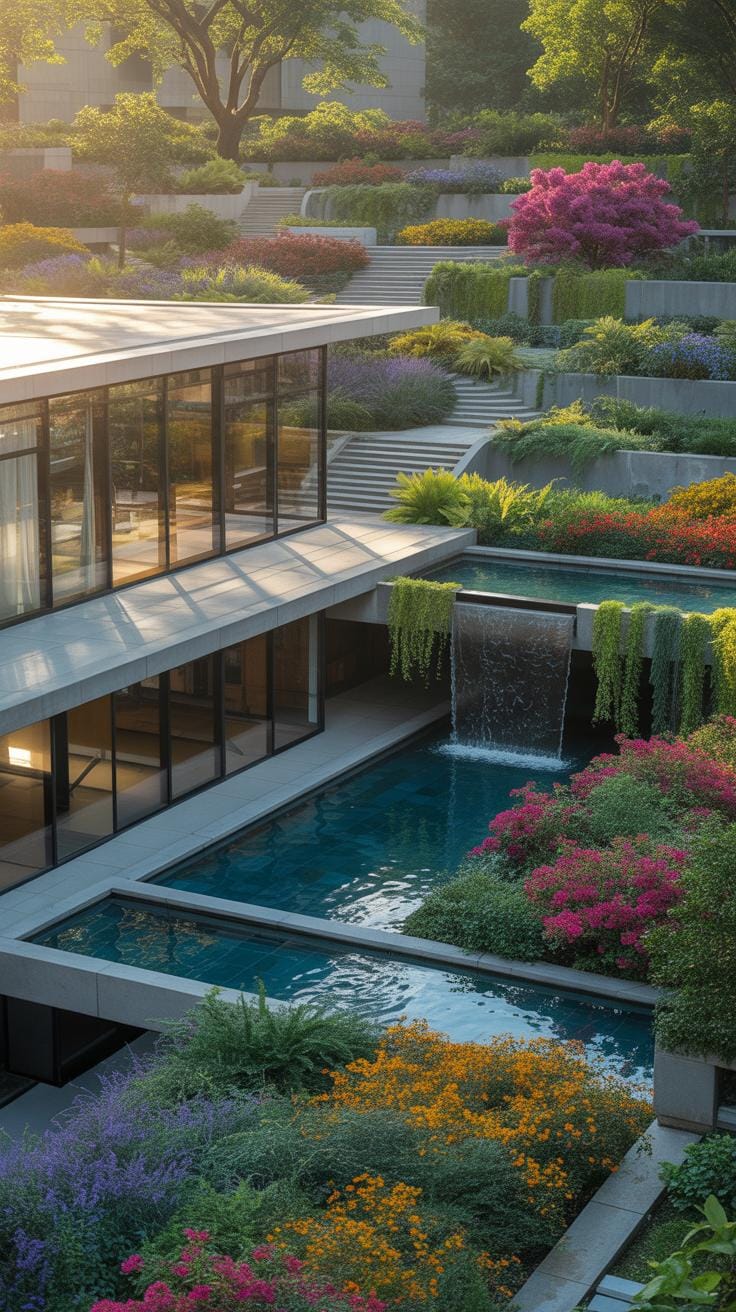
The unprecedented botanical treasures brought home by Victorian plant hunting expeditions transformed domestic and public architecture throughout the nineteenth century. Wealthy collectors and institutions required specially designed structures to protect tender tropical and subtropical specimens from harsh British climates. The development of superior glass-manufacturing techniques, combined with advances in iron framework construction, made ambitious horticultural buildings feasible and economically viable for the first time.
The Crystal Palace, erected for the Great Exhibition of 1851, symbolized this architectural revolution and showcased exotic plants collected from across the globe. Following its success, elaborate conservatories and winter gardens proliferated among estates and public institutions. These glass structures became status symbols, demonstrating wealth, sophistication, and access to rare botanical specimens. Victorian plant hunting directly inspired architectural innovation, creating stunning spaces where exotic flora could flourish and be admired year-round by appreciative audiences seeking horticultural wonders.
In the whisper of ancient fronds and the ink of forgotten journals, let us wander once more through Victorian wilds, where every petal tells a tale of discovery and delight.
The Development Of The National Arboretum At Westonbirt
The Holford family’s passion for dendrology transformed their Gloucestershire estate into Britain’s most comprehensive tree collection during the Victorian era. Robert Holford began systematically acquiring and cultivating rare tree species in the mid-nineteenth century, establishing Westonbirt as a living museum of arboricultural excellence. His meticulous approach to specimen collection and landscape arrangement reflected broader trends in Victorian plant hunting, where systematic organization complemented aesthetic appreciation of natural forms and botanical diversity.
By the late Victorian period, Westonbirt exemplified the professionalization of landscape design and arboricultural practice. The estate’s layout demonstrated sophisticated horticultural knowledge, with trees grouped by geographic origin and botanical family to create educational yet beautiful spaces. The Holford legacy established standards for public and private arboreta throughout Britain, influencing how Victorian plant hunting collections were preserved and displayed for scientific study and public enjoyment beyond individual collectors’ lifetimes.
Ethical Considerations And The Legacy Of Colonialism

The Impact On Indigenous Ecosystems
Victorian plant hunting expeditions, while celebrated as botanical triumphs, fundamentally altered the landscapes and cultures of colonized regions. Plant collectors operated within imperial frameworks, extracting specimens from native territories without consideration for indigenous knowledge systems or ecological balance. Rare orchids, rhododendrons, and ferns were removed from their natural habitats, disrupting delicate ecosystems and severing traditional relationships between local communities and their botanical heritage. The Victorian appetite for exotic specimens drove aggressive collection practices that prioritized Western gardens over environmental sustainability and indigenous rights.
The consequences of this colonial plant hunting extended far beyond aesthetic considerations. Native populations lost access to medicinal plants, food sources, and spiritually significant species that had sustained their cultures for generations. Entire plant populations faced decimation as Victorian collectors competed ruthlessly for the rarest specimens. Communities in tropical regions particularly suffered as biodiverse forests were systematically stripped of their botanical treasures. The legacy of this extraction remains visible today in debates surrounding biopiracy, traditional knowledge rights, and the distribution of resources from biodiversity-rich nations to Western institutions.
Modern Conservation Vs Historical Collection
Contemporary botanical gardens have fundamentally reimagined their missions, transitioning from repositories of imperial conquest to centers dedicated to conservation and scientific research. While Victorian plant hunting aimed at accumulating specimens for display and prestige, modern institutions focus on preserving endangered species, protecting genetic diversity, and supporting ecosystem restoration. DNA research, seed banking, and collaborative repatriation programs reflect a commitment to rectifying historical injustices and acknowledging indigenous expertise in plant stewardship.
Today’s botanical gardens recognize their responsibility to the source countries and communities whose territories were once raided for specimens. Many institutions now prioritize:
- Collaborative research partnerships with indigenous communities and local scientists
- Repatriation of plant specimens and associated knowledge to origin countries
- Support for habitat protection in biodiversity hotspots worldwide
- Documentation of traditional uses and ecological significance of plants
- Equitable benefit-sharing agreements for pharmaceutical and commercial applications
- Educational programs addressing colonial history and contemporary conservation ethics
This transformed approach represents a deliberate departure from the extractive practices that defined Victorian plant hunting, positioning botanical gardens as advocates for environmental justice and sustainable stewardship in the modern era.
How To Start Your Own Victorian Inspired Botanical Journal
Choosing Materials: Quality Paper And Ink
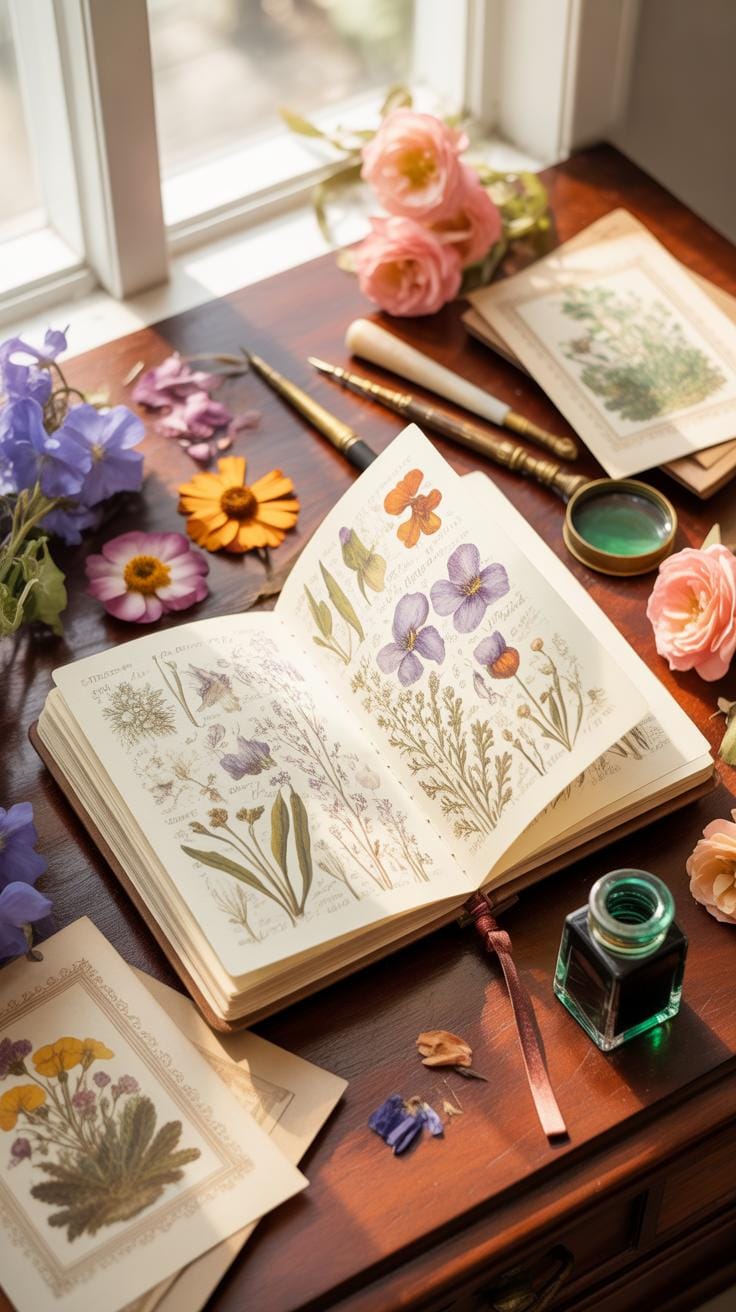
The tactile experience of Victorian plant hunting begins with selecting paper and writing instruments that honor the era’s craftsmanship. Look for journals featuring acid-free, heavyweight paper that mimics nineteenth-century ledgers, typically ranging from 90 to 140 gsm. Leather-bound volumes with marbled covers evoke authentic explorer journals, while cream or off-white pages reduce eye strain and create an heirloom quality. Quality matters tremendously; superior paper withstands repeated watercolor additions, pressed specimens, and pencil annotations that characterize genuine Victorian plant hunting documentation.
- Leather-bound journals with genuine or vegetable-tanned covers
- Acid-free paper weighing at least 100 gsm to prevent deterioration
- Watercolor-compatible pages that resist feathering and bleeding
- Ivory or cream-colored paper rather than bright white
- Hardcover construction for protection during fieldwork
Fountain pens transform documentation into a meditative practice that connects you to historical botanists and naturalists. Select pens with reliable nibs and quality ink formulations—Victorian explorers favored permanent, fade-resistant inks that endured decades of storage in tropical climates and dusty libraries. Modern fountain pen enthusiasts can replicate this experience using period-appropriate colors like sepia, prussian blue, or forest green. The deliberate pace of fountain pen writing encourages careful observation and reflection, mirroring the contemplative nature of Victorian plant hunting expeditions.
Modern Foraging And Documentation Techniques
Contemporary botanical journaling combines Victorian methodologies with accessible modern practices that deepen your connection to local flora. Begin by establishing regular observation routines in nearby parks, gardens, or woodlands, documenting seasonal changes with the same meticulous attention Victorian plant hunters applied to exotic discoveries. Sketch plant structures, note bloom timing, record soil conditions, and observe pollinator interactions. This disciplined approach transforms ordinary local environments into captivating territories worthy of the intensive study early naturalists devoted to remote tropical expeditions.
Recording techniques should balance accuracy with artistic expression, reflecting how Victorian plant hunting journals blended scientific illustration with personal narrative. Preserve pressed flowers between journal pages using archival tissue, allowing them to dry naturally over several weeks before mounting with reversible adhesive. Include detailed notes about location, collection date, local common names, and traditional uses—information Victorian collectors gathered from indigenous guides and local communities. Photography provides supplementary documentation; capture specimens in natural habitat before collection, creating a comprehensive record that honors both scientific rigor and environmental respect.
Frequently Asked Questions

What was Victorian plant hunting?
Victorian plant hunting was a thrilling era of botanical exploration during the 19th century, where adventurers like Joseph Hooker and William Lobb risked their lives trekking through remote Himalayas, Andes, and Chinese mountains to discover exotic species. They brought back orchids, rhododendrons, and ferns that transformed British gardens and fueled the era’s “Pteridomania” fern craze. This golden age of discovery shaped modern horticulture.
How can I journal a Victorian plant hunting expedition at home?
Start your Botanic Bridgerton-inspired journal by researching Victorian plant hunting routes like the Himalayas or Amazon. Sketch imagined flora, note “field observations” such as altitude and weather, and press local leaves using books and blotter paper—just like 19th-century collectors. Add sketches of your “expedition gear” like pith helmets for immersive fun.
What’s a budget way to recreate Victorian plant hunting journaling?
Dive into Victorian plant hunting journaling without spending much—use a simple notebook, free online maps of explorers’ routes, and household items like newspapers for pressing garden plants. Download public domain journals from Hooker or Fortune for inspiration. This accessible hobby brings Regency-era adventure to your desk for under $10.