
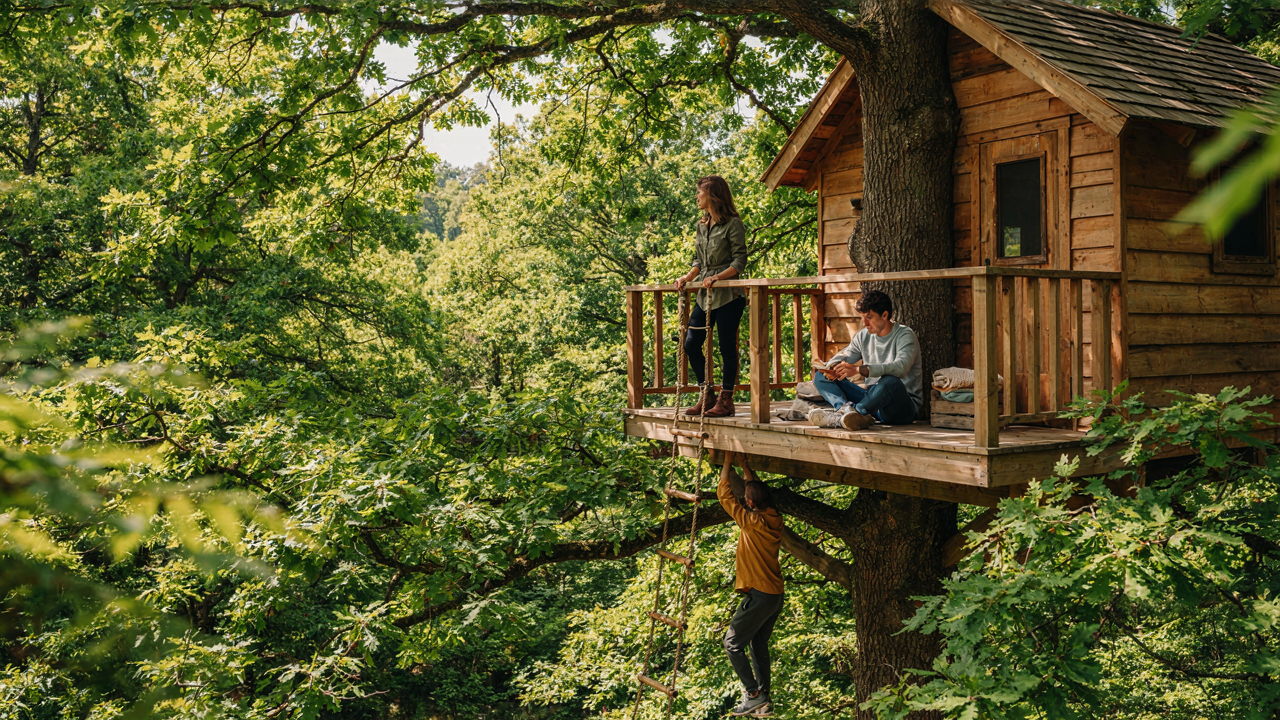
Beyond Instagram: The Strategic Advantage Of Treehouse Stays
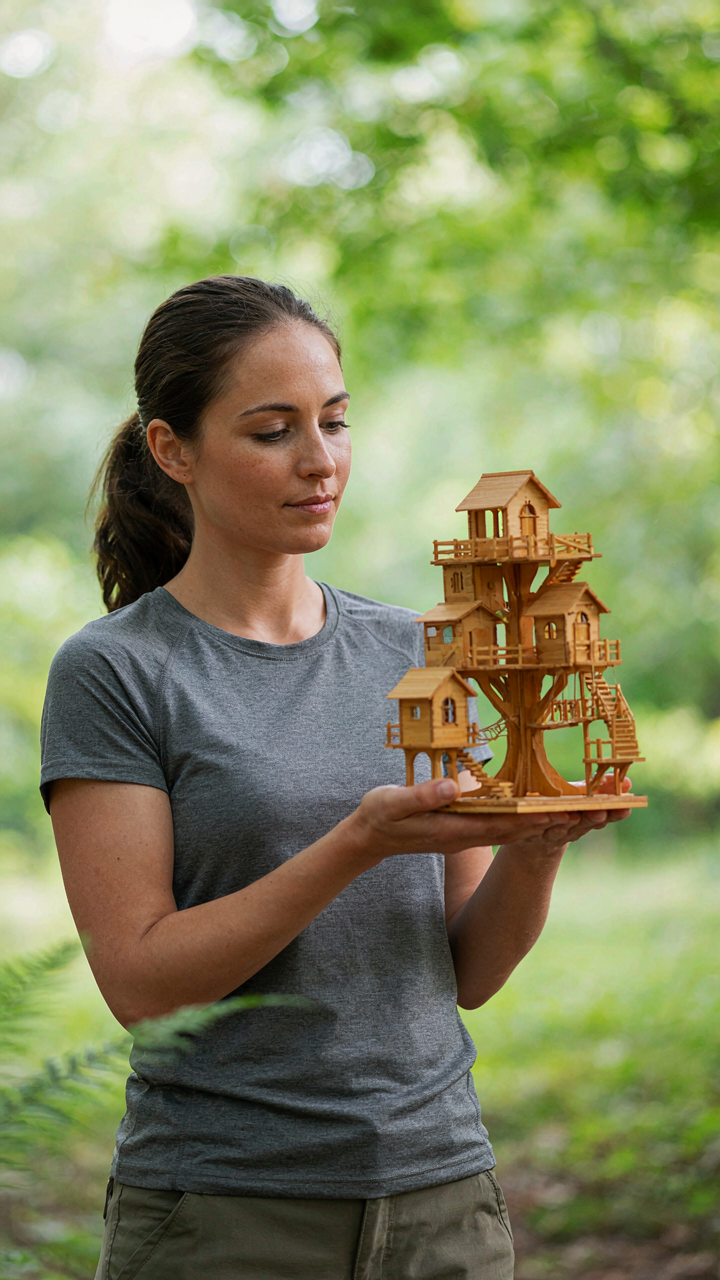
Where Friction Becomes Your Competitive Edge
You want the story more than the experience. That’s the real reason you’re reading this. A treehouse stay signals something—intentionality, access, difference—and you’re right to chase that. But the actual mechanism is friction. Neuroscience calls it “environmental load”—your brain allocates cognitive resources based on the complexity of your surroundings. A treehouse removes the familiar architecture of hotels, hallways, and standardized layouts. Your brain can’t autopilot. It has to be present.
This forced presence isn’t meditation nonsense. It’s a design constraint that rewires how you process information. No elevator hum. No hallway traffic noise bleeding through walls. No ambient anxiety from being interchangeable. The unusual geometry of a treehouse requires active attention to navigate, exist, and think. That activation state is where actual mental work happens.
Attention Recalibration Without The Noise
The common advice says “disconnect to recharge.” That’s backwards and incomplete. You don’t recharge by removing stimulation. You recharge by redirecting stimulation toward something that doesn’t exhaust you. A treehouse stay creates what behavioral psychology terms “attention restoration”—your brain gets to focus on limited, intentional inputs instead of the fragmented chaos of urban life.
Most hotels and retreats still offer the same input channels: WiFi, streaming, room service, planned activities. A treehouse forces genuine constraint. Limited cell signal isn’t a bug—it’s the mechanism. Your decision-making capacity returns because you’re not processing infinite options and notifications simultaneously. The mental bandwidth freed up during a treehouse stay isn’t spent; it accumulates. You leave with more, not less.

The “Gravity Well” Protocol: Finding Your Ideal Treehouse Airbnb

Isolation As A Force Multiplier
You want this experience to feel exclusive. That’s the real reason you’re reading this section. Here’s the mechanism: physics defines a gravity well as a region where mass creates inescapable pull. In treehouse stays, isolation functions identically. The further a structure sits from cell service, road noise, and neighbor proximity, the stronger its psychological grip becomes. Remoteness isn’t a luxury feature. It’s a multiplier that converts a night away into actual recovery.
Most Airbnb listings bury isolation metrics. They lead with photos instead of specifics: distance to nearest road, decibel readings at night, cell signal strength, human population density within one mile. None of this appears in their marketing because it requires data collection they haven’t done. Start by filtering listings using geography alone. Search for treehouses in areas with fewer than five people per square mile, positioned on private land with no through-traffic corridors. Isolation compounds every other decision you make downstream.
Immersion Requires Structural Honesty
The advice here is wrong: charm sells treehouses, but it doesn’t sustain them. A treehouse with platform swings, rope bridges, and climbing walls signals novelty, not depth. The structures that produce genuine immersion have transparent design logic. You can see why every element exists. The builder solved a specific problem: water runoff, wind exposure, weight distribution, seasonal movement.
Examine the construction method before booking. Platform treehouses anchored to single trees move differently than those spanning multiple trees. Single-anchor designs sway during wind; occupants report constant micro-adjustments to balance. Multi-tree installations remain stable. Look for listings that detail wood species, hardware specifications, and structural rationale. Ask the host how the build handles freeze-thaw cycles if you’re visiting in transitional seasons. Immersion deepens when you understand what you’re inside, not when it surprises you.
Luxury Treehouse Stay Vs. Rustic: Decoding Your True Needs
What You Actually Want Versus What You Think You Want
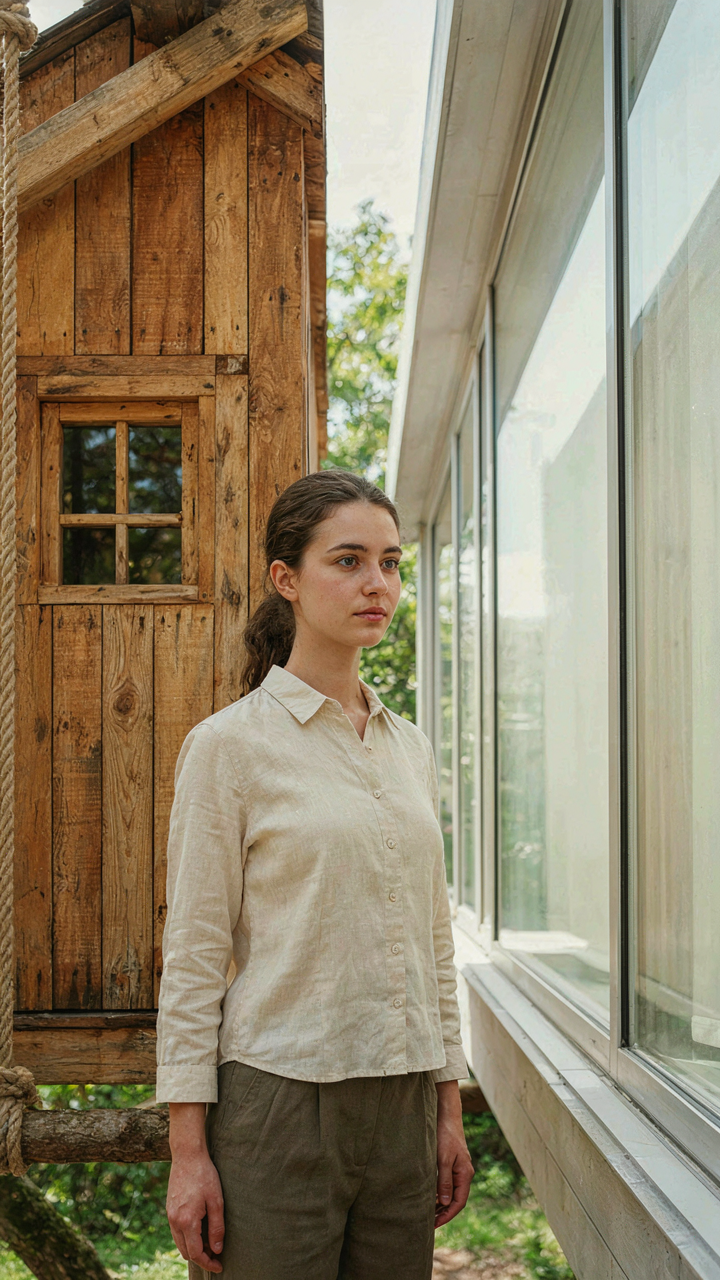
You’re worried you’ll look cheap if you book a rustic treehouse, or bored if you book a luxury one. Here’s the mechanism: your choice isn’t about comfort—it’s about identity performance. The real question isn’t luxury versus rustic. It’s whether you need the stay to prove something to others or to prove something to yourself. Luxury treehouses offer zero additional tree experience. They offer signal. Rustic ones offer no less tree experience. They offer authenticity points. Most people chase whichever story they’re currently selling.
Strip away the status layer and you’re left with one axis: how much infrastructure do you tolerate before the novelty collapses? Some people need hot water and cell service or the experience feels like punishment, not adventure. Others need absence of those things or it feels like a hotel with bad WiFi. The gap between these two types is not small. It determines everything downstream—what you’ll actually use, what you’ll recommend, and whether you’ll return. Your comfort threshold isn’t about weakness. It’s about matching the environment to your nervous system’s actual requirements, not your Instagram requirements.
Essentialism In Trees Means Removing The Wrong Things
Essentialism borrows from design thinking: remove everything except what creates the core value. In treehouse stays, most people remove the wrong elements. They strip out amenities when they should be stripping out distractions. A luxury treehouse with poor insulation and a view of a parking lot is worse than a rustic treehouse with exceptional privacy and silence. The removal strategy matters more than the removal count.
Real essentialism here means identifying the one or two sensations you came for—isolation, height, canopy immersion, novelty—then keeping only the infrastructure that doesn’t kill those sensations. A hot shower doesn’t kill them. A smartphone signal does. A bed frame doesn’t kill them. Air conditioning that hums constantly does. The mechanism is simple: ask yourself what removes friction from the core experience versus what removes the core experience itself. Then build backward from there. Your booking decision should live on that distinction, not on whether the place costs 80 dollars or 300.
The Eco Friendly Treehouse Accommodation Conundrum: Greenwashing Vs. Genuineness
How To Spot Real Sustainability From Marketing Ploys
You want to believe your treehouse stay is guilt-free because the operator uses solar panels and recycles. That’s the real motive here: moral permission. But greenwashing in treehouses works through omission, not deception. The operator tells you what they do right and stays silent on what actually matters.
Apply the economic concept of externalities to treehouse design. An externality is a cost borne by someone other than the buyer. Your stay’s true environmental cost isn’t captured in the price or marketing language. Ask operators three specific questions: What structural damage occurred to the tree during installation? How often do they replace damaged limbs or hardware? What percentage of their revenue funds replanting or arboreal care?
The Real Cost To Trees During And After Your Stay
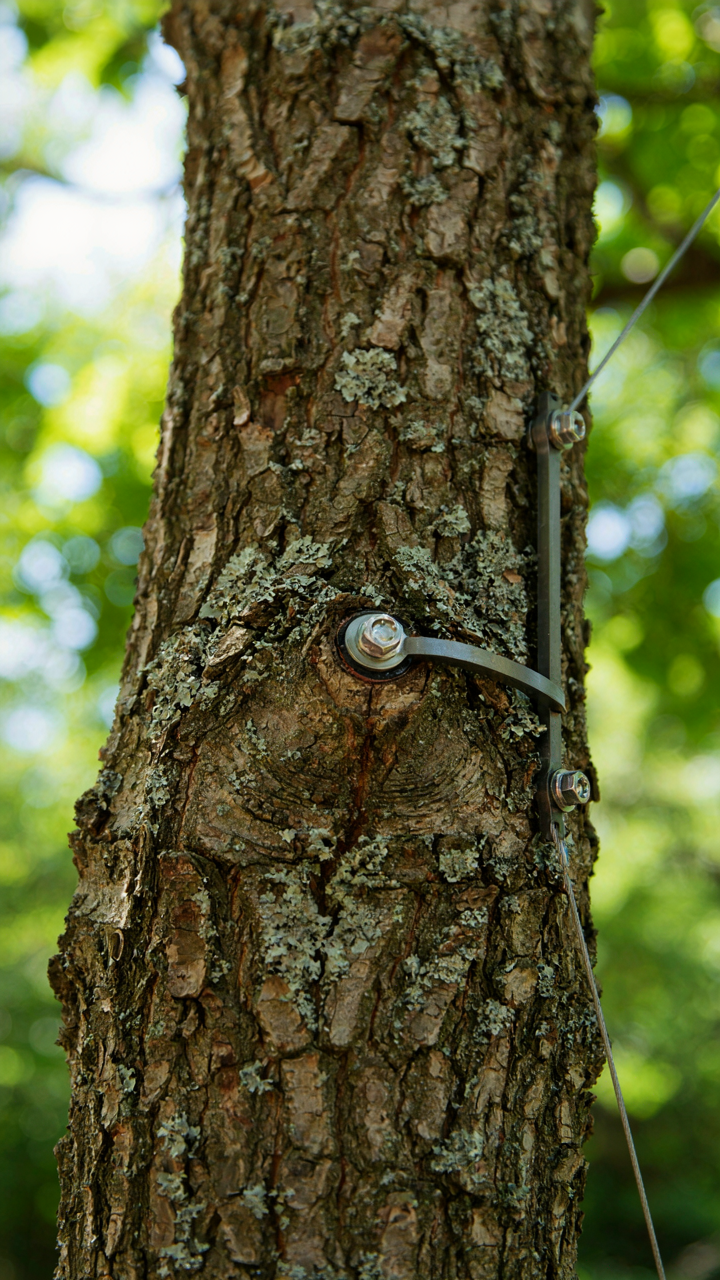
Trees absorb damage in ways guests never see. Fasteners, bolts, and support systems create entry points for disease and pest colonization. The tree doesn’t heal these wounds the way human skin does. Instead, compartmentalization occurs, which slows growth and weakens structural integrity over decades.
Most treehouse operators won’t tell you their tree mortality rate or average lifespan reduction per unit. That data exposes the mechanism. Genuine sustainability operations monitor individual tree health through certified arborists, track decline metrics annually, and factor tree replacement into their business model as a line item, not an afterthought. If an operator can’t show you their arborist reports or tree health protocols, your stay is extracting value from a living organism on borrowed time.
Tree House Hotels: The “Hive Mind” Fallacy Vs. Solitary Sanctuary
Communal Design Versus Isolation Architecture
You’re drawn to this section because you want permission to be alone without feeling like a failure at “experiencing” the treehouse. Here’s the mechanism: most treehouse operations cluster multiple units within sight lines to reduce infrastructure costs and staff overhead. This isn’t hospitality design—it’s operational math. Isolation requires separate water systems, electrical runs, and access roads. Proximity reduces those expenses by 40 to 60 percent. The treehouse that advertises “intimate seclusion” but sits 150 feet from four other units is selling you a feeling, not a fact.
Real solitude demands structural separation. Private treehouses occupy distinct plots with no shared walkways, no common viewing platforms, and independent utility feeds. You pay more because the operator absorbs the cost inefficiency. Some operations—particularly in Costa Rica and Bali—use elevation difference as their primary separator. Your treehouse sits on a ridge at 80 feet; theirs occupies a ravine at 40 feet. Sight lines don’t cross. Sound travels differently through vertical space than horizontal. The design choice determines whether you hear neighbors or wind.
Minimal Interaction Protocol For Deep Work
Most treehouse guides treat “solitude” as a marketing word rather than a structural outcome. It’s not. Behavioral isolation stems from intentional friction in the booking system itself. Properties that require 48-hour notice for housekeeping, limit daily check-ins, and position staff outside your sightline create genuine separation. Properties with open-entry cleaning schedules, community meal times, and shared workspace destroy it instantly. The friction isn’t inconvenience—it’s your boundary mechanism.
Ask operators one question before booking: “How many times will staff enter my space during a seven-day stay, and what triggers each entry?” Properties that answer under four times have designed for introspection. Those that cite daily housekeeping or open-access food service have designed for revenue through turnover. Then lock your unit. Disable notifications. Eat what you brought. Your solitude depends on whether you’re staying in a hotel that happens to be in a tree or a retreat designed around uninterrupted time.
The Bio Mimicry Blueprint For Unforgettable Treehouse Stays

Light And Sound By Design
You want to feel elevated and connected to something real. Most treehouse stays ignore the most basic biological truth: your nervous system calibrates to light and sound patterns before you consciously notice them. Borrow from circadian biology. The mechanism is phase alignment. Your body synchronizes to sunrise, shadow movement, and acoustic environment. A treehouse positioned on the eastern face captures morning light gradually, triggering cortisol release on schedule instead of jolting you awake with a wall of brightness at 6 AM.
Sound design matters equally. Trees naturally filter high frequencies while transmitting low rumbles from wind and distant activity. A treehouse nestled deep in canopy experiences acoustic dampening that reduces jarring noise from ground level. Conversely, a treehouse built on thin branches amplifies every creak and sway. The best stays position sleeping areas where direct light arrives after 7 AM and where prevailing winds create buffer zones against road noise or neighboring activity. This isn’t comfort. This is nervous system optimization happening without your awareness.
Participate In The Ecosystem, Don’t Observe It
Everyone treats treehouses as viewing platforms. That’s incomplete. The real depth comes from integrating yourself into local flora and fauna cycles, not just watching them from a deck. This transforms a stay from passive observation into active participation in living systems.
- Fruiting season timing: Book stays when local fruit trees peak production. You’ll see bird activity, pollinator patterns, and seasonal predator behavior concentrated and visible. This timing isn’t random tourism advice, it’s ecological literacy.
- Night call identification: Learn the specific nocturnal calls of your treehouse’s region before arrival. Identify amphibians, insects, and mammals by sound. Recognition shifts your nervous system from alertness to pattern recognition, deepening the experience neurologically.
- Branch-level insect observation: Most visitors miss the invertebrate layer where the treehouse literally sits. Understand which insects use your specific tree species. Track their arrival times and feeding patterns across your stay duration.
- Canopy water cycles: Observe how rain moves through leaf layers, how humidity shifts between dawn and midday, where water collects and drains. This reveals the tree’s own circulatory system and how your position within it affects microclimate exposure.
- Predator presence markers: Notice scat, feathers, territorial markings on branches near your stay. These are evidence of non-human residents. Mapping their activity creates genuine coexistence rather than distanced observation.
Integration happens through protocol, not sentiment. Before checkout, document what you observed about fauna presence and flora cycles specific to your treehouse location. Leave this record with the host. Future guests build on this dataset. The treehouse becomes a living research station instead of a novelty rental. You’ve moved from consumer to contributor.
Mastering The Treehouse Vacation: Preparation For Peak Presence

What You Actually Need To Bring
You’re really worried you’ll be uncomfortable and look foolish complaining about it. Here’s the mechanism: treehouse stays remove infrastructure you take for granted—power, climate control, stable flooring—so your nervous system treats minor discomfort as major threat. Pack strategically to eliminate the signal, not just muffle it.
- Insulating layers: Trees amplify temperature swings. Merino wool or synthetic base layers regulate body temperature without bulk, keeping your core stable when ambient conditions shift between morning and evening.
- High-lumen headlamp: Darkness in elevated structures triggers disorientation faster than on ground. A reliable headlamp with diffuser mode eliminates the startle response and lets you move safely without phone battery drain.
- Weatherproof phone pouch: Humidity and condensation kill devices faster in tree canopies than you expect. Sealed pouches keep your emergency communication functional while protecting against moisture that accumulates overnight.
- Toiletries and medications in waterproof containers: Treehouse bathrooms lack the seal of traditional ones. Store everything in individual waterproof bags to prevent mold growth and ensure items stay accessible during humidity spikes.
- Non-slip footwear with grip soles: Wooden platforms become slick faster than you anticipate, especially in early morning or after rain. Quality grip prevents the ankle-twisting anxiety that kills immersion.
The goal is removing friction between your body and the environment so your attention can shift from survival mode to presence. Pack light, pack specific, and pack for the worst case you’ll actually face—not the fantasy worst case.
Rewiring Your Attention Before You Arrive
Your brain is wired for ground-level threat detection. Trees trigger the lizard brain because elevation removes an escape route you evolved expecting. Condition yourself by reframing vertical exposure as a feature, not a bug, before arrival.
Spend 72 hours before departure doing three things: sit in high-up spaces (balconies, upper floors), practice slow breathing on elevated structures, and consume media shot from tree canopy perspectives. This primes your pattern recognition system to treat height as neutral rather than dangerous. On arrival day, spend your first hour stationary in one spot—don’t explore. Let your nervous system adapt to the new baseline before you demand movement from it. The mechanism is habituation through graduated exposure, not willpower.
The UK Treehouse Hotel Scene: Overhyped Or Undervalued?

What You’re Actually Paying For
You want to know if treehouse stays in the UK are worth the money, but what you really want is permission to spend more without feeling foolish. Here’s the mechanism: UK treehouse operators price based on scarcity and Instagram demand, not construction cost or operational complexity. A night in a well-built treehouse runs 150 to 400 pounds. The price gap between mediocre and exceptional properties isn’t about materials—it’s about whether the operator understands load-bearing design, year-round weatherproofing, and maintenance cycles. Most don’t. You pay premium rates for operators who treat treehouses as architecture, not novelty.
The real cost separation happens invisible to guests. Professional treehouse builders use engineered bolts, proper drainage systems, and wood that withstands moisture cycles. Budget operators use cheaper fasteners and hope. When you book, you’re not comparing treehouse to treehouse—you’re comparing whether someone understood structural principles or watched a YouTube video. The venues charging 250 pounds or more typically invested in proper engineering. Those under 120 pounds often have foundation problems within five years. Your price tells you something before you arrive.
Where To Find Actual Solitude
Most treehouse listings market themselves as retreats but deliver nothing different from a hotel room with better views. The distinction is ruthless: genuine isolation requires properties that deliberately limit guest density and bookings per year. Shropshire and the Welsh Borders hold the better inventory because land costs less and operators tend toward serious builders rather than hospitality franchisees. Look for owners who restrict bookings to 60 to 80 days annually—that number indicates they prioritize structural integrity and guest experience over revenue.
The protocol is specific. Contact owners directly and ask three questions: How old is the structure, how often does the wood get inspected for rot, and what’s the maximum occupancy per year? Operators who hedge on these answers haven’t thought through longevity. Visit properties in shoulder seasons, not peak summer, when you’ll see how they handle weather and whether maintenance is real or cosmetic. The quietest treehouses sit in regions where operators run one or two properties, not networks—they’re isolated by design, not by accident.
The Real Obstacle Isn’t Finding A Treehouse; It’s Escaping The Mental Prison You Carry With You

Most people don’t book treehouse stays because they’re waiting for the perfect moment that never arrives. They scroll listings, save links, and tell themselves “next year.” The treehouse isn’t the escape. You are. Open your laptop right now and book the first one that makes your stomach flip. Not the safest option, not the cheapest, not the one with the best reviews. The one that scares you slightly. Because the only thing separating you from people who actually live differently is a single decision made before doubt calculates the cost.