

The Illusion Of Tall Specific Hiking Gear

Marketing Exploits A Real Problem Into A Fake Solution
You’re worried you’ll look ridiculous on the trail. That’s the real issue. The gear industry weaponizes that anxiety by convincing you that off-the-rack hiking clothes don’t work for your frame, so you need their special tall line. This is economics playing on status anxiety: they create perceived scarcity to justify premium pricing on items that differ only slightly from standard stock.
The truth is simpler. Tall men face one actual problem: inseam length and sleeve reach. Everything else—fit, function, breathability, durability—operates on universal principles that have nothing to do with height. Most hiking brands already solve the inseam problem through their size ladder. The marketing just obscures this fact to sell you redundancy.
Principles That Work Regardless Of Your Measurements

Function beats positioning. This isn’t fashion. A hiking shirt works because of its fabric weight, moisture-wicking properties, and seam placement. Those characteristics are identical whether you wear a medium or an XL. The mechanism is physics: fabrics either manage sweat and dry quickly or they don’t, regardless of the person wearing them.
Proportional fit matters more than “tall sizing.” Your real job is matching rise, sleeve length, and torso length to your actual dimensions. Most standard hiking brands offer extended sizes that accomplish this. Stop shopping for a label that says “tall.” Start shopping for specific measurements that fit your body. Measure your inseam, shoulder width, and torso length once, then filter every purchase through those numbers.

The Weight To Value Algorithm For Summer Hiking Shorts
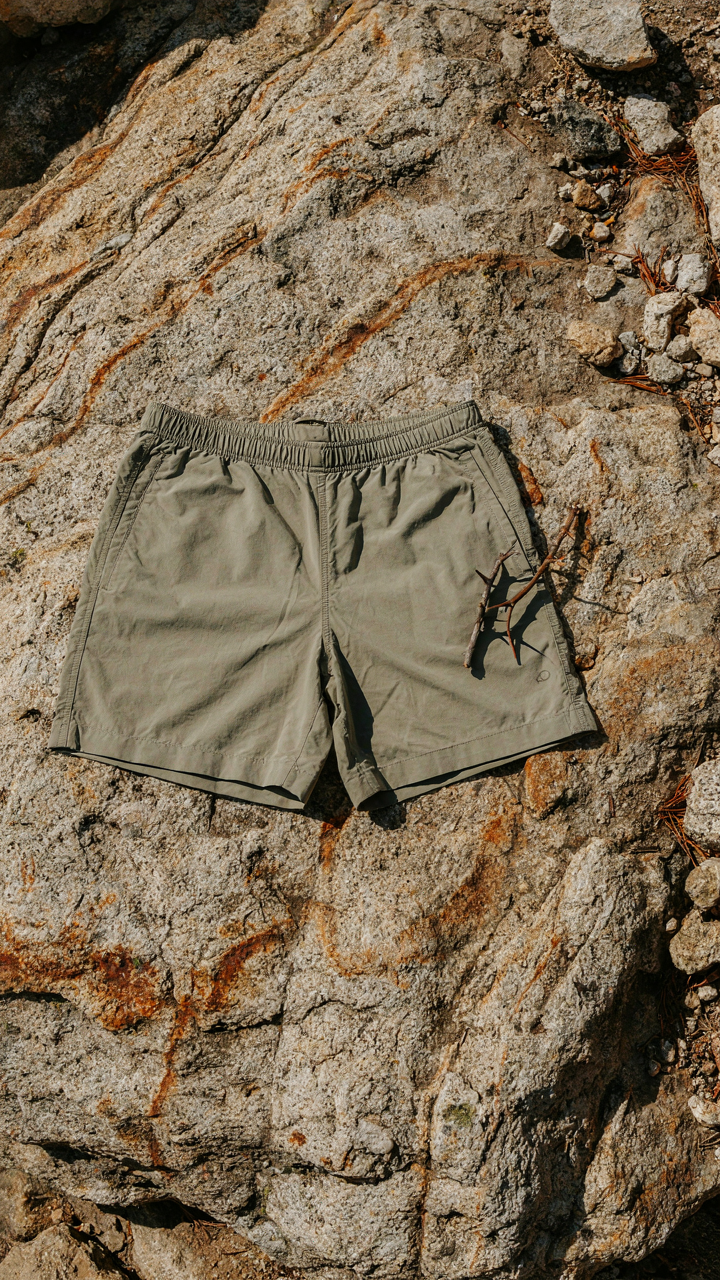
Fabric Density Vs. Durability Tradeoffs
You want shorts that won’t shred on a branch but won’t turn you into a sweating furnace either. That tension is real, and most advice ignores it. In materials science, we call this the strength-to-weight ratio, and it applies directly to hiking shorts: you need enough thread count to survive abuse without adding dead weight to your frame over eight hours of trail time.
Lightweight fabrics (under 5 ounces per yard) breathe faster but fail sooner against abrasion. Mid-weight options around 6-7 ounces per yard hold up longer while staying packable. For tall men, the equation matters more because you’re already carrying more fabric due to inseam length. A 38-inch inseam in a flimsy material becomes a liability; the extra leg length amplifies wear patterns at stress points like the inner thigh and pocket seams.
Pocket Utility Essential Vs. Excess
The common wisdom says more pockets equal more function. That’s incomplete. Most hikers fill pockets they don’t need, then complain about bulk and weight. Real pocket strategy is about placement and capacity, not quantity.
Tall men need pockets positioned for their proportions, not standard sizing. A back pocket on shorts with a 38-inch inseam sits lower on your frame than it does on a 32-inch pair, changing how gear sits and moves against your pack belt. Focus on two secure side pockets with key loops and one rear pocket for maps or permits. Cargo pockets add weight and bounce without solving a problem you actually have on the trail. Evaluate each pocket by asking whether it prevents you from carrying gear in your pack or reduces fumbling time. If the answer is no, the pocket is tax, not benefit.
Sweat Management: The Unspoken Hierarchy Of Base Layers

Synthetic Versus Natural Fibers: The Science
You want to believe merino wool is the answer because it costs more and sounds sophisticated. Here’s what actually matters: fiber structure determines how fast moisture moves away from your skin. Synthetic fibers like polyester have a hydrophobic core, meaning water beads and slides off them. Natural fibers like merino absorb moisture into their structure, then release it slowly. For tall men in summer heat, this distinction changes everything about comfort on long climbs.
Polyester wins in high-sweat environments because it pushes moisture outward immediately, keeping skin dry. Merino wool excels in variable conditions where temperature swings are unpredictable. On a five-hour ridge hike in July, your base layer will work harder than your willpower. Cotton is trash for this purpose—it absorbs sweat and stays wet against your skin, creating a cooling effect that works against you once you stop moving. Choose synthetic as your default for summer hiking unless weather is genuinely cool.
Wicking Efficiency, Not Brand Logos
Most people buy base layers by name recognition, which is how outdoor companies sell inventory instead of solving problems. Wicking efficiency depends on yarn tightness, fabric weight, and how densely threads are knit together. A loose weave moves moisture faster but offers less compression. A tight weave compresses muscles and regulates temperature but can trap some moisture. For tall men with longer torsos, fit matters more than fabric choice—an oversized synthetic base layer performs worse than a properly fitted merino layer because the fabric sits against skin inconsistently.
Test wicking by pouring water on the fabric and timing how long it takes to move through. The water should travel horizontally and downward within three to five seconds. Your base layer is not a fashion statement—it’s a moisture management system. Buy based on this performance metric, then verify the fit sits flush against your entire torso without bunching at the waist or riding up during movement.
The Kinetic Chain Principle For Footwear (Biology)
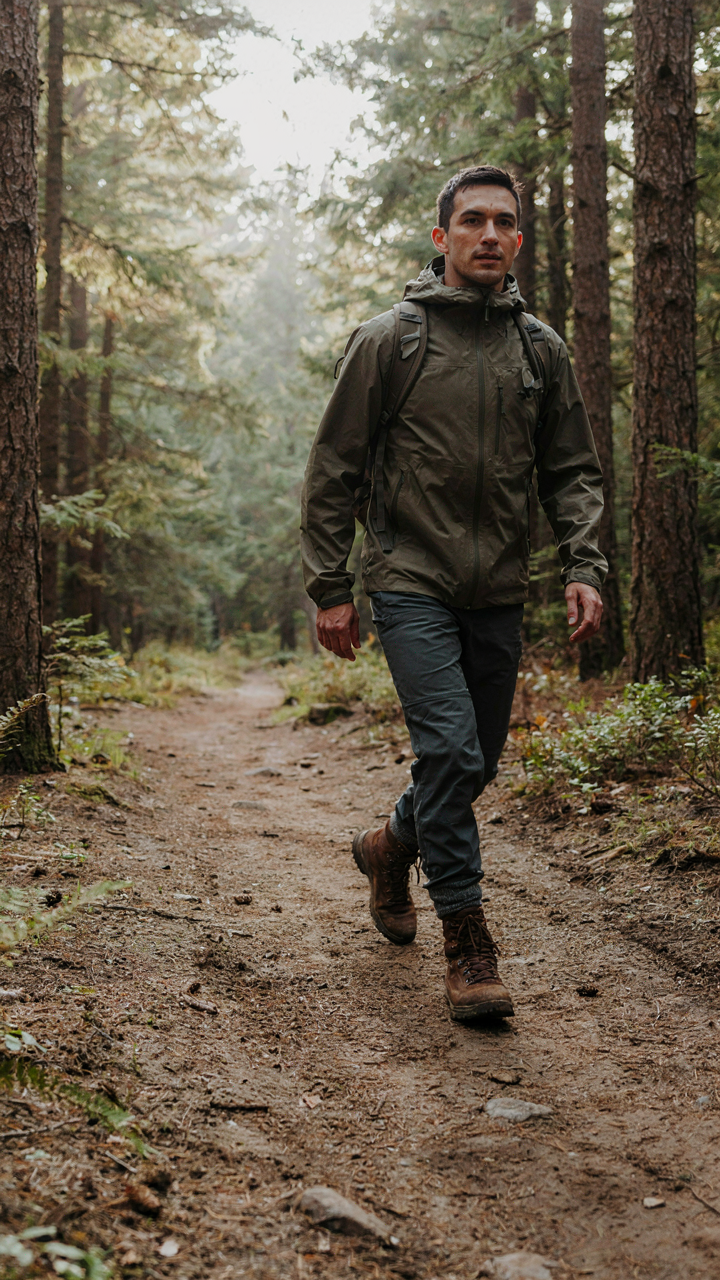
Ankle Stability Shapes Everything Above It
You want to believe your feet don’t matter much to your outfit. They do, but not for aesthetic reasons. Biomechanics uses the term “kinetic chain” to describe how movement transfers from one joint to the next. Your ankles are the foundation of that chain. An unstable ankle forces your knees, hips, and lower back to compensate. On a six-hour hike at 6’2″+, compensation becomes injury. Tall men have a longer lever arm from foot to hip, which magnifies ankle instability into cascading problems up the entire posterior chain.
Most hiking boot recommendations ignore this. They focus on cushioning or waterproofing instead of asking what actually stops your ankle from rolling on uneven terrain. Proprioception, your body’s spatial awareness in the foot, deteriorates with age and inactivity. A boot with poor lateral support doesn’t train proprioception; it atrophies it further. Your footwear must force your stabilizer muscles to work, not eliminate the need for them. This means selecting boots with a stiffer midsole and higher collar, not softer padding.
Your Boots Control Your Posture On The Trail
The shoes you choose dictate your stride length, stride rate, and spinal alignment over six to eight hours. A boot that tips your foot inward or outward tilts your pelvis, which tilts your spine. Tall hikers already deal with longer limbs that require more muscular control to maintain neutral posture. If your footwear adds a postural deviation on top of that, you’re hiking with your spine in a semi-flexed position for the entire day. That exhausts your erector spinae and creates lower back soreness that has nothing to do with pack weight.
Proper footwear doesn’t feel like it’s doing anything special. It means your ankle, knee, and hip stay stacked vertically with each step. You can feel the difference within the first mile. If your foot rolls inward at heel strike, your knee collapses inward, and your hip external rotators work overtime to compensate. Select a boot with a medial post or dual-density midsole designed to resist supination or pronation based on your foot strike pattern. Test this on a 30-minute trail walk before committing to a full day hike.
Beyond Cargo Shorts: The Utility Of Smart Storage

Built In Beats Strapped On
You want cargo shorts because you think they look more intentional than a backpack. They don’t. The real mechanism here is borrowed from logistics: every external attachment point adds friction to your movement. Tall men already fight proportional drag on longer limbs. Integrated storage—pockets engineered into the garment itself—keeps your center of gravity stable and your silhouette clean. Cargo shorts fail because they’re reactive design, not anticipatory. They bulge where you load them, killing the line of fit tall frames depend on.
Shorts with reinforced side pockets, back zip pockets, and internal security slots outperform traditional cargo because the weight distributes across the garment’s structure rather than pulling on specific stress points. Your frame is already extended. Vertical garments with strategic placement reduce the visual weight that makes tall hikers look skeletal or awkward in photos. Quality hiking shorts use tapered waistbands and gusseted crotches to keep pockets from sagging under load. The test is simple: load your pockets fully, hike two miles, then check whether the shorts still hang straight or if they’ve twisted on your frame.
Quick Access Without Breaking Stride
Common advice says wear a small daypack for everything. That’s incomplete. The real efficiency question isn’t capacity, it’s retrieval time under conditions. If you need your sunscreen, map, or snack while moving, digging through a pack backpack breaks your pace and forces you to stop. Tall men on exposed terrain take sun exposure faster because more skin is exposed to direct rays. Shorts with a dedicated upper thigh pocket (above the knee) let you grab essentials without removing your pack or bending awkwardly. This pocket placement is crucial for your proportions. A standard hip pocket on a tall frame sits too low to reach without disrupting your stride.
The setup that works: front zip pockets for phone and keys, side security pockets for small tools like a multi-tool or fire starter, and a dedicated upper thigh pocket for items you access more than twice per hike. Your back pocket should have a reinforced flap if you’re carrying a folded map or permit. Test this before committing to a pair. Load each pocket with what you’d actually carry, hike uphill for 15 minutes, and assess whether you can access everything without stopping or removing your pack. That’s your baseline.
The Unfair Advantage: Sun Protection Beyond SPF
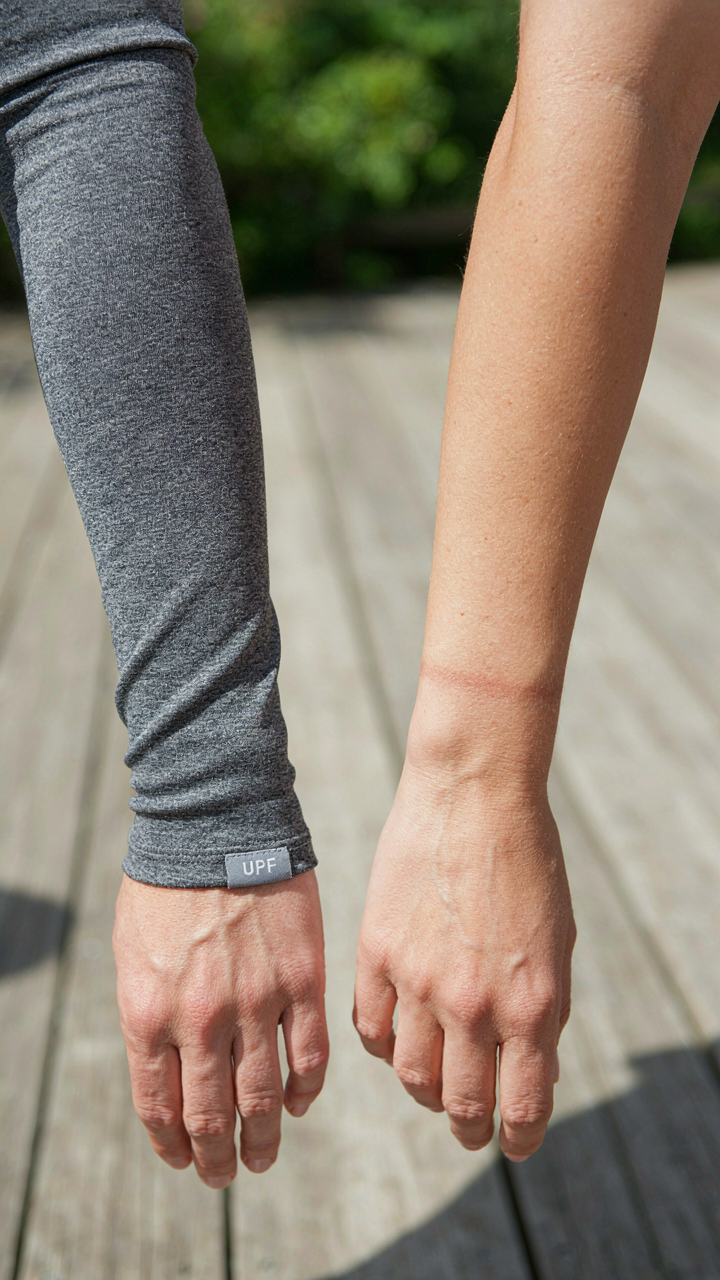
What UPF Actually Blocks
You care about this because sunburn feels like a failure, and tall men get hit harder by UV exposure due to surface area. Here’s the mechanism: UPF ratings measure how much ultraviolet radiation a fabric blocks before it reaches your skin. A UPF 50 shirt stops roughly 98 percent of UV rays. The number is a ratio, not a percentage of protection added on top of your skin’s natural defense. Most hiking apparel brands cite UPF 50 or UPF 50+, which are functionally identical for practical purposes.
Fabric density and fiber type determine UPF more than thread count alone. Synthetic materials like polyester and nylon naturally reflect UV better than cotton. Tight weaves block more rays than loose ones. Dark colors absorb UV before it penetrates, while white reflects some back. Wet fabric loses UPF rating significantly because water fills gaps in the weave. A soaked shirt with UPF 50 drops to roughly UPF 10 until it dries. This matters on creek crossings and sweat-heavy scrambles where moisture sits against your skin for hours.
Neck And Head Coverage That Actually Works
Most tall men skip neck gaiters because they feel optional, then spend three days treating sunburned necks. Neck exposure is disproportionate on tall frames because your neck extends higher and catches angle-of-incidence rays that shorter hikers miss. A neck gaiter rated UPF 50 worn under your chin or pulled up covers the overlooked zone where sun reflection off rock and water compounds damage.
Headwear serves two jobs: shade and sweat management. A wide-brimmed hat with a neck flap creates a shadow zone and keeps sweat from running into your eyes. For tall men, the hat crown matters more than brim width because you’re closer to overhead sun at higher elevations. Mesh panels on the sides of hiking hats allow airflow while UPF fabric on the crown and back of neck stays protected. Wear your neck gaiter under the hat brim, not over it, so sweat drains downward instead of pooling on your collarbone.
Why “Granola Summer Outfits” Fail The Durability Test
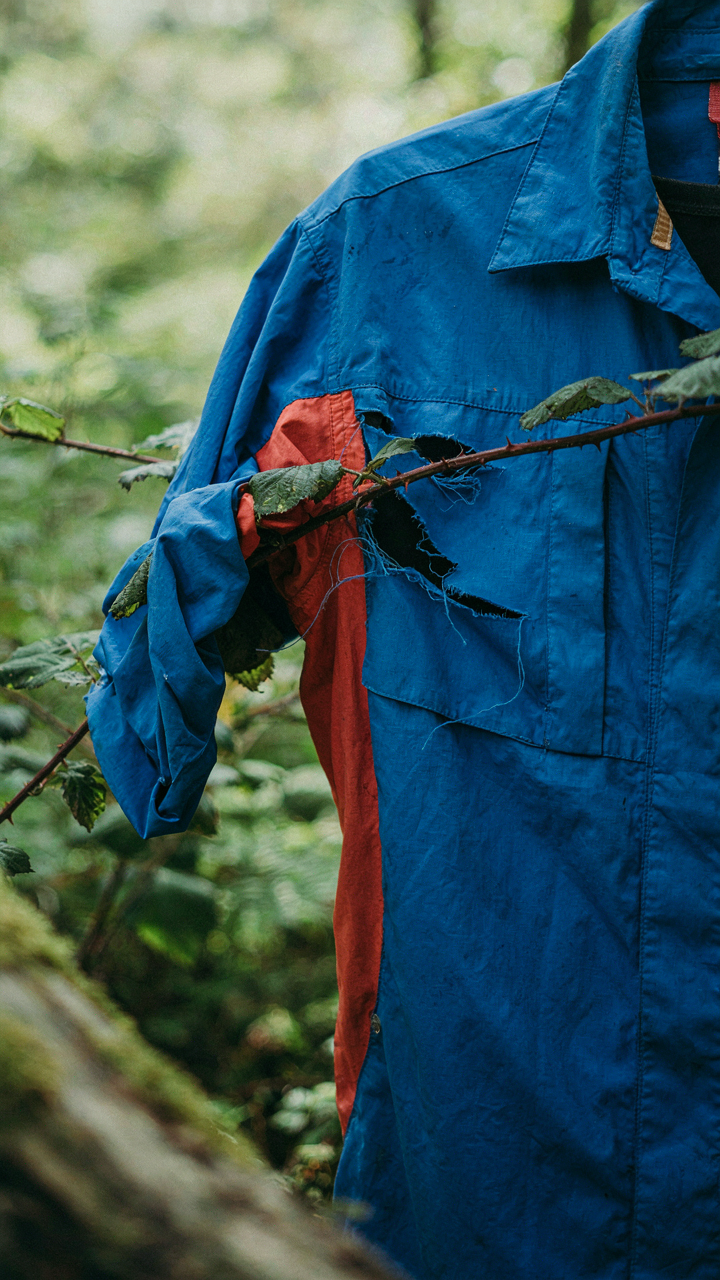
Fashion Trends Versus Real Utility
You want to look like you belong on the trail without looking like you’re trying too hard. That’s the real reason this section matters. The mechanism is simple: fashion cycles prioritize aesthetics on a 12-month refresh rate, while hiking gear exists in a different economy entirely. Brands push linen, oversized cuts, and earth tones because they photograph well and move inventory fast. None of that maps to what actually survives repeated exposure to sun, sweat, and abrasion on a mountain.
The common advice says “buy quality basics and mix them.” That’s incomplete. Granola aesthetics and technical durability operate on opposing timelines. A vintage-inspired linen shirt looks correct for Instagram but shreds after fifteen summit days. Cotton blends marketed as “breathable” fail the salt-stain and UV-damage tests that synthetic fabrics pass routinely. Tall men get hit harder because longer fabric paths mean more stress points at seams and hems where failure starts first.
Longevity Over Seasonal Rotation
Durability is an economic principle: you amortize cost across wears, not seasons. A $120 technical shirt worn 60 times costs $2 per wear. A $45 trendy piece worn 8 times before fading and pilling costs $5.60 per wear. Tall men especially pay the fad tax because fit options in seasonal ranges narrow dramatically. You chase trends, find nothing in your inseam, then overpay for basics that won’t survive next summer.
Build a summer hiking outfit around materials that improve or hold steady through UV exposure: nylon, polyester, and merino wool. These handle sweat oxidation and mildew differently than cotton does. Seam construction matters more than brand noise. Flat-felled or bar-tacked seams at shoulders and underarms survive forty-plus hikes. Buy one outfit that lasts three seasons instead of three outfits that fail in one.
The Backpack Loadout: Maximizing Efficiency For Tall Men

Load Distribution Beats Pack Size
You want a backpack that doesn’t scream “I’m compensating” while holding everything you need. Here’s the real mechanism: tall men have a higher center of gravity, which means weight placed too high or too far from your spine creates exponential strain on your lower back. Physics isn’t negotiable. Most hiking advice ignores this entirely.
The fix is counterintuitive. Don’t buy a bigger pack. Buy a pack designed for torso length, not volume. Your torso is longer, so standard 50-60L packs sit too low and pull weight away from your hips where your body can actually carry it. Load heavier items first, low and tight against your back. Place sleeping bags and shelter at the bottom. Mid-weight items like food and water go in the middle. Keep electronics and rain gear accessible at the top. This stacks load directly over your hips instead of spreading it across your shoulders.
Minimal Gear, Maximum Function
- Ultralight tent or bivy: Saves 2-4 pounds and eliminates unnecessary bulk. Tall men benefit from reduced pack height that forces better weight distribution.
- Compressed sleeping bag: Use temperature rating matched to summer season. Store compressed in stuff sack at pack bottom for stability and low center of mass.
- Water bladder over bottles: 3-liter capacity weighs less than rigid containers. Deflates as you drink, improving balance on technical terrain where tall frames are less stable.
- Minimal clothing rotation: Two pairs of socks, one base layer, one insulating layer, rain shell. Cotton kills. Merino or synthetic only. Laundry on trail takes 20 minutes.
- Single-burner stove and pot: Lightweight aluminum or titanium. Eliminate the camp stove and grill. Boiling water is your meal prep.
Total loaded pack weight for tall men should sit between 18-22 pounds on summer trails. Most people carry 30+ because they pack options instead of answers. Strip down to what you actually use in a single day. Everything else is insurance you’ll never claim.
The Real Obstacle Isn’t Finding The Right Gear; It’s Overcoming The Soft Mindset That Demands It

Most tall men don’t fail on the trail because their shorts are wrong. They fail because they convince themselves the gear matters more than showing up. You already know what works: breathable fabric, proper fit, layers you can strip. Stop researching and start hiking this weekend. Your body adapts faster than your browser tabs multiply. The outfit doesn’t make the hiker. The hiker makes the decision to move.