

The Minimalist Mindset: Not Less, But Optimized
Strip Down To What Actually Works
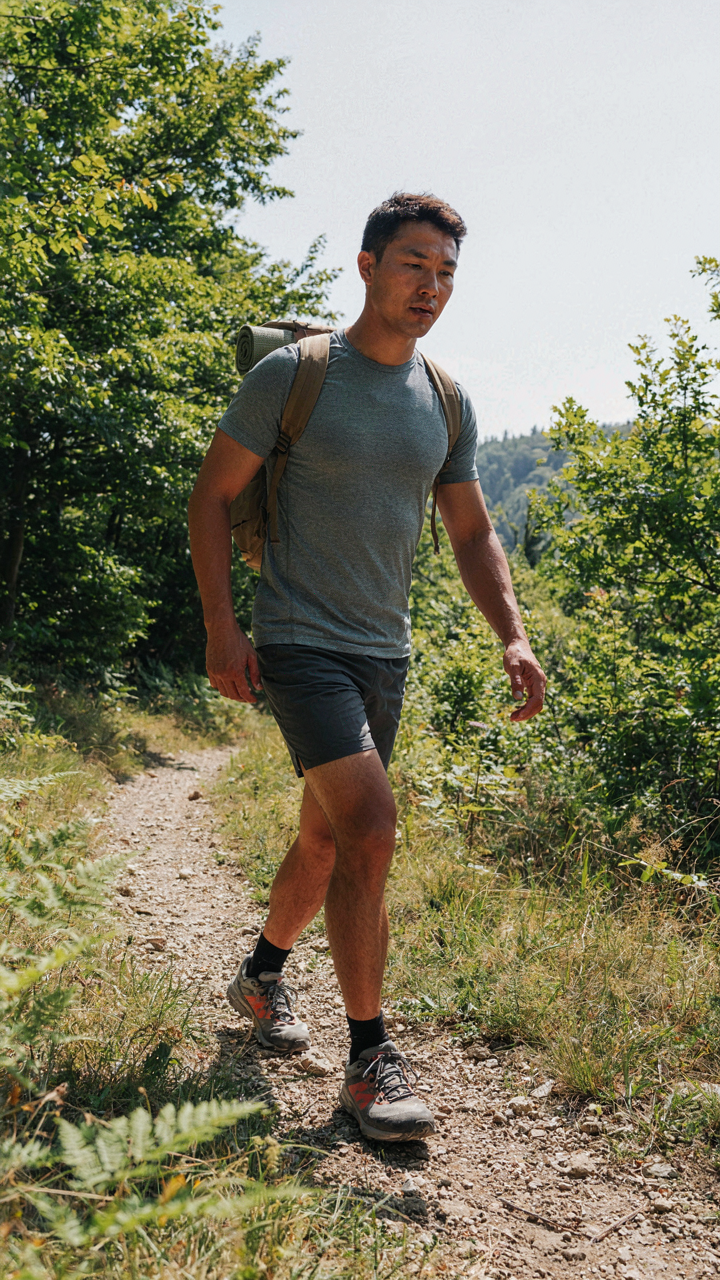
You want to look like you know what you’re doing on a trail without hauling your entire closet up a mountain. The real mechanism is this: every piece of gear you carry either performs a function or it doesn’t. Most hikers carry items for status or insurance, not utility. A summer hiking outfit for men works when each layer, pocket, and material choice solves a specific problem you’ll actually face. Remove everything else. Start with base layer, mid layer, and shell. Add shorts that dry fast. Choose shoes with real grip. That’s the skeleton. Everything beyond that is negotiation between comfort, weight, and distance.
The common advice says “pack light” without explaining why. Weight multiplies across hours. Physics calls this leverage: small loads compound into massive fatigue over distance. A single unnecessary pound in your pack costs you speed, endurance, and decision-making clarity by mile eight. Summer hiking doesn’t require insulation, so strip the bulk. Your outfit should weigh less than five pounds total. Merino wool base layer, synthetic mid layer, minimal shell, lightweight shorts, and trail shoes. No redundancy. No backup items you think you might need. Choose pieces that work in heat and dry quickly when you sweat through them.
Weight Becomes The Variable You Control

Ounces matter on extended trails because they don’t stay small. Carry two pounds extra and your legs absorb that force repeatedly for six hours. The cumulative effect isn’t linear; it’s exponential in terms of muscular fatigue and recovery demand. Most summer hiking outfits fail because men add “just one more layer” or choose heavier materials for perceived durability. That’s backwards. Lightweight synthetics and merino wool handle summer conditions and last longer than heavy cotton blends because they don’t break down under repeated moisture cycling. Pick fabrics first, then count weight.
Your outfit becomes a performance multiplier when you optimize for the actual conditions, not for looking prepared. Summer heat demands breathability over insulation. Fast-drying fabrics over moisture retention. Minimal layering over coverage options. Test your outfit on a three-mile hike before committing to a longer route. If you’re still dry after an hour of sustained effort, your base and mid layers are working. If sweat pools anywhere, your fabric selection failed. Adjust and repeat until your outfit performs, then lock it in.

Debunking “Cool”: The Science Of Heat Management
Sweat Works Or It Doesn’t
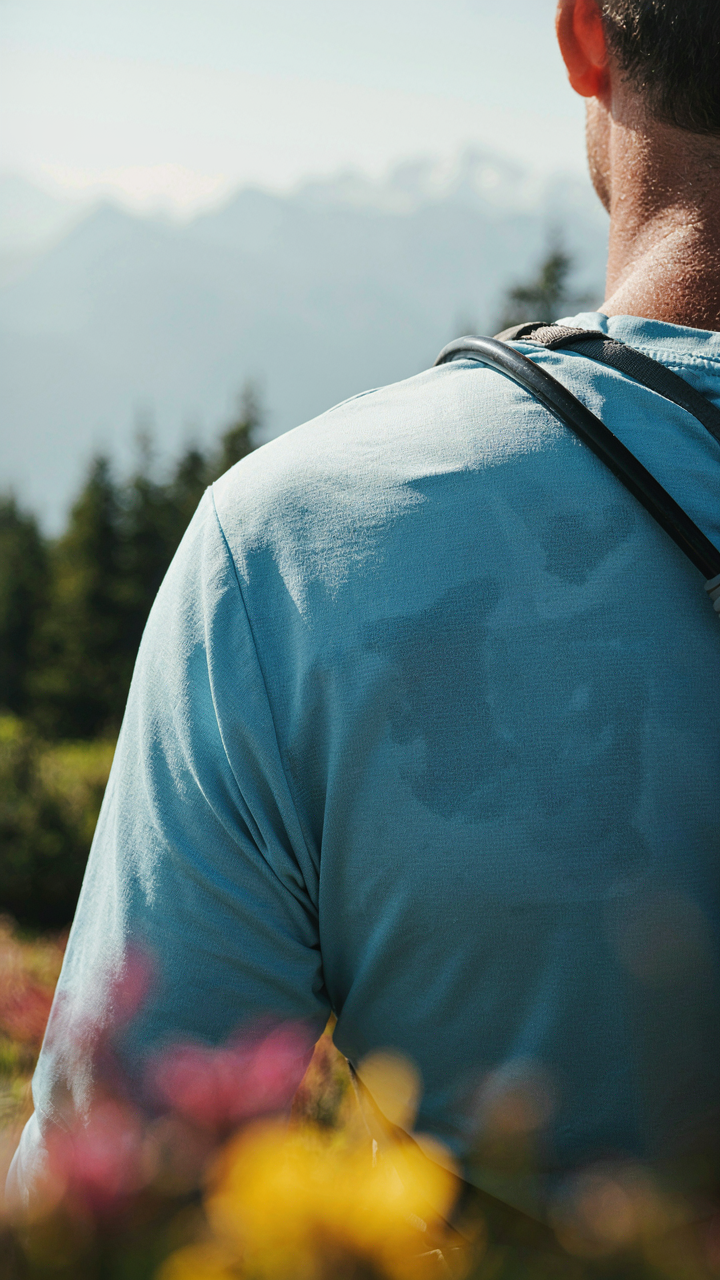
You want to feel cool because you think it means you’ll perform better and suffer less. That’s true, but only if you actually understand how your body sheds heat. Physics calls this evaporative cooling: water on your skin absorbs heat energy as it transitions from liquid to vapor, pulling that energy away from your body. Your outfit either enables this process or blocks it. Most men wear cotton hiking shirts that trap moisture against the skin, which prevents evaporation from happening at all.
The mechanism is simple. Moisture must move away from your skin to the outer layer of fabric where air can reach it and evaporation can occur. If your shirt holds sweat against your body, you stay hot and wet. Synthetic fabrics and merino wool move moisture outward through capillary action, creating the conditions for evaporation to work. Fit matters here too. A loose shirt allows air circulation; a tight one traps humid air against your skin. Choose moisture-wicking synthetics or merino, size up slightly, and accept that some visible sweat is actually the system working correctly.
Marketing Versus Material Reality
The outdoor industry tells you to buy technical fabrics because they’re “advanced” and “innovative.” That’s not why they work. The real advantage is fiber structure. Synthetic polyester has a smooth surface that resists water absorption while its internal structure contains channels that wick moisture through capillary action. Merino wool naturally repels liquid water but absorbs water vapor, which means it stays dry-feeling even when damp. Neither fabric works because of a brand name or price tag. They work because of geometry.
Cotton absorbs water like a sponge and holds it. That’s chemistry, not opinion. When cotton gets wet, it loses insulating properties and your body temperature drops. On a cold summit, this kills performance. On a hot day, it makes you stay hot and clammy. The marketing solution is to sell you expensive “performance” versions of the same material. The real solution is to stop wearing cotton on summer hikes entirely. Pick a synthetic crew neck or merino base layer, wear it loose, and layer a lightweight shirt over it if you need sun protection or want to manage wind.
The “Adaptive Layering” Protocol
Base Layer As Skin Extension
You want to look competent on the trail without actually thinking about what you’re wearing. Here’s the mechanism: your base layer isn’t clothing—it’s a moisture management system between your skin and everything else. Wear merino wool or synthetic polyester, not cotton. Cotton absorbs sweat, holds it, and kills your temperature regulation. Merino wicks moisture away from skin while regulating heat. Synthetic does the same faster and costs less. Pick fitted cuts that move with your body, not loose fabric that creates dead air pockets and bunches under outer layers.
The fit matters more than the material choice. A tight base layer transmits body heat upward through the next layer instead of trapping warm, moist air against your skin. Summer means you’re running hot, so you’re choosing a base layer for its ability to shed moisture during high-output movement, not for insulation. Wear short sleeves or sleeveless on pure sun days above treeline. On mixed terrain with shade and exposure, long sleeves in lightweight merino prevent sun damage and add minimal bulk. Test your base layer wet. If it stays cold and clammy, it’s wrong.
Strategic Outer Shell Deployment
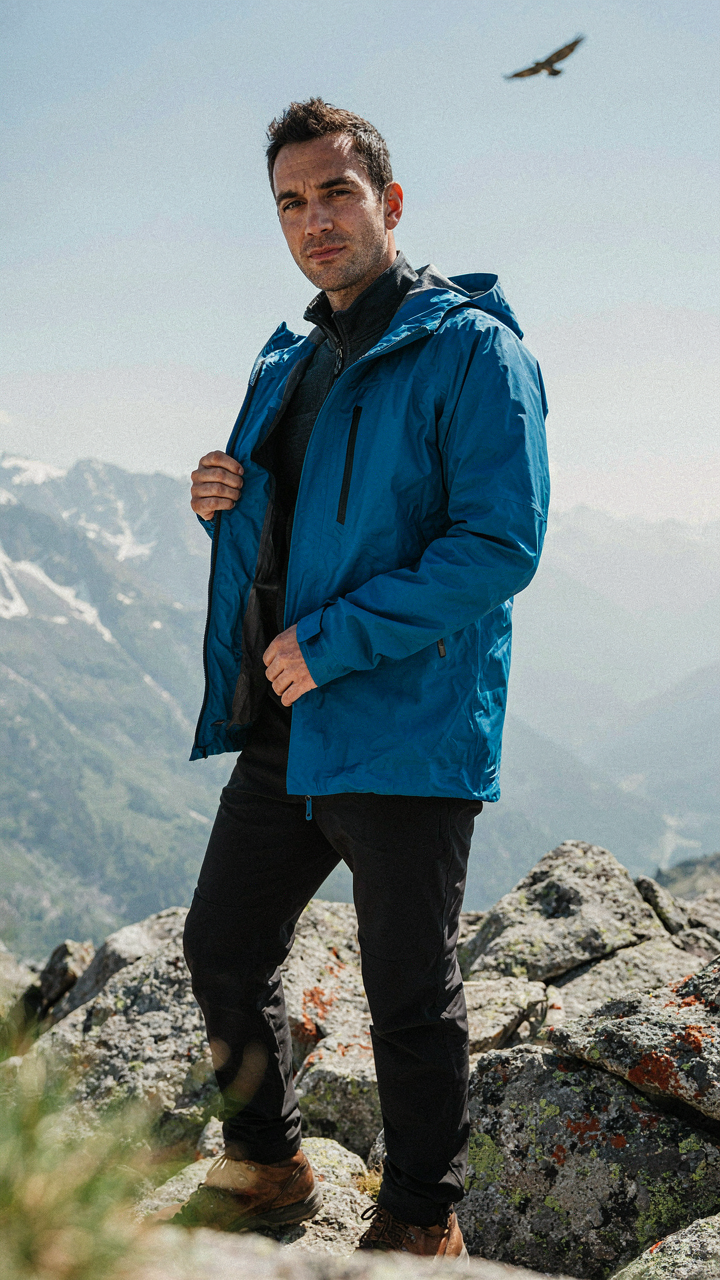
The outer shell is your only defense against wind and sudden weather—deploy it only when conditions demand it, not as default coverage. Military doctrine calls this “minimal force application,” and it translates directly: carry a lightweight shell, wear it only when rain or wind appears, stow it immediately after. A three-ounce rain jacket stuffed into your pack costs nothing until you need it. Wearing it preemptively wastes energy, traps moisture inside, and trains you to ignore real weather signals.
Choose a shell with pit zips or underarm vents. Summer hiking generates serious heat. A sealed shell turns into a sweat chamber fast. Pit zips let you dump moisture without removing the jacket entirely. Size the shell to fit over your loaded pack with room to move. A tight shell restricts shoulder mobility and defeats the purpose of layering. Pack the shell in an accessible outer pocket or compression sack. The moment you think “I might need this,” you already do.
Footwear: Your Foundation For Domination
Grip Transfers Power Into The Trail
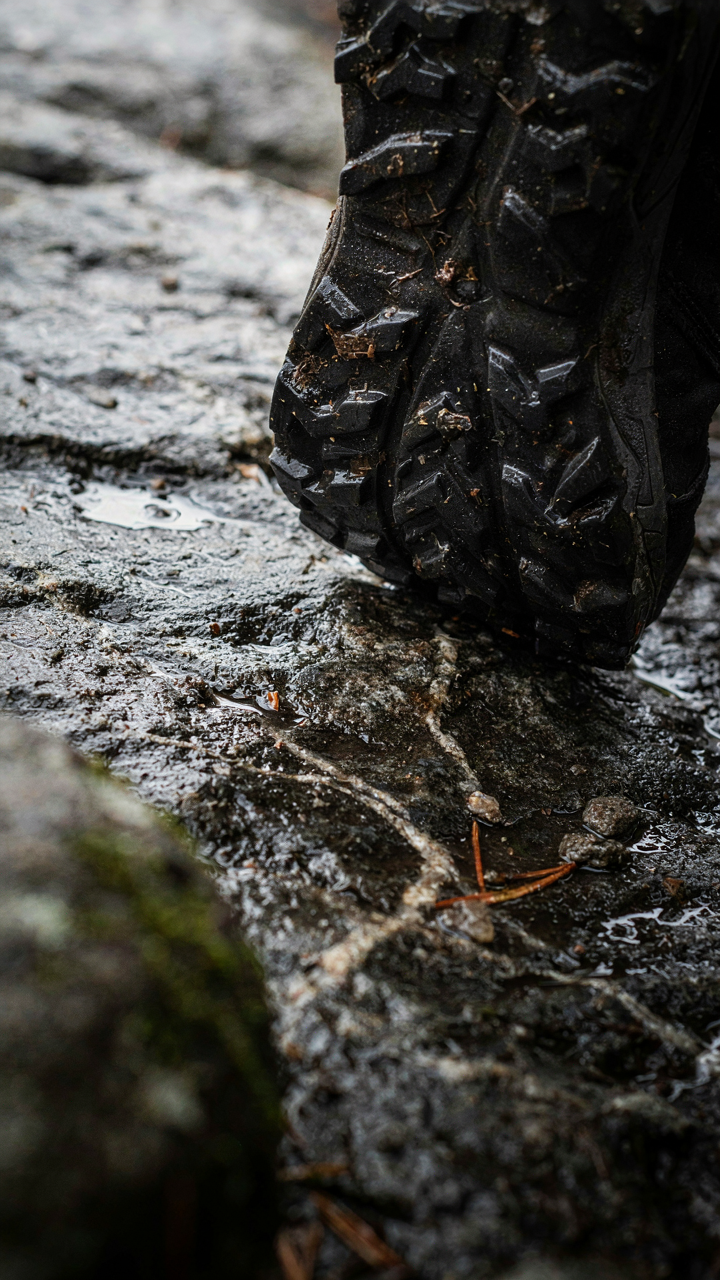
You care about this because you don’t want to slip and look incompetent in front of people. Real talk: your shoe’s sole is a mechanical system for energy transfer. Think of physics here—Newton’s third law states that every action has an equal and opposite reaction. Your foot pushes down; the ground pushes back through grip. A worn or wrong sole absorbs that energy instead of channeling it, forcing your legs to compensate. You burn out faster on descent. You hesitate on rock. You lose ground.
Summer hiking demands soles engineered for wet granite and loose scree, not pavement. Vibram rubber compounds hold their edge because they’re formulated to stay pliable in heat instead of hardening. The tread pattern matters less than material consistency—a shoe with deep lugs but cheap rubber slides the same as a smooth sole in wet conditions. Test your current shoe on wet tile before hitting the trail. If it skids, replace it. Your grip dictates how much mental energy you spend managing terrain versus just moving forward.
Ankle Stiffness Versus Movement Range
The common advice says high-ankle boots prevent twists. Incomplete. A rigid boot doesn’t prevent ankle rolls on uneven ground—it transfers the torque up into your knee instead. The real trade is between proprioceptive feedback and structural support. A stiff boot mutes your ankle’s sensory input, so you don’t feel micro-instabilities until they become macro problems. Low-cut shoes or trail runners force your stabilizer muscles to work, keeping them engaged.
For summer hiking, this matters because terrain changes fast and temperature makes swelling unpredictable. A mid-cut approach boot offers the practical compromise: enough collar to prevent your ankle from flopping sideways on a misstep, but not so rigid that it kills the nerve signals telling your foot how to respond. Wear ankle boots if you’re carrying heavy weight or hiking off-trail regularly. Wear low or mid-cut shoes if you move fast on established paths. Match the tool to the actual variable, not to fear.
Trek Outfits Men: The Unseen Threats
UV Damage And Fabric Breakdown
You care about this because skin cancer is real, but the actual threat most hikers ignore is fabric degradation. UV radiation doesn’t just burn exposed skin—it degrades synthetic fibers through photochemical breakdown. Polycotton blends and cheaper polyester lose tensile strength after repeated sun exposure, becoming brittle and prone to tearing. Your outfit won’t last as long as you think it will.
The mechanics are straightforward: UV wavelengths break polymer chains in synthetic materials. Cotton resists this better than pure polyester, which is why vintage climbing gear favored 100% cotton despite its moisture disadvantages. Modern hiking outfits use UV-stabilized synthetics and tight weaves to slow this process. Wear a long-sleeve UPF shirt rated 50+, not as fashion, but as a material protection protocol.
Tick And Mosquito Vector Prevention
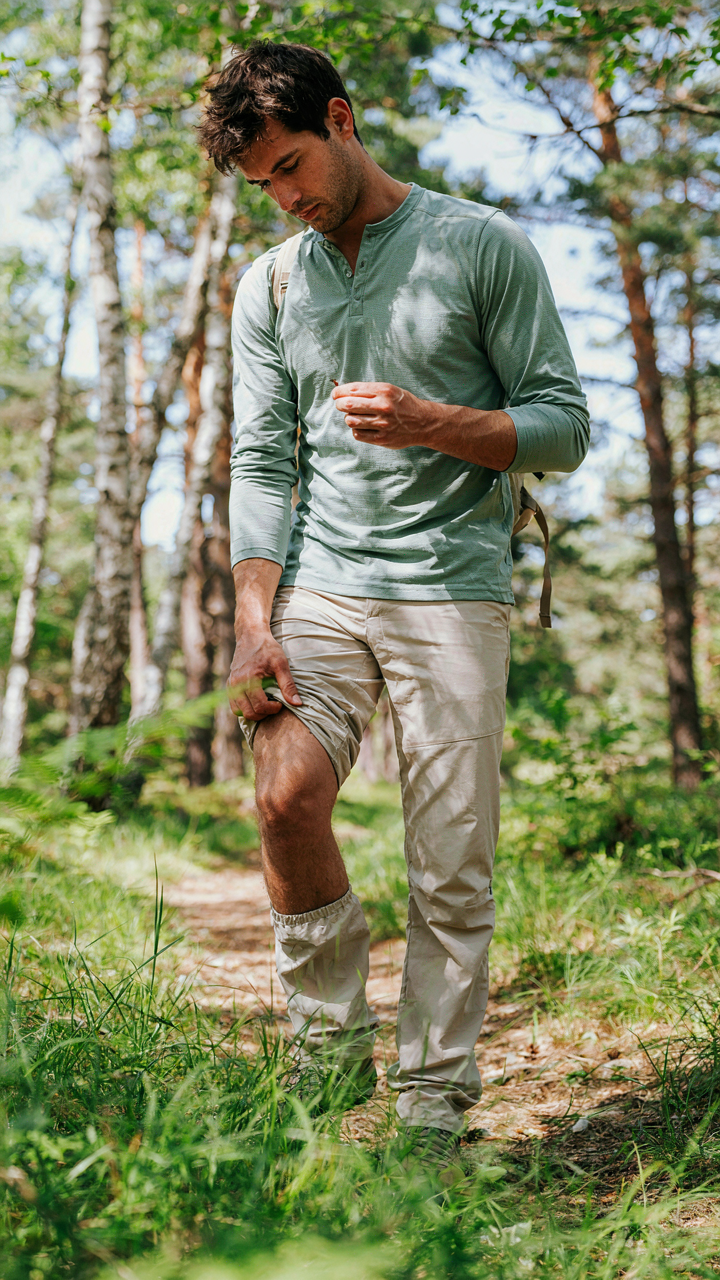
This isn’t about comfort or itching. This is epidemiology applied to your legs. Ticks transmit Lyme disease, babesiosis, and anaplasmosis. Mosquitoes carry West Nile virus and dengue in certain regions. Your outfit becomes a barrier against biological vectors, not just weather.
Light-colored pants and long sleeves make ticks visible before they attach, which changes the outcome. Treat clothing with permethrin before hiking, not after. The chemical bonds to fabric fibers and persists through multiple washes. Wear socks that cover your ankle-to-calf gap completely—ticks exploit transition zones. Permethrin application is the single highest-impact decision you make for disease prevention on a summer hike.
The “Zero Distraction” Principle For Hiking Outfit For Men
Pockets: Utility, Not Excess
You want pockets because you’re afraid of losing your phone or keys, not because you need seventeen compartments. The mechanism is simple: every unused pocket becomes dead weight your body carries uphill. Cargo pants and vests marketed to hikers exploit this fear by adding pockets that stay empty. Strip them out. Count what you actually carry on a hike—phone, keys, maybe a snack—and choose garments with exactly that capacity, nothing more.
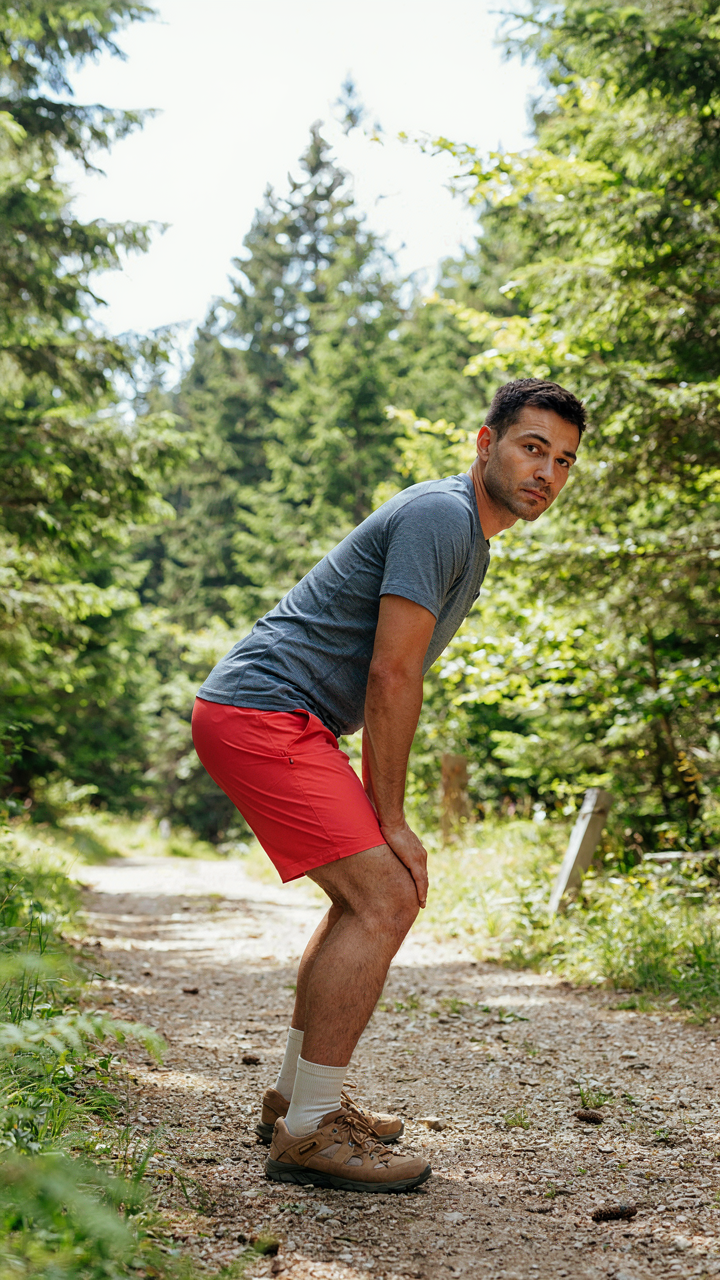
The best summer hiking pants have two front pockets and one rear pocket. That’s the standard for a reason. Side cargo pockets add bulk without proportional utility and catch brush on narrow trails. Shorts with mesh linings in the pockets prevent sweat pooling and keep items dry. If you need more storage, use a pack. Pockets exist to keep your hands free and essentials accessible, not to inflate garment price tags.
Range Of Motion Over Fit Standards
Fashion fit and hiking fit are antagonistic forces. Tailored shorts that look sharp in a store restrict your stride on an incline and bunch behind your knees when you squat. The physics term here is degrees of freedom—hiking demands maximum range without triggering muscle strain. Your legs need clearance at the hip crease and thigh without the fabric pulling taut anywhere.
Seams should sit on the outer thigh, not down the center. Inseams should end two inches above the knee in shorts, allowing full knee flexion without fabric bunching. Test this by doing a deep squat in the fitting room. If you can’t descend past parallel without the shorts pulling, they’re wrong. The garment should move with your body, not against it.
Accessory Arsenal: Amplifying Your Outdoor Style

The Hat Question Beyond Sunburn
You want people to notice you’re the type who prepares. That’s not shallow—it’s signal. But here’s what everyone misses: a hat on the trail operates on the same principle as camouflage in military doctrine. It breaks your silhouette against the environment while protecting the single most exposed surface on your body. UV damage compounds over years. One summer of exposure accelerates skin degradation permanently.
Choose a hat with a brim that extends at least two inches forward and one inch back. Merino wool or synthetic blends dry faster than cotton and won’t retain sweat against your scalp. Dark colors absorb heat; light colors reflect it. Fit matters more than brand. A hat that shifts in wind wastes cognitive load—your brain tracks it instead of the terrain. Secure retention means one variable eliminated.
Grip And Damage Control
- Leather or synthetic leather gloves: Protect palms from rope burn and sharp rock edges during scrambling sections. Choose thin construction so you maintain tactile feedback on handholds.
- Fingerless or half-finger designs: Allow dexterity for map reading, camera operation, and first aid tasks while protecting the vulnerable back of your hand from UV and abrasion.
- Touchscreen-compatible synthetic gloves: Enable phone navigation without removal. Look for reinforced thumb and index finger where wear concentrates fastest.
- Climbing or approach gloves with silicone palms: Grip wet rock and metal better than bare skin. Essential if you’re traversing exposed ridges or scrambling terrain.
- Lightweight liner gloves: Layer underneath heavier gloves for warmth regulation or wear solo in mild conditions. Merino wool liners wick moisture better than synthetics.
Most hikers skip gloves or choose the wrong type. You don’t need mountaineering gloves on summer trails—you need hand protection that adds zero friction to movement. Test grip on rock or metal before buying. Your hands navigate technical terrain; compromised grip means compromised safety. The glove should be an extension, not a constraint.
Post Hike Recovery: Extending Peak Performance
Why You Actually Change Clothes After Hiking
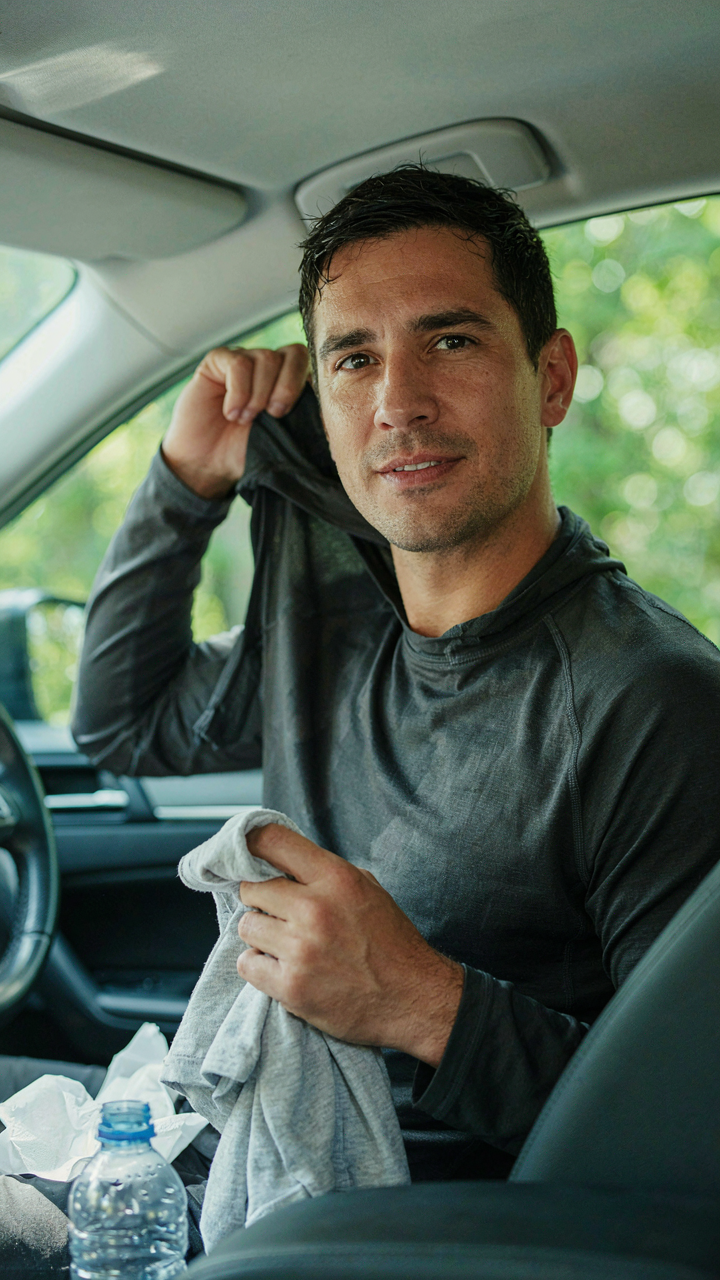
You want to feel like you recovered well because it signals you’re someone who finishes strong, not someone who collapses. Here’s the actual mechanism: sweat-soaked fabric cools your skin too aggressively through evaporation, triggering a drop in core temperature that reads to your body as threat. This stalls muscle repair and prolongs the inflammatory phase of recovery. Changing into dry layers stops this sabotage immediately.
The common advice about “just let yourself cool down naturally” is incomplete. Yes, gradual cooling prevents shock. But sitting in wet synthetic fabric accelerates heat loss beyond what’s useful. Cotton holds moisture longest and continues cooling for hours. Merino wool dries faster and maintains insulating properties even damp. The swap from hiking wear to dry clothes isn’t comfort theater. It’s thermal management that directly impacts how quickly your muscles recover and soreness resolves.
Small Shifts In Fabric Choice Compound
Think of this through the lens of marginal gains from sports science. Each small advantage stacks. A fresh t-shirt of moisture-wicking synthetic material removes sweat 40 percent faster than cotton. Lightweight joggers in breathable nylon keep your legs from overheating while allowing airflow. Clean socks prevent blisters that haven’t fully formed yet from progressing into real damage. Changing strategy prevents post exertion pitfalls by removing the conditions that cause them.
Most hikers treat post-hike clothing as an afterthought. They stay in their hiking kit until evening. By then, chafing has set in, salt buildup irritates skin, and muscle soreness accelerates from prolonged inflammatory response. Spend two minutes changing into fresh apparel immediately after the hike ends. Pack a lightweight shirt, shorts, and socks in your vehicle or day pack specifically for this purpose. This single protocol reduces soreness onset and extends your ability to hike again sooner.
The “Edison Fallacy” Of Gear Acquisition
The 20 Percent That Matters
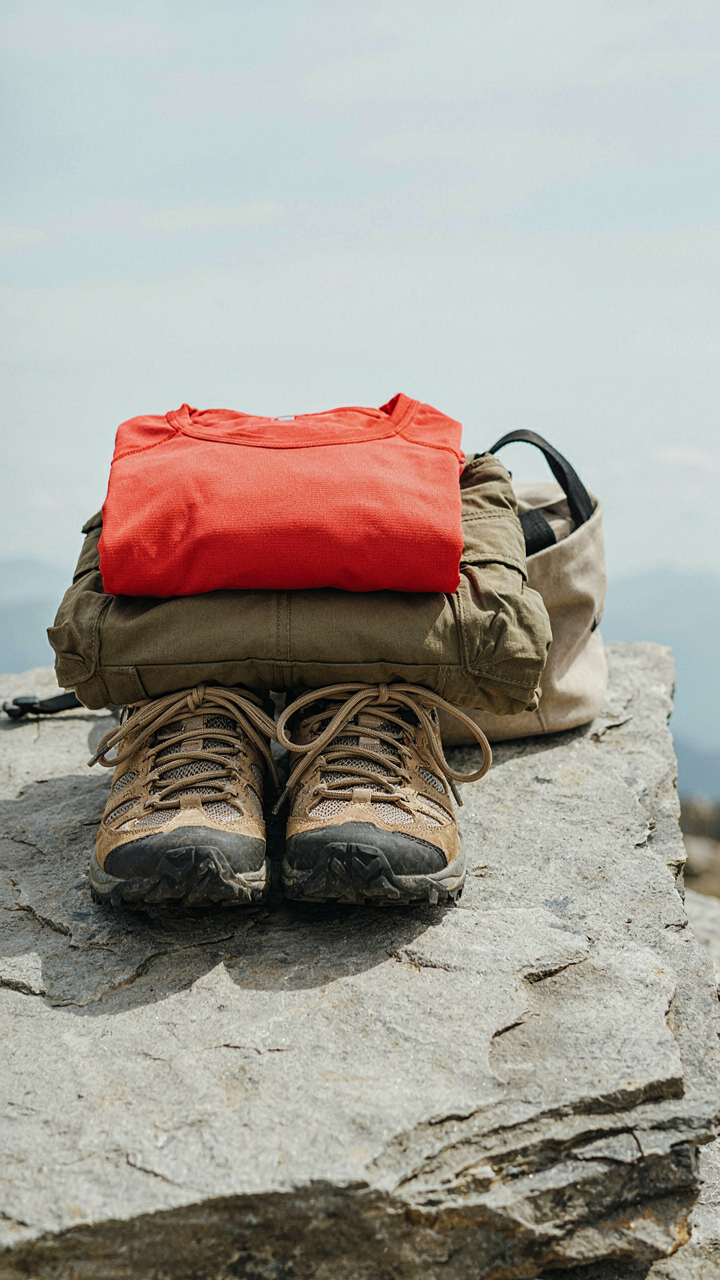
You’re worried you’re missing something, and that fear is selling you gear you don’t need. Economics calls this the Pareto principle: 80 percent of your hiking comfort comes from 20 percent of your equipment. For summer hiking, that 20 percent is lightweight base layer, shorts with quick-dry fabric, and trail shoes with grip. Everything else is noise competing for your wallet.
Most hikers invert this. They buy the exotic insulated jacket, the premium pack, the brand-name everything before they own basics that actually function. You notice this at trailheads: guys loaded with expensive gear that doesn’t fit their body or the season. Start with the minimal set that solves real problems. Add nothing until you’ve logged twenty miles in what you own and identified a genuine gap.
Gear As Durability, Not Status
Stop thinking of a hiking shirt as a purchase and start thinking of it as an asset with a lifespan. Real gear compounds over seasons. A merino wool shirt lasts longer than cotton because it resists odor and wear. A pair of quality trail shoes with resoleable construction outlasts two pairs of disposable knockoffs. You’re not buying more expensive, you’re buying more uses per dollar.
The mechanism is simple: initial cost divided by actual miles worn equals true cost per use. A 60-dollar shirt worn fifty times costs 1.20 per wear. A 25-dollar shirt worn ten times costs 2.50 per wear. The expensive thing becomes cheap when you actually use it. Don’t ask what it costs. Ask how many summers it survives.
The Real Obstacle: Your Belief That More Gear Equals More Preparedness. It’s A Weakness, Not A Strength
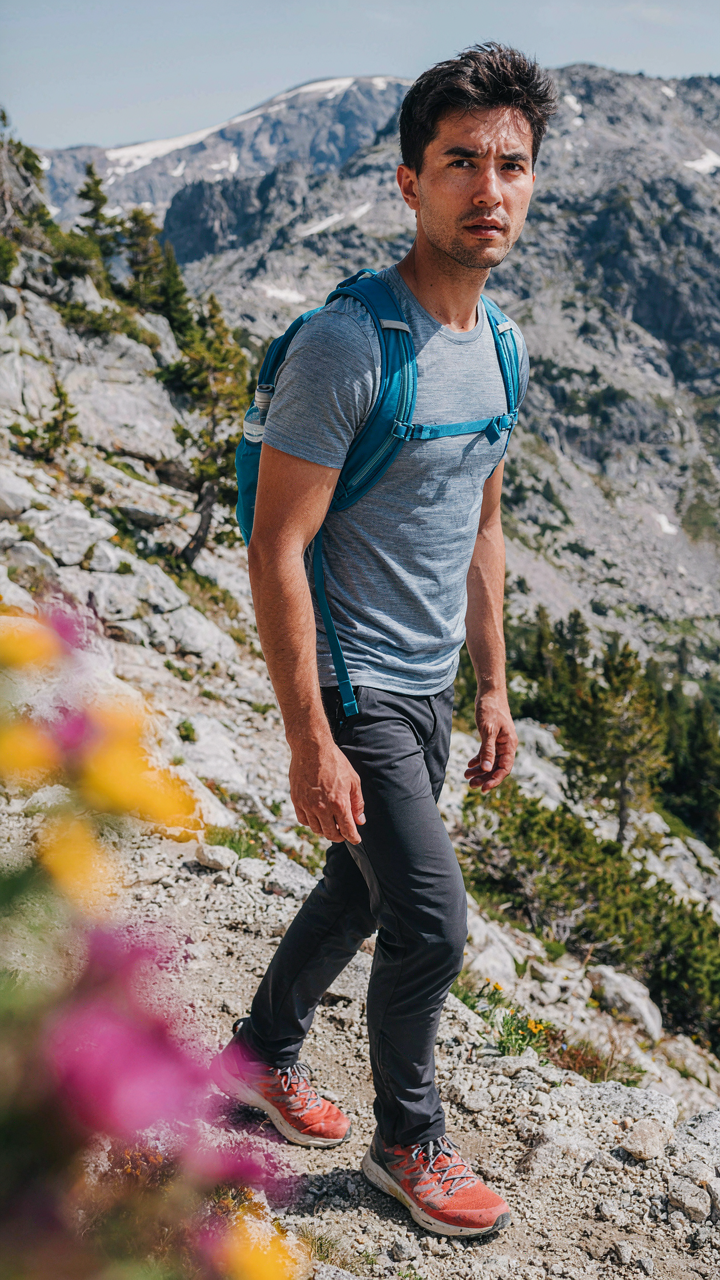
Most men stuff their backpacks like they’re preparing for war. They confuse weight with wisdom. The best summer hiking outfit men actually wear does one thing: it moves with them, not against them. Strip it down today. Pick three core pieces that work together. Wear them on a short hike. Feel the difference between carried gear and gear that carries you. Minimalism isn’t about deprivation. It’s about moving faster than your excuses.