

The Sweat Wicking Protocol: Beyond Basic Fabrics

Synthetic Versus Natural Fibers: What Actually Works
You want to believe cotton is fine because it feels familiar and costs less. Here’s the mechanism: cotton absorbs sweat into its fibers, holds it against your skin, and dries slowly. Synthetics like polyester and nylon don’t absorb water. They move moisture away from skin to the fabric surface where it evaporates faster. On a summer hike, this difference determines whether you stay comfortable or chafe within two hours.
Merino wool sits between both categories and performs differently than either. It wicks moisture while regulating temperature better than synthetics, but costs more and requires specific care. For college students hiking in summer heat, polyester blends or nylon dominate for one reason: they’re cheap, they work, and they dry in hours instead of a day. The trade off is durability. Synthetics degrade faster under UV exposure and repeated washing. Cotton fails functionally but lasts longer. Pick based on trip length, not loyalty to one material type.
Evaporation Dynamics: The Physics That Matters

Evaporation follows thermodynamic law: water molecules require energy to transition from liquid to gas. Your body provides that energy. In humid conditions, air already holds moisture, so evaporation slows dramatically. A fabric’s weave density and fiber diameter determine how quickly moisture moves across the surface and exposes itself to air.
Tight weaves trap moisture against skin longer than loose weaves. Thin fibers create more surface area per volume, accelerating evaporation. This is why hiking shirts use open mesh panels and thin polyester blends instead of dense cotton. You can’t change humidity, but you control fabric properties. Pair loose weave synthetics with ventilated panels over your torso and underarms. Sweat reaches the fabric surface and evaporates before it pools. This single protocol change keeps core temperature lower and extends hiking duration before fatigue sets in.

Sun Blocker Tactics: Your Skin As A Strategic Asset
UPF Ratings Decode What Marketing Won’t
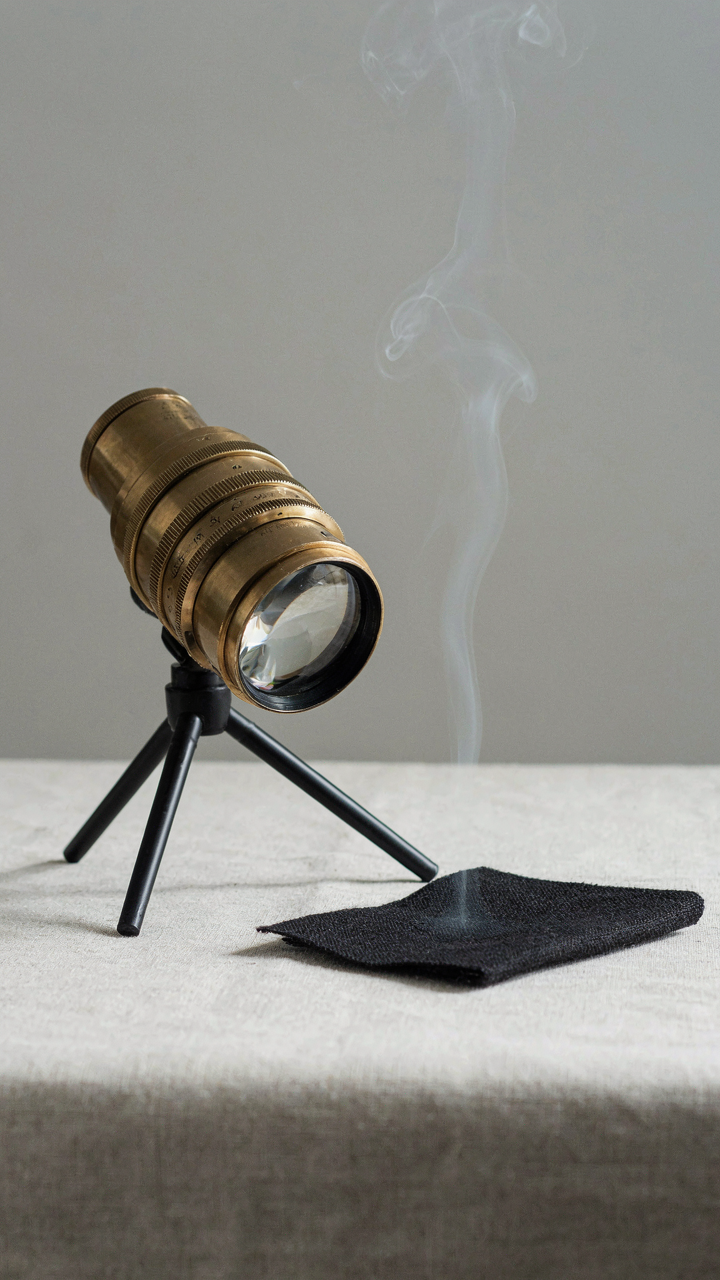
You care about this because skin damage is invisible until it isn’t, and by then you’ve already lost. The real mechanism: UPF (Ultraviolet Protection Factor) is a physics problem, not a marketing number. It measures how much UV radiation passes through fabric. A UPF 50 shirt blocks 98% of UVA and UVB rays. A regular cotton t-shirt sits around UPF 5 to 7. The difference compounds over years.
Most college hiking guides skip the actual science and tell you to “wear sunscreen.” That’s incomplete. Fabric with tight weaves and synthetic fibers (polyester, nylon) naturally deflect radiation better than loose cotton. You need base layer shirts rated UPF 25 minimum. Check the tag before buying. If it doesn’t state a UPF number, the fabric isn’t engineered for sun protection and sunscreen alone won’t cover eight hours on a trail.
Hat Buff And Sleeve Strategy
The real integration isn’t picking random items—it’s layering coverage zones. Your face, ears, and neck are where melanoma clusters. A wide-brimmed hat (three inches minimum) covers the face and ears in one move. A neck gaiter or buff worn as a balaclava handles the throat and lower face. Long sleeves in UPF fabric cover forearms where sun damage accumulates fastest on hikers. Don’t treat these as separate choices. They’re a system.
The mistake: assuming one item does the job. Hats leave ear and neck gaps. Buffs alone don’t protect forearms. Sleeves don’t cover the face. Stack them deliberately. Wear a hat with a chin strap so wind doesn’t strip it off on exposed ridges. Pull the buff up during high sun hours (10 a.m. to 4 p.m.). Roll your sleeves down when you’re above treeline. The protocol beats the product every time.
The Chafing Avoidance System: Engineering Comfort

Seam Placement Minimizes Friction Points
You care about this because a blister or raw patch kills your hike faster than fatigue, and you’ll blame yourself for not knowing. The real mechanism: friction multiplies when seams sit where your body moves. Flat seams on shorts and shirts reduce pressure concentration. Side seams matter more than back seams because legs generate more repetitive motion during climbing. Look for garments with seams placed along the outer thigh, not the inner thigh where skin-on-skin contact already exists.
Modern athletic brands borrowed from swimwear design, which solved this problem decades ago through strategic seam routing. Merino wool blends and synthetic fabrics tolerate friction better than cotton, but seam placement remains the primary variable. A $30 shirt with correct seam geometry outperforms a $120 premium brand with poor seam routing. Check the inner tag before buying: if seams run along the sides and shoulders rather than across stress zones, the garment works.
Intelligent Base Layers Do One Job
The common advice calls for “moisture-wicking” as if that solves chafing. It doesn’t. Moisture-wicking moves sweat away from skin, but chafing happens regardless of moisture level because of fabric movement and friction coefficient. The mechanism is material science: base layers should reduce surface drag, not just absorb sweat. Merino wool naturally resists friction and regulates temperature without needing chemical treatment. Synthetic blends with nylon or polyester work if they have a tight weave that minimizes fabric bunching.
Cotton holds moisture, creates heavier friction, and bunches during movement. Avoid it entirely. Your base layer should feel thin and stay in place during vertical movement, which means fit matters as much as material. A tight base layer moves with your skin instead of sliding independently, eliminating the chafing mechanism at its source.
Footwear Foundation: The Unsung Hero Of Adventure Outfit
Traction Metrics For Varied Terrain
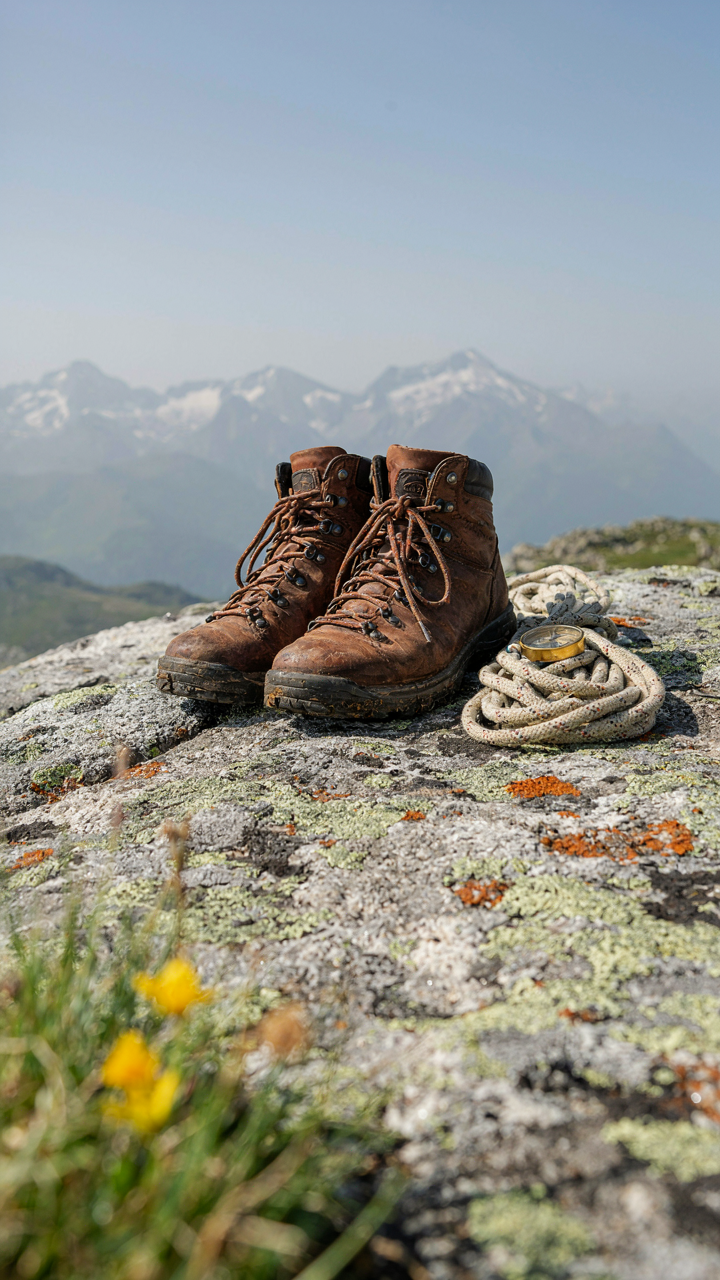
You care about this because you don’t want to look like you don’t know what you’re doing. The real mechanism is simple: grip is physics. Friction between sole and surface determines whether you slip on wet rock or loose scree. Most college students grab whatever hiking shoe is on sale, which is how you end up sliding backward on a muddy descent and looking incompetent.
Sole design matters more than brand. Vibram and similar rubber compounds offer measurable grip across different surfaces because they balance stickiness with durability. Tread pattern works through channels that evacuate water and mud, preventing the hydroplaning effect that kills traction on wet terrain. Summer hiking creates specific conditions: wet trails from morning rain, loose talus fields, and algae-slick rocks near water crossings. Your shoe needs edging for these, not just flat rubber. Test grip by pressing your shoe against wet tile before you buy. If it slides easily, skip it.
Sock Science For Blister Prevention
The common advice is wrong: cotton socks don’t cause blisters in the way people think. Blisters form from friction and heat combined. Cotton holds moisture against your skin, which softens the epidermis and makes friction damage worse. Merino wool or synthetic blends wick sweat away, keeping your skin drier and more resilient.
The protocol is straightforward. Buy merino wool or polyester blend socks rated for hiking, not generic athletic socks. Wear them two sizes up from your normal sock size to prevent compression, which restricts blood flow and increases heat buildup. Change socks if they get wet during the hike. Moisture is the enemy. Pack an extra pair in your backpack if your hike exceeds four hours. Start with dry feet, keep them dry, and blisters become rare.
The Minimalist Pack: Camping Outfits For Women Efficiency
Weight To Utility Ratio Essentials
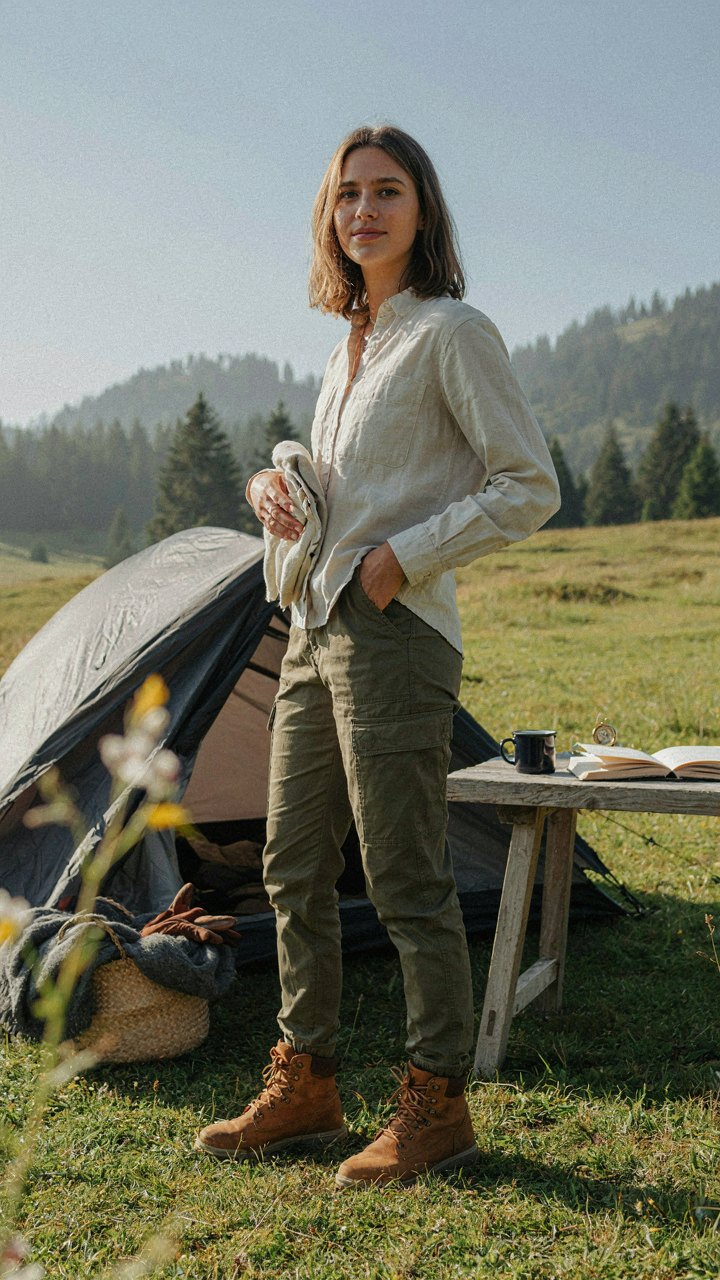
You want to feel prepared without admitting you’re scared of looking unprepared. The mechanism is simple: physics governs your decision, not fashion. Every item competes for space and load capacity. You’re running a payload optimization problem—military logistics uses the same framework to maximize combat effectiveness per pound carried. Strip your pack to items that prevent failure or solve problems that actually occur on the trail.
- Moisture-wicking base layer: Synthetic or merino wool, not cotton. Dries fast and prevents chafing during sustained movement. One top and one bottom covers most summer conditions.
- Lightweight shorts or convertible pants: Nylon with UPF rating. Choose one instead of carrying multiples. Convertible models give you flexibility without doubling weight.
- Sun protection layer: A thin long-sleeve shirt or hoodie. Weighs almost nothing, prevents sunburn that ruins hikes, and adds warmth if elevation drops temperature fast.
- Insulation for evening: A packable down or synthetic jacket. Summer mountain temps drop 30 degrees after sunset. Choose one that compresses to fist-size.
- Rain shell: Hardshell or lightweight softshell. Non-negotiable. Summer storms move fast and hypothermia happens even in July at altitude.
The list above assumes you’ve already identified what actually fails on your hikes. Most hikers pack redundant items they never use. Review your last three hikes. What did you reach for? What stayed in the pack? Cut everything else. Your pack weight drops 20 to 30 percent before you even leave your dorm.
Strategic Access Without Friction
Packing your gear matters as much as what you pack. You need critical items reachable without dismantling your entire bag mid-trail. The top third of your pack holds what you access frequently: water, snacks, sunscreen, rain shell. The middle stores insulation and reserve layers. The bottom holds heavy items like extra water and camp equipment that stay put until setup.
This ordering prevents you from digging through everything to find sunscreen, then leaving it accessible instead of repacking. A hip belt pocket on your pack should hold your phone, keys, and a small first aid kit. You stop and access these items dozens of times per day. Make them grab-and-go. This reduces friction and keeps you moving instead of fumbling with zippers and straps for five minutes each time you need something essential.
Beyond Aesthetics: Park Outfits For Women Functionality

Durability Tests: Investing In Longevity
You want to look competent on the trail without burning money every season. The mechanism is simple: fabric stress concentrates at seams and high-friction zones, and most cheap hiking wear fails there first. Apply the principle of stress testing from materials engineering—identify where your outfit experiences the most repeated force, then verify the garment survives that abuse before buying.
Nylon blends with gusseted seams outperform cotton in the thigh and crotch area during hiking. Check seam construction by running your thumb along the stitching; flat-felled or reinforced stitching holds longer than single-thread construction. Women’s hiking shorts from established brands like Patagonia or The North Face cost more upfront but last three to four seasons of regular use, while mall brands last one season. The real test: wear the shorts on a two-mile hike and inspect the seams for fraying or separation. If they hold, the investment pays out.
Pocket Utility: Accessibility In Motion
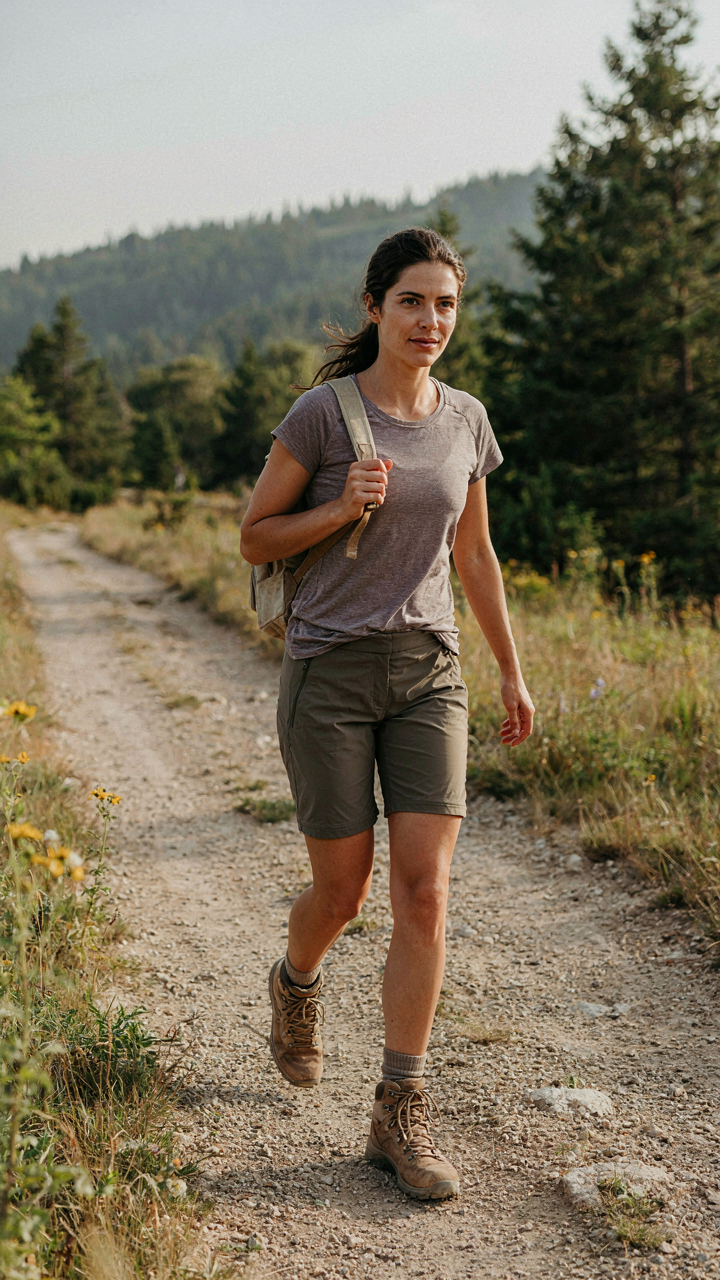
Most women’s hiking gear has pockets that exist for decoration, not function. You need pockets deep enough for a phone or keys and positioned so items don’t bounce or slide out during steep terrain. Design matters here because pocket placement and depth determine whether you actually use the gear or waste energy managing logistics.
Zippered thigh pockets on shorts or pants keep items secure during elevation change and scrambling. Front waist pockets should fit a standard phone without bulging or shifting. Test this by jogging in place for thirty seconds with your phone in the pocket; if it moves, that pocket is theater. Side pockets that sit high on the hip stay accessible without requiring you to reach behind or below your waist. Verify pocket depth before purchase by physically placing your phone or keys inside while wearing the shorts.
Emergency Readiness: The Unseen Hiking Shorts Outfit Women
Compact First Aid Kit Essentials
You’re buying a first aid kit because you want proof you’re prepared, not because you actually think you’ll need it. Here’s the mechanism: most college students pack full kits that sit unused while undersized gaps—blisters, minor cuts, dehydration signs—become real problems on the trail. A compact kit works because it forces prioritization. You carry only what solves 80% of trail injuries, which means blister treatment, pain relief, antibiotic ointment, bandages, and electrolyte packets. Weight stays under eight ounces.
The kit doesn’t prevent emergencies. It reduces response time when they happen. Store it in a waterproof pouch inside your pack’s hip belt pocket, not buried in the main compartment. Accessibility during a hike determines whether you treat a problem immediately or let it escalate. Check contents before every trip. Replenish used items the same day you return. This isn’t optional maintenance—it’s the difference between a managed situation and a wasted afternoon.
Signaling Tools Often Ignored
Military strategy teaches the concept of “redundancy in communication”—the principle that no single signal method guarantees contact with rescuers. Apply this to summer hiking. A whistle works when your voice doesn’t. A mirror works in daylight when you can’t yell loud enough. Neither costs more than five dollars. Most college hikers carry neither because they don’t imagine needing them.
Pack a signal whistle rated for 100+ decibels and a compact signal mirror. Both fit in a cargo pocket. The whistle works in fog, thick brush, or distance where shouting fails. The mirror reflects sunlight visible for miles on clear days. Test the mirror before your trip—angle it at a distant tree to confirm the flash reflects correctly. Attach the whistle to your pack strap with paracord so you access it instantly. These aren’t insurance policies. They’re tools you deploy the moment you need to be found, not hours after panic sets in.
The Post Hike Recovery: Optimizing Your Next Hike Outfit

Wash Your Gear Before It Becomes A Biohazard
You want your stuff to last because replacing hiking gear on a college budget is brutal. Here’s the mechanism: sweat and dirt don’t just sit on fabric. They break down synthetic fibers through salt crystallization and trap moisture that rots the material from inside out. Wash your hiking clothes within 24 hours, not when you remember. Cold water, gentle cycle, no fabric softener. Softener fills the weave and kills breathability permanently.
Your boots and pack need different treatment. Rinse boots with cool water and let them air dry completely away from direct heat. Never use a dryer. For your pack, wipe the interior with a dry cloth and brush off exterior dirt. If straps are truly filthy, hand wash them separately. Mildew takes root in damp gear sitting in a dorm closet, and once it starts, you’re buying replacements.
Fuel The Repair Process, Not The Story
Biology calls this protein synthesis, and your muscles need amino acids to rebuild after six hours on a trail. The common advice is vague: “eat something nutritious.” That’s lazy. You need real protein within two hours of finishing. A chicken sandwich, greek yogurt with granola, or even a protein shake counts. Your body doesn’t care about the narrative, only nitrogen availability.
Sleep beats every recovery supplement college students sell each other. After a hard hike, your body does most of its repair work between hours three and seven of sleep. You don’t need special recovery socks or compression gear. You need eight hours the night after your hike and proper electrolyte replacement if you sweated hard. Drink water throughout the next day, not just at the trailhead. The mechanism is simple: hydration maintains blood volume, which delivers oxygen to healing muscle tissue.
The Real Obstacle Isn’t The Trail; It’s Your Untrained Mind Clinging To Perceived Vulnerabilities

Most college students never hike because they invented a version of themselves that “isn’t outdoorsy.” That person doesn’t exist. You’re holding yourself back with a story, not facts. Stop researching the perfect outfit and buy cheap shorts, a t-shirt, and decent shoes today. Start walking tomorrow. The trail doesn’t care about your gear. Your mind does.