

The Pre Mortem Protocol: Averting Disaster Before It Strikes (Camping Inspiration)

Where Most Trips Collapse
You’re drawn to this section because you’re afraid of looking unprepared in front of people who matter. The mechanism is simple: most camping trips fail not from bad luck but from skipping the one step that costs nothing. You identify failure modes before departure by asking what went wrong on past trips, then working backward to the decision that created it. Bad weather ruins the mood, but poor site selection ruins the entire weekend. A forgotten stove is an inconvenience, but no backup water source is a genuine crisis. The difference between a salvageable trip and a canceled one is whether you named the failure before you packed.
Most advice tells you to “just plan ahead” or “make a checklist.” That’s incomplete. A checklist prevents forgotten items. A pre-mortem prevents structural collapse. You walk through the actual trip in your mind from arrival to departure, then ask: where does this break? Not hypothetically. Specifically. What weather pattern kills this plan? What gear failure forces us home? What interpersonal conflict emerges on day three? Write down three realistic failure scenarios for your specific location, group size, and season. This isn’t pessimism. It’s the difference between a trip you enjoy and a trip you endure.
Contingency Layers That Actually Work
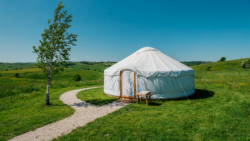
Military strategy calls this redundancy, and camping demands the same principle: every critical function needs a backup that works independently. Your primary water source fails when the stream runs dry or a filter clogs. Your contingency is bottled water or a secondary filtration method carried separately. Your primary shelter fails when a tent pole snaps or seams leak. Your contingency is a tarp and cordage rigged as a lean-to. These aren’t nice-to-haves. They’re the difference between discomfort and danger. Build contingencies only for systems that fail catastrophically, not for comfort items. Backup cooking is essential. Backup bug spray is not.
The protocol is methodical: for each critical system (water, shelter, fire, food, first aid), name what happens if it fails completely, then carry one backup that solves that failure without relying on the primary system. A dead headlamp means a spare flashlight in a different pack. A torn sleeping bag means an emergency blanket or backup bag stored separately. Test these backups at home before the trip. A contingency that doesn’t work is worse than no contingency because it creates false confidence. Pack it, verify it works, then forget about it until you need it.

Deconstructing The Camping Aesthetic: Beyond The Filter

Real Camping Versus The Instagram Version
You want to believe your camping trip will look like the photos. That’s the real reason you’re reading this section. The mechanism is simple: social media collapsed the distance between aspiration and identity, so now people confuse a well-composed image with an actual experience. The camping aesthetic industry exists because this confusion is profitable. Gear companies, influencers, and content platforms all benefit when you chase the look instead of the function.
Here’s what actually matters: a camping trip succeeds or fails based on what you can sustain for the duration, not how it photographs. The difference between performative camping and functional camping is the difference between optimization for an audience and optimization for the environment you’re in. Performative camping requires constant curation. Functional camping requires you to know what breaks, what wears out, and what you genuinely need when you’re ten miles from resupply. Start by asking what would change about your gear choices if nobody would ever see them.
Reducing Gear To Increase Clarity
The common advice says bring less gear for freedom. Wrong framing. In systems design, constraint drives innovation. You don’t reduce gear to feel free or noble. You reduce gear because fewer variables mean faster decision-making and less time troubleshooting in the field. Each item you carry is a potential failure point and a distraction from the actual experience.
The practical protocol is ruthless subtraction. Before a trip, lay out everything. For each item, ask: what specifically does this solve that nothing else solves? If two items serve overlapping functions, pick one. If you can’t articulate the specific problem it solves, it doesn’t come. This isn’t minimalism for aesthetics. It’s operational efficiency. A five-day trip with seven items you understand beats a five-day trip with twenty items you half-remember owning. Test this system on a single overnight before committing to longer trips.
The Expeditionary Mindset: Strategic Wilderness Navigation

How To Ration Finite Resources
You want to feel competent in the field, but most people confuse competence with owning the right gear. Military logistics borrows from economics the concept of constraint optimization: you cannot maximize comfort and minimize weight simultaneously. Your camping trip operates under the same principle. Every item competes for pack space and energy expenditure.
Start by identifying your actual bottleneck, not your assumed one. Water is rarely the constraint on a three-day trip because you can source it from reliable points. Calories and shelter are the leverage points that determine trip success. Build your resource allocation around these two first, then fill remaining capacity with items that solve real friction points you’ve experienced before, not hypothetical scenarios you imagine.
Planning The Supply Chain Before You Leave
The difference between a smooth trip and a chaotic one lives in sequencing decisions made at home. Logistics in supply chain management treats dependencies and lead times as the real cost of operations. Most camping advice skips this entirely and jumps to packing lists, which is backwards. You need to know which items you can acquire last minute, which require advance ordering, and which depend on other decisions.
Map dependencies backwards from your trip date. If you’re car camping, fuel availability is not a constraint. If you’re backpacking into a remote area, water treatment capacity determines your route and camp locations, which determines shelter size, which determines pack weight. Once you identify the actual dependency chain, create a staging timeline. Buy perishables three days before departure. Prep fuel and test equipment one week out. This prevents the friction of last-minute scrambling and reveals what you actually need versus what you think you need.
Unplugging For Real: Reclaiming Focus In Nature
The Actual Cost Of Your Phone In Camp
You want to believe you’ll disconnect, but you’re really afraid of missing status updates from people you don’t actually care about. Here’s the mechanism: your phone triggers a dopamine loop designed by engineers paid to make it addictive. Removing it from camp isn’t about willpower. It’s about removing the stimulus entirely. Bring it in your car, locked in the glove compartment, ten miles away. Not in your tent. Not in your backpack.
The research on attention recovery is clear. Your brain needs roughly seventy-two hours without notification pings to reset. Most camping trips last three to five days, which means the first forty-eight hours are just your nervous system recalibrating. Don’t waste those hours checking messages. You’re paying money and time to be there. Use it.
Presence Without The Pretense
Mindfulness in the wild doesn’t mean meditation circles or spiritual awakening. Apply the economics concept of scarcity: your attention is finite, and you’re choosing where to allocate it. Most people waste attention on internal narrative instead of external data. At camp, you have one job: notice what’s actually happening.
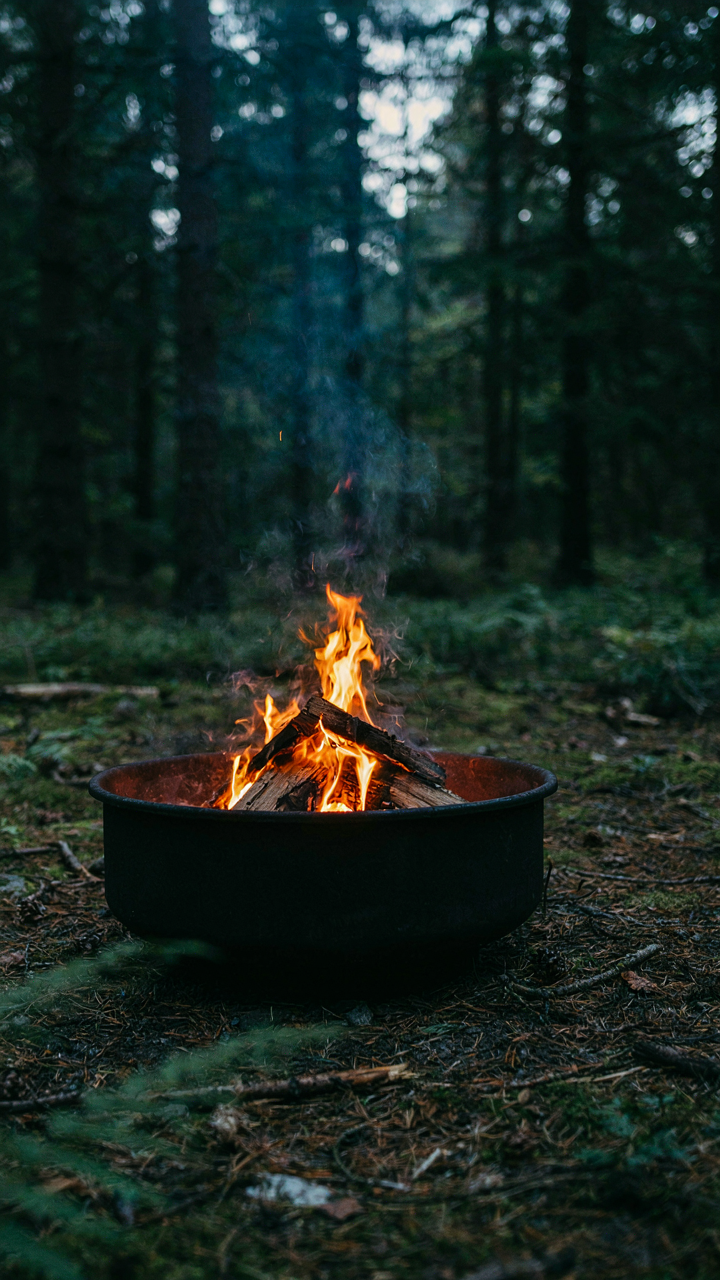
This means sitting by the fire without doing anything else. Not journaling. Not thinking about work. Not narrating the experience to yourself for a future Instagram post. Just fire, sounds, temperature, the specific smell of that location. This trains your brain to process sensory input instead of manufacturing thoughts about sensory input. On the last day of your trip, you’ll realize you remember details with unusual clarity. That’s not magic. That’s what human attention is actually capable of when you stop dividing it.
Mastering The Elements: Weatherproofing Your Experience

What The Sky Actually Tells You
You want to feel competent in the wilderness without actually studying atmospheric pressure. Here’s the mechanism: weather patterns follow predictable local signatures if you stop looking at your phone and start observing actual conditions. Wind direction shifts, cloud formation sequences, and humidity changes happen hours before rain arrives. Learn to read these tells and you eliminate the panic that kills trips.
Cloud type matters more than the forecast app ever will. Cumulus clouds stack vertically and signal afternoon thunderstorms in mountain terrain. Cirrus clouds appear as thin, wispy strands and indicate weather changes within 24 hours. Stratus clouds sit flat and low, meaning overcast conditions but no immediate precipitation. Watch how clouds move relative to the terrain, not just their appearance. The real skill isn’t prediction—it’s positioning your camp where you can retreat fast when conditions deteriorate.
Gear That Stops Excuses Dead
Most campers pack rain gear they never deploy because they bought the wrong category for their actual environment. Layering works through thermodynamics—trapping still air creates insulation, but only if your outer layer stops wind first. The sequence is base layer (moisture management), insulating layer (usually fleece or down), and shell layer (wind and water block). Get this wrong and you’re cold even in 60-degree weather because wind strips heat faster than most people calculate.
- Merino wool base layers: Regulates temperature across wide ranges and prevents odor buildup on multi-day trips. Works when wet better than synthetics.
- Hardshell jacket rated for your climate: Three-season shells handle rain and light snow. Four-season shells add reinforced seams and pit zips. Know which your destination requires.
- Down insulation with synthetic shell: Down compresses small for pack space but loses insulation when wet. Synthetic holds warmth while damp. Hybrid jackets solve both problems.
- Emergency bivy or space blanket: Ultralight backup that prevents hypothermia if you get stranded. Takes 10 seconds to deploy and weighs ounces.
- Waterproof pack liner or dry bags: Separates wet gear from dry gear instantly. Prevents the cascading failure where everything dampens after one downpour.
Pack these items separately from daily gear so you access them before conditions deteriorate. The mechanism isn’t owning gear—it’s deploying it before the moment you actually need it becomes obvious. Most campers wait until they’re shivering to add layers. By then, your body temperature has already dropped and your decision-making degrades fast.
Survival Skills You Actually Need: Beyond The Basics

Fire Starting Without A Lighter
You want to know this because you’re afraid of looking helpless in front of people who matter. Here’s the mechanism: fire requires three inputs—fuel, oxygen, and heat source—and most campers only practice with the heat source they’ll never actually have. Friction methods like bow drill and hand drill work because sustained mechanical pressure generates temperatures above 400 degrees Fahrenheit at the contact point. The skill isn’t mystical. It’s physics applied to wood.
Ferro rods outperform every other no-lighter method because they produce sparks at 3000 degrees Fahrenheit, hot enough to ignite char cloth or dry tinder instantly. Carry char cloth prepped with petroleum jelly. Strike the rod at a 30-degree angle toward your tinder bundle, not away from it. Most people fail because they don’t understand that tinder, kindling, and fuel wood exist in a specific sequence—tinder catches spark, kindling catches tinder, fuel wood catches kindling. Skip one and you restart from zero.
Emergency Shelter Construction
Shelter priorities follow the rule of threes from survival medicine: three weeks without food, three days without water, three hours without shelter in hostile conditions. A debris shelter beats tarps because it uses materials already present and requires zero equipment. Dig a trench, pile branches over the top at a steep angle, then layer leaves and debris thick enough to break wind and trap body heat. The slope matters. Too flat and water pools. Too steep and debris slides off.
The mechanism is insulation through dead air space. Your body radiates heat constantly. Shelter captures that radiant energy by creating barriers the wind cannot penetrate. A properly constructed debris shelter can raise internal temperature 20 to 30 degrees above outside air. Test your construction at night before emergency happens. Most people never practice shelter building until the moment matters, which guarantees failure when stress narrows your thinking. Build one during your trip when stakes are zero.
Leave No Trace: The Ethical Wilderness Code (Forest Camping)

Plan Your Impact Before You Pack
You care about this section because you want to feel like you belong in wild spaces without the guilt. Here’s the mechanism: Leave No Trace is a system of constraints, not suggestions. It operates like supply chain logistics applied to nature—every input and output must be accounted for. You enter with a footprint. The code minimizes it through deliberate sequencing of where you camp, how you move, and what you disturb. Most people think it’s about being nice to trees. It’s actually about designing your presence so nothing proves you were there.
The core principle demands you camp on durable surfaces. In forests, that means bare mineral soil, rock, or established tent sites. Vegetation dies under repeated foot traffic. Once dead, it erodes. Once eroded, microhabitats collapse. Use existing campsites when available—don’t create new ones. If no site exists, stay on hardpan or bare ground and move camp daily so no single spot accumulates damage. This isn’t environmental tourism. It’s the difference between leaving a trace and leaving a scar.
Waste Disposal That Actually Works
The common advice on this is incomplete. Pack it out, yes, but that’s the floor, not the strategy. You need to categorize waste before the trip starts so you don’t improvise in the field. Ecology applies here: closed-loop systems don’t leak. Greywater—from washing dishes or your face—goes 200 feet minimum from water sources. It infiltrates soil and biodegrades. Solid waste travels home in dedicated containers. Human waste requires a cathole dug 200 feet from water and camp, eight inches deep, covered fully. Leave nothing that suggests human activity.
Camp stoves eliminate the need for fires, which means no ash scatter, no charred rocks, no bare soil. If you cook over fire in designated fire rings at established sites, burn only dead wood already on the ground. Don’t strip bark or fell branches. Every piece of trash—foil packets, microplastics from synthetic fabrics, bottle caps—must leave in the pack you brought it in. The protocol is simple: if you carried it in full, carry it out empty.
The Uncomfortable Truth: Embracing Adversity

Why Discomfort Builds Real Capacity
You want to feel like you’ve “earned” something without actually paying the price. That’s what draws people to the idea of camping as growth. But here’s the mechanism: adaptation only happens when your system faces stress it hasn’t solved yet. Biologists call this hormesis. In camping terms, it’s the gap between your current comfort threshold and the environment’s demands. A tent in the rain. No hot shower. Cold sleep. These aren’t problems to eliminate. They’re the actual workout.
Most camping advice sells comfort as the goal. Wrong. Comfort is the enemy of adaptation. When you deliberately choose a trip that removes familiar luxuries, your nervous system recalibrates. You learn to regulate temperature. You sleep deeper. You handle uncertainty without spiraling. The payoff isn’t Instagram footage. It’s a nervous system that doesn’t catastrophize when things go sideways. Plan a trip where you have fewer escape routes, not more. Minimal shelter options. Limited cell service. This creates the conditions where growth actually occurs.
The Mechanism Of Resilience Building
Comfort in discomfort isn’t a mindset hack. It’s a skill you build through repeated exposure, the same way you build muscle. You start with minor stressors: a night in a three season tent when temperatures drop. A camping trip with no amenities beyond water and fire. Then you layer complexity. Rain arrives. The stove fails. You navigate without GPS. Each cycle, your threat response gets quieter. Your problem solving gets faster.
The concrete move: schedule a camping trip that removes one major system you rely on. No electricity. No running water. No road access. Pick one constraint and commit to a full weekend inside it. Document what breaks first in your behavior, not the camp setup. That’s where your real edge lives. When you return to normal life, you’ve expanded the bandwidth of what you can handle. That’s the only outcome that matters.
The Post Trip Debrief: Optimizing Future Adventures

What Actually Worked And What Didn’t
You want to believe your trip was flawless so you don’t have to admit you wasted money and time on decisions you didn’t think through. The mechanism is simple: most people skip the debrief because it forces them to confront waste. But waste is data.
Write down three categories the night you return: gear that performed, gear that failed, and decisions that cost you comfort or time. Be specific. “The tent leaked” is useless. “Water entered through the corner seam where the rainfly didn’t overlap the base by two inches” is actionable. Same with decisions. Don’t say “the hike was long.” Say “we underestimated elevation gain and ran out of water at mile four.”
Building Your Personal Camping System
System design from engineering teaches us that constraints force efficiency. Apply this to camping: treat your next trip as a prototype iteration, not a one-off event. Each trip reveals what your body and mind actually need, not what forums and influencers say you need.
Compare trip reports side by side. Which sleeping bag temperature rating matched actual conditions? Which stove fuel type lasted longest relative to weight? Which campsite elevation or water access prevented problems? Document the pattern. After three or four trips, you’ll see what belongs in your core system and what stays home. This prevents you from solving the same problem twice.
The Curated Campsite Is A Distraction. Your Real Obstacle? The Inability To Thrive When The Algorithm Offers No Immediate Reward

Most people don’t plan camping trips because they can’t handle boredom. They need dopamine hits. They need validation. They need proof it matters before they commit. Stop waiting for permission. Pick a location today. Not the perfect one. A real one. Book it. The discomfort you feel right now is the only metric that matters. Everything else is you negotiating with your fear.