

The Layering Protocol: Your Spring Hiking Outfit Women Defense System
Merino Wool And Synthetic Base Layers
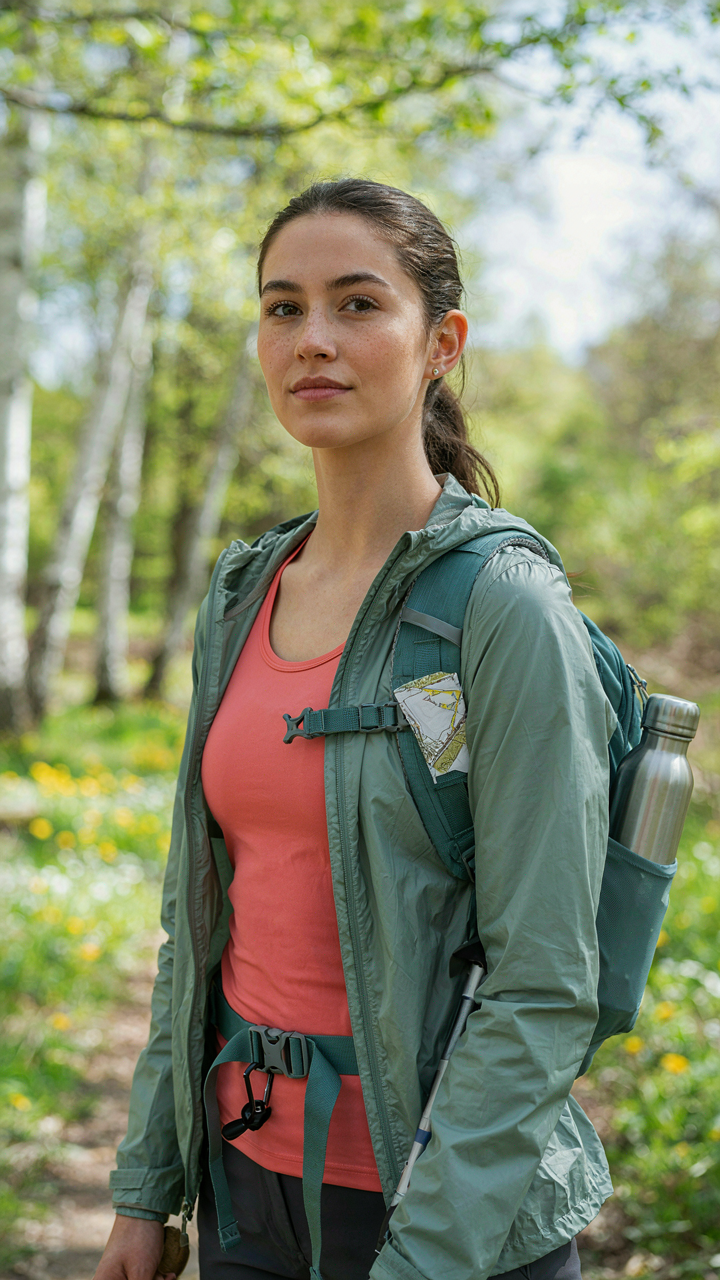
You want a base layer that won’t fail when you sweat, which is the real concern nobody names directly. Thermodynamics teaches us about heat transfer, and your base layer’s job is to manage moisture without letting your core temperature drop. Merino wool works because it absorbs moisture without feeling wet, trapping minimal water against your skin. Synthetic polyester and nylon accomplish the same outcome through capillary action, wicking sweat outward fast. Both materials prevent the cooling effect of damp fabric clinging to your body.
Cotton fails here. It absorbs water, holds it, and turns into a heat sink the moment temperature drops. Skip it entirely on spring hikes. A fitted merino or synthetic base layer should make direct contact with skin from collar to wrist. This contact is what enables the moisture-management mechanism to work. Wear the layer snug but not restrictive enough to limit arm movement.
Fleece Or Down For Variable Conditions

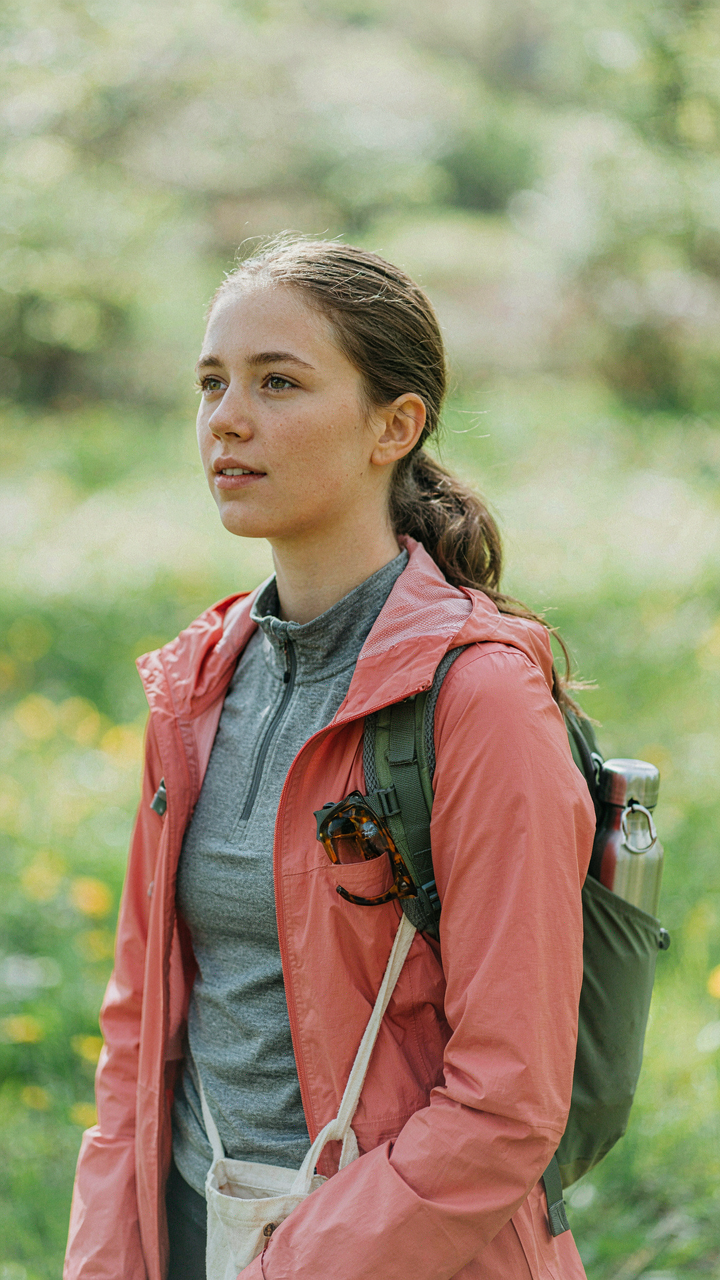
Fleece adds insulation without adding weight or bulk, making it the obvious middle layer for spring conditions that shift hour to hour. Polyester fleece traps dead air in its structure, creating insulation that works even when damp. Down compresses smaller and insulates better per ounce but becomes useless if wet, so save it for dry forecast days only. Most spring hikes call for fleece because conditions shift unpredictably.
The common advice to “layer up” is too vague to act on. Instead, wear fleece as your removable insulation layer, not your permanent one. Pack it in your pack at the start of the hike if temperatures run above fifty degrees. You’ll add it within ten minutes if conditions change. This single protocol prevents overheating early while guaranteeing warmth if you need it. Remove layers before you sweat, not after.

Weather’s Wildcard: Adapting Your Hiking Outfit Women For The Unexpected
Compact Shell That Actually Works
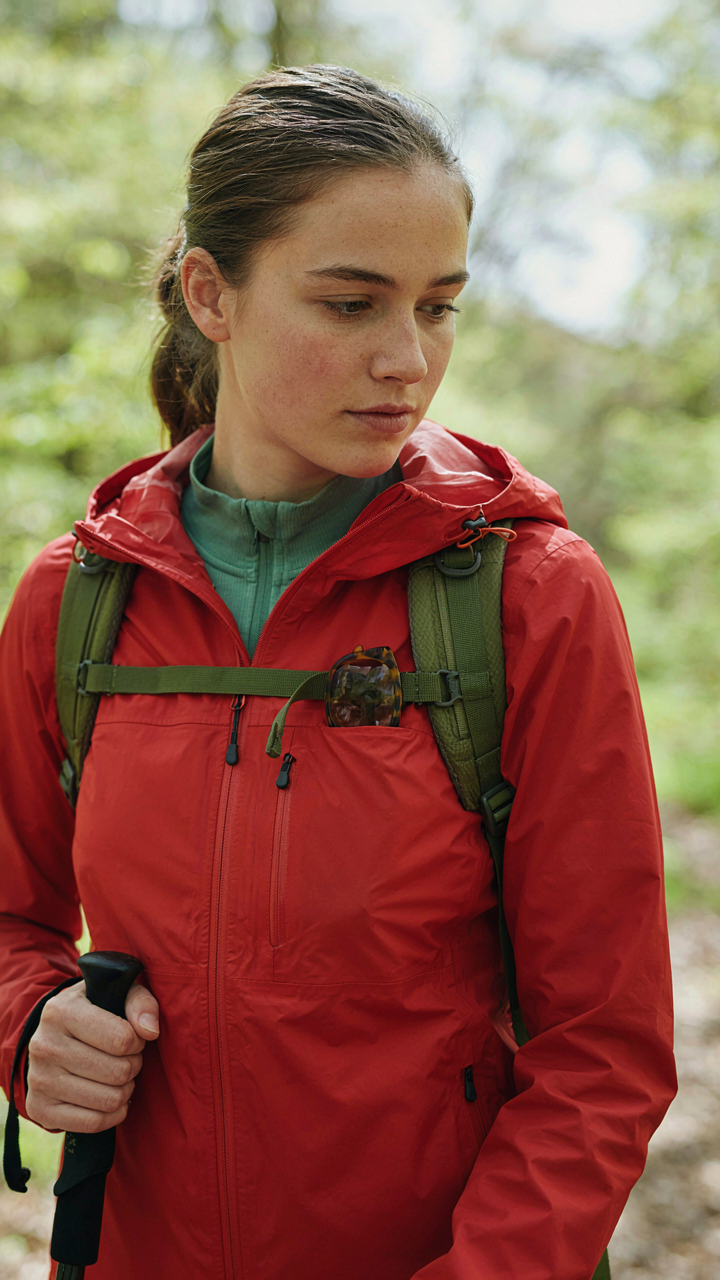
You’re worried a rain jacket will ruin your outfit aesthetic or add bulk you don’t need to carry. The real problem is simpler: most women buy shells designed for layering in winter, not shedding water fast in spring. A compact shell solves one mechanism—vapor transmission. Rain stops, but your sweat needs an exit route or you’ll cool rapidly once movement stops.
Spring rain is intermittent and often warm. You need a shell that compresses into a fist-sized pack and deploys in ten seconds without ceremony. Look for jackets under twelve ounces with taped seams, not just welded ones. The material should feel thin, not padded. Pack it in your hip belt pocket, not your main pack. When rain hits, you’re already wearing it before water soaks through your base layer.
Wind Layer Strategy
Wind is kinetic heat theft. Physics calls it convection, and on exposed ridges at elevation, it accelerates body heat loss faster than rain. A tight-knit synthetic or merino layer stops this mechanism before it drains your core temperature and kills your performance.
Spring conditions create wind pockets you can’t predict. A high-collar quarter-zip synthetic weighing three to four ounces gives you modularity—zip up when exposure hits, unzip during effort. Place it between your base layer and outer shell. This arrangement lets you adjust without stopping. Women’s cuts should fit snug at the chest, not billow like men’s models do. Test it by reaching overhead before you buy; if fabric lifts away from your ribs, it won’t stop convection.
Footwear Fallacies: What Most Get Wrong About A Hike Outfit

Ankle Support Versus Flexibility Trade Offs
You want ankle support because you’re afraid of twisting your ankle and looking incompetent. The real mechanism is biomechanics: your foot needs enough constraint to prevent excessive inversion while maintaining enough freedom to respond to uneven terrain. High ankle boots lock your foot in place, which sounds safe until you step on a root at an angle your boot wasn’t designed for. Your ankle then takes the full force instead of micro adjusting.
Spring trails are wet and unpredictable. A mid-cut hiking shoe with a stiffer sole delivers the actual protection you need. It stabilizes your arch and midfoot without restricting the ankle joint itself. Your ankle can still flex naturally while the shoe’s structure prevents the extreme rotation that causes injury. Test this: walk on uneven ground in a stiff boot versus a mid-cut shoe. The mid-cut shoe lets your foot feel the terrain and correct automatically.
Traction And Sole Grip Importance
Most people buy hiking shoes based on how they look in store lighting, then wonder why they slide on wet spring rock. The physics principle here is friction: sole grip matters more than shoe weight or brand name. A Vibram rubber sole or equivalent provides edge definition and material durability that cheap synthetic soles cannot replicate. Spring mud, wet stone, and damp grass will test this immediately.
The grip mechanism works through two factors: rubber composition and tread depth. Quality hiking soles use denser rubber compounds that maintain friction when wet. Tread depth needs to be at least 3-4mm to cut through moisture and reach the surface beneath. When you’re on spring terrain, your foot placement changes constantly. Without reliable traction, you overcompensate with tension in your legs and lower back. Buy shoes with established traction ratings before you need them, not after the first slip.
The Material Mandate: Why Synthetics Win For Spring Hiking Outfits

Sweat Moves Away From Skin
You want to believe cotton is natural and therefore better. It isn’t, not for this. Using physics terminology, synthetic fabrics operate on capillary action—the same principle that draws water up through soil—to transport moisture away from your skin surface rather than absorbing it. Cotton absorbs sweat and holds it against your body, creating a wet layer that drops your core temperature dangerously fast as air passes over it.
Synthetic materials like polyester and nylon pull moisture laterally across fibers to the outer surface where it evaporates before your body loses heat. This active transport mechanism is why synthetics dominate professional hiking and mountaineering. Your skin stays dry. Evaporation happens outward instead of against you. The cold doesn’t follow.
Dry Clothes Stay Warm Clothes
Everyone says synthetics dry fast. What they miss is that wet fabric chills you through direct contact, not just through evaporation loss. A damp synthetic base layer warms back up within minutes of active movement because the material itself doesn’t trap moisture long enough to conduct sustained heat loss.
Cotton reaches saturation and stays there. Even light spring rain or heavy perspiration turns it into a cold compress against your torso. You can’t hike your way warm again because the material continues pulling heat from your skin as it slowly evaporates. Swap cotton for synthetics in spring and you eliminate the single biggest reason women abandon hikes early: the uncontrollable chill that hits once you stop moving or conditions shift damp.
Accessory Alchemy: Enhancing Your Spring Hiking Experience

Headwear For Sun And Heat Regulation
You want a hat so you look put together on the trail, but the real mechanism is thermoregulation. Your head generates heat constantly, and in spring sun, it accelerates sweat production that drains your energy and throws off your core temperature. A brim blocks UV rays while airflow around your scalp prevents overheating during moderate exertion. Wide brims, not baseball caps, redirect sun from your face and neck where damage compounds fastest.
Spring sun intensity surprises hikers because air temperature feels mild. A lightweight hat with moisture-wicking fabric keeps sweat from pooling on your scalp, which triggers faster fatigue. Mesh panels on the crown let heat escape while protecting exposed skin. Pack it in your pack rather than wearing it the whole hike, then deploy it when intensity peaks and sweat starts running into your eyes.
Gloves For Unexpected Temperature Drops
Everyone knows to bring gloves in spring, but almost nobody understands why: elevation temperature drops three to five degrees per thousand feet gained, and wind chill accelerates that loss. You’ll climb into cold air faster than you expect. Thin gloves, not winter gloves, work because they block wind without trapping excessive heat during exertion when you’re generating warmth.
Gloves prevent fumbling with your pack, map, or phone when your fingers numb. Spring hikers ditch them too early because the trailhead feels warm, then regret it at higher elevation where you’ve already wasted energy shivering. Store them in an accessible pocket, not deep in your pack. The moment you notice yourself clenching your fists or losing dexterity, put them on immediately rather than waiting for numbness to set in.
Backpack Bureaucracy: Optimizing For A Spring Hiking Outfit Woman
Weight Distribution: Biomechanics Of Load
You want your pack to feel effortless because you’re worried you’ll look weak or slow on the trail. That fear is backwards. The real mechanism is biomechanics: your spine and hip flexors don’t care about your confidence—they care about where mass sits relative to your center of gravity.
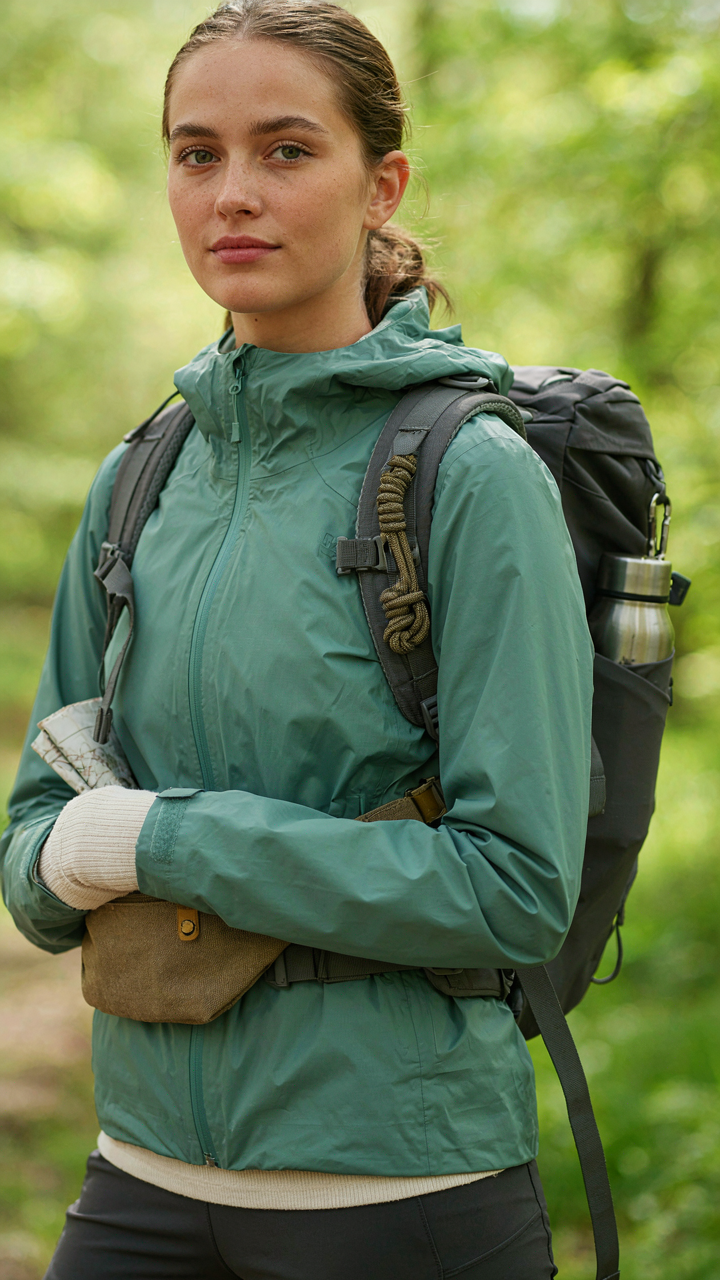
Physics borrowed the term “load path” from engineering. On a woman’s frame, that path shifts. Women’s centers of gravity sit lower and further back than men’s. A pack that rides too high or too far forward creates rotational torque on the lumbar spine. Pack weight should sit directly above your hip bones, not your shoulders. This isn’t comfort preference—it’s load management. Strap your pack so the hip belt carries 70 percent of weight. Your shoulders stabilize, not strain.
Accessibility: Strategic Packing For Essentials
Most advice on packing says “organize by category.” That’s incomplete. Real accessibility means you never remove the pack to get what you need. Essentials like water, sun protection, and a layer sit in side pockets and the front lid pocket. You access them without stopping.
Rain gear and snacks go in the top third of the main compartment. Heavier items like water reserves sit at the bottom, centered. First aid and emergency items go in an easy-reach pocket near your hip belt. This stacking prevents you from unloading half the pack to grab a bandage at mile three. Pack accessibility as a sequence: what you need every hour accessible first, what you need once per hike accessible last.
The Kinetic Principle: Outfit Freedom For Trekking Outfits For Women

Where Your Shoulders Actually Move
You want a spring hiking outfit that doesn’t betray you three miles in. That’s not vanity—it’s math. Biomechanics is the study of how bodies move through space, and hiking demands what researchers call “scapular freedom,” the range your shoulder joint needs to function without obstruction. Most women’s hiking tops are cut too narrow in the armhole, which murders shoulder mobility on uphill climbs and makes your stabilizer muscles work overtime to compensate.
The problem isn’t that garment makers don’t know this. They choose construction shortcuts because they cost less. Real hiking-specific tops for women use a deeper armhole and fabric cut slightly forward at the shoulder seam instead of centered directly over your joint. Your arm swings forward and up on trail climbs—not straight out to your side like a standing pose. Fit your tops to that actual motion, not to what looks balanced on a hanger.
The Friction Problem Nobody Names
Chafing isn’t about sensitivity; it’s about pressure and surface texture. High-friction zones appear wherever fabric bunches, seams sit on bone, or pack straps lay directly on skin. The standard advice says “wear moisture-wicking fabric,” which is half the story and therefore useless. Merino wool and technical synthetics wick moisture fine, but they still chafe under sustained pressure if seams are thick, placement is wrong, or the fabric has a rough weave.
Your bra underwire, shoulder straps, and waistband are primary friction points on a spring hike. Seams on the upper back of your shirt sit directly on your scapula ridge when you hike uphill with a loaded pack. The fix: use seamless or flat-seam construction on tops, wear a sports bra without wires for hiking, and test any new outfit on a steep incline for thirty minutes before committing to a full day. Friction compounds over miles—catch it early.
Beyond The Instagram: The True Cost Of “Cute” Hiking Outfit Women Summer

Performance Over Aesthetics
You want to look good on the trail because you think it matters to other people. It doesn’t. What matters is that your body stays functional for the entire hike. This is basic systems thinking: a garment is a subsystem designed to manage heat, moisture, and movement under load.
Most “cute” spring hiking outfits sacrifice layering capacity and pocket placement for Instagram appeal. A fitted tank top looks better in photos but restricts shoulder movement during scrambling. Tight leggings look sleek but trap sweat against skin when temperatures spike mid-hike. Performance gear prioritizes range of motion and moisture management because the trail demands it. Aesthetics come after your body works.
Investment In Long Term Gear
Buying cheap synthetic fabrics feels responsible until you replace them every season. A quality merino wool base layer costs more upfront but outlasts three budget alternatives by handling repeated washing without degradation. The economics of durability work like compound interest: each year you don’t replace gear, you’re banking the difference.
Spring hiking gear faces specific stress because temperatures fluctuate wildly and wet conditions appear without warning. Reinforced seams, quality zippers, and proven moisture-wicking materials handle this instability. A women’s spring hiking jacket built for actual performance keeps its water resistance after forty washes. Cheap jackets fail around wash twelve. Calculate cost per wear across actual usage, not the price tag alone.
The Unseen Threats: What Your Wander Outfit Must Counter
Insect Repellent As Biological Defense
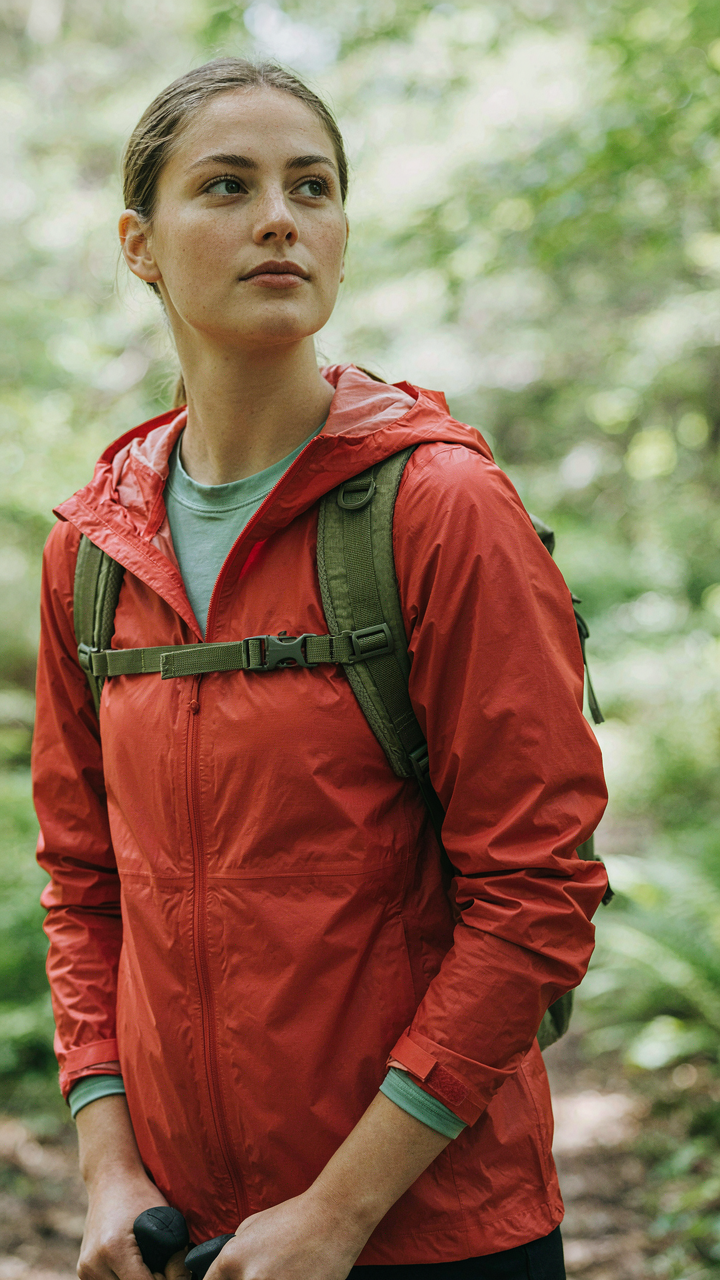
You want to believe bugs won’t bother you on the trail because admitting they will means admitting you’re not in control. Spring hiking deploys insects using a layered invasion strategy: mosquitoes hunt by heat and CO2, ticks wait on vegetation for contact, and midges swarm in clusters. Your outfit is the perimeter. DEET-based repellents work through neurological disruption, not poison—they confuse insects’ sensory receptors so they can’t locate you. This is biological defense doctrine applied to fabric.
Apply repellent to exposed skin and clothing edges—cuffs, collar, sock line—before the hike starts, not during. Permethrin, a synthetic compound, bonds to fabric permanently and survives multiple washes, creating a treated barrier that insects actively avoid. Reapply skin repellent every two hours if you’re sweating heavily or after water exposure. This isn’t optional for spring. Ticks carry disease; mosquitoes carry disease. The mechanism is simple: establish chemical defense early, maintain it systematically, and don’t defer the application until you notice bites.
UV Protection For Accumulated Exposure
Most hikers misunderstand UV damage as an acute event—sunburn in an afternoon—when it’s actually cumulative exposure over years that drives skin degradation. You need to block UVA and UVB rays continuously, not just on high-sun days. Spring sun reflects off snow and water; even overcast conditions transmit 70 to 80 percent of UV radiation. Fabric with UPF rating (Ultraviolet Protection Factor) blocks rays mechanically by density and fiber composition, not by coating.
Wear long sleeves and legs in tightly woven synthetic or merino wool, which naturally scatter UV light. Skip the cotton—it compresses when wet and loses protection entirely. Sun-protective clothing is drier than sunscreen-soaked skin and doesn’t need reapplication mid-hike. The protocol: long sleeves, long pants or leggings, a wide-brimmed hat, and UPF-rated sunglasses that cover the eye area fully. Stack these layers consistently every hike in spring, and you eliminate the variable that damages skin over time.
Post Hike Protocol: Maintaining Your Spring Hiking Outfit Women Gear
Clean Gear While It’s Still Damp
You care about this because worn-out gear signals incompetence, and nobody wants to admit they wasted money on something that fell apart. Here’s the mechanism: dirt and sweat dry into fabric fibers, then bond chemically. Once bonded, they’re harder to remove. Spring hiking introduces mud, pollen, and moisture. The window to clean is tight, ideally within hours of returning home.
Rinse muddy pieces under cold water immediately. Don’t let mud cake and dry. For synthetic fabrics like nylon and polyester, hand wash with mild detergent. Avoid heat, which locks stains and degrades elasticity. Spot treat problem areas with a soft brush. Air dry completely before storage, never in direct sunlight, which accelerates UV breakdown of synthetic materials. This single step prevents permanent discoloration and fabric weakening.
Store Gear In Low Humidity
Humidity is the enemy of longevity in the same way that leverage is the enemy of resistance in physics. High moisture environments create mechanical advantage for mold and mildew, which feed on the organic compounds in fabric coatings and elastic components. Spring brings rain and dampness. Storage location determines whether your gear survives the off season or enters summer degraded.
Keep gear in a cool, dry space away from basements and attics. Use breathable storage bags, not plastic containers that trap moisture. If your region runs humid year-round, add silica gel packets to your storage area and replace them monthly. Ensure fabrics are completely dry before storing. Check stored items monthly during spring and summer for signs of moisture or discoloration. This prevents the slow decay that makes gear look aged after just one season.
The Real Obstacle Isn’t The Outfit; It’s Your Inability To Trust Adaptable Systems Over Rigid Prescriptions
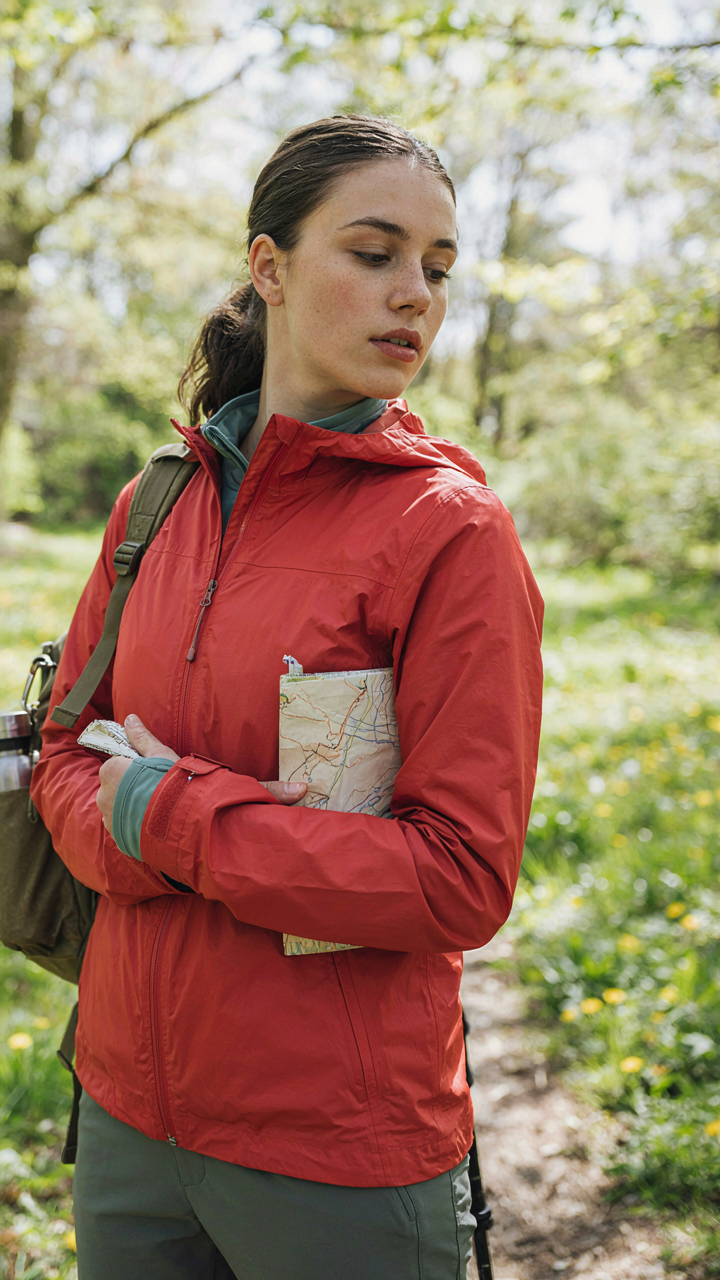
You don’t need a perfect spring hiking outfit. You need permission to stop overthinking it. Most women waste energy memorizing gear lists instead of building a simple layering system they actually understand. Pick three base pieces that work together, test them once, then stop second-guessing yourself. The hike happens when you move, not when you plan. Stop collecting outfits and start collecting miles.