

The “Breathable Base” Fallacy: Ditching The Sweat Trap
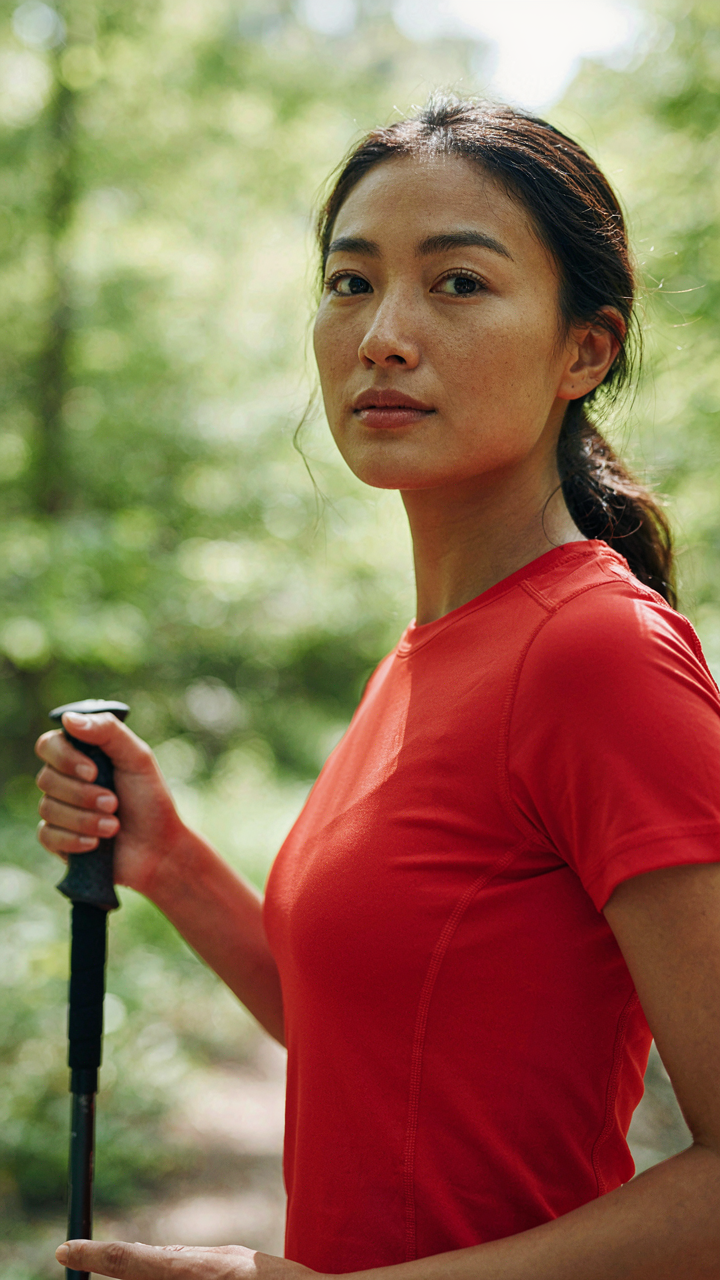
Synthetic Fibers Beat Cotton Every Time
You want to believe cotton works because it feels familiar and costs less. It doesn’t. Cotton absorbs moisture and holds it against your skin, which is the opposite of what you need on a trail. Think of thermal regulation like a heat exchange system in engineering: you’re moving energy (sweat) away from your body. Cotton traps that energy. Synthetic fibers—polyester, nylon, merino wool blends—actively move moisture away from skin to the fabric surface where it evaporates. This is not preference. This is physics.
The scale of this difference matters more for plus-size bodies because surface area and metabolic output are higher. You generate more heat over more skin. Cotton becomes a liability within thirty minutes of moderate effort. Merino wool and polyester blends maintain temperature regulation across the full range of spring conditions, from 40 to 65 degrees. Test this yourself: wear cotton for one mile uphill, then switch to synthetic. You’ll feel the difference in core temperature within five minutes.
Seams Placed To Stop Friction Points

Chafing isn’t random. It happens at predictable pressure zones where larger surface areas create concentrated friction: inner thighs, underarms, bra band area, and waistband. Standard seaming ignores this reality. Seamless or flat-seam construction eliminates the ridge that catches skin during repetitive motion. Look for brands that build seams down the back of legs rather than on the inner thigh, and use gusseted crotch panels—the fabric insert that runs front to back—to distribute pressure across a wider area instead of creating a stress point.
Placement matters more than the word “seamless” alone. A shirt with one center seam down the back performs better than a technically seamless shirt with poor underarm design. For plus-size women specifically, check that the armhole seam sits on your shoulder bone, not at the edge of your chest or underarm flesh. When you raise your arm, the seam should stay on bone. If it pulls into soft tissue, friction will build within the first mile. Buy from brands that publish seam location in their product specs, not those that just say “moisture-wicking seamless.”

The “Adaptable Mid Layer” Protocol For Plus Size Hiking

Fleece Vs. Technical Jackets: Know The Trade Off
You want the mid-layer that won’t betray you halfway up the trail. The real tension here isn’t comfort. It’s recoverability. Fleece traps moisture against your skin when you stop moving. Technical jackets (synthetic or merino blends) shed it. Most advice glosses over this because it’s not sexy. But thermodynamics doesn’t care about marketing.
Fleece wins on packability and cost for plus size bodies. A quality fleece compresses into itself and retains loft even when damp. Technical mid-layers demand more careful layering and cost more. Choose fleece for variable spring weather where you’ll move constantly and stop briefly. Choose technical jackets when you’ll have longer rest periods or suspect rain. The wrong choice isn’t a minor inconvenience. It’s the difference between maintaining core temp and chasing warmth for three hours.
Strategic Openings For Real Temperature Control
Venting mechanisms separate people who understand thermoregulation from people who just buy gear. You need access points that don’t require full removal. Pit zips, side zippers, and chest vents all serve one function: releasing core heat without losing the insulation layer entirely. Spring weather demands this because you’ll swing between effort levels constantly.
For plus size hiking, pit zips matter more than marketing suggests. They let you vent your torso while keeping shoulders and back protected from wind. Side zippers that run from armpit to hip give you granular control. Chest vents are less useful on uphills because you’re already overheating there. Audit your mid-layer zippers before buying. If it only has a front zip, you’re paying full price for partial function. Test whether zippers run smoothly over curved seams when you move your arms. Stiff zippers in the field become immobilizing liability fast.
Outer Shells: Your Armor Against Spring Deception
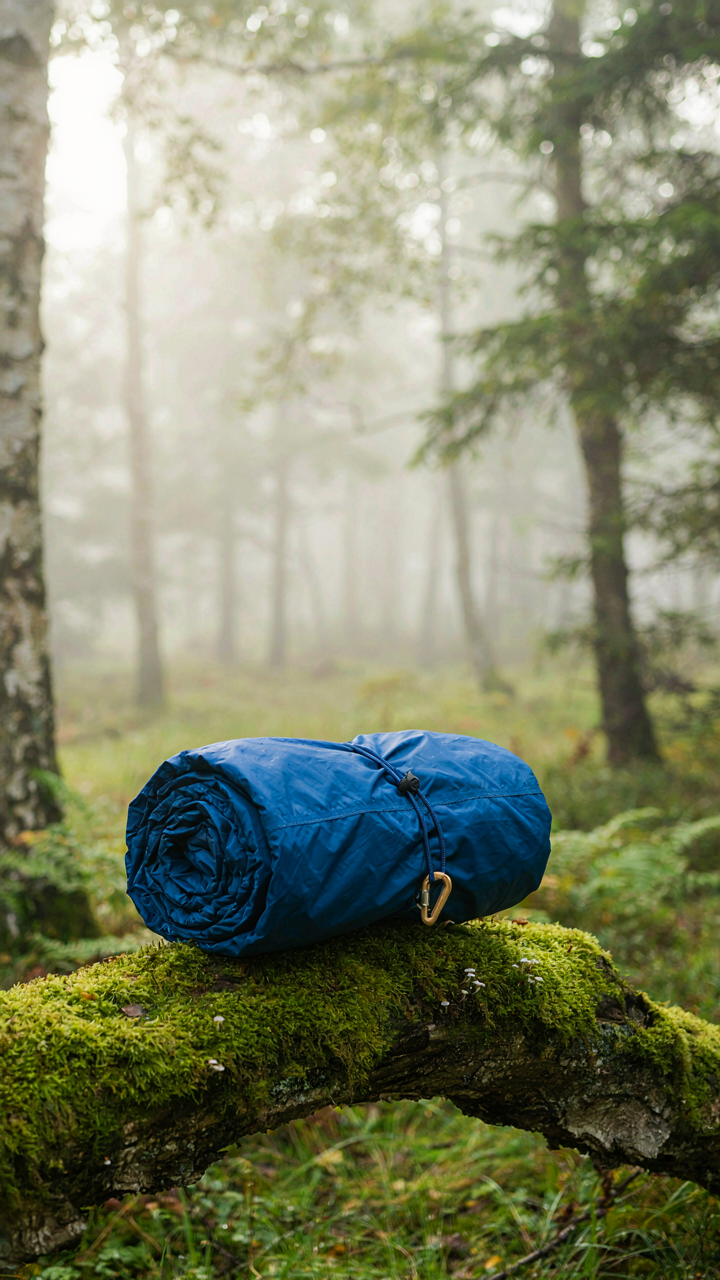
Waterproof Vs Water Resistant
You want the shell that won’t fail you halfway up because it sounds more official. Here’s the mechanism: waterproof means the fabric blocks water penetration entirely through a barrier layer. Water-resistant means the fabric sheds light moisture but will eventually saturate under sustained rain or pressure. Spring hiking gets wet. Unpredictably. You need actual waterproof construction—sealed seams, taped stitching, a coated membrane—not marketing language that sounds protective.
Most jackets marketed to plus-size women skip proper waterproofing to cut costs. The industry assumes you’ll tolerate a cheaper water-resistant shell because the market treats larger sizes as an afterthought. Don’t accept this. Check the product spec sheet for membrane technology. Gore-Tex, eVent, or equivalent sealed-seam construction proves waterproof performance. When you’re three miles in and spring rain intensifies, the difference between water-resistant and waterproof becomes the difference between dry and miserable.
Weight And Packability Strategy
Packability is physics: volume divided by compression equals what your pack actually carries. A heavy shell you never remove adds dead weight all day. A compressible one stuffs into your pack when weather shifts, saving energy for actual hiking. Plus-size women need shells that compress genuinely small without relying on ultra-thin, fragile materials that tear under real-world use. The goal is a jacket that folds to roughly the size of a water bottle when stuffed, weighs under sixteen ounces, and stays intact through a full season.
Spring weather swings demand this flexibility. Morning warmth means you hike without the shell. Afternoon cloud cover means you pull it out. A bulky shell you refuse to pack wastes hours of energy management. Test compression by rolling the jacket in your hands—genuine outdoor brands offer jackets that compress to fist-size. Check weight on the spec sheet, not by feel. Then verify the material composition: nylon with polyurethane or TPU coating performs better than heavier alternatives. Your pack weight determines how far you actually hike before fatigue overrides intention.
The “Curvy Outfits” Reality: Pants That Actually Perform
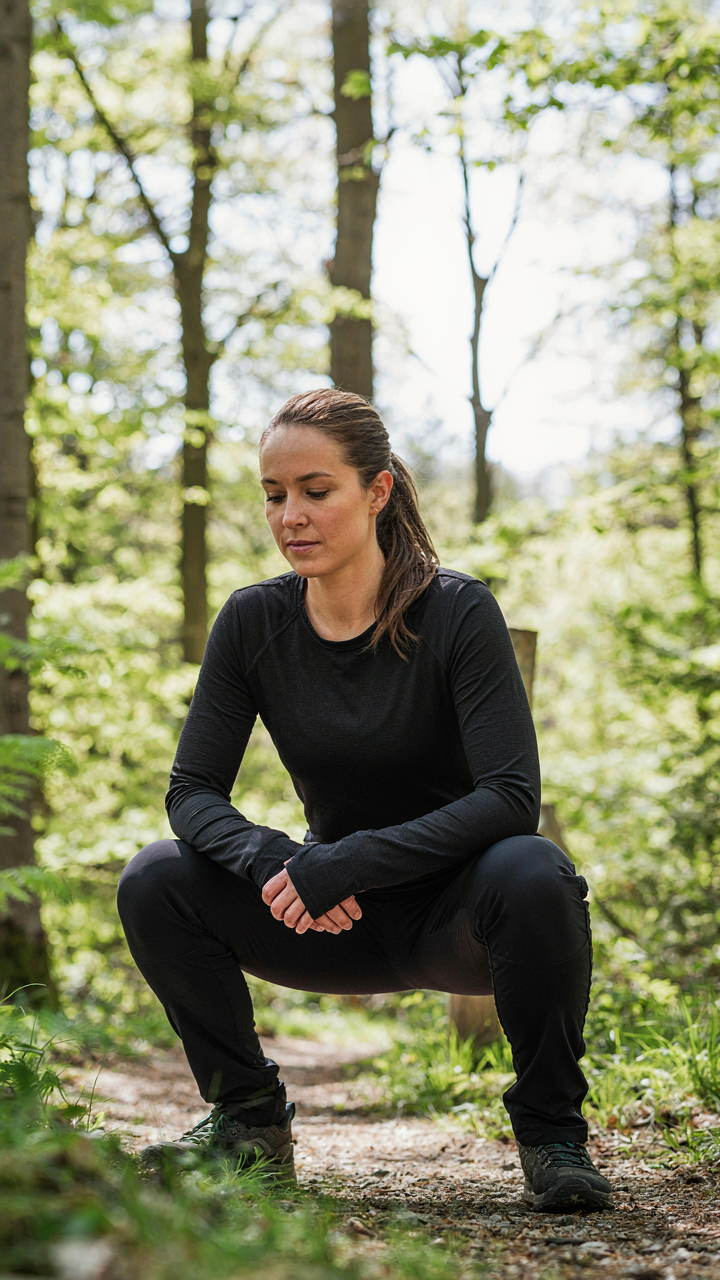
Stretch Fabrics And Articulated Knees
You want pants that won’t betray you halfway up a hill. The real mechanism here borrows from biomechanics: your body needs fabric that moves with the joint, not against it. Standard hiking pants treat all leg shapes the same, which means they restrict movement across the thigh and hip. Stretch blends (nylon-spandex combinations, typically 88/12 or 90/10 ratios) give you the range of motion your larger frame demands without sagging.
Articulated knees matter more than brands advertise. This is the deliberate curve built into the pant leg at the knee to match how your leg actually bends. Plus size women hiking uphill don’t need loose fabric pooling at the ankle—they need structured panels that anticipate the angle of your stride. Look for gusseted crotch construction and tapered waistbands that sit at your actual waist, not somewhere near it.
Reinforced Seams And Abrasion Resistance
The common advice here is weak: brands tell you to “choose quality materials” and call it done. That’s incomplete. Reinforcement matters most where your body creates friction against the fabric. The thigh rub zone, inner leg stress points, and seat area degrade faster on plus size gear because the contact surface is larger and the tension higher. Double-stitched seams and bar-tacked stress points (the X-pattern stitching at pockets and belt loops) are non-negotiable.
Abrasion-resistant fabrics like ripstop nylon or Cordura reinforced panels protect the areas that contact rocks, branches, and backpack straps during the full day. Check the inseam and outer thigh—manufacturers often skip reinforcement there on plus size cuts to save cost. Inspect the weight and weave before buying. When you try pants on, bend into a deep squat and hold it for thirty seconds, then check if the fabric feels loose or compromised at pressure points.
Footwear: The Foundation Of Any Plus Size Hiking Outfit
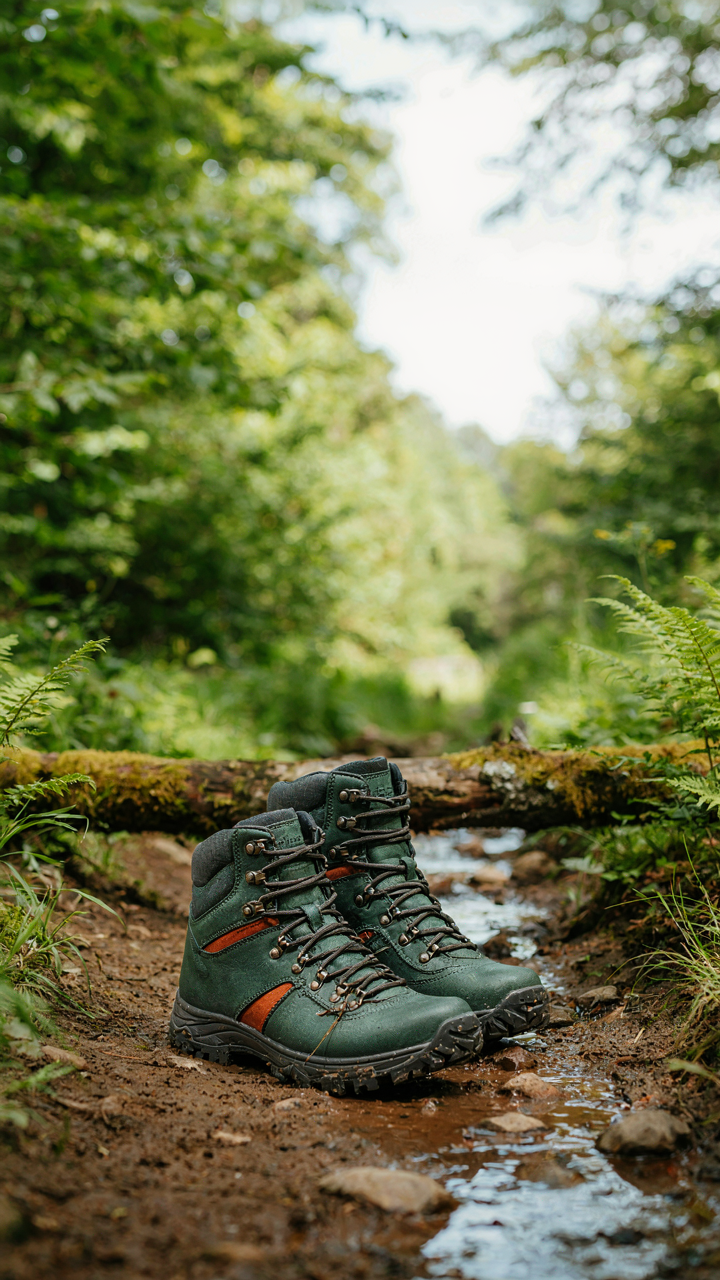
Ankle Support Versus Flexibility
You want boots that look serious because you think serious gear protects you. The real mechanism is simpler: terrain demands specific joint stability, and you pick the wrong one because you’re choosing based on fear instead of the actual ground beneath you.
Biomechanics matters here. On flat or gently rolling spring trails, your ankle does minimal stabilization work. A high-cut boot locks the joint and wastes energy on every step. Low-cut hiking shoes or trail runners give you the flex your foot needs, and your calf muscles do the actual stabilization work they’re built for. Rocky, uneven terrain with loose scree reverses this entirely. High ankle support prevents inversion sprains when the ground shifts under you mid-step.
The common advice tells you to always go high-cut for hiking. That’s incomplete. Spring trails in most regions are neither boulder fields nor paved paths. They’re moderate terrain with seasonal mud and roots. A mid-cut boot with aggressive tread handles this without the energy tax of full ankle restriction. Test your actual trail grade before buying. If you can walk it in running shoes without rolling your ankle, a mid-cut works. If loose rock dominates, go high.
Sock Material And Fit
Blisters aren’t friction problems you endure. They’re a failure of the sock-skin interface that you prevent before the hike starts.
- Merino wool blends: Regulate moisture and temperature without retaining sweat like cotton. Merino fibers wick away dampness that causes friction and maceration of skin tissue.
- Synthetic blends (polyester, nylon): Dry faster than wool in wet conditions. Choose these if your spring trails stay muddy or you expect water crossings throughout the hike.
- Fit and thickness: Socks should compress snugly without bunching in your boot toe box. Midweight socks prevent your foot from shifting inside the boot with each step, which creates the friction that spawns blisters.
- Crew height minimum: Socks covering the ankle prevent your boot collar from rubbing directly against skin. This stops a specific blister trigger at the Achilles tendon.
- Two-pair method: Wearing thin silk liner socks under hiking socks redistributes friction away from your foot. This is standard mountaineering practice for long-distance trips where blister prevention beats treating them mid-trail.
The sock choice matters more than the boot choice. A perfect boot with wrong socks gives you hot spots at mile three. Size up your boot slightly if you wear thicker socks, or your toes jam into the toe box and create pressure points. When you lace your boots, leave the ankle section loose enough to slide one finger under the laces. Tight lacing at the ankle cuts circulation and increases sweat, both of which accelerate blister formation. Test your full sock and boot setup on a two-mile walk before committing to a full spring hike.
Beyond The Instagram Shot: Functional Accessories For Camping Outfits
Tools That Keep You Alive, Not Just Found
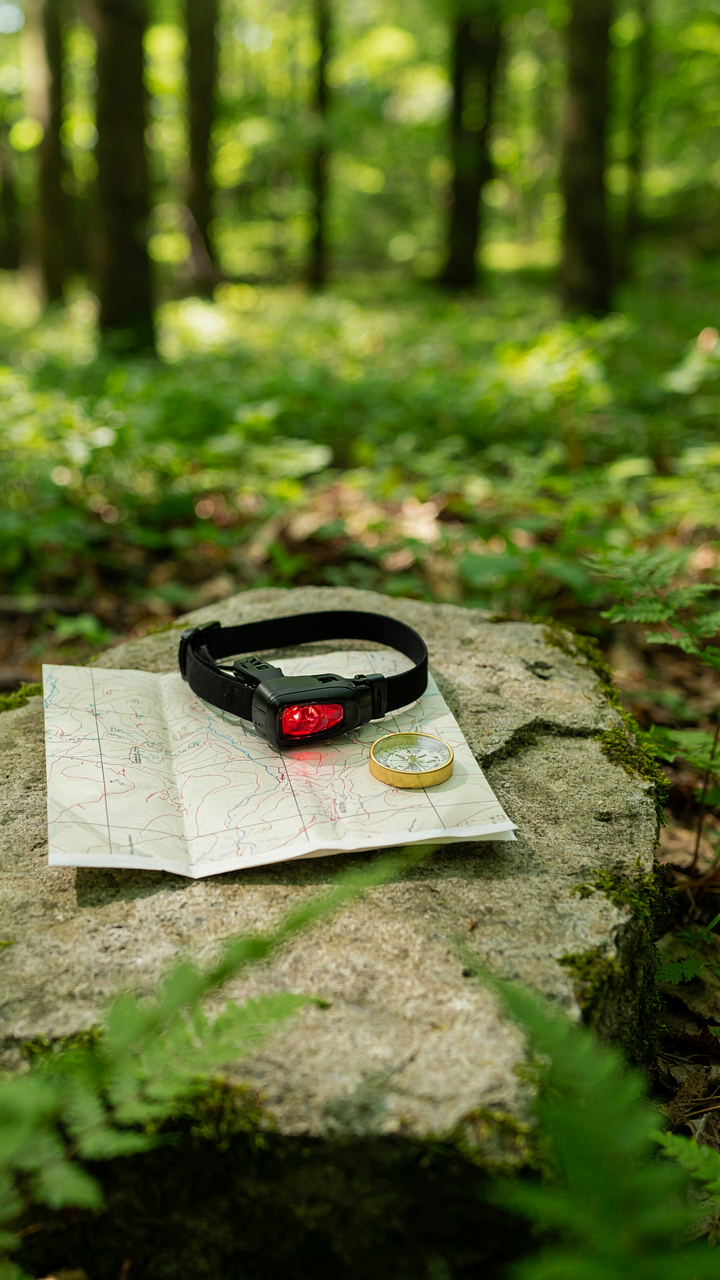
You want this section because you’re afraid of being unprepared. The real mechanism is this: visibility and location work together. In navigation terms, you need both a signal and a receiver. A headlamp without knowing where you are is useless. A map without light to read it is worse. Most advice treats these as separate concerns. They aren’t.
Spring hikes start early and end late. You’ll face low light at both ends of the day, especially at higher elevations where sun drops fast. A headlamp rated for 200+ lumens handles brush and uneven terrain. For plus size hikers, weight matters more than for smaller frames because it compounds fatigue. Choose one under 200 grams. Red light mode preserves night vision and saves battery when checking a map at camp.
Navigation tools shift with season. Spring runoff changes trail markers and water crossings. Download offline maps on your phone before entering the trailhead. Carry a physical map and compass in a waterproof bag anyway. Spring weather creates cloud cover that kills phone signals. A compass costs fifteen dollars and never needs charging. Know how to use it before the hike, not during it.
Hats And Gloves For The Real Spring Pattern
Spring isn’t a season. It’s a lie we tell about temperature stability. Thermoregulation in active outdoor work means you’re managing sweat as much as cold. A hat that works in March doesn’t work in May. Most guides skip this entirely because they write for coastal regions where conditions stay mild.
Your headwear has two jobs: block sun and manage moisture. A wide brimmed hat over 3 inches protects your face and neck in exposed terrain. Merino wool hats wick better than cotton and won’t freeze against your neck if you sweat and stop moving. Size matters for plus size frames. Too small feels like pressure and restricts blood flow. Too large slides when you’re moving uphill. Buy hats that sit flat at the crown without binding.
Spring gloves solve a problem that doesn’t feel like a problem until your hands go numb. Early morning temperatures drop to freezing at 5000 feet even in May. You warm up hiking, but exposed hands still get cold wind. Thin merino wool gloves work because you can keep them in a jacket pocket and swap them fast. Heavy insulated gloves overheat you and then create sweat that chills your fingers when you stop. Carry gloves every spring hike regardless of forecast.
The “Energy Transfer” Model: Backpack Fit For Plus Size Women
Hip Belt Load Transfer
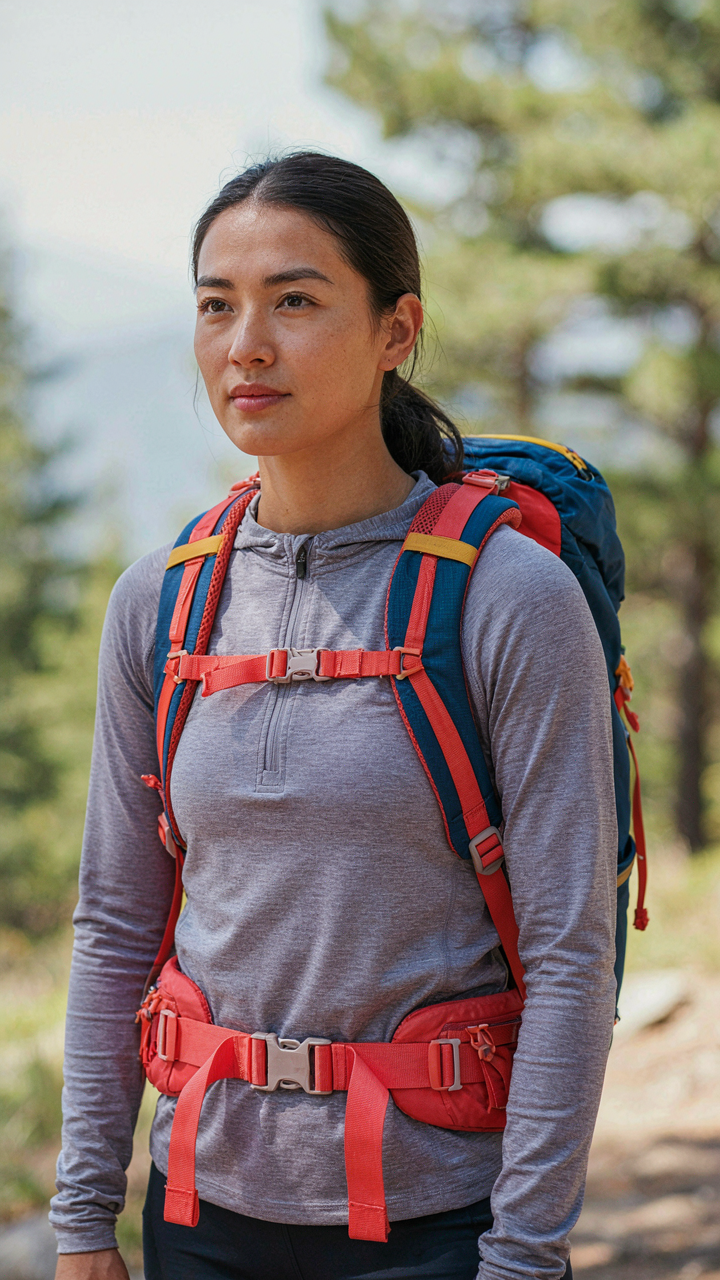
You want to believe your shoulders handle the pack weight. They don’t, and pretending they do wastes energy and ruins your hike. Biomechanics teaches load transfer: the principle that force moves through the path of least resistance. For plus size women, the hip belt isn’t decoration—it’s the mechanism that routes 60 to 80 percent of pack weight directly to your pelvis and legs, bypassing your shoulders entirely.
A hip belt works only when it sits on the widest part of your hips and cinches tight enough to prevent forward shift. Most packs designed for average frames place the belt too high or too narrow. You need a belt that spans at least four to five inches vertically and angles slightly downward from front to back, matching the natural slope of plus size hip anatomy. This positioning lets your stronger lower body absorb the load instead of collapsing it onto your spine and shoulders.
Torso Length And Adjustability
Standard backpack torso lengths run 16 to 18 inches, a measurement that fits nobody accurately. Adjustability is what actually matters. Your torso length—measured from the base of your neck to your hip crest—determines where the shoulder straps attach and how the pack sits against your back. If the attachment point sits too high or low, you lose load transfer efficiency and create pressure points that multiply discomfort over miles.
Look for packs with adjustable shoulder straps that move vertically, not just packs with multiple size options. A women-specific pack design typically offers three to four inches of vertical adjustment built into the frame or harness. This lets you dial in the exact angle so the pack hugs your back without pulling backward or compressing your shoulders. Test this by loading the pack to 15 pounds, tightening the hip belt first, then adjusting shoulder straps until they sit flat and parallel to your ribcage without gaps. That calibration point is where efficiency happens.
The “Cute Hiking Outfit” Trap: Prioritizing Utility Over Trends
Pick Colors That Work Against Nature, Not With It
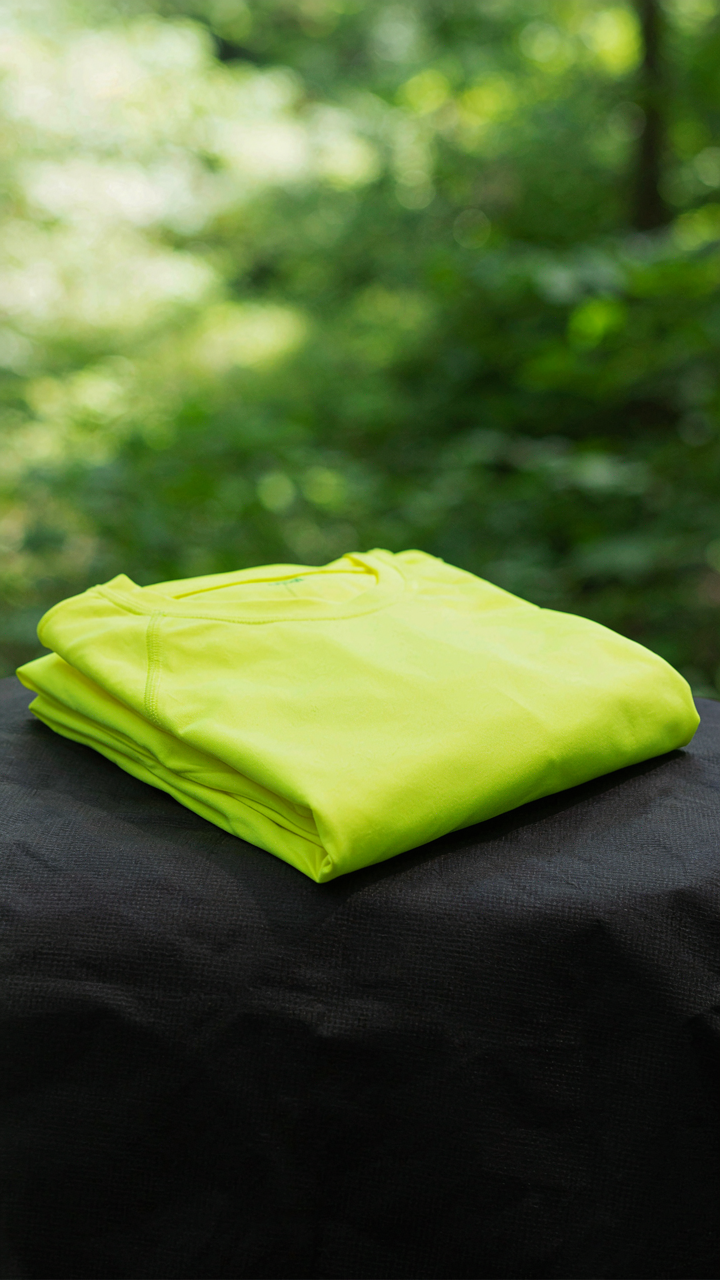
You want to look good on the trail because you think it matters to the people around you. It doesn’t. What matters is that a search and rescue team can spot you in an emergency. Visibility is a physics problem: your outfit either absorbs light or reflects it. Bright colors—neon yellow, orange, hot pink—bounce light back. They’re not trendy. They’re tactical.
Neutral earth tones feel safer aesthetically, which is why hiking brands market them hard. But earth tones vanish against actual earth. Pair bright base layers and jackets with neutral pants if you want both safety and restraint. Spring sun also intensifies UV exposure at higher elevations. Lighter colors reflect heat and rays better than dark fabrics. Pick colors because they solve problems, not because Instagram suggests them.
Invest In Fabric That Lasts Longer Than A Season
The common advice says buy cheap and replace it. That’s backwards for plus size options, where quality brands charge premiums and knockoffs fail faster. Durable gear is an economic calculation: cost per wear. A nylon blend that resists pilling and tears after fifty hikes costs less over time than cotton that shreds after five.
Look for ripstop nylon, polyester blends rated for outdoor use, and reinforced seams. Plus size women’s hiking gear has fewer options, so when you find a brand that fits and performs, buying the better version makes sense. Durability isn’t a luxury. It’s the only rational choice when replacements are limited and expensive.
Seasonal Shifts: Prepping For Plus Size Hiking Outfit Summer
Ventilation Beats Layering When Heat Rises
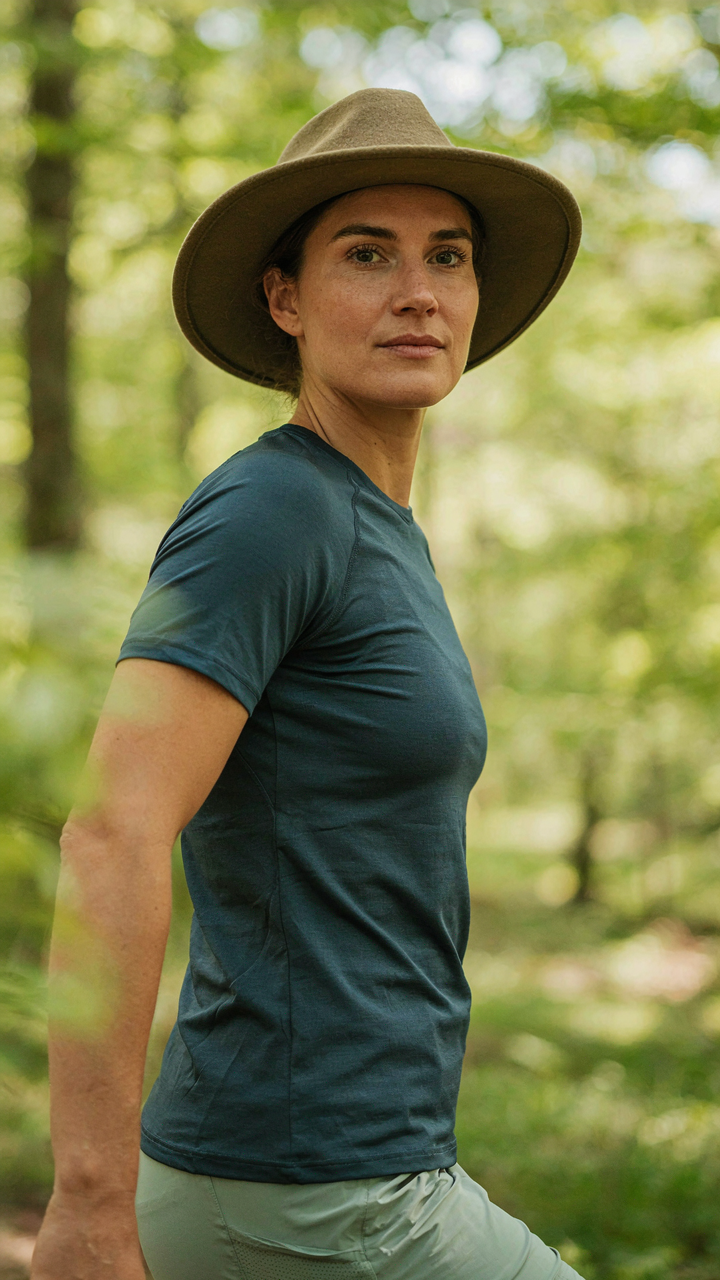
You’re worried about looking bulky in summer, so you’re considering fewer layers. That’s the wrong trade. Thermodynamics doesn’t care about your aesthetic anxiety. The mechanism is evaporative cooling: sweat only cools you if air moves across your skin. Tight or non-breathable fabric traps moisture and heat. Plus size hiking outfits need more surface area exposure to air, not less, which means strategic cuts and materials that move with your body.
Cotton and poly blends marketed as “breathable” often underperform because they lack structure for larger frames. Seek lightweight nylon blends with a loose, tapered cut through the torso and thighs. Mesh panels at the sides and back accelerate airflow without exposing skin to direct UV. Wide-brimmed hats with ventilation holes and lightweight long sleeves in performance fabrics reduce sun damage while maintaining airflow. The goal is function, not conformity to smaller-frame design defaults.
Bug Season Requires Barrier Strategy, Not Avoidance
Most advice says wear light colors and spray insect repellent, then hopes nothing bites you. That’s incomplete. Insects seek skin access points: ankle gaps, wrist openings, collar edges. Your outfit is the first barrier. Plus size hiking requires gaiters that actually fit and seal—not ankle socks that slip down under pressure from wider calves. DEET-based repellent works, but placement matters more than brand. Apply it to fabric, not skin, at entry points: socks, pant cuffs, sleeve cuffs, collar rim. This creates a chemical boundary rather than a skin coating that washes away with sweat. Wear long sleeves and full-length pants in lightweight merino or synthetic blend. Schedule hikes for early morning or late afternoon when mosquito and tick activity drops.
Your Biggest Obstacle On The Trail Isn’t Your Size; It’s Clinging To Generic Advice Designed For Someone Else’s Journey

Stop waiting for a hiking outfit formula that magically fits your body. The real move is testing one outfit this weekend. Pick a two-mile trail near you. Wear what you think works. Notice what actually doesn’t. Adjust before your next hike. That’s the only feedback loop that matters. Your body isn’t the problem; generic advice is.