

The Unseen Drain: How Overthinking Gear Kills Your Hike

The Gear Myth That Costs You Momentum
You want permission to buy something new. That’s the real reason you’re reading about “specialized apparel.” The mechanism is simple: the outdoor industry sells the idea that problems require specific solutions, so older adults accumulate gear instead of understanding layers. Most spring hiking advice treats clothing as a collection of items. It’s not. Layering is a system borrowed from thermodynamics: insulation works by trapping dead air space, and the goal is controlling heat retention and release, not accumulating branded pieces. Your outfit fails when you own the right items but don’t know how they interact.
The common advice is incomplete. You don’t need hiking-specific clothing. You need base layers that wick (synthetic or merino), a mid layer that insulates (fleece or down), and a shell that blocks wind and water. These categories exist in regular clothing. A cotton t-shirt over wool long underwear under a windbreaker works. What kills momentum is overthinking the brand name, weight savings, or technical features. Start with what you own, test it on a short walk in spring conditions, then identify what failed. Replace only that category.
Comfort Disguised As Constraint

Comfort is the trap everyone falls into, and it ends hikes early. You interpret comfort as “soft” or “loose,” which actually means freedom of movement and temperature regulation. These aren’t the same thing. A loose fleece feels comfortable sitting on your couch but bunches under a backpack and traps sweat against your skin during exertion. Tightness at the collar, wrists, and ankles feels restrictive but prevents cold air infiltration and keeps layers in place where they function.
The real mechanism: your body loses heat through convection when air moves across your skin and through conduction when wet fabric sits against you. Snug fit and moisture management beat perceived comfort every time. Test this on your next outing: wear something loose that feels soft, then wear something fitted that manages moisture. The fitted option keeps you hiking. The loose option sends you back to the car. Spring temperatures shift rapidly, so your outfit must respond without needing constant adjustment. Wear fitted base and mid layers. Wear a shell you can open or remove in thirty seconds.

The Minimalist Ascent: Essential Layers, Zero Fluff
Base Layers That Work, Not Just Market
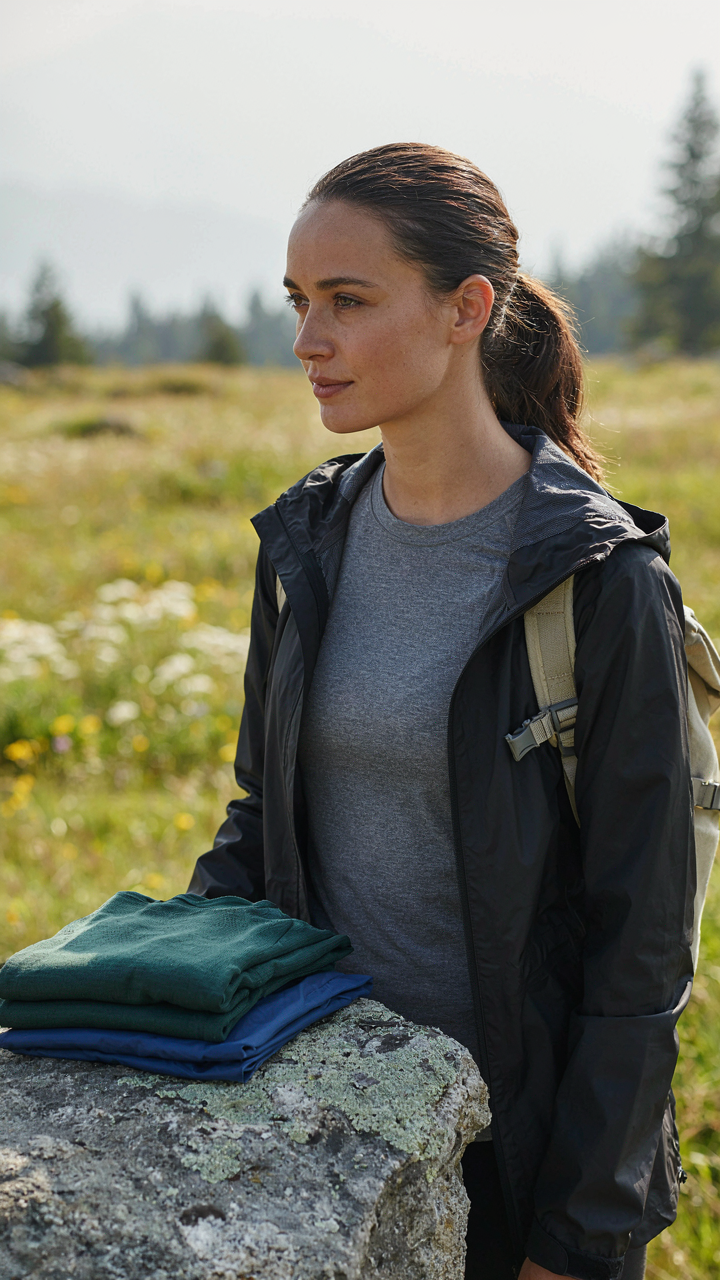
You want base layers because you’re afraid of getting cold and looking weak on the trail. Here’s the actual mechanism: base layers manage moisture by moving sweat away from skin, preventing evaporative cooling that drops body temperature fast. Merino wool and synthetic polyester both do this. Merino regulates better across temperature swings and kills odor naturally. Synthetics dry faster and cost less. Cotton fails because it absorbs sweat and holds it against your skin, making you colder as air evaporates that moisture.
For older adults on spring hikes, merino wool wins despite the price. Your body’s thermoregulation gets less efficient with age, so you need a material that doesn’t force you to strip or layer up every ten minutes. A midweight merino base layer (150-250 grams) handles the temperature fluctuations spring brings without bulk. Wear it directly against skin, not over another shirt. That kills the insulation effect and defeats the purpose.
Rain Shell Without The Bulk
The outdoor industry sells rain shells as if they’re technical armor. They’re not. A rain shell is a barrier between you and water. That’s it. What matters: wind stops, water stops, sweat escapes. Hardshell jackets (rigid plastic-like material) block water completely but trap sweat inside. Softshells (stretchy fabric with water-resistant coating) breathe better but leak in heavy rain. For spring hiking, a lightweight hardshell works best because spring rain is usually moderate, and the shell weighs almost nothing.
Pick a shell with pit zips or back vents. These openings let humid air escape without removing the jacket. Older hikers overheat more easily when climbing, and a sealed shell traps that heat fast. The shell should fit loose enough to layer underneath but tight enough that wind doesn’t move it around. Pack it in your backpack, not on your body, until rain starts. This keeps you from overheating on the ascent.
Footwear: Beyond “Comfy Shoes” To Biomechanical Advantage
Traction Mechanics: Where Sole Pattern Actually Matters
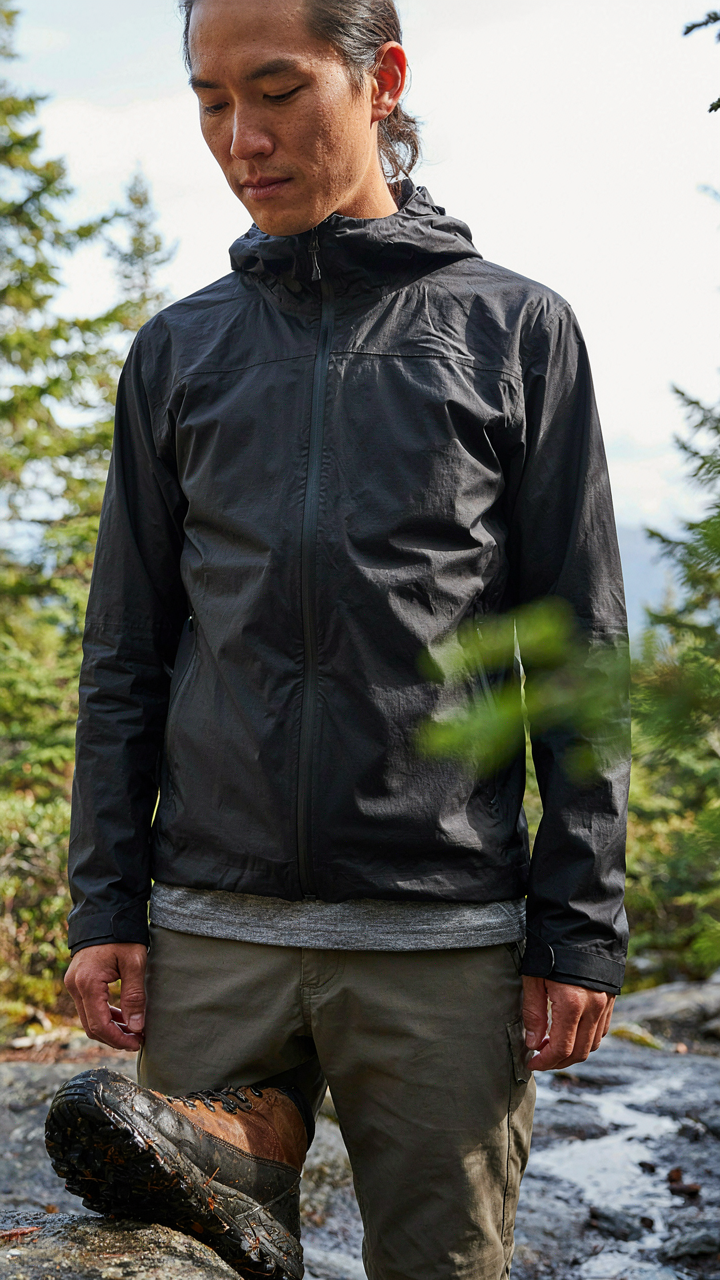
You want to avoid falling. That fear drives most of the footwear conversation, but the real mechanism is surface contact geometry. Friction doesn’t happen evenly across a shoe sole. Lugs (the protruding rubber patterns) create edges that bite into wet rock, compacted soil, and loose scree. Deeper, more aggressive patterns work on spring mud and wet granite. Shallower patterns excel on packed dirt where weight distribution matters more than bite depth.
Older adults lose ankle proprioception with age, meaning your foot registers terrain changes slower. This makes sole pattern function, not feel, the actual control mechanism. Vibram outsoles remain the standard because their lug geometry was engineered through actual mountain use, not marketing. A 3-5mm lug depth handles spring conditions without creating catch points that slow you down on technical terrain. Buy footwear with defined lugs, not smooth or minimally patterned soles, regardless of brand.
Ankle Support Versus Natural Movement: The Stability Paradox
Biomechanics shows us that constraint trades off against proprioceptive feedback. A highly supportive ankle boot locks your foot in a rigid position, reducing ankle mobility but also reducing your body’s ability to sense micro-adjustments in terrain. This creates a paradox: maximum support can paradoxically decrease stability when you need to feel the ground beneath you.
Spring hiking surfaces demand adaptive response. Mid-cut hiking shoes with moderate lateral support provide real stability without eliminating foot communication. Your intrinsic foot muscles remain engaged rather than dormant inside rigid boot structure. Test footwear by walking uneven ground before buying. If your ankle feels reinforced but disconnected, the shoe prioritizes protection theater over function. Select mid-cut options with structured heel counters and moderate ankle collar height to balance support with movement feedback.
The Kinetic Principle: Outfit As An Extension Of Movement

Pack Fit And Load Distribution
You want to believe a good outfit is mostly about looking competent on the trail. That’s not why you’re reading this. You’re afraid of pain, and you’re right to be. Physics doesn’t care about your age—it cares about where weight sits on your body. A pack that loads weight onto your shoulders instead of your hips forces your spine into compensation patterns. Your legs tire faster. Your knees absorb force they shouldn’t.
The mechanism is simple: load-bearing capacity shifts downward when the pack’s weight transfers to your hip belt instead of your straps. A properly fitted pack sits so the hip belt carries 70 to 80 percent of the load. Your shoulders guide, not carry. This matters more for older hikers because your stabilizer muscles fatigue faster and recover slower. Adjust the hip belt first, then tighten shoulder straps just enough to keep the pack from swaying. The pack becomes an extension of your legs, not an anchor on your back.
Fabric Mobility And Joint Mechanics
The standard advice—wear “breathable, stretchy materials”—misses the actual constraint. Joints don’t need fabric that moves in every direction equally. They need fabric that resists movement at the point of maximum extension while allowing controlled range. This is the principle of variable compliance, borrowed from biomechanics. Your knees and hips hinge in one plane. Your shoulders rotate. Fabric that stretches uniformly creates slack in the wrong places and resistance in the right ones.
Four-way stretch tells you nothing. What matters is the weave pattern and the fiber blend. Nylon blends with elastane hold shape better than pure polyester in high-friction areas like the inner thigh and underarm. The fabric should compress slightly during extension, then spring back without bunching. Test this before purchase: squat deep and reach overhead. If fabric pools or creates pressure points, it will aggravate joints after three miles. Spring hiking demands fabrics that stabilize joints, not just move with you.
The “Adaptive Wardrobe” Protocol: Ditching Seasonal Hype (Capsule Wardrobe Women)

Invest Once, Perform Always
You want permission to stop buying new clothes every season. The mechanism is simple: older adults’ bodies regulate temperature differently than younger ones, and their joints demand consistency. Multi-season pieces work because they solve the actual problem, not the calendar problem. A merino wool layer performs identically in March and October. A water-resistant shell works when it’s 38 degrees and damp, or 52 degrees and damp. You’re not dressing for spring. You’re dressing for variable conditions that repeat across the year.
The payoff compounds over time. Buy one quality base layer, one mid-layer, one shell, one pair of hiking pants with gusseted crotches and reinforced knees. These five pieces rotate through every season. You spend less money upfront, less time deciding what to wear, and less energy managing a bloated closet. The real economy isn’t in the sale price. It’s in repetition and reliability. Older hikers benefit most from this because they’ve learned that surprises on the trail cost more than surprises in the budget.
Spring Isn’t A Season, It’s Chaos
The common advice is wrong. Marketing pushes “spring layers” and “spring colors” as if the season has stable properties. Spring doesn’t exist as a consistent weather state. It’s the zone between winter and summer where temperature swings 40 degrees in a single day, where morning frost meets afternoon sun, where wind changes direction without warning. Economics calls this volatility. On the trail, you call it the reason older adults blow out their knees or overheat because their outfits can’t adapt.
Deconstruct what spring actually is: unpredictable moisture and variable temperature. That’s it. Your outfit solves for those two variables, not for a calendar date. The same merino base layer that worked in February works in April. The shell that shed rain in March sheds rain in May. Stop thinking seasonally and start thinking systematically. Build an outfit that responds to conditions, not to what the retailer is promoting this week. When you strip away the seasonal narrative, what remains is a functional system that works for years.
The Tactical Textile: Materials That Actually Matter (Hiking Pants)
Synthetic Versus Natural Fibers: What The Tests Show
You want to feel like you made the right call. That’s why this matters to you. But most gear talk is marketing noise dressed as performance. Here’s the mechanism: synthetic fibers (nylon, polyester) manage moisture by moving sweat away from skin through capillary action. Natural fibers (cotton, wool) absorb moisture into the fiber itself. For older adults on spring trails, this difference determines whether your legs stay functional or lock up.
Cotton absorbs up to 27 percent of its weight in water before feeling wet. It clings to skin and loses insulation when damp. Synthetics shed moisture to the air faster and dry in half the time. Merino wool splits the difference—it wicks sweat while retaining warmth even when wet—but costs more and requires care. Nylon and polyester dominate spring hiking pants because they’re cheap, durable, and predictable across temperature swings. They don’t feel luxurious. That’s not a flaw.
Abrasion Resistance: Fabrics Built For Actual Use
Trail fabric fails one way: brush and rock tear the outer layer, then water and friction finish the job. Military textile testing uses a machine that rubs fabric against sandpaper for thousands of cycles—higher numbers mean longer life. Spring hiking pants need 200+ cycles of abrasion resistance to handle trail contact without degrading.
Ripstop nylon adds small reinforcement threads in a grid pattern. When torn, the grid stops the rip from spreading. Ballistic nylon (originally designed for bullet casings) runs heavier—12 ounces or more—and handles abuse but adds weight older hikers don’t need. Most quality spring hiking pants use 6.5 to 8-ounce ripstop blends that balance durability and weight. Seams need reinforcement too. Double stitching and bar tacks at stress points (waistband, crotch, pocket corners) prevent the fabric from holding up while the seams fail. Check seams before buying, not after your first blister.
The “Adventure Outfit” Illusion: Your Clothes Don’t Make The Explorer

Gear That Fits Your Body, Not Instagram
You want the outfit to signal that you’re capable. That’s the real reason you’re reading this. The mechanism is simple: hiking brands sell identity, not function. They’ve built a visual language around “the adventurer” that works on younger bodies with different movement patterns. When you copy it directly, you’re borrowing a template designed for someone else’s biomechanics and lifestyle.
What works for you starts with honest self-assessment. Your joints move differently than they did at thirty. Your sweat response changes. Temperature regulation isn’t uniform across your body anymore. The outfit that performs isn’t the one that looks like it belongs on a trail guide. It’s the one that acknowledges how your specific body functions in spring conditions.
Durability Over Novelty
The fashion industry resets collections every season. Spring hiking outfits get cycled out because marketing demands novelty, not because last year’s gear failed. This is economics at work. Planned obsolescence keeps you buying. What actually matters: a fabric that breathes when you’re moving uphill, resists tearing on brush, and doesn’t degrade after ten washes. Merino wool blends, canvas, and polyester blends with proper weave structure outlast trendy technical fabrics that prioritize aesthetics over fiber strength.
Stop chasing “the look.” Build pieces that survive repeated use across multiple seasons. A well-made quarter-zip in neutral colors works spring, fall, and early winter. Hiking pants in durable synthetic or cotton-blend hold up to five years of regular use. Shoes rated for hiking rather than fashion wear through the sole and upper without separation. Choose gear based on replacement interval, not launch date.
Accessories: The Leverage Points, Not Crutches
Trekking Poles: Load Distribution Without The Ego
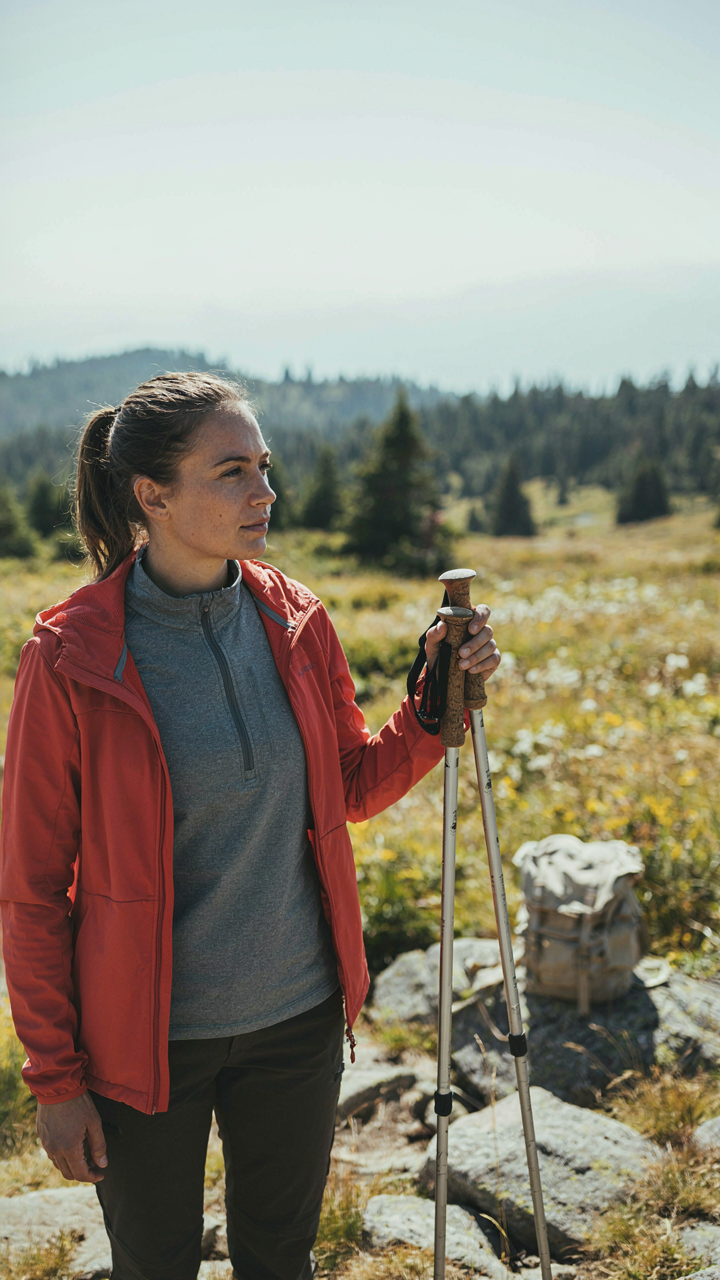
You want trekking poles to feel optional. They’re not. The real reason older adults resist them is the fear of looking frail in front of younger hikers. Biomechanics doesn’t care about optics. Trekking poles reduce ground reaction force on knees and hips by distributing load across your upper body and poles instead of concentrating it in your joints. This is leverage in the literal physics sense: you move the fulcrum, you reduce the force needed.
- Adjustable aluminum poles: Lightweight and won’t fatigue shoulders. Set them to chest height when standing flat on level ground for baseline adjustment.
- Cork or foam grips: Absorb sweat and stay comfortable in spring conditions. Rubber grips become slick when damp and cause grip tension to increase unnecessarily.
- Shock-absorbing mechanisms: Reduce impact on wrists and elbows during downhill sections. Less critical on flat terrain but worthwhile for trails with elevation loss.
- Angled basket size: Smaller baskets (60-75mm) handle packed spring soil and loose ground better than large baskets designed for snow.
- Wrist straps with secure fastening: Your hand should slip through easily when relaxed. Loose straps cause constant micro-adjustments that tire forearms.
The common mistake is gripping tightly throughout the hike. Use poles as weight distribution tools on ascents and shock absorbers on descents. On flats, loosen your grip entirely and let the wrist straps carry minor load. This protocol prevents grip fatigue from sabotaging your ability to finish strong.
Headwear That Manages Three Variables At Once
Spring hiking demands headwear that controls solar radiation, water runoff, and head temperature simultaneously. Most hat recommendations ignore the mechanics. A wide brim reduces direct sun exposure to your face and ears by 50 to 75 percent compared to no hat, but brim width creates wind resistance and heat retention. The trade-off isn’t optional. You manage it by choosing materials that vent heat rapidly while shedding water.
Lightweight synthetic hats with mesh panels regulate temperature better than cotton because synthetics dry faster and don’t retain moisture against your scalp. A brim of 2.5 to 3 inches protects your face without trapping heat underneath. Spring conditions shift fast—sunny one hour, overcast the next. Opt for hats with crushable crowns that fit in a pack pocket so you can carry it without waste. Your head control determines how long you can sustain effort without cognitive decline from overheating.
The Anti Fragile Hiker: Learning From Ecosystems, Not Gear Catalogs
Efficiency Over Accumulation
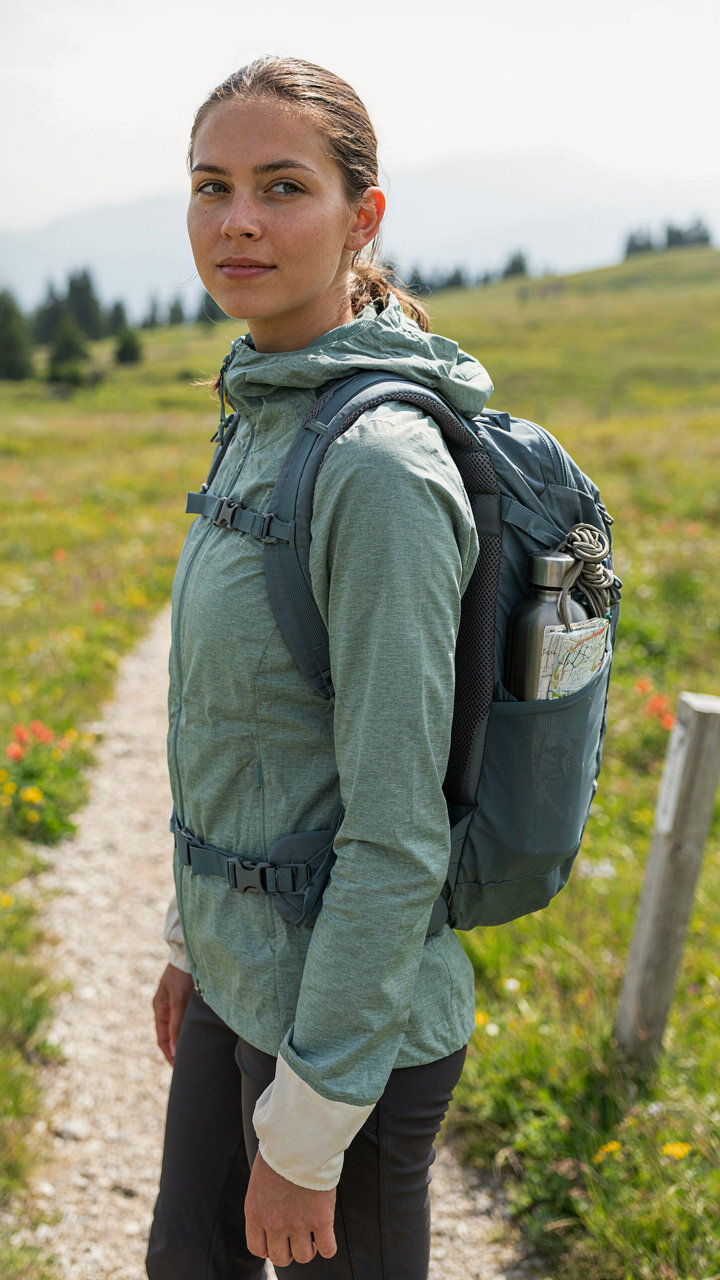
You want permission to buy less gear and still look like you know what you’re doing. Here’s the mechanism: ecosystems don’t waste energy on redundancy. They consolidate function. A spring hiking outfit for older adults works the same way. The gear industry sells you ten items when four do the job. Remove everything that doesn’t serve two purposes. Your base layer insulates and wicks. Your shell sheds water and breathes. Your pack carries load and distributes weight evenly. Done.
Minimalism isn’t deprivation. It’s intentional design. Less weight means fewer joints absorb impact on descents. Fewer layers mean easier temperature regulation without stopping to strip down. Fewer items mean you actually know where everything is and how it functions under stress. Most older adults fail on trails not from weakness but from carrying dead weight that complicates movement. Cut the excess. The trail rewards efficiency, not inventory.
Layering For Variables, Not Weather Forecasts
Biology teaches us adaptation: organisms don’t optimize for one condition, they build capacity to shift across conditions. Apply this directly to your outfit. Spring weather doesn’t stay still. Temperature swings 30 degrees between sunrise and noon. Wind hits exposed ridges. Shade feels 20 degrees colder than sun. Your outfit must respond to these shifts without requiring a full change.
- Base layer in merino wool or synthetic: Regulates temperature across a 40-degree range without bunching or restricting movement in joints.
- Mid layer that compresses small: Fleece or lightweight down packs to the size of your fist and adds 15-25 degrees of warmth when needed.
- Hard shell that stows flat: A packable rain jacket weighs under 12 ounces and deploys when conditions shift, then collapses back into your pack.
- Convertible pants with zip-off legs: One garment handles both warm afternoon hikes and cold morning starts without excess fabric pooling at your ankles.
- Lightweight hat and gloves stored in pack: You won’t use them in full sun, but wind or sudden clouds make them essential without adding meaningful weight.
The outfit adapts as conditions change. You don’t need perfect prediction. You need rapid response. Start layered even if the morning feels warm. Remove layers as you move. Add them back before you cool down, not after. This protocol prevents the energy crash that derails older hikers mid-trail.
The Unspoken Edge: Gear Maintenance As A Performance Multiplier

Stop Treating Gear Like Disposable
You want your hiking setup to last so you don’t face the sunk cost of replacing it. That’s the real driver here. Gear makers design products to fail predictably, not catastrophically. Spring conditions amplify this because wet-dry cycles accelerate material breakdown. Older adults especially can’t afford mid-trail gear failure—the stakes are higher when recovery takes longer. Maintenance isn’t an afterthought; it’s the mechanism that keeps your system performing when conditions turn against you.
Most hikers ignore gear between trips. They pack wet, store compressed, and expect equipment to function identically on trip ten as trip one. This is wrong. A rain jacket stored damp loses water-repellency within weeks. Zippers corrode. Straps fray. Seams separate. Small degradation compounds faster than most people track. The fix is systematic: establish a post-hike protocol that takes thirty minutes and catches problems before they become dangerous.
Catch Problems Before The Trail Pays Back
The economics here mirror preventive medicine. Small repairs now cost nothing. Replacements cost everything. A separated seam on a shoulder strap catches you during a steep climb where repositioning your pack destabilizes your footing. A zipper that sticks might lock mid-adjustment, trapping you in weather. Spring mud gets into everything—boots, pack seams, sock fibers. These conditions aren’t harsh outliers; they’re baseline for this season. Check your gear weekly during spring, not monthly. Look for obvious damage: tears, separation, material cracking, fastener corrosion.
The protocol is straightforward. After every spring hike, dry your entire outfit indoors before storage. Wipe boots clean and inspect the sole for stone lodging. Examine zippers for mud and salt residue—compressed air or a soft brush clears both. Test all fasteners and straps by hand; you’ll feel tension differences that signal wear. Repair immediately using the right materials: seam sealer for splits, replacement zippers for stuck mechanisms, new laces for worn ones. This takes two hours per season and prevents ten times the replacement cost.
The Obstacle Is Not Your Age Or The Trail; It’s The Dogma Of Safetyism Stifling Genuine Capability

Most older adults don’t hike spring trails because they bought the story that bodies decay after sixty. They didn’t. Your body atrophies when you stop using it. Pick one trail this week, wear the outfit you’ve assembled, and go. Not next month. Not after you “get in shape.” The real risk isn’t the mountain, it’s the voice in your head that mistakes caution for wisdom.