

The Adapt & Overcome Layering Protocol For Spring Hiking
Start With Skin Contact
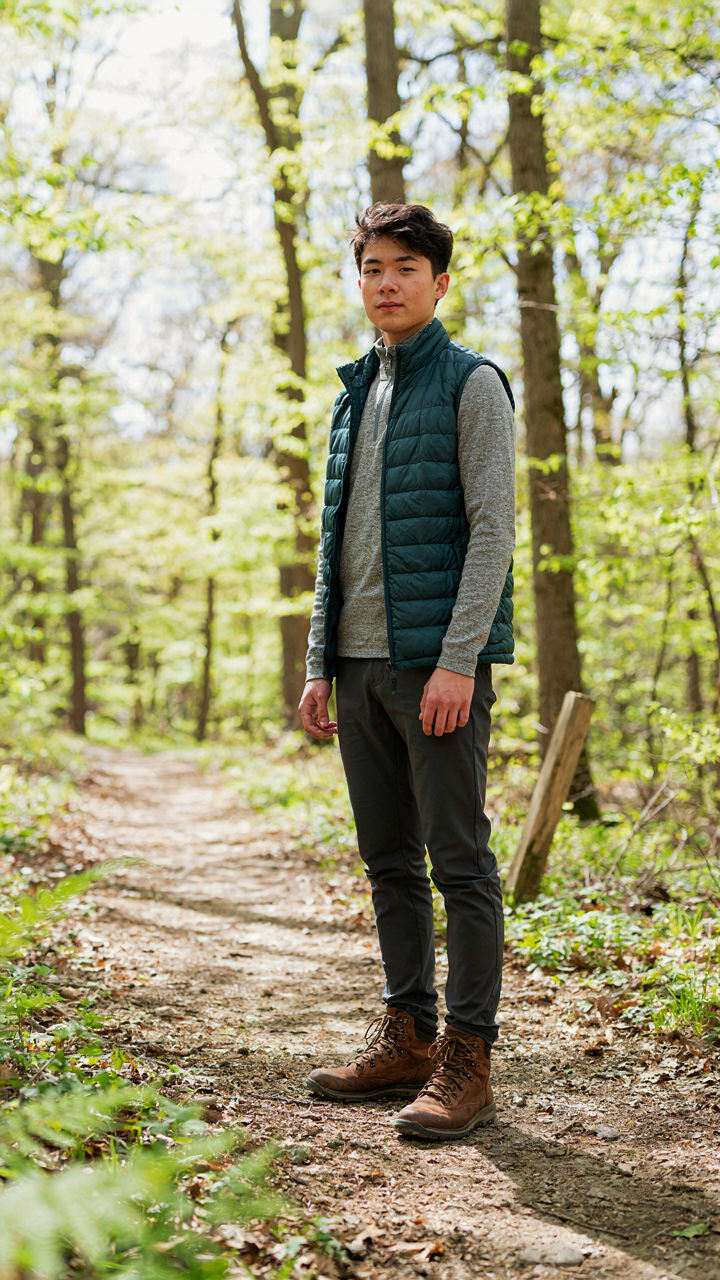
You want to look like you know what you’re doing without actually committing to gear research. Here’s the mechanism: base layers manage moisture, not warmth. Merino wool and synthetic materials wick sweat away from your skin faster than cotton absorbs it. Cotton holds moisture against your body, dropping your core temperature when the wind hits. Spring temperatures swing thirty degrees in six hours, so your base layer does the only job that matters: keeping skin dry.
Wear merino wool or polyester against your skin on spring hikes. These materials push sweat outward while cotton traps it. Your base layer thickness doesn’t need to be heavy—spring air warms quickly once you’re moving. The fit matters more than the weight: snug but not restrictive. If you’re choosing between a thick cotton shirt and a thin merino layer, the merino wins every time, regardless of how “warm” it feels in your dorm room.
The Insulation Trap Door

Insulation works like the military concept of defensive depth: you create zones of protection that stay effective even when one fails. A mid-layer traps dead air space. Fleece, down, or synthetic insulation all do this. The mistake most college students make is treating mid-layers as decorative—wearing them for campus credit instead of function. A mid-layer only works if you remove it when you warm up and add it back when you cool down.
Spring hiking demands a mid-layer you can pack in a backpack without losing your mind. Fleece compresses better than down when damp. Synthetic insulation handles moisture better than down but weighs more than fleece. Pick one mid-layer, not three. Wear it during the cold start, stash it when you’re sweating on the uphill, pull it back on during the descent when the sun drops and the wind picks up. That cycle is your entire protocol.

Weather Whiplash: Navigating Unpredictable Spring Conditions

Rain Shell That Actually Works
You want to look like you have your life together on the trail. Here’s the real mechanism: a rain shell isn’t about staying dry. It’s about wind management and temperature regulation. Spring rain often comes with temperature swings that kill your core faster than cold alone. A functional shell stops convective heat loss while shedding moisture. Cheap shells trap sweat and defeat the purpose. You need a jacket that breathes under exertion, not one that turns you into a sauna.
The common advice says any waterproof jacket works. Wrong. Most college students buy rain jackets based on weight and price, then hate them because they overheat or fail in actual conditions. Get a hardshell or hybrid with pit zips. Test it on a short hike before committing to a full day. The shell rides in your pack ninety percent of the time and deploys during the final mile when weather shifts. That’s when you discover whether it actually functions.
Sunscreen And UV Reality
UV penetration doesn’t follow clouds or season. The mechanism is physics: ultraviolet radiation scatters through atmosphere independent of visible light intensity. Spring clouds create false safety. You can burn under gray skies because UVA rays pass straight through cloud cover. Most hikers skip sunscreen because they don’t see direct sun, then photograph themselves red two days later.
Apply SPF 30 minimum fifteen minutes before heading out. Reapply every two hours and after sweating. Stick formulas beat lotions on trail because they don’t slide off as fast. One standalone tube fits in a pack pocket. The real cost isn’t the sunscreen. It’s the skin damage and future correction you avoid by spending two minutes on application now.
Footwear Fallacy: Why Your Sneakers Are A Liability, Not A “Cute Hiking Outfit”
The Ankle Support Question
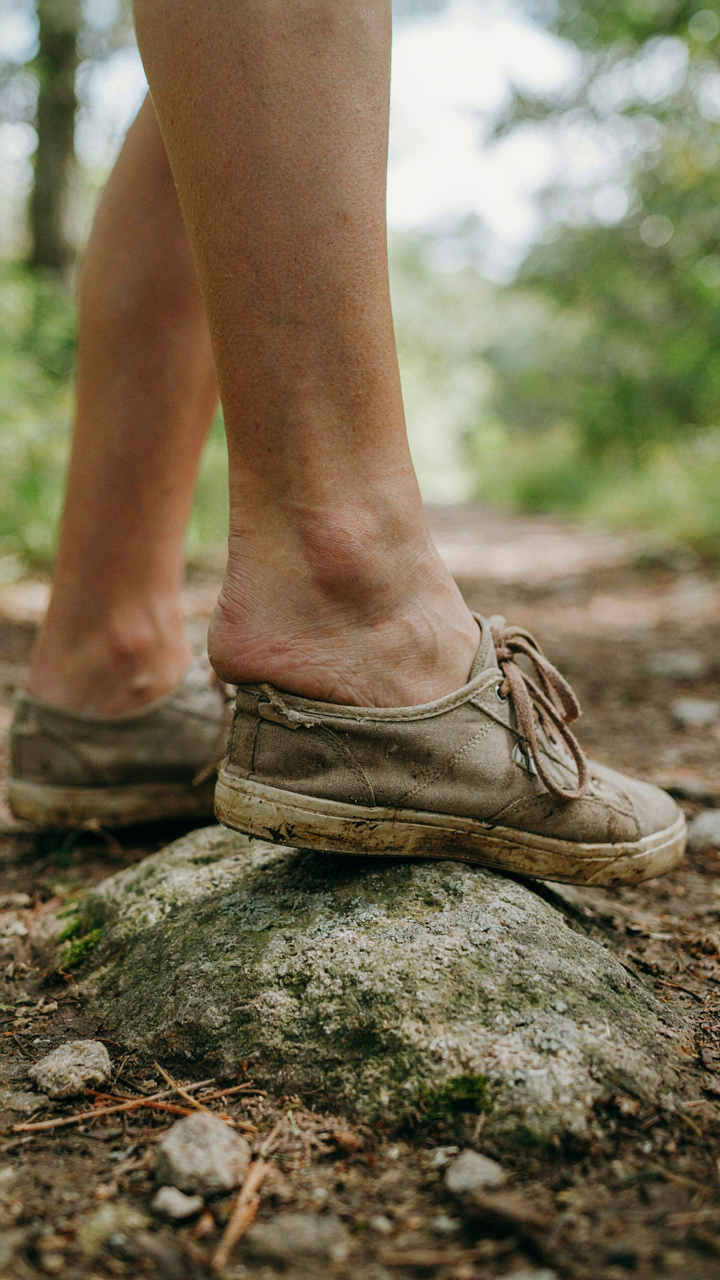
You want to look intentional on the trail without looking like you tried. That’s the real tension here. The mechanism is simple: your ankle is a hinge joint designed for flat surfaces. Sneakers offer zero lateral support because they’re engineered for forward motion only. Spring trails are muddy and uneven. Your foot rolls inward or outward on hidden roots. Sprains sideline you for weeks during midterms.
Hiking boots anchor your ankle with a rigid cuff and higher shaft. The support isn’t about comfort—it’s about preventing inversion injuries that end your semester. Low-cut trail shoes split the difference if boots feel too extreme, but only if they have a stiff midsole and ankle collar. Sneakers fail both tests. Pick one: look cute or stay functional. Spring hiking demands the second choice.
Where Grip Actually Matters
Physics calls it friction—the resistance that prevents slipping between two surfaces. On a spring hiking trail, that surface is wet dirt, mud, and algae-covered rocks. Your rubber sole is the only variable you control. Most sneaker rubber compounds prioritize durability over grip and use shallow tread patterns designed for pavement, not soil saturation.
Hiking boot soles use aggressive tread with deeper lugs specifically shaped to shed mud and bite into soft ground. The rubber compound itself is stickier. Spring conditions demand boots with Vibram soles or equivalent aggressive patterns. Without real traction, you’re not moving faster—you’re sliding downhill on your ass when the pitch steepens. Test your footwear on wet grass before committing to a full hike.
Backpacking Outfits: The Carry Less Commandment For College
Strip Down To Survival Math
You want permission to buy less gear. That’s the real ask here. Economics calls this the Pareto Principle: 80 percent of your comfort comes from 20 percent of your gear. For spring hiking, this means identifying which items actually prevent failure versus which ones just feel nice to have. Most college students carry redundant layers, backup socks, and emergency supplies they’ll never touch. The mechanism is simple: every pound you carry taxes your joints and your pace. Start by listing what kills a hike fast: exposure, dehydration, injury, getting lost. Everything else is noise.
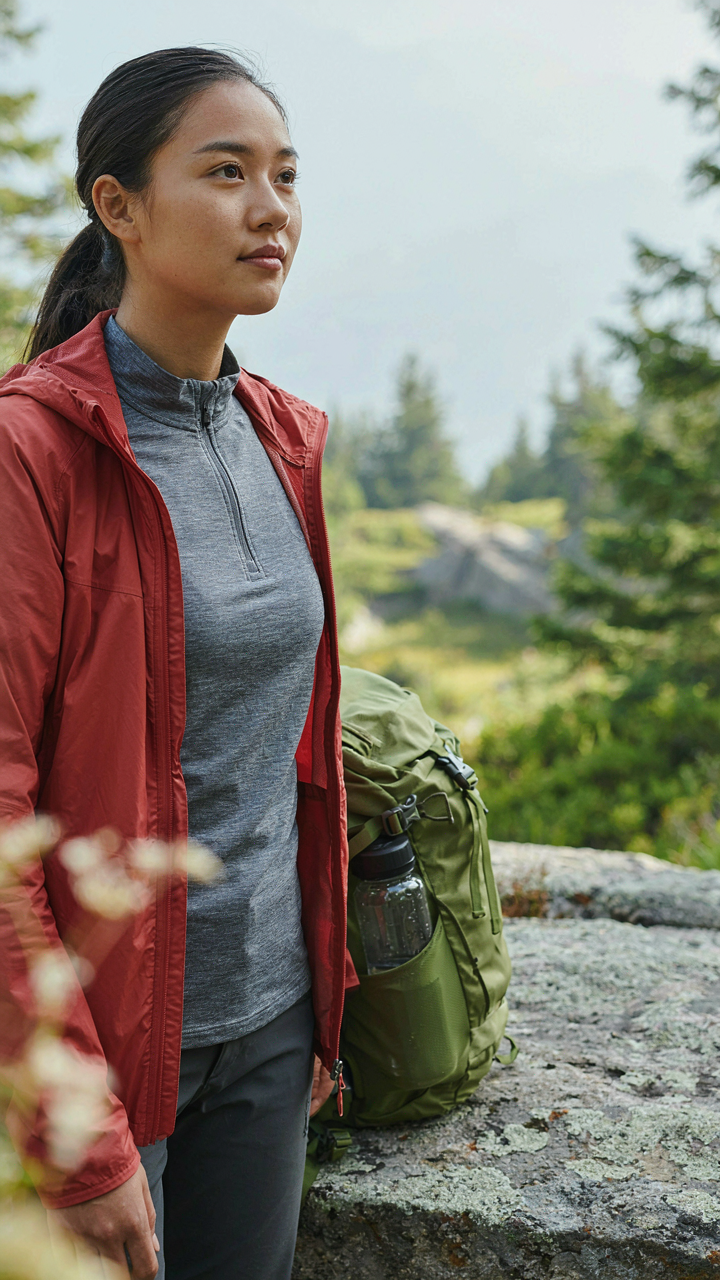
Build backward from those five failure points, not forward from a gear catalog. A base layer, insulating mid layer, and water-resistant shell handle exposure. A hydration pack or water bottle handles dehydration. A basic first aid kit handles minor injury. A map or phone handles navigation. Spring weather shifts fast, so your three-layer system beats five random jackets. Weight compounds over miles. Remove one pound and you remove five miles of cumulative joint stress on a ten-mile hike.
Only Pack What Prevents Suffering
The common advice says “bring layers for versatility.” Wrong framing. What matters is which layers stop you from turning back. A moisture-wicking base layer prevents the cold-and-wet death spiral that halts most college hikes by mile three. An insulating mid layer (fleece or down) retains heat when spring wind hits. A packable rain shell stops the descent into misery when clouds dump. Those three layers handle 95 percent of spring conditions. Bring a lightweight down jacket instead of a heavy puffer. Wear merino wool socks instead of cotton. These swaps cut weight while raising performance.
Add only what directly fixes a specific failure state. A small first aid kit with tape, antibiotic, and blister treatment solves foot problems that halt progress. A headlamp handles unexpected darkness. A basic multi-tool handles gear failure. Skip the “just in case” items. Spring day hikes rarely require emergency shelter or a water filter if you start with a full bottle. Each item should solve a real problem, not a fantasy scenario. Pack this way and you move faster, hurt less, and actually finish the hike instead of rage-quitting at mile two.
The “Cool Girl Camping Outfits” Myth: Function Over Aesthetic
Buy Gear That Lasts, Not Gear That Photographs
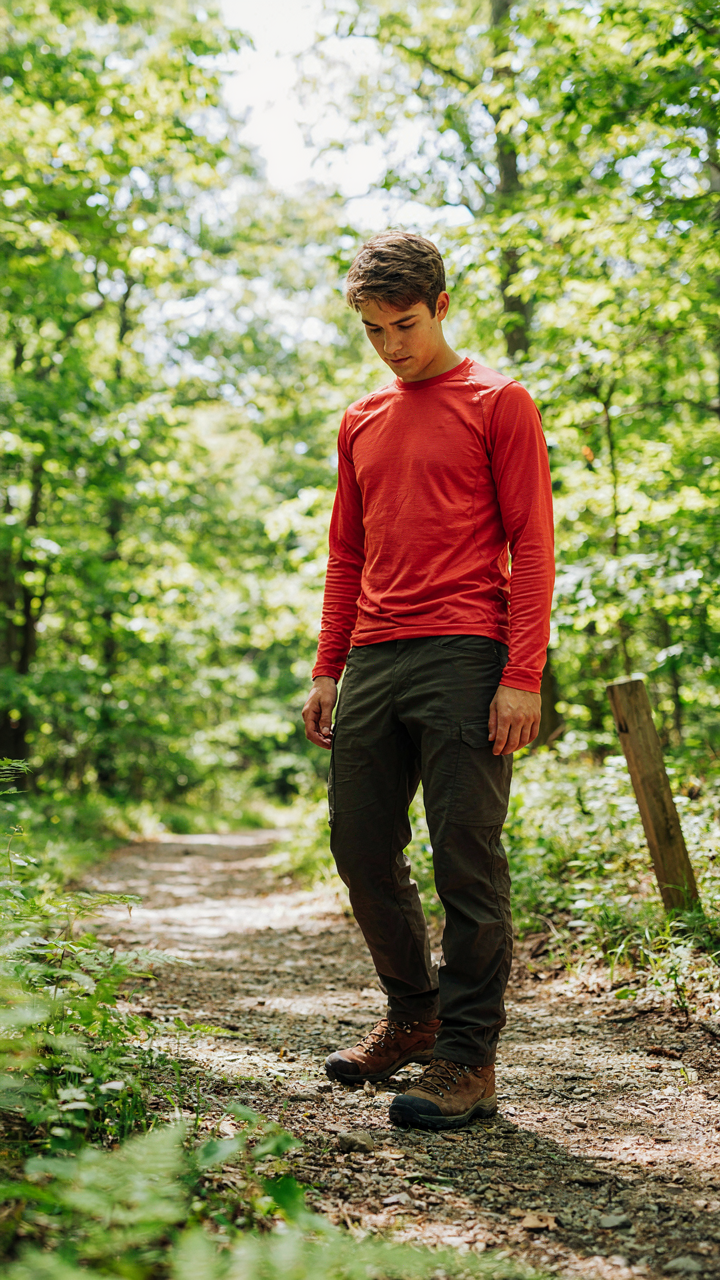
You’re scrolling Instagram looking at outfits because you want permission to feel like you belong on a trail. Here’s the mechanism: your brain mistakes visual coherence for competence. A matching hiking outfit doesn’t make you safer or more capable. Cotton breaks down after thirty washes. Synthetic blends designed for durability cost more upfront but outlast three seasons of college use. This is basic materials engineering. Buy what survives repeated use and sweat exposure, not what looks intentional in flat lay photography.
Most college students treat hiking gear like fashion because brands market it that way. The actual constraint is laundry frequency and budget. Patagonia and Arc’teryx pieces hold up through repeated compress cycles and UV exposure. Fast fashion hiking knockoffs pill, lose elasticity, and tear at stress points within a semester. You’re not being pretentious by choosing durable synthetic over trendy cotton. You’re being practical. The math is simple: expensive piece worn eighty times costs less per wear than cheap piece worn ten times before degradation.
Fit Determines Whether You Hike Again
Chafing is a biomechanical problem, not a comfort preference. Loose fabric bunches under a backpack shoulder strap and creates friction points after two miles. Tight fabric restricts movement and cuts off circulation. Too-long sleeves catch on branches. Too-short inseams limit stride length on steep terrain. Most college students own nothing in the correct size range because retail sizing exists to move inventory, not to fit actual bodies. Your hiking pants should sit at your natural waist without a belt, allow a full squat position, and taper past your ankle. Your shirt should cover your back when you bend forward at the waist.
Proper fit prevents the cascade of problems that kills motivation. Blisters lead to limping. Limping leads to irritation. Irritation leads to skipped hikes next weekend. A shirt that actually fits your shoulders costs the same as one that doesn’t. Try things on. Bend, squat, raise your arms overhead. If seams dig into your armpits or fabric pulls across your chest, move to the next size. You’re not paying for the label. You’re paying to move comfortably for four to six hours without physical punishment.
Budget Brilliance: Strategic Gear Acquisition For Students

Thrift Store Treasures And Outdoor Outfit Ideas
You’re really here because you don’t want to look broke while hiking with people who might matter to your social circle. The mechanism is simple: thrift stores stock surplus outdoor gear from decades past at 90% below retail, and most of it works identically to new equipment because fabric physics haven’t changed. You’re not buying vintage for the story. You’re buying function for the price of a coffee.
- Fleece pullovers: Previous generations donated polartec and similar synthetics in bulk. They regulate temperature identically to current models and cost three to five dollars per piece.
- Canvas and cotton pants: Thrift stores carry Carhartt, Dickies, and workwear brands that perform on trails. These outlast mall-brand hiking pants and cost less than a new t-shirt.
- Wool socks: Merino and wool blends appear regularly in thrift bins. Original cost was high, your cost is negligible, and performance stays constant regardless of purchase date.
- Nylon jackets: Vintage rain shells from the 1990s and 2000s use the same water-resistant materials as modern options. Check seams and zippers, not labels.
- Backpacks: Frame packs and day packs from established brands hold capacity identically whether purchased new or used. Look for intact zippers and straps, not condition cosmetics.
The filtering step separates broke from strategic. Examine every seam for separation. Test every zipper. Check for permanent stains or odors that won’t wash out. One hour in thrift stores beats one week of online browsing because you see fabric quality and construction defects in real time instead of guessing from photos.
Gear Swaps And Network Leverage
This is borrowed from supply chain economics, specifically the concept of asset utilization: instead of each person owning 100% of the gear they use 20% of the time, a network shares ownership and raises utilization rates to 70% or higher. Your college hiking crew operates on the exact same principle. You don’t need to own a tent if four people rotate carrying it across eight trips per semester.
Create a shared inventory in your group chat. Document who owns what, condition notes, and availability. Establish a checkout protocol: two-day minimum use, return clean, report damage immediately. This removes ambiguity that kills swaps faster than actual gear failures. One person buys quality rain gear, another invests in a solid tent, a third handles the stove system. Collectively you own a full setup. Individually you spent a fraction of retail on items you use frequently but don’t own constantly.
Trekking Outfit Tactics: Applying Military Principles To The Trail
Plan For Terrain You Haven’t Seen
You want this section to make you feel prepared, which means you’re afraid of looking unprepared on the trail. Military strategy calls this “movement to contact”—you don’t commit your full force until you encounter the actual terrain. Apply that to your outfit: you’re not choosing between heavy winter gear and bare arms before the hike starts. You’re building optionality into your pack so you adjust on contact with the mountain.
Spring trails vary wildly across elevation and exposure. A ridge at 3,000 feet runs 15 degrees colder than the trailhead a thousand feet below. Wind hits exposed sections harder than sheltered forest. You can’t predict exactly where the cold pocket will hit. Pack a lightweight insulating layer and a wind shell separate from your base layer, not compressed into one puffy jacket. This lets you add or strip pieces as terrain reveals what you actually need, not what you guessed you’d need.
Stack Layers For Real Adjustments
Most advice says “layer up” like it’s obvious strategy. It’s not. Real layering isn’t about depth—it’s about independent adjustment. Military formations use echelon positioning to let units move and reposition independently without cascading failure. Your outfit should work the same way. Each layer must work alone or in combination without locking you into an all-or-nothing decision.
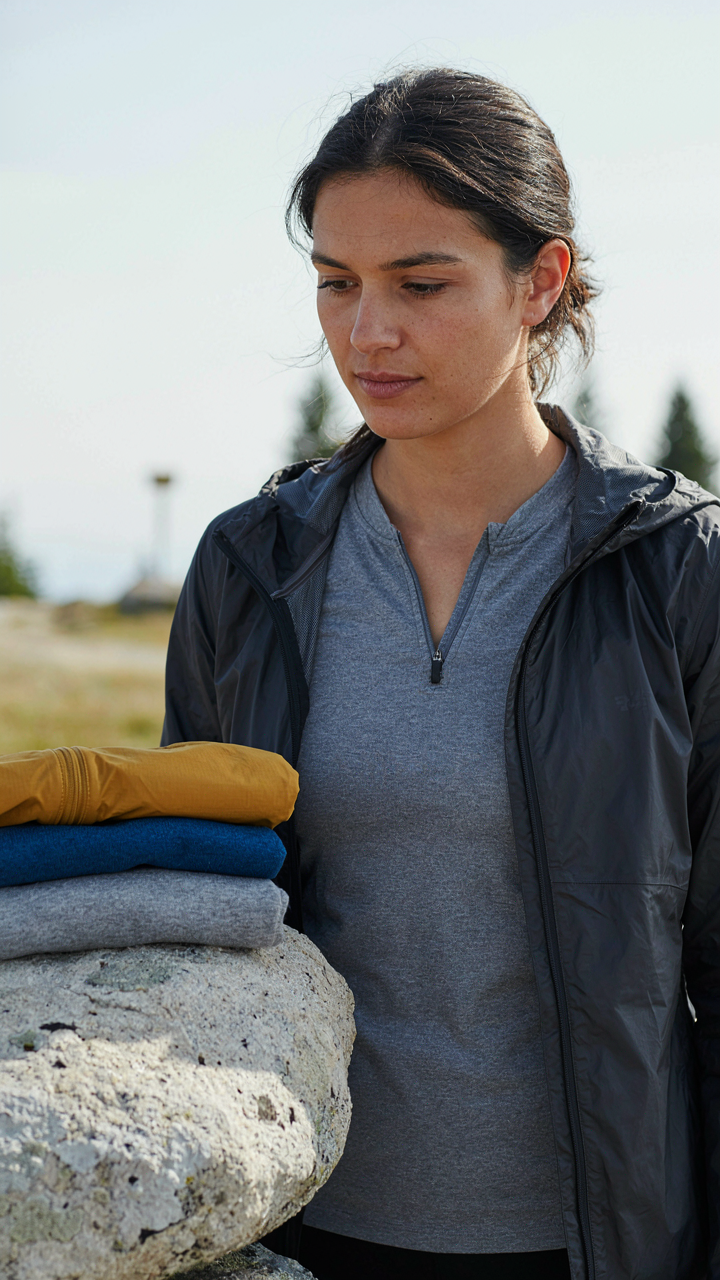
Start with a moisture-wicking synthetic or merino base. Add a fleece or lightweight down insulator you can tie around your waist when you’re warm. Top it with a packable shell that compresses to fist-size. The move: you shed the insulator without removing your shell, or you keep the insulator but ditch the shell in sun. Don’t buy a single “hybrid” jacket that tries to do all three jobs. When one layer fails at its job, you have dead weight instead of a tool. Stagger your layers so each one solves one problem and nothing more.
Beyond The Mountain Outfit: Everyday Versatility

Your Clothes Work Harder Than Your Schedule
You want permission to buy expensive gear and feel like it was worth it. Here’s the mechanism: most college students treat hiking clothes as single-purpose items, then rationalize the expense by pretending they’ll hike constantly. They won’t. The real play is selecting pieces that function in three contexts minimum: the trail, campus, and casual settings. A merino wool base layer works under a t-shirt to class. Trail pants with convertible legs become shorts for the dining hall. Your hiking jacket becomes your library jacket.
Fabric choice determines this versatility. Merino wool regulates temperature and resists odor across both athletic and casual wear. Synthetic blends dry faster between washes, crucial when you’re cycling the same items through a dorm rotation. Cotton fails here because it holds moisture and requires frequent washing. Nylon and polyester maintain structure through repeated use without degrading as quickly as natural fibers alone. The outfit that works on Saturday works on Tuesday if you engineer it right from purchase.
Washing Protocols That Actually Preserve Function
The common advice on gear care is incomplete: most sources say wash less and use cold water, then stop. That’s incomplete because it ignores the specific enemy of spring hiking fabrics. Perspiration and mineral content from spring conditions break down synthetic fibers faster than any detergent does. You need a protocol, not a preference.
Turn items inside out before washing to reduce pilling and fading on the visible side. Use sport-specific detergent or plain water rinses when possible to avoid buildup that traps moisture inside the fabric. Air dry everything, even when you’re impatient. Heat from dryers melts synthetic fibers and destroys the water-resistant coatings on jackets and rain gear. Reapply DWR (durable water repellent) coating annually if your jacket gets heavy spring use. Check the manufacturer’s instructions once, follow that protocol consistently, and your spring hiking outfit lasts through graduation instead of one semester.
The Real Obstacle Isn’t The Trail; It’s Your Inability To Adapt What You Already Own

You don’t need new gear. You need to stop thinking in categories. That hoodie, those jeans, those sneakers gathering dust in your closet—they’re already a spring hiking outfit if you stop waiting for permission to wear them. Today, pick one hike. Get dressed from what you have. Move. Every college student owns the foundation of a solid trail look. The problem isn’t your wardrobe. It’s that you’re looking for certainty before you ever start walking.