

The Layering Fallacy: Why More Isn’t Always Better For Spring Hiking

Stack Fewer Layers, Not More
You think more layers mean more control. They don’t. Thermodynamics teaches us that heat transfer happens through conduction, convection, and radiation. In spring hiking, conduction is your real opponent—your body losing warmth directly to cold air and wet fabric. The mechanism is simple: too many layers trap moisture against your skin, which accelerates heat loss faster than a single proper layer prevents it. One breathable insulating piece beats three cotton shirts every time.
The beginner mistake is treating layers like insurance. You pack them thinking you’ll feel safer with options. Instead, you create dead weight and complexity that makes you sweat during climbs, then chill during descents. Spring weather forces constant adjustment. Your goal isn’t to wear everything. Your goal is to regulate core temperature with minimal gear transitions. This means choosing the right single insulation layer and layering around it strategically, not adding bulk.
One Insulation Layer Solves Most Spring Days

Skip the layering confusion. A fleece or lightweight synthetic insulation jacket handles 80 percent of spring hiking conditions. Fleece works because it wicks moisture away from skin while maintaining loft even when damp. Synthetic insulation like polyester performs the same function. Cotton does not. Wool works but costs more and takes longer to dry. The insulation piece sits between your base layer and your outer shell, not as an extra luxury but as your heat engine.
Beginners overthink this layer because outdoor media has conditioned you to think “layers” means quantity. It doesn’t. It means function. You need three functional layers: something that moves sweat away from skin, something that traps warmth, something that blocks wind. A t-shirt base layer, a fleece mid-layer, and a rain jacket outer layer. That’s the complete system. Add this to your pack and stop shopping for more options. Your spring hikes depend on execution, not inventory.

Beyond “Cute Hiking Outfit”: Function Over Fashion On The Trail

Materials That Actually Survive Repeated Use
You want to look good on the trail because you think it matters to other hikers. It doesn’t. What matters is that your gear works the same way on week five that it did on week one. Materials are the mechanism here. Synthetics like polyester and nylon dry fast, resist mildew, and tolerate abrasion from brush and rock. Cotton absorbs moisture, holds it against your skin, and degrades faster under UV exposure and repeated washing. The difference isn’t philosophical. It’s physics applied to fabric.
Spring conditions demand materials that handle wet and dry states without failing. Merino wool works because it regulates temperature even when damp and resists odor naturally, making it practical for multi-day trips where you won’t wash gear between outings. Nylon shells shed water and don’t absorb it. Fleece made from polyester holds loft after compression and drying cycles that would mat down natural fibers. The common advice to “just wear what you own” is incomplete. You’ll own gear longer if you start with the right material composition. Check labels for fiber content before buying. Prioritize durability metrics, not brand names or color options.
Performance Over Trends, Every Time
The hiking aesthetic shifts every season. Athleisure influences mainstream gear lines. Color palettes change. This noise distracts beginners from a core fact: trends fade, but wet feet and chafed shoulders persist. Ignore what looks current and focus on what solves problems you’ll actually face in spring conditions.
Real spring hiking demands base layers that wick without bunching under pack straps, mid-layers that compress small without compressing your body heat, and outer shells that breathe while shedding rain. A gray synthetic base layer from five years ago outperforms a trendy pastel one that looks better on Instagram. The hikers with functional kits didn’t choose them for aesthetics. They chose them because they tested performance, identified gaps, and replaced what failed. Build your outfit the same way: trial, data, replacement. Ignore what’s fashionable.
The “Trekking Outfit” Trap: Day Hikes Don’t Need Expedition Gear
Know Your Duration First
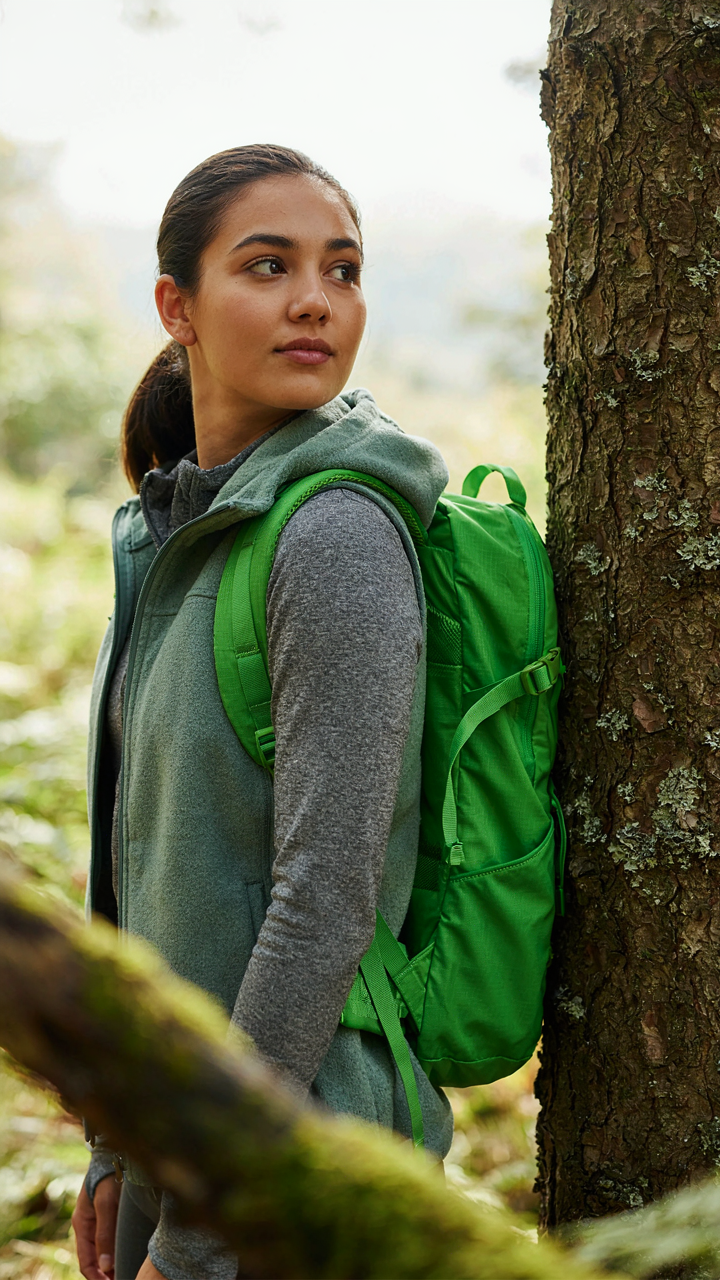
You’re drawn to this section because you want permission to buy less gear and still feel legitimate. Here’s the mechanism: a day hike and a multi-day trek operate under different constraints. On a day hike, your body generates enough heat through movement that insulation layers work differently than they do when you’re stationary in a camp. You move constantly for four to six hours, which means sweat management matters more than pack weight. A three-day backpacking trip requires redundancy, extra food weight, and gear that performs while you’re idle. A day hike demands speed and breathability. Conflating them wastes money on gear you’ll never actually need to use at capacity.
Most beginners buy a 50-liter pack for a four-hour hike. That’s the mistake. A day hike needs a 15-to-20-liter pack because you’re carrying water, a light layer, and snacks only. Your outfit changes fundamentally once you accept this reality. Spring temperatures hover between 45 and 65 degrees Fahrenheit depending on elevation and time of day. You need one base layer, one insulating layer, one wind shell, and nothing else. No sleeping bag. No tent. No cooking system. The gear list shrinks to what actually prevents you from turning back early.
Strip The System Down To Movement
Minimalism in hiking outfit design means removing every item that doesn’t directly serve locomotion or safety. This isn’t about looking lean or sounding ascetic. It’s physics: extra weight requires extra energy. A 30-pound pack on a day hike burns 20 percent more calories than a 10-pound pack over the same distance. Spring conditions don’t demand a full expedition loadout. You need a jacket you can take off, a base layer that dries fast, and bottoms that don’t restrict your stride. Everything else creates friction.
The protocol is simple. Lay out what you think you need. Remove half. Then remove half again. What remains should be: moisture-wicking base layer, insulating mid-layer you can shed, wind-resistant shell, appropriate bottoms, and socks. Spring hiking doesn’t require redundancy because you’re home by dinner. Carry one of each, not backups. Your pack weight stays under 12 pounds including water and snacks. That’s the difference between a hike you enjoy and one you abandon halfway through.
Weather’s Deception: Don’t Overdress For Spring Hiking

Spring Temperature Swings Are Not Linear
You want to look prepared, like you’ve got this figured out. The real problem is this: spring doesn’t warm up evenly. Elevation, time of day, wind exposure, and cloud cover create microclimates that can shift fifteen degrees within a mile. A valley floor at noon feels nothing like a ridge at dawn. Most beginners dress for the warmest moment they expect, then overheat when they actually move. That’s backwards.
Think in terms of thermodynamics. Air temperature is the environment, but your body generates its own heat engine through exertion. A trail that feels cool at the trailhead becomes a furnace thirty minutes in when your muscles are working. Spring’s deception is that the thermometer doesn’t account for your effort output. You start cold, so you layer heavy. Then physics takes over and you’re trapped in insulation that no longer serves you.
Sweat Kills Your Insulation Strategy
The conventional advice says “dress in layers so you can adjust.” Fine. But nobody explains the mechanism that makes most beginners fail: moisture management. When you sweat into a synthetic or wool layer, that layer loses its insulating power. Wet fabric against skin becomes a heat drain. You either strip everything off (exposing yourself to wind chill when you stop) or stay damp and cold for the next two hours.
Start with a moisture-wicking base layer that moves sweat away from skin, not into it. Use a thin insulating mid layer you can shed entirely and stash. Wear your outer shell only when wind or rain demands it, not for warmth. On the hike itself, remove layers before you sweat, not after. This requires reading your effort level and adjusting five minutes into movement, not waiting until you’re drenched. That’s the protocol.
The Footwear Myth: You Don’t Need Boots For Every Spring Hike

Trail Runners Beat Boots On Most Spring Routes
You want the gear that says “serious hiker” because boots look the part. Here’s the mechanism: ankle support is a solution to a problem most spring hikers don’t have. Spring terrain is wet but stable. The real variable is traction and how fast your foot tires. Trail runners win because they’re lighter, they dry faster, and they let your foot work naturally instead of fighting rigid support you don’t need. A five-mile spring loop on maintained trail doesn’t demand the ankle constraint of a boot designed for technical scrambling.
The boot industry built its reputation on backcountry work where loose rock and exposure demand ankle stability. Spring hiking on established trails eliminates that exposure. Your ankle stabilizes itself through natural proprioception when the ground doesn’t threaten to roll it. Trail runners have aggressive lugs for wet grass and mud. They flex with your foot instead of forcing it into a predetermined motion. Start with trail runners on flat or gently rolling spring terrain. Graduate to boots only when your routes include steep descents, off-trail navigation, or sustained technical sections.
Grip And Comfort Over The Ankle Support Fantasy
The physics term here is ground contact. Hiking boots reduce it. A stiffer sole transfers less ground feel to your foot, which means your nervous system has less information about what’s underfoot. This matters on muddy spring trails where subtle texture tells you where traction lives. Trail runners maintain contact through flexible midsoles that conform to uneven ground. Comfort matters because a blister on mile two kills your hike completely. Boots cause blisters through poor fit and heat buildup. Spring hiking doesn’t require armor.
Grip dominates ankle support in spring conditions because the terrain threat isn’t instability, it’s slipping. Wet grass and mud don’t roll your ankle under normal hiking speeds. They make your foot slide. A shoe with proper lugs and a rubber compound designed for wet conditions solves the actual problem. Test your footwear on a wet section before committing to a full hike. If your foot slides or feels unstable, the shoe is wrong, not the route. If it holds and feels responsive, you’ve found your tool. Replace trail runners every 300 to 500 miles of hiking. Inspect the lugs before each season and retire shoes when tread depth drops noticeably.
Fabric Folly: Why Cotton Kills Your Spring Hiking Experience

What Cotton Actually Does To Your Body
You’re afraid you’ll look stupid in synthetic fabrics. Here’s the mechanism that matters: cotton absorbs water instead of moving it. When cotton gets wet—sweat, rain, stream spray—it holds that moisture against your skin. The fibers swell as they absorb water, trapping heat and blocking evaporation. This is basic physics applied to textiles. You end up colder, heavier, and at risk of chafing within two hours on the trail.
Cotton’s water retention compounds in spring conditions. The temperature swings between 40 and 65 degrees mean you’re constantly moving between effort and rest. Cotton doesn’t recover fast enough. A cotton shirt soaked with sweat takes hours to dry. By then, you’re either overheating or shivering. Beginners choose cotton because it feels familiar at home, not because it works on a trail. That’s the only real reason anyone picks it.
Synthetic And Natural Fibers That Actually Work
Moisture-wicking isn’t marketing jargon—it’s a specific property where fibers push water away from skin to the fabric’s outer surface for faster evaporation. Polyester and nylon accomplish this through their molecular structure. They repel water instead of absorbing it. Merino wool does the same job through a different mechanism: the outer scales of wool fibers are naturally water-resistant while the core wicks moisture away from skin. Both categories outperform cotton in every spring condition.
Polyester dries three to four times faster than cotton and regulates temperature across wider ranges. Merino wool handles odor better because its structure resists bacterial growth, meaning you can wear the same base layer for multiple days without washing. Nylon blends offer durability when combined with spandex for stretch. The choice depends on your budget and activity level. For spring hiking beginners, a polyester base layer under a merino wool mid-layer gives you reliable performance without premium pricing. Start there, then test alternatives as conditions demand.
The “Hiking Outfit Women” Illusion: Unisex Principles For The Trail
Stop Buying Into Gendered Marketing
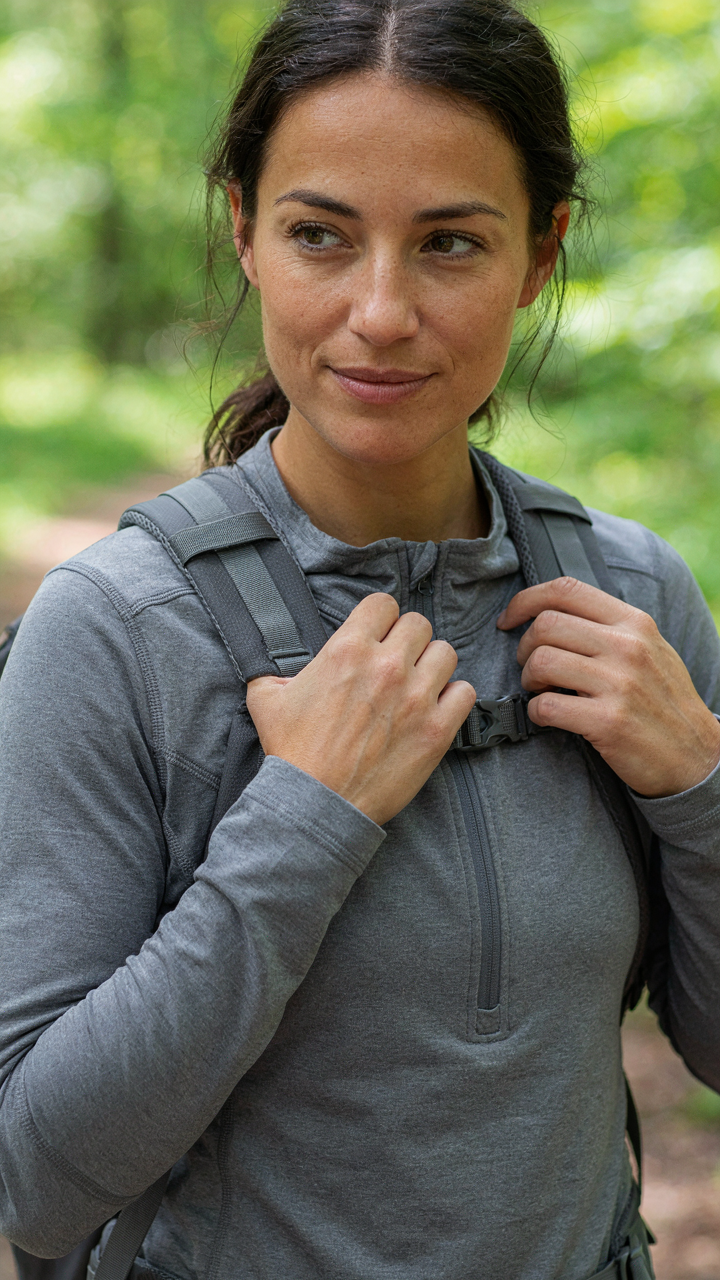
You’re looking at gendered hiking gear because you want permission to belong in a category, not because the physics of your body demands it. The real mechanism: manufacturers segment markets by perceived identity, not by actual biomechanics. Women’s hiking clothes exist primarily as a pricing and branding tool. Cut-and-fit differences matter only when they address real structural variance. Everything else is margin capture dressed up as inclusivity.
The only legitimate functional differences between gendered outdoor wear relate to torso length, shoulder width, and hip placement. Most beginners don’t need specialized versions of basic layers. A unisex synthetic base layer works identically on any body because it moves moisture through fabric regardless of who wears it. Buying the cheaper unisex option first, then upgrading to tailored fit only if comfort fails, saves money and eliminates waste. This is the actual decision tree.
Warmth, Protection, Mobility Work The Same Way
Physics doesn’t recognize gender. Insulation traps dead air in material through loft, whether the jacket says “men’s” or “women’s” on the tag. Protection from wind and water depends on fabric weave and membrane technology, not marketing categories. Mobility requires appropriate range of motion and weight distribution, which depend on fit alone. The principle is load distribution: your body needs unrestricted movement under load, and excess fabric wastes energy while tight fabric restricts blood flow.
Spring hiking demands three functional layers that work together regardless of gendered labels. Base layer moves sweat. Mid layer traps warmth. Outer layer blocks wind and water. Each layer solves one problem. A unisex medium base layer, a mid-weight fleece, and a nylon shell accomplishes this with no gendered versions necessary. Try on what fits your actual frame, not your presumed category. If it allows full arm rotation and doesn’t bind at the shoulders when you’re bent forward, wear it.
The Adaptability Protocol: Applying Military Logistics To Your Pack
Build Layers Around Your Core
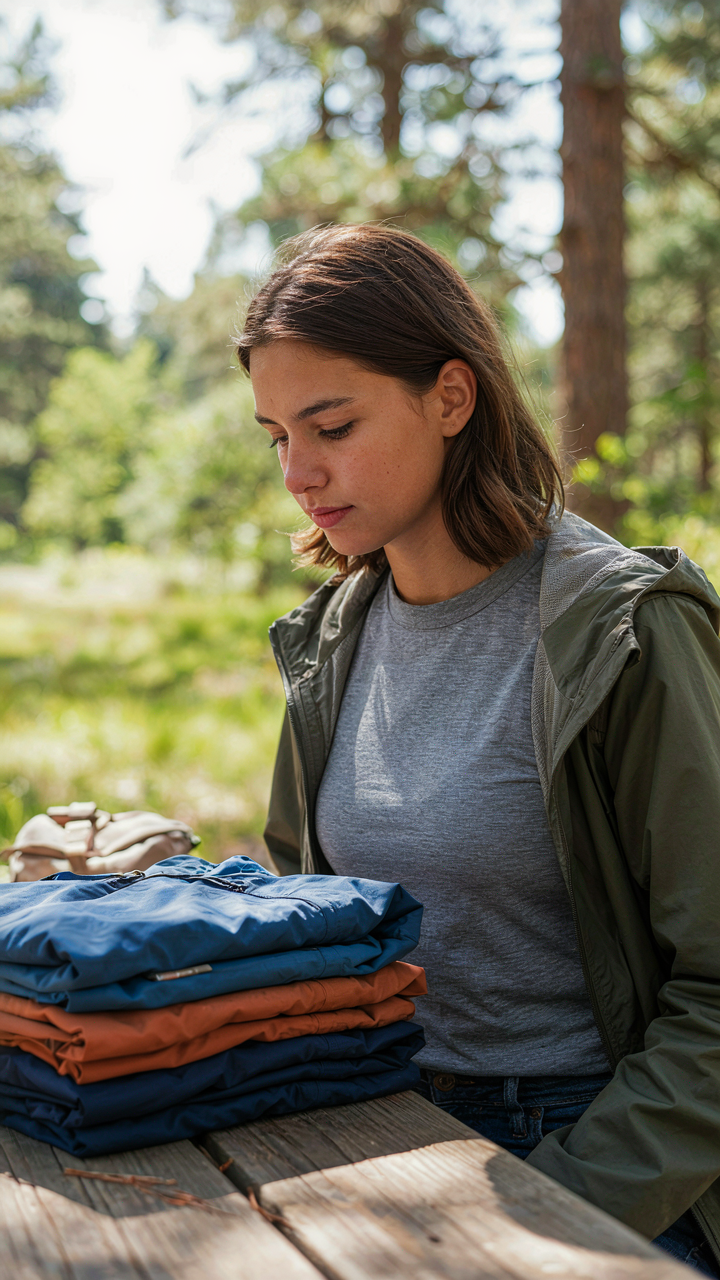
You want to look competent without overthinking every choice. The real mechanism here is modularity: military supply chains win by swapping single components instead of replacing entire systems. Your spring hiking outfit works the same way. Start with a base layer, mid layer, and shell. Each solves one problem. Spring weather demands this because temperature swings twelve degrees between 9am and noon. A rigid outfit fails. A modular one adapts.
The mistake most beginners make is buying a “hiking outfit” as one complete set. That’s backwards. You’re building a system where each piece plays one role and layers stack or strip based on conditions. Your base layer wicks moisture. Your mid layer traps warmth. Your shell blocks wind and rain. Nothing does two jobs well. When conditions shift, you remove or add one piece. This is faster than a wardrobe swap and keeps your core regulated without dead weight.
Carry Backup For Critical Functions Only
Redundancy sounds wasteful until you’re two miles in with wet socks. Essentialism sounds smart until you realize you’ve optimized for the wrong scenario. Military logistics calls this “critical path resilience.” In your pack, only critical functions get backups: moisture management and insulation. Your feet fail first in spring hiking. One spare pair of socks solves this. An extra insulating layer handles unexpected cold. Everything else is single-redundancy or nothing. You don’t carry two rain jackets. You carry one reliable shell and understand its limits.
Load optimization means ruthless subtraction. Remove items that solve problems you won’t face. Spring in most regions doesn’t demand extreme altitude gear, avalanche equipment, or heavy winter insulation. Test your outfit on local trails first. If you don’t use it in three hikes, it doesn’t go in the pack. Weight compounds over distance. Every ounce you carry up a hill you carry back down. This is mathematics, not motivation. Build your loadout around actual conditions you encounter, not scenarios that sound dramatic.
Accessories That Actually Matter: Beyond The Gimmicks For Spring Hiking

Head Protection And Sun Defense
You want to look like you know what you’re doing on the trail. Here’s the mechanism that actually matters: spring sun reflects off snow at high altitude and bounces off water in valleys, creating UV exposure you can’t see building until damage happens. This isn’t vanity. It’s physics. A hat with a brim stops direct and reflected rays. Sunscreen alone won’t catch the bounce.
- Wide-brimmed hat or visor: Blocks both overhead and reflected UV. Baseball caps miss the ears and back of neck entirely. Brim should extend 2-3 inches minimum.
- Sunglasses with UV protection: Spring snow glare causes snow blindness if ignored. Polarized lenses reduce water and rock reflection. Look for 100% UVA/UVB blocking on the label.
- Sunscreen SPF 30 minimum: Reapply every two hours, especially after sweating. Spring sun at elevation is stronger than fall sun at sea level. Stick formulas work better than lotions on a sweaty face.
- Insect repellent with DEET or picaridin: Early spring mosquitoes and ticks emerge as temperatures hit 50 degrees. Apply to exposed skin and clothing cuffs. Reapply after swimming or heavy sweating.
- Lip balm with SPF: Lips burn faster than skin because they lack melanin. Carry balm in a pocket, not a pack. You’ll use it if it’s accessible.
Most beginners skip these entirely or grab whatever’s at the gas station. The ones who don’t end up with sun poisoning, bug bites that itch for weeks, or squinting so hard they miss trail junctions. Spring conditions amplify what summer trails forgive.
The Backpack Decision Nobody Makes Correctly
Beginners buy capacity instead of fit, which means they haul dead weight and shift load wrong all day. That’s an ergonomic failure, not a gear failure. The real variable isn’t size. It’s hip belt design. A pack distributes 65 to 75 percent of weight to your hips when fitted right. Most day packs sold to beginners have hip belts that don’t actually lock or pad properly, which forces your shoulders to carry everything.
Get a pack between 15 and 20 liters for spring day hikes. Anything larger tempts you to bring things you don’t need. Test the hip belt in the store by loading it with weight, buckling it tight, then grabbing the pack frame above your shoulders. You should lift almost nothing. If the hip belt rides or slips, return it. Simple packs without too many compartments force you to organize ruthlessly instead of stuffing randomly, which means you find things when you need them.
The Cost Delusion: You Don’t Need Expensive “Spring Hiking Outfits”
Durability Over Brand Names
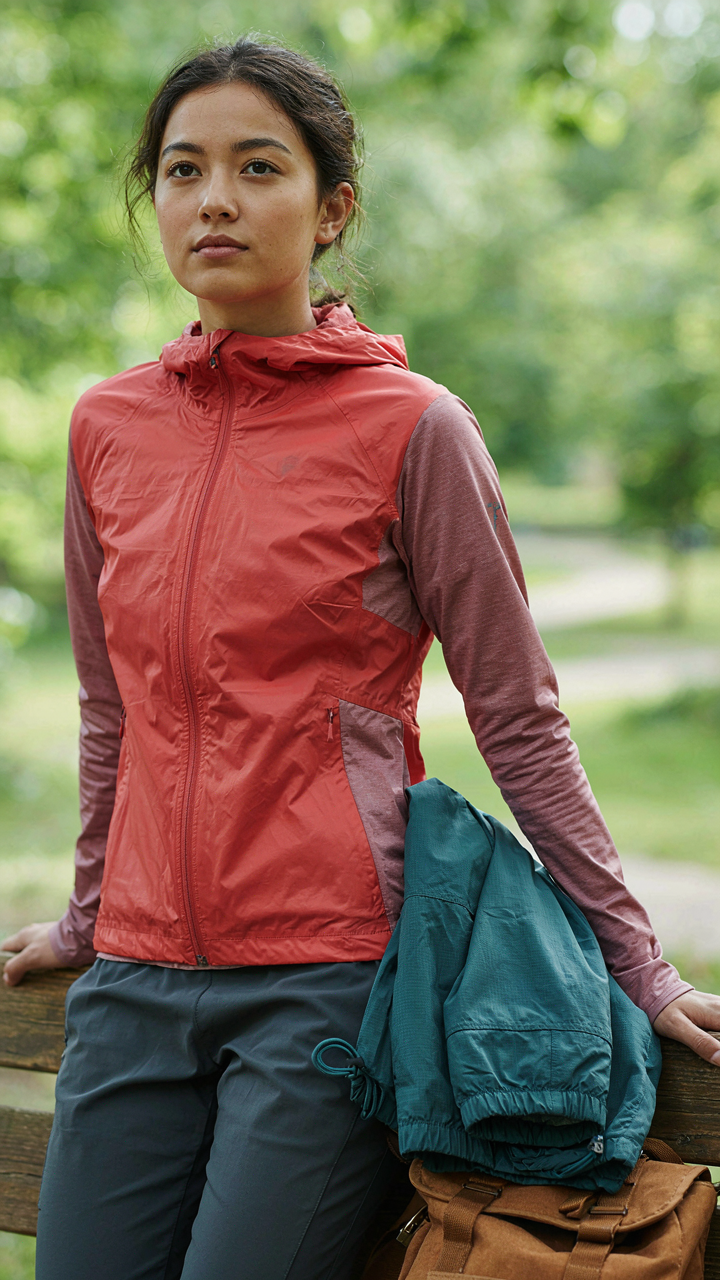
You’re worried expensive gear makes you legitimate. It doesn’t. Here’s the economic mechanism: brands price status into their products, not function. A $200 jacket and a $60 jacket both block wind and shed water if they use the same fabric weight and construction. Spring hiking demands base layers, a shell, and pants that breathe. Materials matter. Brands don’t. Look for nylon or polyester blends with a tight weave, not logos.
The actual cost calculation is about replacement cycles. Cheap gear fails faster, forcing repurchase. Mid-range gear from unknown manufacturers lasts three to five seasons of regular use if you dry it properly and don’t abuse seams. Buy based on fabric composition and construction details visible in product photos, not on whether REI or Arc’teryx stamped their name on it. Inspect seams before purchase. Check if zippers are YKK or similar quality standard. That’s what determines lifespan.
Used Gear And Crossover Pieces
Generic advice says buy new so you “know what you’re getting.” False. Used outdoor gear is underpriced because most people buy it for Instagram photos, not actual wear. Spring hiking needs moisture management and wind blocking. A used fleece from five years ago does that as well as new. Search Poshmark, eBay, and local buy-sell groups for past-season technical pieces. You’ll pay 40 to 60 percent less.
The leverage move is buying clothes that work outside hiking too. Joggers made from nylon blend work for hiking and casual wear. Tech t-shirts dry faster than cotton and function both on trail and around town. This isn’t doubling down on gear for its own sake. It’s cutting the total wardrobe budget by eliminating single-use pieces. A merino wool long-sleeve shirt costs the same as a cotton one but handles sweat, temperature shifts, and odor better across all seasons and activities. Buy overlap. Skip specialty items.
The Real Obstacle Isn’t The Outfit; It’s Your Fear Of Looking Like A Novice

Every beginner thinks experienced hikers judge outfit choices. They don’t. They notice commitment. You’re spinning your wheels obsessing over gear layering when you should be obsessing over actually going. Pick merino wool, grab your shoes, and hit the trail this weekend. That’s it. People respect action over aesthetics, and the only way to stop looking like a novice is to stop thinking like one.