
The Uncomfortable Truth: Your Brain Is The Weakest Link

How Your Brain Sabotages Your Trail Decisions
You want to believe careful planning alone keeps you safe. It doesn’t. Your brain runs on shortcuts that work in civilization but fail on the trail, and you’ll rationalize every single one while it happens. Cognitive biases function like cognitive load in decision theory: the more information your mind must process under stress, the faster it abandons careful analysis and defaults to pattern matching. On a solo hike, this means you’ll see what you expect to see instead of what’s actually in front of you.
The trail amplifies three biases that wreck solo hikers. Confirmation bias makes you ignore weather warnings that contradict your planned summit. Optimism bias convinces you that the 40-minute detour won’t leave you hiking in darkness. Sunk cost bias keeps you moving forward because you’ve already invested the morning, even when conditions demand a turnaround. Planning doesn’t prevent these. Mechanisms do. Write specific turnaround times on your permit. Set phone alarms. Build decision rules before you leave the car, not on the trail.
False Confidence And Earned Caution

The gap between perceived skill and actual preparedness kills solo hikers at a rate that matters. You’ve done five moderate day hikes, so now you’re running a 14-mile alpine route with 3,000 feet of elevation gain and weather you didn’t check. This isn’t bravery. It’s a failure to distinguish between the hike you imagine and the hike that exists. Managing this requires separating fear responses from legitimate environmental signals. Fear of falling in a slot canyon is often correct information. Fear of hiking alone because you’re alone is noise and should be ignored.
The protocol is cold: rate each hike against three real data points, not against how you felt on previous hikes. Compare the elevation gain, not how fit you believe you are. Compare the weather window, not how lucky you’ve been. Compare the trail condition reports from the last two weeks, not your gut sense about difficulty. When your confidence and these data points diverge, your confidence loses. Tell someone exactly where you’ll be and when you’ll check in. This isn’t optional and isn’t insurance. It’s the only mechanism between a bad day and becoming a search area.

The Solo Sentinel Protocol: Pre Hike Mental Fortification

Run The Failure Simulation
You want to feel prepared so you don’t have to actually think on the trail. The mechanism is simple: your brain doesn’t differentiate between a vividly imagined crisis and a real one. Military strategists call this “decision tree mapping”—you’re building neural pathways for responses before stress narrows your thinking. Spend 20 minutes alone visualizing specific failures: twisted ankle at mile three, sudden weather shift, GPS device dying, running out of water.
Don’t imagine vague struggle. Picture the exact moment. You’re limping downhill on one leg. Your phone has no signal. It’s 3 PM and you’re still two miles out. What’s your next move? Walk slower? Call for help? Self-evacuate? This isn’t pessimism. It’s the difference between freezing during a crisis and executing a pre-decided action. Your body learns what your mind has already rehearsed.
Reverse Engineer Your Worst Outcome
Everyone talks about “what could go wrong,” but that’s lazy. Pre-mortem analysis flips the question: assume the hike fails completely, then work backward to identify which specific decisions caused it. You start from the end state—rescue helicopter, search and rescue team, hospital—and trace the chain backward. What led there? Dehydration. What caused that? You miscalculated water needs for the elevation gain. What caused that? You didn’t check the elevation profile beforehand.
This method catches gaps that generic checklists miss because it forces you to connect decisions to outcomes. Write down three realistic failure scenarios specific to your route and season, then list the exact prevention step for each. Not “stay safe.” Not “be careful.” Write “I will refill water at mile 2.5 spring even if I feel hydrated because elevation gain accelerates depletion.” Specificity is the only thing that changes behavior on the trail.
Beyond The Hiking Checklist: Curating Essential Gear (Not Collecting It)

The Weight Threshold Where Decisions Matter
You want a comprehensive gear list because it feels like control. The real mechanism is this: every ounce you carry on a solo trip compounds across miles and days. Physics doesn’t negotiate. Once your pack exceeds 20 percent of your body weight, fatigue accelerates nonlinearly, decision-making degrades, and injury risk spikes. Below that threshold, marginal gear additions feel harmless. They aren’t.
Minimalist backpacking emerged in the 1970s partly as a reaction to Cold War surplus equipment dominating the market, but it stuck because the math works. Start with a target base weight of 15 pounds for your shelter, sleep system, and pack. Everything else gets auditioned against a single question: does this prevent a trip-ending failure? If the answer is “maybe,” it doesn’t come. Gear that prevents optionality kills trips faster than gear that prevents comfort.
- The Big Three (shelter, sleep bag, sleeping pad): These account for 40 to 60 percent of total pack weight. Optimize here first. A three-season tent under 1.5 pounds, a 20-degree bag rated conservatively, and a pad that insulates matter more than any other gear purchase.
- Water treatment over water capacity: Carry a lightweight filter or tablets instead of a heavy hydration bladder. Refill at sources. This saves pounds and removes the calculus of “how much water do I need to carry between sources.”
- Layering system, not abundance: One base layer, one insulation layer (fleece or down), one wind shell. Rotation dries them faster than quantity. Stop at three pieces.
- Cook system scaled to one: A single lightweight pot, a spork, a stove that weighs under two ounces. Solo cooking doesn’t require batch capacity. Eat the same meals repeatedly to justify the gear.
- Navigation redundancy, not GPS gadgets: A paper map and compass weigh ounces and never fail. Download offline maps on your phone as backup. Skip the dedicated GPS device unless you’re navigating off-trail consistently.
The gear you don’t carry is the gear that can’t fail, get lost, or slow you down. Every item in your pack should earn its weight through either preventing failure or enabling the core activity. Anything else is weight tax on your knees.
Tools That Collapse Into Each Other
Your knife does more than cut. It splits wood, repairs gear, processes food, and handles camp tasks. Your water filter pumps and can scrape. Your trekking poles become tent stakes. This isn’t clever packing. It’s the discipline of economics applied to solo logistics.
When you’re alone, you can’t borrow tools or divide labor. A multi-use item isn’t an accessory—it’s redundancy built into one object. A good fixed-blade knife (3 to 4 inches) costs thirty to eighty dollars and outlasts specialty gadgets. Trekking poles rated for load-bearing can anchor a tarp or assist with creek crossings. A bandana functions as a towel, sun protection, pot holder, and gear organizer. The mechanism is simple: fewer objects means fewer failure points, faster packing, and lighter weight. When you’re solo and something breaks or gets lost, you don’t have a teammate to compensate. You adapt or you exit the trail.
Build your gear around tools that serve multiple functions explicitly. This means testing each tool on a day hike before committing it to a multiday trip. You’ll discover what actually gets used versus what you imagined would. Bring the tools that earned their space through prior use, not potential use.
Terrain As A Mirror: Reading Nature, Reading Yourself

Map Reading Without The Anxiety Spiral
You want to feel competent before you leave the parking lot. Most hikers skip micro-navigation entirely and rely on trail markers, which fails the moment you need it. Navigation borrows from military strategy: terrain association means matching your position to the actual landforms around you, not just following a GPS dot. Your map is useless without the discipline to verify your location every 15 minutes, whether you think you need to or not.
Pull your map at every major junction, ridgeline, water crossing, and vista point. Mark your thumb on the current spot. Identify three terrain features ahead: a peak, a creek bend, a saddle. Name them aloud. This forces your brain to lock position into memory instead of drifting into autopilot. Most solo hikers panic when they realize they stopped paying attention. Stopping the panic before it starts beats any GPS device.
When The Trail Becomes Something Else
The real cost of dynamic conditions is not difficulty. It’s decision fatigue. Snow melt raises creek crossings that guidebooks describe as ankle-deep. Rockfall closes a ridge you planned to traverse. A lightning storm materializes in 20 minutes instead of the predicted four hours. None of these scenarios end in injury if you decide ahead of time what triggers a route change.
Build a branching decision tree before you hike. Write it down. Example: if water is above knee height, turn back to the last established camp. If visibility drops below 50 feet, descend to treeline immediately. If you experience any joint pain beyond normal fatigue, cut the mileage by half the next day. This removes the paralysis that kills judgment. You execute the protocol instead of negotiating with fear. The mechanism is simple: predetermined thresholds turn chaos into a checklist.
The Resilience Dividend System: Applying Military Strategy To Solo Hiking

Observe, Orient, Decide, Act On The Trail
You want this section because you’re afraid of making the wrong call when nobody’s around to catch your mistake. The mechanism you’re missing is the OODA loop, borrowed directly from military strategy and fighter pilot doctrine. This four-stage cycle—Observe, Orient, Decide, Act—compresses decision-making into a repeatable system that works when stakes are real and time is compressed. On trail, most hikers skip straight to Act, which is why they miss early warning signs and compound small errors into emergencies.
Observation starts before you move. You scan weather shifts, trail conditions, your own physical state, and time remaining until darkness. Orientation means filtering that data through what you already know: your fitness level, the terrain’s difficulty rating, water sources on this specific section, and how your body performed on similar grades. Decision happens fast once you have those two pieces. Act means committing to the choice and committing to the next observation cycle within minutes. When you hit unexpected snow at mile eight, you don’t panic and turn back immediately. You observe the snow depth and temperature. You orient against your turnaround time and food remaining. You decide to move forward or retreat based on data, not fear. Then you act and observe again in ten minutes.
Command Yourself Like You’re The Only Authority
The principle that matters here is decentralized command, which military organizations use when central communication breaks down. In solo hiking, central communication is already broken—you have no radio to base camp, no team leader to consult. This means you must pre-decide your own boundaries before you need them, and then trust those boundaries absolutely when fatigue and sunk cost fallacy pressure you to break them.
Write your turnaround time in your itinerary and treat it like a law, not a suggestion. If you said you turn around at 2 PM and it’s 1:55 PM and the summit is thirty minutes away, you turn around. The mechanism isn’t willpower. It’s removing the decision from the moment of temptation by making it earlier, when your thinking was clear. You also pre-decide your abort criteria: if weather shifts to lightning risk, if your water runs out before the next known source, if knee pain hits a specific threshold. The solo hiker with the survival advantage isn’t the toughest one. It’s the one who follows her own predetermined protocol when her judgment gets clouded by adrenaline and ego.
Emergency Protocols: The Antifragile Hiker’s Guide

When Your Plan Falls Apart
You want contingency planning to feel like you’ve done something responsible. The real mechanism is this: most hikers plan the trip but not the failure states. You need to map what breaks, when it breaks, and what you do before help arrives. This is antifragility thinking from systems design. A fragile system fails under stress. An antifragile system gets stronger from shocks. Your contingency plan doesn’t eliminate emergencies, it positions you to benefit from the information they provide.
Most solo hikers carry a first aid kit and call that preparation. It’s not. First aid covers bleeding and sprains. Contingency planning covers the hours before rescue arrives when you’re immobilized, lost, or injured beyond your skill. You need shelter protocols, water rationing procedures, and a decision tree for when to stay put versus when to move. Write these down before the hike. Your brain under stress runs on pattern recognition, not logic. A written protocol bypasses panic.
Calling For Help: The Tech Trap
Everyone now assumes a satellite communicator or personal locator beacon solves the signaling problem. Old school methods still work and often work faster because they require no battery, no signal, and no subscription fee. A whistle carries three miles in silence. Three blasts is the universal distress signal. A mirror flashes across valleys. A bright tarp signals from aircraft. These work. But here’s what nobody admits: technology creates a false sense of coverage. Dead zones exist. Batteries fail. You need redundancy, which means carrying low-tech backup.
Your protocol stacks signals by speed and range. Start with what reaches fastest without electricity: mirror to aircraft during daylight, whistle to nearby hikers, bright fabric to search parties. Add your communicator or beacon next. Carry both if the terrain supports it. Test your device before departure on the actual trail to confirm it connects where you plan to be. If it doesn’t signal there, it’s decoration. If it does, document which spots worked and which didn’t so you know where rescue can actually locate you.
The Post Hike Debrief: Beyond The Instagram Post
Dissecting Your Choices, Not Your Views
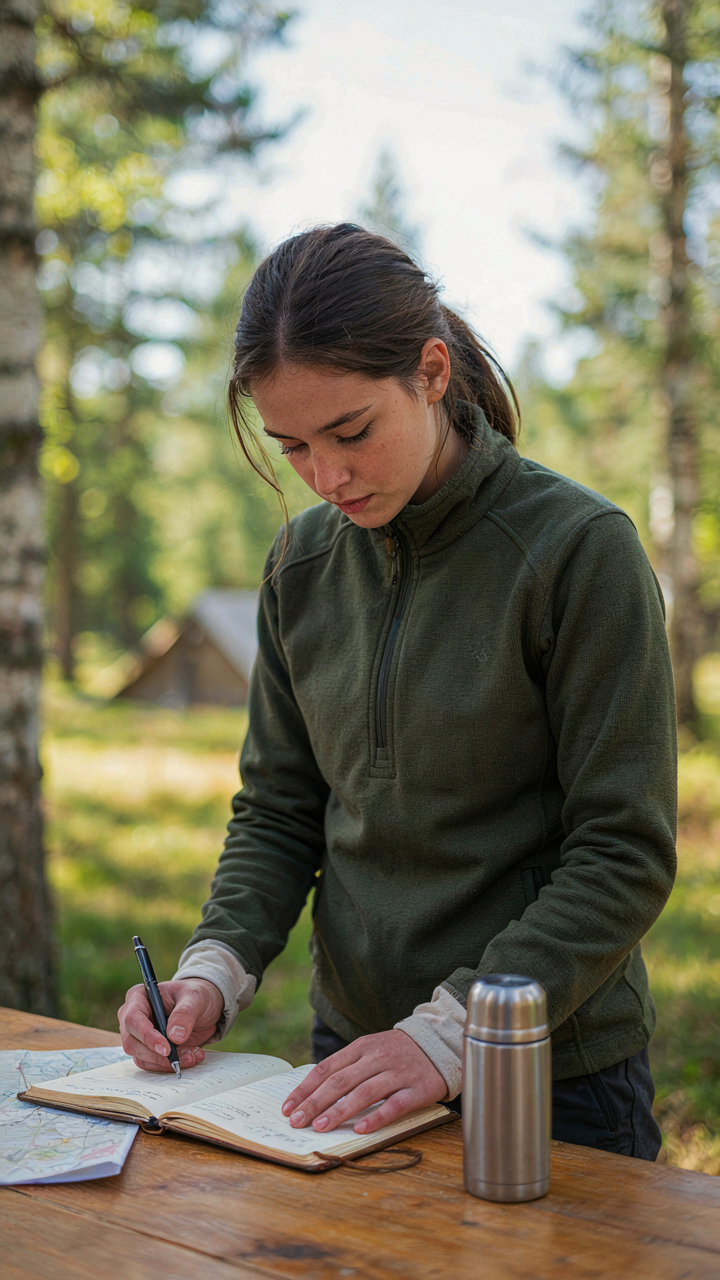
You want to feel like your trip mattered, so you’re tempted to log the miles and move on. But the real value lives in the decisions you made in the field, not the scenery you photographed. Decision analysis from aviation and military operations isolates what worked and what didn’t by separating outcome from process. Your hike succeeded or failed based on specific calls you made, not luck. Write down three decisions: route selection, weather response, and resource management. Grade each one against what you’d do differently. This isn’t reflection. It’s forensics.
Most hikers skip this because introspection feels slower than scrolling. The mechanism is simple: your brain defaults to remembering the peaks and skipping the mistakes unless you force it to catalog them. The mistakes are your only growth material. A decision that worked once might fail under different conditions. A decision that felt right but created risk needs to be renamed as such before your next trip. You’re not journaling to feel good. You’re documenting the gap between your judgment and reality so the gap shrinks next time.
Tracking Patterns Across Multiple Trips
The journal isn’t a feelings dump. It’s a performance log that reveals what actually slows you down, exhausts you, or creates avoidable risk across multiple hikes.
- Pace vs. Terrain Type: Record your actual hiking speed on different gradients and surfaces. Most solo hikers overestimate their speed on ascents and underestimate fatigue accumulation. Track this and recalibrate your time estimates for future planning.
- Weather Response Accuracy: Document what you predicted before the hike, what actually happened, and how well your gear choices matched reality. This teaches you the gap between forecast reliability and ground truth in your region.
- Calorie and Water Consumption: Log how much you ate and drank versus how much you carried. Surplus weight is wasted effort. Shortage is danger. Data beats guessing every time.
- Injury or Discomfort Onset: Note exactly when blisters, joint pain, or muscle soreness appeared and what triggered it. Boots break differently for everyone. Pain patterns are predictable once you see them.
- Decision Regrets Under Pressure: Track moments where you wish you’d chosen differently in real time. These are your highest-leverage learning events because they happened when stakes felt real.
Six months of logged hikes give you a personal dataset no guidebook can provide. The patterns that emerge from your own trips will dictate your next gear list, your packing strategy, and your timeline estimates far better than generic advice. Review your journal before every new hike to lock in what you’ve learned. Do this consistently, and you stop repeating the same mistakes.
Choosing Backpacking Routes: The Path Less Taken, The Mind More Tested

Matching Route Difficulty To Your Actual Capacity
You want a route that sounds hard enough to prove something. That’s the real reason you’re reading this. The mechanism is simple: difficulty without alignment to your fitness level and technical skill creates risk that compounds over days. You don’t gain growth from a trail that breaks you. You gain injury, poor decisions, and a solo situation you can’t manage.
Start by separating fitness from technical skill. A long, flat trail demands aerobic endurance over multiple days. A short, steep trail with scrambling demands leg strength and balance right now. Most solo hikers overestimate their capacity on both counts after minimal time in the field. Run the route at 60 percent of your estimated capability. If you can hike 15 miles per day on flat ground, plan routes around 10 miles daily with elevation gain you’ve actually completed before. This isn’t conservative. This is tactical.
Abandoning Consensus Trails For Genuine Solitude
Everyone’s advice to “check AllTrails” is incomplete. It tells you where crowds are, not where to go. The algorithm surfaces popularity, not quality or safety. A remote trail isn’t inherently better, but it forces you to rely on skills instead of infrastructure, which is the actual point of solo travel.
Scout routes on USGS topographic maps instead of apps. Look for trails with consistent water sources, clear waymarking on older guidebooks, and low mention counts across forums. Your goal is a route someone actually knows, not one that sounds exotic. Contact local ranger stations directly. They will tell you which trails have recent maintenance, where water runs dry in certain seasons, and which ones experience navigation issues solo hikers encounter. This call takes fifteen minutes and eliminates most preventable problems before you start.
The Real Wilderness Isn’t Out There; It’s The Unexamined Mind Within

Most people never take a solo hiking trip because they’re afraid of what they’ll think about alone. The logistics are easy. The real work happens when you stop running from yourself. Today, pick a trail within two hours of your home and commit to one night. Not because the destination matters. Because you need to find out who you are when nobody’s watching. The hike doesn’t change you. Silence does.