The Illusion Of Best Train Trips In America: Beyond The Postcard
What Everyone Books Instead Of What Works
You want the story you can tell at dinner. That’s the real driver here. The Empire Builder, the Coast Starlight, the Rocky Mountaineer—these routes dominate travel blogs because they photograph well and fit the narrative you already own. But popularity is a signal of compromise, not quality. Borrowed from economics, we call this the “crowding cost”—the degradation of an experience as more people consume it. On scenic train routes, crowding cost manifests as reserved seating in observation cars that fill by 7 AM, dining seatings scheduled in rigid two-hour blocks, and routes designed for the median tourist, not the traveler who actually wants to see the landscape.
The Amtrak long-distance trains run on freight railroad schedules, not their own. This means delays compound. The Lake Shore Limited runs late more often than on time. The Southwest Chief stops at small stations for ten to fifteen minutes while freight takes priority. You’re paying premium rates to ride somebody else’s infrastructure on their timeline. Most travel writing omits this because it’s not romantic, but it’s structural. You can’t design your way around it.
The Real Signal Hides In Friction

What matters isn’t ease of booking or Instagram density. What matters is whether the route itself reveals something about geography, engineering, or human settlement that you couldn’t access by car or plane. The Glacier Park train from West Glacier to Essex doesn’t maximize comfort—it maximizes gradient. You watch the railroad literally climb a 2 percent grade through the Mission Mountains. Engineers had to route the line that way because the terrain forced it. The train becomes a tool for reading geology.
Look for routes where the railroad’s constraints become the experience. The White Pass and Yukon Route climbs through passes where the grade defeats standard freight operations, so the railroad had to engineer specifically for this corridor. The Cumbres and Toltec Scenic in Colorado uses an 3 percent grade over Cumbres Pass—one of the steepest standard gauge railroad grades in North America. The train stops not because marketing says so, but because physics demands slower speed. Find routes where the landscape dictates the schedule, not tourism demand.

The “Voyage Protocol”: Engineering Deep Focus On Scenic Train Rides US
Kill Your Phone Before The Whistle Blows
You want permission to ignore your notifications without guilt. That’s the real ask here. The mechanism is simple: your brain treats digital interruption as a threat, triggering the same stress response as an actual predator. Neuroscience calls this “task-switching cost.” On a train, task-switching isn’t about productivity—it’s about sensory erosion. Every notification fragment steals your capacity to process the landscape moving past the window.
Most train riders keep their phones live, telling themselves they’ll stay present. They don’t. The phone wins because it’s engineered to win. The actual protocol is surgical: enable airplane mode ninety minutes before boarding, not during. This creates a psychological buffer where you’ve already decided the phone is dead. You’re not resisting temptation once you’re seated. You’re honoring a decision made in advance.
The Pre Journey Mental Checkpoint
Preparation determines what you actually see, not the route itself. The Appalachian or Rocky Mountain routes are visually identical to someone distracted by unsolved problems. Your mental state before boarding is the real landscape. Cognitive load—the total mental work your brain is performing—determines whether you notice the river gorge or zone past it entirely.
The checkpoint itself takes twelve minutes. Write three things you’re not solving on this journey. Not delegating. Not postponing. Actively not solving. Then write one thing you’re specifically watching for: a specific geological formation, a particular type of bridge engineering, a regional architectural pattern. Specificity crushes wandering attention. You arrive on that train with a filter installed, not a blank slate.
Beyond “Explore Train Routes In America”: The Art Of Deliberate Observation
Watching Becomes Collecting
You want a sense of purpose during travel without admitting you’re bored by passive scenery. The mechanism is simple: your brain stops registering what it already predicts. A mountain looks like a mountain until you’re forced to describe it to someone else. This is attention decay, and train routes amplify it because the pace strips away novelty fatigue. You sit still long enough to actually see.
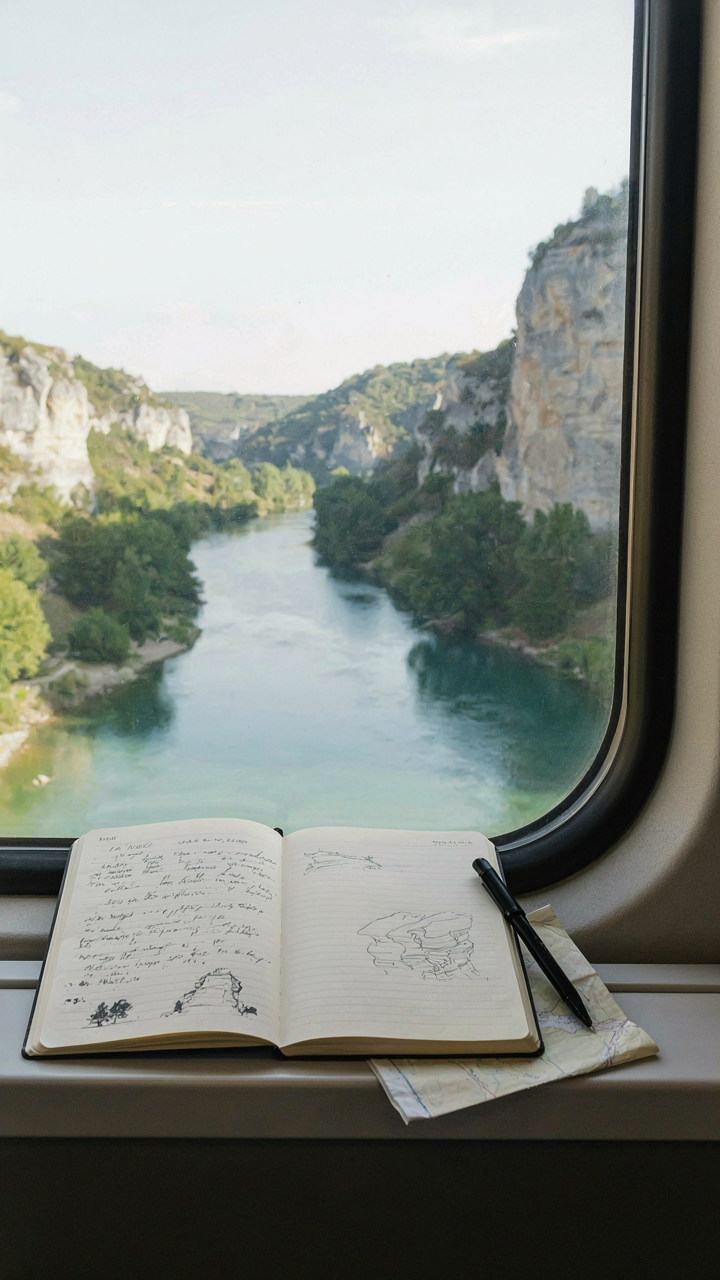
The shift from passenger to observer requires a single constraint: document what you notice. Carry a notebook or voice recorder. Name specific details. Not “beautiful valley” but “limestone cliffs with horizontal striations, trees only in the ravine.” This practice forces pattern recognition. Your eye begins hunting for what breaks the visual rule you just established. The train’s consistent speed becomes your timer for perception.
The Carriage As A Working Laboratory
Studio culture from industrial design teaches us the principle of “constraints breed solutions”—the train’s physical boundaries work exactly like this. You cannot pace, cannot access the internet reliably, and cannot escape the window view. Those limitations are your production environment. Writers, photographers, and designers have used train routes as deliberate work cycles for decades because the format demands output.
Set a specific task before boarding. Not “get inspired” but “shoot one frame every 15 minutes” or “write 500 words on what you observe.” The Glacier Express between St. Moritz and Zermatt, a seven-hour route through the Swiss Alps, has fixed light conditions and repeating terrain that force compositional decisions. The rhythm of track noise becomes a metronome for work. Your output won’t be perfect, but it will be deliberate.
The “Amtrak Train Travel East Coast” Anomaly: Speed Vs. Stillness
East Coast Efficiency And Overlooked Pockets Of Calm
You want the East Coast train experience to feel meaningful, not like a bus that happens to run on rails. Here’s the mechanism: Amtrak’s Northeast Corridor prioritizes speed between major stations, which kills the scenery window. The train moves too fast through the best visual material to actually process it. You miss the Delaware River gap, the Hudson’s western bank, the Connecticut coastline detail. The route optimizes for time savings, not observation. This is the inverse of what scenic train travel actually delivers.
The Northeast Regional, operating the same corridor at lower speed, reveals what the faster Northeast Direct obscures. You gain roughly thirty minutes of travel time but recover hours of actual stillness. Stations like New Haven and Providence sit long enough for the nervous system to recalibrate. The difference isn’t comfort or amenities. It’s architectural permission to look out the window without your brain treating it as motion blur. Choose the slower service deliberately when your stated purpose is seeing the route, not reaching the destination on schedule.
Finding Contemplative Moments In Unexpected Places
This guidance lands wrong in most travel writing. The advice suggests you need special routes or golden hour timing. You don’t. The mechanism is friction, borrowed from physics. A train moving at variable speed through mixed terrain creates interruptions in visual rhythm, forcing conscious attention rather than passive blur. The Empire Builder and the California Zephyr exploit this naturally through mountainous sections. On the Northeast Corridor, you manufacture friction by boarding a regional rather than express service, sitting in the observation car instead of coach, and riding specific segments in reverse daylight.
The Amtrak Downeaster between Portland and Boston runs the New England coastline and interior forests in deliberate sequence. Few travelers know it exists. The route forces you into Maine’s seasonal light and Rhode Island marshland without the Northeast Corridor’s commercial pressure. The mechanism: low ridership and fewer stops per mile mean the train maintains a rhythm that allows your attention to settle. Book this route specifically to test whether the contemplation you seek comes from the route itself or from your willingness to abandon the notion that speed equals value.
Decoding “Train Trips Across America”: The Thermodynamics Of Travel
Why Your Route Choice Actually Matters
You want permission to take the trip without feeling like you’re wasting money or time on the wrong one. Here’s the real mechanism: train travel planning operates under the same entropy principle as any complex system—disorder increases unless you apply deliberate structure. Most people fail not because they pick bad routes, but because they treat route selection as decoration instead of the operational foundation.
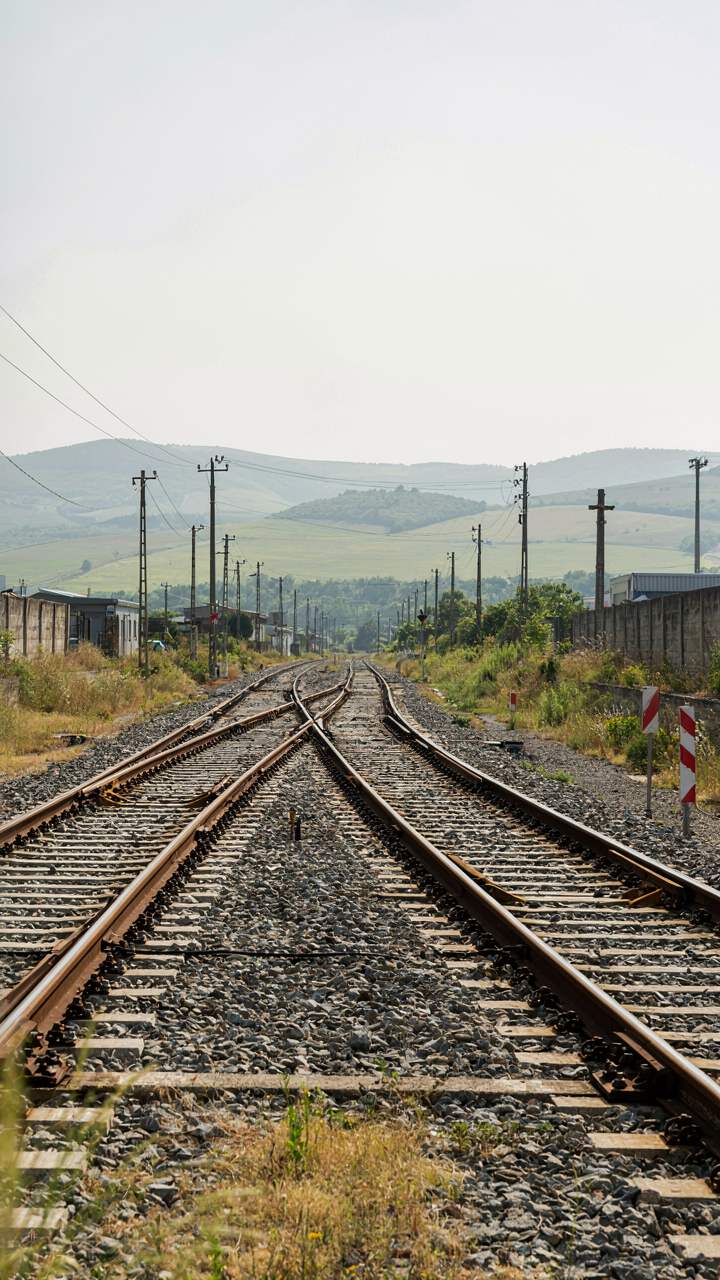
The Amtrak network covers 21,000 miles across the continental US. But distance isn’t the variable that matters. What matters is friction: how many times you switch trains, how many hours you sit in a station between connections, whether your schedule forces you into dead time. Every connection point is a friction node where your mental energy leaks. The Coast Starlight from Seattle to Los Angeles runs 35 hours with one connection point. The same geography via three separate regional trains creates four friction nodes. Same destination. Radically different cost to your attention.
Energy Returns: The Actual Calculation
Route optimization is not about picking the longest or most famous line. It’s about measuring energy expenditure against mental return, which is the inverse of what travel blogs teach. They push “coverage”—hit ten states, see the mountains and the desert and the plains. That’s tourism accounting. Real energy conservation means you sit on one train, watch one landscape evolve, and let cognitive load drop to zero.
The Empire Builder from Chicago to Seattle does this better than most routes in North America. Forty-six hours. Two stops. One continuous narrative of landscape change: flatlands to Rockies to Pacific Northwest. Your brain doesn’t need to reset. Compare this to piecing together a multi-leg itinerary where you optimize for “destinations” instead of journey coherence. You burn energy context-switching between stations, reboarding, checking schedules. The Empire Builder conserves that energy by design. Calculate which routes run the fewest stops between your origin and endpoint. That’s your mechanism: fewer friction nodes equals higher mental return per hour traveled.
The “Train Ride Through America” Misconception: The Myth Of The “Perfect” Trip

You Don’t Want Perfection, You Want Control
You’re looking for this section because the idea of a flawed train journey threatens you more than the journey itself does. You want guarantees. The mechanism is simple: scenic train routes don’t fail because conditions are bad. They fail because travelers expect conditions to match a photograph they saw online. The Amtrak Empire Builder derails schedules. The Rocky Mountaineer has weather delays. The Glacier Express stops for avalanche control. These aren’t failures. They’re the actual trip.
Reality on a train is messier than the marketing. You’ll sit next to someone loud. The dining car will run out of your preferred meal. A mechanical issue costs you three hours in Nebraska. Most people interpret this as the trip being ruined. It’s not. It’s just the trip being real. The difference between a good experience and a wasted one is whether you decided before boarding that imperfection was acceptable.
Adaptation Is The Only Reliable Skill
Travel advice tells you to plan everything, then stay flexible. That’s backwards and incomplete. You can’t stay flexible about something you over-planned. The real skill comes from naval strategy, where commanders prepare for uncertainty by building decision-making protocols instead of rigid itineraries. On a train, you don’t plan around problems. You plan how to decide when problems happen.
The Great Northern Railway corridor runs through areas with cellular dead zones for hours. You cannot change this. What you can change is deciding in advance whether you’ll read, sleep, or journal during that time. You cannot control if the Canadian enters Montreal two hours late. You can control whether you booked a connection that requires a forty-minute buffer or a three-hour one. Build slack into your reservations and your expectations. The protocol is simple: list three outcomes for each leg of your journey and decide your response to each before you board.
Curating Your Train Ride Vacations: Crafting The Internal Experience
Setting The Stage For Actual Thinking
You want permission to sit still without guilt. That’s the real reason you care about designing your environment on a train. The mechanism is simple: trains remove the productivity theater that poisons normal travel. You’re not driving. You’re not checking your phone for navigation. The environment does the work for you.
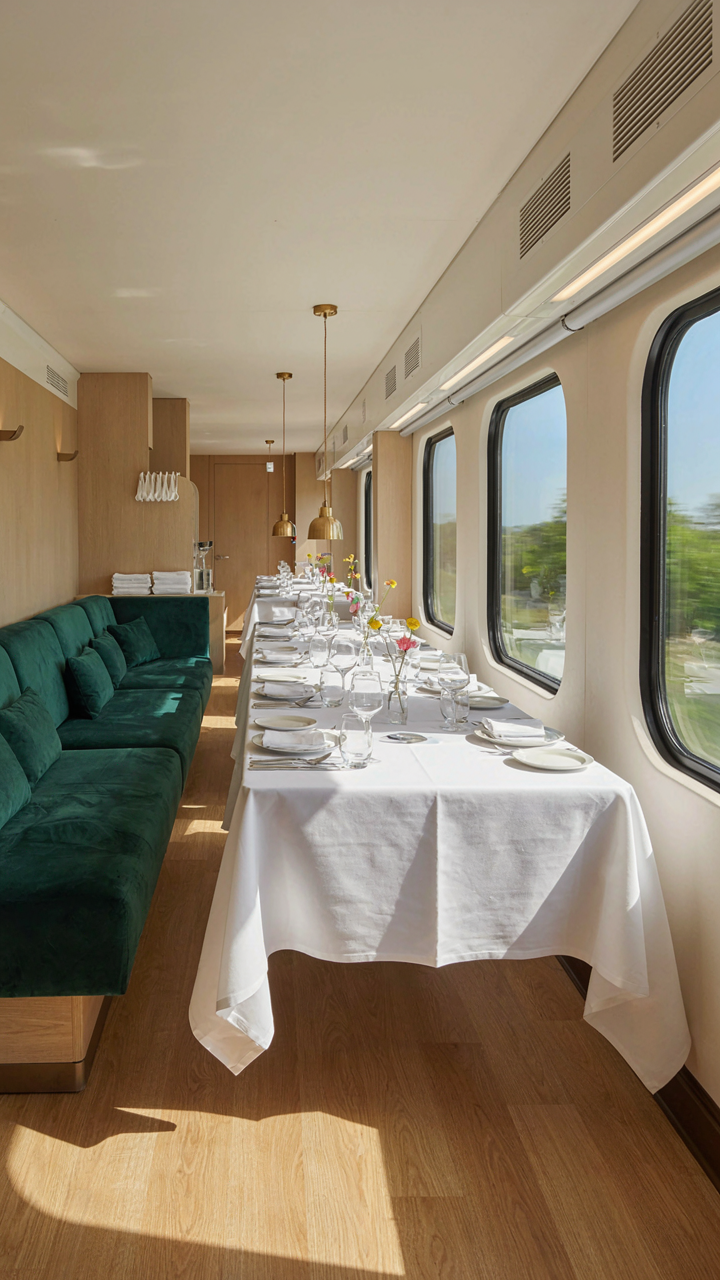
Borrow from environmental psychology here. Designers call it “affordance”—the train’s layout signals what actions are possible. A window seat affords gazing. A dining car affords conversation. A sleeper cabin affords rest without apology. Choose your car type and seating position before boarding. This isn’t decoration. It’s infrastructure that either supports reflection or sabotages it.
- Window seat on the sunny side: Positions you for continuous visual input without effort. Take the route during daylight hours to maximize this setup.
- Dining car for structured breaks: Creates natural pauses in passive observation. Schedule meals at off-peak times to control crowd density and noise.
- Sleeper cabin on overnight routes: Eliminates the false choice between rest and time. Routes like the Coast Starlight and Canadian use this layout intentionally.
- Observation deck or viewing car: Removes the barrier between you and the landscape. Most scenic routes (Rocky Mountaineer, Bernina Express) feature this as standard.
- Minimal phone signal zones: Creates forced disconnection without willpower. Check signal maps before booking specific routes through mountainous terrain.
Bring one notebook and one pen. Not a laptop. Not a phone with apps. The friction of writing by hand forces compression. You’ll think differently when you can’t document everything. The train’s rhythm becomes your metronome. Work with it, not against it.
Translating Movement Into Action
What you experience on the train means nothing if you return to your normal system unchanged. The integration phase starts before you board—you must identify the specific friction points you’ll solve before you leave home.
Write down three concrete problems from your actual life. Not vague aspirations like “clarity” or “creativity.” Real problems: a decision you’re avoiding, a relationship dynamic you misread, a project direction that stalls you. During the train ride, you’re not trying to fix them. You’re mapping the context. You notice which thoughts repeat. You catch the assumptions you defend without evidence. You identify what you actually want versus what you think you should want.
After you return, spend two hours within forty-eight hours capturing what shifted. Not feelings. Patterns. What assumption changed? What decision became obvious? What did you notice about how you think when movement and distance separated you from your environment? Then name one specific action that flows from this. Not “I’ll be more mindful.” Instead: “I’ll move this meeting with X because I realized I’m avoiding feedback.” Or “I’ll stop working on this product because I saw the flaw I was defending.” The action must be small enough to execute within two weeks. The train’s value compounds only if you carry the mechanism forward, not the memory.
Best Train Rides In America: Beyond The Obvious, Beyond The Crowds

The Routes Nobody Instagram’s
You want the story without the crowds. You want proof you did the thing before it became the thing. Here’s the mechanism: tourist routes reach saturation because they’re easy to book and easy to describe, which means the signal-to-noise ratio collapses under volume. The underappreciated routes work because friction filters out casual passengers. The Great Northern Railway’s Empire Builder still moves through the same Northern Pacific landscape it crossed in 1929, but ridership stays manageable because getting there requires actual planning and tolerance for 48 hours of travel. The Hiawatha line through Montana moves fewer people than the Rocky Mountaineer simply because it lacks the marketing budget, not because the geography is inferior.
The real filter isn’t time or money. It’s willingness to accept a route that doesn’t perform for social media. The Amtrak Sunset Limited runs through the Sonoran Desert and the Louisiana bayou on a schedule that rewards patience over speed. Regional operators like the Durango and Silverton Narrow Gauge Railroad in Colorado run narrow-gauge equipment that cannot be rushed, which means the experience stays intimate. You find these by abandoning search engines and reading archived railroad society publications. The route selection process is inverted: ignore what’s trending and follow what requires local knowledge to discover.
Where Experience Meets Lack Of Curation
Tourist infrastructure corrupts experience by designing it backward. A curated route tells you what to see. An uncurated route forces you to build your own narrative. The Cumbres and Toltec Scenic Railroad in northern New Mexico operates vintage narrow-gauge locomotives on track built in the 1880s, but the lack of themed stops and scripted commentary means you’re observing actual terrain, not a performance of terrain. No gift shop engineering. No manufactured authenticity. The ride functions because the railroad exists first and tourism exists second.
The mechanism separating authentic from manufactured: ask whether the infrastructure was built to serve locals or to extract from visitors. The Northeast Regional corridor still moves commuters between New York and Boston daily, which means the experience remains functional rather than theatrical. A window seat becomes genuinely interesting when the people beside you are reading newspapers and eating their own food, not when they’re checking off box 7 on their guided experience checklist. Book regional routes that run year-round with mixed passenger loads. These attract fewer tourists because the marketing doesn’t promise transformation.
The True Luxury Isn’t The View Outside, But The Clarity You Gain Within. Stop Chasing Distractions; Start Cultivating Presence
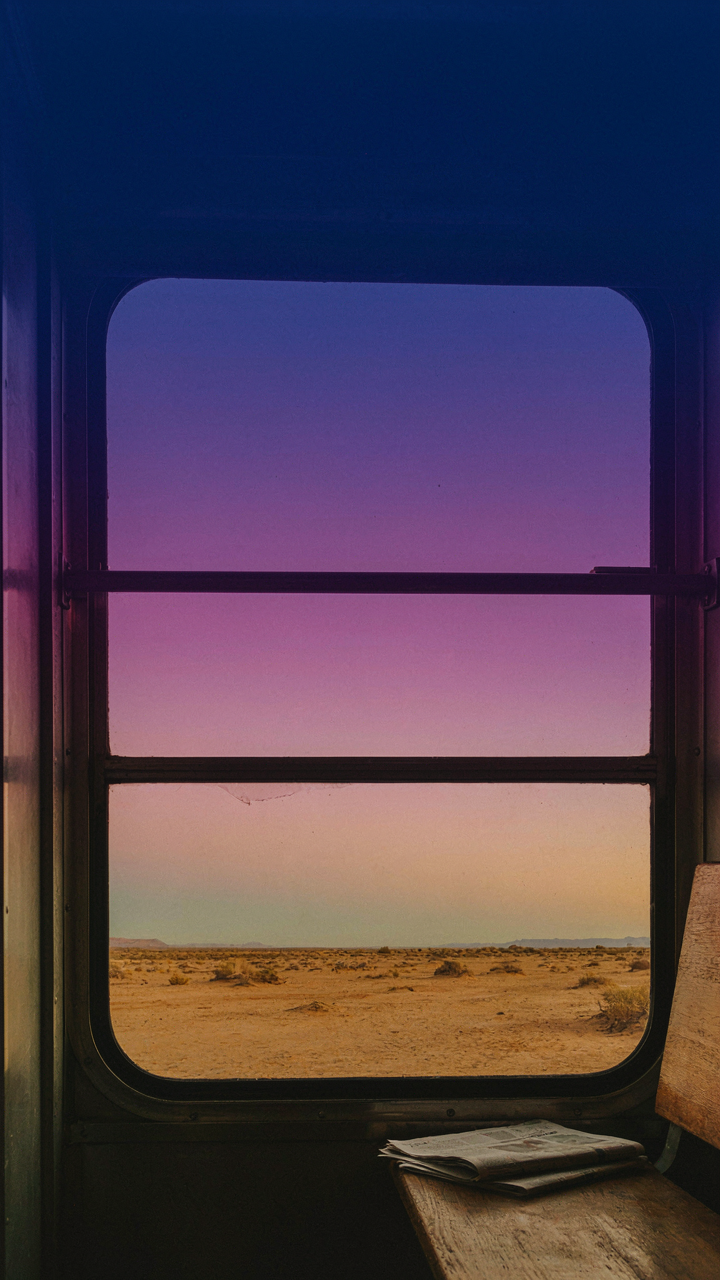
Most people book a scenic train route to escape. They think the mountains will fix them. They won’t. The real shift happens when you kill your phone, stop documenting, and let boredom become your teacher. Book a single overnight route this month. Not for the landscape. For the silence. Your brain needs to remember how to think without input. The view is just permission to sit still.