

The Myth Of Spontaneity: RV Adventure Vs. Reality

The “Wing It” Fantasy Doesn’t Work
You want to believe spontaneity is freedom, but it’s actually just anxiety wearing a disguise. The mechanism is simple: untethered RV travel without structure creates cascade failures across every system you depend on. A full water tank without a dump station location means sewage backup. No propane refill plan means cold showers. No reservation means parking in unsafe lots at night. Spontaneity sounds rebellious until you’re stuck fixing a problem instead of moving toward one.
The RV industry markets wanderlust to sell you hardware, but hardware requires discipline to operate safely. Most people romanticize the open road because they’ve never experienced the compounding friction of no plan. You don’t gain freedom by abandoning logistics. You gain freedom by automating them so thoroughly they stop consuming mental energy. The difference between a vacation and a disaster is a spreadsheet.
Strategic Planning As Tactical Advantage

Real freedom isn’t the absence of a plan; it’s the confidence that comes from executing one so well you can adapt within it. Think in terms of systems thinking from operations management: you’re not reducing choices by planning, you’re reducing failure points. Pre-booking campgrounds doesn’t limit you. It secures your base camp so you can actually explore radius from safety. A water management schedule doesn’t restrict you. It lets you focus on the landscape instead of calculating tank depletion rates.
The concrete move: build a rolling 14-day framework before you leave your driveway. Document exact campground dates and locations, fuel stops, water and waste dump stations, supply runs, and maintenance windows. This isn’t busywork. This is the container that lets genuine spontaneity exist without consequence. Once that framework runs on autopilot, you can deviate from the sightseeing plan without destroying your infrastructure. Planning kills one type of freedom to create another that actually matters.

Beyond The Campground: Unlocking True RV Camping

The Economics Of Boondocking
You want to camp for free because you resent paying thirty to fifty dollars per night for a concrete pad and enforced quiet hours. That’s the real motive. But the mechanism is simpler: boondocking leverages what economists call “information asymmetry.” Public lands exist everywhere. Most RVers don’t know how to find them legally. This gap between what’s available and what gets used is where you operate.
Bureau of Land Management land, National Forests, and dispersed camping areas across America allow free camping for fourteen days or less. No reservations. No hookups. No rules about when you leave or arrive. The trade is straightforward: you get cheap or free camping. You handle your own water, waste, and power. This isn’t roughing it. It’s just removing the middleman markup and the infrastructure you don’t need anyway.
Spotting Real Alternatives To Chain Parks
Most RV guides tell you to download apps and trust user reviews. That’s incomplete. The real skill is pattern recognition. Chain campgrounds like KOA exist because they’re easy to find and standardized. They also mark where RVers congregate. Real alternatives live in the gaps: small-town RV parks run by locals, private farm stays, and unmarketed seasonal lots near fishing towns or farm regions.
Call county chambers of commerce directly. Ask about RV parking near agricultural areas or small marinas. Many communities have lots with minimal infrastructure that don’t advertise online. You’ll pay fifteen to twenty dollars instead of forty. The owners aren’t competing on amenities. They’re competing on price and location. These places fill through word of mouth, not aggregator apps. That’s why you find them by asking humans, not screens.
RV For Beginners: The Anti Mistake Protocol

Pre Trip Inspections: Systems Before Surprises
You want to feel prepared. That’s not the real issue. The real issue is that most RV owners treat their vehicle like a car: drive it, ignore it, let it break. Think of your RV like a biological system—you don’t diagnose illness after collapse; you run diagnostics before exposure. Pre-trip inspection is preventive medicine for your rig.
- Tire pressure and tread: Check all tires, including the spare, for proper PSI and visible damage. Cold weather lowers pressure; heat raises it. Measure when tires are cold for accuracy.
- Fluid levels: Engine oil, coolant, transmission fluid, brake fluid, and power steering fluid must be topped off. Low levels cause catastrophic failure in remote locations.
- Brake system function: Test brakes before departure. Check brake fluid color and level. Soft pedal response means air in the lines or failing master cylinder.
- Water system integrity: Inspect fresh water tank seals, gray water tank for leaks, black water tank for cracks. Pressurize the system lightly to spot leaks before miles pass.
- Propane safety: Check for leaks using soapy water on all connections. Verify regulator function and tank level. A propane leak kills in minutes.
- Electrical systems: Test battery voltage, shore power inlet, generator startup, and all interior lights. Dead battery at a dispersed campground leaves you stranded.
This routine takes two hours and prevents thousands in repair costs and downtime. Most breakdowns happen because the owner never tested basic systems before departure. Inspection isn’t thorough until you’ve written down what each check revealed and dated it. That log becomes your maintenance history and proves you weren’t negligent when warranty disputes arise.
Hookups And Dump Stations: Mechanics Of Connection
The common advice is “just ask a ranger.” That’s lazy. You need to understand why connections fail, not just follow someone’s hand gestures. Hookups operate on simple mechanical principles: threaded fittings under pressure, gravity-fed systems, and electrical compatibility standards. Misalignment destroys seals; cross-threading strips fittings; wrong adapter choice floods tanks or electrocutes you.
Shore power requires matching your RV’s inlet to the pedestal’s outlet. Mismatched amperage causes overheating; wrong voltage fries electronics. Always verify before you plug. Water connections need washers on both sides of the fitting to prevent leaks. You tighten by hand first, then a quarter turn with a wrench. Over-tightening cracks plastic fittings. Sewer connections require proper slope to prevent backup. Most dump stations angle downward at roughly four inches per hundred feet. Position your rig accordingly before connecting the hose. Black water tanks must drain fully before gray water, or solids lodge in the valve seat and it locks shut. Always dump in this order: black, gray, then top off your fresh water tank.
The Minimalist RV: Ditching Unnecessary Gear

Decluttering For Efficiency And Genuine RV Hacks
You want people to think you’re organized and capable, so you pack redundant tools and backup gear that never leaves the storage compartment. The real mechanism is weight distribution. Every pound costs you fuel efficiency, brake performance, and tire lifespan. In structural engineering terms, an RV operates under load constraints. Exceed your vehicle’s payload capacity, and you don’t just waste money—you compromise safety and handling. Start by weighing everything you own, not estimating.
Most people keep duplicates without realizing it: two flashlights, three multi-tools, backup cooking equipment that mirrors what you already have. The friction point isn’t deciding what to keep—it’s the shame of throwing away something you spent money on. Examine your last trip. Identify what you actually touched. Everything else becomes a candidate for removal. Take photos of items before you sell them. You’ll recover capital and mental space simultaneously.
Essential Items Only: Less Baggage, More Experience
Conventional RV advice tells you to prepare for every scenario, which is lazy thinking masquerading as caution. You don’t need seventeen different camp setups. You need one reliable configuration that handles seventy percent of trips, plus a short list of swaps for edge cases. The difference between “prepared” and “weighed down” is ruthless specificity about your actual travel patterns. If you camp in similar climates and terrain, your core gear stays static. Customization happens through addition, not accumulation.
Strip your RV to functional baseline: sleeping, cooking, water, waste, power, climate control. Everything beyond those categories is negotiable. Most people discover they miss nothing from the items they removed. The mechanism is simple: less complexity means less failure points, faster setup, and clearer decision-making when problems arise. Your next trip becomes about the destination and experience, not inventory management. Keep a printed checklist of your core items. Use it before every trip without exception.
Power Play: Mastering RV Energy Management
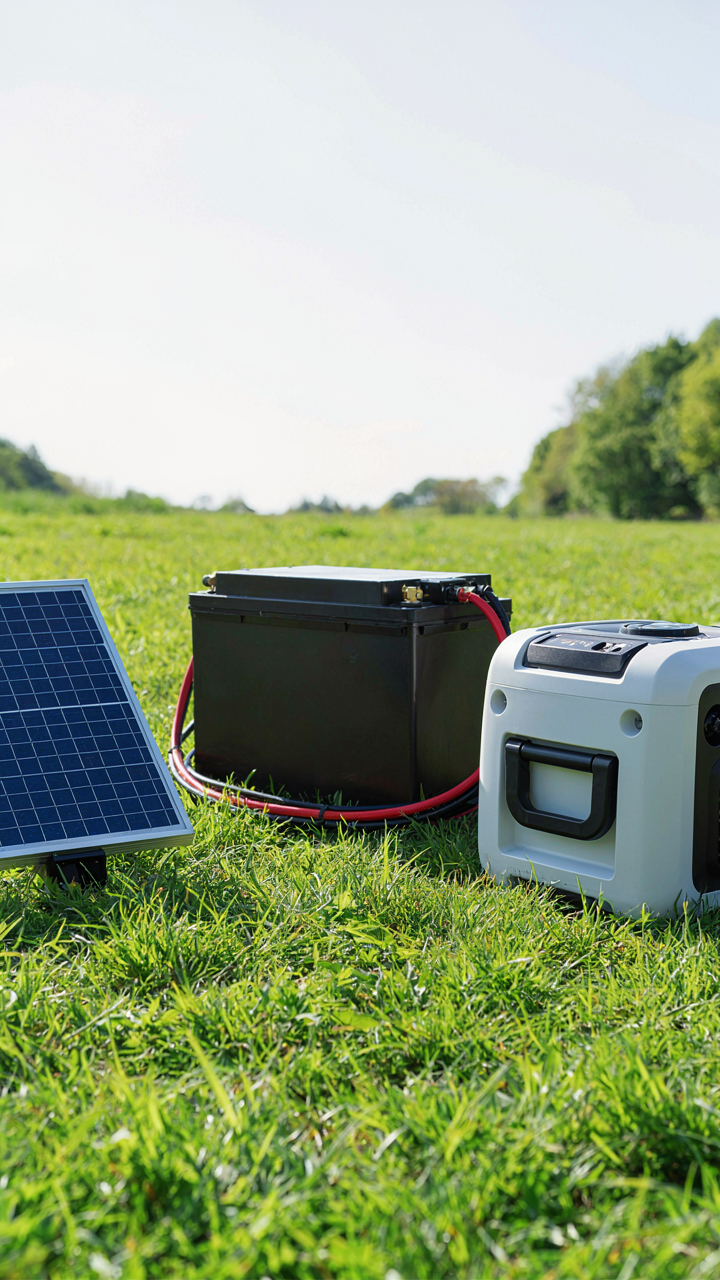
The Three Source Energy Stack
You want off-grid freedom without the anxiety of going dark. Here’s what actually matters: your RV runs on three distinct power sources, and you need to understand which one handles what load or you’ll make expensive mistakes. Think of it like supply chain logistics—each source has capacity limits, recharge rates, and optimal use cases. Solar generates power during daylight. Batteries store it. Generators create it on demand. Most RV owners treat these as interchangeable, then wonder why their battery dies at night or their generator won’t start when they need it.
Solar panels produce DC current directly into your battery bank on clear days. Most RV setups use 100 to 400 watts of solar capacity, though dry camping enthusiasts push toward 600 watts. Your batteries absorb this charge through a controller that regulates voltage. Generators run on propane or gasoline and convert fuel into AC current via an inverter. They handle surge loads that batteries can’t supply instantly, like air conditioning or water heaters. The battery bank sits between solar and generator, accepting charge from both and supplying power to your 12-volt and 120-volt systems continuously.
Drain Before You Plan
Most conservation advice fails because it starts with habits instead of data. Before you cut consumption, you need to measure what’s actually consuming power in your rig. Buy a basic DC clamp meter or use your inverter’s display to see amp draw in real time. Your refrigerator runs continuously. Your furnace draws 10-15 amps when the heating element cycles. Your water pump uses 8-10 amps per minute of operation. Light loads seem invisible until you stack them. One LED bulb draws 0.5 amps. Ten of them draw 5. Your entertainment system might pull 15 amps steady.
The lever is usage time, not just wattage. A 1500-watt air conditioning unit kills your battery in under an hour, but you don’t need to run it all night. A 100-watt load running for eight hours drains the same amp-hours as a 400-watt load running two hours. Shut off systems you’re not actively using. Cover windows to reduce heat gain so your furnace doesn’t cycle as much. Use propane appliances when available instead of electric. Run your generator during peak usage windows to charge batteries while appliances draw power, then coast on battery storage during low-demand periods. This stacking strategy cuts your fuel consumption significantly.
RV Camping Hacks: Engineering Your Comfort Zone

The Submarine Approach To Dead Space
You want to feel less cramped without buying a bigger rig, which costs money you don’t have. Submarine design solves this through vertical stacking and modular storage—the Navy figured out how to fit 100 people in a metal tube by eliminating wasted air. Apply the same principle: your RV has cubic footage you’re not using.
Start vertical, not horizontal. Wall-mounted cabinets above seating, hanging organizers on cabinet doors, and overhead storage bins multiply your usable space without eating into the footprint. The mechanism is simple: gravity and sight lines work against you in an RV, so you reverse them. Stack gear upward, keep the floor clear, and your 30-footer feels less suffocating than a 40-footer with scattered belongings everywhere.
Heat Moves In Predictable Directions
Thermodynamics doesn’t care about your comfort preferences. Heat flows from high to low temperature and moves upward—that’s the law, not a suggestion. Most RV owners fight this instead of using it.
Position your cooling and heating strategically based on this fact. In summer, shade the windshield and side windows first, since they absorb radiant energy before air enters the cabin. Use roof vents with a cross-breeze strategy: open windows on the shaded side, close them on the sun side. In winter, run your furnace low and use insulated window coverings to trap the heat already inside rather than continuously heating cold air. The protocol: assess your RV’s orientation to the sun each morning, then adjust your ventilation and shade placement accordingly.
Security: Protecting Your Mobile Sanctuary

Deterrents And Awareness
You want security because you’re afraid of losing your stuff or worse, and that fear is rational. The real mechanism is visibility. Thieves operate on a simple cost-benefit calculation: they target what looks easy and unguarded. In military strategy, this is called “hardening the target.” Your RV is mobile, which makes it inherently soft unless you actively signal that it’s not. A locked door means nothing if your rig screams abandoned or distracted.
Most security advice focuses on locks and cameras, which matter but miss the point. The primary defense is making your RV look occupied and aware. Park in high-traffic campgrounds with staff presence, not isolated spots. Keep curtains partially drawn so people can’t scan the interior. Install motion-sensor lights. Leave a vehicle parked nearby or rotate where you camp. Thieves avoid rigs where someone might be watching or where escape routes are complicated. Your behavior matters more than your hardware.
Proactive Emergency Response
You need emergency protocols because the cost of improvising during a crisis is catastrophic. Whether it’s a break-in, medical issue, or vehicle failure, you’ve already lost if you’re still thinking when action is required. Protocol means you’ve decided in advance, before panic clouds judgment. Pre-event decisions always beat in-the-moment ones.
Document everything before you camp: your RV’s make, model, VIN, and serial numbers of valuable equipment. Store photos and receipts off-site, digitally. Keep a list of campground contact numbers and the nearest hospital or sheriff office in your phone. Establish a check-in system with someone at home so they know if something’s wrong. Know your RV’s location coordinates before emergencies happen. When you need the information, retrieval takes seconds instead of minutes. Seconds matter when time is running out.
The Digital Nomad’s RV: Connectivity Without Compromise

Internet Solutions That Actually Work
You want the freedom narrative without admitting you can’t function offline. Here’s the real mechanism: internet quality on the road is a layering problem, not a single solution. Think of signal strength like military logistics—you need redundant supply lines, not one vulnerable route.
Satellite internet (Starlink, Viasat) covers everywhere but introduces latency that kills real-time work. Cellular boosters amplify existing tower signals and work best in fringe zones where one bar exists. Wi-Fi extenders grab public networks but depend on their quality. Stack all three: satellite as your baseline, cellular as your primary when available, boosters and hotspots as tactical fills. This redundancy costs money upfront but eliminates dead zones that kill productivity.
Working When Motion Is Your Address
Productivity on the road fails because people treat the RV as a home office transplanted. It’s not. An RV adds friction: power management, interruptions from driving, network drops, temperature swings. Accept this and build your workflow around it, not against it.
Batch your deep work into four-hour blocks during stationary days. Schedule client calls and meetings only during your first 72 hours at a location—before the network degrades or you move. Download files, emails, and reference materials before you roll. Use offline-first tools like Notion and Google Docs that sync when connection returns. The mechanism is simple: assume connectivity fails, plan accordingly, treat surprises as bonuses instead of emergencies.
RV Maintenance: Avoiding Catastrophic Failures

Treat Your RV Like A System
You care about this section because breakdowns expose you as unprepared, stranded, dependent on strangers. That fear is rational. Here’s the mechanism: an RV isn’t a collection of separate parts. It’s a system where the water, electrical, propane, and mechanical subsystems feed into each other. Plumbing failure doesn’t just mean no shower. It means water damage in your subfloor, mold in your walls, structural rot you won’t see until it’s expensive. Economics teaches us about cascading failures. One weak component triggers failure in the next. Your job is to interrupt that chain before it starts.
Most RV maintenance advice treats systems like independent problems. That’s backwards. You need to identify the failure points that cascade hardest. Water system failures cascade faster than anything else because water hides. Propane leaks cascade into safety disasters. Electrical failures cascade into battery death, then nothing works. The real preventative maintenance protocol isn’t about following a checklist religiously. It’s about knowing which systems fail first, which failures hide, and which ones chain into others.
- Water System: Check seals and connections monthly. Slow leaks create structural damage before you notice pooling water. Test the water heater bypass valve annually to prevent tank corrosion.
- Propane System: Inspect lines and connections before each trip. Propane leaks don’t always smell strong enough to catch early. Test detectors with canned propane to verify they function.
- Battery Bank: Monitor voltage weekly during trips. A failing battery drains others faster than most people realize. Replace all batteries together, not one at a time, to keep them balanced.
- Roof and Seals: Walk your roof twice yearly looking for cracks, gaps, and degraded caulk. Water enters through gaps you can’t see from ground level. This is the fastest path to frame rot.
- Slides and Levelers: Operate them under load monthly. Hydraulic fluid degrades. Motors fail when they sit dormant for weeks. Moving them catches problems early.
Failure prevention beats failure management. When you catch a slow water leak in month three instead of month nine, you save the subfloor. When you replace a failing battery before it dies, you avoid getting stuck without power. Build a maintenance log with dates and observations. Track which systems showed early warning signs. This pattern becomes your early warning system for the next failure.
Diagnose And Fix Problems Without Calling A Shop
You’re miles from help when something fails. Common advice says “carry spare fuses and belts.” That’s incomplete. The real skill is rapid diagnosis. You need to move from symptom to cause in under five minutes, then decide: can I fix this or do I need to move to a service area?
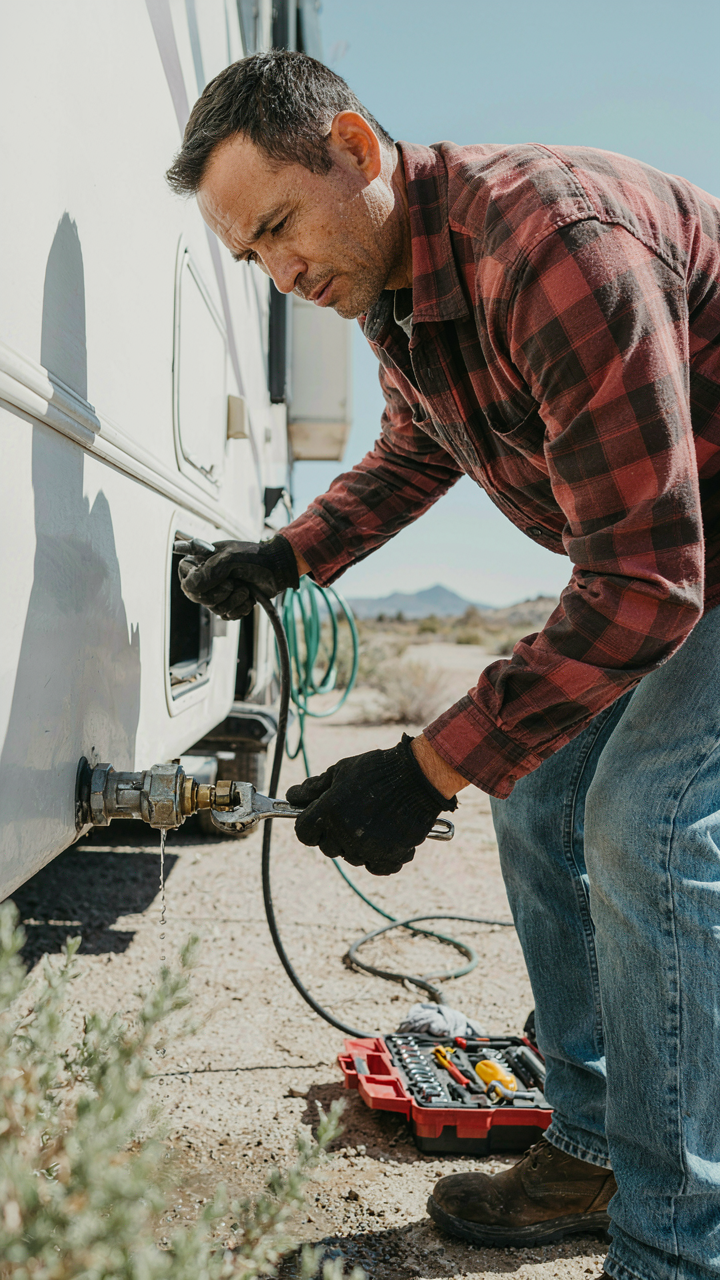
Water pooling under your rig doesn’t tell you if it’s the black tank vent, a grey tank seal, or a supply line. Propane not flowing doesn’t tell you if the regulator froze, the line is kinked, or the tank valve stuck. You need a mental map of each system and where things break. Start by learning the path: water enters here, propane comes from there, electricity flows this way. When something stops working, trace backwards from the symptom to the source. Is water not flowing? Check the pump switch first, then the tank level, then inspect lines for kinks or clogs. No propane to the stove? Check if the tank valve is open, then the regulator valve, then listen for hissing near the line. These aren’t guesses. They’re systematic elimination steps. You test each point once and move to the next only if that point works. Carry multimeter, adjustable wrench, wire connectors, and spare hoses for each system. Keep them organized so you find them under pressure. Most RV breakdowns you can address yourself fall into three categories: electrical connections that loosen, water lines that freeze or clog, and propane regulators that stick. Learn how to check each one. Practice before you need it.
The Mindset Shift: True RV Adventure Isn’t A Vacation
Problems Masquerading As Features
You want RV camping to feel like escape. That’s the lie you’re buying. The mechanism behind most RV advice treats travel like a consumer product to optimize for comfort, not a system that demands adaptation. You’re paying for gear and tips that let you avoid the actual work of being self-sufficient, which means you’re paying to miss the only part that matters.
The industry sells RV camping as hotel rooms on wheels. Comfortable beds, full hookups, level ground, WiFi. This commodifies what should be a skill. When everything works like your apartment, you learn nothing. The challenges aren’t bugs in the system. They’re the system. Your water pump fails at mile marker 47. Your gray tank backs up. The propane runs out during a cold night. These aren’t problems to eliminate. They’re data points that teach you how the machine works and what you’re actually capable of managing.
Self Reliance Starts With Friction
Friction is not your enemy in RV camping. Economics teaches us that friction reduces efficiency, yes. But efficiency and growth operate differently. You grow by solving problems you can’t outsource. Most RV campers never develop competency because they book sites with full hookups and outsource every failure to a service call. The person who learns to winterize their system, diagnose electrical issues, or repair a water heater becomes the person who actually owns their rig. The person who doesn’t becomes a passenger.
The first step is deliberate incompetence. Choose a camping trip where you’ll face a real constraint. Dry camp for three days. Boondock without sewer. Navigate a tricky site without electric leveling. You’ll solve problems faster than you think, and each solution sticks because you earned it through necessity, not YouTube tutorials. Document what you learned in writing. When the same issue arises six months later, you already own the answer.
The Real Obstacle Isn’t The Road, It’s Your Unexamined Assumptions

Most people don’t fail at RV camping because they lack tips. They fail because they believe comfort requires a permanent address. That belief kills the entire experiment before it starts. Your real competition isn’t logistics or gear. It’s the voice telling you that living differently is reckless. Today, book one night in an RV. Just one. Watch how fast your assumptions crumble when reality replaces theory. The road doesn’t punish the curious, it rewards the ones stubborn enough to test their own bullshit.