

The “Hydrophobic Hierarchy” For Trekking Outfit Success

Start With Skin Contact First
You want the outfit to work without thinking about it constantly. That’s the real draw here. The mechanism is simple: your base layer either moves sweat away from skin or traps it. Moisture on skin kills temperature regulation and breeds discomfort fast. In thermodynamics terms, you’re fighting evaporative cooling—the same principle that makes wet skin feel colder than dry skin. Your base layer is the thermal buffer that determines everything above it.
Merino wool and synthetic polyester both wick moisture, but they work differently. Merino pulls sweat outward through capillary action and regulates temperature across a wider range. Synthetics like nylon or polyester move moisture fast and dry quicker. In rain, speed matters more than temperature regulation. Wear a synthetic base layer on rainy hikes because it dries in hours, not days. Cotton holds water and becomes a heat sink against your body, so avoid it entirely.
Insulation Without The Wet Penalty

Most advice says “add a fleece layer” and stops there. That misses the critical detail: wet insulation loses function. Fleece absorbs water like a sponge and keeps it close to your body. Synthetic insulation like polyester or polypropylene maintains loft even when damp, which is why it beats down for rain hiking. Down collapses when wet and never recovers on the trail, so skip it.
A lightweight synthetic insulating layer goes between your base and shell. Aim for 100-200 grams of synthetic fill, not thick puffy jackets. The layer compresses small enough to stuff in a pack pocket and adds real warmth without bulk. Wear it under your rain shell, not over it. If you get overheated during climbing, pull off the shell temporarily and let the insulating layer breathe, then reseal. This gives you control without adding weight or package size.

Beyond Waterproof: The Breathability Fallacy In Hiking Outfit Rainy Days
DWR Coatings Versus True Waterproofing
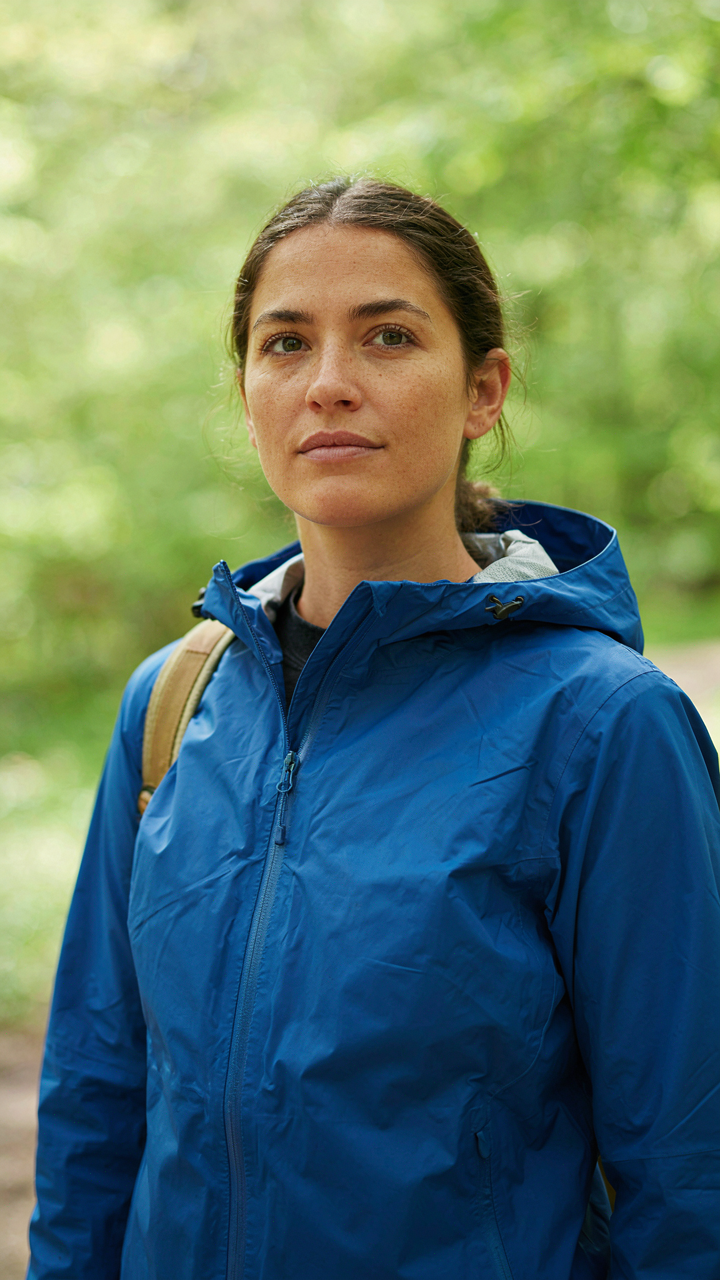
You want to believe a single layer solves rain. It won’t. The real gap nobody mentions: DWR (Durable Water Repellent) and waterproofing are opposite strategies with different failure modes. DWR is a surface treatment that beads water away temporarily. It degrades with wear and washing. Waterproofing uses membranes like Gore-Tex that block water molecules but allow vapor through. Most rainy season hiking jackets use DWR alone because it’s cheaper and lighter. You feel dry for the first hour, then the coating fails and you absorb water like a sponge.
The mechanism: DWR fails fastest where friction happens most—shoulders, underarms, pack straps. A true waterproof membrane lasts years. But membranes add weight and cost manufacturers hate that. So brands market DWR as “waterproof” and you buy the lie. For rainy season hiking, demand a membrane layer if you’re spending real time in active rain. DWR alone works for drizzle or quick trips. Anything longer than two hours in sustained wet demands Gore-Tex or equivalent.
Ventilation Strategies For Staying Dry
The physics of vapor transport applies here: sweat moving faster than rain penetrates beats any coating. You generate internal moisture constantly while hiking uphill. A sealed waterproof jacket with no ventilation traps that sweat inside and you end up wetter from your own body than from the storm. Pit zips or underarm vents work because they exhaust humid air fast without opening the main body to rain.
Placement matters tactically. Side vents don’t work in crosswind rain. Pit zips angled downward shed water outward instead of letting it collect in the armpit. The practical protocol: open pit zips during climbs when sweat production peaks. Close them on descents or flat sections when external moisture is the bigger threat. Layering underneath with merino wool or synthetic materials that wick while wet gives you a second defense. The jacket becomes your outer shell while the layer under keeps skin temperature regulated even if trapped moisture exists.
The “Shell Game” Protocol: Outer Layers For Rainy Hike Outfit
Hardshell Versus Softshell Performance
You want the right jacket so you don’t look like you don’t know what you’re doing. Here’s what actually matters: hardshells and softshells solve different problems, and picking wrong wastes money and leaves you wet. Think in terms of fluid dynamics—the science of how water moves. A hardshell is a physical barrier. A softshell is a compromise that trades waterproofing for breathability. Hardshells shed rain outright. Softshells absorb water into the outer fabric while moving vapor out, which fails when rain is heavy or sustained.
Hardshells work for rainy season hiking because rain is relentless during those months, not occasional. They use membranes—typically polyurethane or PTFE—that block water droplets while allowing sweat vapor through. The catch: they’re louder, less flexible, and trap heat if you’re working hard uphill. Softshells excel on dry days with drizzle, or when you need mobility and don’t want condensation pooling inside your jacket. On a rainy season hike where precipitation is the forecast guarantee, hardshell is the rational choice, even if it feels less comfortable in the first ten minutes.
Seam Sealing And Zipper Integrity
Most women buying rain jackets ignore seams entirely and wonder why water finds its way in. Seams are where fabric panels stitch together, and those needle holes are direct water entry points. Manufacturers seal seams with tape or adhesive applied to the inside, but the quality varies drastically. Budget jackets skip sealing on lower-stress seams. Mid-range jackets seal the critical ones: shoulders, back yoke, and underarms. Premium jackets seal everything. You need to inspect what you’re buying, not assume the price tag did the work for you.
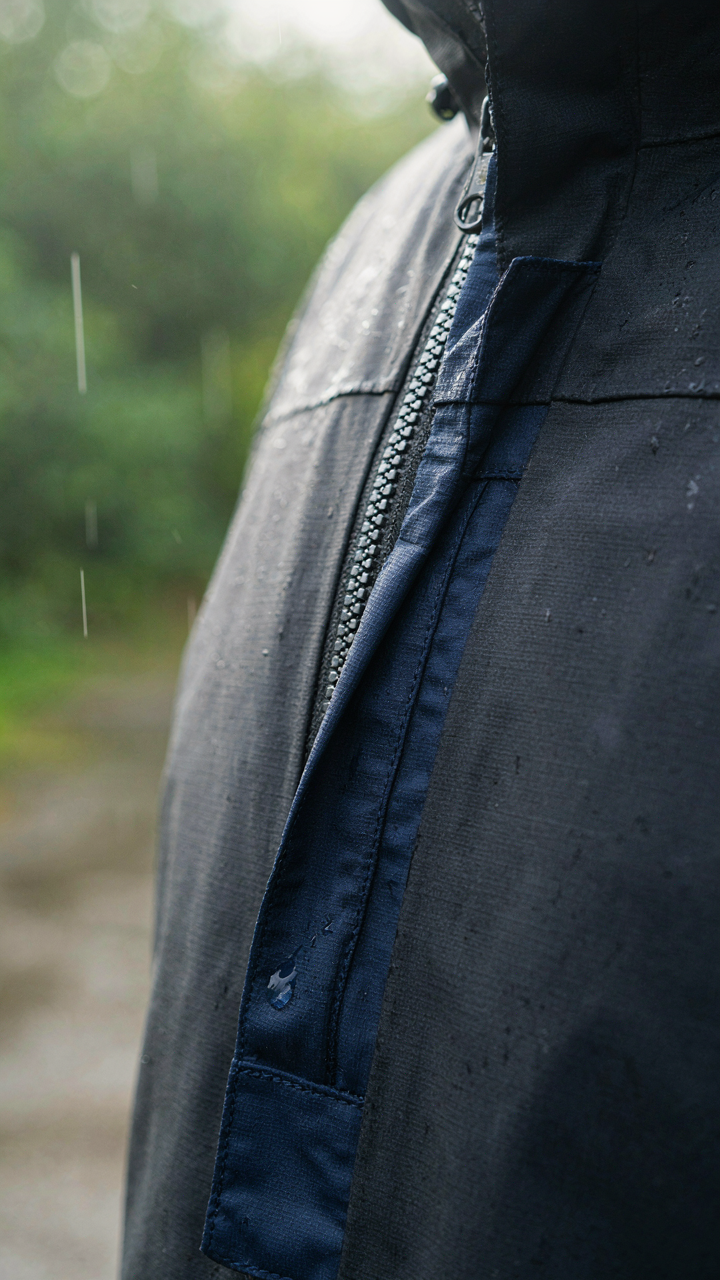
Zippers are the second vulnerability. Water runs down fabric and funnels straight into zipper tracks unless you use a rain guard flap—the fabric strip that overlaps the zipper teeth from the outside. Test any jacket in a store by running your finger along the zipper seam while imagining water flow. If water could reach the teeth, it will during a sustained downpour. Inspect seam tape for peeling or gaps before purchase. Replace a defective jacket; patching seams mid-hike solves nothing.
Footwear Fails: Avoiding The Wet Boot Trap For Hiking Outfit Women

Waterproof Boot Types And Their Real Limits
You want a boot that promises to keep your feet dry so you stop worrying about blisters and trench foot ruining your hike. Here’s the mechanism: no boot is waterproof forever. Materials like Gore-Tex membrane work by blocking liquid water while allowing vapor to escape, but the system fails at seams, at the collar opening, and when water pressure exceeds the membrane’s rating. Most hiking boots handle rain fine for hours. They fail when you ford streams, wade through saturated terrain, or sit in wet conditions for extended periods.
The industry calls this “waterproofing” but it’s more accurate to call it “water resistance with an expiration date.” Leather boots with sealed seams last longer than synthetic mesh because leather’s thickness resists puncture and seam breakdown. Unlined boots dry faster than lined ones but offer less insulation when wet. The real play: accept that rainy season hiking means wet feet eventually, then choose boots designed to drain and dry rather than boots marketed as impenetrable. Pick models with aggressive tread, drainage channels in the sole, and a wide toe box that doesn’t compress when swollen from moisture.
Sock Material Science: Wool Versus Synthetics
Thermal regulation in textiles works like a heat exchanger: the material either absorbs moisture and loses insulation (cotton), or it sheds moisture while retaining warmth (merino wool and synthetics). Merino wool regulates temperature by releasing trapped heat when you’re warm and retaining it when you’re cold, even when wet. Synthetic blends like polyester and nylon wick faster but offer zero insulation when saturated. Your choice depends on whether you need speed or durability.
Merino wool socks stay functional when damp because the fiber itself insulates. They resist odor longer, dry moderately fast, and handle temperature swings on rainy hikes where sun breaks through clouds. Synthetics dry the quickest and cost less, but they lose all thermal value once soaked and trap odor faster. The mechanism to exploit: bring two pairs of merino wool socks and rotate them. Wear one pair while the other air dries inside your pack. If your boot interior never fully dries, the second pair stays drier than it would if you’d worn synthetics all day.
The Accessory Advantage For Mountain Outfit Comfort
Hat And Glove Selection: Warmth And Grip
You want accessories that won’t fail when conditions worsen because dropping a glove at 8,000 feet means your fingers go numb in minutes. The real mechanism here is heat retention combined with dexterity: your hands and head are the body’s fastest heat-bleed points, and wet hands lose grip friction on gear. Most hikers grab any waterproof glove and call it done. Wrong. You need gloves with palm grip designed for wet surfaces, not just water-blocking materials. Neoprene or rubber coatings on synthetic leather actually work because they maintain traction when soaked. Cotton liners underneath prevent sweat accumulation that kills warmth.
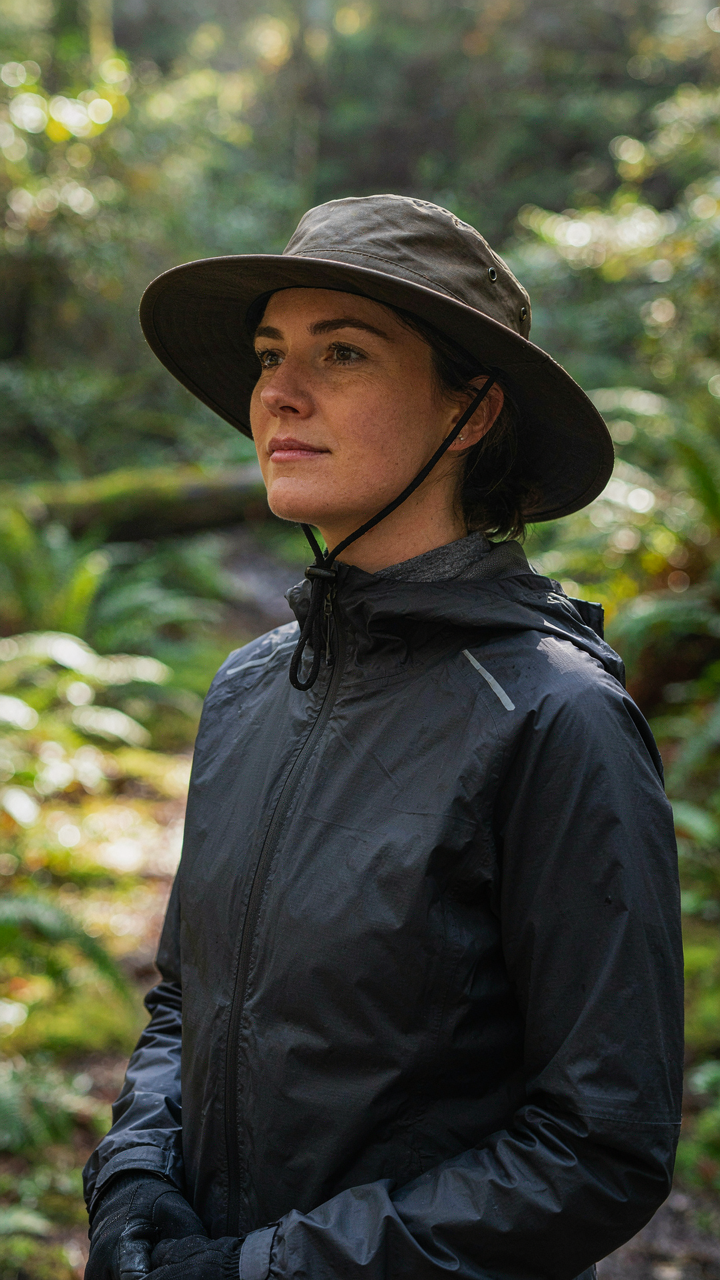
Hats function differently in rainy conditions than dry ones. A wide brim protects your face and shoulders from direct downpour while venting humidity that builds under the crown. Merino wool or synthetic blends dry faster than cotton and retain heat when wet, which cotton cannot do. Choose a hat with a chin strap because wind hits harder on exposed ridges, and losing headwear means rapid heat loss plus the time wasted retrieving it. Secure your gloves to your pack with a carabiner clip so you never face the choice between wet hands and fumbling through pockets mid-hike.
Gaiters: The Unsung Hero Of Dry Legs
Everyone overlooks gaiters because they seem unnecessary. They solve the actual problem that kills hikes: wet socks and mud-caked lower legs that drain core temperature and invite blisters. Gaiters create a physical seal between your boot top and your pant leg, blocking water and debris from entering your boots during creek crossings or sustained wet-brush contact. The mechanism is straightforward sealing, not insulation. Most women’s gaiters sit too loose because they’re cut from men’s patterns scaled down, leaving gaps at the heel and ankle where water flows straight through.
Fit matters more than material. Your gaiter should cinch tight under your boot arch and overlap your pants by at least three inches. Velcro closures are simpler than zippers in wet conditions because zippers freeze or jam with mud, while velcro still grabs when soaked. Test your gaiters at home before a real hike: squat, step over logs, and crouch to see if they slip or bunch. Do not buy gaiters in person only at a store that lets you try them with the exact boots you use for hiking.
Backpacking Outfits: The Weight Vs. Protection Equation
Pack Cover Vs. Internal Dry Bags
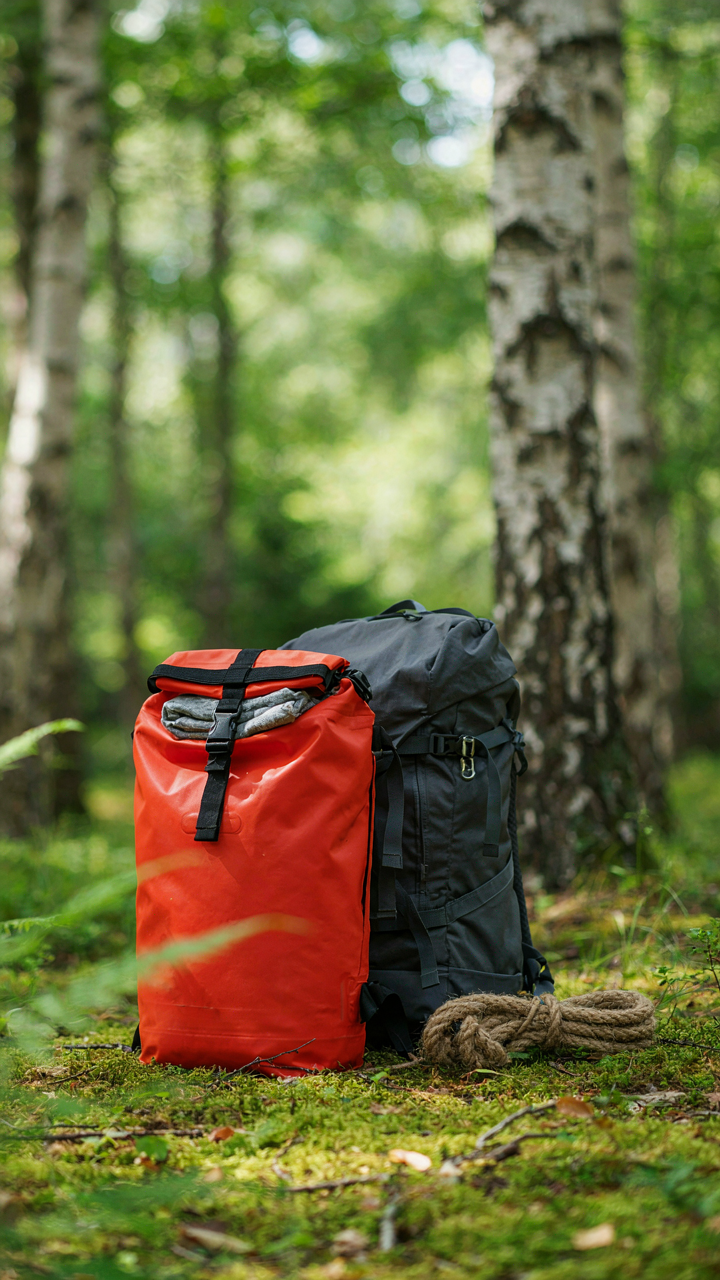
You’re drawn to this choice because you want permission to buy less gear. Here’s the mechanism: a pack cover treats moisture as a surface problem. Internal dry bags treat it as an infiltration problem. Pack covers shed water off the exterior. Dry bags seal compartments so water that enters your pack doesn’t touch your clothes. Most guides call them interchangeable. They’re not. A cover fails when water pools in seams or finds gaps at the straps.
Dry bags win on reliability but demand weight trade-offs. A quality pack cover weighs 150-250 grams and costs less than multiple dry bags. Internal bags spread that weight across your pack and protect specific layers separately. If your backpack already has a rain cover included, skip redundant protection. If not, add one dry bag for the critical zone—your sleeping system and base layers—rather than assuming the cover handles everything.
Carry Weight For Efficiency
Physics calls it load optimization: minimizing resistance while maintaining system integrity. In rainy season hiking for women, this means your rain layer can’t be so heavy it collapses your ability to move. The standard advice says “pack light, period.” Wrong. You need to pack strategic, not light. A 3-pound rain jacket that keeps you functional for eight hours outperforms a 10-ounce poncho that leaves you drenched and cold.
The real lever is consolidation, not deprivation. Wear your rain shell as your outer layer the entire hike instead of storing it. This eliminates the weight of a separate weather barrier and the decision fatigue of when to deploy it. Choose one pair of rain pants instead of carrying backup bottoms. Use a lightweight down layer under your shell instead of multiple mid-weight fleeces. Test this exact sequence before the trip so you know whether you’re actually warm or just mentally committed to the outfit.
Wander Outfit: Adapting To Microclimates
Local Knowledge Beats Weather Apps
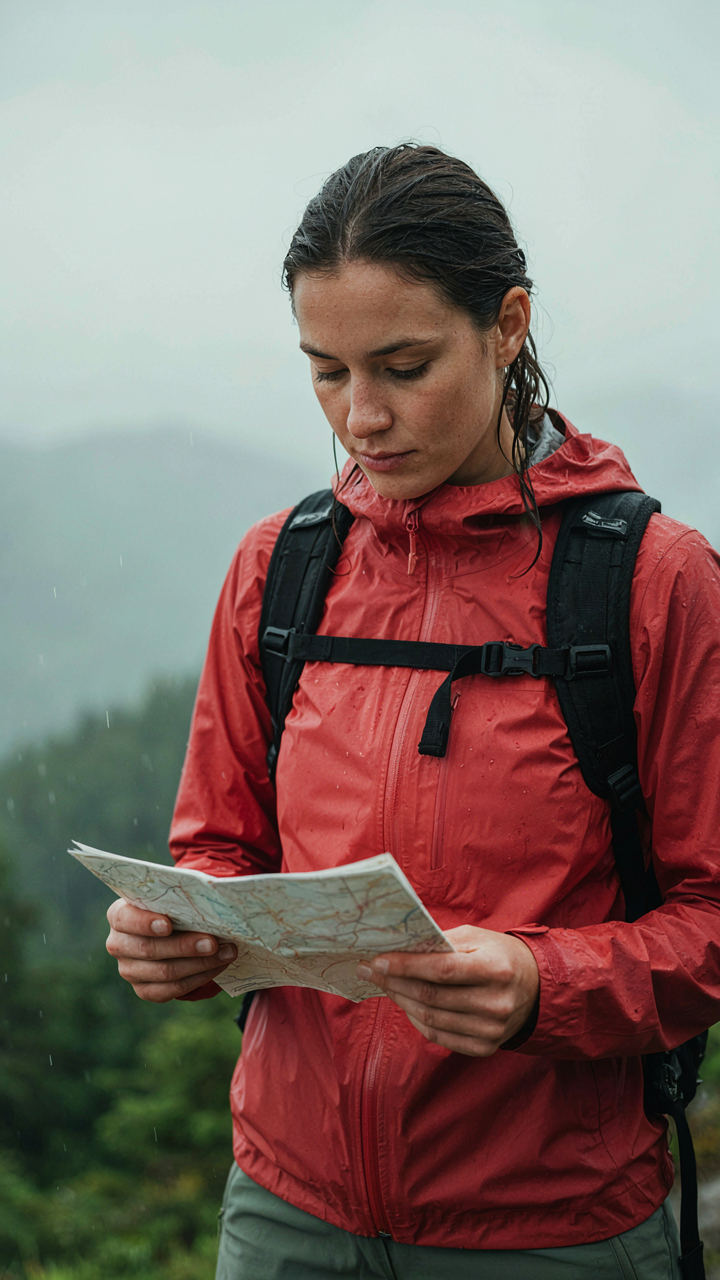
You want the outfit that works everywhere so you don’t have to think. That’s the trap. A rainy season hike isn’t one climate, it’s five stacked on top of each other, and your phone’s forecast captures none of it. The mechanism is simple: elevation, exposure, and time of day create isolated weather zones within a single trail. A ridge gets hammered by wind while the valley stays still. Upper elevations freeze while lower sections steam.
Talk to people who hike that specific trail during rain season, not last season or the next valley over. Ask them what happens at mile three, what the wind does near the exposed ridge, whether the lower section traps humidity. This isn’t social nicety, it’s data collection. Your outfit adapts to what actually happens, not to what the general forecast predicts. Local knowledge collapses uncertainty.
Layers That Respond To Actual Changes
Everyone says layer, but nobody explains why rainy season demands a different layering system than fall hiking. Thermodynamics applies here, and the key principle is dew point management. Your base layer controls moisture. Your mid layer traps or releases air depending on exertion. Your outer shell stops wind and precipitation. During rainy season, temperature swings aren’t gradual, they’re sharp. You climb out of a humid valley into cold wind in twenty minutes.
Start with a merino wool base layer, not cotton, because it regulates moisture without absorbing it. Add a lightweight fleece or synthetic mid layer you can remove fast. Your shell jacket stays accessible, not stuffed in a pack. The real protocol: strip one layer before you sweat, add one layer before you shiver. Don’t wait for comfort to fail. Execute the adjustment at the first sign of temperature shift, not when you’re already cold or damp.
The Preparedness Paradox For Cute Hiking Outfit Selection
Redundancy Wins When One Layer Fails
You want to look put-together on the trail without looking like you’re prepping for survival. That’s the real tension here. Military logistics borrowed the concept of redundancy as a fail-safe: if one critical system breaks, a second one takes over. Apply this to rainy season hiking outfits. Your waterproof shell is system one. Your mid-layer wool or synthetic acts as system two. If the shell tears or your body heat overwhelms it, the mid-layer still functions independently.
Most hikers treat their rain jacket as the single solution and skip the backup layer entirely. Wrong. Cotton fails when wet. Merino wool and synthetic blends (polyester, nylon blends) retain insulation even saturated. Pack an extra synthetic mid-layer, not for redundancy of the same function, but because wet conditions expose gaps in single-layer strategy. A torn seam, a zipper that jams, condensation buildup from the inside, or unexpected wind chill all require a second containment system ready to deploy.
What Actually Keeps You Alive Beyond Fabric
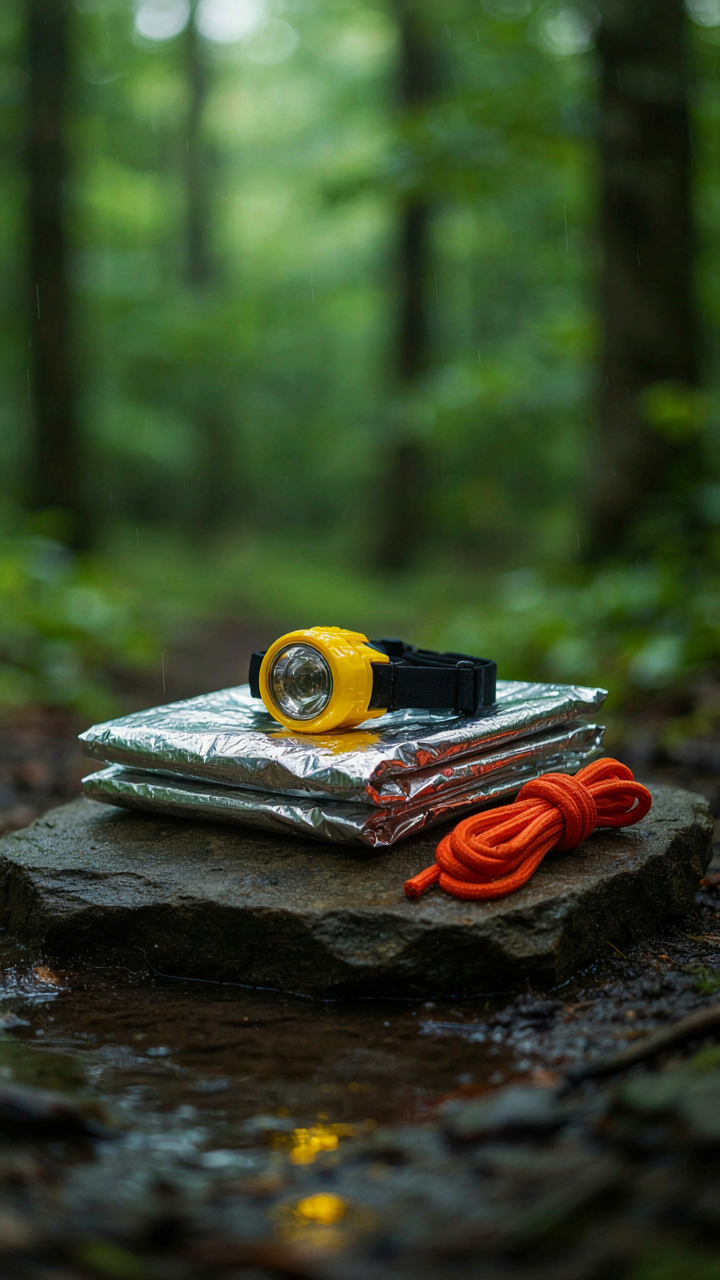
First aid kits matter less than the items that prevent you from needing one. Blister prevention beats blister treatment. Waterproof storage for your phone beats carrying a dead device. Navigation fails when maps get soaked. These aren’t clothing choices, but they sit in your pack alongside your rainy season hiking outfit and determine whether you hike back or get extracted.
- Waterproof map case or dry bag: Stores paper maps and phone together. Enables navigation if electronics fail. Take photos of your route before departure.
- Merino wool socks, two pairs minimum: Prevents blisters in wet boots better than cotton or thin synthetics. Wet blisters become infection vectors in remote terrain.
- Moleskin or blister prevention tape: Apply before problems start, not after pain begins. Reduces emergency descent scenarios in rain.
- Waterproof headlamp with extra batteries: Rain degrades visibility faster than altitude or time. Staying on trail depends on seeing obstacles ahead.
- Electrolyte tablets or salt pack: Cramping accelerates in cold, wet conditions. Prevents performance collapse during extended exposure.
Your outfit handles moisture. These items handle the downstream failures moisture creates. Separate them in your pack so you grab them as a unit before every rainy season hike, not as afterthoughts while sitting in your car.
Trekking Outfits For Women: Post Hike Recovery Protocol

Drying Gear Efficiently: Preventing Mildew
You care about this because wet gear rotting in your closet feels like money disappearing. The mechanism is biology: mildew is fungal growth that accelerates in darkness, moisture, and stagnant air. Synthetic fabrics used in rain shells and base layers dry faster than natural fibers, but they still trap moisture against themselves if bundled. Spread everything flat or hang it vertically with air movement. Open windows or use a fan. Mildew colonizes within 24 to 48 hours of sustained dampness, so speed matters more than perfect conditions.
Most advice says “just air dry,” which is incomplete. You need active air circulation, not passive sitting. Hang rain shells on hangers away from walls. Lay base layers on a clean towel and flip them every few hours. Stuff hiking boots with newspaper and replace it as it absorbs moisture. Store gear only after it reaches full dryness, not just surface dryness. Moisture trapped in seams or collar folds will spawn mildew even if the main fabric feels dry to touch.
Rehydrating And Refueling After Exposure
The common advice is to drink water and eat a snack. That misses the mechanism: your body loses electrolytes through sweat under a rain shell faster than plain water replaces them, and you’ve burned glycogen climbing in wet conditions, which demand more energy than dry terrain. Dehydration impairs recovery and increases injury risk. Drink fluids with sodium and carbohydrates within 30 minutes of finishing. Water alone will not restore your electrolyte balance or replenish muscle fuel.
Refueling works on timing, not volume. Aim for a ratio of carbohydrates to protein of roughly 3 or 4 to 1 within the first hour post hike. A banana with peanut butter, rice with chicken, or a sports drink followed by a sandwich all work. Your muscles uptake glycogen most efficiently in this window. Neglecting this protocol delays recovery and leaves you sore and depleted for the next hike. Eat before hunger signals arrive, because satiety lags behind actual nutritional need by 20 minutes.
The Unseen Cost Of “Budget” Rainy Season Gear

Cheap Fabrics Fail In Wet Conditions
You’re drawn to budget gear because you want to avoid wasting money on something you might use twice. Here’s the mechanism: fabric degrades exponentially in wet environments, not linearly. A $40 rain jacket deteriorates faster than a $120 one because the base material itself has lower density and inferior water-resistance coating. Polyester breaks down under UV exposure and repeated compression when wet. Nylon compounds lose tensile strength when saturated. The cheaper the jacket, the thinner the weave and the lower the denier count.
Rain tests this brutally. Budget fabrics absorb moisture into their fibers rather than repelling it. This adds weight, reduces insulation capacity, and creates mildew conditions within two seasons. A mid-range jacket with 70D nylon and a proper DWR coating stays functional for five to seven years of regular use. A budget alternative deteriorates noticeably within two to three seasons. The cost per use climbs fast when you’re replacing gear annually instead of maintaining one solid piece.
Real Materials Hold Their Value
Fabric science directly transfers to garment longevity. Think of material durability like compound interest in finance: small initial differences compound into massive gaps over time. A $120 jacket with 100D ripstop nylon and a polyurethane backing costs more upfront because the material itself resists degradation. You’re not paying for a brand logo. You’re paying for fibers that maintain their structural integrity through humidity cycles, salt spray, and repeated wetting and drying.
Quality gear stops degrading after the first season. Cheap gear starts degrading immediately. Better materials also repel dirt and algae growth, which means less frequent washing and less damage from detergent. A woman buying a quality rain shell spends $120 once and uses it for seven years. A woman buying budget alternatives spends $40 three times, replacing gear every two years, and ends up paying $120 total while owning three broken jackets instead of one functional one. Calculate actual cost per use, not purchase price.
The Only Real Obstacle To A Comfortable Rainy Hike Is Your Own Overthinking, Not The Weather
You don’t need the perfect outfit. You need to stop waiting for one. Most women never hike in rain because they convince themselves they’re unprepared, so they stay home instead. Pick one decent waterproof layer today. Wear it on a short trail this weekend. The discomfort you fear doesn’t exist once you’re actually moving. Everything else you think you need becomes obvious after that first hike. Your gear gap isn’t the problem. Your hesitation is.