
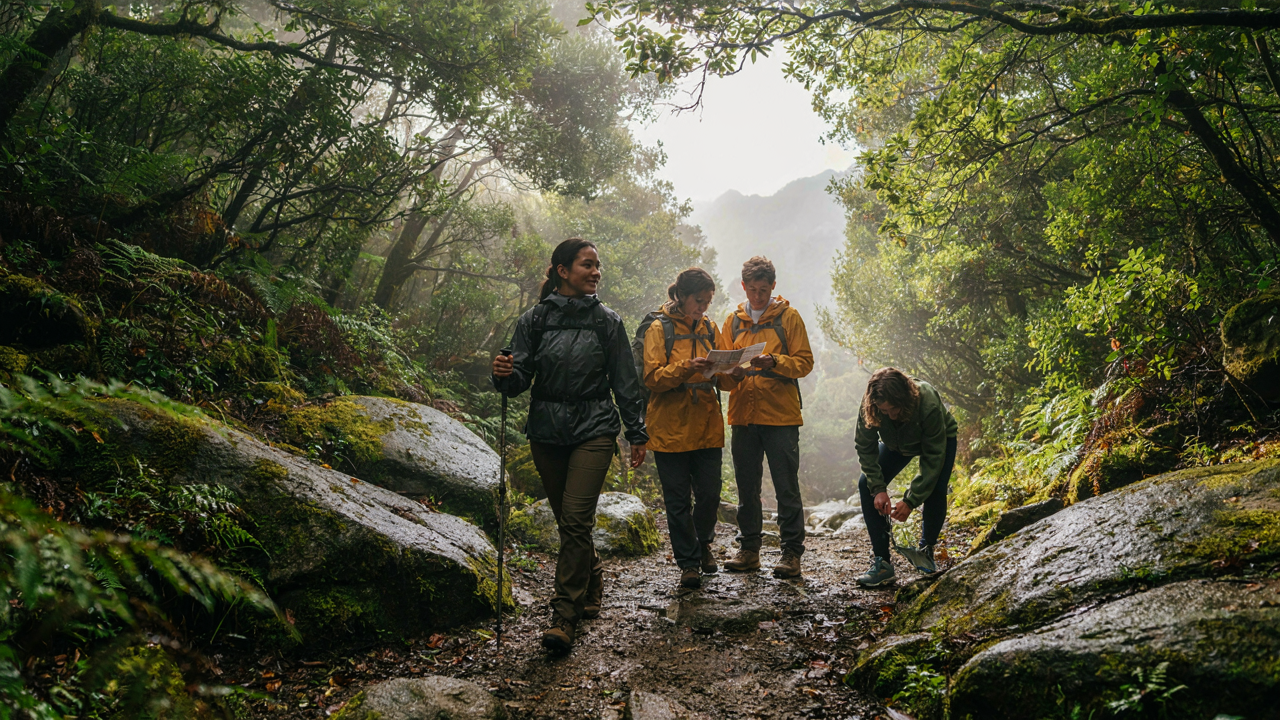
The Wet Truth: Why Your Current “Rain Gear” Fails

Waterproof Doesn’t Mean What You Think It Does
You bought rain gear because you’re afraid of looking unprepared, but the real problem is that waterproof has become a marketing term that means almost nothing. The mechanism at play comes from material science: a fabric can resist water penetration for hours but still fail catastrophically under the specific conditions of hiking. Most gear marketed as waterproof uses a hydrostatic head rating, which measures how much water pressure a material withstands before leaking. A tall man wearing standard-fit rain jackets faces a compression problem—fabric stretches across broader shoulders, reducing its rated resistance and creating micro-failures at seams and sleeve extensions.
The distinction matters because waterproof fabrics (like coated nylon) block water but also block vapor, trapping moisture inside your layers. Most manufacturers don’t tell you that a “waterproof” jacket rated at 10,000mm hydrostatic head will fail in heavy rain if you’re moving and generating sweat. Tall men need jackets with reinforced seams at the shoulders and sleeves where stretch happens first, not just a higher waterproof rating. Pick a jacket designed for your frame, not one that claims total waterproofing—the claim itself is the red flag.
Sweat Kills Faster Than Rain Does

Thermodynamics favors the rainy season hiker who understands that internal humidity becomes your primary threat, not external moisture. When you move, your body generates heat and sweat regardless of rain, and if your outer layer traps that vapor, you create a sauna that cools your core faster than wind ever could. A tall man hiking in standard rain gear often finds the torso stays relatively dry while arms and shoulders—where the fabric pulls tight—develop sweat pockets that accelerate heat loss.
The solution isn’t a single magic jacket. Layering strategy demands a breathable mid-layer that wicks moisture away from skin, then a rain shell that lets vapor escape while blocking horizontal rain. For tall builds, this means the rain jacket must have pit zips or underarm vents that you can open during active climbing and close during exposed sections. Test your setup on a short, wet trail before committing to a full hike—if your inner layers are damp after two hours of movement, your gear stack is failing and you need to adjust the breathability of your base or mid-layer.

The Tall Man’s Layering Protocol For Rainy Season Hiking Outfit Men
Start With Sweat, Not Warmth
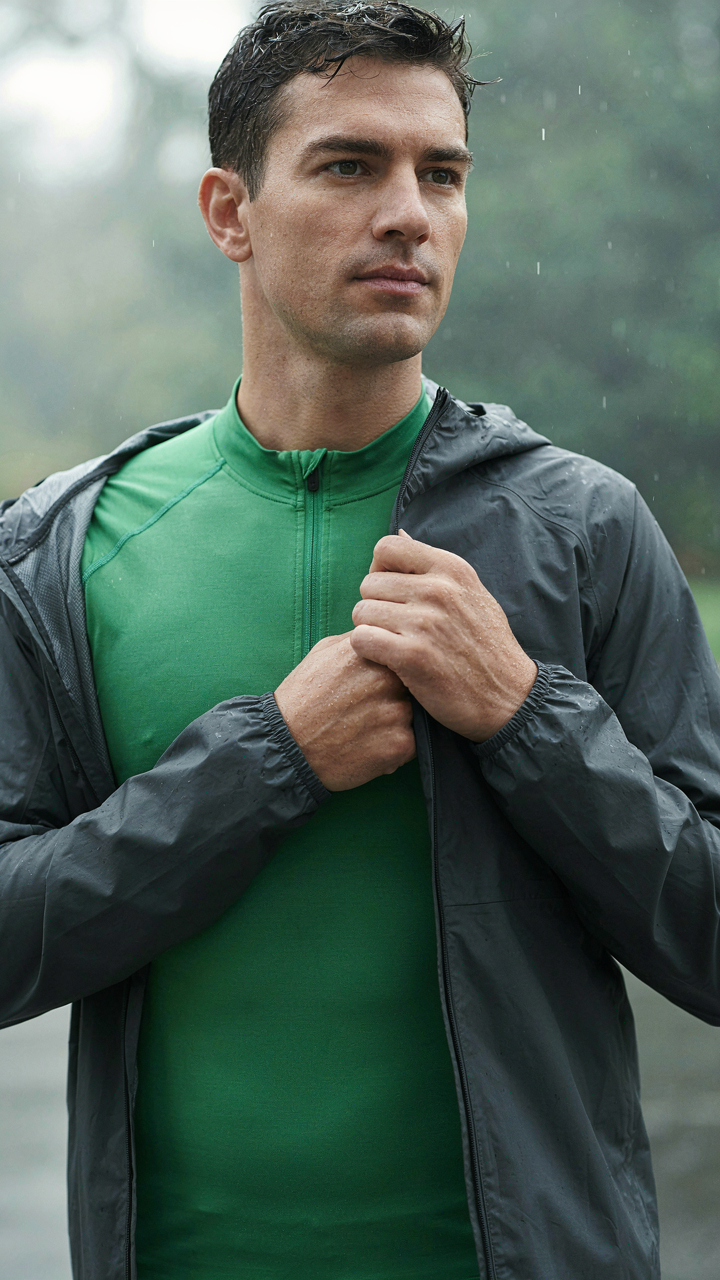
You want base layers that make you look like you know what you’re doing. Here’s the mechanism: your body produces sweat during exertion. Cotton absorbs it and holds it against your skin, cooling you through evaporation you can’t control. Synthetic fibers and merino wool move moisture away from your body to the next layer, keeping you dry and warm. This is the actual job of a base layer. Most advice ignores this and treats base layers like fashion choices.
Tall men need full-length synthetic or merino options because standard lengths gap at the wrists and ankles. Brands like Patagonia Capilene and Smartwool make extended sizes that actually reach your joints. Buy them slightly fitted, not loose. Loose fabric bunches under rain gear and creates dead air pockets that trap moisture instead of wicking it. The base layer works only when it contacts your skin consistently.
Insulation That Adjusts To Effort
Thermodynamics doesn’t care how tall you are. The mid-layer’s job is trapping dead air while allowing moisture to escape upward. Fleece or lightweight synthetic insulation does this on rainy hikes better than down because wet down collapses and stops insulating. You need something that maintains loft even when damp. Patagonia R2, Arc’teryx Delta, or similar grid-fleece patterns outperform solid fleece because they reduce compression under rain shells while keeping warmth trapped.
Tall men should choose mid-layers at least two sizes up from their shirt size to accommodate layering underneath without restriction. A tight mid-layer over a base layer creates compression that kills insulation performance. Wear it over your base layer during cool sections, strip it when climbing intensifies, and add it back during breaks. This on-off cycle prevents overheating and sweat accumulation. The mid-layer is your temperature dial, not your permanent jacket.
Shell Game: The Outer Defense System For Outdoor Outfit Men
Hard Shell Versus Soft Shell: Knowing The Difference
You want to buy the right jacket and feel like you made an intelligent decision. The real mechanism is this: hard shells and soft shells solve different problems, and most tall men buy the wrong one because they confuse weatherproofing with breathability. Hard shells use rigid materials like Gore-Tex to block water completely but trap heat. Soft shells use stretchy fabrics that shed water while letting vapor escape, sacrificing some waterproof performance for mobility and comfort during active movement.
Hard shells excel in heavy downpour or standing rain where you’re stationary or moving slowly. Soft shells work better during sustained hiking when sweat buildup matters more than occasional drizzle. The choice depends on your rainy season terrain and pace, not on what looks more technical. For tall men, hard shells often run short in the torso, leaving your lower back exposed. Soft shells offer better cut options and won’t restrict your stride when layered properly over moisture-wicking base layers.
DWR Coatings: Temporary Solutions, Not Magic
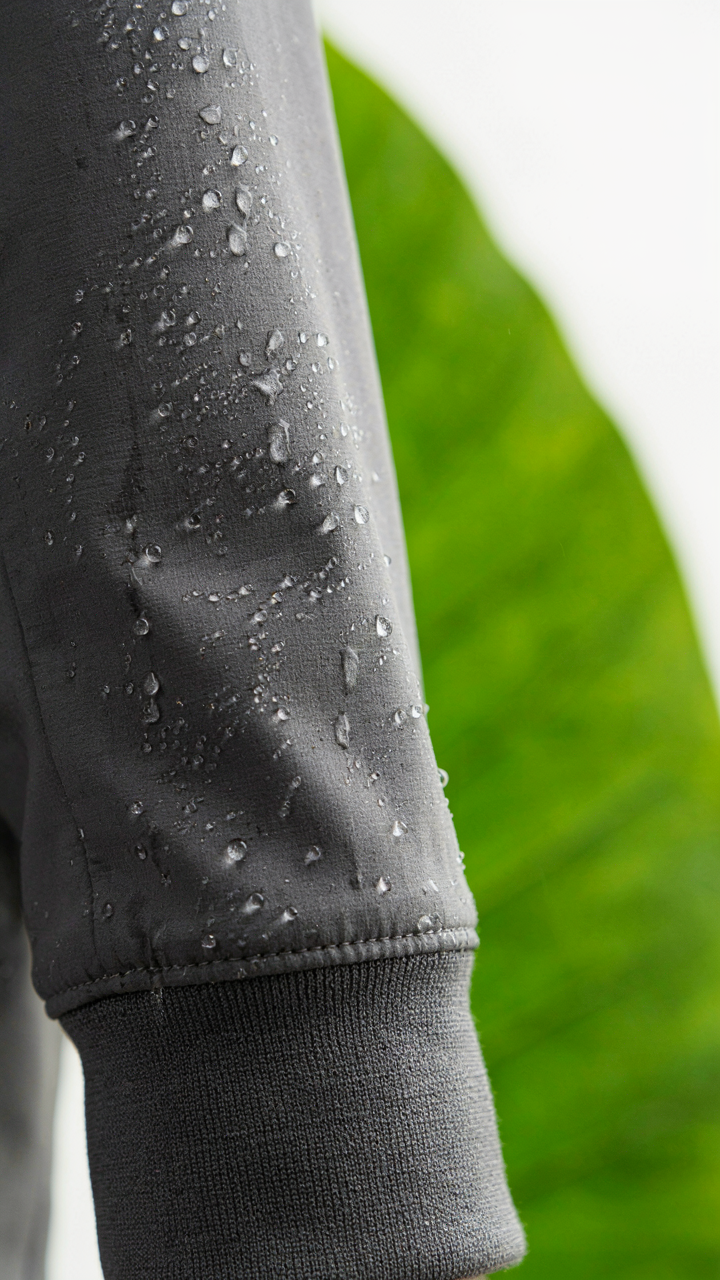
The marketing tells you DWR (durable water repellent) coatings make fabric waterproof forever. That’s incomplete. DWR is a hydrophobic layer applied to the surface of fabric that beads water away, buying you time before saturation occurs. It degrades with sweat, sunscreen, dust, and washing. Most DWR coatings last between fifty and one hundred fifty kilometers of wet hiking before performance drops noticeably, depending on brand and fabric quality.
This means treating DWR as maintenance, not insurance. You reapply it seasonally using wash-in or spray-on treatments, or you accept that your jacket’s water shedding will weaken over time. For tall men who hike regularly through rainy seasons, budgeting one reapplication per year keeps the coating functional. Without it, you’re relying solely on the base membrane’s integrity, which still resists water but won’t shed it as quickly. Check your jacket’s DWR performance by splashing water on the sleeve and watching whether beads form or the fabric darkens from absorption.
Footwear Foundation: Avoiding The Soggy Step Syndrome

Waterproof Boots Reality Versus Marketing Hype
You want waterproof boots because you’re afraid of blisters and failure on the trail, but that’s not actually what stops your feet from rotting. The mechanism here is vapor pressure: water wants to escape from your skin, and boots marketed as “waterproof” block that escape route. You end up with swamp foot either way—rain from outside or sweat from inside. Most waterproof membranes (Gore-Tex, eVent, similar tech) work by allowing water vapor through while blocking liquid water, but they degrade fast under sustained moisture and foot friction. The real problem isn’t waterproofing the boot. It’s managing the water that gets in anyway, which it will.
Stop buying boots based on waterproof claims alone. Buy boots with aggressive tread, fast-draining construction, and sealed seams because you’ll get wet regardless. Tall men wearing standard sizing often find boots too short in the shaft, which channels water straight down the instep. You need 1 to 2 inches of extra shaft height to shed rain before it pools at the collar. Choose leather or treated synthetic uppers with drain holes near the sole, not sealed boxes masquerading as protection. Test boots on wet terrain before committing to them on a full hike.
Wool Versus Synthetics And The Blister Equation
Sock material determines blister formation through friction and moisture management, a principle from materials science that applies directly to your feet. Merino wool outperforms synthetics because it wicks moisture while maintaining structural integrity when wet—synthetics compress under sustained dampness, increasing friction against your skin. The conventional advice that all wool itches or that synthetics dry faster is incomplete. High-quality merino (17 microns or finer) doesn’t itch, and synthetics don’t actually dry faster than wool in a wet boot; they just feel drier because they don’t retain water visibly. Wool keeps working even when soaked. Synthetics fail the moment they lose air circulation.
Buy merino wool socks in a mid-weight thickness (around 400 grams per pair), not ultralight or expedition weight. Tall men need longer socks that extend past the ankle cuff to prevent the gap where your boot collar sits against bare skin—that gap is where blisters start. Wear only one pair per hike and change them only if they actually feel cold against your skin, not because they feel damp. The moisture trapped in wool reduces friction better than dry synthetic that’s been sitting in boot sweat for four hours.
Accessory Advantage: The Unsung Heroes Of Trek Outfits Men

Hat Selection Breaks Down To One Real Choice
You care about this because a bad hat choice signals you didn’t think through the basics, and that compounds every other mistake on the trail. Here’s the mechanism: rain protection operates on surface area. A brim sheds water away from your face and neck. A beanie absorbs it. For rainy season hiking, a brim wins every time. Wide brims, specifically those extending three inches or more, deflect rain before it reaches your eyes and drips down your collar. Tall men benefit doubly because their higher eye level means rain approaches at sharper angles.
Brimmed hats rated for hiking deserve breathable fabric with a sealed seam at the bill’s underside. Cotton blends fail in sustained rain. Look for synthetic materials with moisture-wicking properties that dry fast when wrung out. Beanies trap sweat against your scalp in wet conditions, then cool you when the rain stops. They’re dead weight on rainy season hikes. The brim is what actually protects you from the repeated wetness that causes hypothermia risk on long descents.
Glove Systems Solve For Wet Grip Loss
Gloves follow a principle from material science: friction degrades as surfaces get wet. Your hands need grip when handling trekking poles and scrambling over slick rock. Most hikers buy insulated gloves for warmth and discover they’ve bought slippery neoprene mittens. That’s the mistake. Rain season gloves prioritize grip over insulation because you’re moving hard enough to stay warm. Synthetic leather palms with textured grip patterns work when wet. Merino wool glove liners underneath provide warmth without the bulk that kills dexterity in your fingers.
The two-layer approach beats single gloves for tall men tackling variable terrain. Thin liner gloves let you remove the outer shells and keep hand function when scrambling steep sections. Neoprene shells add water resistance without the dead weight of thick insulation. Check the cuff design. Gloves must overlap your jacket sleeve by at least two inches to stop rain from running down your wrist and into your glove when you reach overhead. Test this overlap before the hike.
The Thermodynamics Of Gorpcore Outfits Men
When Your Body Becomes A Heat Engine
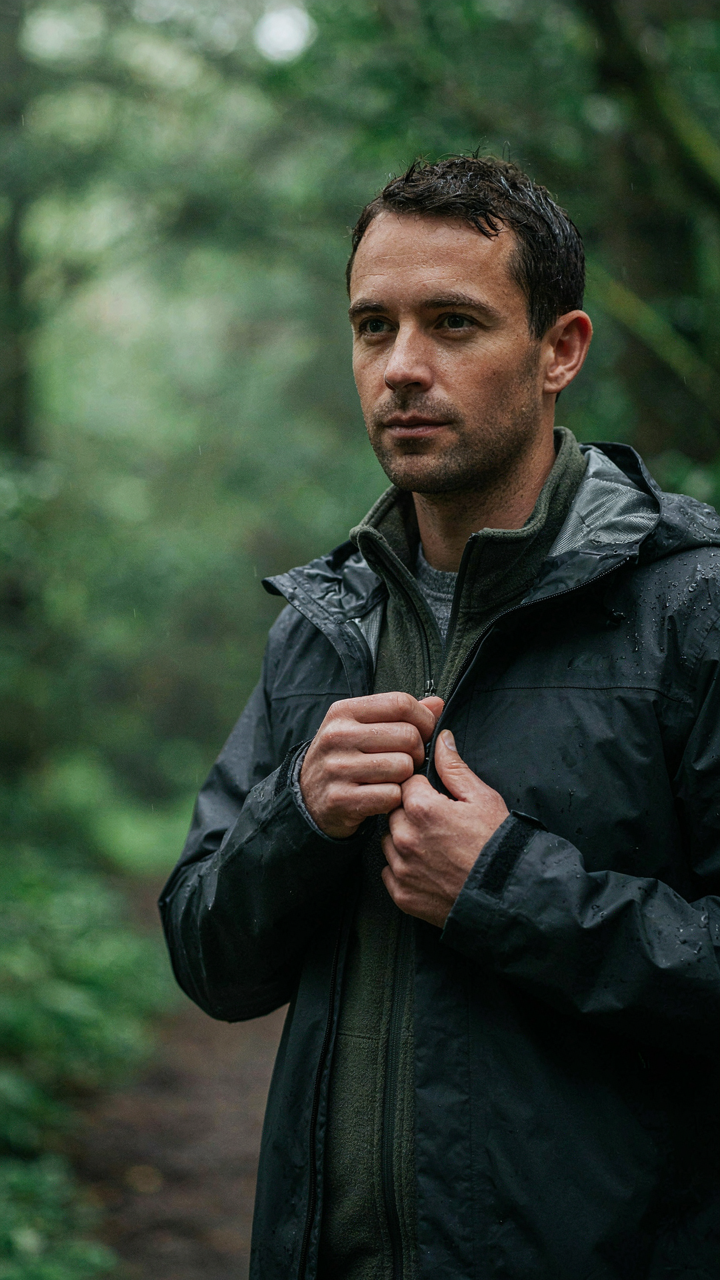
You care about this section because you’re tired of soaking through expensive gear and looking like you don’t know what you’re doing. Here’s what matters: thermodynamics is the physics of heat transfer, and in wet conditions, the military learned long ago that managing heat loss is a survival problem, not a comfort one. Your tall frame has more surface area exposed to wind and rain, which means faster heat dissipation. The mechanism is simple: wet fabric against skin accelerates convective cooling because water conducts heat away from your body 25 times faster than air does. Layering strategy isn’t about looking good. It’s about controlling where heat escapes.
The common advice says “wear moisture-wicking base layers and a waterproof shell.” That’s incomplete. You need to understand the order of operations. Your base layer traps a thin air film between itself and your skin, slowing conductive heat loss. Your mid-layer adds insulation. Your shell blocks wind and rain from accelerating the process. But here’s what people miss: if your base layer is too tight or too thick, it compresses that air film and kills the insulation value. For tall men, an oversized base layer in synthetic material keeps the air gap intact while accommodating your torso length without bunching at the wrists or pulling out of your waistband during arm movement.
Sweat Management Under Pressure
Evaporative cooling destroys your temperature regulation in wet conditions because your body can’t shed moisture fast enough to regulate core temperature. The condensation problem is this: when warm, moist air from your skin hits the cold inner surface of a waterproof shell, it turns to liquid. Now you’re wet from the inside, and your body loses heat rapidly through conduction again. This is called vapor drive, and it’s why premium shells use semipermeable membranes like Gore-Tex or eVent. They let water vapor escape while blocking liquid rain.
For tall men in humid rainy seasons, the real problem is activity level. If you move too fast, your sweat production exceeds what any fabric can evaporate, and condensation builds regardless of shell quality. The protocol: move at a controlled pace, unzip your shell vents before you sweat heavily, and choose a shell with pit zips or underarm venting. During rain breaks, crack open your outer layer to let trapped moisture escape. Your tall frame means longer sleeves and torso, so ensure your shell has enough length to stay tucked and vented without riding up during hiking movements.
The Maintenance Mandate: Extending Gear Life And Performance
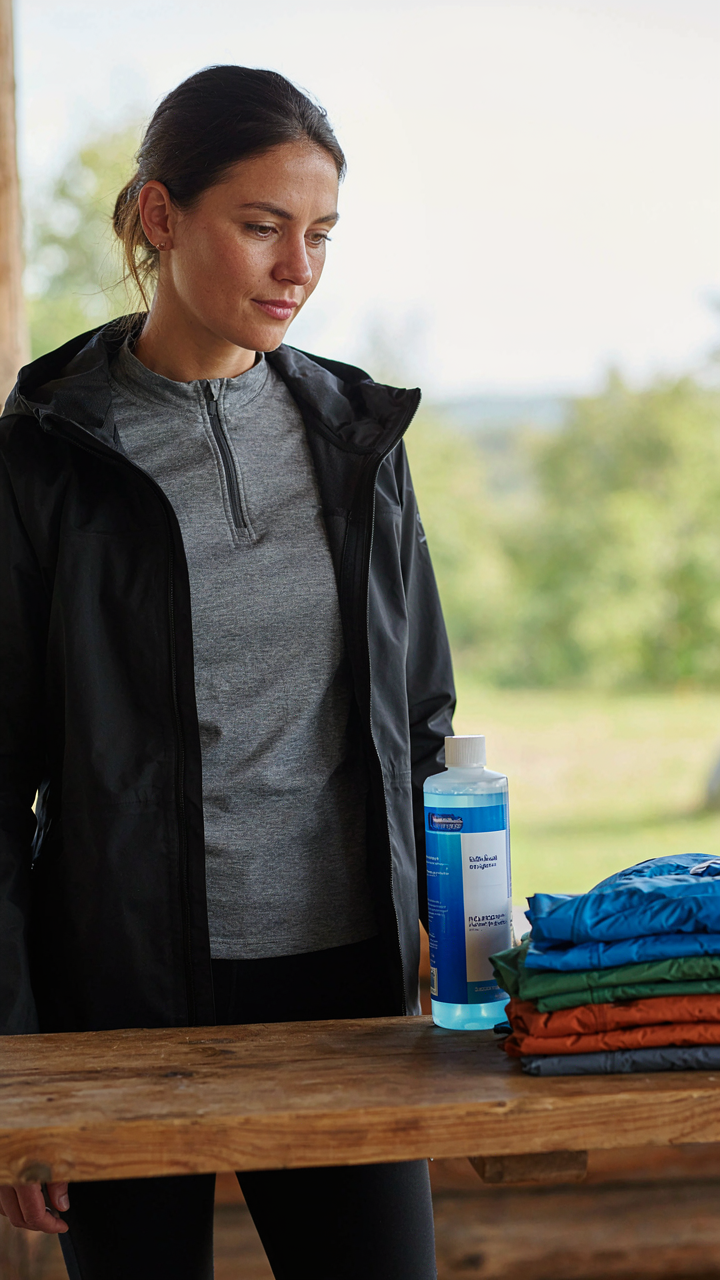
How To Clean Technical Fabrics Properly
You’re afraid your expensive rain gear will fall apart if you wash it wrong. That fear is why most tall men either never clean their jackets or destroy them in a regular washing machine. The mechanism is simple: technical fabrics depend on their coating and fiber structure staying intact. Aggressive agitation, high heat, and harsh detergents break both down.
- Cold water hand wash: Use lukewarm water under 30 degrees Celsius with gentle agitation only. Machine washing, even on delicate cycles, creates friction that degrades waterproof membranes faster than you’d think.
- Specialized synthetic detergent: Standard laundry soap leaves residue that clogs pores in breathable fabrics. Buy detergent made for technical gear, not the stuff in your bathroom cabinet.
- Avoid fabric softener completely: Softeners coat fibers and destroy breathability permanently. One wash with softener can ruin a jacket that cost three figures.
- Rinse until water runs clear: Residual soap accelerates membrane degradation. Rinse at least three times to ensure no detergent remains trapped in the weave.
- Air dry flat or hanging: Never use a dryer. Heat melts adhesive layers in membranes and shrinks synthetic materials. Lay the jacket flat on a towel or hang it indoors away from direct sunlight.
Tall men often buy quality rain jackets then sabotage them through careless cleaning. The cost per wear drops dramatically when you maintain properly instead of replacing every two seasons. Most jackets last five to seven years with correct washing. Most fail in eighteen months without it.
When To Reapply Waterproofing Treatment
The confusion here isn’t accidental. Gear manufacturers profit when you think waterproofing is permanent. It isn’t. Water beading on your jacket tells you nothing about actual waterproof performance. Durable Water Repellent coatings break down through UV exposure, sweat, and abrasion, not just rain.
Test your jacket’s performance by pouring water onto the fabric from six inches above. If water soaks in instead of beading up, the DWR is gone. Reapply treatment every 12 to 18 months if you hike regularly in wet conditions. Tall men’s jackets get more abrasion across shoulders and arms, so check these zones first. Apply DWR spray or wash-in treatment according to product instructions, then let the jacket dry fully before storing. Most treatments require 24 hours to cure. Skip this step and your waterproofing fails faster than you’ll notice it happening.
Beyond The Gortex Style Men: The Mindset Of The Prepared Hiker

Read The Weather Before It Reads You
You want to believe your gear choice matters more than your planning. It doesn’t. The real mechanism is this: weather prediction gives you decision time. You’re not reacting to conditions on the trail—you’re deciding what conditions you’ll face before you lace your boots.
A tall man’s longer limbs mean longer exposure time during weather transitions. Check forecasts 48 hours out, not two hours before. Look at hourly breakdowns, not just the daily summary. Identify the temperature floor, wind speed window, and precipitation probability. Route planning follows weather reading. Pick trails with bailout points if conditions shift. Know your descent time. Know the shelter options. This removes guesswork.
When Your Gear Betrays You On The Mountain
Gear fails. Your rain shell tears. Your pack strap snaps under a tall frame’s weight distribution. Your socks get soaked through a seam. The difference between prepared hikers and the rest is that prepared hikers already know what they’ll do when it happens.
Carry repair capacity that matches your outfit’s complexity. Duct tape wrapped around a pencil weighs nothing and patches most tears. Extra socks in a waterproof bag beat any other contingency investment for tall men—your longer legs mean more surface area and faster heat loss when wet. If your main shell fails, layering becomes your shelter. This isn’t backup thinking. This is the actual system. Test your contingencies on short hikes first. A failure in your plan on familiar terrain is better than a failure on the mountain.
The Real Obstacle Isn’t Your Height Or The Rain; It’s Your Reliance On Generic Advice Instead Of Functional Mastery
You’ve read enough listicles. What matters now is this: stop treating your height and the weather as problems to solve with the right gear. Treat them as design constraints that force you to build a system. Today, pick one hike you’ve been avoiding. Go. Document what actually fails. That failure teaches you more than a thousand articles ever will. The hikers who dominate rainy seasons aren’t the ones with the best equipment. They’re the ones who learned by doing.