

The “Miniature” Myth: Debunking Sizing For Serious Hikers
Technical Fit Over Labels
You want to believe standard sizing is the problem because it’s easier to blame manufacturers than to learn how gear actually functions on your body. It isn’t. The real issue is that petite hikers treat sizing like a vanity game instead of an engineering problem. Technical fit means the garment’s architecture matches your proportions so load distributes correctly, moisture moves where it should, and you stay dry under effort. Most petite women buy “petite” versions and stop thinking. That’s the trap.
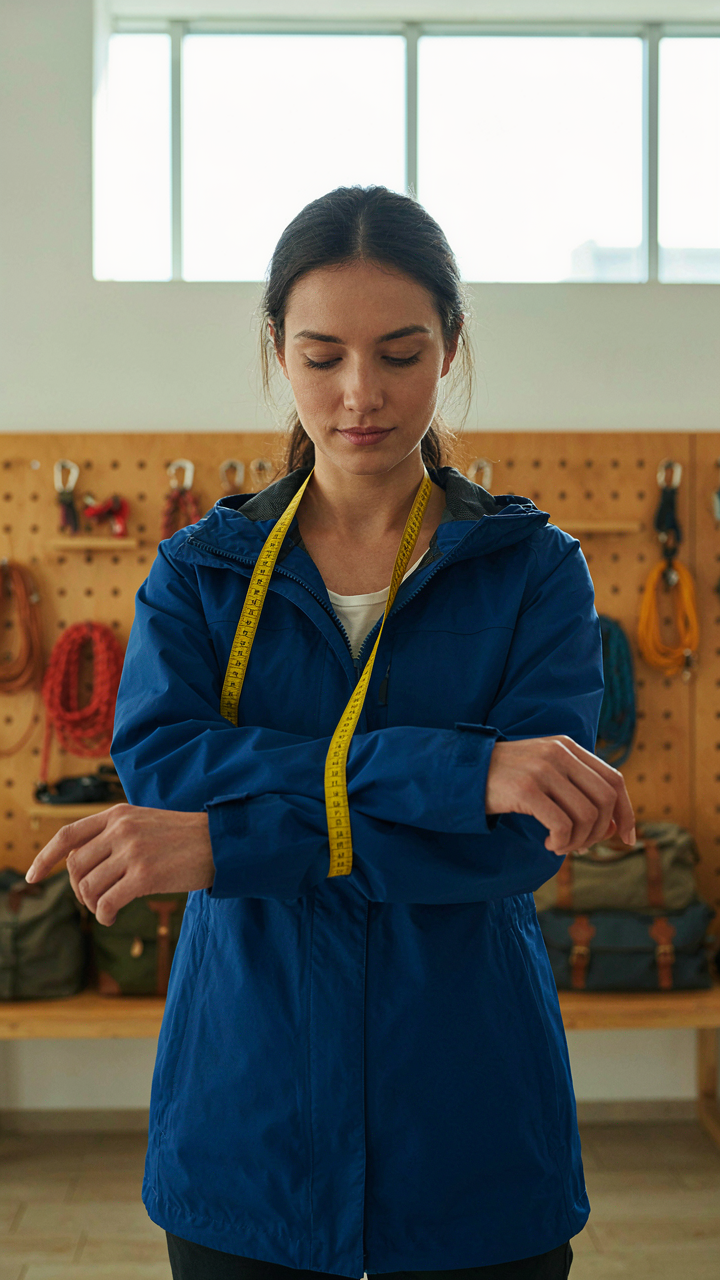
Rainy season hiking demands precision. A jacket cut for average frames leaves excess fabric bunching at your shoulders and sleeves riding past your wrists, which channels water down your arms instead of shedding it. An overly long torso ruins pack belt positioning, which destabilizes your load. Generic petite sizing sometimes solves this, but often doesn’t because “petite” is marketing shorthand, not biomechanics. You need to measure your actual dimensions against spec sheets, not trust the label on the tag.
Torso, Sleeves, And Inseam Specs

Fitting rain gear works like tailoring in ballistic engineering: every millimeter of sleeve length or torso position changes how the shell handles water flow and load transfer. Start by measuring your torso length from the base of your neck to your hip bone, then compare it to the jacket’s listed torso measurement. Most petite-sized rain shells sit one to two inches shorter overall, which helps, but doesn’t guarantee the shoulder seam lands right. Check sleeve length from the center back neck to your wrist bone when arms hang relaxed. Inseam matters less for rain jackets than for pants, but matters heavily for rain pants because improper length either pools at your ankle or rides too high.
- Torso measurement: Base of neck to hip bone. Compare to listed jacket torso length. Aim for one inch past hip bone for pack belt clearance on rainy descents.
- Sleeve length: Center back neck to wrist bone, arms relaxed. Your sleeve should end at the wrist crease. Longer sleeves bunch at cuffs and trap water inside gloves.
- Inseam: Crotch seam to inside ankle bone. Rain pants should hit just above or at your hiking boot collar. Too long collects mud; too short limits stride on steep terrain.
- Shoulder seam position: Measure from outer shoulder to outer shoulder. This should align with your actual shoulder width within half an inch. Off-spec shoulders kill load bearing and water shedding.
- Armpit girth: Measure under one arm from center chest to center back. This determines if pack straps sit on fabric or skin. Undersized armholes restrict shoulder movement in steep rain.
Most petite-specific gear still carries too much sleeve and torso length because manufacturers optimize for median petite sizing, not outliers. Measure before buying. Many technical brands now publish full spec sheets in metric and imperial—use them. Order the smallest adult size if petite options don’t match your measurements, then have a tailor modify inseam and torso length. A fifty-dollar alteration beats a hundred-dollar misfitted jacket that fails during a rainstorm at five thousand feet.

Beyond “Waterproof”: Understanding Fabric Performance For Rainy Hiking Outfit
Hydrostatic Head And Breathability Ratings Decoded
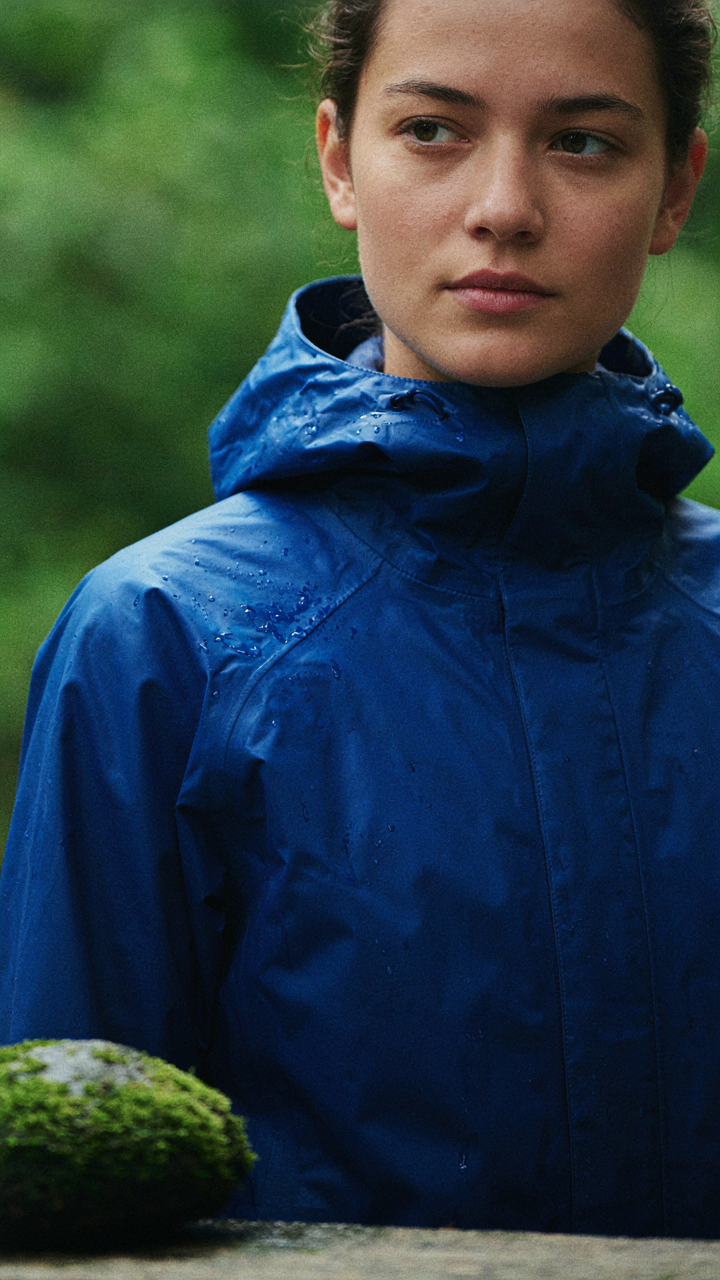
You’re buying gear hoping the label will tell you the truth so you don’t have to think about it yourself. It won’t. Hydrostatic head is a physics measurement, borrowed from materials science, that quantifies how much water pressure a fabric withstands before leaking. For petite women, this number matters because your smaller frame means less body heat radiating outward to dry accumulated moisture inside the jacket. A 10,000mm rating stops most rain; 20,000mm handles sustained downpour and waterfall spray without degradation.
Breathability ratings measure vapor transmission in grams per square meter per 24 hours. Higher numbers mean moisture escapes faster, keeping you dry from sweat. The tension here is real: membranes that block water often trap vapor. A 10,000mm hydrostatic head paired with 8,000g breathability works for most rainy season hikes under two hours. Beyond that duration, you need at least 12,000g breathability or you’ll spend the descent clammy and uncomfortable. Test your actual jacket in humid conditions before committing to a full day on the trail.
DWR Vs. Membrane Choose Wisely
The common advice treats DWR and membrane coatings as interchangeable. They’re not. DWR is a surface treatment that makes water bead and roll off. It’s temporary, washing out after 15 to 30 wears depending on the product and your care protocol. Membrane is a bonded layer engineered to block water molecules while allowing vapor through. DWR alone fails fast in genuine rain. Membrane alone works but feels stiff and plasticky in your hands.
Smart layering combines both: DWR on the outer shell for initial moisture shedding, membrane underneath for sustained protection. For petite women, this dual approach matters because you’re more sensitive to bulk and weight. A thin DWR treatment reduces the membrane’s thickness requirements, keeping your jacket packable and light. Reapply DWR every ten to fifteen hikes using a wash-in treatment or spray. This maintenance step is non-negotiable if you want your membrane to stay functional past two seasons of regular use.
The Unseen Enemy: Moisture Management Beyond The Jacket

What Your Base Layer Actually Does
You care about this because a wet base layer turns your core temperature into a liability, and nobody wants to be the person shivering on mile four. The real mechanism is simple: a base layer’s job isn’t to keep you dry—it’s to move sweat away from your skin fast enough that evaporation doesn’t cool you down. Synthetic and merino both do this, but through different paths.
Synthetic materials like polyester and nylon are hydrophobic. They actively repel water and dry quickly because moisture sits on the fiber surface rather than absorbing into it. Merino wool is hygroscopic—it pulls moisture into the fiber itself, which sounds worse until you realize this process generates heat as a byproduct. For petite women on rainy hikes, synthetic wins in true downpour conditions because it’s faster. Merino wins in light rain and variable conditions because it regulates temperature better and won’t chill you as fast when wet. The choice depends on your rain intensity, not on marketing claims about “natural” or “technical.”
The Heat Trap Layer
Mid-layer strategy borrows from thermodynamics: you’re building an insulation sandwich where the middle piece must trap air while rejecting moisture. Without this layer working correctly, your jacket becomes useless because dampness moves straight through to your outer shell.
- Fleece weight matters for petite builds: Lightweight fleece (100-200 weight) compresses small enough to layer without bulk, while maintaining air pockets that insulate wet skin. Heavier fleece adds volume petite women don’t need.
- Grid fleece over solid fleece: The textured grid pattern breaks capillary action, pushing moisture laterally toward edges instead of straight up to your jacket. Solid fleece traps moisture longer against skin.
- Fit precision prevents convection loss: A mid-layer that’s too loose lets warm air escape around your torso. Petite-cut versions keep that insulating layer tight without restricting arm movement.
- Synthetic mid-layers outperform wool here: While merino excels as a base, synthetic mid-layers dry faster and maintain loft when damp. Wet fleece flattens regardless of material, but synthetic recovers loft as it dries.
- Pit zips create pressure relief: On intense climbs, moisture builds faster than any layer can shed it. Pit zips let you dump heat without removing your mid-layer, dropping core temperature without exposing your base to outside air.
Your mid-layer’s real job is finishing what your base layer starts. If your base layer moves moisture outward and your mid-layer pushes it sideways and up into your shell, your outer jacket becomes an actual vapor barrier instead of a trap. Most hikers skip mid-layer testing entirely and blame their jacket, which is backwards. Test your mid-layer in light rain first, then commit to a system where the three layers work as one unit.
Footwear Fallacy: Ankle Support Isn’t Just For Big Boots

Why Low Profile Beats High Cut
You want ankle support because you’re afraid of rolling your ankle on uneven terrain. The real mechanism is leverage, borrowed from physics. A tall boot creates a longer moment arm above your ankle joint, which actually increases rotational stress on the ligaments during lateral movement on wet, slippery ground. Petite women hit a specific advantage here: your lower center of gravity and shorter leg length mean you need less stabilization hardware than the generic advice assumes.
Low-profile waterproof hiking shoes outperform heavy boots in rainy conditions because they reduce the rotational forces your ankles must absorb. The shoe sits closer to your foot’s natural pivot point, transferring weight more directly through your leg. Wet rocks and mud don’t reward bulk, they reward responsiveness. Your foot stays alert to terrain changes instead of being locked into an elevated platform that fights against your smaller frame’s natural balance mechanics.
Sock Strategy Over Brand
This is where most hikers waste money on expensive merino wool without understanding the actual blister mechanism. Friction between your foot and the sock comes from moisture saturation and inconsistent pressure zones, not material alone. Sock height matters more than you think: crew-length socks (mid-calf) protect the vulnerable zone where your shoe collar rubs during downhill descents, especially when your proportionally smaller feet shift inside standard-sized boot wells.
Pair a merino wool or synthetic blend crew sock with a thin polypropylene liner sock underneath. The liner wicks moisture away from skin directly, while the outer sock handles the bulk moisture load without bunching. Change socks at the halfway point during rainy hikes, even if they don’t feel soaked yet. Wet fabric degrades quickly, and prevention beats treatment when you’re miles from the trailhead.
The Kinetic Harmony Protocol: Fluid Movement In Downpour
Lower Center Of Gravity Advantage
You want to know this section because you’re worried wet rocks will betray you mid-hike. The biomechanics field calls this concept “stability margin”—the distance between your center of gravity and your base of support. Petite women have a natural advantage here. Your lower mass sits closer to the ground, which means less rotational force needed to maintain balance on slick terrain. Taller hikers fight physics. You don’t. Capitalize on it with fitted layers that don’t shift your weight distribution or create dead zones around your torso.
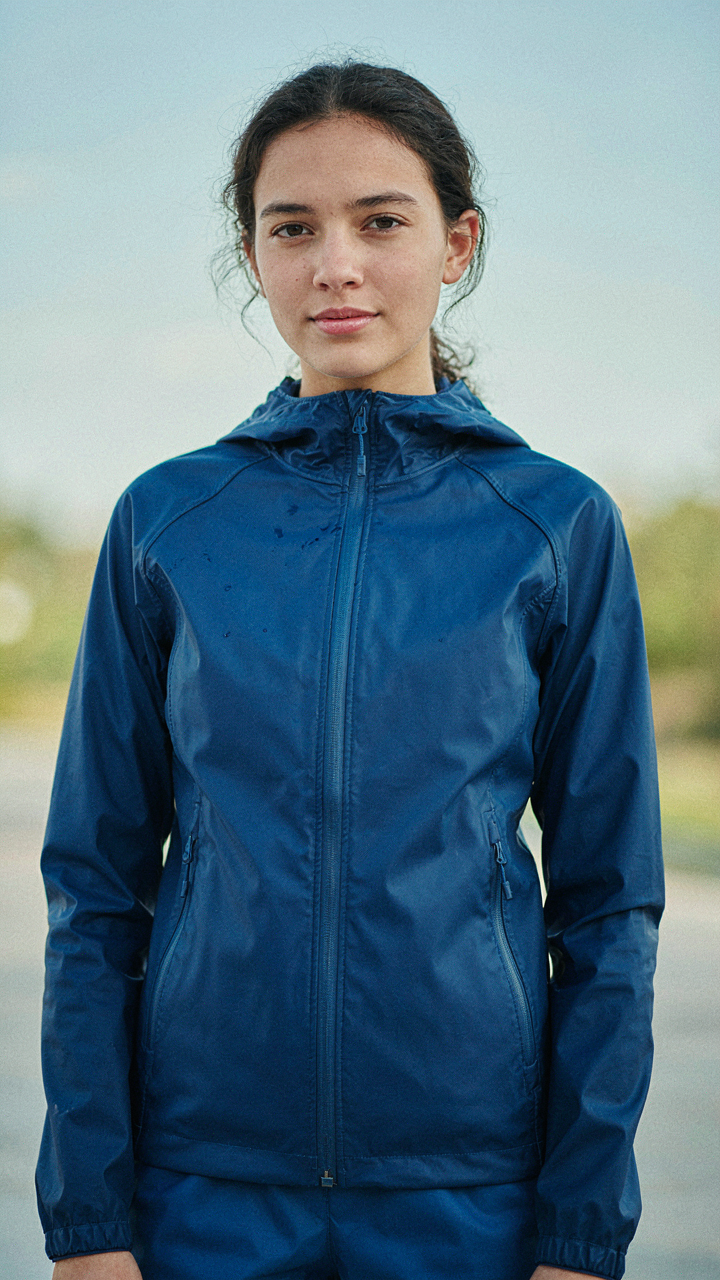
Wet conditions demand precision over bulk. Oversized rain jackets and pants create lag between your body’s intention and your limbs’ response. That quarter-second delay costs balance on scrambles. A petite-cut shell that hugs your frame keeps your nervous system directly connected to terrain feedback. Your proprioception works best when nothing floats between skin and ground contact. Choose tapered rain pants with a higher rise designed for shorter inseams. The fit keeps weight centered over your feet, not pooling at your ankles where it throws off your gait on steep descents.
Dynamic Range Without Restriction
Rain gear that binds your shoulders kills your ability to stabilize during tricky footwork. When you move through water-logged terrain, scrambling demands full overhead mobility and lateral reach. Standard rain jackets designed for average frames force your arms into a compromised range. You need strategic cut points that unlock movement. Look for shells with drop-shoulder construction and gusseted underarms. These features give you the full reach needed to catch balance on rocks without the jacket riding up or creating pressure points.
Petite-specific rain pants should have a reinforced crotch gusset and articulated knees. These details aren’t cosmetic. They let your legs bend deeper into a squat position without the fabric pulling or tearing. Wet scrambling means unpredictable foot placement and constant micro-adjustments. Your outfit needs to absorb that range without fighting back. Test mobility before you buy: squat fully, reach overhead, simulate a climbing movement. If fabric bunches or pulls, it will fail on rain-slicked stone.
The Pack Paradox: Your Bag’s Role In Your Rainy Hike Outfit

Pack Cover Versus Waterproof Pack: Which Performs
You want to believe one solution exists so you don’t have to think about this again. The mechanism is simple: a pack cover adds a layer that sits loose against your bag, creating air pockets that trap water. A waterproof pack has no air gap. Physics favors the waterproof pack, but only if the seams hold.
Pack covers fail because hikers assume they stay positioned during movement. They don’t. A cover shifts, bunches, and exposes seams after thirty minutes of hiking. Waterproof packs use taped seams or welded construction that doesn’t degrade the way fabric does. For petite women carrying lighter loads on shorter trails, a cover works. For rainy season hiking where you’re wet for hours, a waterproof pack or a pack with a sealed rain liner is the actual answer.
Internal Dry Bags For Critical Items
Your gear splits into two categories: gear that fails when wet, and gear that doesn’t. Only the first category belongs in dry bags. Most hikers stuff everything inside, which defeats the purpose and adds dead weight you don’t have room for at a smaller frame.
Phone, map, first aid kit, and fire-starting materials go into individual dry bags using roll-top compression. Don’t use one large dry bag and pile everything in. Small, separate bags let you access what you need without unpacking your entire pack. Compression dry bags reduce volume by thirty to forty percent compared to traditional stuff sacks, which matters when your pack is already tight. After the bag closes, test the seal by submerging it in water for sixty seconds before your hike.
Head To Hand: Protecting Extremities In Rainy Outfits Women
Wide Brim Hats That Stay Put
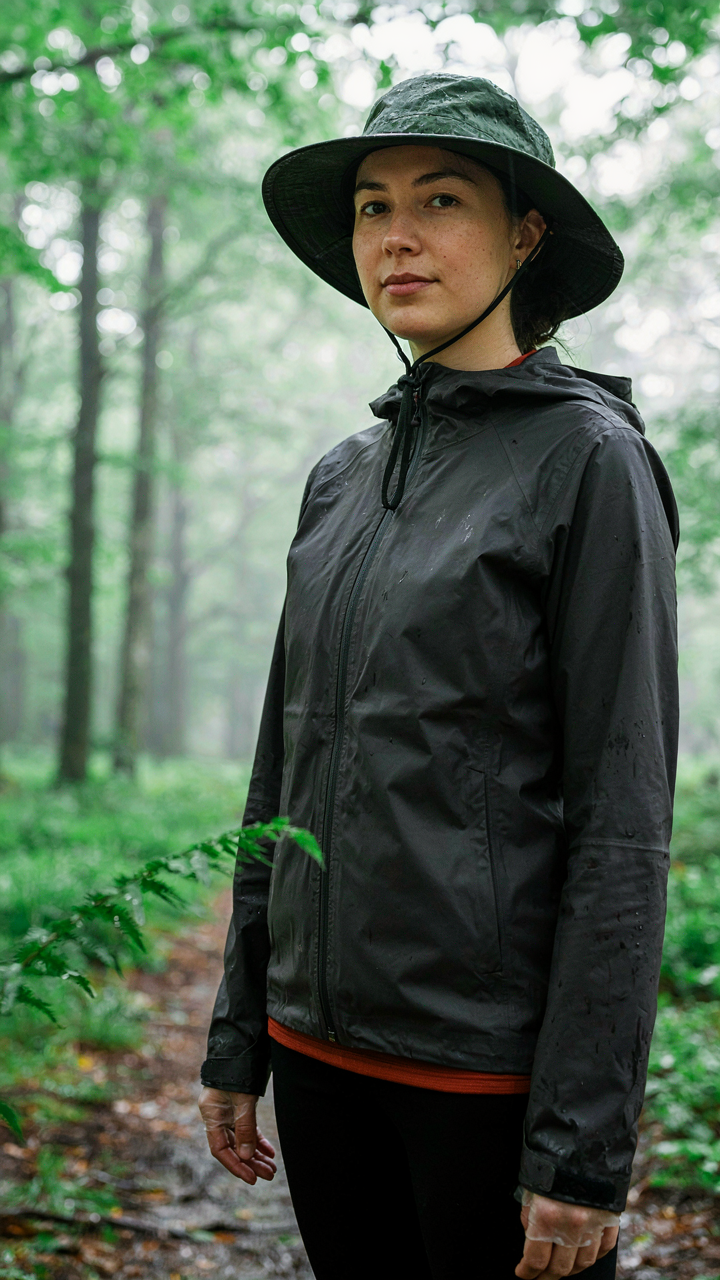
You want the hat to make you look intentional, not desperate. The real mechanism is simple: rain runs off fabric edges, and a wide brim controls where that water goes—away from your face and neck. For petite women, oversized brims create a visual imbalance, so you need a hat scaled to your frame. A brim between two and three inches works. Anything wider reads as costume.
Material matters more than size. Nylon and polyester with DWR coating shed water without absorbing it, unlike cotton. The crown height should match your proportions—lower crowns on smaller frames prevent the hat from dominating your silhouette. Secure it with a chin strap that doesn’t slip. A hat that shifts in wind defeats the entire purpose of wearing one.
Grip And Warmth Without Bulk
Most hiking glove advice ignores what petite hands actually need. From a biomechanics standpoint, smaller hand surface area loses heat faster, requiring better insulation per square inch. Standard gloves gap at the wrist and add unnecessary volume that kills dexterity on technical terrain.
Look for gloves with tapered fingers and sealed seams, not chunky padding that creates dead space. Neoprene or merino wool liners under a thin waterproof shell layer trap warmth efficiently. Test grip on wet rocks before you buy—squeeze a textured surface to confirm your fingers don’t slip. Your gloves need to be tight enough that you feel the trail, loose enough that circulation doesn’t shut down in cold rain.
The Underestimated Advantage: Smart Accessories For Rainy Days
Gaiters: The Unsung Hero Of Dry Legs
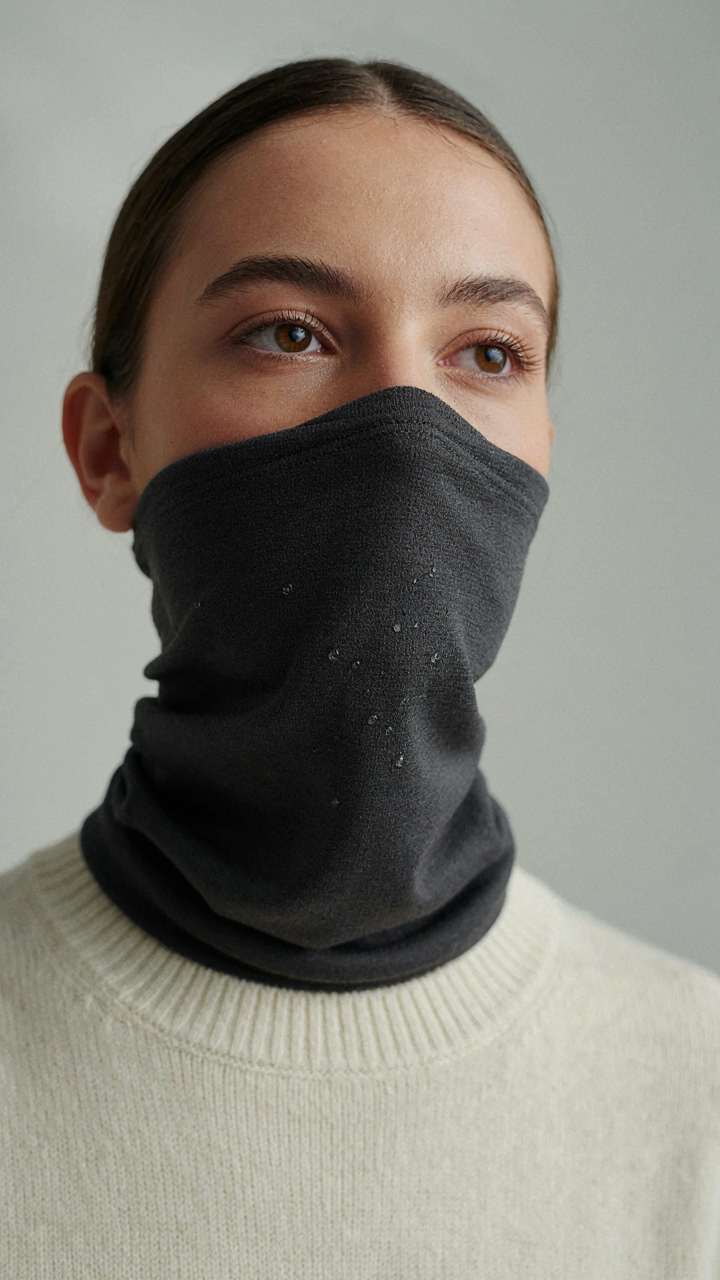
You want to look put-together on the trail without admitting you’re terrified of soggy socks ruining your day. Gaiters solve this by acting as a physical barrier between your lower leg and the ground. Water, mud, and debris hit the gaiter first, not your hiking boot or pant leg. For petite women, this matters more because shorter inseams mean your pants already sit higher on your ankle, exposing more skin to splash and saturation. A gaiter wraps around your lower calf and over your boot, creating a seal that keeps moisture out.
The mechanism is simple friction and coverage. Gaiters don’t need to be expensive or technical. Fabric gaiters work fine in moderate rain and function better than Gore-Tex versions for petite frames because they fit tighter without bunching. Measure your calf circumference and choose gaiters that cinch snugly with the lower strap running under your boot arch. This prevents the gaiter from riding up during steep descents, which happens constantly to petite hikers because our shorter limbs mean sharper leg angles on standard trail grades. Cinch them before you leave the trailhead, not halfway through when water has already soaked in.
Trekking Poles For Stability And Testing Puddles
Most advice on trekking poles ignores why petite women actually need them on wet terrain. Physics calls this the stability triangle: your base of support expands when you add contact points to the ground. Two feet alone create narrow leverage. Four contact points (two feet, two poles) create a wider, more stable base. On rain-slicked rocks and muddy descents, this matters more for someone carrying a proportionally higher percentage of body weight as a petite frame.
Poles also let you test ground before stepping. On rainy trails, mud hides depth. A puddle might be two inches or two feet. Thrust a pole ahead and into that water before committing your full weight. You’ll feel the bottom, assess stability, and adjust your footing. Use trekking poles with cork or foam grips because rubber grips become frictionless when wet. Adjust pole length so your forearm stays parallel to the ground when the pole tip touches soil. For petite women, this typically means collapsible poles set to their shortest recommended length, roughly four to eight inches shorter than standard adjustments.
The Post Hike Reality: Gear Care Extends Life
How Water Leaves Your Shell
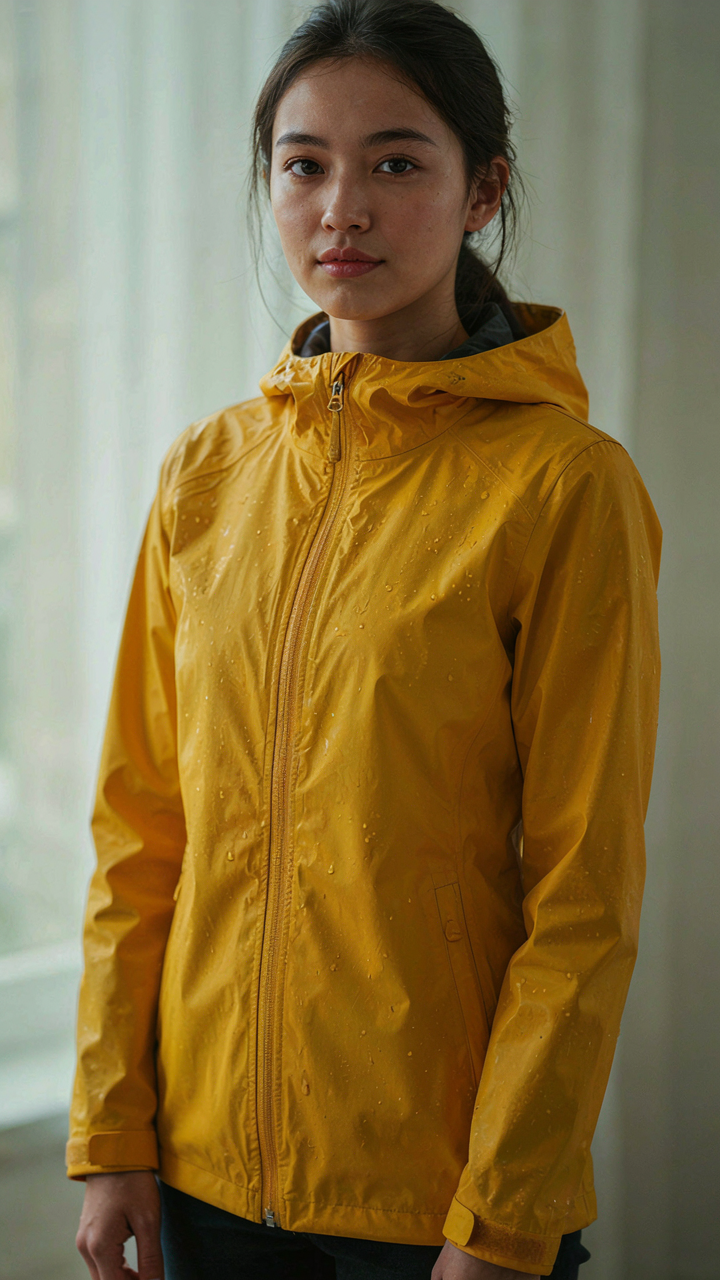
You’re buying premium gear so you don’t have to replace it next season. That’s the real reason you care about drying. Here’s the mechanism: moisture trapped inside synthetic or down insulation breaks down the materials from within. Air circulation is what stops this. Hang wet shells vertically in a space with moving air, not a closed closet. Petite-sized jackets dry faster than standard cuts because there’s less fabric mass to expel water from. Don’t hang by the hood or sleeves—use a hanger that supports the garment’s body weight evenly to prevent stretching shoulder seams.
The common mistake is using heat to speed drying. Dryers and radiators damage waterproof membranes and break down synthetic fibers. Open air with decent ventilation works. If you hiked in rain, wring out excess water from cuffs and seams before hanging. Interior pockets trap moisture longest, so leave them open. Most shells dry fully in twelve to eighteen hours depending on humidity and fabric weight.
Restoring The Invisible Barrier
Physics governs how water beads on fabric, and the term from material science is “surface tension.” Your jacket’s DWR coating is just that—a chemical treatment that reduces surface tension so water rolls off rather than soaking in. It wears down from friction, body oils, and repeated washing. When water stops beading and instead darkens the fabric, your DWR is gone.
Wash your jacket in cool water with a specialized technical cleaner designed for DWR restoration, not regular detergent. Standard soap leaves residue that blocks the coating from working again. After washing, dry the jacket on low heat or air dry completely. Heat reactivates the DWR chemicals and restores beading. Do this every two to three seasons for petite-sized jackets, or whenever you notice water no longer rolls off. Reactivation takes minutes and costs far less than replacing a jacket.
No Style Points For Hypothermia: Prioritizing Function Over Fashion
The Real Reason You Care About Looking Good On A Trail
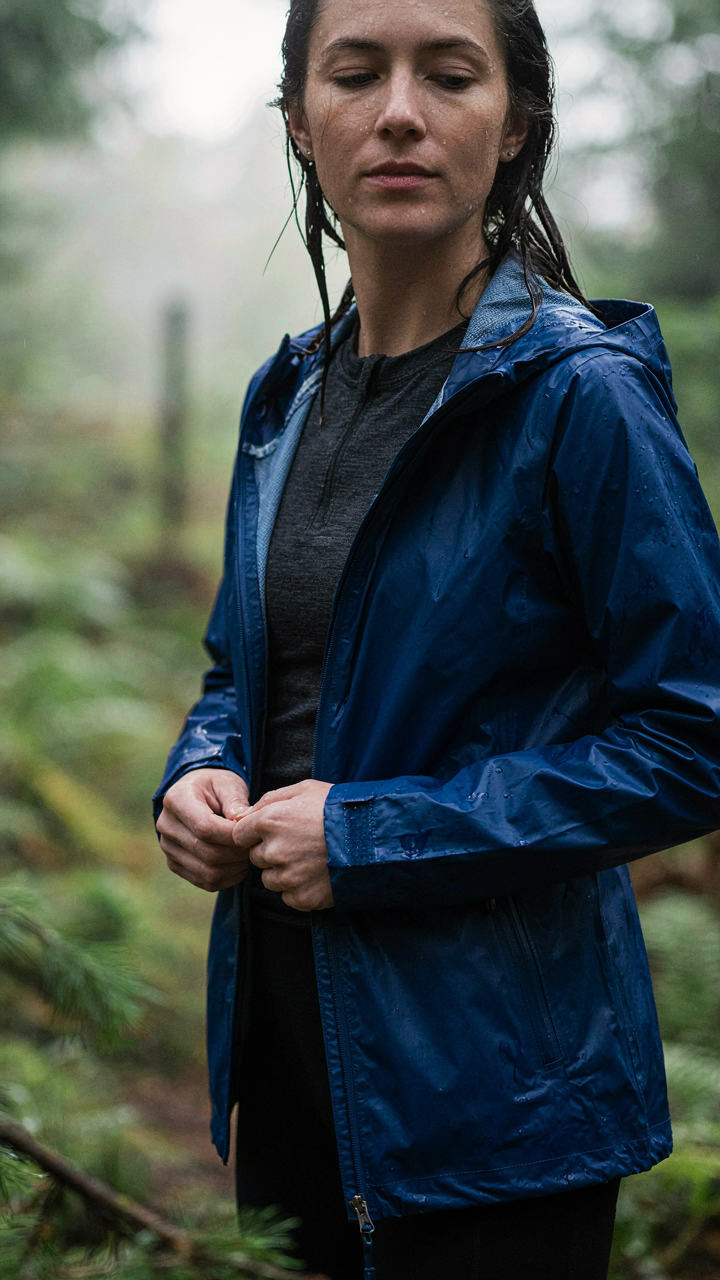
You want to feel put-together on the trail because you’re afraid looking bad means you’re unprepared. That fear is actually useful. But here’s what gets skipped: thermal regulation operates on physics, not preference. Your body loses heat through four mechanisms—radiation, convection, conduction, and evaporation—and a petite frame has higher surface-area-to-mass ratio, meaning you shed warmth faster than average-sized hikers. Tight, fashionable layers trap moisture and accelerate heat loss through evaporation. Loose, unflattering technical gear prevents that loss. The mechanism isn’t negotiable.
The industry sells you “cute hiking outfits” because aesthetic appeal drives repeat purchases. What actually keeps you alive in rain is fabric that sheds water, fit that allows airflow without exposing skin, and materials that retain insulation when wet. A petite woman in wool base layers two sizes too small because they look streamlined will experience rapid core temperature drop. Function means buying pieces that fit your actual measurements, not the Instagram version of your measurements. Your outfit’s job is to keep you breathing, not to earn compliments at the trailhead.
When Comfort Takes A Backseat To Consequences
Most hiking guides tell you “find what feels comfortable.” That’s incomplete advice that kills people. Comfort is subjective and often masks poor decisions—wool feels itchy, so you skip it for cotton that feels better but fails in wet conditions. Hypothermia doesn’t announce itself with sharp pain or obvious warning. It arrives as confused thinking, poor judgment, and the false sensation of warmth. A petite woman on a rainy six-hour hike wearing a fashionable rain jacket that’s too large (creating convection pockets) over cotton layers will experience core temperature drop before recognizing the problem.
The real consequence isn’t discomfort—it’s becoming a rescue statistic. Sacrificing function for aesthetics on a rainy hike means prioritizing how you look during the first two hours over whether you can think clearly by hour five. Petite women face a specific trap: standard sizing assumes a longer torso-to-leg ratio than you have, so “fitted” jackets gap at the waist and let rain channel directly onto your core. Your outfit prevents this by matching your actual proportions, wearing base layers one size down in chest and two down in length, and choosing water-shedding shells with tapered waists. Check your outfit’s fit before you leave the parking lot, because hypothermia clouds judgment too late.
The True Obstacle Isn’t Your Size; It’s Succumbing To Marketing That Underestimates Your Capability

Gear companies built an empire on convincing you that your body needs special treatment. It doesn’t. You need function over fashion, layers that actually work, and the audacity to ignore sizing charts designed by people who’ve never hiked. Pull your rain jacket from your closet today and test it on a steep incline. Your size isn’t the limitation. Your willingness to move anyway is.