

The Myth Of Waterproof: Why Your Gear Fails

The Paradox Of Breathable Barriers
You’re buying waterproof gear because you think it solves rain, but what actually breaks your setup is the moisture you generate yourself. Here’s the physics: a fabric can’t be simultaneously impermeable to liquid water and permeable to water vapor. The moment you seal out rain, you trap sweat. Jackets marketed as “waterproof and breathable” use a membrane that exploits a size difference between water droplets and vapor molecules, but this only works when there’s a temperature gradient pushing vapor outward. In practice, when you’re moving uphill in humid rain, that gradient collapses.
The real failure mode isn’t a hole in your jacket. It’s saturation. Your inner layer wicks moisture to the shell. The shell blocks it from escaping. Humidity builds. You feel cold not because rain leaked in, but because your microclimate became a sauna with no exit valve. Most men blame their gear when the problem is stacking three layers designed for different conditions. You need a system that actively moves moisture away from skin, not a single expensive shell that promises to do everything.
Sweat Breaks Your Setup Before Rain Does

Your sweat output during moderate hiking climbs to two liters per hour in humid conditions, and no breathable membrane moves that volume fast enough. Most hiking outfits fail on the inside, not the outside. The conventional advice is to wear “moisture-wicking” synthetics, but that term is marketing noise. Wicking doesn’t mean the moisture disappears. It means the fabric pulls water away from your skin into its fibers, where it sits in the weave. If the shell can’t exhaust that volume to the air, you’re just extending the journey time before saturation.
The protocol that works: wear a thin base layer that dries quickly even when damp, add a mid-layer with actual insulation only if temperature demands it, and choose a shell designed for high-output venting, not maximum waterproof rating. Pit zips, back vents, and full-length side zippers aren’t luxury features. They’re extraction systems. Undo your shell completely when you stop. Let air circulate. Moisture moves through air faster than through any fabric. This single habit prevents the internal collapse that turns an expensive jacket into a sweat trap.

The Layering Protocol: Beyond Just Adding Clothes

Your Skin’s Second Line Of Defense
You want to look prepared without looking paranoid. The real mechanism is this: wet skin loses heat thirty times faster than dry skin. That’s thermodynamics. Your base layer job is simple—move moisture away from your body, not trap it. Cotton does the opposite. Merino wool and synthetic polyester pull sweat outward so it can evaporate or drip off without cooling your core. The fiber matters more than thickness here.
Most hikers grab whatever synthetic shirt they own. That’s incomplete. You need fabric with consistent fiber structure that won’t pill or compress when wet, reducing its wicking speed. Merino wool handles temperature swings better—it regulates even when damp. Synthetics dry faster. Pick based on your hike length and how much you sweat. The base layer sits against skin for hours. Get this wrong and no mid-layer saves you.
Warmth That Doesn’t Trap Water
Insulation physics teaches us one principle: dead air pockets hold heat, not the material itself. A fleece mid-layer creates thousands of tiny air gaps. Wet conditions demand materials that retain insulation even when damp—fleece works, down fails catastrophically. Polyester fleece or wool both trap warm air while allowing vapor to pass through, unlike solid jackets that compress and lose function. This is what separates working systems from gear graveyard mistakes.
The mid-layer doesn’t need to be thick. R-value per ounce matters more than bulk. Lightweight grid fleece moves moisture faster than dense fleece while keeping you warm. Wear it over your base layer only when temperature drops below fifty-five degrees or wind accelerates. Remove it if you start sweating during climbs. The protocol is add mid-layer, monitor core temperature, strip it before sweat builds. Most men skip the strip step and hike damp under extra insulation.
Strategic Shell Selection: Gortex Style Men Demystified
Hard Shell Vs. Soft Shell: Knowing The Battlefield
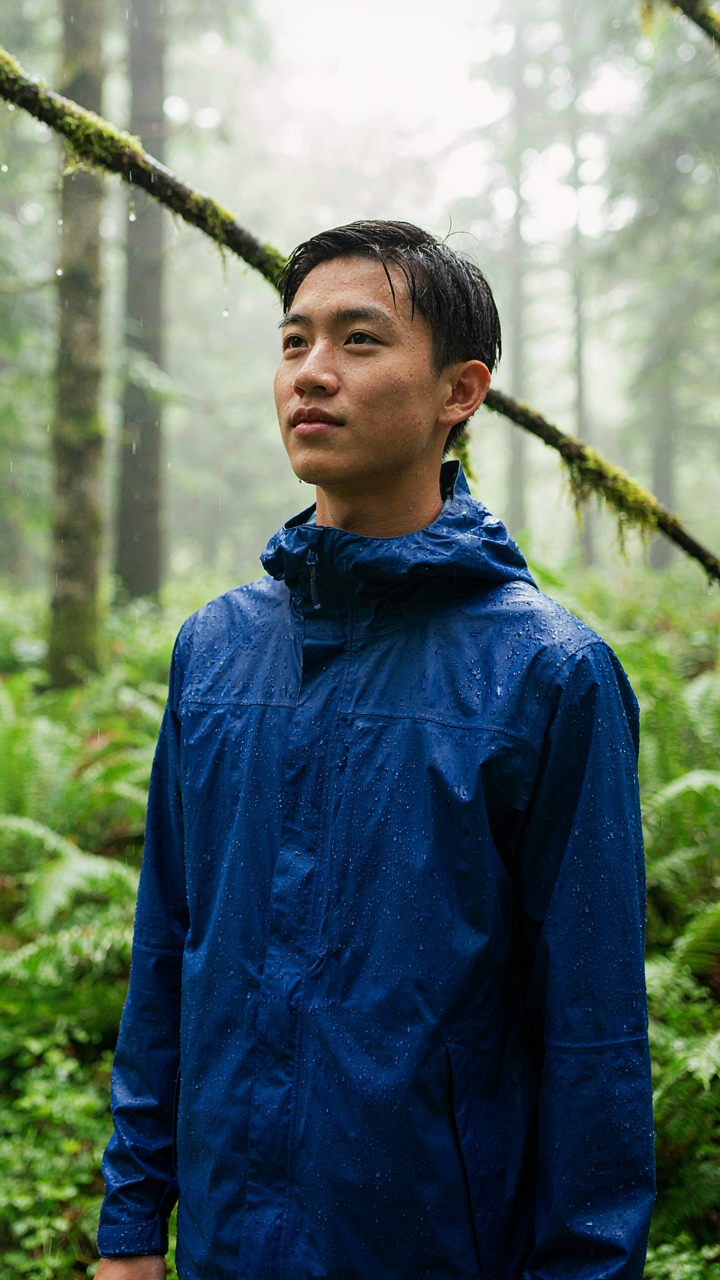
You want the right jacket because you’re afraid of being wet and cold, which is rational, but you’re also buying status through gear knowledge. Here’s the mechanism: hard shells and soft shells solve different problems. Hard shells use rigid fabrics with sealed seams to block water completely. Soft shells sacrifice some waterproofing for breathability and mobility. Neither works in all conditions. The military distinction is load-bearing capacity under duress. A hard shell blocks rain. A soft shell blocks wind and light precipitation while letting moisture vapor escape faster.
Hard shells work when rain is the only variable. Soft shells work when you’re generating heat through exertion and need water vapor to escape. Pick hard shell for stationary or low-output hiking in heavy rain. Pick soft shell for steep climbs in intermittent rain where you sweat more than rain falls. Combine them in a layering system instead of choosing one and pretending it handles everything.
DWR Coatings: Temporary Fixes, Not Magic
The common advice treats DWR as permanent protection, which is incomplete. DWR (Durable Water Repellent) is a chemical coating applied to the outer face of fabric. It causes water to bead and run off instead of soaking in. Over time, dirt, body oils, and washing break down the coating. DWR doesn’t waterproof anything by itself. The actual waterproofing happens in the membrane or laminated layer underneath.
Reapply DWR every six to twelve months of regular use if you want the beading effect back. Wash your jacket periodically with technical soap to remove contaminants that degrade the coating faster. Skip fabric softener and bleach entirely. Understand that a jacket loses its water-shedding efficiency before it loses its core waterproofing. When water stops beading and starts pooling on your jacket, your membrane is still waterproof, but your DWR is gone. Refresh it before the fabric gets heavy and uncomfortable.
Footwear Fallacies: Why Your Boots Betray You

Waterproof Myths A Losing Battle
You buy waterproof boots because you want to believe rain won’t touch your feet. That’s the real motive. But here’s the mechanism: waterproofing isn’t a barrier—it’s a temporary delay. Water finds entry points. Sweat builds inside. Seams fail. Gore-Tex membranes clog with dirt. Within two hours of hard rain, your feet are wet. The boot companies won’t tell you this because they sell the illusion, not the physics.
Waterproof ratings mean almost nothing on the trail. Manufacturers test boots in controlled lab conditions, not during a six-hour descent with water cascading off your pack. Your feet generate moisture from inside faster than any membrane can vent it. Stop treating waterproofing as a solution. Treat it as a speed bump that buys you ninety minutes before reality arrives.
Drainage Over Defense Adapt Dont Resist
Hydrology teaches us that water follows the path of least resistance. Apply that to your boots: design your footwear system around drainage, not waterproofing. This means choosing materials that shed water fast and dry quickly rather than trap it. Open mesh panels, aggressive tread patterns, and fast-draining midsoles matter more than sealed seams. Your feet will get wet. The question is whether they dry in two hours or stay waterlogged for eight.
Quick-dry boots with aggressive lugs and ventilation perform better than traditional waterproof models on rainy hikes. Merrell’s grip patterns and Salomon’s cross-terrain designs prioritize water escape over perfect dryness. Pair them with moisture-wicking socks and a spare pair in your pack. Accept wetness as the starting condition, then manage it through material choice and sock rotation instead of fighting it with failed membranes.
The Human Thermoregulation System: A Biological View
Leverage Your Body’s Heat Generation
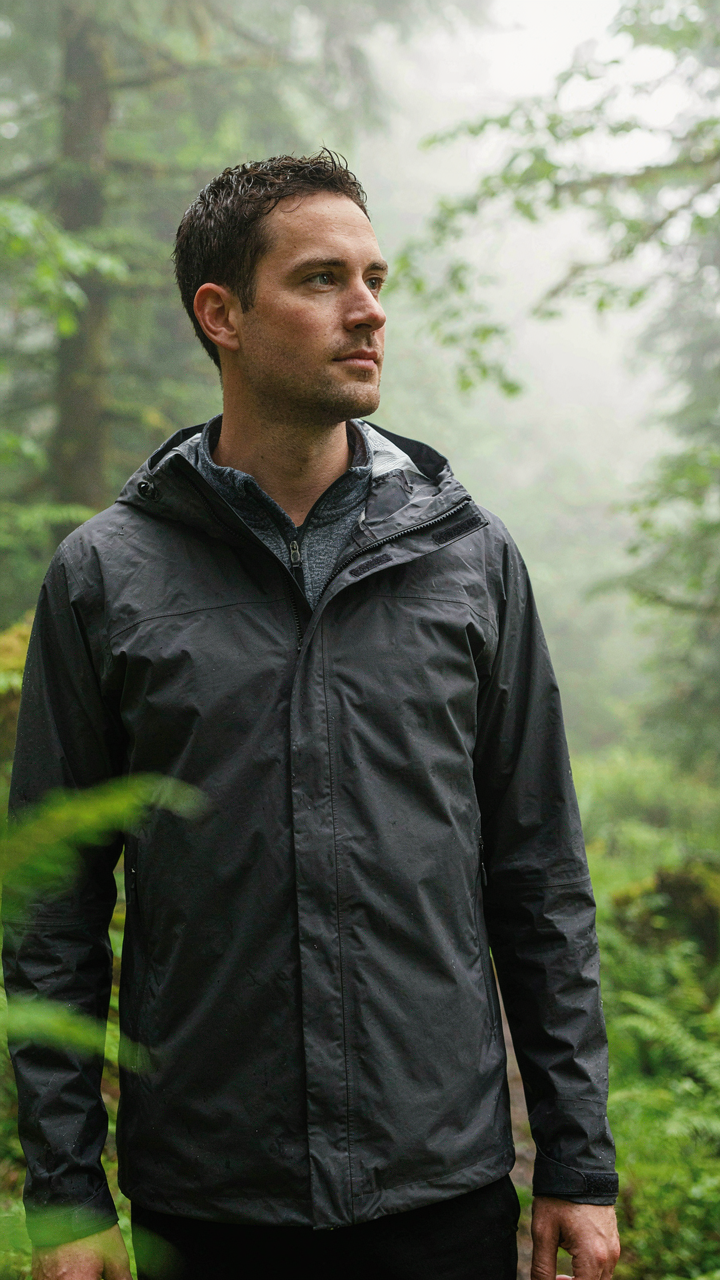
You want to feel comfortable without overthinking layers because comfort signals competence. Here’s the mechanism: your body generates heat through muscle activity, and rain gear either traps or releases that energy. In thermodynamics terms, you’re managing enthalpy—the total heat content of your system. Most hikers treat their outfit as passive insulation. They’re wrong. Your outfit is a heat management tool that works with your metabolism, not against it.
When you hike uphill in rain, your muscles produce significant heat. Cotton and heavy wool trap this heat inefficiently, creating swamp conditions under your jacket. Synthetic and merino materials wick moisture while allowing your core temperature to stabilize. The mechanism is simple: match your baselayer to your output. Start with a thin synthetic or merino shirt that moves sweat away from skin. As you climb, your body maintains its set point without overheating or chilling.
Sweat As A Coolant, Not The Enemy
The common advice says “sweat bad, stay dry.” That’s incomplete. Sweat cools you through evaporation, and rain gear that blocks all moisture also blocks your body’s primary cooling system. You need to manage sweat strategically, not eliminate it. Your midlayer and shell must allow vapor to escape while rain stays out. This is the difference between staying comfortable for eight hours and developing chafe and heat stress by hour three.
Ventilation is the protocol. Open your jacket collar when climbing steep sections, even in rain. This lets sweat vapor escape before it condenses against your skin. Close it when you stop or move to flat terrain. Use pit zips on your shell if available, or keep your jacket unzipped at the chest. Your outfit succeeds when sweat leaves your skin as vapor, not when it pools beneath waterproof fabric.
The Unsung Heroes: Hats, Gloves, And Socks
Head Protection That Actually Works
You want to know why everyone talks about jackets and pants but nobody mentions hats: because a hat feels like admitting you’re not tough enough to handle weather. Thermodynamics doesn’t care about ego. Your head loses heat at a rate disproportionate to its body surface area, and in rain, that loss accelerates. A wet head drains core temperature faster than a wet torso because there’s minimal insulation between skin and skull.
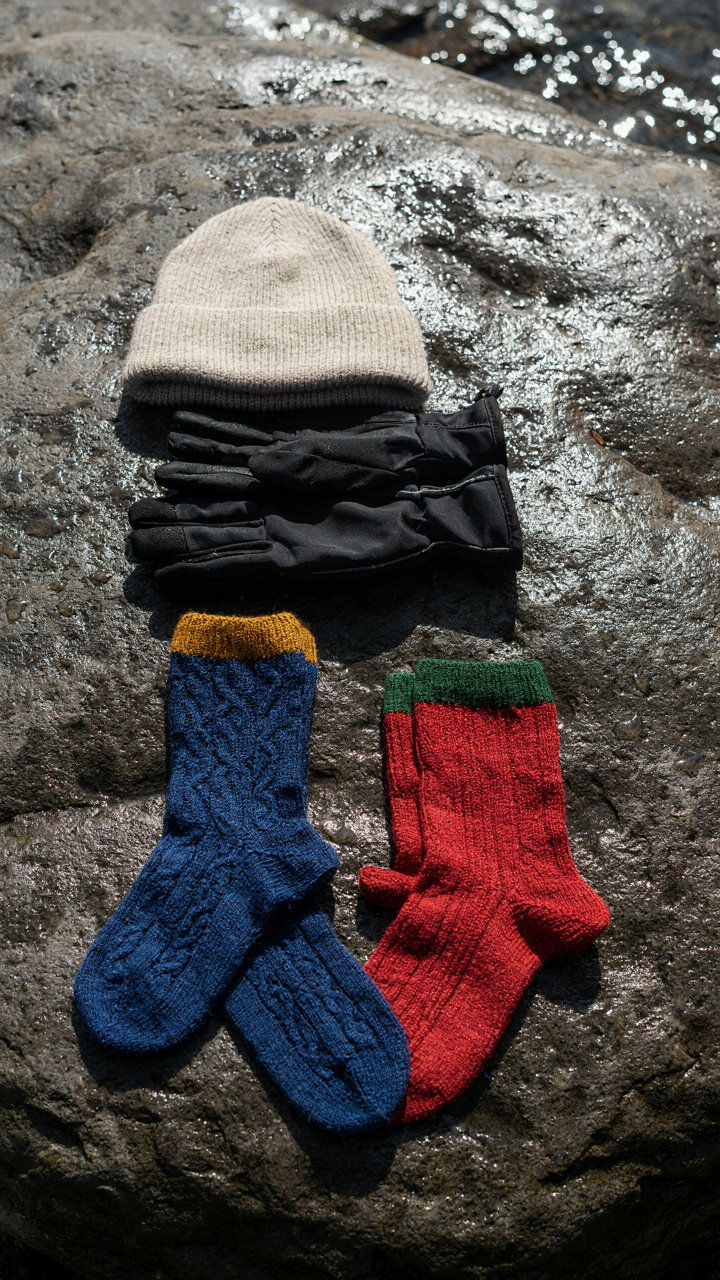
- Merino wool beanies: Retain insulation when wet, unlike cotton. Merino regulates temperature and resists odor buildup over multi-day trips.
- Wide-brimmed rain hats: Direct water away from face and neck. The brim angle matters more than material thickness for rain shedding.
- Skull cap liners: Fit under helmets or hoods without bulk. Designed for mountain guides and rescue teams for a reason.
- Neoprene winter caps: Seal around the ears and neck without restricting airflow. Used in water sports because they work in saturation.
- Convertible hood systems: Attached to jackets to eliminate the gap between hat and collar where rain penetrates. Tested by military mountaineers.
The mechanism is simple: water on the scalp creates evaporative cooling that compounds core heat loss in minutes, not hours. A hat rated for rain isn’t optional. Pick one designed for wet conditions, not dry cold, because the material behavior changes when saturated.
The Grip Between Cold Fingers
Gloves and socks are where comfort becomes survival math, and the common advice is catastrophically incomplete. Most people treat them as afterthoughts when they’re the difference between fumbling a rope and moving deliberately. Wet fingers lose dexterity before they lose sensation, meaning you’ll keep pushing forward while your grip strength collapses without warning.
Choose gloves that balance waterproofing with tactile feedback. Neoprene or treated leather works better than Gore-Tex in sustained rain because Gore-Tex fails under constant moisture exposure, but gloves packed in a jacket pocket stay drier longer than gloves worn during breaks. Socks demand merino wool or synthetic blends that insulate when wet. Cotton holds moisture against skin and kills foot temperature in hours. Change socks at camp before your feet signal distress. The mechanism: wet socks compress the insulation layer and enable conductive heat loss through direct contact with cold ground.
Gorpcore Mens Outfits: Function Over Fashion
The Uniform That Signals Competence
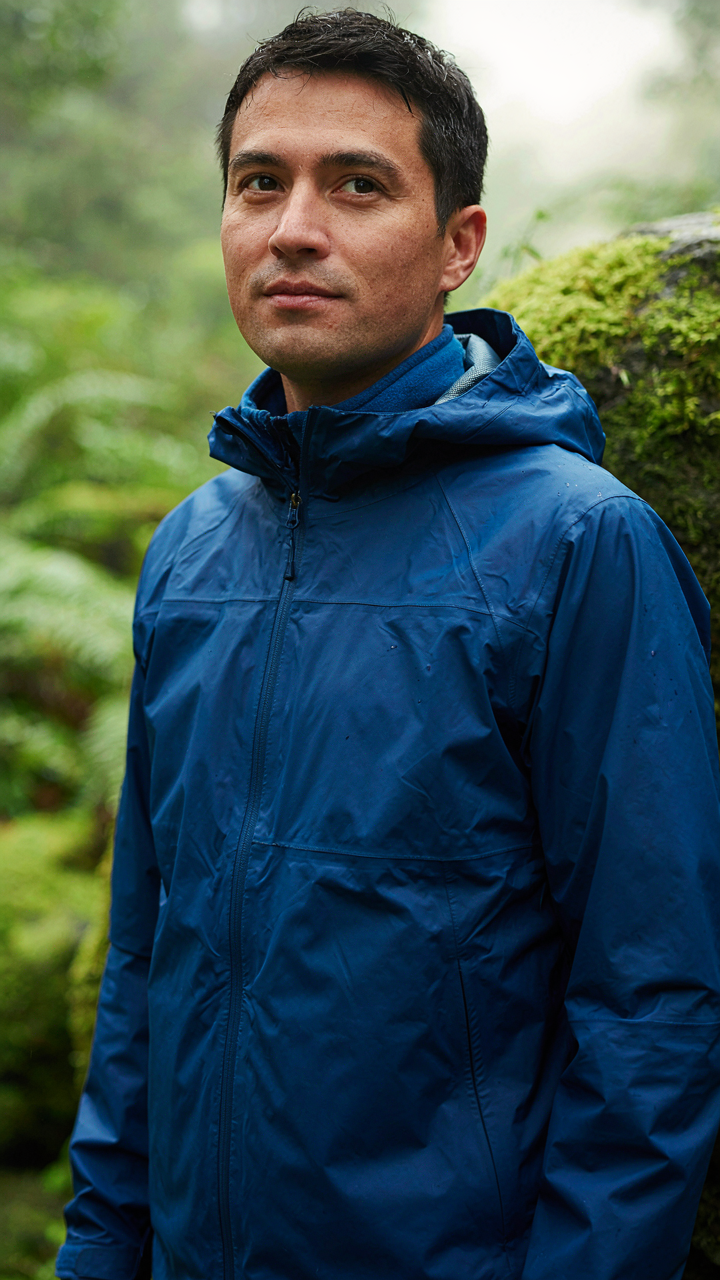
You want people to see you as someone who knows what he’s doing out there. That’s the real pull. Gorpcore flips the script: it abandons the gear-head posturing and instead dresses like someone who actually moves through weather. The aesthetic emerges from constraint, not trend. Military and rescue teams dress this way because they’ve eliminated every choice that doesn’t solve a problem. When rain hammers down, your outfit either works or it doesn’t.
The visual language is brutal. Muted colors. Visible technical details. Pockets positioned for access, not symmetry. No logos meant to impress. This look reads as competent because it is competent. A man in proper gorpcore rainy season gear looks like he’s done this before. Not because fashion said so, but because the clothes prove it through their architecture.
Material Science Over Marketing
Marketing teams built the myth that expensive brands equal better protection. That’s incomplete. The mechanism is material engineering: fiber composition and construction method determine water resistance, breathability, and durability far more than the brand stitched to the seam. Polyester microfibers with DWR coatings shed water faster than marketing budgets ever could. Nylon blends with sealed seams handle repeated exposure without degradation.
Study the actual construction, not the retail price. A mid-range jacket with three-layer laminated fabric and taped seams outperforms premium gear with single-layer shells and marketing. Examine weight, denier count, and whether seams are mechanically sealed or chemically treated. Manufacturers cutting corners use cheaper adhesives that fail in cold wet conditions. Your rain protection lives or dies on whether the maker invested in proper sealing techniques, not whether their catalog appears in lifestyle magazines.
The Preparedness Mindset: Beyond The Gear List
Route Planning Beats Expensive Gear
You want the outfit to do the protecting so you don’t have to think. That’s backwards. The real mechanism comes from military route planning: commanders don’t send soldiers into unnecessary exposure and then hope their uniforms save them. You apply the same logic to rainy season hiking by choosing terrain and timing that minimize weather risk in the first place.
Study the topography before you move. Ridgelines funnel wind and lightning in rainy season. Valley floors collect runoff and mud. Exposed boulder fields turn slick. Pick routes with tree cover, established drainage, and bail-out points. This decision, made at home on a map, does more work than any fabric technology. Your outfit becomes a backup system, not your primary defense.
The Essentials That Actually Matter
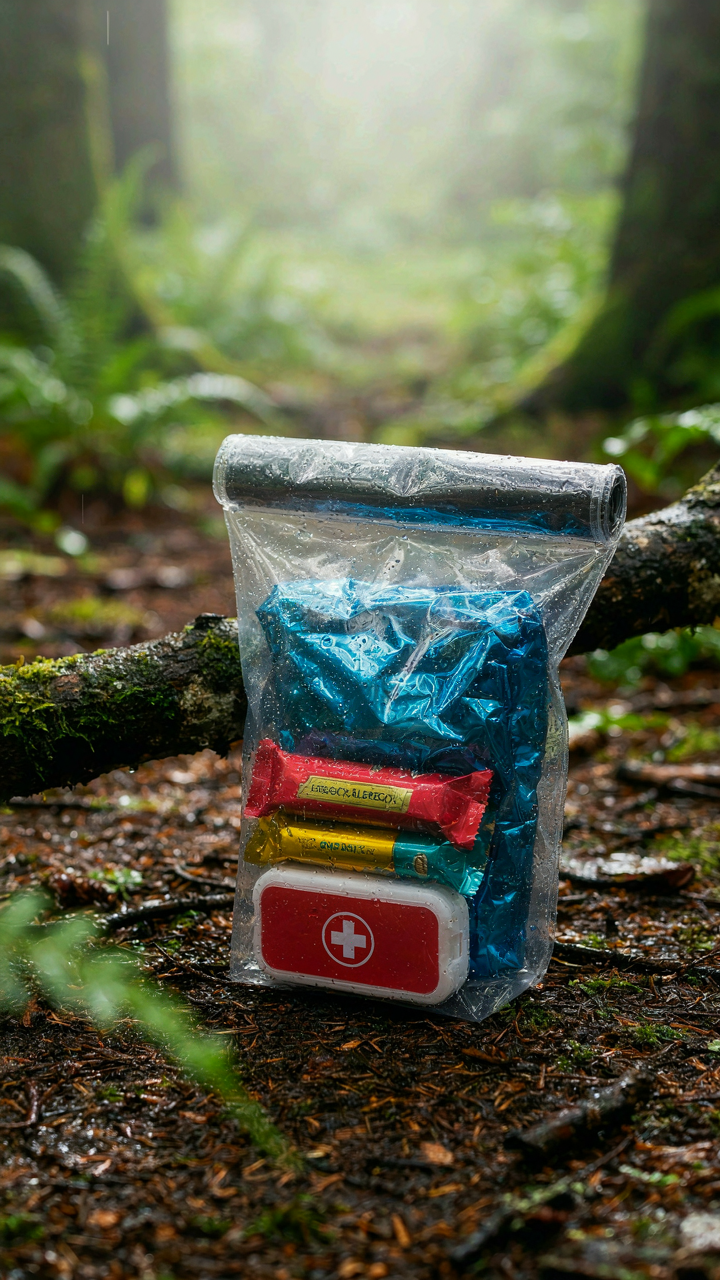
Most hikers treat emergency gear like insurance they’ll never file a claim on. Wrong frame. Think of it like a load-bearing wall in construction: remove one element and the whole structure fails faster than you think. Rainy conditions accelerate problems. Hypothermia arrives quick. Disorientation happens in low visibility. You don’t carry emergency essentials for survivalists. You carry them because wet, cold, and lost is a real outcome in rainy season hiking.
- Navigation backup: Map and compass in waterproof case. GPS and phones fail or die. Paper works in rain and doesn’t need batteries.
- Fire starter: Waterproof matches or lighter inside dry bag. Wet conditions kill standard matches. This is non-negotiable for temperature control.
- First aid for blister management: Rainy hiking creates friction and moisture. Blisters disable you faster than you expect. Tape, blister pads, and antibiotic ointment in waterproof container.
- Emergency shelter or bivy: Lightweight emergency bivy or space blanket. Stops wind and reflects body heat. Takes minimal space, essential in rainy season.
- High-calorie food: Energy bars or nut butter packets. Rain exhausts you faster. Calories maintain body temperature and mental function during extended exposure.
Pack these items in a dry bag separate from your main pack. Assume your primary gear gets soaked. Keep your emergency kit untouched until you actually need it. This discipline means you have a functional backup when conditions turn bad.
Post Hike Protocol: The Unseen Recovery
Stop Losing Heat Before It Costs You
You’re worried about ruining gear you just paid for, but the real issue is your core temperature dropping while you’re still wet. Thermoregulation is physics: evaporation pulls heat from your body at a rate that accelerates when you stop moving and wind hits damp fabric. Your muscles generate less metabolic heat at rest. Wet gear amplifies this effect by orders of magnitude.
Strip the outer shell layer first, then the mid-layer if it’s soaked through. Don’t wait until you’re shivering. Replace everything with dry pieces immediately, starting with the torso and extremities. Set a hard rule: if water drips from fabric, it comes off now. Your emergency insulation layer goes on next. This isn’t comfort. This is preventing hypothermia from creeping in during the drive home.
Dry Your Gear Before It Breaks Down
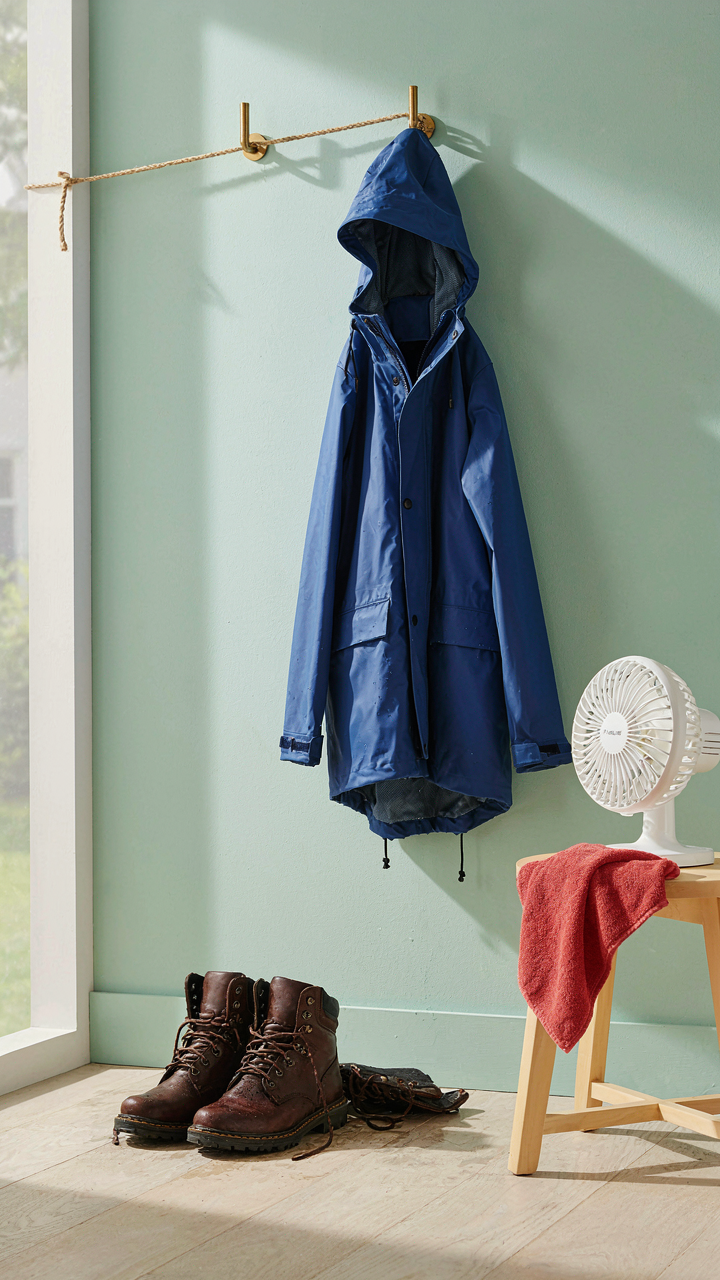
Most advice says “hang it up and let it air dry,” which is incomplete and lazy. The actual mechanism matters: moisture trapped in synthetic fabrics causes delamination in waterproof membranes like Gore-Tex, and it accelerates mildew in the insulation core. Cotton holds water longest and degrades fastest. Your rain shell needs moving air, not just time.
Remove insoles and wring out liners from boots immediately after you get home. Hang the rain shell in a well-ventilated space, never in a closed closet. Open all pockets and pit zips to expose internal moisture. Stuff damp base layers and mid-layers loosely, not tightly rolled, and place them where air moves freely. Don’t use direct heat like radiators or dryers. Run a fan pointed at your gear for the first few hours. After twenty-four hours of air movement, your gear survives. Without it, your investment deteriorates.
The Real Obstacle Isn’t The Rain, It’s Your Addiction To External Validation

You don’t need the perfect rainy season hiking outfit. You need to stop waiting for permission to go. Men obsess over gear specs and brand names because it delays the actual hike. The rain doesn’t care about your layering strategy. It falls the same on expensive technical fabric and cheap cotton. Pick functional clothes today, not next month. Go hiking in the rain before you’re ready, and you’ll learn what actually matters.