
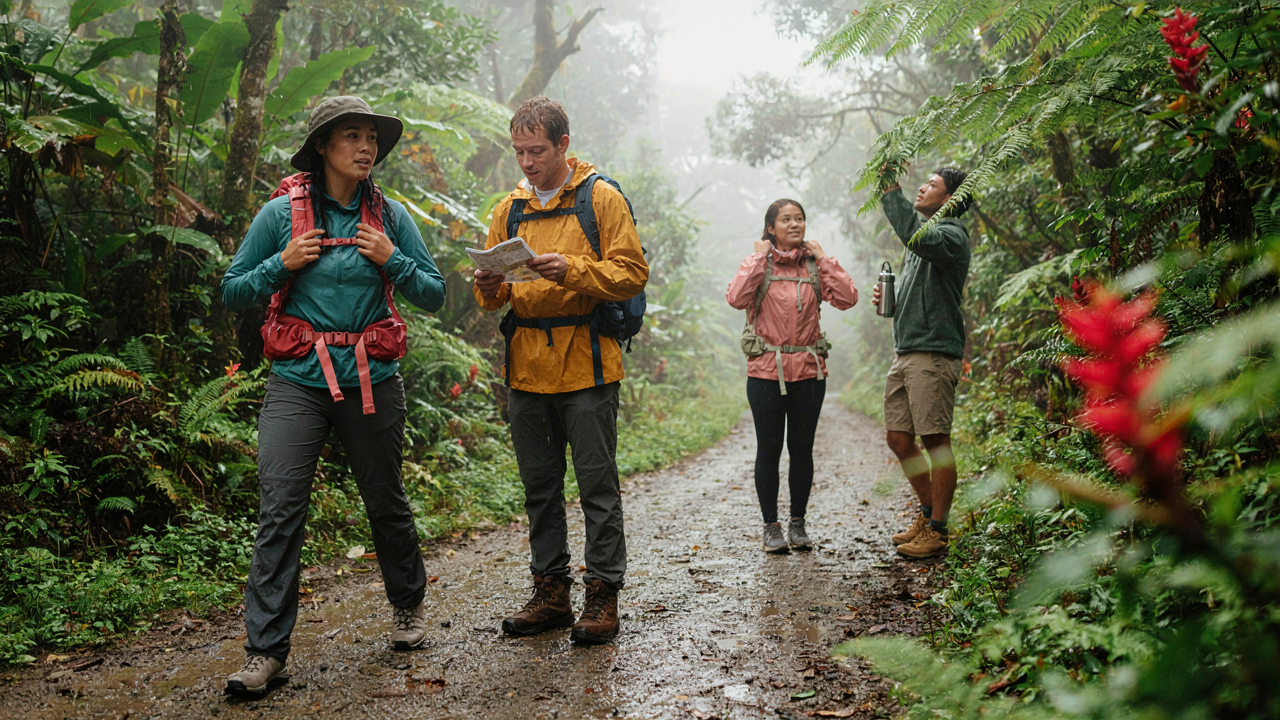
The Wet Weather Hiking Outfit Fallacy: Why “Waterproof” Fails

Breathability Wins Over Total Blockage
You want one jacket that handles everything. That’s the real problem here. The material science is simple: permeability and breathability exist on opposite ends of a spectrum, just like in thermodynamics where you cannot maximize heat retention and heat dissipation simultaneously. A truly waterproof barrier blocks vapor. Your body produces vapor constantly. Block it completely and you sweat internally, which defeats the entire purpose of staying dry.
Most beginners chase “waterproof” ratings and end up soaked from the inside. A jacket rated for heavy rain but with zero breathability becomes a sauna. After thirty minutes of hiking, you’re wetter than if you’d worn nothing. The mechanism is basic: your body heat drives moisture outward, it hits an impermeable wall, and it pools against your skin. Pick a jacket with a breathability rating over 10,000 grams per square meter per 24 hours and accept minor moisture penetration on the outside.
Your Skin Will Get Damp

The myth is that you stay perfectly dry on rainy hikes. You don’t. Rain finds seams, sleeves, and gaps. Your own moisture migrates outward regardless. Acceptance matters more than denial here. The goal isn’t dryness. The goal is managing moisture so you stay warm and functional.
Water touching your skin is not failure. Uncontrolled water saturation is. A damp base layer under a breathable mid layer under a water-resistant outer layer keeps you warm even when wet because the trapped air between layers insulates. Moisture wicks upward through the stack, then out through your jacket. You accept dampness, manage it intentionally, and move on. Test your outfit on a short rain walk before a full hike. You’ll feel where water enters and learn what actually works for your body.

The Layering Protocol: Your Skin Is Not A Sponge
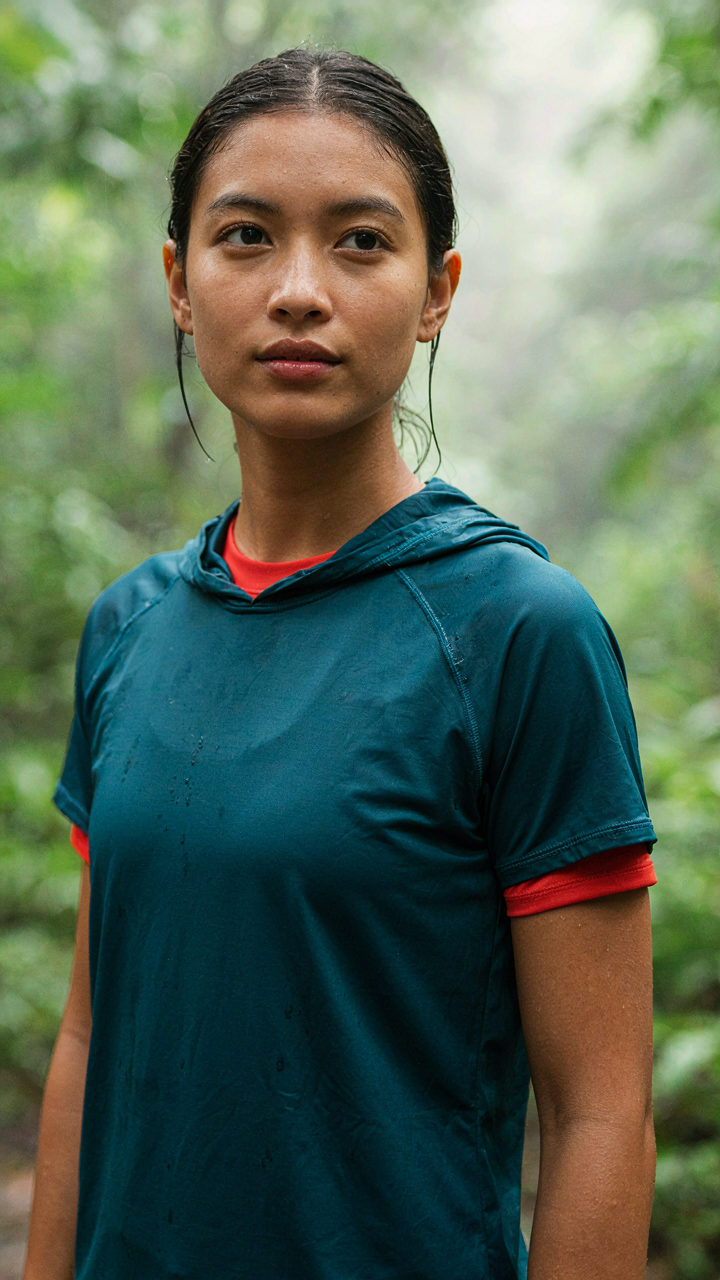
Base Layers: Wicking, Not Warming
You want base layers to make you look like you know what you’re doing. That’s not what they do. The mechanism is vapor transport: base layers move sweat away from skin before it cools you down. Cotton fails here because it absorbs moisture and holds it against your body. Synthetic materials like polyester and nylon move sweat outward, keeping your core temperature stable during rain and exertion.
The confusion exists because beginners conflate insulation with moisture management. Base layers don’t warm you. They prevent the wet-fabric-against-skin cycle that drains heat faster than cold air alone. Wear them snug but not restrictive. They work only if water moves through them, not pools in them. This is the foundation of every other layer decision that follows.
Mid Layers: Insulation When Damp
Thermodynamics teaches us that air pockets trap heat. A fleece jacket creates those pockets even when damp, unlike down which collapses when wet and loses all insulating value. Most beginners bring the wrong mid-layer and end up cold because they prioritized lightness over material science. Fleece, wool, or synthetic insulation keep working in rain. Down does not.
The protocol is straightforward: your mid-layer must function when saturated. Test this by running water over it before you buy. If it dries quickly and maintains loft when damp, it works for rainy season hiking. Wool retains 80 percent of its insulating capacity when wet. Quality synthetic fills do the same. Choose one, layer it over your base, and trap your body heat regardless of what the sky does.
Outer Shells: The “Rainy Hike Outfit” Of Last Resort
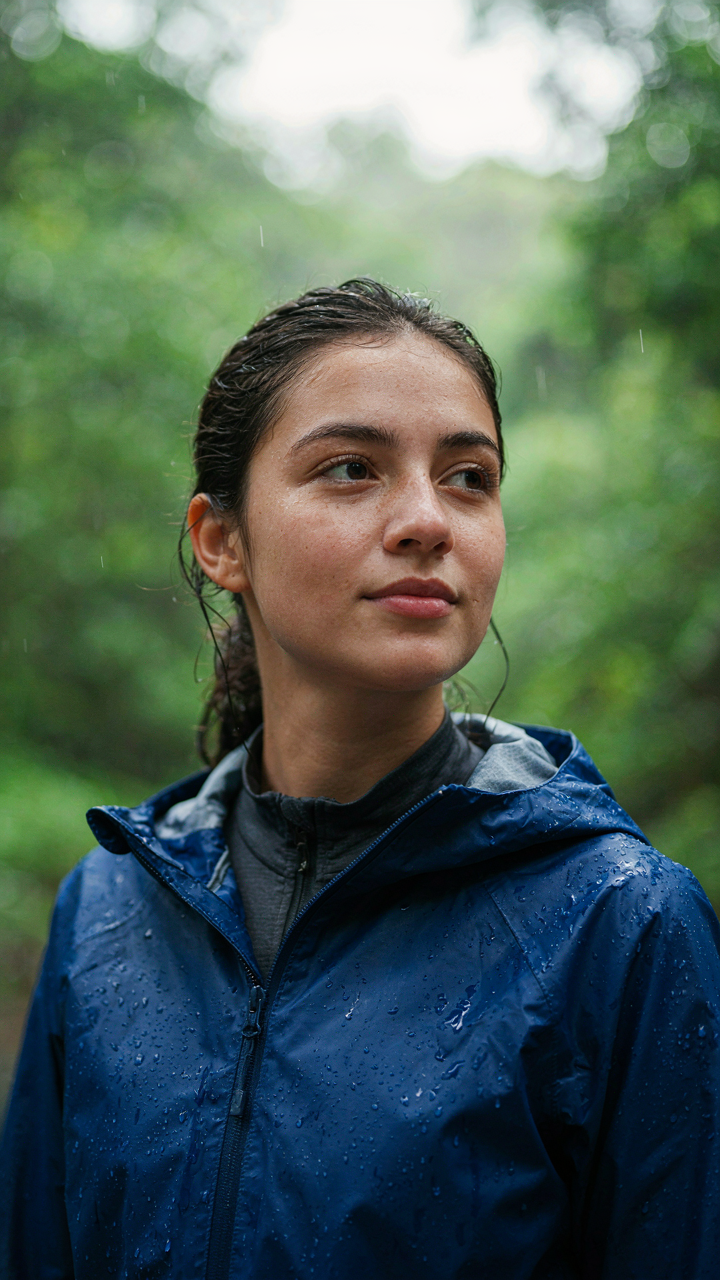
Hard Vs. Soft Shells: Protection Levels
You’re buying a shell because you want to look prepared, not get soaked. Here’s the mechanism: a hard shell is a sealed membrane with taped seams that stops water from entering. A soft shell is a stretchy fabric that resists water but breathes better and sacrifices some protection. Hard shells win in sustained downpour. Soft shells win in variable conditions where you move between effort and rest.
Hard shells create condensation inside because they trap body heat and humidity with nowhere to go. Soft shells leak faster in heavy rain but dry you from sweat accumulation, which matters more on moderate hikes. Neither choice is universal. Pick hard if your hike involves hours of steady rain. Pick soft if conditions shift or you generate heavy sweat. The beginner mistake is buying based on brand reputation instead of actual rain intensity where you hike.
DWR Coating Actually Matters
Water beads and rolls off a DWR-treated surface instead of soaking into fabric fibers. This isn’t waterproofing in the technical sense. DWR is a temporary treatment that degrades after washing and friction. You get maybe 20 to 40 washes before it quits. Most beginners think DWR makes a shell waterproof for life, so they ignore reapplication entirely.
DWR matters most on soft shells and on hard shells without taped seams. Once DWR wears down, water wicks into the top layer and you feel damp inside the jacket even though the membrane blocks penetration. Reapply DWR when you notice water no longer beading on the surface. The protocol is simple: wash the jacket, apply DWR wash-in or spray treatment per instructions, and dry it. Skip this step and your shell slowly transforms into an expensive sponge.
Hiking Pants For Rainy Days: Avoiding The Soggy Drag
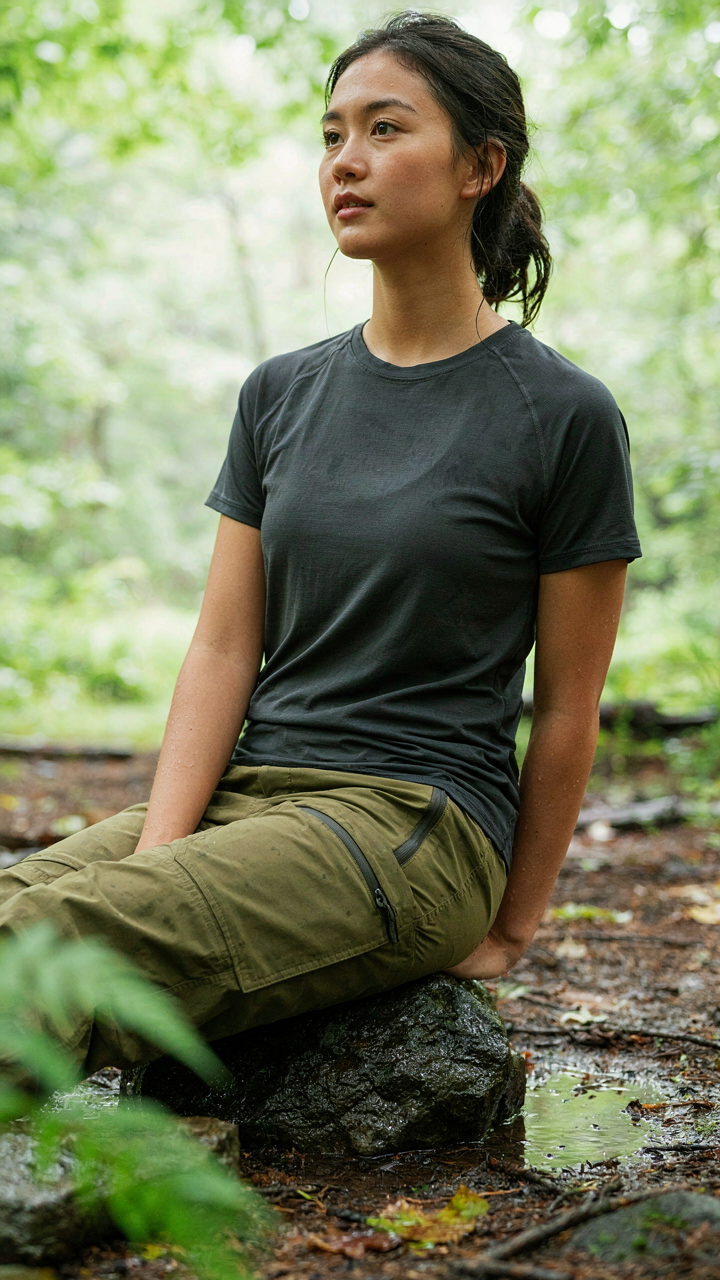
Quick Dry Fabrics Trump Waterproofing
You want pants that won’t betray you when you’re miles from the trailhead. The real mechanism here is saturation speed, not water blocking. Most beginners chase waterproof coatings that trap moisture inside the fabric. When rain hits and sweat builds, you’re wearing a wet prison. Quick-dry synthetics like nylon and polyester wick moisture away and evaporate fast. This matters because the goal isn’t staying dry—it’s staying functional. Wet fabric weighs more, loses insulation value, and chafes. Speed of evaporation determines comfort, not a water-resistant label.
Cotton absorbs water like a sponge and never dries on the trail. Merino wool retains moisture too. Your pants need to shed water off the surface and release any absorbed moisture into the air quickly. Brands marketing “waterproof hiking pants” for beginners are solving the wrong problem. You’ll move through the rain for hours. Pick a quick-dry synthetic blend in olive, gray, or black. Test the fabric by running water over it—it should bead and roll off, then dry your hand within seconds when you wring out the sample.
Articulated Knees For Movement
Stiff fabric at the knees locks your stride and multiplies fatigue over eight hours on the trail. Articulated knee design means the seams and panels angle toward your body’s natural bend, not straight down your leg. This isn’t a luxury feature. It’s the difference between a hike that feels manageable and one where your quads burn before mile three. Rain gear makers often skip this because flat-panel construction is cheaper. Beginners don’t know to look for it, so brands keep costs down and profits up.
Check the inside of the knee when you try pants on. The seam should angle inward, not run vertically. Gusseted crotches also matter—they give you room to move without pulling fabric tight across your hips. When you squat to test the fit, the pants should feel like they’re moving with you, not against you. Bad knee articulation makes rain hikes miserable because you’re fighting the fabric on top of fighting the weather. Spend the extra thirty seconds examining the panel construction before checkout.
Footwear: The Foundation Of A Rainy Day Hiking Outfit

Waterproof Vs Quick Drying Shoes
You want to believe one shoe does everything so you don’t have to think about this again. That’s the trap. Waterproof and quick-drying are opposing design constraints, not a spectrum.
Waterproof shoes use sealed membranes like Gore-Tex. Water doesn’t enter from outside, but sweat moisture gets trapped inside because the membrane blocks vapor too. Your foot stays dry from rain but wet from perspiration. Quick-drying shoes use porous mesh or open weaves. Water enters freely but evaporates fast once you’re moving and air circulates. Your foot gets soaked initially but dries within minutes of active hiking.
Most beginner advice says “buy waterproof.” This is incomplete. Waterproof works only if you stop moving or if the trail isn’t sustained. On a rainy season hike lasting hours, trapped moisture turns your feet into a breeding ground for blisters and fungal issues. Quick-drying shoes with proper sock strategy outperform waterproof for continuous rain exposure. Test this: wear waterproof shoes for three hours in steady rain without breaking stride. Your socks will squelch.
Choose quick-drying trail shoes over waterproof boots for rainy season hiking. The evaporation cycle beats moisture trapping every time.
Wool Socks: Critical Moisture Management
Wool regulates temperature through absorption and release, a principle borrowed from textile physics called hygroscopic capacity. Merino wool absorbs up to thirty percent of its dry weight in moisture without feeling wet to skin. Cotton does the same but then stays soggy. Synthetic blends dry faster but don’t manage heat shifts during rain transitions.
Merino wool socks prevent blisters by maintaining friction control between your foot and shoe as moisture moves through the fibers. When cotton socks get saturated, they bunch and bunch causes hot spots. Wool stays dimensionally stable even soaked, keeping consistent contact and preventing the micro-sliding that triggers blisters. You wear the same sock weight whether rain starts or ends.
Pack two pairs of wool hiking socks minimum and change into dry ones at the halfway point, even if the first pair feels acceptable. Wet socks accumulate debris particles that accelerate blister formation by mile five.
The Kinetic Energy Principle For Hiking Outfit Raining
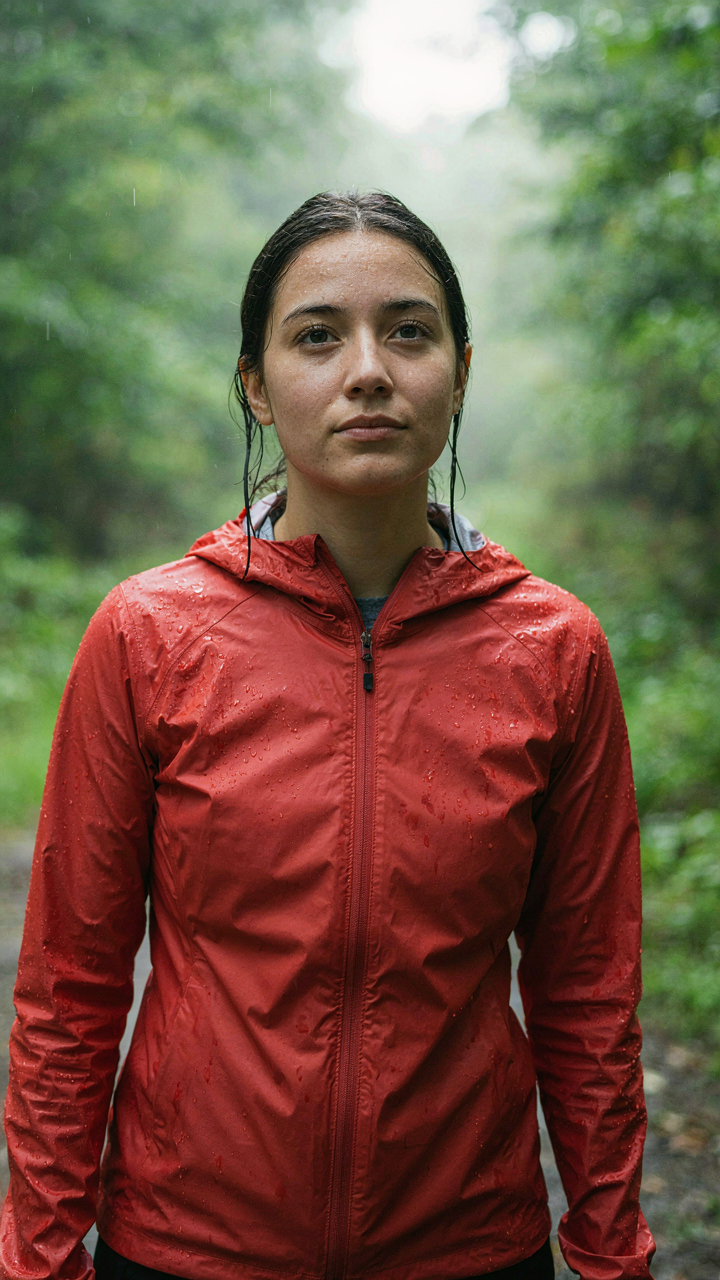
Movement Generates Heat You’re Not Buying
You want permission to wear less and spend less money. Here’s the real mechanism: physics calls it kinetic energy. In hiking, sustained movement converts muscle work into heat faster than static insulation ever will. The problem most beginners make is treating a rainy hike like standing still. You don’t. Your body produces continuous warmth through exertion, and rain gear’s job is containment, not generation.
When you move uphill in rain, your muscles burn fuel at a rate that often exceeds what a heavy insulation layer can manage. Overdressing traps sweat, which kills you faster than cold air. The outfit works because movement itself becomes your primary heating system. Rain gear simply stops wind and moisture from stealing that heat away. This flips the conventional wisdom: beginners obsess over thickness when they should obsess over breathability paired with consistent forward motion.
Calories Burned Versus Heat Lost
Energy expenditure is the real variable. A beginner hiking at moderate pace burns roughly 400 to 600 calories per hour depending on terrain and load. That metabolic output translates directly to body heat. Rain strips that advantage because water conducts heat 25 times faster than air. Your outfit strategy must account for this exchange rate, not just static temperature.
The mechanism is simple: match your garment’s moisture management to your actual exertion level, not the weather forecast. High-output hiking in rain demands breathable synthetic or merino layers that move sweat outward faster than water can soak inward. Low-output hiking, or frequent stops, demands heavier insulation because your heat engine idles. Most beginners stay warm during the hike and freeze during breaks because they chose outfits for static conditions instead of dynamic ones. Layer systems that adapt to changing exertion patterns prevent both overheating and sudden chills.
Head And Hand Protection: Small Details, Big Impact
The Glove Trade Off That Nobody Admits
You want gloves that keep your hands dry without turning them into frozen clubs. That’s the real tension here, and most beginners choose wrong because they think one glove solves both problems. Thermodynamics says heat loss accelerates when moisture traps against skin, so waterproof materials that block vapor create a paradox: you stay dry from rain but sweat builds inside the glove, cooling you faster than if you’d gone ungloved.
Synthetic leather gloves with sealed seams handle moderate rain without the moisture trap that full rubber creates. Your hands need micro-ventilation during climbing effort, even in rain. Pick gloves one size larger than your regular size to allow airflow and reduce the pressure that forces sweat outward. Test them on a short walk first. If your fingers feel clammy after ten minutes of movement, they’re too tight or the material blocks vapor too aggressively.
Hat Brim Angle Matters More Than Material
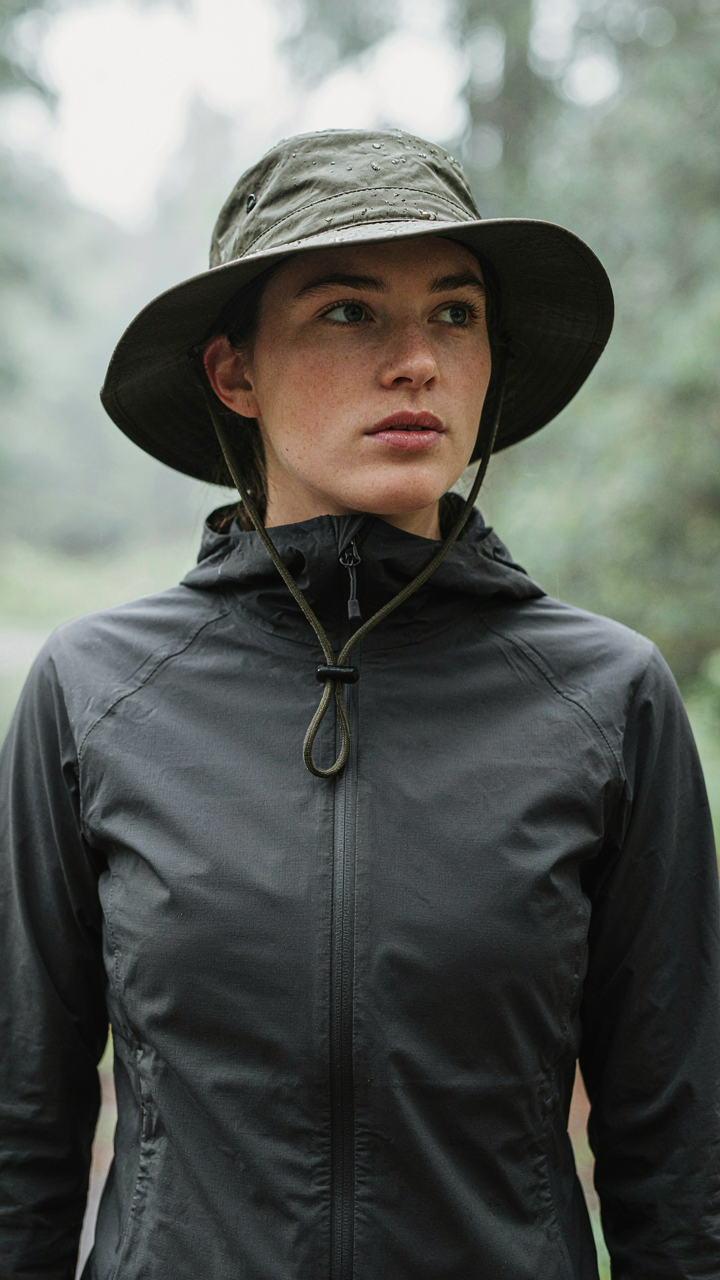
A hat’s job in rain is physics, not magic. The brim’s angle determines how much water runs down your face instead of off the hat. Most beginners buy hats with brims angled wrong for hiking because they shop based on what they see in stores, not on what actually works when you’re moving uphill in wind.
A brim that extends one to two inches forward and angles downward at fifteen to twenty degrees keeps rain off your eyes without blocking your vision of the trail. Wool hats shed water better than cotton, but the brim angle beats material choice every time. Secure your hat with a chin strap or lose it on your first steep descent. The strap also prevents the wind from pushing the brim upward when you’re moving through open terrain.
Gear Management: The “Rainy Hiking Outfit” Backup Plan
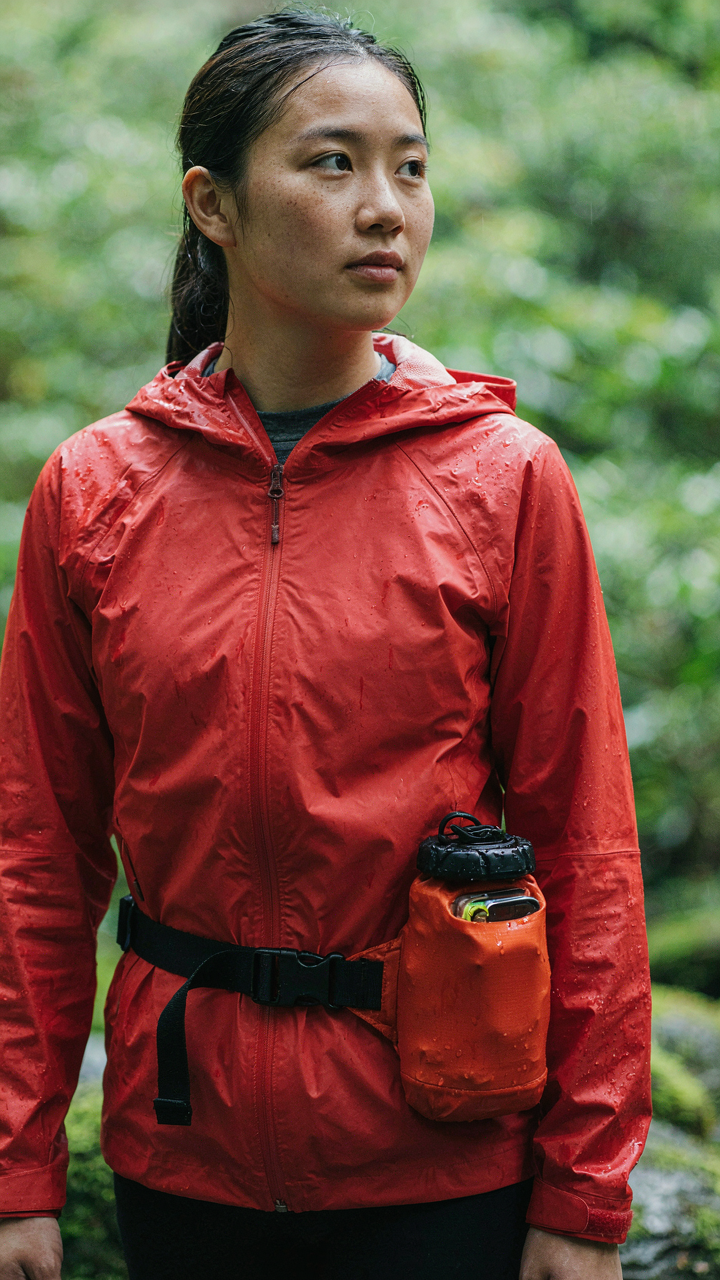
Dry Bags For Electronics And Essentials
You’re not actually worried about your phone getting wet. You’re afraid of being stranded without a way to call for help. That fear is rational, but it exposes the real mechanism: water doesn’t destroy electronics through magic. It creates conductivity paths that short circuits. A dry bag breaks that path before it forms.
- Small stuff sack (1-2 liters): Holds phone, ID, emergency whistle, and first aid supplies. Weighs almost nothing and clips to pack straps for fast access.
- Medium dry bag (5-10 liters): Stores layers, snacks, and extra socks. Roll-top closure is faster and more reliable than zipper seals in field conditions.
- Waterproof pouch for map and compass: Navigation gear must stay legible. Laminated maps work but a clear dry pouch lets you check without opening it fully.
- Separate fire-starting kit bag: Matches, lighter, and tinder stored in their own sealed compartment. Keeps moisture away from ignition sources so emergency fire remains possible.
- Waterproof headlamp pouch: Keeps batteries and lens dry. A wet headlamp fails when you need light most, usually after dark in rain.
Roll-top dry bags outlast zipper bags in rainy conditions because they have no moving parts to fail. Test your bag’s seal before the hike by submerging it empty. If water enters, it will fail during actual rain when you cannot turn back.
Emergency Warm Layer: Non Negotiable Safety
Most beginner advice says “bring an extra layer” and stops. That’s incomplete. In rainy conditions, your body loses heat 25 times faster through wet fabric than dry air. This is thermodynamics. One additional warm layer isn’t backup comfort. It’s the difference between mild discomfort and hypothermia on a 4-hour unexpected delay.
The layer must be synthetic or merino wool, not cotton. Wet cotton holds water against your skin indefinitely. Wet synthetics and wool dry faster and retain insulation even when damp. Stuff this layer into a waterproof pouch, not loose in your pack where rain soak can reach it. Pack it deliberately separate from your other gear so you know exactly where it is when you need it fast, no digging around in the dark during an emergency stop.
Post Hike Protocol: Avoiding Mold And Misery
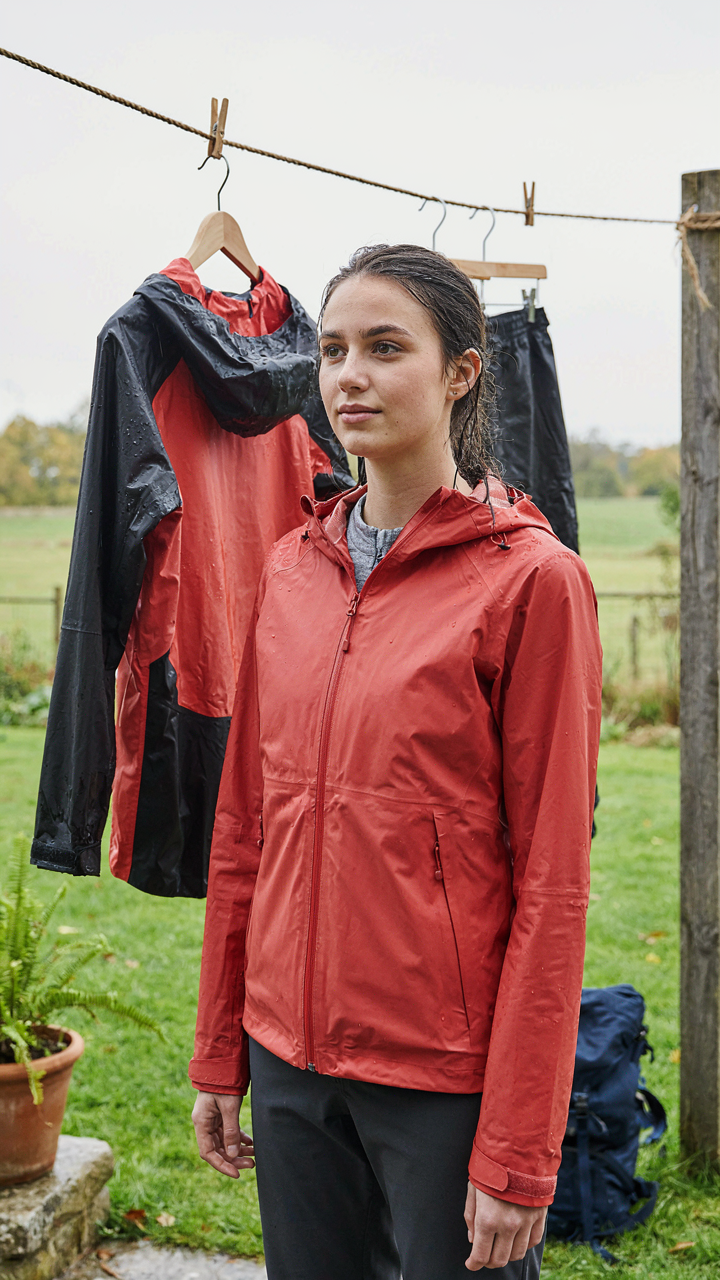
Air Drying Gear: Essential, Not Optional
You care about this because wet gear sitting in your closet means money wasted and gear dead in two weeks. The mechanism is simple biology: mold grows in oxygen-free, damp environments. Synthetics and merino wool decompose when bacteria colonize wet fibers. Air drying creates airflow that kills the conditions mold needs. Hang everything immediately after the hike, never stuff it in a bag or closed space.
Spread gear across open areas with direct airflow. Synthetic jackets, rain pants, and base layers dry fastest in sunlight and breeze. Remove insoles from shoes and dry them separately. Never use a dryer on hiking gear because heat damages waterproof membranes and elastic. The goal is complete dryness before you pack anything away, which takes 24 to 48 hours depending on humidity and material.
Preventing Odor And Material Breakdown
Most advice stops at “just dry it.” That misses the real problem: salt deposits and bacteria accelerate fabric degradation even after drying. Think in terms of corrosion prevention from materials science. Sweat leaves mineral salts on synthetic and wool fibers, eating away at coatings and elastic. Rinse gear with fresh water before air drying to strip salt. This step changes the timeline and lifespan of your outfit dramatically.
After rinsing and drying, store gear in breathable bags or open shelving, not plastic containers. Merino wool handles moisture better than synthetics but still needs airflow to prevent odor compounds from setting in. Check zippers and seams during drying to catch damage early. The rule is simple: salt off the fiber, air through the material, store in open space.
Hiking Outfit Women: Specific Considerations, Not Concessions
The Fit Problem Nobody Names
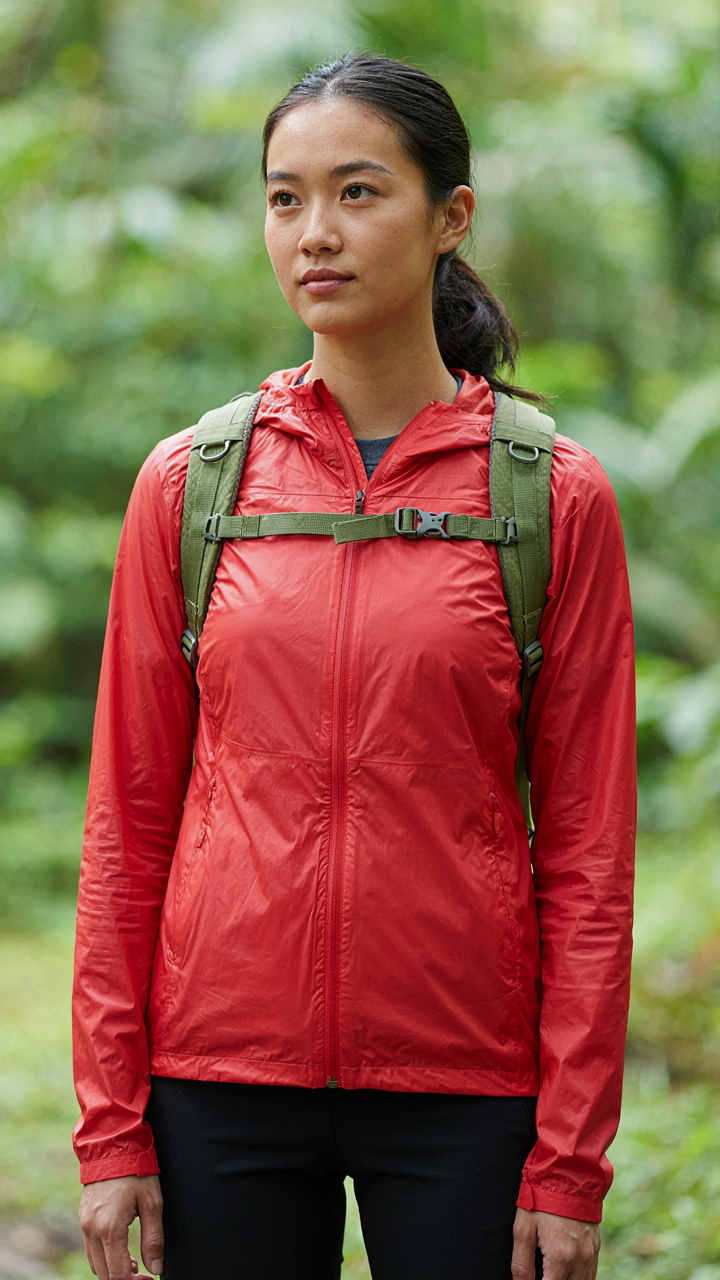
You want gear that works without compromise because you’re tired of choosing between looking competent and actually being comfortable. Here’s the mechanism: women’s torso length differs from men’s, and standard hiking jackets sit wrong at the waist and hip. This isn’t fashion sensitivity. It’s engineering. A jacket that gaps at the back exposes your core to rain. A hem that hits mid-thigh restricts stride on steep terrain. Fit determines whether layers trap heat or let moisture escape.
Most brands size women’s gear smaller, not differently. They subtract inches proportionally across all dimensions instead of adjusting torso-to-arm ratios and shoulder width independently. This produces jackets that pinch shoulders or leave sleeves short. Buy by fit tests, not size labels. Wear your intended base layer and mid-layer, then test jackets in a squat position. If fabric pulls across your back or armpit gaps appear, the cut is wrong for your frame, not your fitness level.
Strategic Layering For Thermal Efficiency
Women generate less metabolic heat at rest than men, which means your insulation strategy needs precision instead of bulk. This is basic thermoregulation from human physiology: smaller muscle mass requires thinner base layers that don’t create false security, paired with mid-layers you can actually peel off at 10,000 feet. The common advice is “layer up,” which produces overheating and excessive sweating in rain.
Start with a synthetic or merino base layer that fits snug, not loose. Loose fabric under rain gear traps sweat and defeats the purpose. Your mid-layer should be thinner than a man’s equivalent because you’re generating adequate warmth with less mass. Choose grid fleece over thick insulation for rain season, since it sheds water better and compresses smaller. Test your system on a 45-minute uphill hike before a full day out. If you’re sweating visibly at mile two, your mid-layer is too thick or your base layer is cotton.
The Real Obstacle Isn’t The Rain, It’s Your Expectation Of Staying Completely Dry

Every beginner obsesses over a waterproof outfit that doesn’t exist. You’ll get wet. Accept it now and you stop buying garbage gear trying to achieve the impossible. The real skill is drying fast and staying warm while damp. Buy one solid rain jacket today, layer underneath it with merino wool, and hit the trail this weekend instead of researching for another month. You don’t learn by staying dry on your couch.