
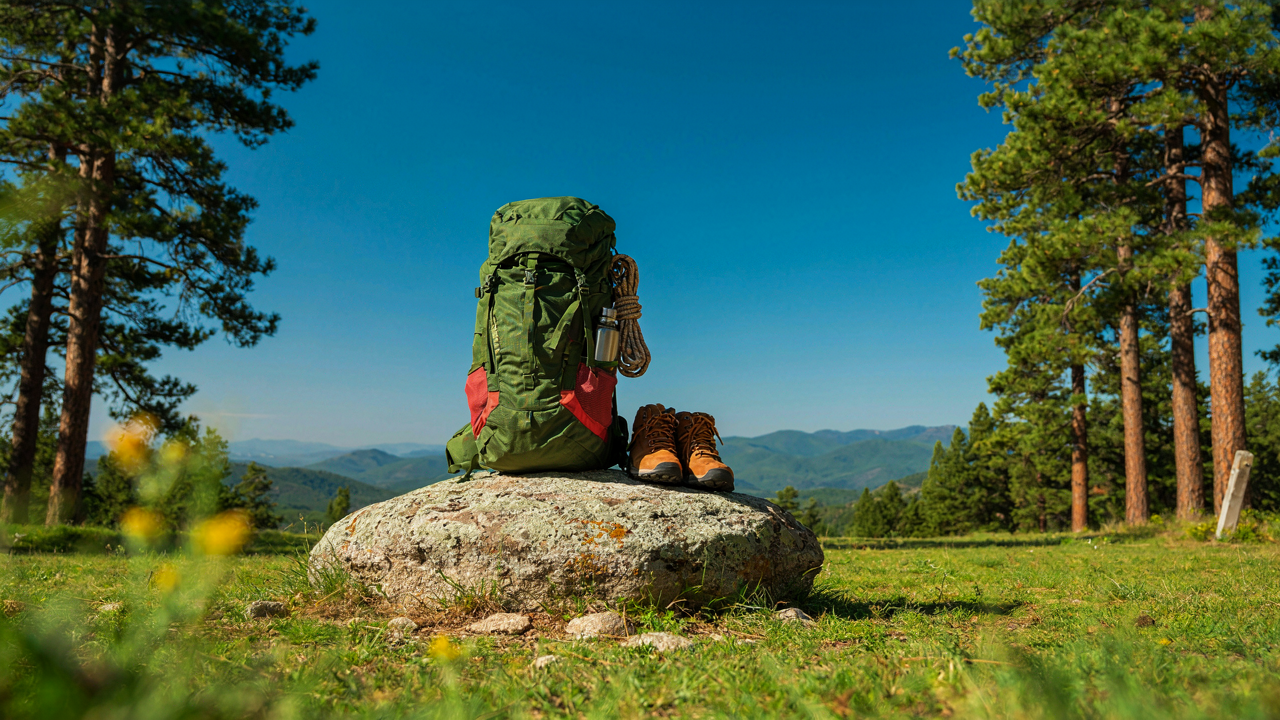
The Minimalist Mindset: Why Less Is Your Only Option
Every Pound Costs You Twice
You want to pack heavy because it feels safe, like you’re prepared for anything. But that’s not preparation—that’s anxiety masquerading as strategy. Economics calls this the “carrying cost,” and it applies directly to your backpack. Every extra item you carry doesn’t just weigh more; it taxes your energy, slows your pace, and shrinks the distance you can cover before fatigue kills your trip. A five-pound difference compounds into a miserable final day.
The math is simple. Your body has a finite energy budget on the trail. Excess weight burns calories faster, forces more frequent breaks, and delays your arrival at viewpoints when light is best. Hikers who pack light cover more miles, see more terrain, and experience the park rather than suffer through it. The park doesn’t reward thoroughness—it rewards mobility.
Experiences Scale, Gear Doesn’t
The common advice says “pack for all conditions.” That’s incomplete. What you actually need is the ability to stay comfortable across a narrow range of conditions while moving freely. Possessions don’t multiply value—they multiply friction. You cannot buy a better experience by owning more stuff; you buy it by being present and unencumbered.
The shift happens when you stop asking “what if I need this?” and start asking “what will I actually use daily?” Sunscreen, water, a map, navigation tools, shelter, and food are non-negotiable. Everything else is negotiable. Strip your packing list to items that directly support movement, safety, or basic function. The park reveals itself to people who can walk through it without distraction, not to people who unpack their entire home at camp.

The Core Four Protocol: Your Non Negotiables For Any National Park
The Four Systems That Keep You Alive
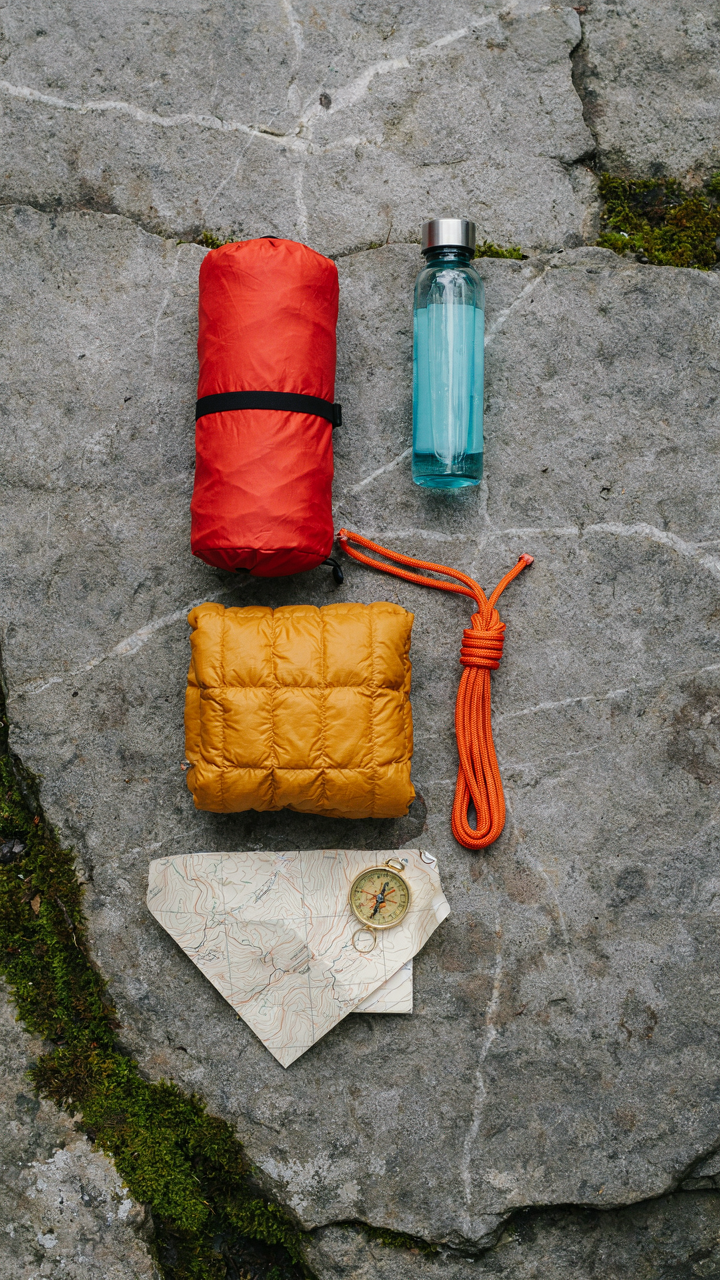
You want this list because you’re afraid of looking unprepared or getting stranded. The real mechanism is simpler: survival depends on four independent systems, not a collection of random gear. Each one fails independently. Shelter fails when temperature drops. Water fails when you run dry. Warmth fails when moisture + wind steal your core temp. Navigation fails when you lose position. Pack for system redundancy, not for comfort.
- Shelter layer: A lightweight tarp or emergency bivy. Blocks wind and precipitation. Weighs under a pound. Deploys in seconds.
- Water container and purification: Two liter capacity minimum plus a filter or tablets. Treats contamination at the source. Non negotiable in every terrain.
- Insulation layer: Fleece or down jacket rated for 20 degrees below your expected low. Retains warmth when wet. Pack it even on warm days.
- Navigation tool: Physical map of your park plus compass. GPS fails when batteries die or signal drops. Paper never does.
- First aid basics: Blister treatment, pain relief, wound closure, and antihistamine. Injuries cascade fast. Stop them early.
Most people pack shelter and water, then skip navigation and insulation because the forecast looks mild. That’s where people end up spending unplanned nights. Your systems work independently, so you carry all four regardless of conditions. Each one weighs almost nothing. The cost of replacing one system in an emergency runs into hundreds of dollars and hours of lost time.
When Conditions Force You To Adapt
Elevation changes how fast you lose heat. Afternoon storms appear without warning. Terrain changes water scarcity overnight. The principle from ecology applies here: niche adaptation means your core four stays identical, but your support gear shifts. You don’t change what keeps you alive. You change what extends your range.
Desert parks demand extra water containers and sun protection. Alpine zones demand more insulation layers and lightning awareness. Wet forests demand vapor barrier and fungal prevention. Your four core systems remain constant. The adaptation happens in your secondary gear: extra socks, electrolyte tablets, bug nets, rain pants. This distinction separates people who over-pack from people who pack smart. Carry your invariant systems everywhere. Customize your variables by park.
Beyond The Obvious: Unconventional Gear That Actually Matters

Gear That Earns Its Weight
You want this section to validate that you’re a thoughtful packer, not a paranoid one. The real mechanism is constraint forcing clarity. In economics, this is the concept of opportunity cost applied to your backpack. Every item you pack removes space for something else. The items that matter most solve multiple problems at once.
A merino wool base layer isn’t just temperature management. It regulates sweat, resists odor for days, dries faster than cotton, and compresses to nothing. A single lightweight tarp serves as rain shelter, ground cover, windbreak, or sun shade depending on how you rig it. A multi-tool with quality scissors cuts everything from blisters to rope to camp food prep. These aren’t luxury items dressed up as essentials. They’re force multipliers that collapse several needs into one physical object.
The Mental Inventory You Never Pack
People skip this part because you can’t buy it. Mental preparation determines whether your trip becomes a memory or a regret. The mechanism is simple: your brain either solves problems in real time or spirals into narrative about how unprepared you are. One creates resilience. One creates suffering.
Before you leave, rehearse three scenarios where things go wrong. Not catastrophes. Real situations. Rain turns a trail muddy. Someone gets a blister. You miscalculate distance and arrive tired. Run through the decision tree for each before it happens. When the actual moment arrives, you recognize the pattern and execute the plan instead of panicking. Your gear only works if you’ve already decided what you’ll do with it.
The “Leave No Trace” Illusion: Packing For True Environmental Respect

Minimize Waste From The Source
You care about this because it feels like virtue. Here’s the mechanism: every item you pack either gets used or becomes waste. Most people frame Leave No Trace as a cleanup problem at the end of the trip. That’s backwards. The real impact happens before you leave your driveway. Each unnecessary item creates friction—you overpack to feel prepared, then abandon gear or trash it because it’s too heavy to carry out.
The math is simple. A five-day national park trip means five days of consumables, five days of clothing rotation, and five days of gear wear. Pack thirty percent more than you need, and you’ve just created thirty percent more waste decisions in the field. The moment you’re tired on day three and your backup flashlight stops working, you’re tempted to ditch it. That’s not an ethical failure. That’s a packing failure.
Beyond Trash: Impact Of Unnecessary Items
Systems thinking applies here. In logistics, they call it the “chain reaction of failure”—one redundant part creates cascading problems downstream. Your overstuffed backpack weighs more, so you hike slower, so you camp in suboptimal locations, so you impact soil and vegetation in ways you wouldn’t if you’d packed lean. The weight itself becomes environmental impact.
People obsess over which trash bag to bring, then pack five energy bars they won’t eat. That’s the wrong problem. Every item you don’t pack eliminates a decision point where you might fail. Pack only what you’ll actually use, verified against a trip log from a previous visit. That’s not minimalism as virtue. That’s minimalism as precision. Before your next trip, cross-reference every item against what you actually consumed on your last one.
National Parks Visit Checklist: The Anti Checklist Approach
Stop Defending Your Gear Choices
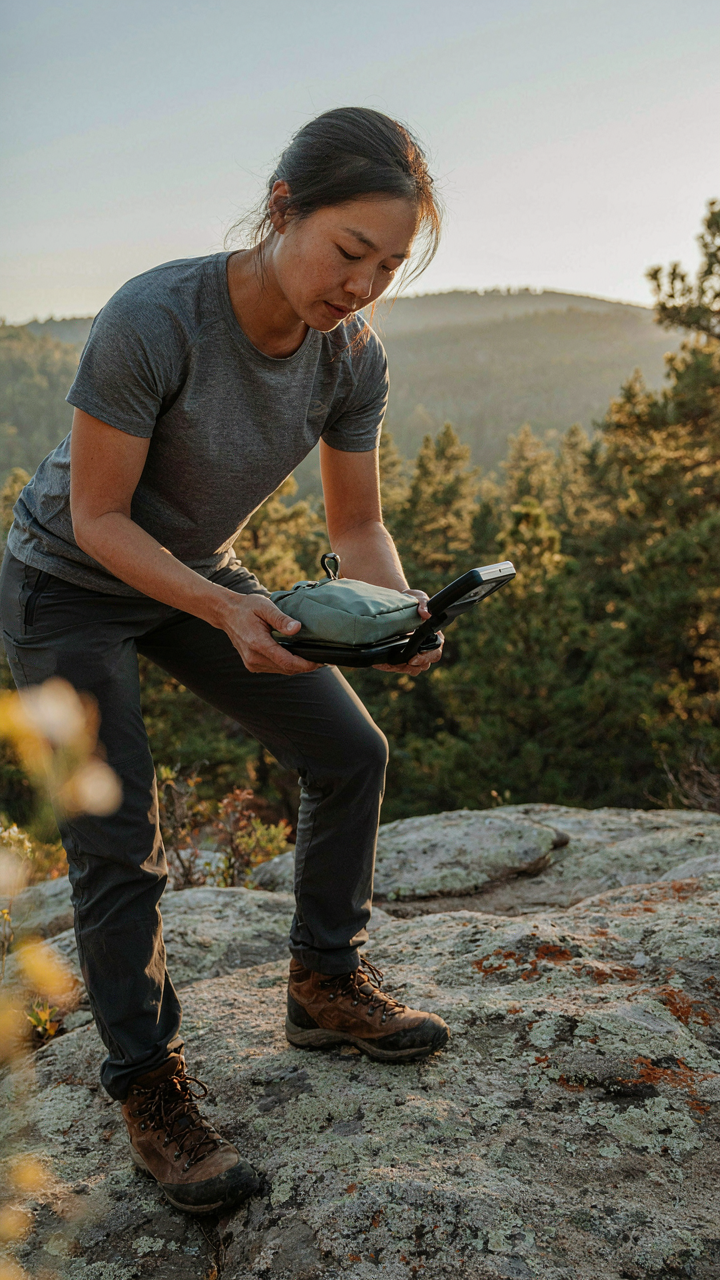
You want permission to bring less and still look prepared. Here’s the mechanism: every item you pack carries a hidden cost—weight, bulk, decision fatigue, and the mental load of tracking it. In economics, this is called carrying cost. Your pack has one too. The question isn’t whether something might be useful. It’s whether the burden of carrying it exceeds the actual problem it solves on the trail. Most people reverse this calculation.
Start by naming the real threat each item addresses. Not the imagined threat. Not the “what if” threat. The specific weather condition, terrain hazard, or discomfort you’ll actually encounter based on the park, season, and your itinerary. Then ask: does this item solve it better than an alternative, or better than adapting your behavior instead? Most redundancy fails this test. Strip it.
Second Order Consequences Of Packing Decisions
The rookie error is optimizing for comfort on day one. You pack extra layers, extra snacks, extra safety gear. You feel secure. By mile four, you’re exhausted not from the hike but from hauling weight you didn’t need. The second order consequence is that fatigue compounds. You move slower, make worse decisions, and enjoy less. You return home sore and swear off hiking.
Experienced hikers pack for the conditions at the summit, not the parking lot. They know that starting cold is temporary. Starting overweight is permanent across the entire trip. This shift in thinking eliminates 40 percent of unnecessary items. Your packing list should reflect the actual demands of the specific hike and season, not a generic fear of being unprepared. Test your core layers at home first. Know what you need before you commit to carrying it.
Packing For National Park Road Trip: The Logistics Of Lean Travel
Your Car Is Not Storage
You want to believe your vehicle can hold everything, so you pack it like a warehouse. That’s the real problem here. Think in terms of load-bearing capacity: every extra pound reduces fuel efficiency, increases wear on suspension, and cuts into your actual usable space. Your car has a Gross Vehicle Weight Rating. You’re probably over it without realizing it.
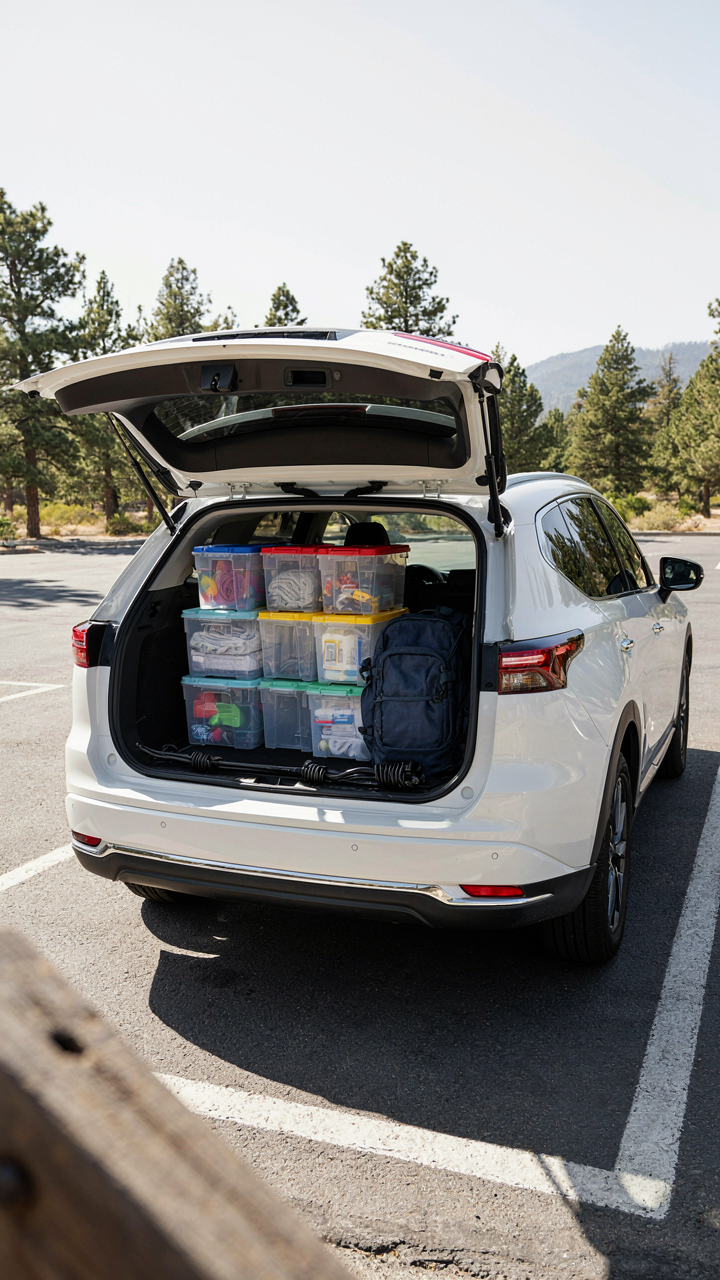
The mechanism is simple. A disorganized load wastes cubic feet. Items shift during driving. You access the same three things repeatedly while digging past twelve others. This friction compounds across a multi-day trip. Pack by frequency of use, not by category. Items you need daily go in the front seat zone. Everything else goes in the rear, organized by access sequence, not sentiment.
The Hidden Tax Of Chaos
Most advice says just make lists and organize by type. That misses the real cost. Every minute searching for something is a minute not moving, not setting up camp, not exploring. Multiply that across days and you lose hours to pure inefficiency.
Disorganized packing also creates duplicate items. You pack a flashlight, can’t find it, pack another. You bring two phone chargers because you forgot where the first one is. These duplicates add weight and clutter without adding function. Use clear containers with labels facing forward. Pack identical items in the same container. Before you close the trunk, photograph your layout. Reference that photo when you need something, not by hunting.
Glacier National Park Packing List: The Alpine Adaptability Principle
Your Body Is A Thermostat You Can Reprogram
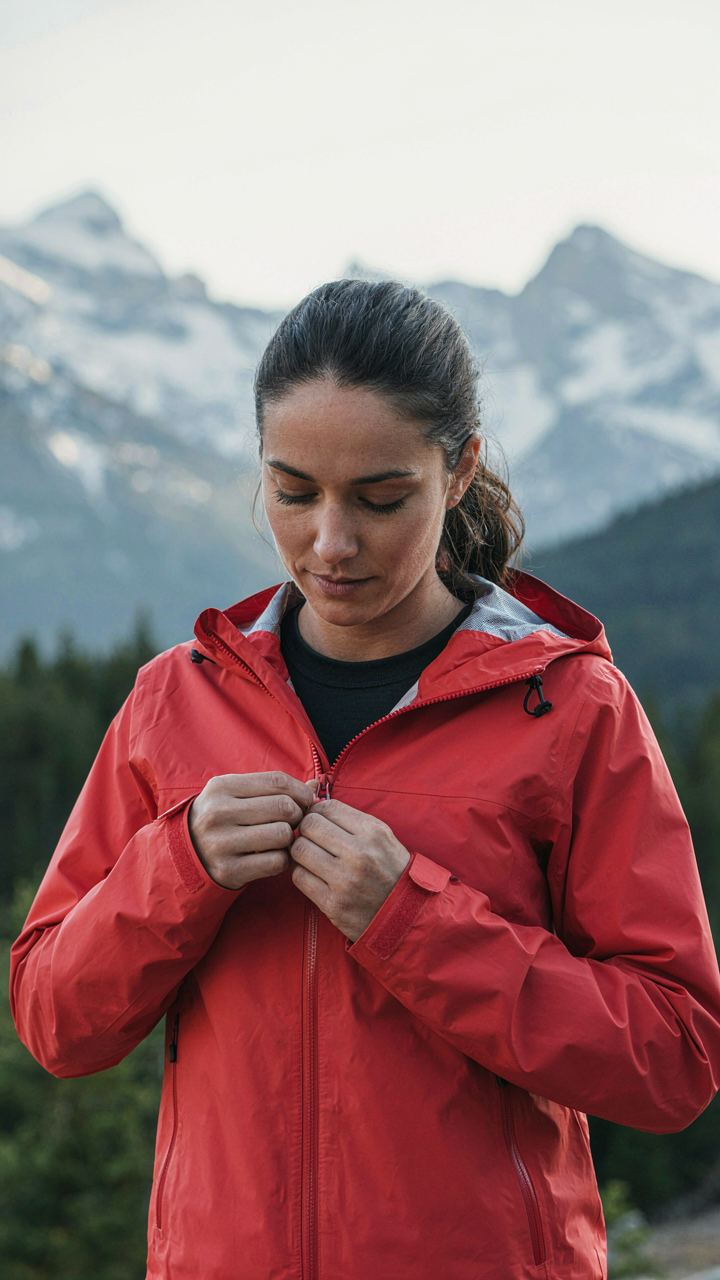
You want to look competent on the trail without freezing or sweating through your base layer. Biology teaches us about homeostasis—your body’s system for maintaining stable internal temperature. Layering works on the same principle: you’re building a stack that traps air, wicks moisture, and adapts to output. The goal isn’t comfort. It’s preventing your core from destabilizing so your energy goes to movement and navigation instead of shivering or heat dissipation.
Most people pack a fleece and call it layering. That’s incomplete. You need three distinct materials working in sequence: a base layer that moves sweat away from skin, a mid layer that traps air without absorbing moisture, and an outer shell that blocks wind and precipitation. Glacier’s elevation swing from 3,000 to 10,000 feet means temperature drops roughly 3.5 degrees per 1,000 feet. Your pack needs to handle that range without buying five jackets. One good fleece, one shell, and three base layers solve this mathematically.
Seasonal Windows Compress Into Days
Glacier’s weather doesn’t follow a calendar—it follows elevation and time of day. June and September still mean snow above 7,000 feet. July and August look stable until they don’t. You’re not predicting the season. You’re reading the specific week you’re going and building for worst-case conditions in that window, not best-case. Most guides tell you to “pack for all seasons.” That’s lazy. Real preparation means checking historical snowfall data, checking the park’s current conditions reports, and packing for the coldest, wettest day that statistically occurs during your visit week.
Bring rain gear in July. Bring insulation in September. Neither is optional. The park publishes which trails remain snowbound by week. If 40 percent of your planned route is snow-covered, your footwear and traction systems change. Your layering changes. Your water capacity changes because snow melt means water access but also slower movement. Pre-emption isn’t guessing. It’s reading the data the park provides and adjusting your pack’s weight and composition before you leave home.
National Parks Camping Gear: The Art Of The Essential
Campsite Minimalism Wins Over Comfort Theater
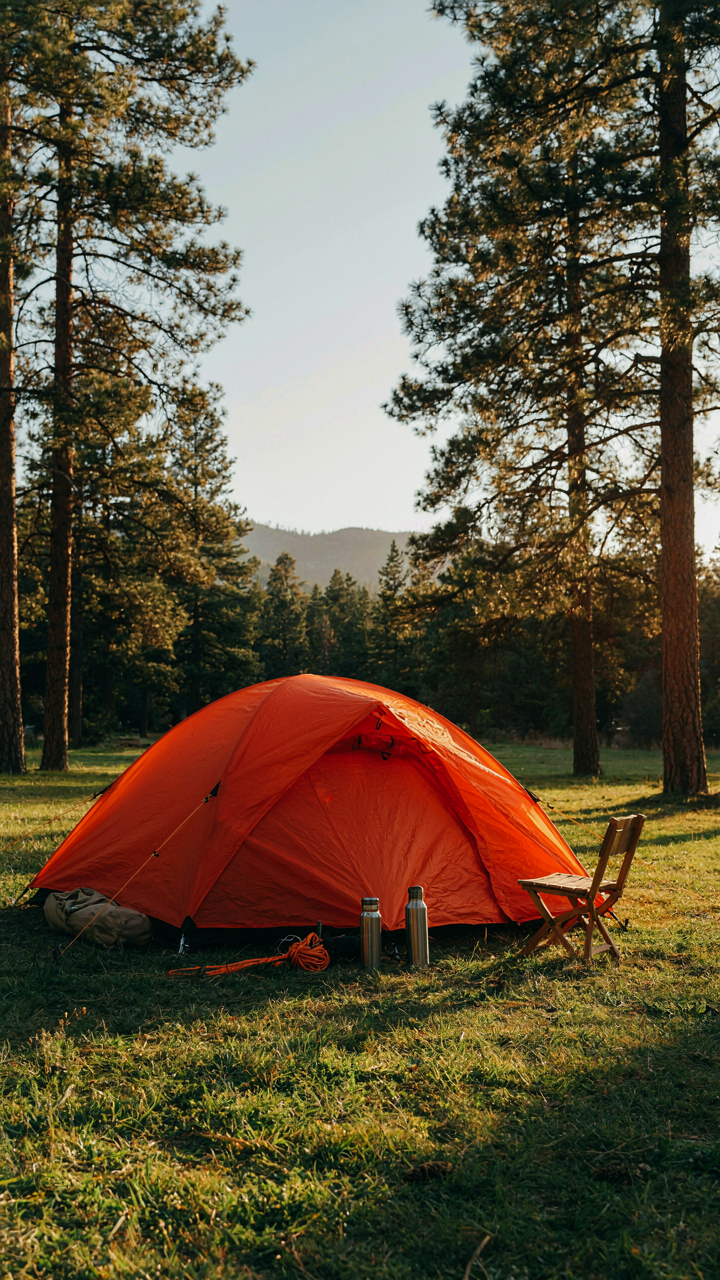
You want to feel prepared, which makes you buy more, which makes you feel worse. The real mechanism here is cognitive load. Every item in your pack demands setup time, decision-making energy, and mental real estate during your trip. The parks don’t care what you brought. They’ll deliver the same experience whether you have four things or fourteen. Strip down to what actually functions. A quality tent, a sleeping bag rated for the season, a stove that works. That’s the baseline. Everything else competes for attention you should spend looking at what you came to see.
The minimalist approach isn’t about suffering or proving something. It’s about removing friction between you and the landscape. Less gear means faster camp setup, which means more daylight hours for hiking. Less gear means you’re not managing your own logistics when you should be managing your experience. Ultralight backpacking emerged in the 1990s not from asceticism but from a straightforward discovery: people who carried less enjoyed their trips more. You don’t need a camp chair, a backup flashlight, and three pairs of socks. You need the things that fail without a replacement and nothing else.
Built To Last, Not Built To Impress
The gear industry sells replacement cycles as features. Marketing teams call durability boring. What they won’t admit is that cheap equipment fails in ways that ruin trips. A tent seam that splits on day two, a sleeping bag that loses loft after one season, a stove that clogs mid-trip. These aren’t inconveniences. They’re trip-enders. Investing in equipment that survives five national park trips instead of one is simple arithmetic, not luxury.
Real durability comes from materials that age well and designs that don’t chase trends. Gore-Tex fabric still works after fifteen years. Aluminum poles don’t degrade. Steel stakes hold their shape. Nylon stitched with quality thread outlasts the person using it. Buy from manufacturers with repair programs, not replacement programs. The cost delta between a tent that fails in three years and one that survives a decade is often less than buying two cheap replacements. Specify what gear you own by its repair potential, and build your packing list around items you’ll actually keep.
The Iterative Packing Method: Evolve Your Gear List

Post Trip Debrief What Worked What Wasn’t
You want to believe your first packing list was complete. It wasn’t. The real mechanism here comes from feedback systems in engineering: you can’t optimize what you don’t measure. A post-trip debrief is measurement. You audit what you actually used versus what sat untouched, and you document the friction points nobody anticipated.
Within 24 hours of returning, log three columns: used frequently, used once or twice, never touched. Be honest about the never touched category. That rain jacket you carried for three days? If you didn’t deploy it, it’s dead weight next time. The camp pillow that gave you neck pain? Gone. This isn’t sentimental. You’re building data on your actual behavior, not your imagined behavior on the trail.
Refining Your Kit Over Time
Most people treat packing as a one-time problem. It’s not. Each trip adds one variable you didn’t predict, one piece of gear that underperformed, one comfort item that shifted everything. The feedback loop is simple: trip, debrief, adjust, repeat. After three trips to the same terrain, your list stabilizes because you’ve removed the guesswork.
Keep a digital or paper record of what changed between trips. Not because it’s fun to document, but because you’ll forget what worked six months from now. Note the specific conditions: temperature range, weather events, trail difficulty. Next spring, when you’re packing for a similar environment, you don’t start from zero. You start from your own data. This compounds. After a year of trips, you pack in half the time and carry half the mistakes.
National Parks Checklist By State: Beyond Generic Recommendations

Stop Trusting Lists From People Who Haven’t Been There
You want the checklist that works everywhere so you don’t have to think. That’s the trap. Generic packing lists exist because they sell to mass audiences, not because they keep you safe or comfortable. The real mechanism is simple: every park operates under different environmental constraints. Elevation, humidity, season variance, and trail infrastructure change the entire calculation of what you actually need. A list built for Moab fails in the Smoky Mountains. A list built for Colorado fails in Florida. You either research your specific park or you pack wrong.
The parks service publishes condition reports, trail updates, and weather patterns for each location. Spending two hours reading the official site for your chosen park gives you more useful information than any generic packing article. You learn what failed hikers actually forgot, what rangers report as safety issues, and what the elevation or water situation demands. This isn’t about being thorough. This is about replacing guesswork with data from people who work there year-round.
Terrain Physics Demands Different Gear
Elevation and exposure operate like force multipliers in physics—they amplify the consequences of being unprepared. A thousand feet higher means ten degrees colder and half the oxygen. Desert parks demand sun protection and water storage capacity that forest parks don’t. Wet terrain in Appalachian parks requires different traction and waterproofing than rocky alpine environments. You can’t pack the same way for both.
The park’s official website lists elevation gain, trail surface type, and water availability for each major hike. Cross-reference that data against the season and weather forecast before you pack. If your park sits above 10,000 feet, you need layers for twenty-degree temperature swings. If it’s a slot canyon or river-adjacent, you need gear that survives soaked conditions. If it’s exposed desert, you need sun-rated clothing and electrolyte capacity. The specific environment writes the packing list, not the other way around.
Your Overpacked Bag Isn’t A Safeguard; It’s A Self-imposed Limitation

Most people pack for the hike they imagine, not the hike they’re taking. They stuff their bag with “just in case” items that never leave the bottom, turning a three-mile trail into a five-mile slog. Weight kills experience. Start packing half of what you think you need, then remove one more item. Do this tonight for your next trip. The best adventures go to the people moving fastest, not the ones prepared for every imaginary disaster.