
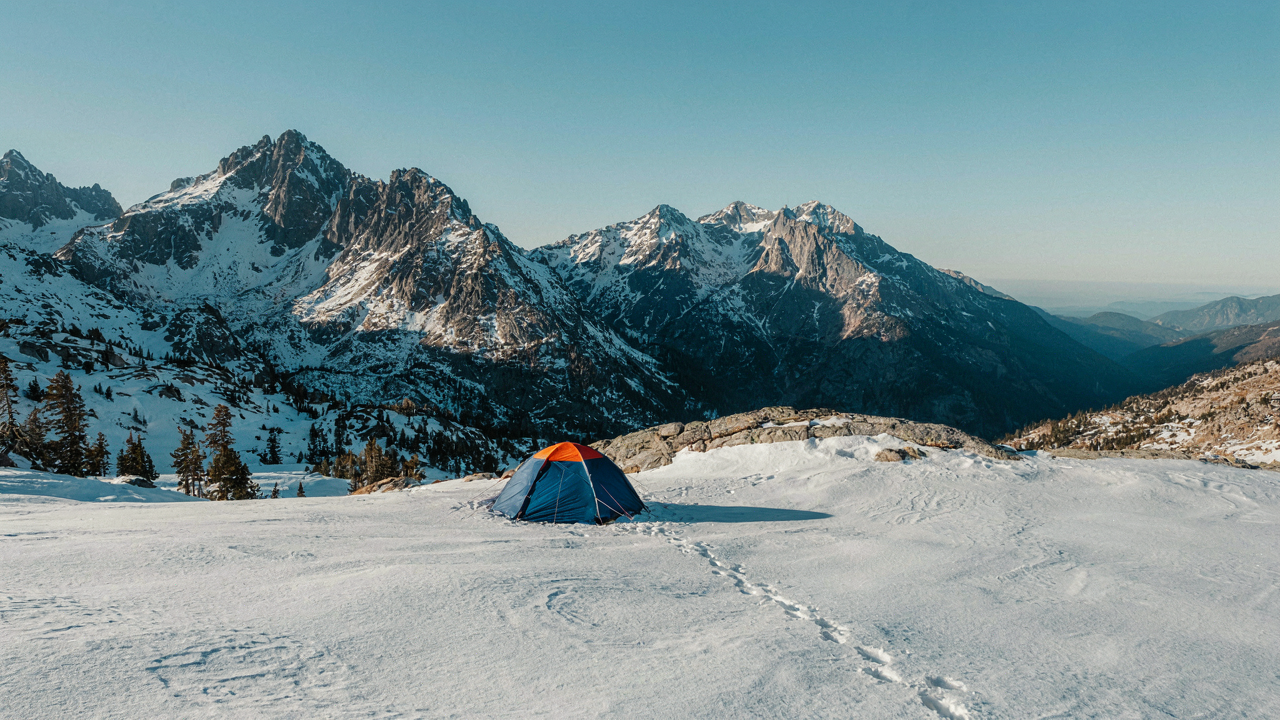
The Thermal Inversion Fallacy: Why More Layers Fail
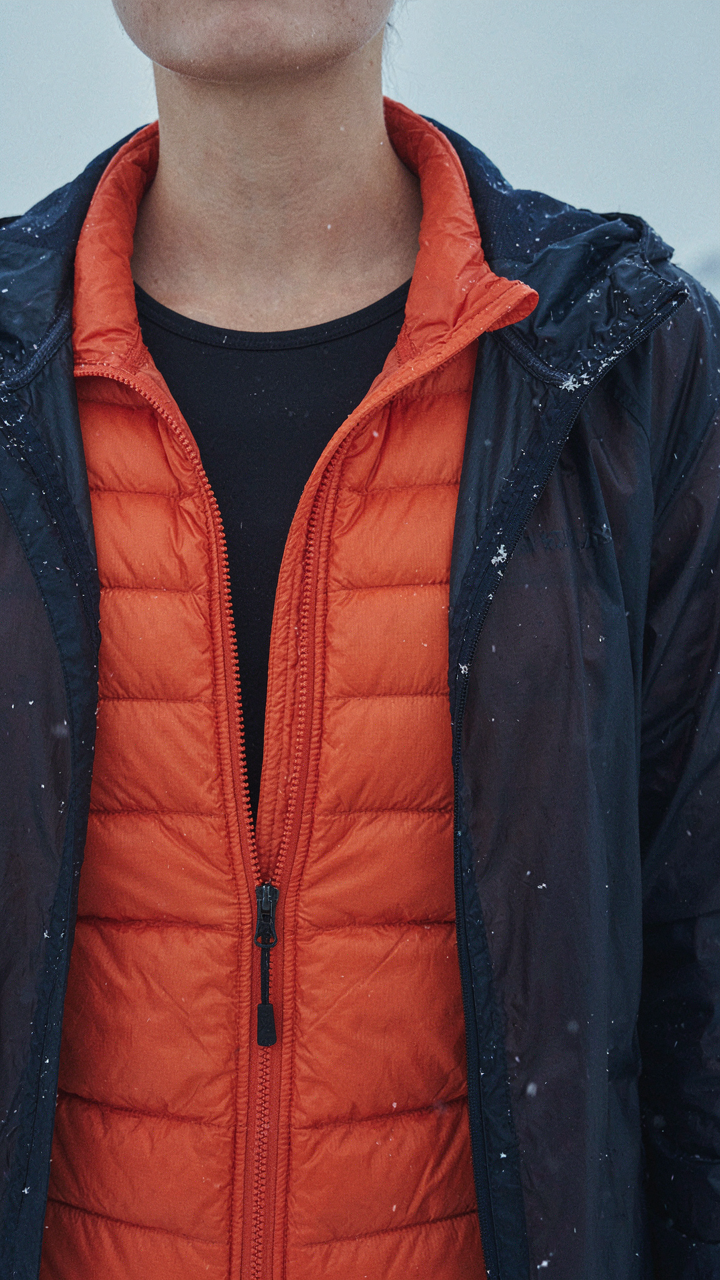
Where Bulk Becomes Dead Weight
You think more layers mean more warmth because it sounds logical, and buying gear feels like progress. The mechanism is different. In thermodynamics terms, you’re confusing insulation with thermal resistance. More material doesn’t trap heat efficiently if you’ve misunderstood how heat actually leaves your body in winter camping conditions.
The real problem: most people layer like they’re building a wall instead of managing moisture and air gaps. Tight, compressed layers kill the dead air space that does the actual insulating work. Wet fabric against skin transfers heat away fast, regardless of thickness. Cotton especially becomes a heat sink once it absorbs sweat or condensation from your breath. You end up colder wearing five layers than three, because the fifth layer is compressing everything below it into useless density.
Insulation Placement Over Insulation Volume
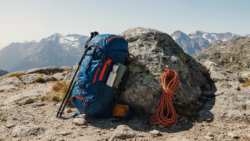
Stop thinking in terms of “more insulation” and start thinking in terms of “where does heat escape fastest.” Core temperature matters first. Extremities second. Head last because that myth about 40 percent heat loss through your head is wrong, but strategic insulation at your torso and thighs prevents the cascade that makes extremities fail anyway.
Down insulation excels in dry conditions because it traps still air efficiently. Synthetic holds value when wet, but it requires volume to match down’s R-value, making it bulkier. The win is layering a moisture-wicking base, an insulating mid-layer with zero compression, and a wind-blocking shell. Your sleeping bag matters more than jacket layering because you spend eight hours stationary in it. Pack a bag rated 10 to 15 degrees below your expected low temperature, then layer strategically underneath it rather than trying to compensate with heavier clothing you’ll sweat through during the day.

Winter Camping Checklist: The 3 Tier Survival Stack
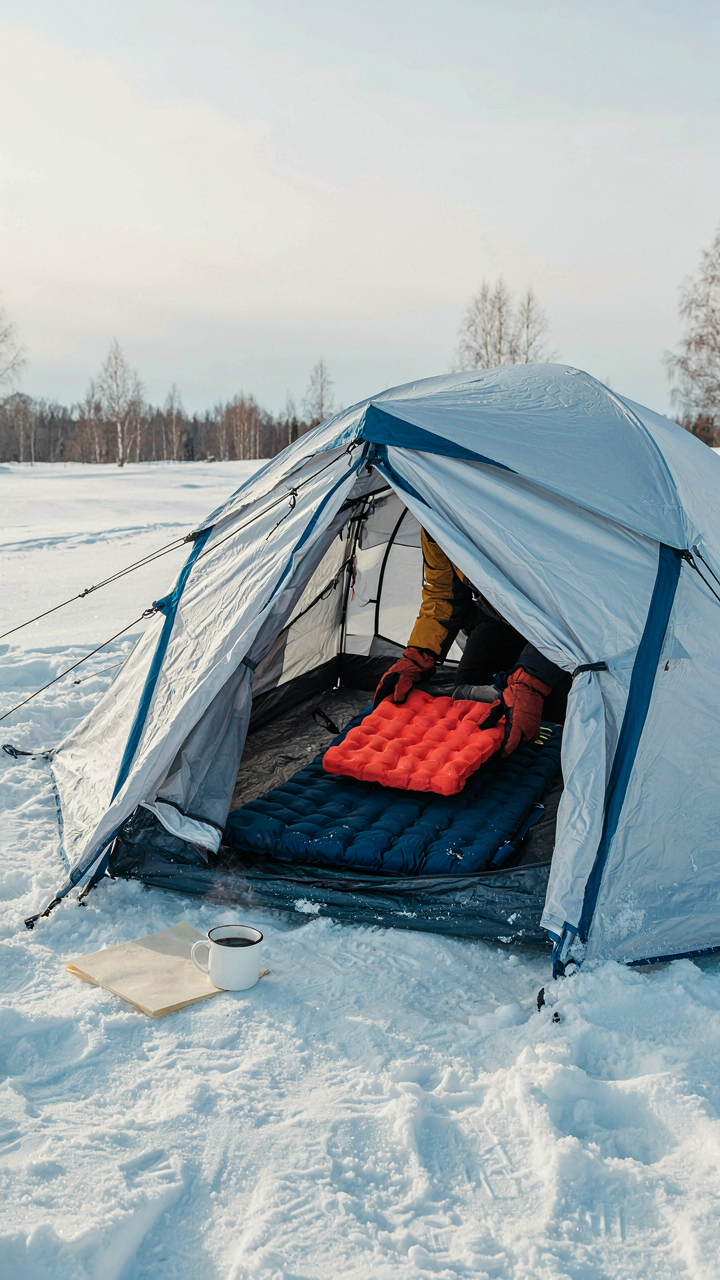
The Non Negotiable Core
You want this list because you’re afraid of dying in the cold and looking stupid if you survive anyway. That fear is useful. Winter survival operates on the same principle as a redundant system in engineering: each component must function independently because failure in one tier cascades into failure everywhere else. Your shelter, warmth, and hydration aren’t optional features. They’re the load-bearing walls of staying alive.
- Four-season tent or bivy sack: Designed to withstand wind and snow load. A three-season tent fails here because it lacks the structural integrity and insulation layer needed for winter conditions.
- Sleeping bag rated to at least 20 degrees below expected low: Winter temperatures drop faster than forecasts predict. A bag rated to zero degrees becomes useless if the real temperature hits minus twenty.
- Insulated sleeping pad with R-value of 5 or higher: Ground conducts heat away from your body faster than air. The pad stops convective loss. R-value measures thermal resistance. Without it, your bag is nearly worthless.
- Stove, fuel, and lighter with backup: Fire or heat is not optional. Bring two lighters or matches in waterproof containers. One failure means you cannot melt snow for water or warm core temperature.
- Insulated water bottle or thermos: Hydration freezes. You need containers that prevent this. Drink warm water before sleeping to generate internal heat through digestion.
Pack these items first, verify they work before departure, and inspect them on site. Everything else is secondary. If these five systems fail, you’re managing an emergency, not camping.
Backup Systems For When Failure Happens
The common advice stops at listing gear. That’s incomplete. Experienced winter campers pack redundancy for anything that could kill you alone. This isn’t paranoia. It’s acknowledging that gear fails, breaks, or gets lost in snow. Military planning calls this “single point of failure analysis.” Apply it: identify which broken item makes you unsolvable, then pack two of those items.
Your stove could malfunction. Your lighter could fall in snow. Your sleeping bag could get wet from condensation or accident. Pack a backup lighter. Bring a second fuel canister. Carry a chemical heat source or hand warmer for emergency core temperature management. Your primary insulated pad might tear. Bring repair tape and a foam pad as last resort. The mechanism is simple: every system that keeps you alive needs a parallel system that also keeps you alive.
Beyond The Tent: Unconventional Shelter Tactics
Snow Shelters And Natural Windbreaks
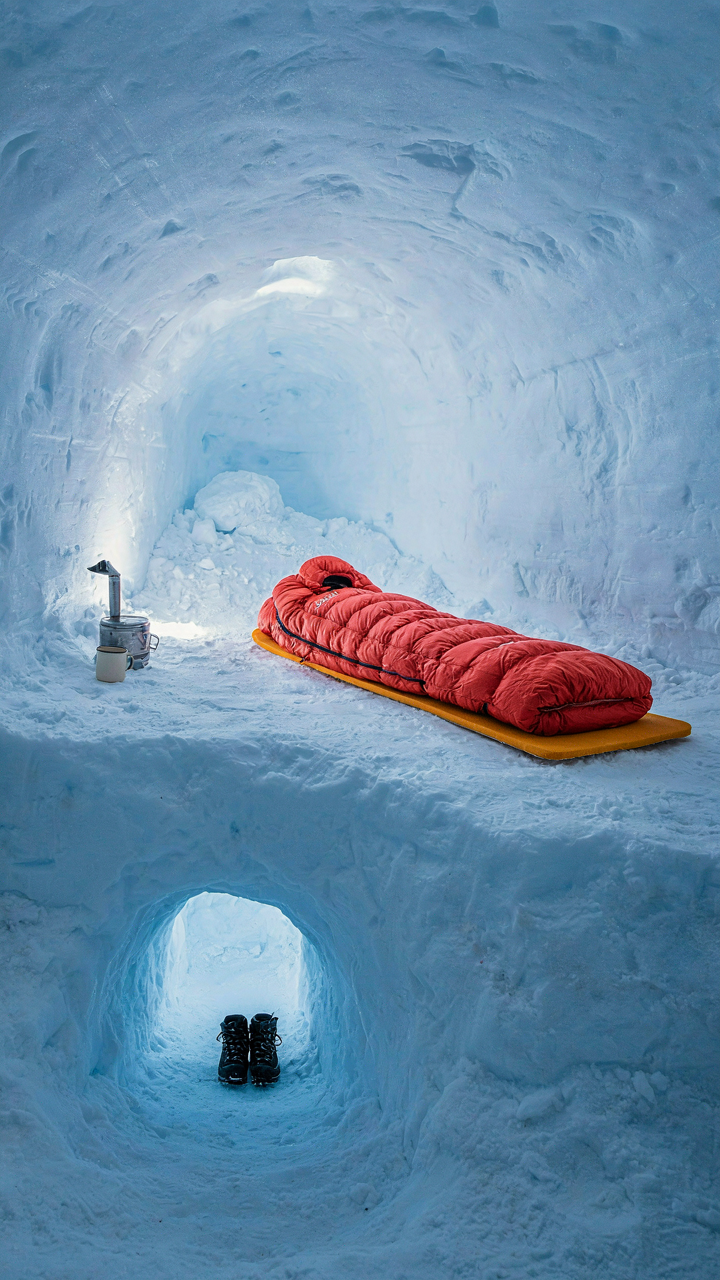
You want this section because you’re afraid a tent won’t cut it, and you’re right to be skeptical. The real mechanism is thermal mass. Snow is an insulator because it traps dead air in its crystal structure. A snow cave or quinzhee uses physics the same way a thermos uses it: the material itself becomes the barrier, not just a container for one.
Building a snow shelter requires specific conditions. Wet, dense snow compacts and holds shape. Powder collapses. You need a slope or drift with at least four feet of depth to carve a sleeping chamber above the entrance tunnel. The entrance sits lower than the bed so cold air sinks away from where you sleep. This isn’t theory. It’s how arctic explorers survived before modern tents existed.
Natural windbreaks demand reconnaissance before dark. A dense stand of trees, a rock outcrop, or a slope facing away from prevailing wind all reduce the energy your tent loses. Position your shelter on the leeward side. The wind direction in winter camping determines whether you survive comfortably or spend eight hours shivering. Pack a lightweight tarp and knowledge of terrain to find or create a break that cuts wind by fifty percent before you ever stake your tent.
Emergency Bivvy And Thermal Reflection
Most people pack a sleeping bag and assume that covers it. It doesn’t. Thermodynamics teaches us that radiation moves heat in all directions, and you’re radiating heat into the ground. A bivvy sack or emergency bivy creates an air gap between your body and the outside. That gap is the difference between a night you sleep through and one where you burn calories fighting cold.
Pack a lightweight emergency bivvy alongside your sleeping bag. The material reflects radiant heat back toward your body while still allowing moisture to escape. Thermal reflection works because your sleeping bag insulates from air temperature, but ground cold pulls heat through conduction. The bivvy stops that. Your sleeping pad does part of this job, but a bivvy seals the leak. Lay your sleeping pad first, then the bivvy inside the tent, then your sleeping bag inside the bivvy. This setup turns your tent into a thermal trap instead of a cold box.
The Energy Balance Equation: Fueling Cold Weather Camping
Calorie Density Over Volume
You’re worried about weight but terrified of bonking in the cold. Here’s what nobody tells you: the mechanism is thermogenesis. Your body burns calories to generate heat. In physics, energy input must match energy output or the system fails. Winter camping demands you pack fuel density, not meal variety.
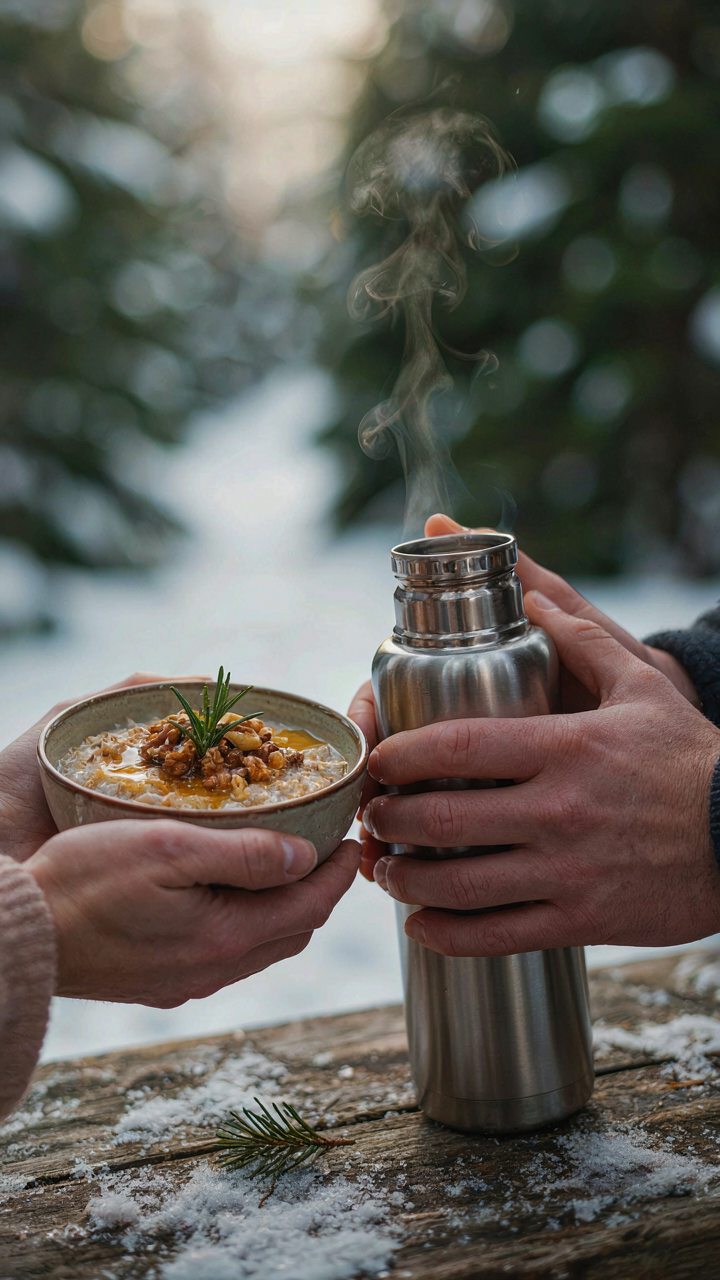
Most people bring trail mix and energy bars. That’s lazy. You need 5,000 to 7,000 calories per day in winter, not the 2,000 to 3,000 of summer. Butter, nuts, pemmican, and full-fat jerky deliver calories in minimal weight. Cook hot meals twice daily: oatmeal with oil for breakfast, a stew with meat and fat for dinner. Liquid calories matter most. Bring powdered whole milk, coconut oil packets, and nut butters to stir into warm drinks between meals.
Liquid Before Ice Forms
Dehydration kills faster than cold because your body can’t regulate temperature without water. The trap is obvious: you won’t drink cold water when it’s 20 degrees. So everyone arrives dehydrated, then suffers worse cold exposure than necessary.
Drink warm liquid every two hours. Thermos bottles with hot broth or tea preserve temperature for hours. Melt snow only as a backup, never as your primary source. Eat snow directly and you’ll lower your core temperature further. Drink at night too. Keep a wide-mouth bottle inside your sleeping bag so you can drink without exiting. Freeze urine in your bottle, not water, if you’re caught without insulation.
Winter Camping Essentials: The Sleep System Audit
Sleeping Bag Ratings Versus Real World Warmth
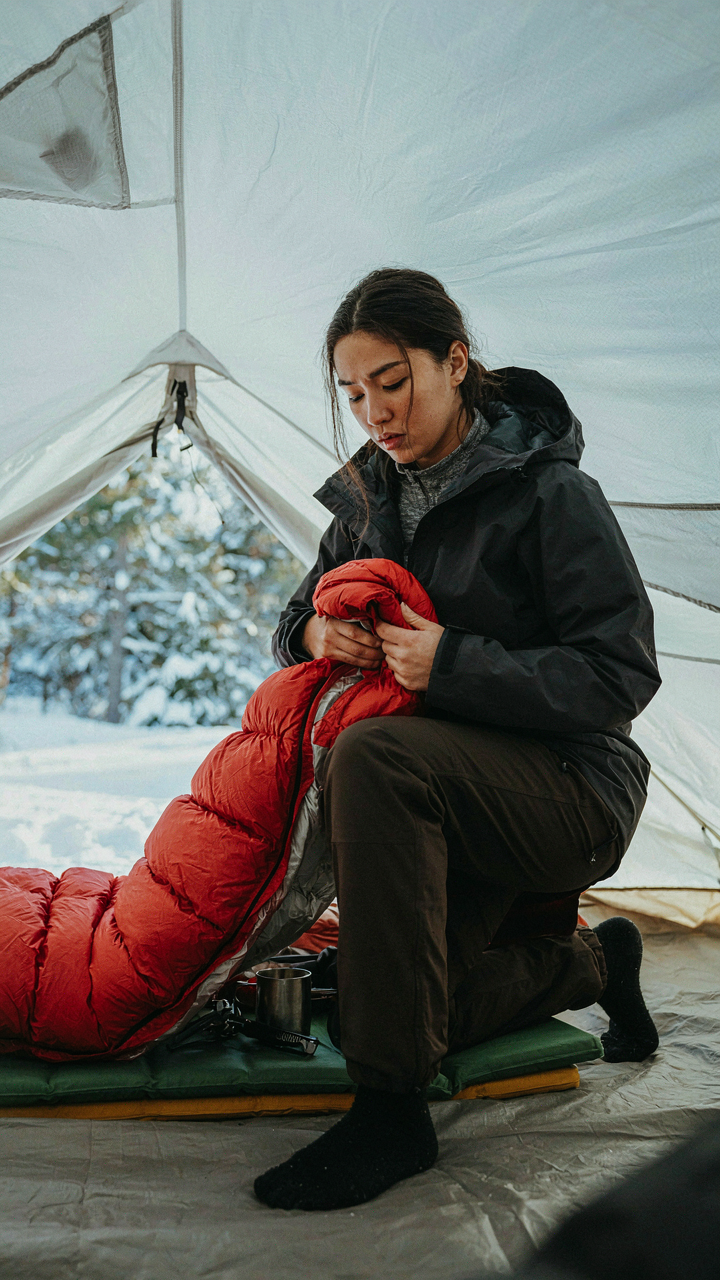
You want the sleeping bag to work so you don’t have to think about it. That’s the real reason you’re reading this. Here’s the mechanism: manufacturers rate bags using a controlled lab test with a nude mannequin on an insulated pad in still air. Your actual body generates less stable heat than that mannequin, your pad degrades over time, and wind penetrates fabric. A bag rated for 0 degrees will fail you at 15 degrees if you’re not accounting for the gap between spec and field reality.
The comfort rating matters more than the limit rating. Manufacturers publish both, but most people fixate on the lower number and buy a bag that keeps them alive but not warm. A bag rated 20 degrees comfort means you’ll actually sleep at that temperature without constant shivering. Buy for the comfort number, then drop 10 more degrees as a safety buffer. That’s the protocol.
Ground Insulation The Overlooked Heat Thief
Physics calls it conduction, and it’s the primary mechanism draining your body heat in winter camping. Your sleeping bag insulates you from above and sides, but zero insulation separates you from the frozen ground below. Compressed insulation under your body loses 60 to 70 percent of its R-value under pressure. Your weight flattens the air pockets that create the insulation in the first place.
Use a sleeping pad with an R-value of 5 or higher, or layer two pads to reach that threshold. Never skip this step because your sleeping bag alone will not compensate. A foam pad under an inflatable pad gives you both puncture protection and thermal redundancy. Stack them strategically and your sleep system works as designed instead of fighting a battle you’re losing on the bottom.
The “Cold Hands” Myth: Blood Flow Management
Your Core Stays Warm Or Everything Dies
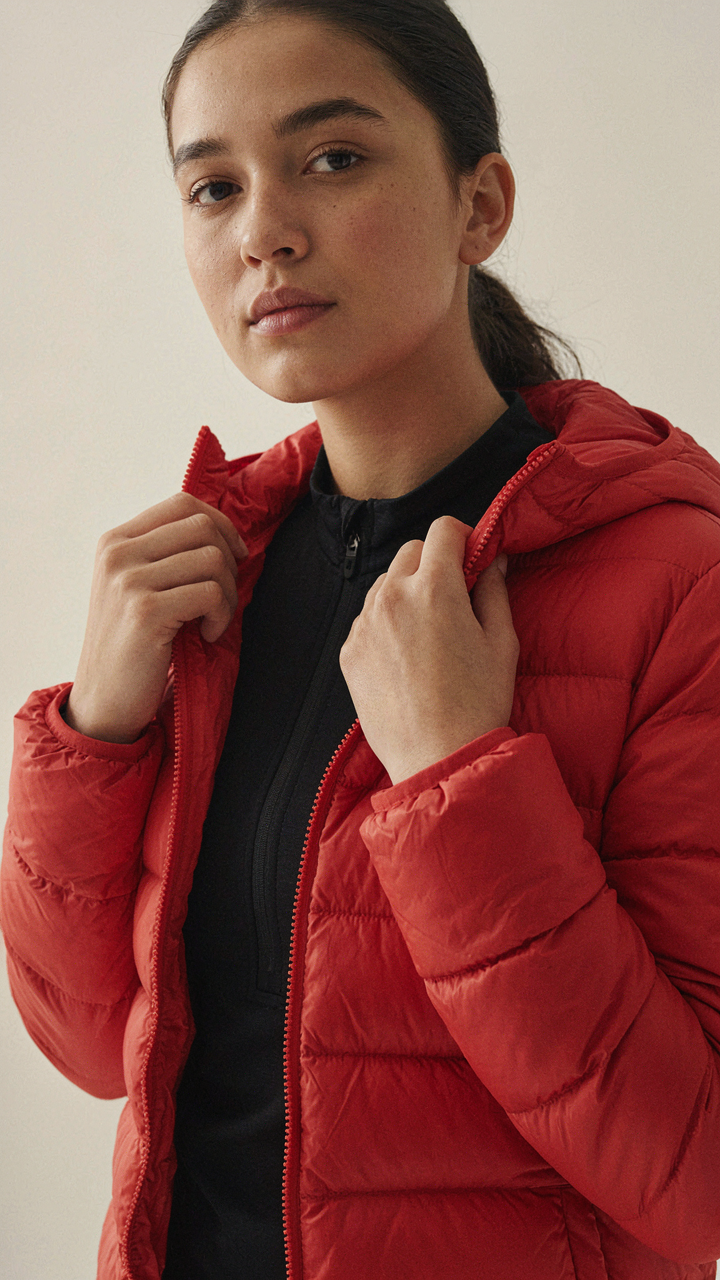
You think the problem is your hands. It’s not. Your body runs on a single priority: keep your core alive. Everything else is negotiable. Thermoregulation is a hierarchy, not a democracy. When ambient temperature drops, your nervous system makes a choice: sacrifice the extremities to protect your heart, lungs, and brain. Your hands go numb not because they lack insulation, but because your body is actively restricting blood flow to them.
Most winter camping advice treats this as a hand problem. Wrong framing. The real mechanism is core temperature management. Your body measures internal temperature constantly. If it drops below 37 degrees Celsius, survival systems activate. Vasoconstriction happens first, which means blood vessels in your fingers and toes narrow deliberately. This isn’t a failure of your gloves. This is your body prioritizing survival. Pack layers that keep your torso stable, and your hands stay functional longer than any marketing claim about “thermal technology” suggests they should.
Extremities Lose The Oxygen Game First
Peripheral circulation operates on scarcity. Your body rations blood like a general rations ammunition. When core temp drops, your circulatory system pulls blood away from your extremities and channels it inward. This is vasoconstriction, the same principle that keeps you alive in water immersion incidents. Your fingers are last in line for oxygen and heat. They also have the most surface area relative to their volume, so they shed heat faster than any other part of your body.
The fix isn’t exotic insulation. Stop relying on thick gloves alone. Your extremities stay warm when your core temperature remains stable. Wear a quality base layer that wicks moisture, add an insulating mid layer, and use a wind-resistant outer shell. Keep your torso temperature high, and your body will keep sending blood to your hands. The moment your core drops, no glove saves you. Maintain core warmth first, then add hand protection as a secondary measure, not a substitute.
Winter Camping List: Tools That Earn Their Weight
One Tool That Does Five Jobs
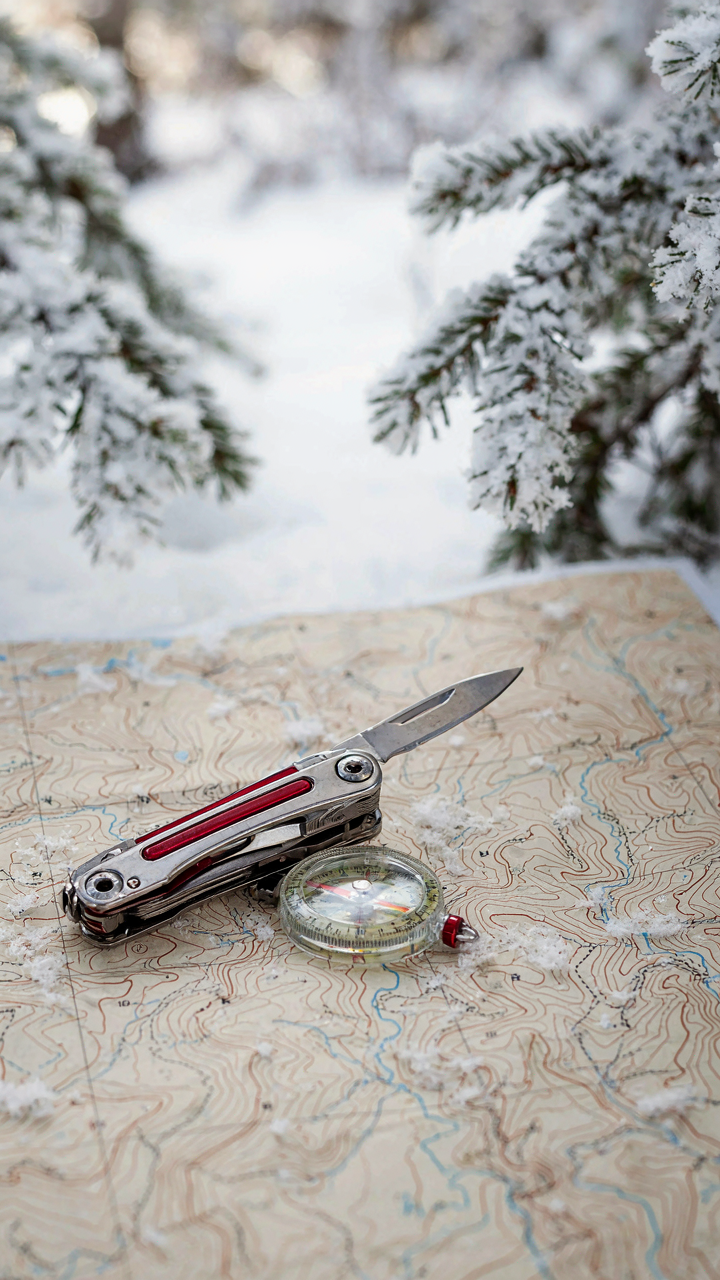
You want to feel prepared without carrying a hardware store, so you tell yourself you need specialized gear for every scenario. That’s backwards. In systems thinking, redundancy is built into critical functions so failure of one component doesn’t collapse the whole operation. A quality multi-tool replaces five single-purpose items and weighs almost nothing.
The knife blade handles food prep and gear repair. The pliers manage broken equipment and wire. The screwdriver adjusts bindings and secures loose parts. The saw cuts branches for fire or shelter. The file sharpens edges and smooths rough surfaces. Carry one tool that masters these five functions instead of five tools that master one each.
Navigation Without Relying On Your Phone
Electronics fail in cold. Batteries die faster in freezing temperatures. GPS units run out of power when you need them most. This is why you carry redundancy: a paper topographic map, a baseplate compass, and a GPS unit working as backup only, not primary navigation.
Learn to read contour lines and identify terrain features before you go. Compass work requires no battery and no signal. Your map stays accurate in any condition. On trip day, use GPS to confirm your position, but navigate using map and compass as your main system. Mark your planned route on paper before departure and reference it constantly, not as afterthought.
The Psychological Warfare Of Cold Weather Camping
Stoicism Beats Comfort Chasing
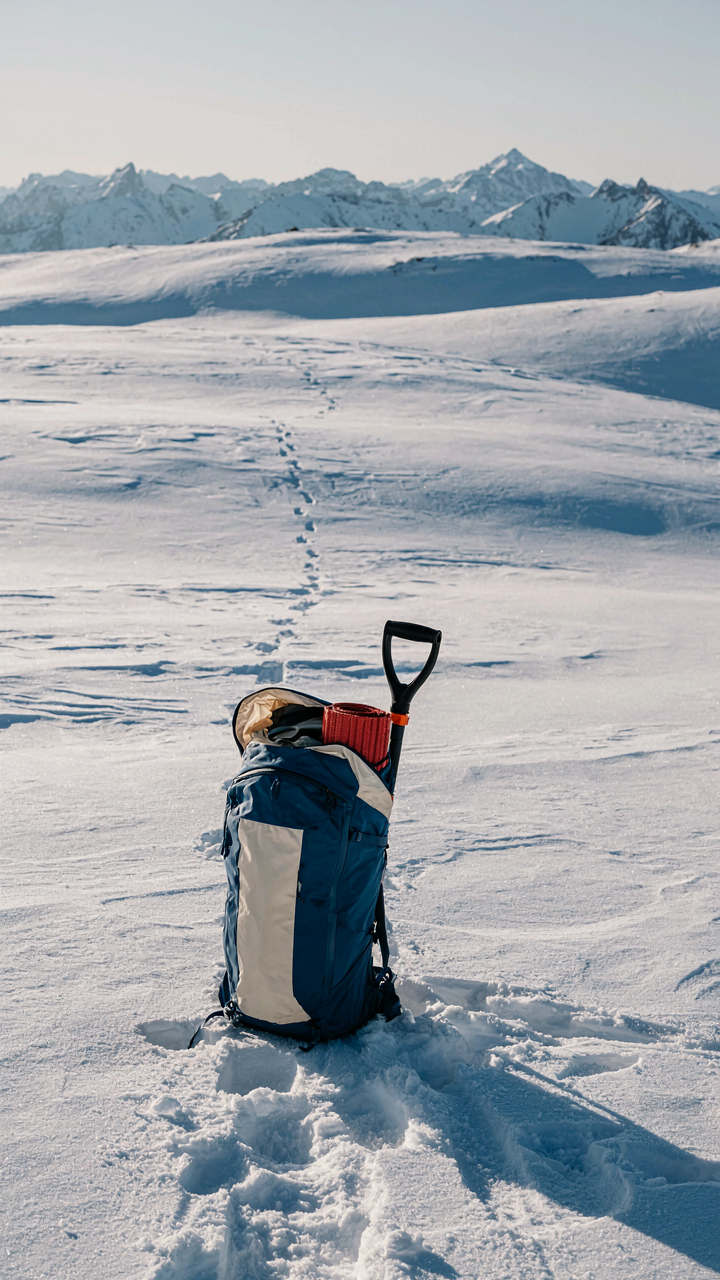
You’re reading this section because you’re afraid you’ll be miserable, and you want permission to bring enough stuff to guarantee comfort. That’s not how winter camping works. The real mechanism comes from military doctrine: soldiers who accept discomfort as inevitable perform better than those who fight it. Your packing list should reflect this. Bring what keeps you alive, not what keeps you pampered. The difference matters because every extra item is weight, bulk, and false confidence that fails when conditions shift.
Stoicism isn’t about suffering. It’s about removing the mental tax of expecting things to go smoothly. When you pack for winter camping, you’re betting that something will go wrong. Your sleeping bag will compress. Your hands will hurt. Your feet will get damp. Accept this upfront, and you pack differently. You bring redundancy in critical areas, not comfort layers. You stop wasting pack space on “just in case” items that add complexity without solving the core problem: staying alive through the night.
Constraints Make Better Decisions
Decision fatigue is an economics term describing how choice quality degrades as you make more decisions. Apply it here: a 60-liter pack forces better choices than a 100-liter pack. The volume ceiling forces you to cut. Limited choices under duress produce sharper gear decisions than unlimited options made from your couch. Most people pack poorly not because they don’t know what matters, but because they never had to choose.
Create hard constraints before the trip. Decide your pack volume. Decide your base layer system. Decide your shelter and sleeping bag. Write these down. Everything else gets evaluated against these anchors, not debated in the field. This removes the mental load when you’re tired, cold, or second-guessing your preparation. When you step into the cold, your packing should feel inevitable, not negotiable.
Packing For Winter Camping Trip: The “Anti Fragile” Principle
Redundancy Over Perfection
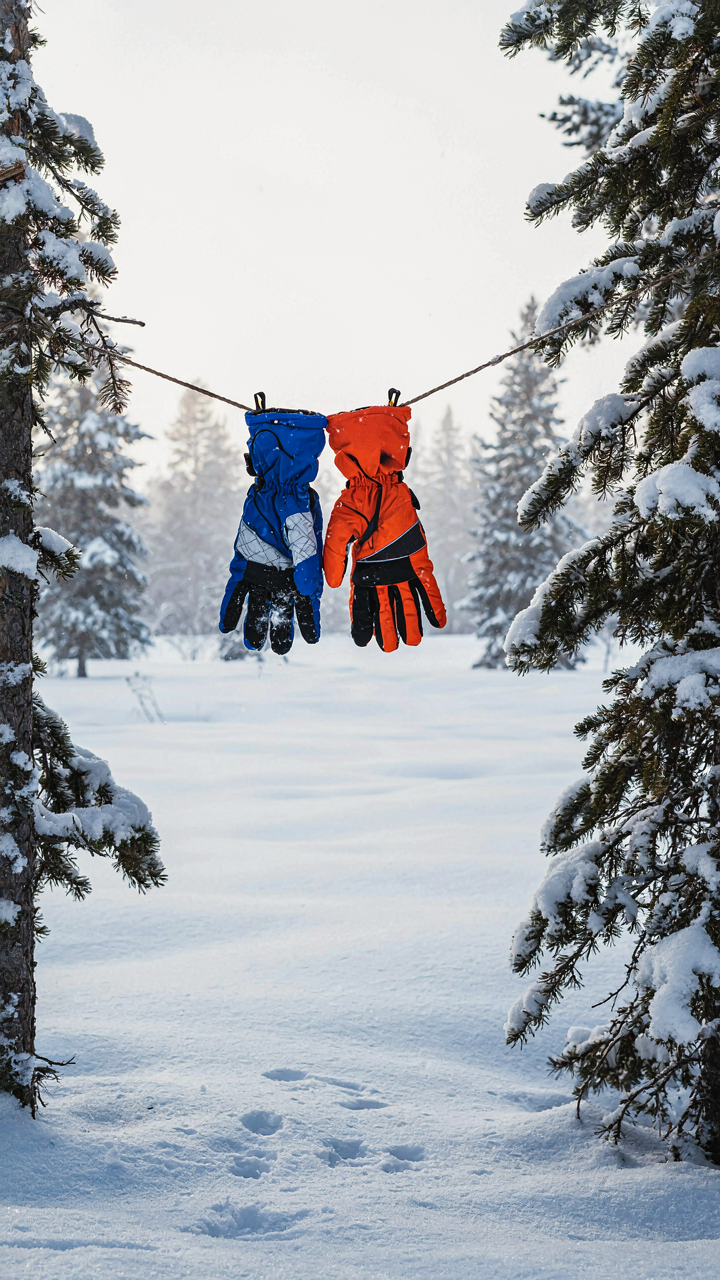
You want the right gear so you feel prepared and won’t embarrass yourself if something breaks. That’s not the real problem to solve. The mechanism is this: one failure in winter isn’t an inconvenience—it’s a cascade. Your primary insulation fails, you have no backup, and your core temperature drops faster than you can recover. You need redundant systems that function independently.
Pack two of what matters. Two insulating layers, two ways to start fire, two sources of heat generation. Not as insurance. As architecture. Single-layer packing fails in winter because conditions change faster than you can adapt. Redundancy isn’t wasteful—it’s the difference between solving a problem and becoming the problem someone else has to rescue.
Ancestral Design, Modern Materials
Biology teaches us that organisms survive through diversity, not specialization. Apply this directly to your gear selection: you need systems that perform across multiple failure states, not equipment optimized for one perfect condition. Your ancestors didn’t pack one coat. They layered. They built shelter with multiple insulation methods. They carried redundant fire sources because fire meant survival.
Modern winter gear works because it copies this principle using better materials. Merino wool, synthetic insulation, and down each perform differently when wet or compressed—mirroring how ancestral clothing combined furs, plant fibers, and animal materials. The lesson isn’t nostalgia. It’s that packing for winter means building depth into every system rather than betting on ideal conditions.
Post Trip Debrief: What You Actually Needed

The Gear That Earned Its Weight
You want to believe you packed right. That’s the real tension here. You spent money, researched, committed to a system. Now you’re home and the truth is sitting in your gear bag: some things worked, most didn’t, and you packed like someone afraid of being cold instead of someone prepared for it. Thermodynamics has a term called “thermal mass.” In winter camping, thermal mass means items that store and radiate heat back to your body. A 2-pound sleeping bag that maintains 15 degrees does more work than a 1-pound rain jacket. Stop counting ounces. Count heat transfer. The gear that earned its weight is the gear that either kept you warm, kept you dry, or enabled the other two. Nothing else matters. Write down what you actually used each hour. The items you touched, adjusted, or relied on. Everything else is insurance you never claimed.
Your second night reveals more than your first. Exhaustion drops your discipline. You stop fiddling with layers. You sleep or you don’t. The gear performing on night two is the gear staying in your rotation. The stuff you ditched halfway through or abandoned at camp is the stuff you overestimated. Most winter campers pack three base layers when one works. They pack backup gloves that never leave the bag. They pack items “just in case” and the just-in-case never arrives. Strip the debrief to this: if you didn’t use it, you didn’t need it. If you used it but could have improvised, it’s optional. If you couldn’t have done the trip without it, it’s core.
Building The Actual Minimal Kit
The common advice here is garbage. Most guides tell you to “pack light but bring backups.” That’s hedging, not strategy. A minimal winter kit isn’t built by removing items from a full kit. It’s built by identifying the non negotiable functions, then finding the single best tool for each. Your functions are: core insulation, moisture management, wind blocking, and navigation. Not comfort. Not convenience. Not redundancy. One sleeping bag rated for your lowest expected temperature. One insulating layer that stays dry. One windproof shell. One headlamp with fresh batteries. One navigation tool. These five items create the floor. Everything else is architecture on top of that floor. Most people build the floor three times by accident.
Test your kit in the cold before committing. A forty-eight-hour trip in controlled cold reveals what a multi-day expedition never will. You’ll find gaps fast. A gap is something that forced you to improvise, compromise, or suffer unnecessarily. Fix gaps by swapping items, not adding them. If you got cold at night, upgrade your sleeping bag insulation, don’t add a blanket. If your hands froze, upgrade your gloves, don’t pack three pairs. Each time you return, you replace one item with a better version. After three trips, your kit is built from real data, not fear.
The Only Truly Essential Gear Is Your Unfussy Resilience
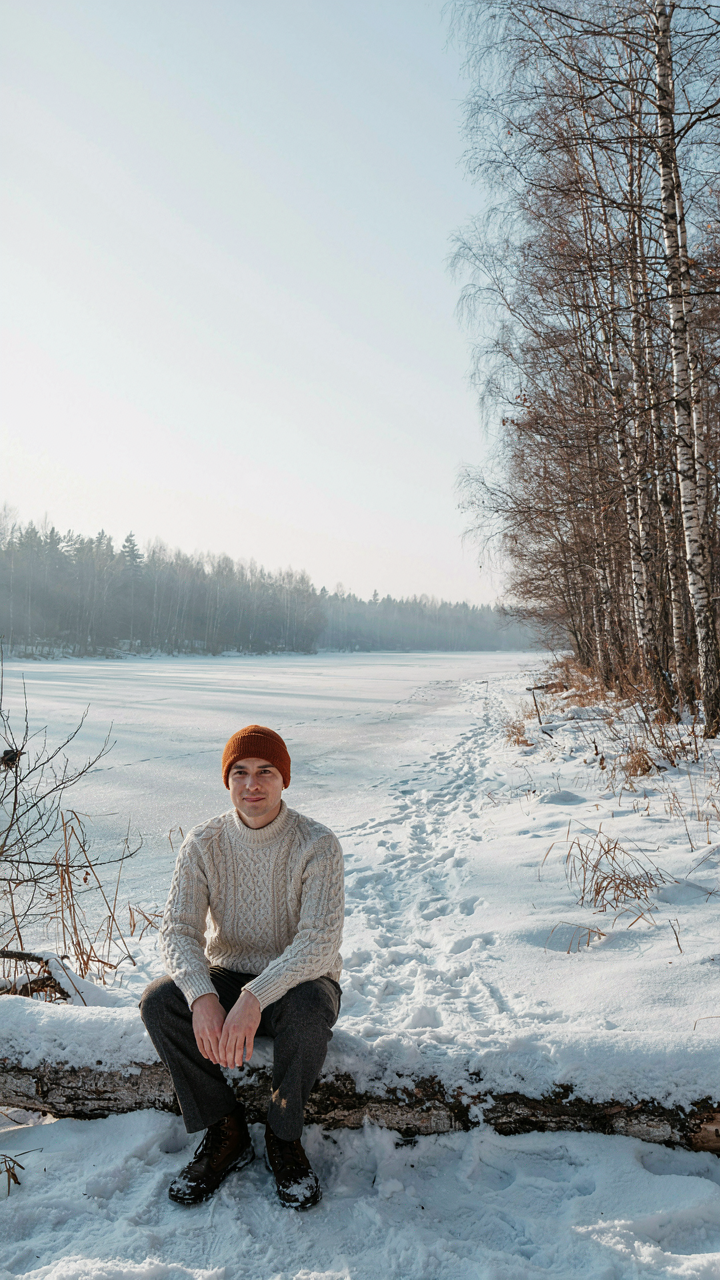
Most people fail winter camping trips not because they packed wrong. They fail because they expected comfort. You don’t need the perfect sleeping bag or insulated boots. You need the ability to sit in cold, discomfort, and boredom without narrating a story about how miserable you are. Stop researching gear lists. Buy one warm thing. Go this weekend and learn what you actually need by freezing a little.