
The Hydration Paradox: Beyond The Gallon
Know Your Water Before You Leave
You want the one-size-fits-all number so you can feel prepared without thinking. That’s not how deserts work. Water availability determines your entire pack weight and route viability, so you assess it first, not as an afterthought. Map your trailhead to identify reliable sources: established water caches, springs, seeps, or natural basins. Call the ranger station. Talk to recent hikers. One wrong assumption costs you miles of unnecessary weight or a dangerous situation.
The mechanism here is information hierarchy. You don’t pack water; you pack based on where water lives. If your route has a reliable source at mile eight, you carry different volume than a waterless stretch. Desert springs fail seasonally. Some maps show sources that dried years ago. Verify current conditions before you leave your driveway. This single step eliminates the guessing that kills people.
Electrolytes Handle What Water Cannot
The common advice is drink more water. That’s incomplete and dangerous in desert conditions. Your body loses sodium and minerals through sweat faster than you lose water volume, creating a biochemical mismatch. Think of it like economics: volume is supply, but electrolytes are demand. Without both, your system destabilizes. You can drink a gallon and still dehydrate at the cellular level if minerals are absent.
Pack electrolyte powder or tablets that contain sodium, potassium, and magnesium. Aim for drinks with 300-600mg sodium per liter, which matches actual sweat loss in hot conditions. Mix it into your water at regular intervals, not just when you feel thirsty. Thirst is a lagging indicator in the desert. By the time you feel it, your performance has already dropped. Start electrolyte replacement in hour two and maintain it every hour thereafter.

Clothing As Climate Control: The Layering Deception
Material Science For Desert Thermoregulation
You want the “right” layers because you think it proves you’re prepared. Here’s what actually matters: physics treats your skin as a heat exchange system, and your clothing is the insulation barrier controlling that transfer. Most people pack cotton or heavy synthetics. Both fail in deserts.
Merino wool and synthetic blends like polyester regulate temperature by wicking moisture away from skin while maintaining insulation even when damp. Cotton absorbs sweat, holds it against your body, and drops your core temperature. In a desert where humidity runs 10-20%, you’re fighting a different problem than humid climates. Your sweat evaporates fast, which is good, but the speed of that evaporation pulls heat from your body aggressively. Tight-weave, lightweight synthetic base layers cut this energy loss without adding bulk. A single long-sleeved shirt in merino or poly beats multiple cotton layers every time.
The real mechanism works like this: wear a moisture-wicking base layer close to skin, add a loose outer shell that reflects sun and lets air move underneath, and skip the middle layer entirely until temperature drops below 50 degrees Fahrenheit. Most hikers over-pack insulation they’ll never need because they picture cold nights without calculating actual heat loss. Bring one extra layer for camp. That’s it.
Sun Protection: SPF Is A Rookie Number
SPF numbers are marketing theater masking a harder truth: you need coverage, not just sunscreen. SPF 30 blocks 97% of UVB rays. SPF 50 blocks 98%. The gap is meaningless. What matters is surface area and reapplication frequency, which most people ignore entirely.
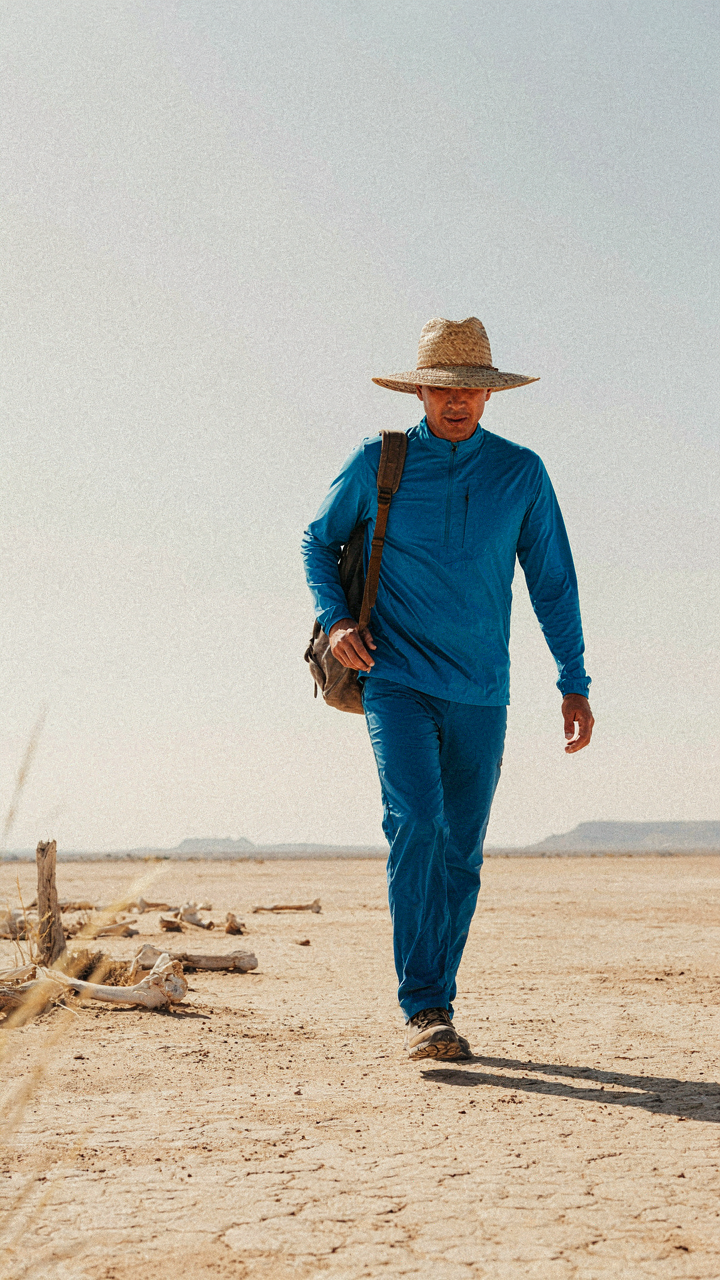
Long-sleeved UPF-rated shirts with tight weaves block 95% of UV rays passively without reapplication. A wide-brimmed hat with neck coverage stops 80% of facial and neck damage before it starts. Sunscreen requires reapplication every two hours in direct sun, and most hikers apply half the recommended amount. Wear the shirt and hat first, use sunscreen as a backup on exposed skin only. Zinc oxide formulas stay put better than chemical sunscreens in sweat. Bring a 1.5-ounce tube as insurance, not as your primary defense. Your clothing does the real work; sunscreen fills the gaps.
The Unconventional Shelter Protocol For Desert Travel
Tarps And Bivvys: Lightweight Desert Solutions
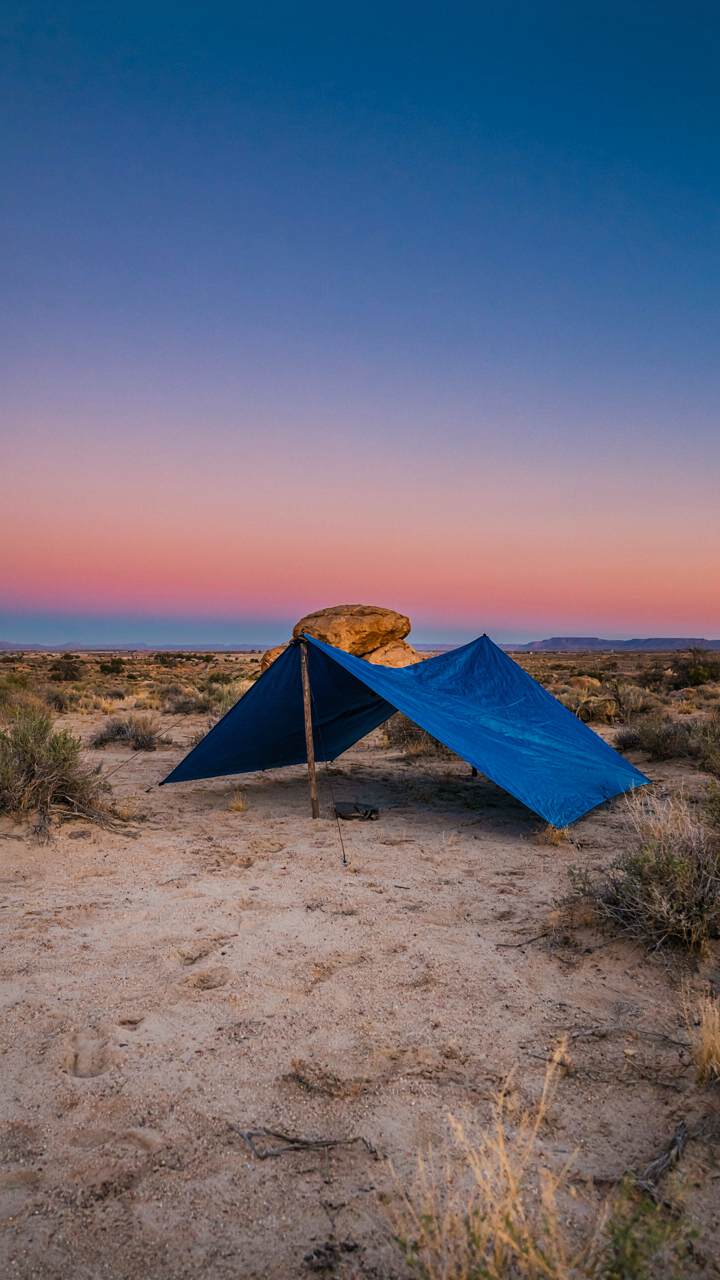
You want shelter that doesn’t telegraph weakness through weight. The real mechanism here is surface area efficiency: a tarp gives you protection without the thermal mass penalty that a tent creates in 40-degree temperature swings. Most hikers pack tents because they’re psychologically reassuring, not because they solve the desert problem.
A tarp system, pitched low with minimal ground contact, deflects wind and sun while allowing airflow that prevents heat trapping. Bivvys work similarly but demand skill to deploy correctly in variable terrain. Both options weigh under two pounds and pack smaller than a water bottle. You need stakes rated for hard ground and guy lines you can tension tight. The trade-off is simple: skill and attention for weight savings. Desert hiking rewards this exchange every mile.
Microclimate Awareness Shapes Camp Location
Microclimate operates like thermal real estate: every small geographic feature creates a distinct temperature zone. Most advice says “pick level ground,” which is incomplete. You need the specific mechanism that determines heat retention in your actual location.
Rock outcrops cool faster than sand at night because they radiate heat more efficiently. Sand holds warmth longer but reflects intense daytime radiation. Low points collect cold air as the sun sets. Vegetation clusters, however sparse, offer wind breaks that reduce evaporative cooling when temperature drops. Scout your camp spot 30 minutes before sunset. Set up where rock or slight elevation drains cold air downslope, away from your sleeping position. This single decision reduces nighttime temperature variance by 8 to 12 degrees without adding ounces to your pack.
Navigation: Beyond The Smartphone Grid
Map And Compass Mastery: Essential Skills
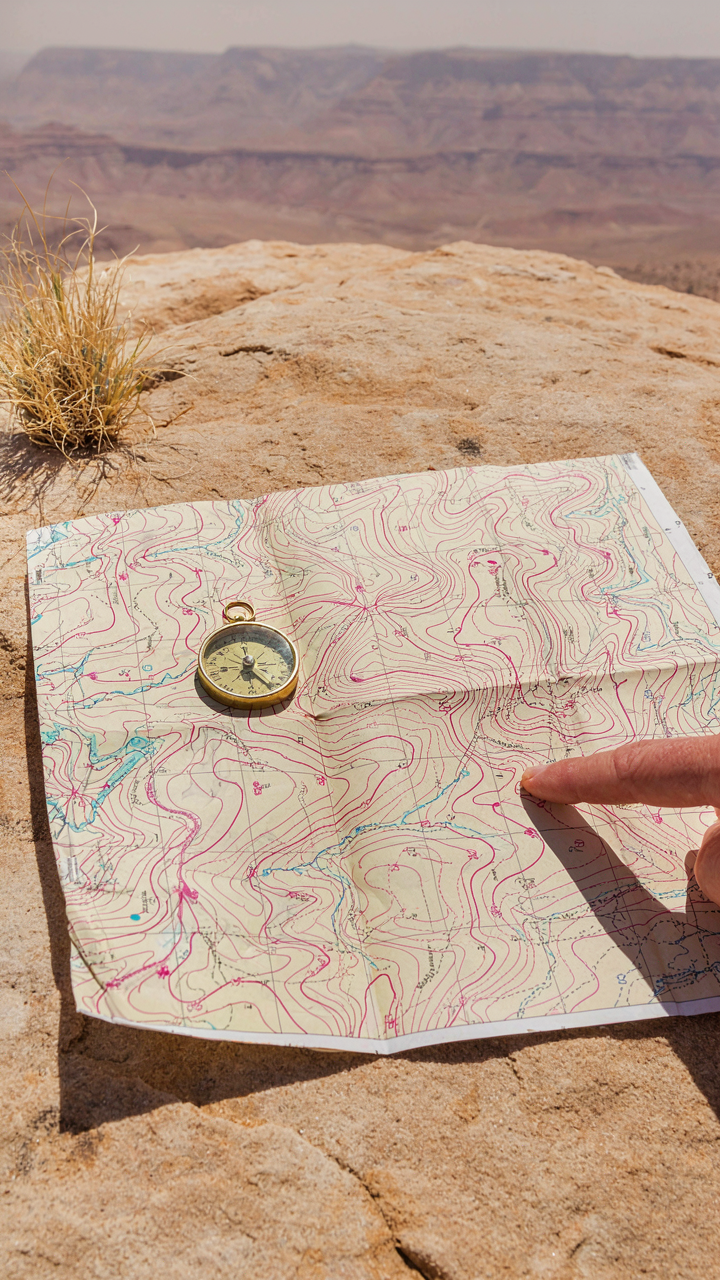
You want this section because you’re betting your safety on a device that dies. The real mechanism is simple: a map and compass work without batteries, signal, or any infrastructure. Military and search-and-rescue teams use orienteering—the practice of navigation using only terrain features and instruments—because it’s the only method that never fails. Packing a topographic map and quality compass means you’ve built redundancy into your navigation layer. Learn to orient the map to magnetic north, identify landmarks, and triangulate your position before the trip. These skills take two hours to internalize and prevent the panic that kills people in deserts.
A compass without map literacy is a decorative object in your pack. You need to understand contour lines, elevation changes, and how terrain features correspond to what you see around you. Practice at home first. Mark your starting point on the map before departure. When you’re 4 miles into the desert and your phone dies, this habit saves the calculation time that turns a minor detour into a crisis. The mechanism is competence under pressure, not luck.
GPS Reliance Versus True Navigation Competence
Everyone says carry a GPS backup. What they miss is that relying primarily on GPS atrophies the navigation instinct you need when technology fails. Navigation psychology shows that learners outsource decision-making to devices, which destroys their ability to read terrain independently. Your smartphone GPS works until it doesn’t: dead battery, cloud cover, canyon walls blocking signal, or simple operator error. Desert hiking demands that you navigate first with map and compass, then cross-reference with GPS only to confirm. This flips the hierarchy and keeps your primary system intact even after gadget failure.
Pack both tools but train your brain to use the non-digital option as the lead system. Check GPS against your map calculation, not the reverse. On the trail, navigate by terrain features and compass bearing. Verify with GPS at major waypoints only. This teaches you to read the actual landscape instead of trusting a screen. The moment your phone battery hits 15 percent in the desert, you’ll already know exactly where you are because you’ve been tracking it manually the whole time.
The “Desert Packing List” Of Energy And Sustenance

Calories Per Ounce Beats Everything Else
You want to pack light without bonking halfway through day two. That’s the real anxiety here. The mechanism is physics: mass creates drag on your body, but calories are your actual constraint in the desert. Every ounce must deliver energy density or it’s dead weight. Most people pack what tastes good or what they know, ignoring the math that determines whether you finish strong or finish depleted.
Desert hiking burns 4,000 to 6,000 calories daily depending on terrain and heat. Your pack weight amplifies this burn. High-calorie foods like nuts, nut butters, dried fruit, and energy bars deliver 150 to 200 calories per ounce. Trail mix sits around 160 calories per ounce. Chocolate covers 150. Compare this to granola bars at 90 to 110 calories per ounce or dried fruit alone at 60 to 80 calories per ounce. The gap determines whether you pack extra days of food or stay lean. Choose calorie density first, taste second. Pack what fuels the hike, not what feeds your preferences.
Minimal Stove Systems Win In Heat
The common advice says bring a camp stove for hot meals and morale. Wrong premise. Heat is your enemy in the desert, not your friend. A stove adds weight, fuel weight, and cooking time when you should be moving before the day gets brutal. Cold meals beat hot meals in the desert because they preserve water and energy. Your actual goal is nutrition, not comfort. If you must cook, use a ultralight canister stove that weighs under four ounces and demands minimal fuel. No-cook options like energy bars, nuts, and nut butter sandwiches eliminate the decision entirely and save you thirty minutes at camp. When you stop cooking, you stop generating heat. When you stop generating heat, you preserve body fluids. When you preserve body fluids, you survive the distance.
Emergency Preparedness: The Redundancy Principle
Layered Fail Safes Beat Single Solutions
You want to feel prepared without actually thinking through what happens when your main plan fails. Military strategy solves this through redundancy: multiple independent systems accomplish the same critical function so that losing one doesn’t cascade into total failure. In desert hiking, this means your water backup isn’t a single extra bottle. It’s a bottle plus a filter plus a chemical treatment method. Each works independently.
Most hikers pack one navigation tool and call it covered. GPS dies. Maps tear or get lost. A compass works without batteries and functions in ways GPS cannot. You need all three because they fail for different reasons and in different conditions. The moment you rely on a single solution for any critical function, you’ve built in a single point of failure. The desert doesn’t care about your assumptions.
Survival Kit Critical Essentials
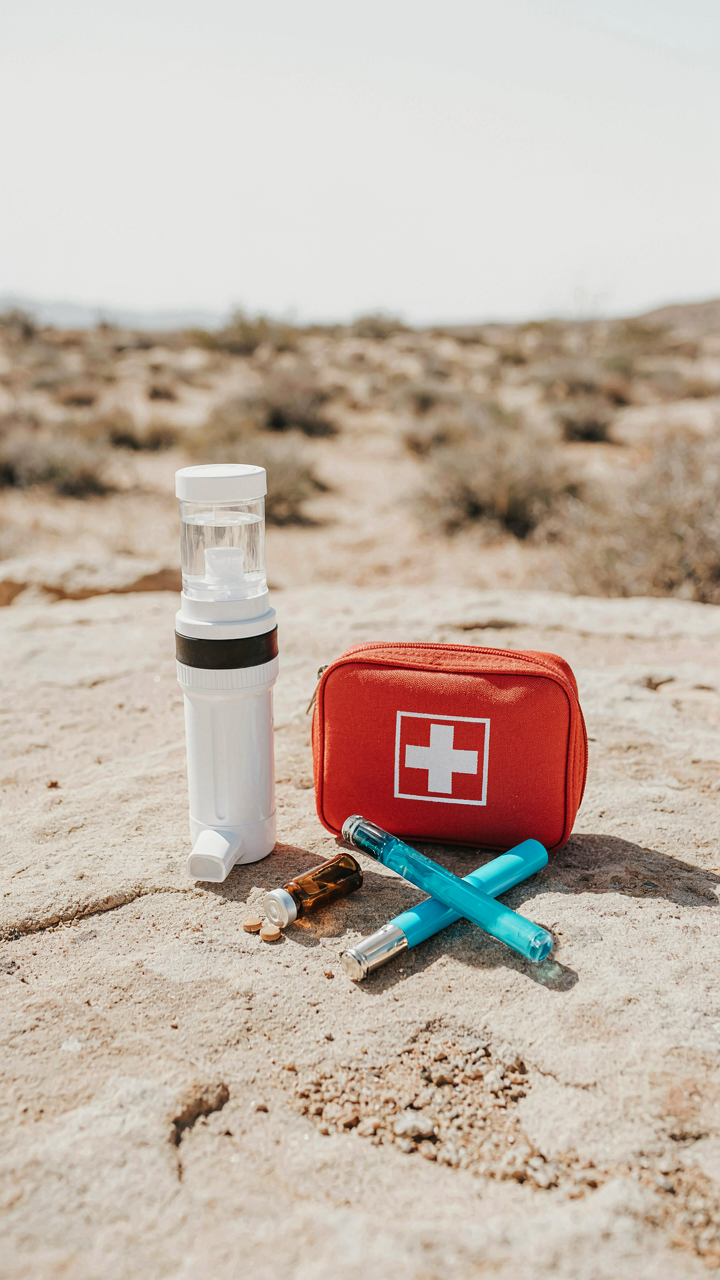
The first paragraph exists because you want proof you’ve done something, not because you’ve actually prepared for what matters. Strip away the prepackaged survival kit nonsense that includes fishing hooks and signal mirrors. Build instead from actual desert emergencies: dehydration, heat injury, cuts that won’t close, sunburn that compromises skin integrity, and navigation loss.
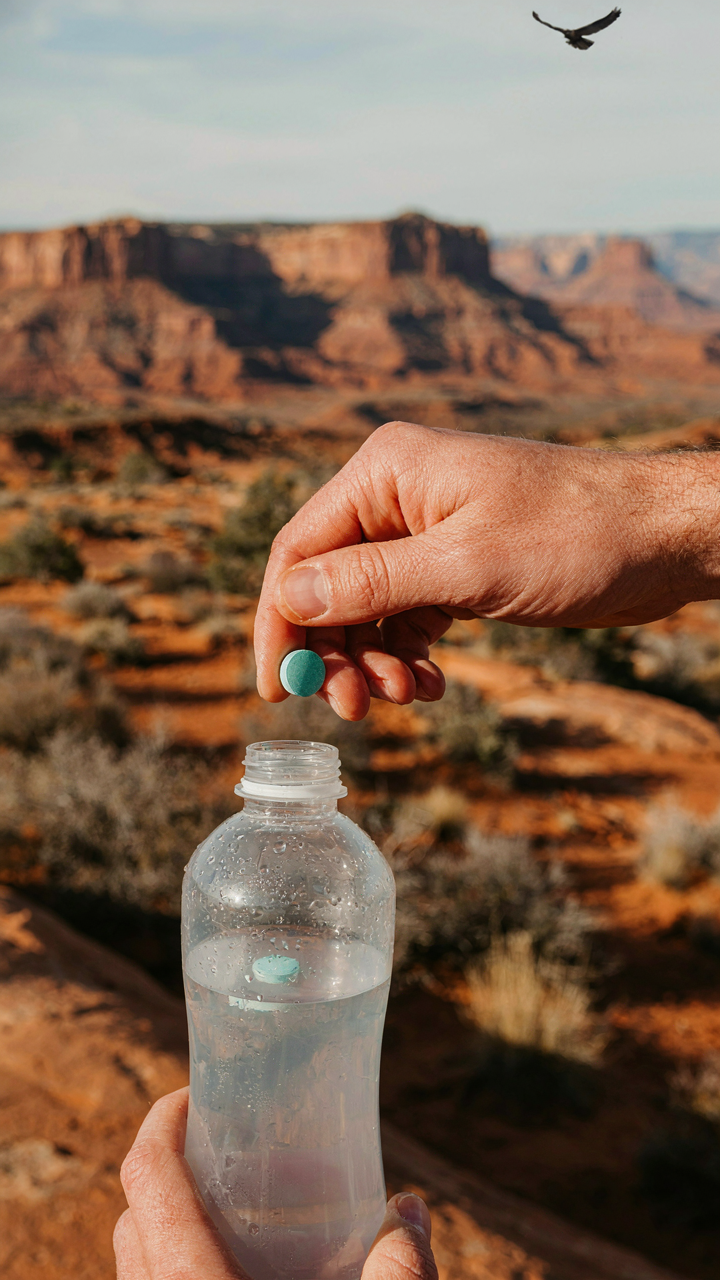
- Water purification tablets: Chemical backup when filters clog or break. Iodine or chlorine dioxide works within 30 minutes. Take enough for double your planned trip duration.
- Pressure bandages and athletic tape: Stops bleeding faster than standard bandages. Tape prevents blisters before they form. One roll handles both prevention and response.
- Sun protection layer: Lightweight long-sleeve shirt and wide-brim hat. Prevents skin damage that kills your ability to sweat. Physical barrier beats sunscreen alone in extreme UV.
- Electrolyte powder packets: Water alone doesn’t restore salt lost through sweat. Your body needs sodium to retain fluids. Three packets cover a full day of hiking in heat.
- Repair kit for gear: Duct tape wrapped around a pencil, needle and thread, safety pins. Fixes pack straps, tent issues, shoe problems. Prevents a minor failure from ending your hike early.
Redundancy in survival gear means carrying backup for your backups. Your main water container fails. You have purification tablets. Your filter breaks. You have tablets. Your headlamp batteries die. You have chemical light sticks. Each critical function has two independent paths to success. Before leaving, verify every item actually functions by testing it once under conditions similar to your trip.
Footwear And Footcare: The Often Ignored Foundation

Stop Treating Blisters Like Bad Luck
You think blisters happen to you. They don’t. They’re friction plus moisture plus time, and you control all three variables before they form. Most hikers pack blister treatment and call themselves prepared. That’s reaction, not prevention. The mechanism is simple: heat and sweat soften skin, friction shears the layers apart, fluid pools underneath. You prevent this by removing the conditions, not by bandaging the damage after it starts.
Start with socks engineered for moisture wicking. Merino wool or synthetic blends pull sweat away from skin faster than cotton, which absorbs moisture and holds it against your feet. Pair this with a friction barrier between sock and shoe. Leukotape or similar pre-emptive taping on high-friction zones (heel, ball of foot, sides of toes) stops the shearing before blisters form. Pack extra tape, not extra bandages.
Grip, Breathability, Durability By Design
Desert terrain demands different mechanics than mountain trails. The rule from biomechanics is simple: grip reduces the muscular demand on your stabilizer muscles, which means less fatigue and less sweat accumulation. A sole with aggressive tread patterns grips sand and loose rock more effectively than smooth rubber, meaning your feet work less hard to stay stable on unstable surfaces.
Breathability matters because heat accelerates skin breakdown. Shoes with mesh uppers allow air circulation, which drops foot temperature and reduces sweat production. Durability isn’t about how long the shoe lasts in general—it’s about maintaining structural integrity under heat stress. Desert temps can exceed 110 degrees Fahrenheit, which softens adhesives and breaks down foam faster than cooler conditions. Boots built for extreme environments use heat resistant midsoles and stitched construction instead of glued-only assembly. The real metric is how the shoe performs at mile eight in direct sun, not how it feels at mile one.
The Toolkit For Travel Essentials For Desert Trips: Multi Functional Minimalism
Gear That Earns Its Weight
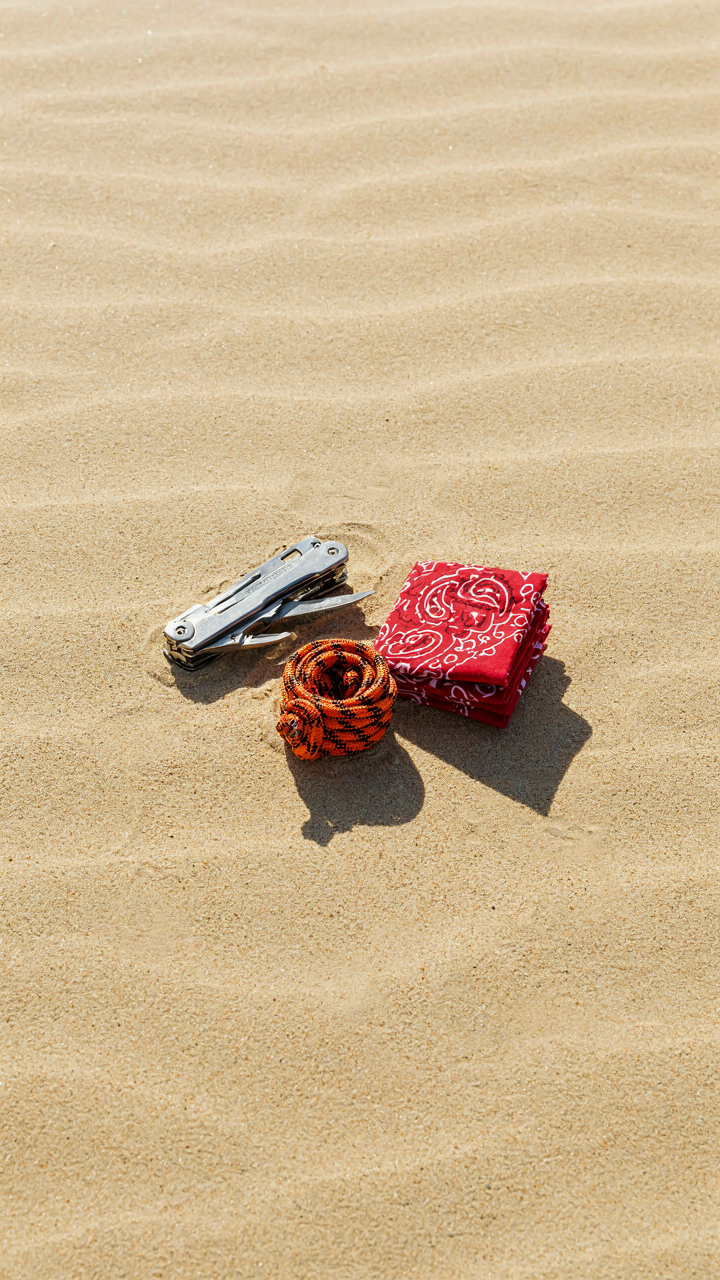
You want to look prepared without actually carrying dead weight. That’s the real tension here. The mechanism is tool stacking: each item must solve multiple problems or it doesn’t come. A knife cuts rope, opens packages, and processes food. A bandana is sun protection, sweat management, and an emergency tourniquet. Paracord lashes gear, acts as a clothesline, and becomes a repair material. Single-purpose gadgets are status symbols pretending to be solutions. They stay home.
Desert heat accelerates failure. Metal expands, adhesives weaken, fabric tears faster. Your toolkit compensates by reducing variables, not multiplying them. A multi-tool with pliers, knife, screwdriver, and file covers the majority of field repairs without requiring you to own six separate items. Weight compounds. A pound saved on unnecessary gear is a pound of water you can carry instead. The math is brutal and simple.
Repair Kits: Field Fixes, Not Replacements
The common advice frames repair kits as insurance. Wrong. A repair kit is triage protocol. You’re not restoring equipment to factory condition in the field. You’re keeping it functional enough to finish the hike. Military field repair doctrine calls this “operational readiness,” and it applies directly: your goal is sustaining function until extraction, not perfection.
Duct tape wrapped around a pencil takes up minimal space and fixes tears in fabric, gear, and skin. Needle and thread fixes rips before they expand. A small tube of seam sealer prevents water penetration through boot seams. These items are grams, not ounces. Carry a replacement battery or two for your headlamp, an extra boot lace, and a small piece of sandpaper to address blisters before they become liability. Stop the problem cascade early. The margin between a minor inconvenience and a forced exit narrows fast in desert conditions, so fix small failures immediately before they compound into larger ones.
Your Biggest Obstacle Isn’t The Desert; It’s Your Attachment To Unnecessary Burdens

Most hikers pack for a trip they’ve never taken. They imagine suffering and over-prepare. The desert doesn’t care about your backup jacket. Strip your pack down to what you’ll actually use, not what might happen. Today, lay out everything you plan to bring and remove one third of it. You’ll survive. The only weight that kills you is the weight you convince yourself you need.