
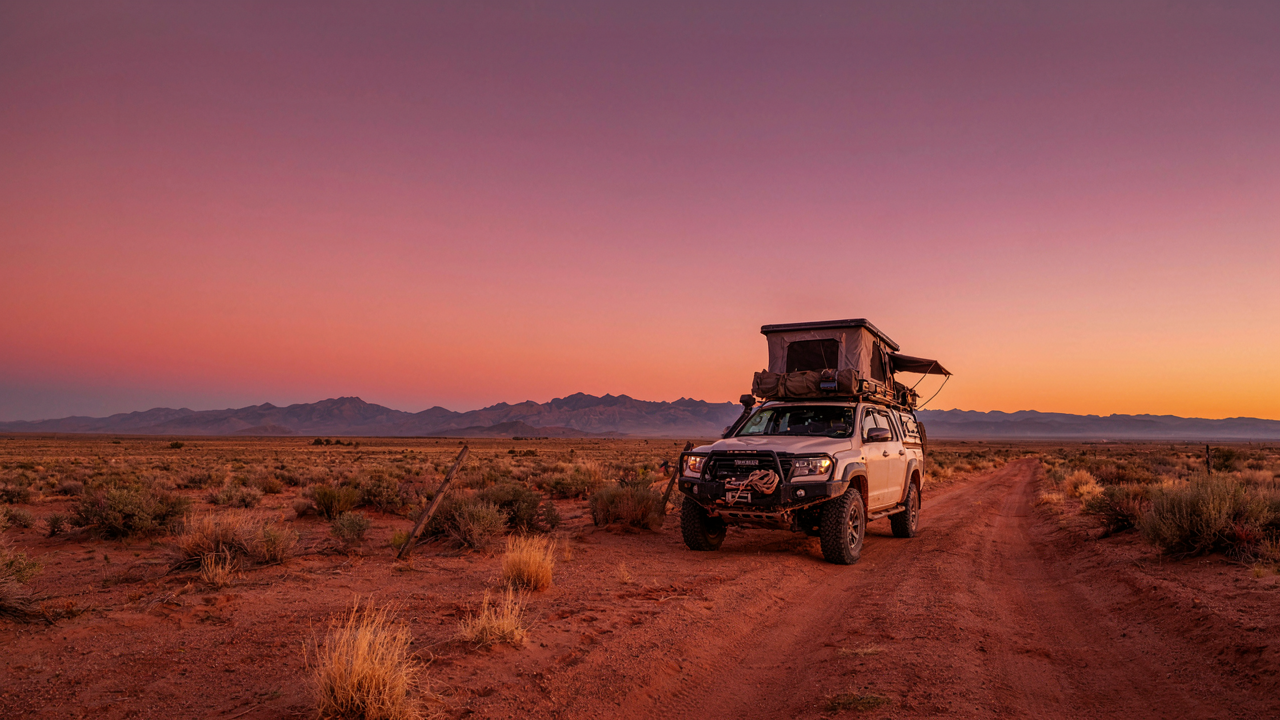
The Minimalist Overlanding Protocol: Ditch The Gear Hoard
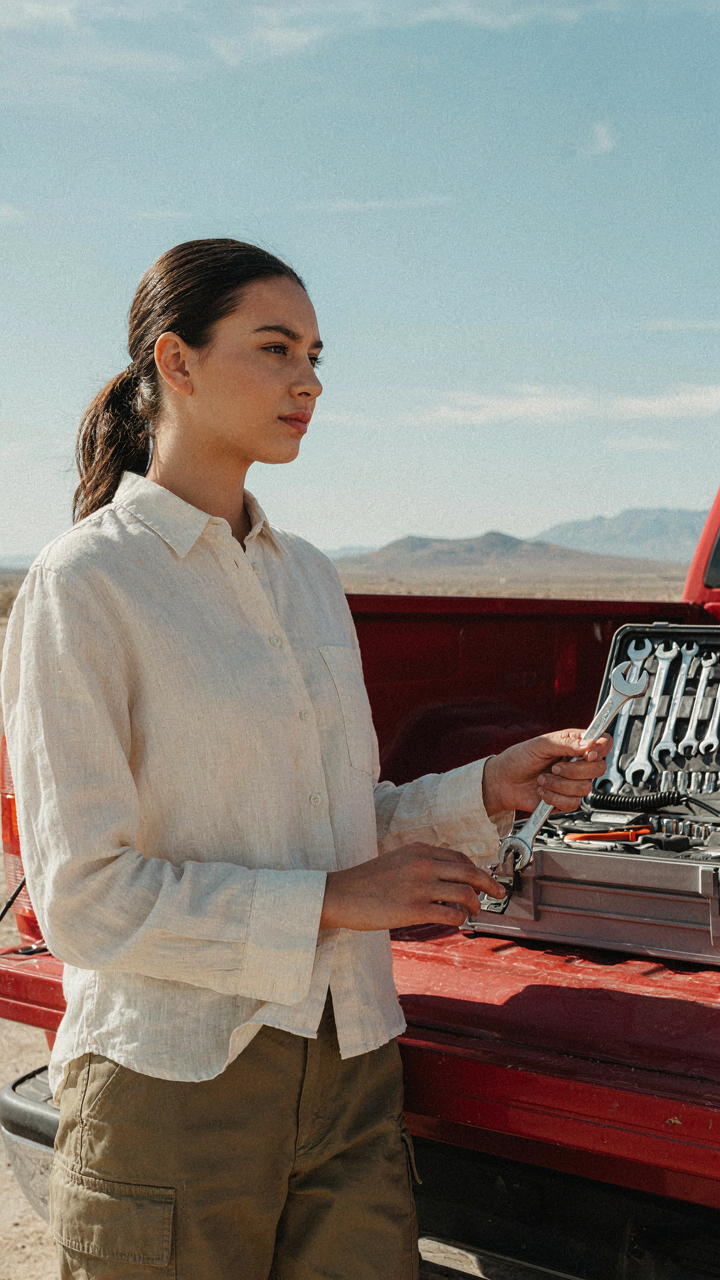
Separate Essential Gear From Status Symbols
You want people to think you’re prepared. That’s why your garage looks like an REI warehouse exploded. Here’s the mechanism: your brain confuses ownership with capability. In engineering, this is called the signal-to-noise ratio. On an overland trip, noise is every item that doesn’t solve a specific problem you’ll actually face. Essential gear keeps you moving when systems fail. Status gear keeps you broke and your vehicle overloaded.
Start by naming one real failure scenario per item you pack. Will this tool get you unstuck? Will this piece restore water, food, or shelter? Will it fix your engine or medical emergency? If you answer no to all three, it stays home. The best overlanders run stripped-down vehicles because weight costs fuel, handling, and speed. Your truck isn’t a mobile showroom for gear you don’t use.
Carry Less Weight, Preserve Vehicle Performance
Physics doesn’t negotiate. Every pound above your vehicle’s designed payload capacity degrades acceleration, braking, suspension response, and tire wear. This isn’t opinion—it’s load distribution, the same principle engineers use to calculate structural integrity. An overloaded truck becomes predictably unstable in sand, mud, and high-speed emergency maneuvers where you need control most.
Calculate your vehicle’s actual payload capacity from the door jamb placard. Subtract driver and fuel. What remains is your total gear weight. Most overlanders exceed this by 20 to 40 percent without noticing until a tire fails or the frame flexes. Test your rig with gear loaded exactly as you’ll pack it for the trip. Drive desert terrain at speed. If handling feels sluggish or the rear end bounces, you’ve already lost. Remove items until the truck responds predictably again.

Beyond Google Maps: Mastering Terrain Intelligence

Maps And Satellite Imagery As Decision Tools
You want to look competent, like someone who has their route figured out before wheels turn. The real mechanism is this: topographic maps and satellite imagery aren’t navigation aids. They’re prediction engines. They let you see what the ground will do before you drive it.
Topographic maps show elevation change through contour lines. Closer lines mean steeper terrain. Satellite imagery shows vegetation density, water patterns, and surface texture. Together they answer one question: what will my vehicle actually encounter? Google Maps flattens everything into a single layer. It doesn’t show you a dry riverbed that becomes impassable after rain, or the rocky washout hidden under tree cover. Use USGS topographic maps for the United States, or equivalent government geological surveys for other regions. Satellite imagery from Google Earth or Sentinel Hub reveals ground conditions that contour lines alone miss. The combination gives you terrain predictability that generic routing cannot.
Reading Ground Conditions From Visible Signals
Most overlanders scan terrain and see “rough” or “smooth.” That’s incomplete pattern recognition. Geology teaches us that surface features reveal subsurface structure. A wash with exposed red soil tells you water runs there seasonally, which means it hardens into a rut highway during dry months and turns into quicksand when wet.
Vegetation patterns indicate soil composition and drainage. Dense shrubs cluster where water collects. Sparse vegetation on ridgelines means exposed rock and fast drainage. Salt deposits visible on surfaces mean groundwater is present and the terrain floods. Look for tire tracks from previous vehicles, but understand they show you the path of least resistance, not necessarily the best path for your rig’s weight and wheelbase. Your decision to follow or deviate depends on matching observed ground conditions to your specific vehicle capabilities, not to consensus routing.
The Spartan’s Setup: Overlanding Vehicle Setup Tips
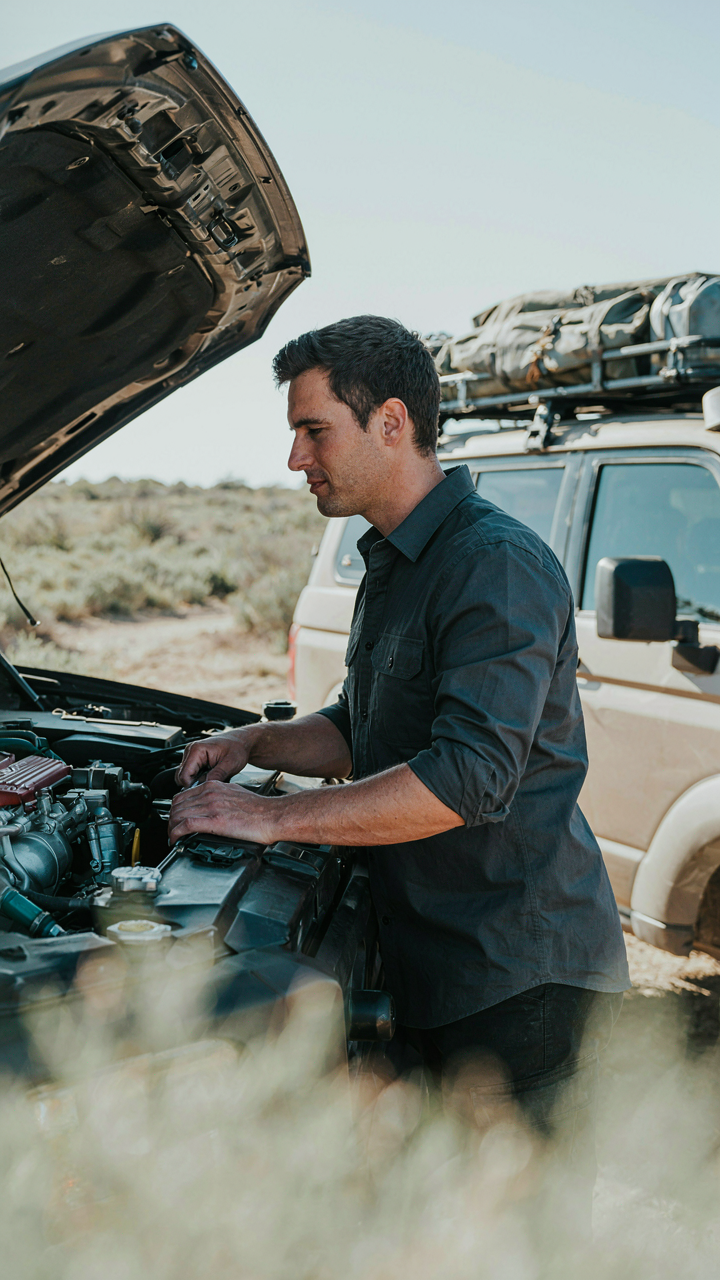
Reliability Over Status Symbols
You want people to see you’ve invested in your rig. That’s not a sin, but it’s expensive delusion. The mechanism is simple: overlanding breaks vehicles through cumulative stress, not single catastrophic events. A winch looks impressive. A bulletproof cooling system keeps you moving when ambient temperature hits 120 degrees and you’re 80 miles from water.
- Engine cooling capacity: Oversized radiators and auxiliary fans handle sustained heat better than stock setups. Critical in desert or tropical climates where engine temps climb faster than you can manage them.
- Suspension geometry over lift height: A properly tuned suspension that maintains axle articulation matters more than ride height. Most people lift their vehicle and destroy geometry without understanding what they broke.
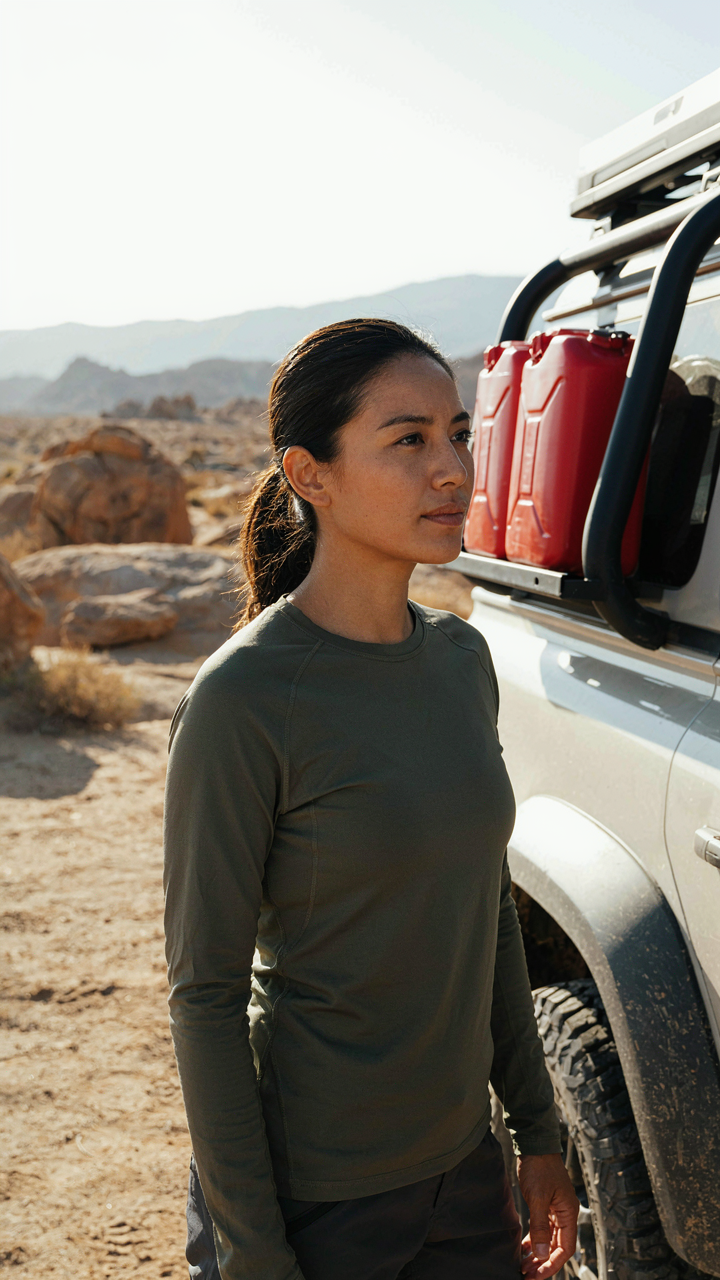
- Fuel system redundancy: Dual fuel tanks or jerry can mounts on the frame let you extend range without depending on fuel stops that may not exist. This directly impacts trip feasibility in remote areas.
- Electrical system upgrade: Move to a dual battery setup with proper isolator and quality alternator before adding accessories. A single dead battery strands you faster than any mechanical failure.
- Transmission cooling: Factory transmission coolers fail under load in hot climates. Auxiliary coolers prevent fluid breakdown that turns your gearbox into scrap metal 300 miles from anywhere.
Stock overlanding vehicles fail because owners prioritize visible upgrades over invisible architecture. Spend money on things that fail silently: cooling, charging, lubrication, and heat management. A dented fender costs nothing in functionality. A failed alternator costs everything.
The Mechanic You Can Be
The common advice here is broken: “learn basic repairs so you’re not stranded.” Wrong framing. You’re not learning repairs to avoid dealership bills during the trip. You’re learning which repairs you can actually execute with hand tools and zero electricity while camping, and which ones require a shop.
Some fixes you handle yourself on trail: tire repair, belt replacement, hose clamping, battery terminal cleaning, spark plug swaps on accessible engines. Some you don’t: transmission rebuild, head gasket replacement, electrical diagnostics on modern vehicles with computer dependency. Dealership dependence isn’t the enemy. Overestimating your capability under stress is. Before you leave, run a test: break something non-critical on your driveway and fix it in an hour using only what fits in your toolbox. If you can’t, you can’t fix it on the road either. The trip doesn’t make you smarter or more patient. Stock your vehicle with spares for things you can actually repair: belts, hoses, filters, fluids, fuses, spark plugs. Buy a factory service manual and read the engine section twice. Practice one major procedure before departure so your hands know the steps when your brain is tired and the sun is setting.
Fuel, Water, And Fear: The Expeditionary Logistics Model
How Military Supply Lines Apply To Remote Routes
You want this section because you’re afraid of running out. That fear is rational, but most overlanders solve it wrong by hoarding instead of calculating. Military logistics borrowed a principle called “supply rate”: the amount of resources consumed per unit of time in a defined operational area. On an overlanding trip, your supply rate determines whether you carry enough or too much.
The military model maps directly onto remote travel. You have three variables: daily consumption, distance to resupply, and vehicle capacity. Don’t estimate consumption by gut feeling. Measure your actual fuel economy on terrain similar to where you’re going, measure your water use during previous trips, and measure food depletion across multiple days. This data replaces assumption. Your supply rate becomes a formula, not a guess.
Calculating Consumption Before You Leave
Most guides tell you to “bring extra just in case.” That’s incomplete. You need a baseline consumption number first, then calculate duration until resupply, then add margin. Baseline consumption means: liters of fuel per 100 kilometers, liters of water per person per day, calories burned per activity level. Track these across a three to five day trip before any major expedition.
Once you have baseline data, map your intended route and identify the longest segment between resupply points. Multiply days until resupply by your daily consumption rates. Add 20 percent as buffer for terrain difficulty, navigation detours, or unexpected delays. Load that total plus the 20 percent into your vehicle. Your supply rate is now a protocol, not a prayer. Execute it exactly.
Off Road Adventure Planning Tips: Embrace The Unknown

Build Routes With Breakpoints, Not Timelines
You want a plan that makes you look competent to people back home. The real mechanism here is borrowed from military strategy: commanders build routes around decision points, not clock time. Each day should have a clear breakpoint where you reassess conditions, vehicle status, and group energy. This isn’t flexibility for its own sake. It’s structural optionality built into the architecture.
Most overlanders plan by distance or hours. That’s the first mistake. A rigid timeline creates pressure to push through deteriorating conditions, mechanical issues, or group fatigue. Instead, identify 2-3 natural stopping points per day based on terrain changes, water access, or camp quality. Between breakpoints, you move at whatever pace matches reality. You hit a checkpoint, you evaluate, you decide the next leg or you don’t move.
Build Redundancy Into Systems, Not Just Gear
Contingency planning fails because people treat it as an inventory problem. You buy spare parts and call it done. But the real breakdown happens in the decision-making layer, not the parts bin. Build duplicate decision pathways into your plan. That means identifying what goes wrong, which scenarios cascade, and who decides the pivot when they do.
Start with the three failure modes that actually kill trips: vehicle immobilization, group medical events, and navigation loss. For each, write the decision protocol now, before you need it. Who turns back? Who stays? Who goes for help? What communication protocol activates? Then assign the gear that supports those decisions. A satellite communicator only works if someone knows when to use it and everyone knows what happens next.
Survival In Silence: How To Camp Off Road
The Ethics Of Disappearing
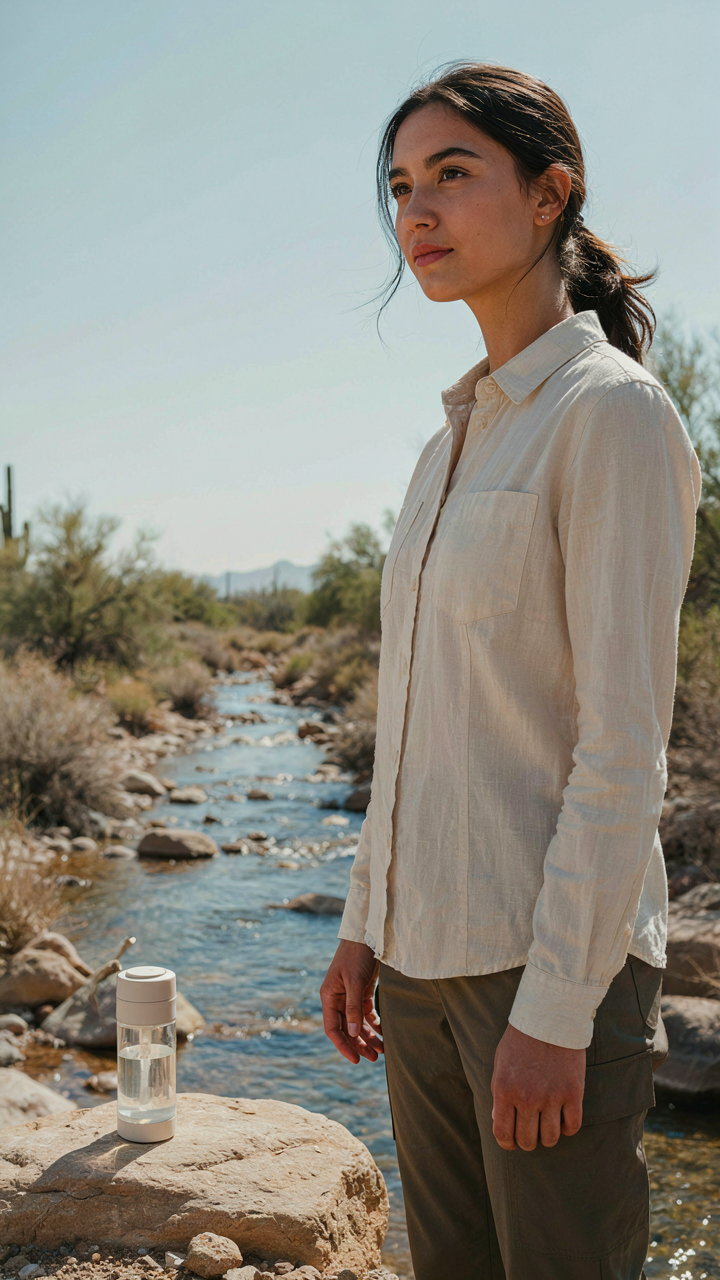
You want to camp off-road because you think it proves independence, but what you’re really after is the ability to go somewhere without asking permission. The mechanism that keeps wild land wild is restraint, not regulation. Leave No Trace is the operational framework borrowed from ecology and land management, where the principle of “carrying capacity” measures how much human presence an ecosystem absorbs before degradation becomes irreversible. Your campsite has a carrying capacity too. Exceed it once, and the scar compounds.
Most overlanders ignore this because it feels abstract. The real rule is mechanical: pack out everything you pack in, burn nothing, bury waste properly, and camp on durable surfaces like rock or compacted soil, never vegetation. Move your camp location every night if you’re in the same region for multiple days. This isn’t virtue signaling. It’s the only way backcountry camping stays accessible without gatekeeping.
The Cost Of Miscalculation
Self-reliance sounds romantic until you’re stranded without water or your engine fails in a canyon with no signal. Military logistics uses the concept of supply lines to describe the chain connecting a soldier to survival resources. Your supply line in the backcountry is your vehicle, your water, your fuel, and your communication. Failure in any of these is catastrophic because rescue is slow and expensive. You cannot outrun consequence out there.
The common advice is to carry redundancy, which is correct but incomplete. Redundancy without testing is just extra weight. Before any serious trip, test your water filtration system in your driveway. Practice changing a tire on your actual vehicle, not in a gym. Verify your satellite communicator works and understand its battery life under real conditions. Pack a physical map and know how to use it. Your emergency protocol starts now, not when you need it.
The Overlander’s Mindset: Beyond The Destination
Antifragility Under Uncertainty
You want to believe that good planning eliminates problems. It doesn’t. The real edge comes from systems that improve when conditions break. Borrowing from risk management, antifragility means building redundancy and loose coupling into your overlanding setup so failures don’t cascade. A single water source fails. Your backup activates. A route closes. You pivot without panic because you’ve built optionality into your decisions before departure.
Most overlanders approach resilience backward. They pack for known scenarios and hope nothing else happens. Real adaptability means designing your vehicle, supplies, and decision-making to gain from disorder instead of just survive it. When your tire blows, you don’t just fix it. You learn where your spare placement failed and adjust. When weather changes your timeline, you don’t stress. You’ve built buffer days and flexible waypoints into your route structure. The mechanism is simple: anticipate categories of failure, not specific failures, then create systems that benefit from the unexpected.
Discomfort As Information, Not Punishment
The common advice says overlanding teaches you about yourself through hardship. That’s incomplete and misses the actual signal. Discomfort tells you exactly where your systems are weak. A blister at mile three doesn’t build character. It means your footwear choice was wrong. Sand in your engine doesn’t teach resilience. It means your air filter design failed. Pain is data, not purpose.
The overlanders who return transformed aren’t the ones who suffered longest. They’re the ones who paid attention to what discomfort revealed and built solutions. Dehydration teaches you how much water you actually need at your elevation and activity level. Poor sleep setup shows you what gear combination works for your climate. Boredom during static camps reveals which activities sustain you mentally. Extract the information, adjust the variable, then test the fix. Discomfort serves you only when you treat it as a diagnostic tool, not a rite of passage.
The Primal Camp: Overland Camping
Finding Sites Without The Crowds
You want to feel like you discovered something nobody else knows about—and you’re right to want that, because isolation is actually the mechanism that determines your safety and your ability to operate freely. Treat site selection like a military topography problem: you need defensible terrain, water access, and escape routes. Most overlanders obsess over pretty views. The real players obsess over what isn’t visible from the road.
The common advice is to use apps and follow established camps. That’s how you end up parked next to six other rigs on a Friday. Instead, study satellite imagery before you leave. Look for canyon systems, plateau breaks, and ridge lines that create natural barriers. Scout during shoulder seasons when fewer people travel. Talk to locals, not tourists. They know the land’s actual rhythms—which sites flood, which attract rangers, which draw theft.
Building Shelter And Managing Fire
Most overlanders confuse camp setup with luxury accommodation. That’s backwards. Your shelter exists to manage three variables: wind exposure, water drainage, and thermal mass for temperature regulation. Position your vehicle or tent perpendicular to prevailing wind, never parallel. Site on a slight grade so water runs away from your sleeping area. If you’re stationary for multiple nights, dig a trench around your tent perimeter. The difference between a wet sleep system and a dry one is whether you engineered for five inches of rain you didn’t expect.
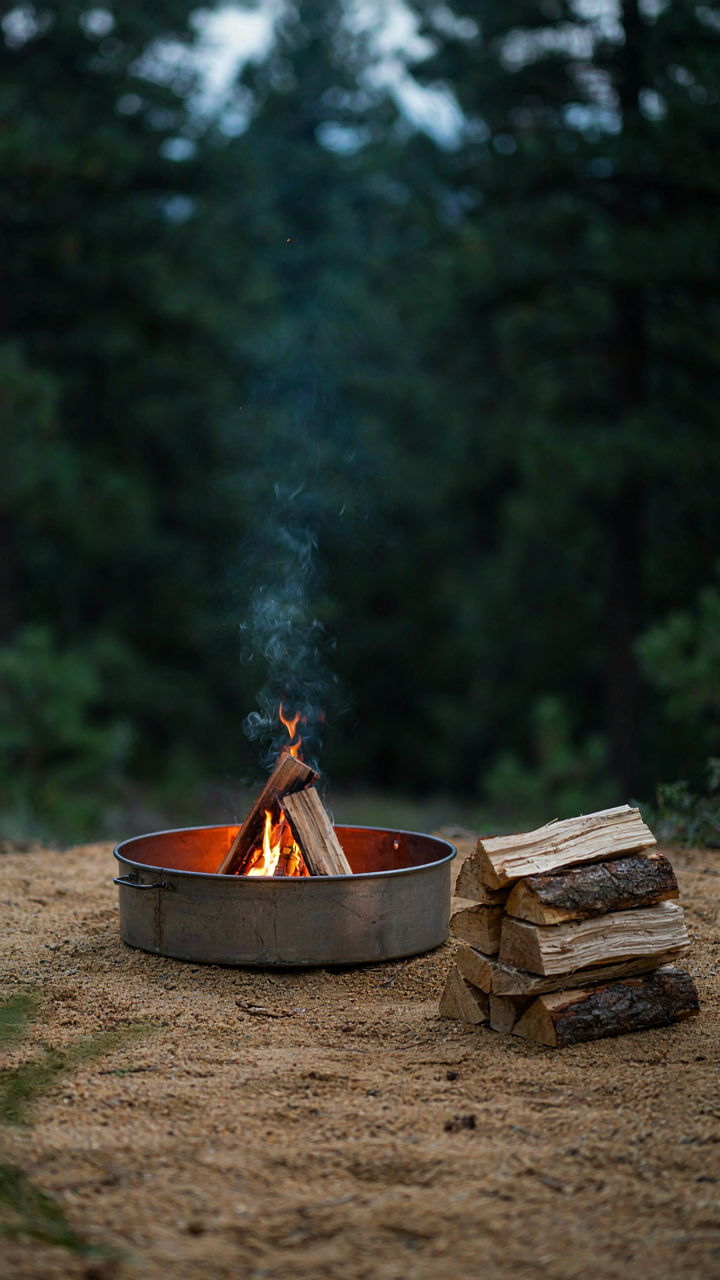
Fire management isn’t about ambiance. It’s about fuel efficiency and minimal trace. Use dead fall wood only, never cut live branches. Keep fires small enough to cover with your boot sole. In dry regions, know local fire bans before you arrive. Many overlanders skip cooking fire entirely and use camp stoves—more efficient, more portable, zero legal risk. When you pack out, scatter cold ash and bury charcoal. The goal is to make your camp invisible to the next person who lands on that spot.
Post Trip Debrief: The Uncomfortable Truths

Lessons That Stick, Not Instagram Posts
You want to believe the trip changed you. That’s the real reason you’re reading this section. The mechanism is simple: your brain defaults to storing emotional peaks and valleys, not data. You remember the sunset at camp. You forget the tire pressure checks that prevented a blowout. This gap between memory and utility ruins most debrief processes.
Write down three specific problems you solved on the road. Not the feeling of solving them. The actual decision, the tool you used, the outcome. Do this within 48 hours while your working memory still holds the details. This becomes your operational database for the next trip. Without this, you’re just collecting stories, not building competence.
What The Road Actually Reveals
Most overlanders confuse discomfort with insight. They think sleeping in a vehicle teaches them something profound about themselves. It doesn’t. What matters is what you notice about your vehicle’s actual limits, your navigation patterns, your decision-making under fatigue, and your resource management. These are mechanical truths, not spiritual ones.
Document the specific conditions where your gear failed, where your route assumptions broke down, and where your physical endurance hit a wall. Not the romantic struggle. The measurable failure point. This becomes the foundation for your next build or route selection. Everything else is noise masquerading as growth.
The Real Obstacle Isn’t The Trail; It’s Your Addiction To Comfort And Certainty
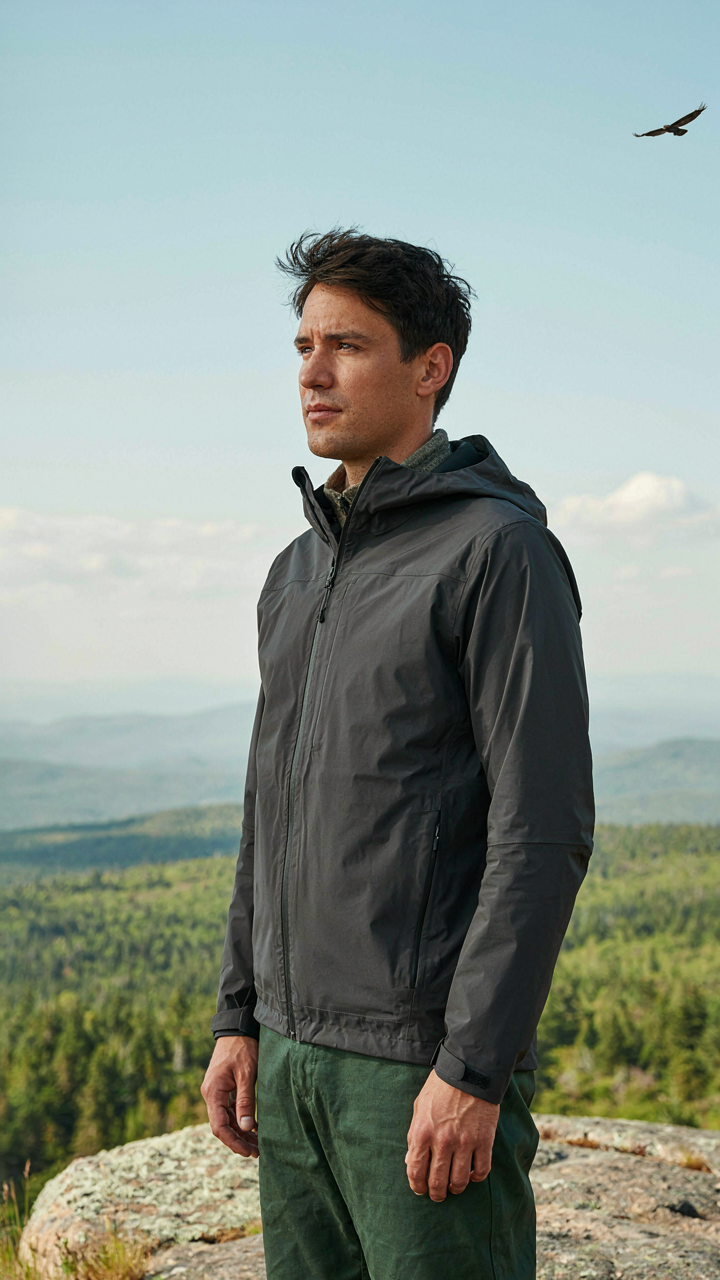
Most people won’t take an overlanding trip because they fear the unknown more than they crave freedom. They want the destination without the discomfort, the story without the struggle. Your move today: book a three-day trip for next month. Non-negotiable. Not someday. Next month. The trail doesn’t care about your excuses, and neither should you. The only thing standing between you and a transformed life is your willingness to be uncomfortable.