
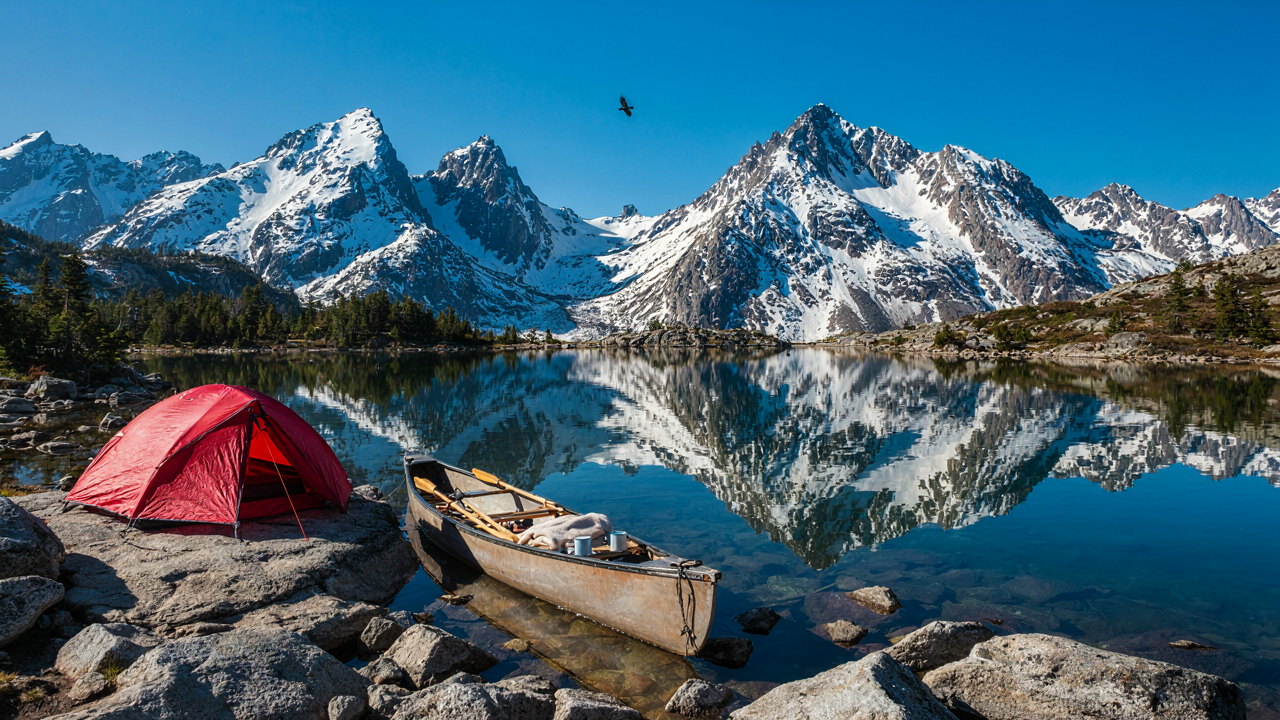
The Adventure Aesthetic Deception: Why Pretty Pictures Fail

Aspirational Imagery Kills Planning
You’re scrolling because you’re afraid your life looks ordinary. The mechanism is simple: platforms like Pinterest and Instagram curate only the final frame—the golden hour light, the perfect composition, the moment everything worked. They strip away the 47 failed attempts, the weather delays, the logistics that took three months to coordinate. Your brain registers these images as proof that adventures are effortless, so you bookmark them instead of booking them. Aspirational imagery creates a false equivalence between seeing and doing.
The gap between inspiration board and execution is where most trips die. You need source material that shows the actual steps: trailhead parking logistics, seasonal weather patterns, permit requirements, real timeline estimates. Boards that only display the aesthetic outcome train you to expect adventure without planning. Start distinguishing between two board types now: galleries that make you feel something, and references that tell you how to build something.
The Engagement Loop Versus Execution
Neuroscience shows that liking and sharing trigger the same reward pathways as completing the actual task. Your brain gets the dopamine hit from hearting a photo of a backcountry lake without ever loading a backpack. This is why you can spend ninety minutes curating boards and feel like you’ve planned a trip. The platform’s algorithm reinforces this by serving more similar content whenever you engage, deepening the illusion of progress.
Break the loop by treating boards as a capture tool, not a destination. Save an image, then immediately write one sentence next to it: the specific obstacle you’d need to solve to actually do this trip. No sentence written means the pin stays aspirational. This forces your brain past the engagement reward into the planning reward, which is harder but irreversible.

Nature Scrapbook As Constraint Map: The Anti Vision Board
The Real Reason You’re Building This
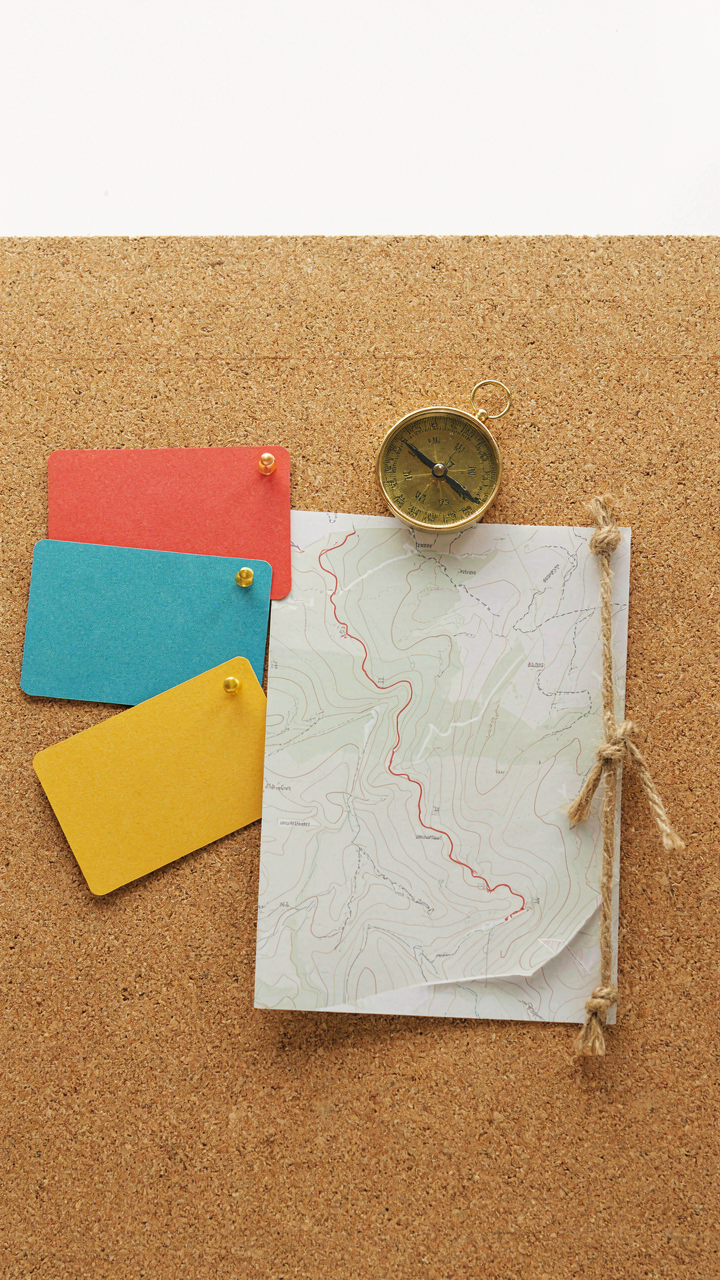
You want permission to do something without looking unprepared. That’s the mechanism: a inspiration board isn’t about discovery. It’s about covering yourself before commitment. Most people treat boards like wish lists when they should work like constraints. Constraints force decisions. Decisions eliminate the paralysis that kills trips before they start.
Borrowing from systems engineering, your inspiration board functions as a failure mode analysis. You identify what breaks trips, not what makes them pretty. A real constraint map names the three variables that will actually stop you: time available, actual budget you’ll spend, and skills you genuinely possess. Not the skills you want to have by August. The ones you have now.
Desires Become Specifications
Everyone says “know what you want.” That’s useless advice. Wanting doesn’t generate action. Specification does. Convert each pull into a measurable component that either qualifies a trip or disqualifies it. Distance, elevation gain, permit lead time, group size, season window, gear requirements. These aren’t dream details. They’re filters.
Start with one specific desire and reverse engineer backwards. If you want to backpack the Enchantments in Washington, don’t just pin photos. Name the permit lottery deadline, required fitness level for the 9 mile approach, water carry capacity in late summer, and whether you need bear canister knowledge. Each specification either lands you on a trip or removes it from consideration. That clarity is what separates boards that collect dust from boards that generate departures.
The Scrapbooking Voyage Protocol: Reverse Engineer Your Escape

Outcome First, Pinterest Later
You’re looking at inspiration boards because you want permission to believe a trip is possible for you. The real mechanism: most people build boards from scattered imagery and call it planning, which guarantees they’ll never leave. You need to invert this. Start by naming one specific outcome you want from a trip, then use boards to validate it exists, not to discover what exists.
Define your outcome in constraints, not dreams. “Backcountry skiing in accessible terrain” beats “epic mountain adventure.” “Solo hiking with zero navigation app reliance” beats “nature immersion.” Specificity kills the paralysis that inspiration boards create. When you search for images tied to a real outcome, the board becomes a verification tool, not a wish-list generator that keeps you scrolling indefinitely.
Commitments That Actually Fit Your Life
Breaking a trip into micro-commitments uses the same principle as project management in software development: chunking reduces perceived friction and creates momentum through small wins. Your inspiration board should reflect these chunks, not the entire trip as one overwhelming image.
- Gear acquisition phase: Identify specific items you need and source them over four weeks instead of last-minute shopping that breeds decision fatigue and poor choices.
- Route reconnaissance: Dedicate one evening to mapping waypoints, water sources, and bailout options rather than vague trail familiarity the week before departure.
- Fitness baseline test: Complete one shorter version of your planned activity to expose gaps in conditioning or technique before committing full resources.
- Permit and logistics lockdown: Secure reservations, transportation, and contingency plans in writing two months out, not the day before travel.
- Skill drills: Practice one technical skill per week for three weeks prior, documented with images or notes that anchor your confidence to actual competence.
Pin each micro-commitment stage on your board with dates attached. This converts inspiration into a project timeline. The trip stops being theoretical when you have a committed sequence of actions tied to specific weeks. Your board now functions as a contract with yourself, not a mood board.
Collage Mountains: The Terrain Of Reality, Not Fantasy
The Permit Stack You’re Ignoring
You’re building inspiration boards because you want to feel like an adventurer without doing the administrative work. Here’s the mechanism: inspiration boards work as permission structures. You see the image, your brain treats it as proof the trip is possible, and you stop researching. Most people skip the actual logistics layer entirely.
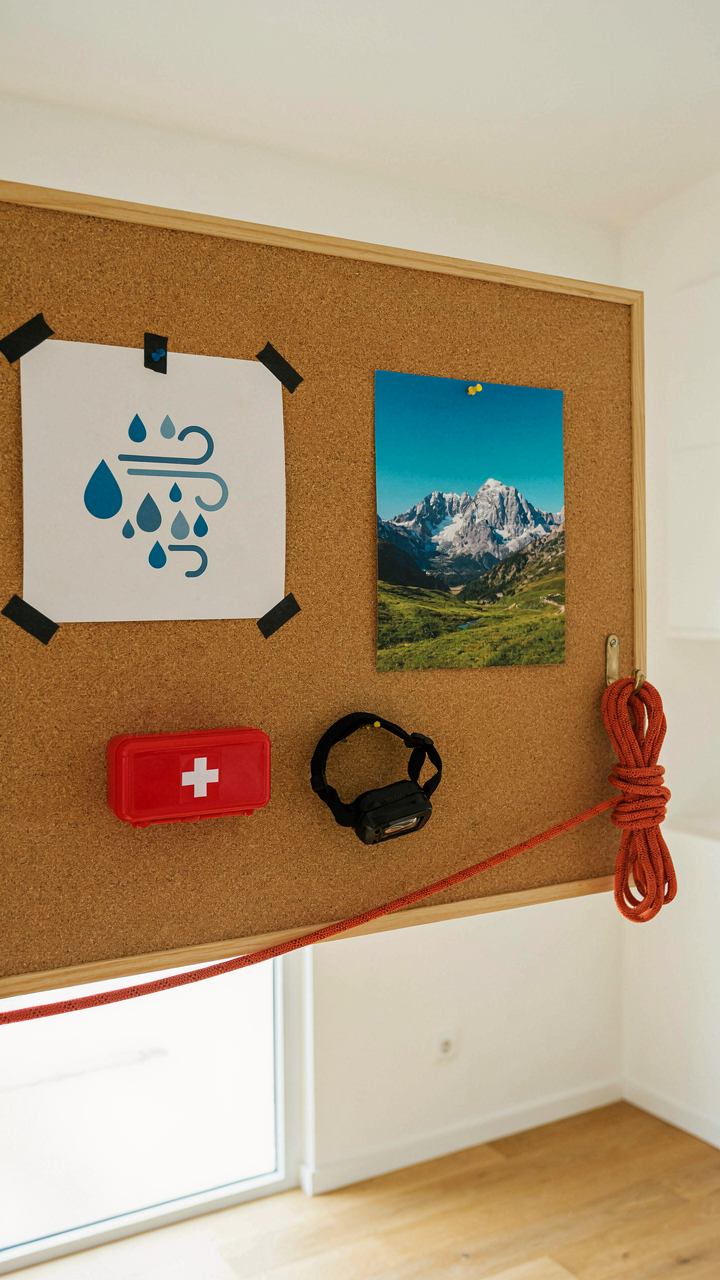
Real trips run on permits, route conditions, and gear specifications. A photo of a mountain pass tells you nothing about when it’s passable, which agency issues access, or what gear prevents injury. Embed these details into your inspiration collection. Add screenshots of permit timelines, weather windows, and gear requirements directly next to the aesthetic images. The board becomes a project brief instead of a mood board.
Friction As Your Planning Partner
Military strategy calls this “friction”—the gap between what you plan and what reality delivers. Outdoor inspiration boards treat friction as something to hide. They show the summit moment, not the hour your knees fail on descent or the night your stove fails at 12,000 feet.
Reframe your board to include failure scenarios alongside success images. If you’re inspired by a high-altitude climb, add images of altitude sickness symptoms, the cost of rescue operations, and the physical baseline required. If you’re drawn to remote backcountry, include photos of actual weather patterns for that region during your planned season. Obstacles visualized in advance become manageable. Obstacles ignored become emergencies. Your inspiration board should terrify you a little. If it doesn’t, you haven’t researched enough.
Life Collage Ideas: Integration, Not Escapism

Trips As System Reinforcement, Not System Exit
You’re drawn to this section because you sense a gap between who you say you are and what your calendar shows. Here’s the mechanism: inspiration boards work backwards. Most people collect trip images to escape their life. That’s why the trips never happen or why they happen and feel hollow. Instead, build boards that show trips reinforcing what you already claim to do. If you say you’re a writer, a trip collecting stories in a new place isn’t escape—it’s research. If you’re building a business, a trip studying how another region solves your problem isn’t leisure—it’s market intelligence.
The physics term is “vector alignment.” In physics, a vector has magnitude and direction. Your life direction is set by your daily commitments: work, relationships, skills, obligations. A trip that points in a different direction than your stated vector wastes kinetic energy. A trip aligned with your vector accelerates it. Pin trips that extend what you’re already doing, not trips that contradict it. The shift happens on your board immediately: you stop collecting generic “wanderlust” images and start collecting trips that prove something about your existing mission.
Adventures That Compound Your Position
The conventional wisdom is wrong here. Generic advice says take time off to recharge and forget about work. That’s not how high performers operate. A trip that compounds your position generates value you bring home, not just memories you file away. If you’re learning a craft, travel to where that craft has depth. If you’re studying markets, travel to where your industry operates differently. If you’re building relationships in a field, travel to where those people gather.
Your inspiration board should show the mechanism plainly: trip destination connects directly to a specific gap in your current work or skill. Before you pin anything, ask what becomes true about you after this trip that wasn’t true before. Your calendar fills because trips shift from optional entertainment to strategic input. The action: when building your next board, write one sentence per pin explaining how this trip returns value to your core work within 90 days of returning.
Travel While You Can: The Opportunity Cost Matrix

Scarcity Forces Real Choices
You’re reading this because you’re afraid you’ll run out of time. The economy of your life operates on one constraint that doesn’t bend: you have a fixed number of years, and you’re spending them right now whether you decide anything or not. Economics calls this scarcity, and it applies to outdoor trip inspiration boards the same way it applies to money. Every board you curate, every trip you plan but don’t execute, represents a trade-off against something else you could be doing with that energy.
The mechanism is simple. When you treat outdoor inspiration as infinite browsing instead of finite decision-making, you convert planning into procrastination. You accumulate reference images, locations, and gear lists without ever asking what you’re actually giving up. The board becomes a pressure relief valve instead of a commitment device. You scroll Patagonia landscapes and feel like you’re moving forward when you’re really just deferring the actual cost: the money, time, and logistics required to show up.
The Price Of Waiting
Everyone calculates trip costs wrong. They add up flights, lodging, and meals, then decide whether the number fits their budget. That’s incomplete. The real cost includes what you lose by not going now instead of later. Your knees work differently at 35 than at 55. Your friends have different availability in different seasons. A location you want to climb might become inaccessible due to access restrictions or overdevelopment.
The action that matters is not adding more inspiration to your board. It is identifying one trip on that board and calculating its expiration date. Set a deadline. Not someday. Not next year. A specific month. Then reverse-engineer what needs to happen between now and that date. That constraint forces you to stop treating the board as a wish list and start treating it as a schedule.
Adventure Vision Board As A Strategic Battle Plan

Gathering Intelligence Before You Move
You want to feel prepared without doing the hard work of actual planning. Here’s the mechanism: Military strategy calls reconnaissance the foundation of every operation, and outdoor trip inspiration boards function as your reconnaissance layer. You’re not collecting pretty images. You’re collecting data points about terrain, weather patterns, crowd density, and seasonal variables that determine whether your trip survives contact with reality.
The boards that work isolate specific variables. Pin the exact trailhead photo, not the filtered landscape shot. Collect weather data from the actual month you’re traveling. Document what other people brought, what they regretted leaving behind, what broke on them. This is raw intelligence. Most people skip this step and pin aspirational content instead, which is why they show up unprepared.
Building Redundancy Into Your Route
Common advice says “have a backup plan.” That’s incomplete and useless. What you actually need is contingency architecture—the military concept of identifying critical nodes where failure cascades into disaster, then building alternatives at each node. Your inspiration board should map these explicitly.
Identify the single points of failure: the one water source, the exposed ridge line where weather turns dangerous, the narrow pass where you’re committed. For each one, pin two alternatives directly onto your board. Bad weather? Pin a lower-elevation route. Permit sold out? Pin three different trailheads with the same terrain signature. Transport fails? Pin where you can rent gear locally. Document the decision criteria next to each alternative so you don’t waste time deliberating when conditions force your hand.
Camping Inspiration: The Minimum Viable Expedition

Start Small Before You Commit
You want permission to skip the big trip without looking like you’re afraid of the outdoors. Here’s the mechanism: camping gear and logistics feel permanent once you buy them, so most people either overthink the purchase or skip it entirely. You need to test the actual variables—sleep quality, food preferences, weather tolerance, social dynamics—on a weekend trip first, not in your head.
A two-night trip near your home reveals what matters and what doesn’t. You’ll find out if you hate sleeping on the ground, if your tent setup takes too long, if your stove fails in humidity. These aren’t theoretical problems. They’re real friction points that determine whether you’ll actually go on longer expeditions or become another person with unused gear in their garage.
Watch What Actually Gets Used
Borrowed from systems thinking, the signal is what survives repeated use. Most inspiration boards show gear that looks good but gets abandoned after trip one. Your job is to document which items you reach for again and which stay in your pack untouched.
Create a simple record: what did you pack, what did you actually use, and what would you leave behind next time? After three or four trips, a pattern emerges. The ultralight tent that seemed unnecessary becomes non-negotiable. The camping pillow you thought was luxury becomes essential. The filtered water bottle you saw on Pinterest gets replaced with something cheaper that works better. This data replaces guessing.
Summer Sticker Syndrome: From Impulse To Implementation

The Calendar Trap
You’re scrolling through inspiration boards in January because you’re terrified of repeating last summer. That fear is the real problem here. The mechanism is simple: seasonal FOMO makes you book trips based on what others are doing, not on what you actually want. You pin kayaking trips, mountain hikes, and coastal getaways in a compressed burst, then abandon most of them by March. The board becomes a graveyard of intentions, not a planning tool.
The fix isn’t willpower. It’s accepting that peak season crowds and peak season prices are inversely related to when you actually want to go. Build your inspiration board year-round, but schedule trips based on your calendar constraints and genuine interest, not on the arbitrary summer window. If you travel in September instead of July, you still travel. You just pay less and see fewer people doing the exact same thing.
Build Upward, Not Sideways
Momentum in trip planning works like compound interest in finance: each smaller excursion funds and informs the bigger one. You don’t jump from your couch to a two-week expedition. You start with weekend trips that teach you what gear actually works, what conditions you tolerate, and what logistics matter. Your inspiration board should reflect this sequence, not treat every trip as an isolated event.
Start by pinning realistic nearby trips. Complete those. Use what you learn to upgrade your next pins. A weekend backpacking trip in spring builds the skills and confidence for a weeklong wilderness trip in fall. Your board becomes a map of progression, not a fantasy catalog. The concrete protocol: pin one small trip per season, execute it fully, then use that experience to narrow and sharpen your next board before pinning again.
The Unignorable Itinerary: From Abstract To Absolute

Lock In Dates And Money
You’re afraid this trip won’t happen. You’ve pinned things to inspiration boards for years while life moved forward without you. The mechanism that separates dreamers from travelers is friction removal through irreversible commitment. When you book a flight and hotel, you’ve transferred the decision from your brain to external reality. The cost becomes real. The dates become non-negotiable. Inspiration boards work only when they force you into financial and temporal specificity.
Write down three non-negotiable dates: departure, return, and the booking deadline. Cross-reference those dates against your actual cash flow. Many people skip this because it feels like admitting limitation. Do it anyway. The trip doesn’t exist until money leaves your account and confirmation emails arrive. Make both happen within one week of finalizing your itinerary. Everything else is fantasy.
Build In Forced Accountability
Most accountability advice is hollow because it relies on willpower. Accountability works when someone else holds the cost of your failure, not you. Find one person who will publicly call you out if you miss your departure date, and tell them the exact departure time. Better: make them part of the trip or give them authority to post about your cancellation. The mechanism here is social capital—you now have more to lose by backing out than by going.
Schedule a pre-trip check-in meeting with this person two weeks before departure. They should verify your bookings are locked in, your gear is acquired, and your time off is confirmed with your employer. Don’t make this optional or casual. Treat it like a business deadline. On departure day, send them a photo from the trailhead or airport. The cycle reinforces that abstract inspiration boards become concrete reality only when other people witness the execution.
The Only Wasted Trip Is The One You Never Rigorously Planned
Most people treat inspiration boards like mood rings. They scroll, they feel something, then they forget. You’re different now. You know the board isn’t decoration. It’s a filter for your actual decisions. Open Pinterest or your notes app right now. Start one board. Drop five images you genuinely want to experience, not five images that look good. That friction between “pretty” and “real” is where actual trips live. Plan the trip or plan to waste another year pretending.