
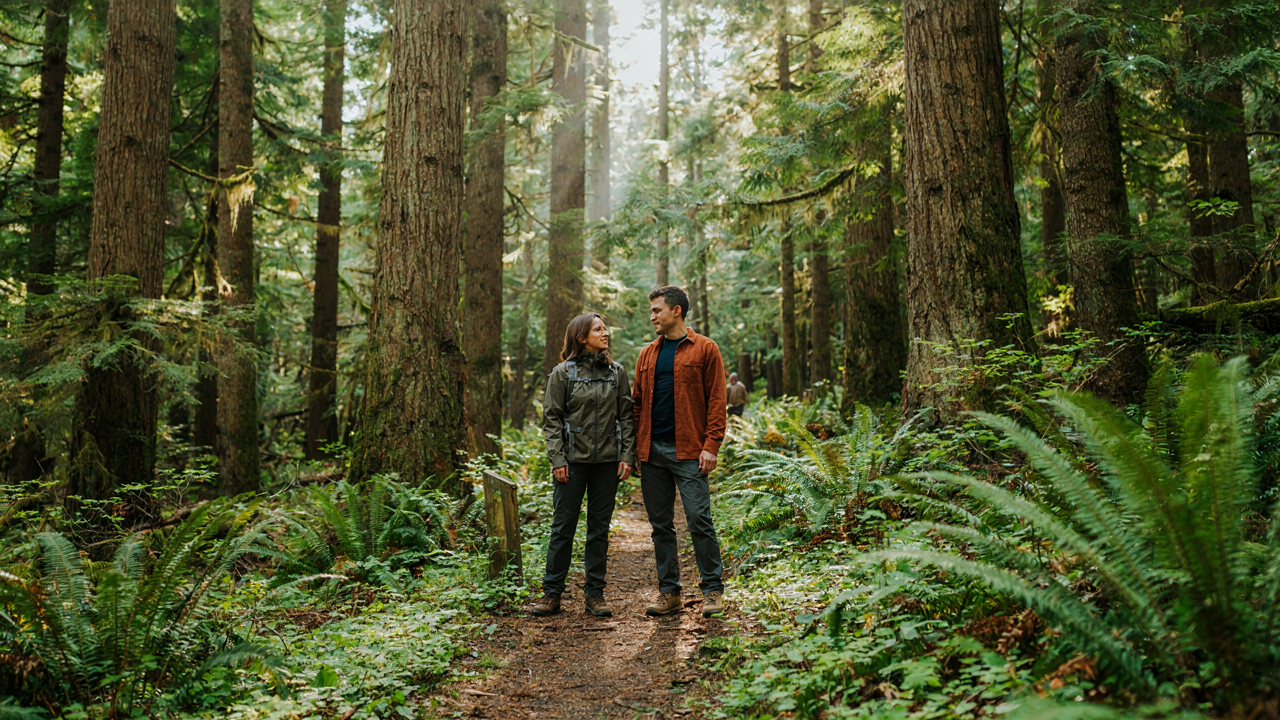
The Illusion Of ‘Escape’ In A Forest Walk
Why Most Forest Walks Deliver Surface Calm, Not Restoration
You want to believe a walk fixes you. That’s the real draw here, not some vague wellness fantasy. The mechanism is simple: most people treat old growth forest walks as visual stimulus, not as environmental intervention. They show up, look around, leave unchanged. The nervous system stays taxed. The loop closes on nothing.
Restoration ecology teaches us the concept of “functional recovery”—when a degraded system returns to operational capacity. Your body works the same way. A forest walk fails when it only addresses aesthetics while ignoring the actual stressors that keep you dysregulated. Dappled light and birdsong create ambient pleasure, but pleasure is not restoration. Restoration requires friction, attention, and sustained engagement with the environment’s specific properties.
The Subconscious Hunger Your Body Won’t Name

Your nervous system doesn’t care about Instagram scenery. It hungers for specific conditions: air quality variation, negative ion density, absence of human-generated electromagnetic noise, uneven terrain that demands proprioceptive engagement. Old growth forests deliver these. Shopping mall forests don’t. Most people never distinguish between them, so they walk through plantation stands or second-growth buffer zones thinking they’re getting restoration when they’re just getting the look of restoration.
The real pull isn’t escape—it’s recalibration. Your body recognizes old growth forests because they contain complexity that matches biological expectation. The soil composition, fungal networks, competitive plant strata, predator absence, and structural unpredictability create an environment your ancestors spent millennia adapting to. When you walk an old growth trail, your physiology has something to actually do. Measure your heart rate variability before and after a true old growth walk versus a groomed park path. The data won’t lie.

Old Growth Forest: A Time Capsule Of Natural Intelligence
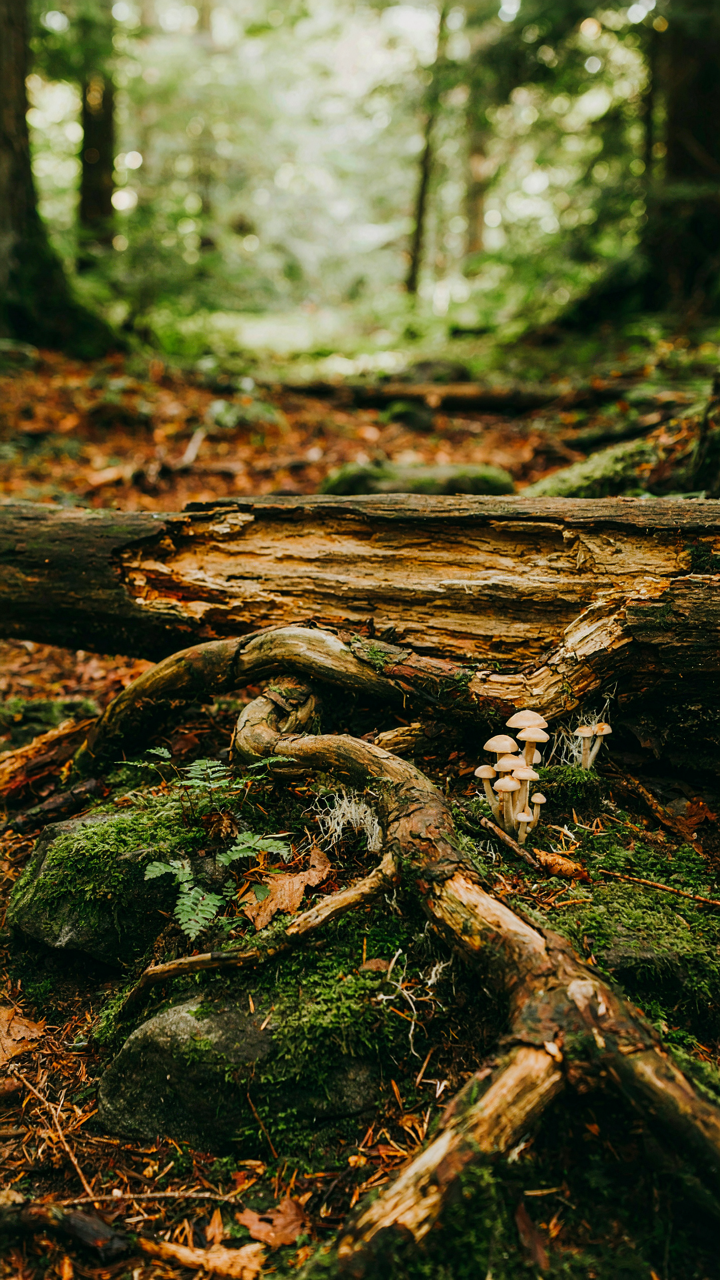
How Ancient Trees Survive And Compound Growth
You want to feel small. That’s the real reason you’re reading this. But what actually matters is understanding why old growth forests don’t collapse under their own weight. Apply systems thinking here: old growth operates on redundancy, not efficiency. Young forests optimize for speed. Ancient forests optimize for survival across centuries of drought, fire, and pest cycles.
The mechanism is structural diversity. Old growth canopies have multiple layers—emergent giants, mid-story trees, understory shade-tolerant species. This redundancy means if one cohort fails, others compensate. Root systems interweave across decades, creating a mycorrhizal network that shares nutrients and signals between trees. A single old growth stand contains trees of different ages, species, and health states. This isn’t weakness. It’s antifragility. The forest gets stronger when stressed, not weaker.
The Hidden Grammar Of Forest Systems
Most people treat forests as scenery. They’re actually communication networks. Ecologists use network theory to map how trees exchange resources and information through fungal connections in soil. Old growth forests maintain signal integrity across centuries because the infrastructure—root systems and fungal networks—remains stable and undisturbed.
When you walk through old growth, you’re moving through a language you can’t hear. Trees share water and carbon with neighbors through fungal highways. Damaged trees send chemical warnings about pest infestations. Kin trees preferentially support their offspring. The forest coordinates as one organism. On your walk, observe the forest floor. Dead logs aren’t decay. They’re active infrastructure transferring nutrients and housing the next generation.
The Deep Observation Protocol For Woodland Paths

Cutting Off Input To See More
You want to believe a forest walk is therapeutic because it sounds civilized. The real mechanism is sensory deprivation, borrowed from neuroscience: removing competing stimuli forces your brain to process what remains with higher resolution. Leave your phone in the car. Not silenced. In the car. The nervous system responds to phantom vibrations even when the device is off.
Old growth forests naturally create this condition. Canopy density blocks cell signals. The absence of human noise becomes the baseline. Your auditory cortex stops filtering background sound and starts parsing specifics: the weight difference between a Douglas fir needle drop and a hemlock needle drop. This is not meditation. It is sensory triage.
Marking Patterns Before Memory Fails
The advice to “journal later” fails because memory reconstructs, not records. Neuroscience confirms this: the act of encoding changes the memory itself. Carry a small notebook. Document one specific observation per five minutes of walking, not impressions or feelings. Write: “Moss only on north face of snags, not on live trees.” Write: “Fallen log colonized by younger conifers in linear pattern, spacing roughly three feet.”
This creates a verifiable record that disrupts false pattern-making. Your brain will want to generalize what you saw into what you expect to see. The notebook prevents this drift. After three walks, compare your notes across locations. You will notice which patterns repeat and which were location-specific anomalies. This is how you build an actual taxonomy of old growth forest structure instead of carrying away generic nature feelings.
Forest Photography: Capturing The Unseen, Not Just The Scenery
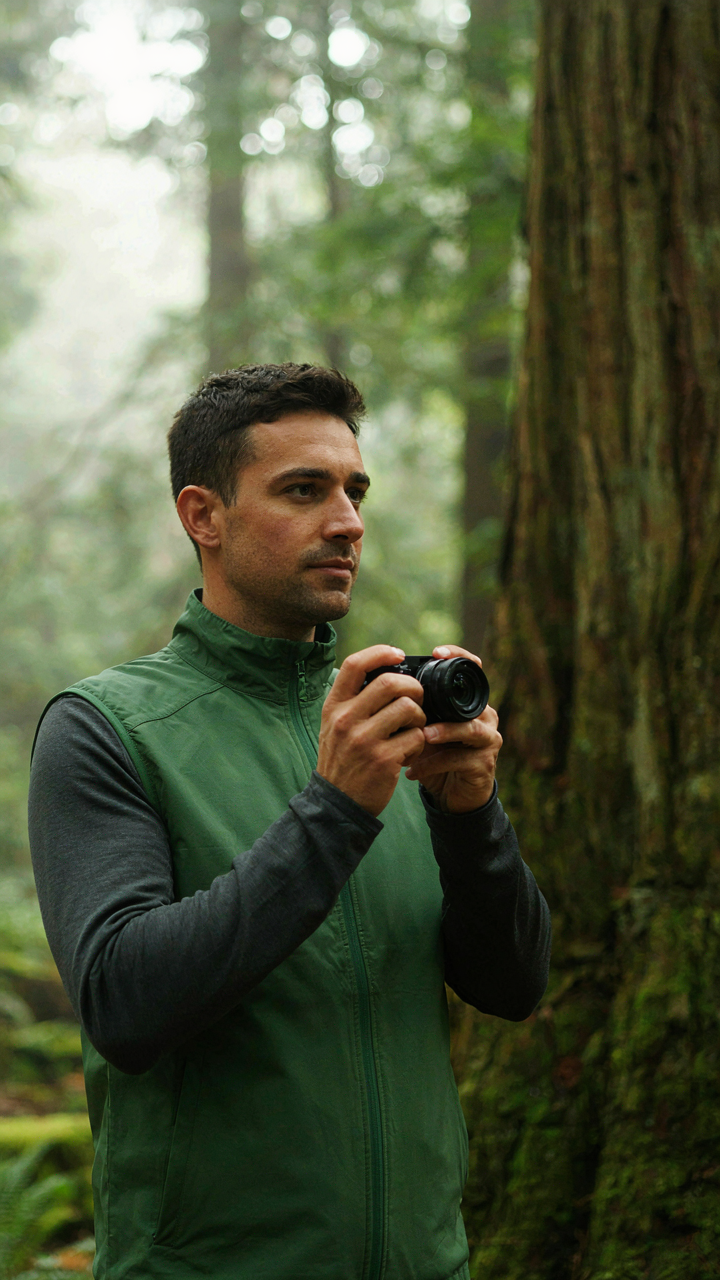
Reframing Ancient Scale And Intricate Detail
You want proof you were somewhere important. That’s the real reason you’re reading this. The mechanism is simple: your camera frame forces you to choose what matters, and in old growth forests, that choice reveals what you actually value versus what you think you should value.
Scale in old growth demands a decision most photographers never make. You can shoot the 300-year-old trunk filling the frame, or you can shoot the human hand touching it. One says “look how big.” The other says “look how small you are.” The first is a postcard. The second changes how you move through the forest.
Light, Shadow, And Emotional Depth
The common advice is to chase golden hour and dramatic backlighting. That’s incomplete. In old growth forests, the real work happens in the diffused light under the canopy where emotion lives in gradation, not contrast.
- Underexposure by intention: Shoot one to two stops darker than your meter suggests. The shadowed details hold more information than blown highlights ever will.
- Sidelighting through gaps: Position yourself so light enters from the side, not behind. This sculpts texture and age without theatricality.
- Gray overcast days as your tool: When skies are flat, old growth reveals itself through surface detail. No drama needed. The forest does the work.
- Foreground shadow frames: Let near trees block light across part of your composition. This creates depth that pulls the viewer into the scene instead of just showing them a view.
- The single source principle: Identify one light direction and stick with it for an entire sequence. Consistency builds emotional weight faster than variety.
The mechanism: your camera interprets light as data, but your eye interprets it as feeling. When you underexpose, you’re telling the sensor to preserve shadow detail instead of highlight protection. That technical choice forces you to see the forest as a relief map of time, not a bright landscape. Take your first five shots at minus 1.3 stops and compare them to your meter reading. The difference is immediate.
Walking Through Forest: A Lesson In Biological Succession
How Forests Rebuild After Disruption
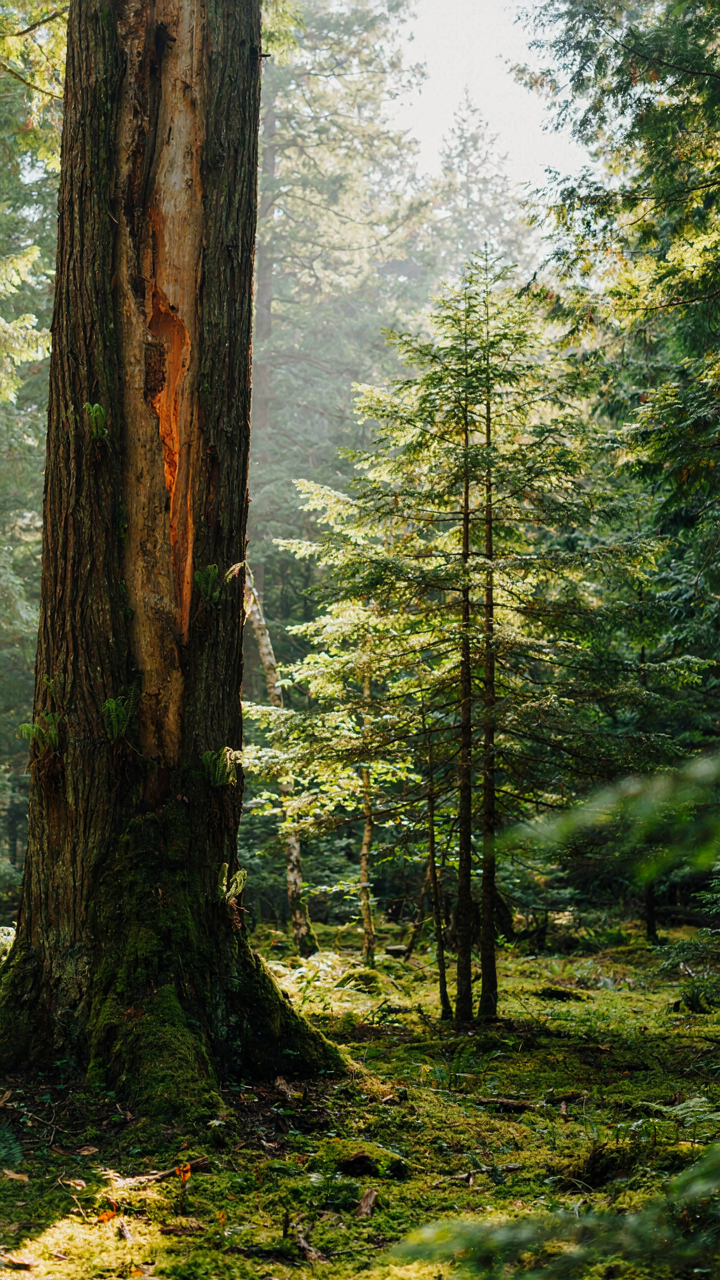
You want to know this because you’re stuck in a repeating pattern and you need permission to believe change isn’t linear. Ecology offers the answer: succession. In forest biology, succession describes how an ecosystem reorganizes after disturbance—pioneer species arrive first, then intermediate species, then the climax community stabilizes. Old growth forests represent the endpoint of this decades-long process. A walk through one shows you what rebuilt looks like, not as metaphor but as visible stage progression in real time.
When you move through an old growth forest, you’re walking through proof that disruption doesn’t end forests—it redirects them. The oldest trees stand surrounded by younger cohorts at different heights, different ages, different functions. Gaps in the canopy created decades ago now host specific plant communities adapted to that light availability. The forest didn’t skip steps or accelerate past its nature. It followed a sequence. Your personal reset follows the same mechanics: disruption, pioneer phase, stabilization, depth. Start mapping where you are in your own succession cycle, not by feeling, but by identifying what stage of regrowth shows up in your daily outputs.
Networks Before Individual Achievement
Symbiosis isn’t cooperation—it’s dependency made functional. In forest ecology, mycorrhizal networks connect tree roots underground through fungal threads, moving nutrients and information between trees of different ages and species. A walk through old growth reveals nothing about these networks visually, but their effects are everywhere: the health distribution doesn’t follow logic, the survival rates across poor soil shouldn’t work, the communication patterns emerge in wood ring data. The mechanism predates your thinking about collaboration because it’s older than your species.
Most collaboration advice treats people as isolated nodes trying to connect. Wrong frame. You’re already networked. The question isn’t whether to build relationships—it’s whether you’re a nutrient sink or a nutrient source in the networks you inhabit. In old growth forests, weak trees die when networks fail. Strong trees pull from networks during stress and feed them during abundance. Apply this directly: audit your collaborations for what you extract versus what you feed back into the system. Then restructure your contribution schedule to match seasonal demand, not your convenience.
Redwood Forest: Architectures Of Vertical Ambition
When Size Stops Being Metaphor
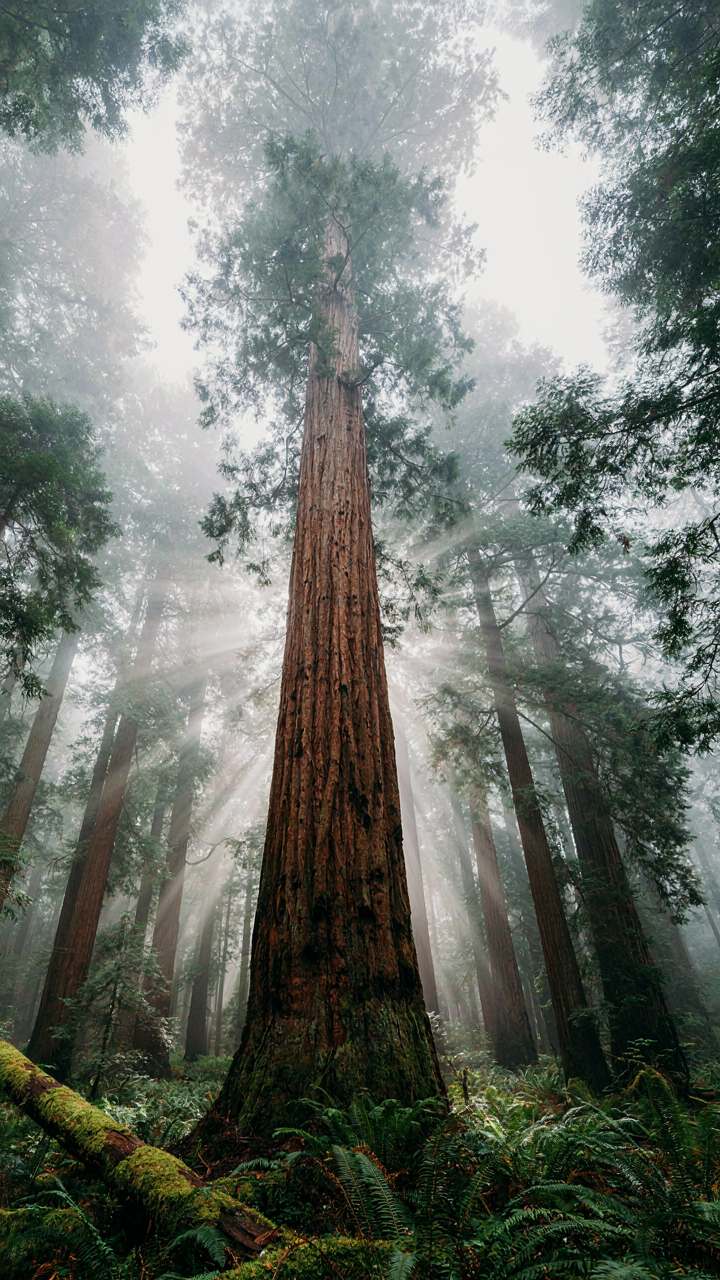
You want to walk among redwoods because you need proof that something can actually be that large. That’s the real reason. Most people operate inside perceptual ceilings their whole lives, and redwoods demolish them on contact. A 350-foot coast redwood isn’t impressive in the abstract. You need to stand beneath one and feel your visual system fail to process the top.
Redwoods use a biological principle called apical dominance: a single leader stem grows upward while suppressing lateral branching below. They stack height like compound interest. The mechanism works because redwoods minimize weight distribution problems through their tapered form and because coastal fog provides direct water absorption through their needles, reducing dependence on root hydraulics alone. This solves a physics problem that keeps most trees under 200 feet.
The Network You Can’t See
People say old growth forests teach interconnection. That’s incomplete. What they actually teach is how stability emerges from redundancy buried underground. Redwood root systems spread laterally, not deep. A 350-foot tree often has roots that only penetrate 6 to 12 feet down. They interlock with neighboring redwoods, creating a root mat that functions like load-bearing infrastructure, not individual anchors.
This mirrors network architecture in systems design: resilience comes from horizontal distribution, not central strength. When you walk a redwood grove and feel the terrain give slightly underfoot, you’re literally walking on a living platform. The walk itself becomes a mechanism for understanding why isolated systems fail and why old growth persists across centuries while monocultures collapse in storms. Proximity matters. Interconnection matters. The forest walks you through the proof.
Wooded Hiking Trail In Forest: The Signal Vs. Noise Filter
Cutting Through The Complexity
You want permission to stop overthinking. Most people enter old growth forests and get paralyzed by sensory input, mistaking overwhelm for depth. The mechanism is simple: your brain treats novelty as information, even when it’s just variation. A 500-year-old Douglas fir isn’t more valuable to notice than the fungal pattern on its bark, but your attention treats them equally. This kills focus.
The real work is building a filtering system before you walk. Decide what you’re tracking: succession stages, specific species, soil composition, or temporal change. Old growth forests reveal their patterns only to observers with a predetermined lens. Without this filter, you collect observations instead of understanding. The trail becomes tourism.
Pattern Recognition Under Pressure
Signal detection theory from cognitive science applies directly here: your job is distinguishing meaningful information from background noise in conditions of uncertainty. Most hikers miss structural patterns because they’re scanning surface-level detail. Old growth forests operate on different time scales than the human eye naturally perceives.
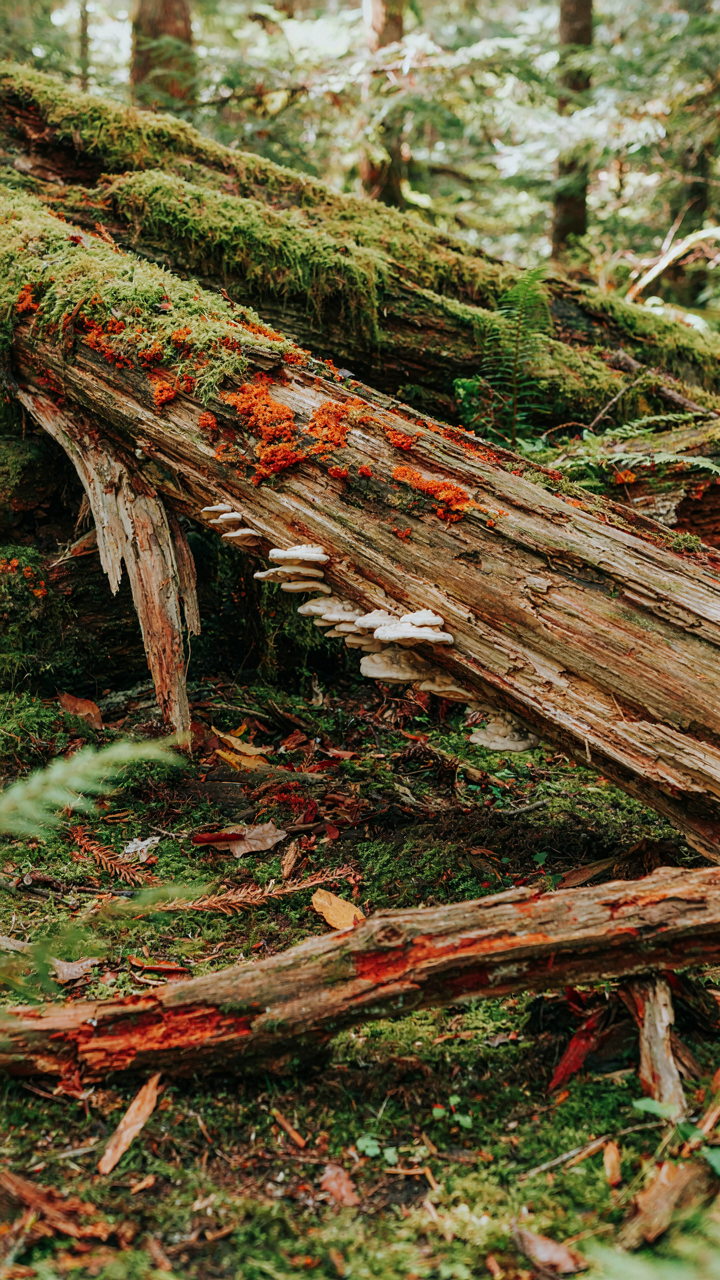
Focus on three mechanisms instead of abundance: deadfall distribution, canopy architecture, and understory light stratification. These reveal how the forest actually functions. Deadfall patterns show you where wind stress concentrates and how decay recycles. Canopy gaps expose where recruitment happens. Light stratification tells you which species compete for which resources. Spend fifteen minutes on one mechanism instead of rushing through the trail noting everything.
Old Growth Forest Scenery: Beyond Passive Consumption

Touch The Bark, Read The Ring
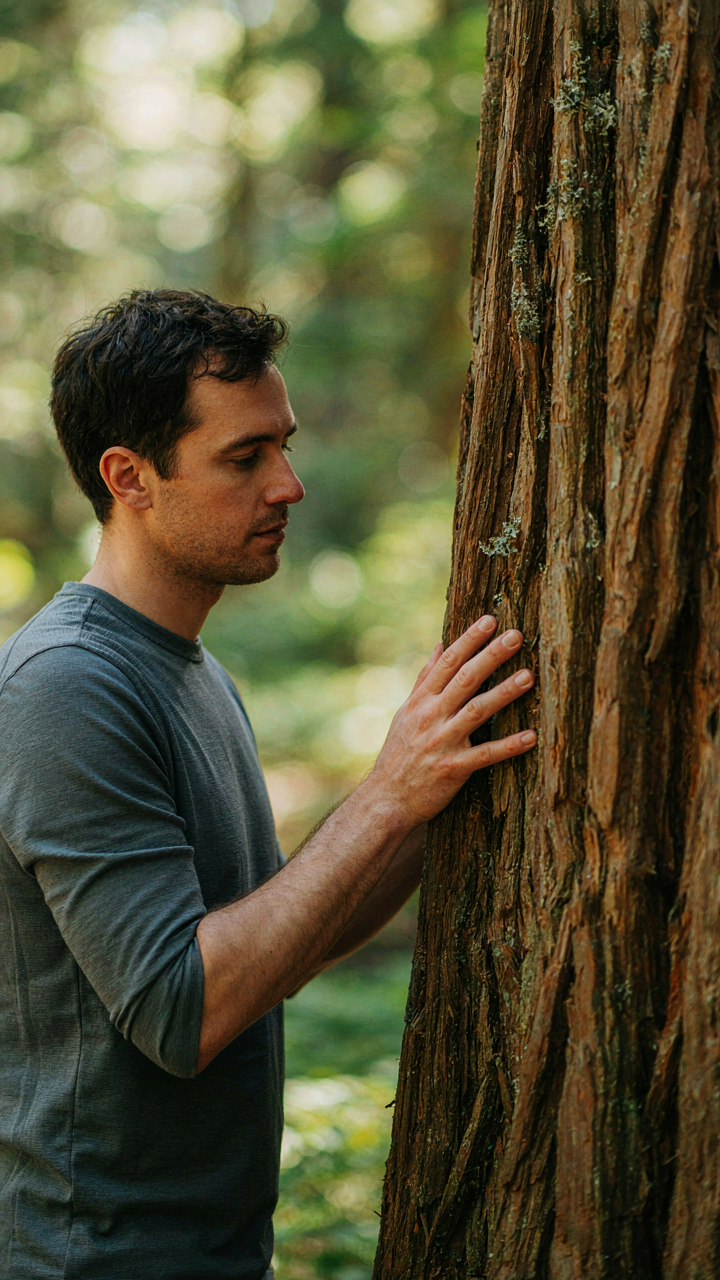
You want old growth forest walks to feel meaningful so you can post about having done something real. The mechanism is simple: your brain doesn’t process what it doesn’t interact with. Neurology teaches us about sensorimotor feedback loops, and old growth forests demand the same principle. Place your palm on a Douglas fir that’s 400 years old. Run your fingers into the bark fissures. Your nervous system registers depth, texture, and time in a way eyeballs alone never will. You’re not observing the forest. You’re creating a physical record your body understands.
This isn’t poetic. It’s anatomical. Most people walk through old growth with their hands in their pockets, eyes pointed downward at the trail. They miss the mechanism that actually builds memory: tactile engagement. Bark tells you about fire scars, weather stress, and insect damage. Fallen logs reveal decay patterns that show how nutrient cycling actually works in systems 500 years old. Touch forces you to slow down to the forest’s timeline instead of imposing your own. Spend five minutes examining one tree’s surface instead of hiking past ten. That trade compresses what you actually retain.
Listen Past The Ambient Hum
Most forest walk advice treats sound as background noise, optional flavor. Wrong. Soundscape ecology is a legitimate field, and old growth forests create acoustic signatures that reveal their structure before your eyes catch up. The absence of human noise isn’t relaxing. It’s informational. An old growth forest has a particular acoustic texture because of canopy density, spacing between trees, and moisture saturation. Listen for the difference in how sound travels through dense understory versus open groves. Moss-covered ground absorbs high frequencies differently than bare soil.
Bird calls in old growth sound different than in younger forest because the species composition changes. Spotted owls, marbled murrelets, and varied thrushes occupy niches that only exist where trees are 200 plus years old. Their calls tell you the forest is functioning in a specific way. Water movement through ferns and root systems creates a baseline frequency you won’t hear in managed forest. Stop walking every 15 minutes and listen for 90 seconds without speaking. Your job is to identify what you’re hearing, not to enjoy the quiet. That’s the protocol that builds actual sensory data.
The Unspoken Cost Of Ignoring Ancient Wisdom
Pattern Recognition Without Reference
You want to believe your instincts still work in the modern world, but they’ve atrophied because you’ve lost the natural anchors that calibrate them. Ecology teaches us about “keystone species”—organisms whose removal collapses entire systems despite being a small fraction of the biomass. Old growth forests function as keystone environments for human intuition. Without regular exposure to them, you lose the ability to read subtle environmental signals: soil composition, light quality, spatial depth, seasonal rhythm.
Your nervous system developed over millennia to parse these inputs. When you stop walking through old growth forests, you stop training the pattern-matching hardware that evolved for exactly this task. Most people blame technology or distraction, but that’s incomplete. The real mechanism is simpler: you cannot maintain a skill you never practice. Remove the stimulus, lose the signal.
Structural Resilience Built Over Centuries
Forest ecology proves this: ecosystems that survive millennia do so through redundancy, not optimization. A 500-year-old forest contains species that serve identical functions. One dies, another compensates. Monocultures collapse faster because they lack this buffer. Your resilience operates the same way. Walking old growth forests teaches you how to build cognitive and emotional redundancy—multiple pathways to solve problems, multiple ways to interpret events, multiple reference points for what “normal” actually means.
Most resilience advice prescribes adding complexity: meditation, journaling, exercise routines. That’s not wrong, but it misses the mechanism. You need exposure to systems that have already solved the resilience problem through evolutionary trial and error. Old growth forests have spent centuries optimizing for shock absorption. When you spend time there regularly, you internalize those patterns. Your decision-making becomes less brittle because you’ve learned from a structure that doesn’t break under pressure.
The Real Obstacle Isn’t Finding A Path; It’s Acknowledging Your Own Fleeting Nature Against The Forest’s Enduring Truth
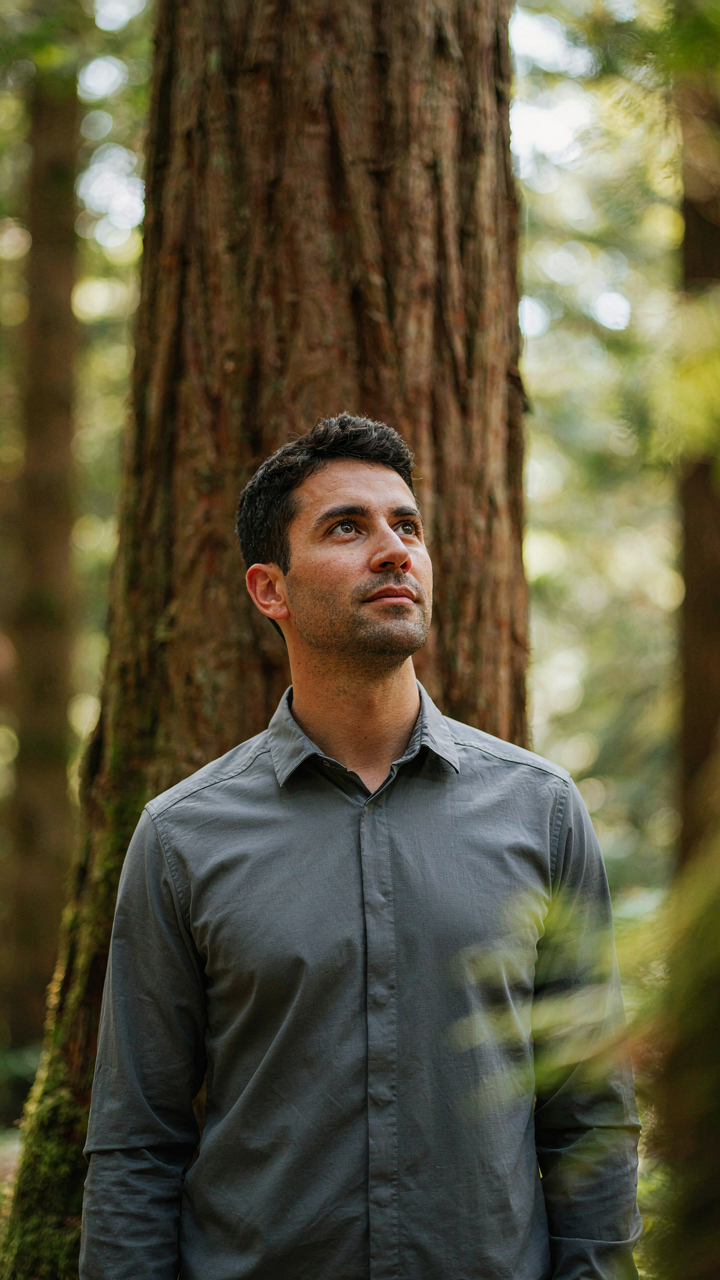
Most people never walk an old growth forest because they’re waiting for the perfect time. There won’t be one. Book a trip this week, not next month. Stand among trees older than your entire bloodline and feel what it does to your ego. That discomfort is the point. You’re not there to relax. You’re there to remember you’re temporary, and that changes how you spend the time you actually have left.