

The Illusion Of More: Why Shorter Trips Win

Park Hopping Destroys The Experience
You want to say you’ve “done” multiple parks because it sounds better than admitting you barely saw one. Economics calls it diminishing returns, and it applies directly here: each additional park you squeeze into a trip reduces the actual value you extract from every single one.
Most people frame this wrong. They think more parks equal more experience. The mechanism is the opposite. Travel time between parks, setup and breakdown at each location, and the cognitive load of navigation compounds. You spend thirty percent of your trip driving and twenty percent reorienting yourself. That leaves half your time for actual engagement, split across three parks instead of one.
Depth Builds Memory And Understanding

Shallow coverage creates the illusion of accomplishment but leaves almost no lasting recall. One day at Yellowstone teaches you nothing about geothermal systems or wildlife patterns. Two or three days builds framework. Five days builds actual knowledge you retain.
The parks themselves enforce this. Grand Canyon’s scale defeats you on day one. You need day two to understand the geology. Day three reveals why you missed the important overlooks on day one. A rushed itinerary prevents this progression entirely. When you stay longer, you stop acting like a checkbox collector and start acting like someone actually interested in the place. Your behavior shifts from seeing to observing, and that shift is where memory lives.

The “Minimum Viable Experience” National Park Itinerary

What You Actually Came To See
You want to feel like you didn’t waste the trip, which means you’re optimizing for a feeling of completion rather than an honest inventory of what moves you. The mechanism is simple: every park has one or two things people travel there to experience. Everything else is filler that eats time and creates decision fatigue.
Identify that core objective before you book. For Yellowstone, it’s geysers and wildlife. For the Grand Canyon, it’s the canyon itself from specific viewpoints. For Zion, it’s The Narrows or Angels Landing. Not all of these. Not a checklist. The thing you’d regret missing. That single objective determines your minimum time requirement.
Cutting The Tourist Orthodoxy
Common advice says you need a week to “really experience” a park. That’s marketing. Most parks compress their actual experiential value into 48 to 72 hours if you strip away the activities that exist only because other tourists do them. The real constraint isn’t time per park, it’s your ability to ignore the itinerary that everyone else follows.
Stop the visitor center, the scenic loop drive, the ranger talk designed for people on hour two of their first park visit. Those aren’t bad, they’re just not essential to your core objective. Visit the park with a topographic map and a single focal point. Drive or hike directly to what you came for. Spend the remaining time repeating that one experience at different times of day when light and crowd levels shift, which reveals depth the single-pass approach misses.
Optimal Duration By Park Archetype: Planning National Park Trips

Park Complexity Determines Your Minimum Stay
You want to know the “right” answer so you can feel efficient, but the mechanism nobody names is that parks don’t scale linearly—complexity compounds. Using systems thinking from ecology, parks operate as nested environments where each zone of accessibility requires its own time investment, and skipping one creates knowledge gaps that ruin the whole trip. A park isn’t just bigger or smaller; it’s structurally different.
Yellowstone demands 4-5 days minimum because its geothermal features, wildlife corridors, and canyon systems occupy separate geographical zones that don’t connect visually. Zion needs 3 days to justify the trip: the Narrows, Angels Landing, and valley floor activities demand different physical preparation and time blocks. Grand Canyon differs fundamentally—2 days works if you’re only doing the South Rim overlooks, but canyon depth requires different energy accounting than lateral traversal. The park’s actual architecture determines your time requirement, not the park’s fame or size alone.
Energy Topology Shapes Your Pace, Not Preference
Matching trip length to terrain isn’t motivational—it’s load-bearing architecture. Parks operate on different exertion profiles: some demand consistent cardiovascular output, others spike intensity in isolated moments. Moab parks cluster high-intensity activity (Canyonlands, Arches) into day hikes, meaning you can compress them into 2-3 days if you’re fit. Shenandoah spreads moderate effort across distance, so 3-4 days feels right because the landscape dictates walking pace, not ambition.
Rocky Mountain National Park forces a choice: either allocate 4 days for summit attempts and high-altitude hikes, or 2 days for valley and waterfall circuits. The park won’t compress. Your energy capacity matches one pattern or the other—trying to do both in 3 days creates a failed experience, not efficiency. Calculate your trip length by matching the park’s exertion topology to your actual fitness level, then add one day as buffer.
The Opportunity Cost Protocol For National Parks Visit Planning

Focus Dilutes With Every Added Day
You want to believe you can “do it all” in one trip. The real anxiety is that you’ll waste time and money on a trip that feels incomplete. Here’s the mechanism: economics calls this opportunity cost, and it applies directly to park visits. Each extra day you add doesn’t multiply your experiences equally—it divides your attention across more destinations, trails, and viewpoints. The first three days at Yellowstone hit differently than days four through six because your mental energy depletes. You stop noticing details. You rush between stops instead of sitting with them.
The math is brutal. A ten-day park trip means spreading yourself across roughly double the territory of a five-day trip. But your capacity to absorb, photograph, and actually remember what you saw doesn’t double. It contracts. You’ve traded depth for breadth, and breadth is forgettable. The visitors who report the highest satisfaction aren’t the ones who hit the most checkboxes—they’re the ones who spent concentrated time in fewer zones and returned home with sharp, specific memories instead of a blurred montage.
The Real Cost Of Seeing Everything
Everyone talks about the “must-see” list, and that’s exactly where the trap closes. You can’t optimize for complete coverage and peak experience simultaneously. The conventional advice says “make a master list and prioritize”—which is lazy guidance that ignores the actual constraint. Your constraint isn’t the number of days. It’s the number of distinct locations your brain can meaningfully process before they collapse into generic mountain, canyon, and forest. A park like Zion requires either two full days of strategic movement or five rushed days of partial engagement.
The cost of attempting full coverage is hidden in what you don’t capture: the quiet observation time that turns a hike into a memory, the unplanned detour that becomes the trip’s best moment, the willingness to skip a “famous” overlook because you’re already saturated. Parks are designed to reward lingering, not logistics. Your protocol: commit to a maximum of three to four distinct zones per trip, spend at least two full days per zone, and actively eliminate everything else from your itinerary before you arrive.
Seasonal Cycles And Crowds: When To Visit National Parks

Peak Season Ruins The Point You’re Trying To Make
You want to see a national park without feeling like you’re in a mall parking lot. That’s not nostalgia talking—it’s economics. Peak season (summer, major holidays) concentrates visitor volume into narrow timeframes, which forces parks to manage capacity rather than experience. The mechanism is supply and demand. You have fixed trailhead capacity, fixed parking, fixed viewpoint space. When demand spikes, the park doesn’t expand. It just gets congested. You came for solitude or clarity. You get lines.
The common advice says “just go in summer.” That’s lazy. Summer delivers the opposite of what most people actually want from a park. You wait in traffic to access trailheads. You share every scenic overlook with fifty other phones. You burn daylight navigating crowds instead of absorbing terrain. The real strategy is recognizing that peak season optimizes for visiting the park, not experiencing it. Your trip length expands because you spend more time managing logistics and less time on the land. A five-day trip in August might give you three effective days of actual engagement.
- July and August: Maximum visitor density across all major parks. Trailheads fill by 8 AM. Parking requires early arrival or lottery systems. Plan for two-hour waits at popular hikes.
- Spring and fall holidays: Easter, Memorial Day, Labor Day create secondary peaks. These weekends pack disproportionate crowds into a compressed timeframe. Weekday visits adjacent to holidays remain manageable.
- Winter at lower elevation parks: Most traffic concentrates at high elevation sites. Desert and lower elevation parks see reduced crowds during winter months despite mild temperatures.
- Christmas and New Year period: Extended holiday break drives multi-week peaks. Lodging fills months in advance. Road conditions become variable in mountain parks, limiting access naturally.
- Avoid checking only one data point: Park services publish traffic patterns by month and even by week. Use this data to avoid the specific peak windows rather than entire seasons.
The mechanic is simple: subtract peak season weeks from your planning, and your trip length shrinks because you accomplish more per day. You get parking. You get trailhead access. You get your five days to actually work instead of burning them on gridlock.
The Real Advantage In Between Seasons
Shoulder seasons—April through May and September through October—operate on a different economic principle. Capacity stays constant, but demand drops. That’s arbitrage in environmental terms. You get the same infrastructure, same terrain, same park. The only variable that changed is the number of people competing for it.
Here’s what actually shifts: your trip length requirement drops because you compress more experience into each day. You start later, hike longer, revisit spots without pressure. Weather remains stable enough for most activities. Early mornings aren’t mandatory just to secure parking. You move at your own pace instead of everyone else’s. A four-day shoulder season trip often produces more substantive park engagement than a five-day peak season trip. The ground time matters more than the calendar time. Temperature swings less extreme than either peak season heat or winter cold. Trails remain accessible without requiring technical gear or route-finding skills. You see the park as its designers intended, not as a logistics problem.
Beyond The Instagram Shot: Cultivating Presence

Disconnect To Actually See
You want this section because you’re afraid three days at a national park means you’ll miss something. Here’s the mechanism: your attention operates like bandwidth. Fill it with notifications and you’ve got nothing left for the environment. The parks don’t reward scanning. They reward sustained focus.
Most people treat parks like checkbox tourism. Phone out, snap the vista, move to the next trailhead. But presence works like soil ecology—it requires time for nutrients to absorb. Two days of actual attention beats five days of distracted motion. Unplugging isn’t about virtue. It’s about making your trip duration actually count for something.
The Observation Protocol
Mindful observation isn’t meditation language. It’s a protocol: stop, identify one specific detail, hold it for two minutes minimum, then move. Most visitors look at landscapes. They don’t examine them. You see differently when you commit time to a single view instead of rotating through ten.
This shifts your trip math. A four-day park visit with focused observation generates more memory and learning than a seven-day sprint through scenic overlooks. Set a rule: one deep stop per half-day hike, not a photo at every marker. Document one element—tree bark, rock formation, animal behavior, light pattern—in detail each day. This trains the kind of attention that makes a park visit actually stick.
The Multi Park Road Trip Trap: Road Trip Places
The Math You’re Avoiding
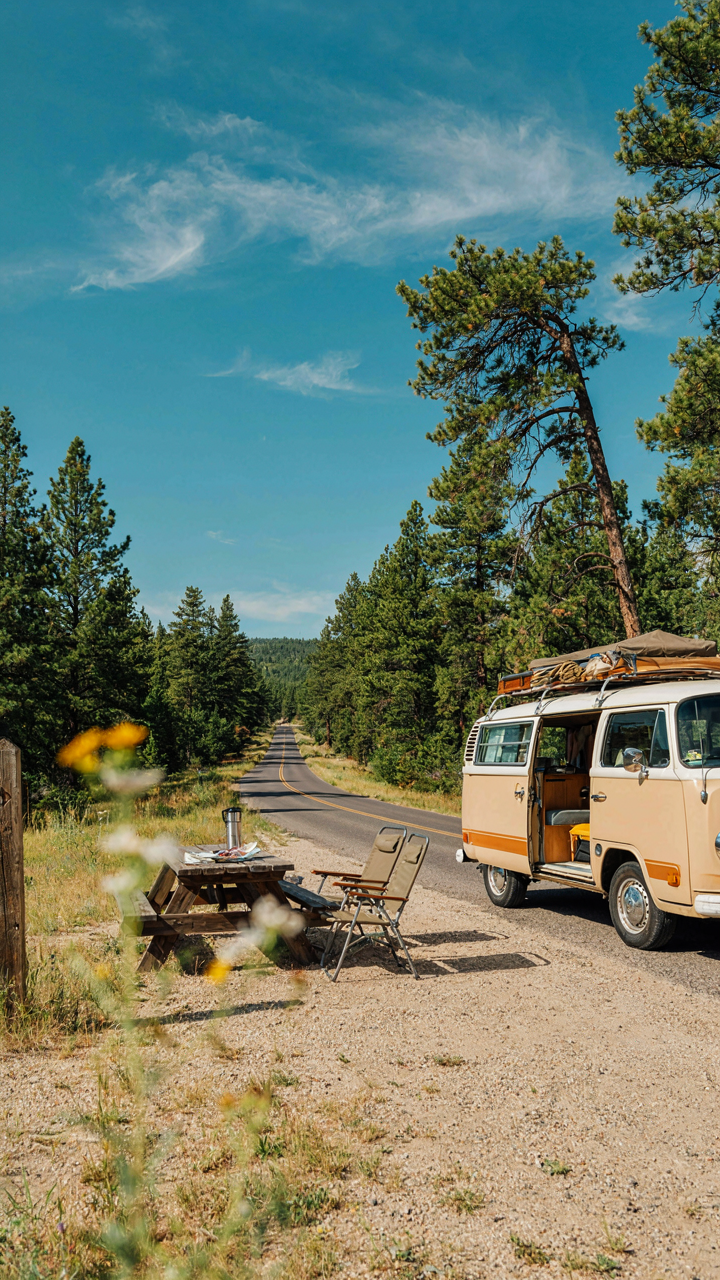
You want to hit multiple parks because it sounds efficient and photographs well on social media, but here’s what you’re actually doing: trading depth for coverage. The mechanism is simple. Road time eats park time at a ratio most people refuse to calculate upfront. A drive between Zion and the Grand Canyon takes six hours minimum. That’s not six hours of bonus content. That’s six hours subtracted from your actual exploration window, and you’re tired when you arrive.
Most multi-park itineraries fail because travelers treat transit time as free time. It’s not. Physics demands a trade-off. Every mile driven is a mile not spent hiking, observing geology, or acclimatizing to elevation. The hidden math: if you have ten days and visit three parks with two days per park plus two days of driving, you’ve compressed your per-park time to 48 hours of daylight, minus meals and sleep. You’re not visiting parks anymore. You’re checking boxes.
Commit To One Park, Not The Idea Of Multiple Parks
- Single park, 4 to 5 days: Covers major trails, viewpoints, and gives you time to absorb terrain without rushing or sitting in a car recovering.
- Two parks, 8 to 10 days minimum: Only if one is a logical neighbor (like Zion and Bryce, two hours apart) and you’re willing to spend one full day just driving and resetting.
- More than two parks: Requires 14 days or longer to avoid the trap of seeing nothing thoroughly. Most people don’t have that window.
- Peak season multi-park trips: Parking and trailhead crowding get worse when you’re rushing between locations, compressing your experience into narrow time slots.
- Off-season single park depth: Winter or shoulder season gives you fewer crowds, longer daylight hours relative to your time investment, and no FOMO about missing a second destination.
The common advice is that “you can do multiple parks in one trip.” True, technically. But you shouldn’t. One park visited thoroughly teaches you how to move through that landscape, where the crowds thin, what the light does at different times of day. Two parks rushed teaches you how a windshield looks. Pick one. Spend the time you saved on depth instead of distance.
Reframing “Longer” As “Deeper”: National Parks Trip

Extra Days Mean Real Patterns Emerge
You want the answer that justifies the time off work. Here’s the mechanism: parks reveal their actual structure only after you stop moving. Ecology teaches us about saturation—the point where additional exposure generates insight instead of just data points. Three days gets you the highlights. Five to seven days gets you the rhythm of a place. You start noticing which trails hold shade at noon, where wildlife actually moves, why certain viewpoints matter at specific times. The park stops being a checklist and becomes legible.
Most people pack too much into too little time because the travel industry sells parks as destinations, not study subjects. You need padding—dead time—to let observation replace activity. Sit by a river for an hour. Walk the same trail twice. Watch light change across a canyon wall. This isn’t romantic filler. It’s the only way your brain catalogues what you’re actually seeing instead of just collecting photos. Extended time transforms you from a consumer into a witness.
One Ecosystem Over Multiple Surface Tours
The ecosystem model beats the tour-checklist model because depth compounds understanding in ways breadth cannot. You understand a place by following one thread completely rather than sampling five places partially. Pick one canyon system, one mountain range, one thermal area. Spend your extra days there instead of driving four hours to hit Checklist Item Seven.
National parks organize themselves into distinct ecological zones, and moving between them just restarts your learning curve. The Grand Canyon’s North and South Rims are different worlds—spend all your time at one rather than splitting days between both. Yellowstone’s thermal features operate on their own logic once you stop treating them as separate attractions. You compress data noise and build actual knowledge. That’s the real economy of time.
The Anti Bucket List Approach To National Park Vacation

Resonance Over Completion
You’re worried you’ll miss something. That’s the real cost calculation happening in your head right now. The mechanism is simple: we confuse completeness with value because social proof tells us parks are scored by coverage, not depth.
Most park trip planning reverses causality. You decide on a duration, then cram attractions into it. This assumes the park exists to fill your schedule. Reality works backward. Your schedule should exist to let one environment rewire how you see. Three days at Yellowstone hitting every boardwalk differs fundamentally from three days at one thermal basin, learning its microecology and returning daily.
Ignoring The Urgency Trap
People manufacture scarcity where none exists. You can return to a park. You will not die if you skip the visitor center. The real urgency is invented by travel media pushing manufactured itineraries and social feeds showing highlight reels.
One trip to one area, fully explored, builds capability you can deploy later. Two weeks of park hopping builds a collection of photos. Connection requires boredom. The mechanism is biological: your nervous system needs repetition in one location to stop scanning for threats and start noticing texture. Plan your next park visit by asking what you failed to notice last time, not what you failed to see.
The Real Obstacle Isn’t Time, It’s Your Unexamined Need For External Validation

You’re asking “how many days” because you want permission. You want someone else to validate whatever length you choose. Stop. Pick a number based on what you actually want to experience, not what Instagram tells you a “real” trip looks like. Three days beats fourteen days of half-attention every time. Open your calendar right now and block the dates you’re actually taking. That act alone separates the people who go from the people who plan forever. Your national park trip doesn’t need to be perfect. It just needs to happen.