
The Instagram Lie: Why Most National Park Road Trip Planning Fails
Effortless Beauty Doesn’t Exist
You’re scrolling because you want proof that spontaneity works, that showing up unprepared somehow leads to transcendence. It doesn’t. The mechanism here is simple: Instagram shows you the frame, not the 14 hours of driving, the permit rejections, or the campground full sign you hit at 8 PM. People mistake curation for ease and plan accordingly, which means they plan nothing.
The parks themselves don’t care about your aesthetic. Yellowstone’s geysers erupt on schedule. The Grand Canyon’s overlooks have capacity limits. Zion’s trails close when weather turns. Every photograph you’ve seen of these places required logistics someone else already solved. When you skip that work and show up “inspired,” you collide with reality: no parking, no reservations, no backup plan. The difference between the people who get the shot and the people who get stuck in traffic is not luck.
The Real Cost Of Following Feeds

Chasing curated moments burns money and time in ways most travelers don’t account for until they’re living it. You drive to a trailhead that looked perfect on someone’s grid, find it packed, backtrack 90 minutes to the next option, pay for gas you didn’t budget. You book a lodge near a park without checking if that lodge is 45 minutes outside the park boundary. You travel during peak season because that’s when the photos looked best, spending 3x more on everything while waiting in lines.
The actual mechanism is price discrimination by season and location scarcity. Park fees don’t change, but hotel rates near famous viewpoints spike 200 to 300 percent during peak months. Restaurants and gear rentals within park towns raise prices because demand exceeds supply. You absorb these costs because you planned based on imagery rather than calendar and logistics. Build your itinerary around when you travel and where you actually need to be, not around what looked good on a feed three months ago.

The Scarcity Protocol: Maximizing Limited Time In National Parks

Quality Over Quantity
You want to feel like you didn’t waste your time or money. That’s the real fear driving this question. The mechanism is simple: most people treat national parks like a checklist app, collecting park names the way they collect Instagram followers. This destroys the actual value. You have finite days. Spending four hours driving between parks to spend forty minutes at each one nets zero memory and maximum regret.
Pick one or two parks maximum per trip. Go deep instead of wide. A full day at Zion teaches you the park’s actual geography, geology, and hiking options. You’ll see how weather changes the light on the canyon walls. You’ll know which trails are accessible at your fitness level. You’ll eat without rushing. Depth compounds. Surface coverage doesn’t.
The Deep Work Versus The Performance
Economics has a term called opportunity cost. Apply it here: every hour in a car is an hour not spent on a trail, at a viewpoint, or absorbing what you came for. Most road trip advice ignores this math entirely. It tells you to “hit as many parks as possible,” which is advice that serves travel bloggers, not you.
A three-day trip to one park beats a three-day trip spanning four parks every single time. You wake early once and know the parking patterns. You eat at the same diner and learn the locals’ recommendations. You hike a trail twice if the first attempt didn’t click. Repetition builds competence and satisfaction, not novelty.
Beyond The Best National Park Road Trips: Crafting Your Own Route

Ignore What Everyone Else Is Driving
You want a road trip that feels like you discovered something. The mechanism nobody states plainly: the parks themselves published their most popular routes decades ago, and the internet amplified them into consensus. You’re competing for parking, views, and trail access with thousands of people following the same GPS coordinates. The real move is understanding that consensus routes exist because they’re geographically efficient, not because they’re optimal for your experience. Break the efficiency rule intentionally.
Study the park’s official maps and identify the secondary loops that exist outside peak traffic zones. Most visitors hit the main scenic drive and leave. The secondary loops often connect overlooked trailheads, pull-offs with genuine solitude, and natural features that guidebooks mention once in passing. Visit the park’s official website, not travel blogs. Read the ranger-led program schedule to understand what natural events happen during your visit window. Then route yourself toward the opposite side of the park during peak hours.
Access Points Most People Never Find
Leverage the economics principle of supply and demand: popular entrance stations create bottlenecks that route everyone through the same corridors. Lesser-known access points function as parallel supply lines with identical resources but zero demand. The National Park Service maintains secondary trailheads, pull-offs, and entrance roads that receive a fraction of the traffic even though they lead to the same features or better ones.
Obtain the official park map from the NPS website before your trip, not at the entrance station. Identify roads and access points marked on the map but absent from standard guidebook narratives. Contact the park’s visitor services directly via phone and ask which trailheads stay empty during your travel dates. Secondary access points require an extra 20-30 minutes of driving but eliminate crowds entirely. Plan your route to enter through a secondary entrance and exit through the main one rather than reversing the pattern everyone follows.
The Anti Itinerary: How To Embrace Spontaneity On Your National Park Road Trip

Building Flexibility Into Your Framework
You want permission to feel spontaneous without the anxiety of wasted time or missed highlights. The real mechanism is this: constraint creates spontaneity, not the inverse. Borrow from systems design. You need a skeleton itinerary, not a rigid spine. Identify 3 to 4 non negotiable parks or landmarks based on your total driving days. Leave 40 percent of your time unscheduled. This isn’t laziness, it’s architecture. The gaps are where real decisions happen.
Most road trip advice tells you to “just wing it” or gives you a pre built ten day loop. Both fail. One leaves you paralyzed at junctions. The other locks you into someone else’s priorities. Instead, map your anchor points, then build variable routes between them. Know your start and end. Know your must see locations. Accept that everything else is negotiable. This removes decision fatigue while keeping actual optionality alive.
Opportunistic Detours, Not Rigid Schedules
Common advice says “leave room for spontaneity.” That’s not actionable. The real move is scheduling your flexibility as a concrete buffer, not a hope. Build in one full day per week of driving that has no prescribed destination. Your plan says “Day 6: Drive north from current location, stop at any roadside feature, hike anything 4 miles or under.” Not vague. Not rigid. Specific about the structure, open about the content.
Detours demand a decision protocol or you spiral. When you spot something interesting, ask: How many minutes adds to my total drive time? Can I see it in under two hours? Does it align with my general direction? Those three questions take thirty seconds. You either commit or skip it. No guilt either way because you evaluated it rationally. The detour becomes a chosen action, not a distraction that ate your schedule.
The Stoic Packer: Essentialism For National Parks Travel Route

Minimal Gear, Maximum Range
You want people to think you’re prepared without actually carrying the weight that kills a road trip. That’s the real game. In military logistics, they call it “supply line efficiency”—moving the right resources to the right place without the bloat that slows everything down. National park packing works the same way. Most travelers pack for scenarios that never happen, then spend four days moving slowly between overlooks because their car is a storage unit.
The mechanism is simple: every item must justify its weight against miles driven and time spent. A sleeping bag rated for 20 degrees in July is dead weight. A second pair of shoes when you have one pair that works is friction you don’t need. The National Park Service doesn’t reward gear quantity. It rewards agility. Strip down to what you actually use, and you move faster between sites, hike more, and recover better because you’re not exhausted from managing surplus.
Tools That Earn Their Place
Forget the advice about “having the right gear for the job.” Most gear does one job and one job only. You don’t need a dedicated camping pillow when a rolled fleece works. You don’t need a separate rain jacket when a quality windbreaker sheds light precipitation. You don’t need three layers when two strategic pieces handle 95 percent of temperature variance across elevation changes in the parks.
The real strategy: each item solves multiple problems. A quick-dry towel becomes a ground sheet, a sun shield, a sweat rag, and a picnic blanket. A lightweight merino wool shirt regulates temperature, resists odor for multi-day wear, and works for both hiking and casual evenings. A small multi-tool handles camp tasks, gear repairs, and trail maintenance. Before packing anything, ask what else it can do. If the answer is “nothing,” it stays home. When everything multiplies its utility, your total load drops by 40 percent without losing function.
Funding Freedom: Budgeting For A US National Parks Road Trip Without Sacrifice

Where Your Money Actually Goes
You want to know how to travel cheap without feeling broke the whole time. That’s the real question beneath the budget talk. The mechanism nobody states plainly is this: most people blow money on things that don’t compound into the experience they came for. You drive past a landmark because you stopped at a mediocre restaurant. You skip a trailhead because gas ate your margin. Attention economics works here like it works everywhere else. You have a fixed attention budget. Spend it on what matters.
The National Park Service doesn’t charge park entrance fees to visitors who possess an America the Beautiful Pass, which costs 80 dollars and grants year-round access to all federal recreation sites. Without it, entrance fees run 15 to 35 dollars per vehicle depending on the park. On a typical road trip hitting four to six parks, the pass pays for itself in two stops. The mistake people make is calculating this wrong. They think about the immediate cost, not the permission structure it unlocks. Buy the pass before you leave home. This removes a decision from every park entry and gives you psychological clearance to visit smaller, less-crowded sites without the friction of “is this worth the fee?”
The Real Tax On Convenience
Everyone says pack snacks and cook your own meals. True, but incomplete. The actual cost structure problem isn’t what you eat. It’s where you eat. A meal at a park gateway town costs three times what the same meal costs fifty miles away. This isn’t price gouging. It’s pure supply and demand. You have nowhere else to go. Gas station coffee inside park boundaries runs 6 to 8 dollars. The same coffee at a town thirty minutes back costs 3 dollars.
The protocol is simple: buy gas and food before entering the park perimeter, never inside it. Plan your route so you eat lunch at a planned stop before reaching the park entrance, not after. This single behavior cuts 200 to 400 dollars off a two-week trip for a family of four. Camping versus hotels follows the same logic. Official NPS campgrounds cost 15 to 35 dollars per night. Private campgrounds outside park boundaries cost 20 to 45 dollars but offer shower facilities and often better infrastructure. The real savings come from staying two nights in one location instead of moving every night. You cut your setup time in half and eliminate redundant driving. Move every other day, not every day.
The Logistician’s Edge: Mastering National Park Road Trip Map Navigation

Download Maps Before You Lose Signal
You want to feel prepared, in control, ready for anything. The real mechanism is simpler: cellular networks fail in canyons, tunnels, and remote park roads. You need offline maps not for peace of mind but because you will lose signal. Download maps through AllTrails, Gaia GPS, or the official NPS app before you enter park boundaries. These tools cache satellite and topographic data locally, letting you navigate without relying on towers that don’t exist where you’re headed.
Most people download one generic map and call it done. That’s lazy. Download multiple map types for the same park: topographic maps for hiking context, satellite imagery for road conditions, and the official park map for regulations and facility locations. Store these on your phone and a tablet as redundancy. The redundancy isn’t paranoia, it’s the acknowledgment that one device fails or runs out of battery. Bring a car charger and a portable battery bank rated for multiple full charges. Test your maps on a short drive before committing to a week-long route.
Navigate Permit Systems Like You’re Working With Constraints
Think of park permits like supply chain logistics: scarcity creates bottlenecks, and you must plan backwards from the constraint. Most parks don’t require permits for day-use, but overnight stays, backcountry camping, and specific trailheads do. Zion, Grand Canyon, and Yellowstone operate reservation systems months in advance. Check the park’s official website for permit release dates, which typically drop 6 months before the travel month. Many parks release permits on specific dates at specific times. Missing that window means you hike popular trails during crowded hours or pivot your entire itinerary.
Permits aren’t bureaucratic obstacles. They’re information about where the park is actually managing capacity. If a trailhead has permit limits, you know it’s congested during peak season and worth skipping. Some parks offer alternative permit systems: Zion uses a timed entry pass system instead of traditional permits. Grand Canyon distributes backcountry permits through a weighted lottery. Read the exact rules for each park because systems vary wildly. Call the backcountry office directly if the website leaves ambiguity. A five-minute phone call saves you showing up at a trailhead only to learn you can’t start until tomorrow.
The Unseen Journey: Optimizing Physical And Mental State Biology

Your Sleep Schedule Determines Your Actual Experience
You want to feel present at the Grand Canyon’s rim instead of fighting your own neurology. Circadian biology isn’t motivational—it’s mechanical. Your body runs on a roughly 24-hour cycle that regulates cortisol, melatonin, and core temperature. When you drive across time zones without adjustment, you’re operating with a depleted prefrontal cortex and elevated stress hormones. Presence collapses. You become a tourist taking photos instead of an observer absorbing place.
Arrive at your destination two to three days before major activities. This timeline lets your circadian rhythm shift without emergency intervention. Start shifting your sleep schedule five to seven days before departure by moving bedtime fifteen minutes earlier or later per day, depending on your direction of travel. This gradual reset prevents the three-to-four-day cognitive deficit that kills road trip memory formation. Your body adapts better to gradual pressure than sudden shock.
Stress Response In Unpredictable Terrain
Road trip stress isn’t optional—it’s structural. Navigation failures, weather delays, and unfamiliar driving conditions activate your sympathetic nervous system continuously. This isn’t weakness. It’s biology. Your amygdala treats a missed turn the same way it treats a predator: as a threat requiring immediate resource mobilization. Over six to eight hours of driving, this taxation accumulates as decision fatigue and emotional volatility by evening. The common advice to “just relax” misses the mechanism entirely.
Build predictability into your route to reduce false alarms. Pre-drive uncertain segments using Google Street View or drive them twice before committing to your itinerary. Plan rest windows after high-demand activities like canyon rim hikes or technical mountain passes. Your parasympathetic nervous system requires fifteen to thirty minutes of stillness—not phone scrolling—to genuinely recover. Schedule one full non-driving day per week of road travel. This bottleneck in your itinerary is what actually determines whether you return restored or depleted.
The Post Trip Audit: Learning From Your National Park Road Trip Itinerary

What Actually Worked Against Plan
You want to believe your planning was solid so you don’t have to admit you wasted money on bad timing or missed the obvious. But the mechanism is simple: most people confuse what felt good with what was efficient. You drove five hours to a trailhead because the photo looked right, not because the payoff justified the time. That’s the gap you’re measuring.
Write down three concrete metrics before you leave the park: miles driven per day, hours spent at each stop, and whether you saw what you came to see. Not feelings. Not how the light hit the canyon. Did the itinerary deliver on its stated objective? If you planned to see the Milky Way and clouds blocked it, that’s data, not failure. If you spent eight hours driving and three hours actually at a location, that’s the real number you need to see.
Building A System That Scales
Treat your road trip like a supply chain problem. In logistics, you measure velocity against friction: how much output you get per unit of resistance. Your friction is gas, time, and weather. Your output is park access and experience quality. Most people plan backward from what parks exist, not forward from what their actual constraints allow.
Create a simple template with these columns: departure point, destination, driving time, weather window, trailhead options, backup location if conditions fail. Run two trips through this template before your next road trip. The second iteration exposes what your first plan got wrong. You’ll spot patterns in your own decision-making: you overestimate daylight hours, you underestimate meal and rest stops, you choose scenic roads over efficient ones. Document these as personal constants, not excuses.
Beyond The Postcard: Cultivating Authentic National Park Experiences
The Real Economy Of Access
You want proof you went somewhere worth going. That’s the hidden trade you’re making when you plan a park road trip. The mechanism is simple: most visitors treat national parks like theme parks with assigned viewing stations, which means the actual culture and communities that shaped these landscapes remain invisible. You’re paying for geography when you could be buying relationship.
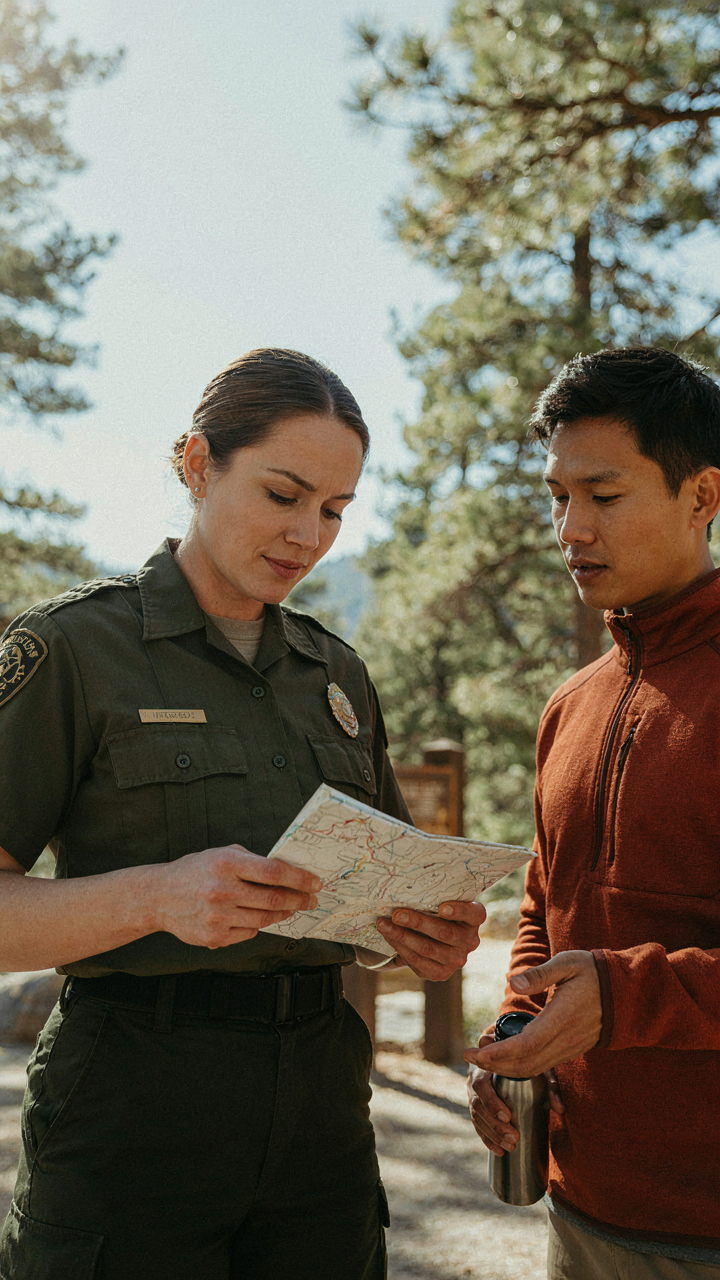
Think of it in terms of economic scarcity. The park itself is a fixed resource with declining marginal utility—more people visiting the same viewpoints extracts less value per person. Local knowledge operates differently. It compounds. A conversation with a park ranger, a local historian, or someone whose family lived in gateway communities before park designation gives you context that makes every subsequent view mean something. That’s the exchange that matters.
Small Towns Hold The Real Story
Most road trip guides ignore gateway towns entirely, treating them as pit stops for gas and fast food. Wrong. These communities exist because of specific terrain, water access, or economic history tied directly to the park adjacent to them. Moab sits where it does because of the Colorado River. Springdale exists because of Zion Canyon. These weren’t accidents of placement.
Visit a local diner, a historical society, a family-owned outfitter that’s been operating for decades. Ask specific questions: What changed when the park was established? What do locals actually do here? What does the park mean economically to your town? These conversations take thirty minutes and reframe everything you see on the road. They’re also free, which makes them the highest-return activity per dollar spent on a road trip.
Timing Against The Crowd Is A Discipline
The standard advice says “visit in shoulder season.” Technically true. Incomplete. Shoulder season still concentrates visitors at the same viewpoints, just slightly fewer of them. Real solitude requires understanding traffic patterns with surgical precision. Most parks publish entrance and exit counts. Some offer timed entry permits with specific windows. Arriving at a major trailhead before dawn isn’t romantic—it’s a tactical decision with measurable results.
Study your specific park’s peak hours, not just peak seasons. Many parks have daily traffic rhythms. Geyser basins fill in late morning. Rim drives empty after sunset. Trailheads see surges at lunch time. Plan your major hikes for times when most visitors are doing something else. This isn’t about finding untouched wilderness—it’s about working within the constraints of a managed system to create space for yourself. Check park websites for real-time occupancy data before you enter.
Less Traveled Trailheads Exist By Design
Park systems intentionally promote certain trails while leaving others understaffed and unmarked. This isn’t neglect. It’s distribution strategy. The hidden mechanism is that parks need to concentrate foot traffic on durable terrain and away from fragile ecosystems. A trailhead with eight parking spaces and minimal signage isn’t forgotten—it’s protected. Those trails still reach compelling places. They just require you to do the research that casual visitors skip.
Pull topographic maps and cross-reference them with trail databases specific to your park. Look for trails that intersect with the attractions you want to see but require more navigation effort. Ask rangers directly: Which trails do you rarely see crowded? Which viewpoints are worth the extra effort? Rangers know the answer because they work there year-round and they’re tired of directing people to the same five overlooks. You’re not discovering hidden gems—you’re using the park’s own information against consensus behavior.
Your Real Obstacle Isn’t Logistics; It’s The Fear Of Forging Your Own Path

Most people never take a national park road trip because they’re waiting for permission. Permission from a guidebook. Permission from Instagram. Permission from someone who’s already done it. Stop waiting. Open Google Maps right now, pick a park within eight hours of you, and block three days on your calendar. The logistics solve themselves once you move. The only real question is whether you’ll spend the next five years planning the trip or actually living it.