
Introduction
Italian Summer Vibes capture the essence of Italy’s warm season, blending travel, food, drink, and health into an experience like no other. Italy in summer offers sun, sea, and cultural richness that invites you to enjoy delicious local dishes, refreshing beverages, and outdoor activities. This season highlights how Italians embrace life through their vibrant traditions and fresh produce.
In this article, discover practical advice for planning your summer trip in Italy, learn about popular summer foods and drinks, and find tips to maintain your well-being while enjoying your Italian summer time. Each aspect of the Italian summer brings a unique perspective on living well and savoring life.
Italian Summer Food And Drink Guide
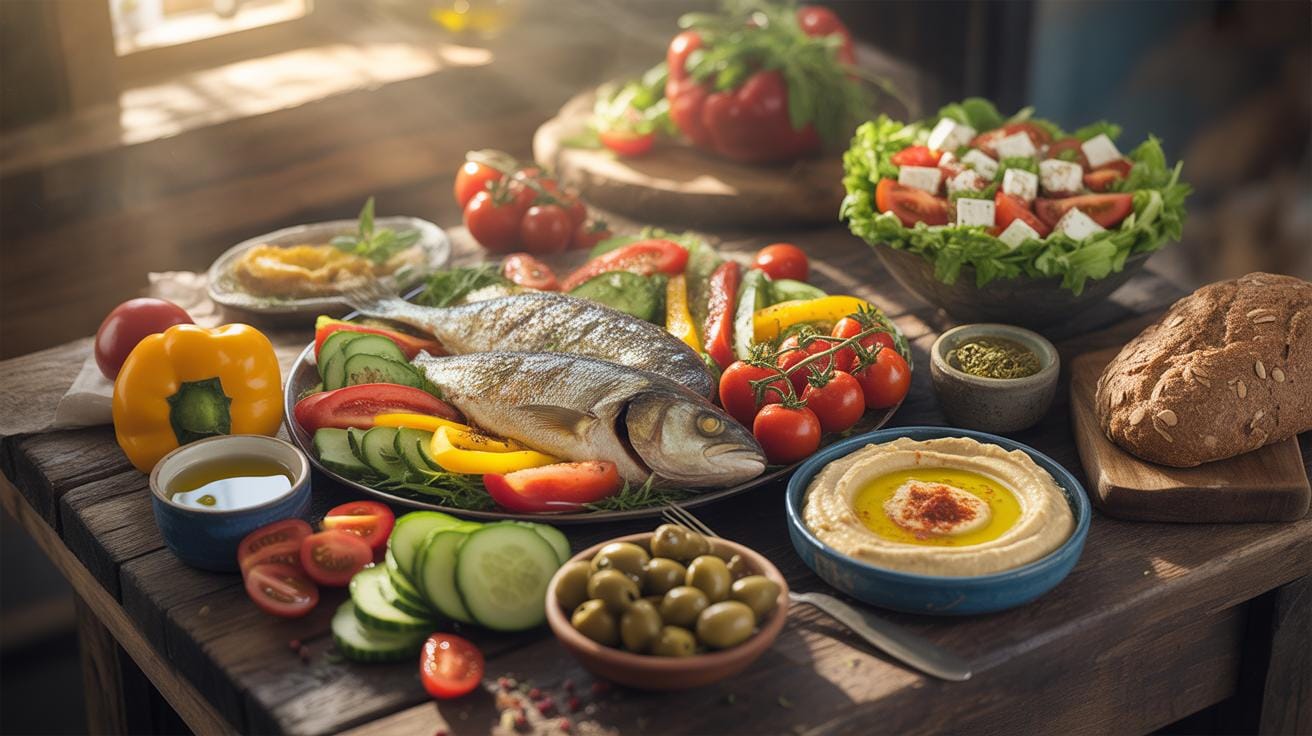
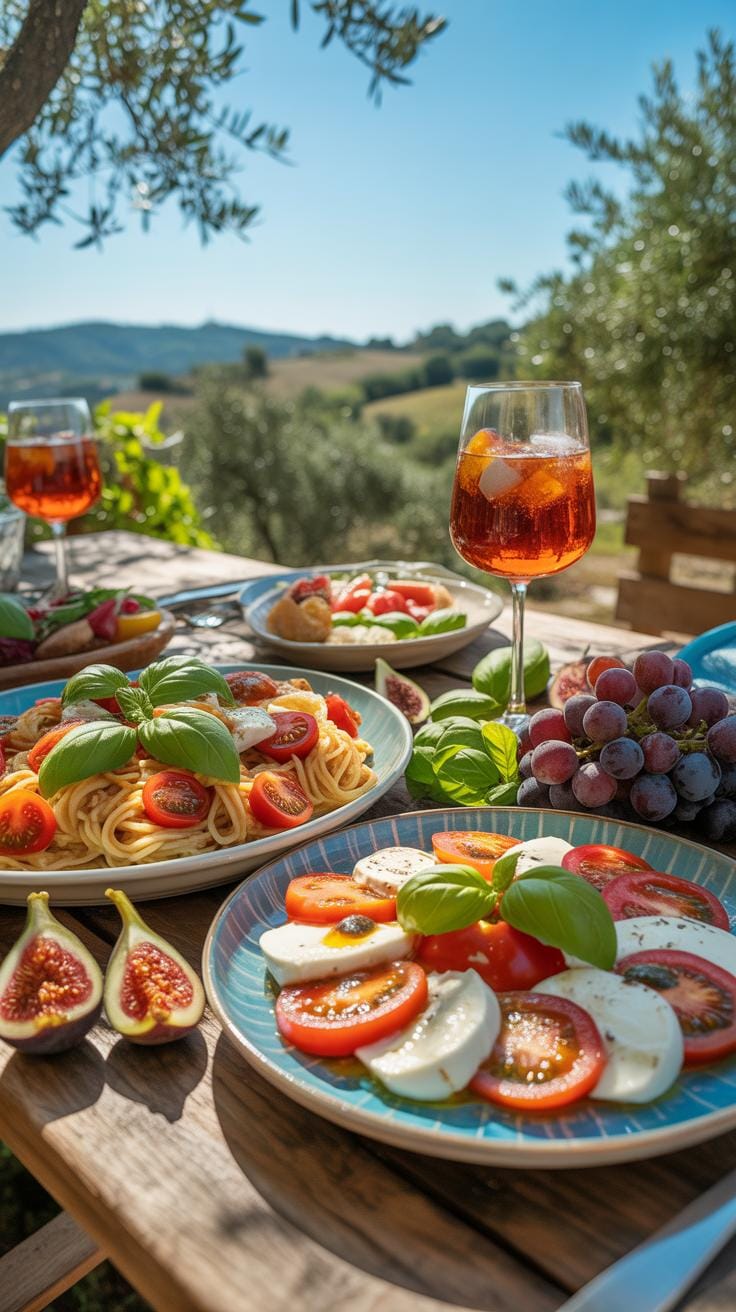
When summer comes in Italy, the dining scene shifts to embrace the season’s bounty—light, fresh, and bursting with local flavors. Think tomatoes ripened under the hot sun, fragrant basil, zucchini, and an abundance of seafood from nearby coasts. Each region leans on what it grows best, creating distinct summer specialties that invite you to taste the season.
In Sicily, for example, you’ll find dishes highlighting fresh sardines and capers, while Tuscany favors simple preparations of vegetables like fava beans and artichokes. These ingredients don’t just fill plates; they tell stories about the land and the sea. It’s easy to see why Italians prefer meals that don’t weigh you down during those long, warm days.
Summertime meals often avoid heavy sauces. Instead, they opt for fresh olive oil, a squeeze of lemon, or herbs that enhance rather than overpower. It’s a style of eating that feels almost casual but is, in fact, deeply rooted in a respect for seasonal produce and tradition.
Typical Italian Summer Dishes To Try
Italian summer dishes lean toward simplicity and freshness. Caprese salad is a classic—you get the creamy mozzarella, vine-ripened tomatoes, and basil leaves drizzled with high-quality olive oil. It’s surprising how such a few ingredients make a dish so satisfying.
Seafood pasta is another must. Whether it’s spaghetti alle vongole in Campania or trofie al pesto with fresh shrimp in Liguria, the seafood is often caught the same day, keeping flavors sweet and briny. Light pasta with olive oil, garlic, and seafood beats heavy creams any day during summer.
And you can’t pass up gelato, Italy’s answer to ice cream but lighter and with intense natural flavors—think pistachio, lemon, or fresh berries. It’s not just a treat; it’s a tradition on hot afternoons or after dinner, a way to cool down that feels deserved.
Refreshing Drinks For Italian Summers
When the heat rises, Italians turn to drinks that cool and refresh without overwhelming the palate. Iced coffee, or caffè shakerato, is popular—a vigorous mix of espresso and ice, shaken until frothy, offering a sharp pick-me-up.
Wine also flows freely but usually lighter varieties like rosé or sparkling Prosecco. These wines feel less heavy and pair well with the fresh flavors on the table. They keep the meal relaxed, perfect for long, leisurely lunches that stretch into the afternoon.
Mineral water, often sparkling, is a dining staple. Hydration is key, and sparkling water can feel more refreshing, even cleansing, between bites. There’s something about sipping cool, effervescent water during a summer meal that just fits the Italian mood—a balance of enjoyment and practicality.
How To Plan Your Italian Summer Trip
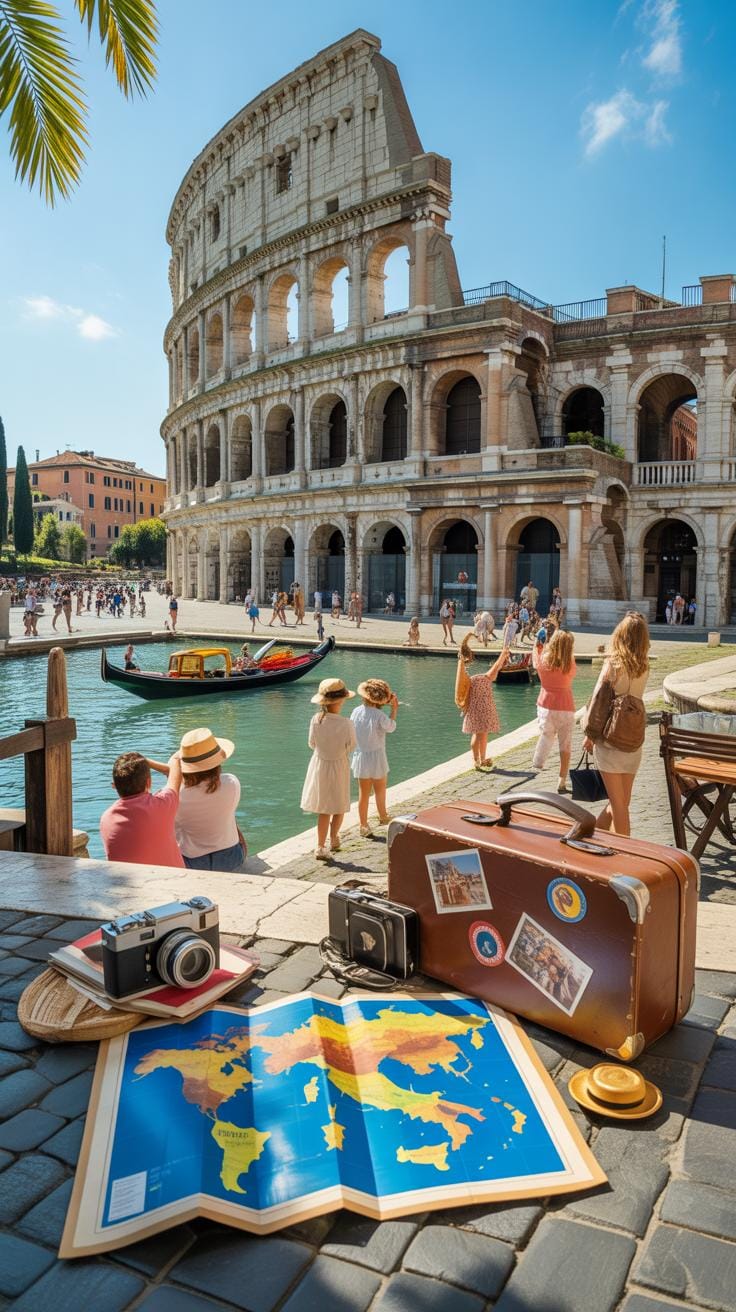
Planning a summer trip to Italy can feel overwhelming, but breaking it down step-by-step makes it manageable. First, think about your transportation. Flying into major hubs like Rome, Milan, or Naples usually offers the best options. From there, trains connect many towns and cities efficiently—though renting a car can be handy for rural areas or coastal drives.
Next up is accommodation. Booking early matters in summer—places fill fast, especially near popular spots. Consider staying in smaller towns just outside big cities for a quieter experience without losing access.
Choosing where to go depends on what you want. If you’re after beaches, the Amalfi Coast or Sardinia might fit. For culture and history, Florence and Rome stay unbeatable. Then again, places like Puglia mix both well.
To skip common travel annoyances, try to avoid peak travel days and be flexible with time. Also, pack light but include sun protection—Italian summers can be intense. And, yes, learning a few basic phrases in Italian can really help with locals—and the charm of your trip.
Italian Summer Health Tips Checklist
Staying Hydrated Under The Italian Sun
Drinking enough water during an Italian summer isn’t just a good idea—it’s a must. The heat here can sneak up on you, making dehydration quick and unpleasant. Aim for at least two liters a day, but remember, if you’re out exploring or walking a lot, you might need more.
Italians often sip water slowly throughout the day rather than gulping it down all at once. Mineral water, with a touch of natural fizz, is popular, but don’t overlook plain water—it does the trick just fine. Sometimes a splash of lemon or a few fresh mint leaves adds flavor and helps you drink more often.
Keep a refillable bottle handy, especially while wandering cobbled streets or lounging near the coast. It’s surprisingly easy to forget drinking enough when distracted by beauty everywhere.
Protecting Skin And Energy Levels Outdoors
Sun protection in Italy is more than slapping on sunscreen. Wearing a lightweight hat and loose, breathable clothing can shield your skin and help you stay cool. Broad-spectrum sunscreen with at least SPF 30 is a staple—don’t skimp on reapplying every two hours, even if you think you’re barely sweating.
Many locals avoid the harsh midday sun entirely. Taking breaks indoors or in shaded cafés between 12 and 3 pm can make a big difference. If you’re set on touring during these hours, pace yourself and sit down often to recharge.
For energy, it helps to snack on fresh fruit or nuts rather than heavy meals. Italians often enjoy a light lunch and save the big meal for evening. This pattern keeps energy steady without the slump that can come from overloading your system in the heat.
Summer Activities In Italian Coastal Towns
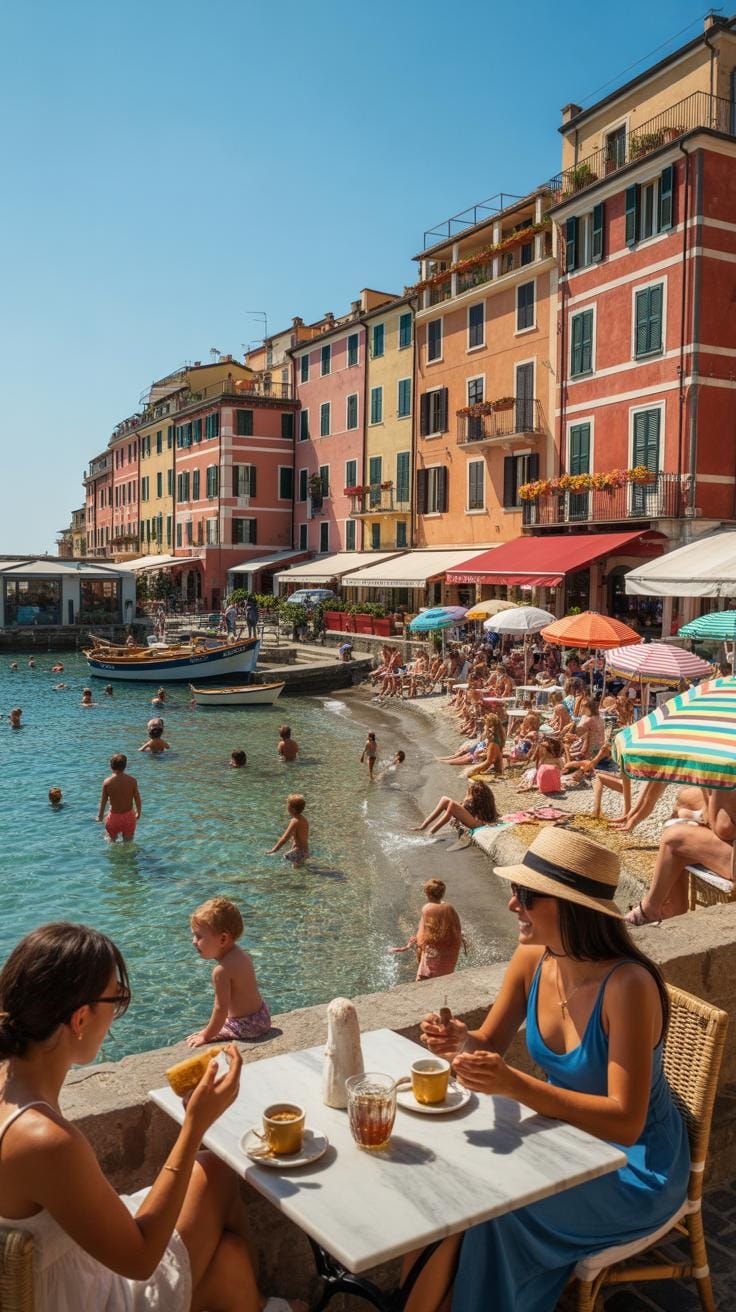
When summer arrives, Italy’s coastal towns come alive with outdoor activities that seem to invite you in. Swimming in clear, cool waters is almost a daily ritual, especially in places like Amalfi or Cinque Terre. The water temperature hits just the right balance—not too cold, not too warm—making it perfect for a refreshing dip.
Boating is another favorite, whether it’s a small motorboat or a sailboat. Along the Ligurian coast near Portofino, you’ll find gentle waves perfect for boat tours that reveal hidden coves and sea caves. You might consider renting a kayak too—it’s quieter and gets you closer to nature.
Beach sports happen everywhere from Rimini to Sardinia. Friends gather for volleyball or paddleball matches, often with more enthusiasm than skill. There’s a casual, almost spontaneous air to these games that make watching as fun as playing.
Local festivals sprinkle the summer calendar. In towns like Sorrento, the Festa della Tonnara celebrates fishing traditions with music and seafood tastings. These events provide a great chance to mingle with locals and try out regional dishes in a lively setting.
Best Beaches For Relaxing And Leisure
Italy’s coast offers beaches that cover the spectrum from chaos to calm. Spiaggia dei Conigli on Lampedusa is often cited as one of the best, mainly because of its soft white sand and crystal-clear water. It’s a bit isolated, so expect limited amenities, but the peace there is unmatched if you don’t mind a small hike to reach it.
On the other hand, Forte dei Marmi provides a more polished experience. You’ll find private beach clubs with sunbeds, umbrellas, and bars. It’s ideal if you like to balance sunbathing with cocktails and a bit of people-watching. Arriving early helps snag a good spot.
Consider La Pelosa Beach in Sardinia for shallow, almost lagoon-like waters and striking views. It’s smaller, so it gets crowded quickly. Visiting during weekdays might offer a quieter experience, especially if you aren’t a fan of packed shores.
Water Sports And Festivals To Join
Sailing is deeply embedded in the culture of coastal towns. Places like Naples and Sorrento offer sailing lessons for beginners, and local clubs often welcome newcomers. It’s a bit challenging initially but can become a rewarding way to explore the coastline.
Snorkeling around the Amalfi Coast reveals fascinating marine life and underwater rock formations. If you’re new to snorkeling, guided tours can help you spot hidden spots and stay safe.
Summer also brings festivals dedicated to water sports and local food traditions. The Regata Storica on Lake Garda mixes historic sailing races with street food. Meanwhile, the Lido di Camaiore hosts a Kite Festival that lights up the sky and the shore, blending sport with spectacle.
Comparing Northern And Southern Italian Summers
Climate And Weather Differences
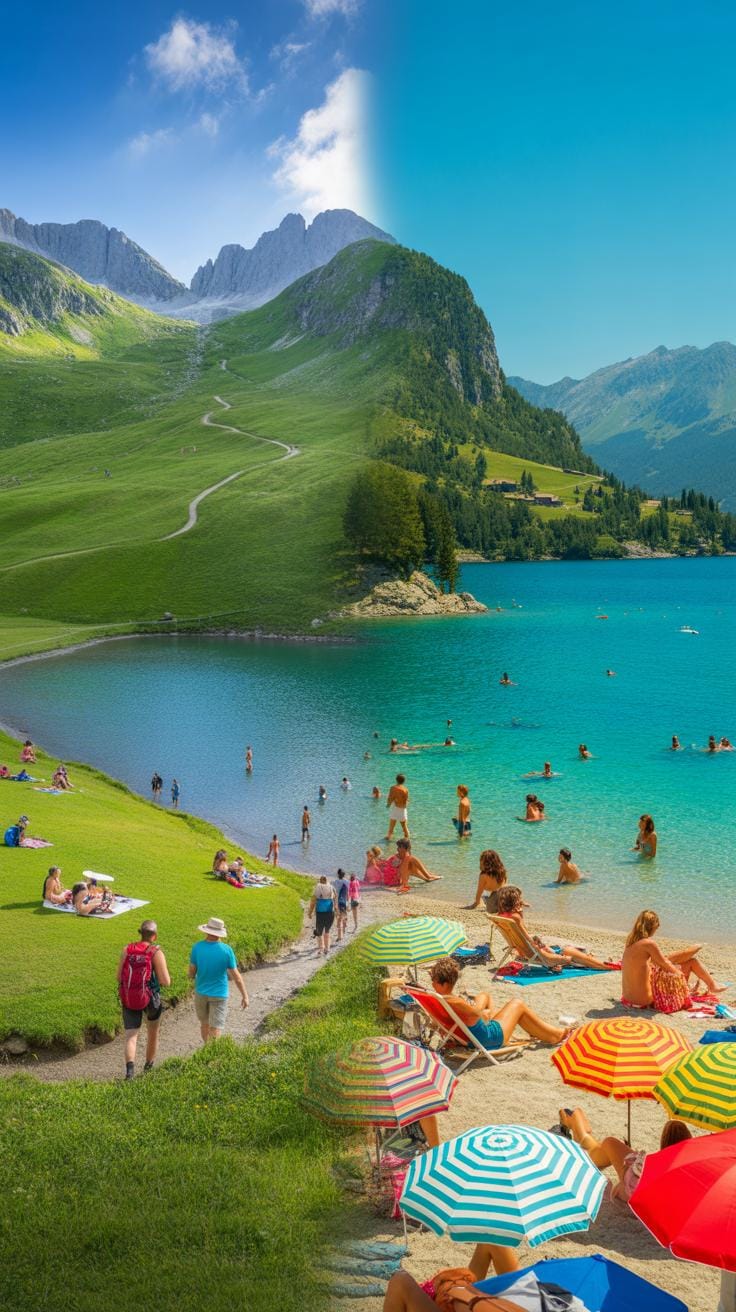
Summer in Northern Italy feels quite different from the South. Up north, near the Alps and the Po Valley, the heat can be intense during the day but often breaks with cooler evenings. You might find relief trekking in the hills or by the lakes, where the air is fresher and less humid than the bustling cities. Rain showers pop up now and then, offering a break but sometimes making plans a bit unpredictable.
Down south, along the Mediterranean coast, summer stretches longer and hotter. Expect dry, stable weather almost every day. The sun beats down relentlessly, especially inland in regions like Sicily or Puglia. Coastal breezes help, yet the evenings often linger warm. If you’re sensitive to heat, you might find the South a little overwhelming during peak afternoon hours.
Regional Food Variety And Preferences
Food shifts noticeably as you move from north to south in summer. Northern Italian summer dishes lean toward light, fresh ingredients—think of risottos flavored with local herbs, or chilled vegetable soups. White wines from Alto Adige or Franciacorta sparkling wines often accompany these meals. There’s a clear preference for delicate, cool flavors, possibly reflecting the need to refresh after milder heat.
Meanwhile, Southern Italy embraces bold, sun-ripened flavors in summer. Tomatoes, olives, capers, and fresh seafood dominate plates. You’ll find more grilled fish and spicy sauces. Reds and rosés from regions like Sicily and Campania are common, thirst-quenching in their own way. The food feels heartier but still celebratory of summer’s intensity. Curious how two neighboring regions use their ingredients so differently? It’s a reminder that summer in Italy isn’t one experience but many.
How Italian Summer Affects Local Lifestyle
Meals And Social Time In Summer
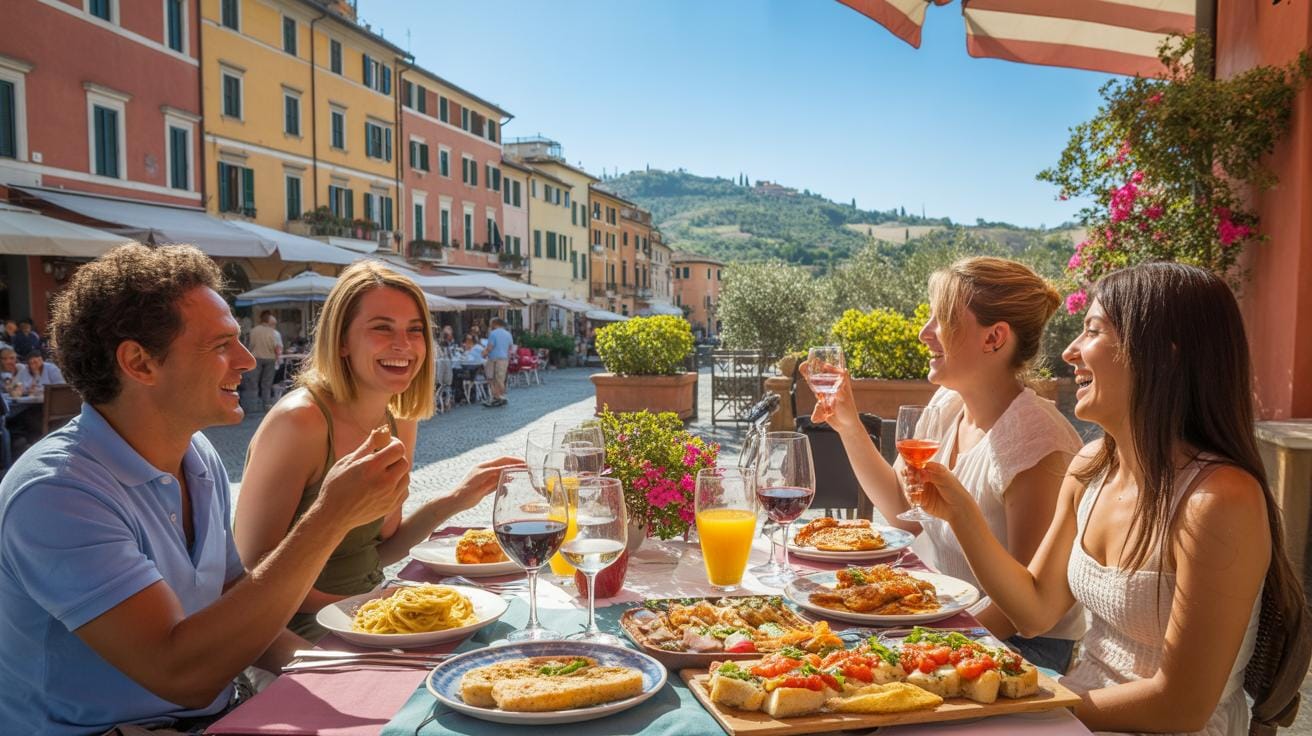
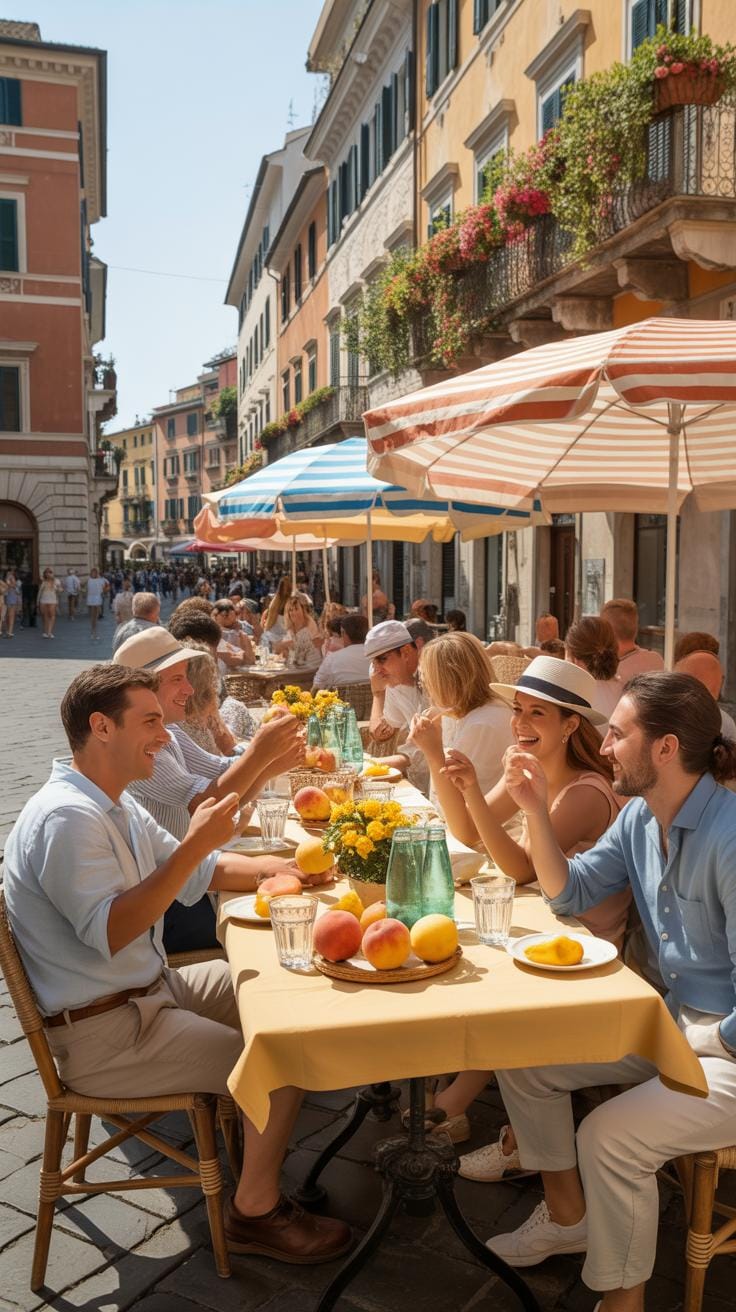
In Italian summers, meals take on a rhythm that feels almost like a dance. People usually delay dinner until late evening, often around 8 or 9 pm, when the sun’s heat has finally started to fade. It’s common to see families, friends, and neighbors gathering outdoors—balconies, piazzas, and street cafes fill up with chatter and laughter. These long, leisurely dinners stretch into the night, offering a chance not just to eat but to reconnect.
Lunch tends to be lighter and quicker in the summer, especially in hotter parts of the country. Many locals might grab a simple panino or enjoy a fresh salad. But come evening, the dining scene blossoms. Outdoor feasts aren’t just about food; they’re social rituals. People catch up, share stories, and enjoy a glass of wine or a refreshing aperitivo. It’s a vibe you have to experience yourself to get—it’s slow, relaxed, but lively.
Approach To Work And Rest During Heat
The summer heat transforms daily routines in Italy, nudging people to rethink their work and rest habits. Many businesses close or scale back during the hottest hours in the afternoon. While the traditional siesta isn’t as widespread as it once was, especially in bigger cities, smaller towns and rural areas still pause mid-day.
Work schedules often shift earlier in the morning or later into the evening to avoid the peak heat. For example, shops might open around 8 or 9 am, then close around 1 pm, reopening after 5 pm until late. It seems like the heat forces everyone to slow down, though it’s not uniform depending on where you are. Tourists create extra buzz, pushing locals to balance leisure with the demands of hospitality and commerce.
It makes you wonder—how much of this is genuine tradition, and how much just a practical response to the sun? Either way, it shapes a distinct tempo to summer life that’s hard to find elsewhere.
Checklist For Packing For Italian Summer
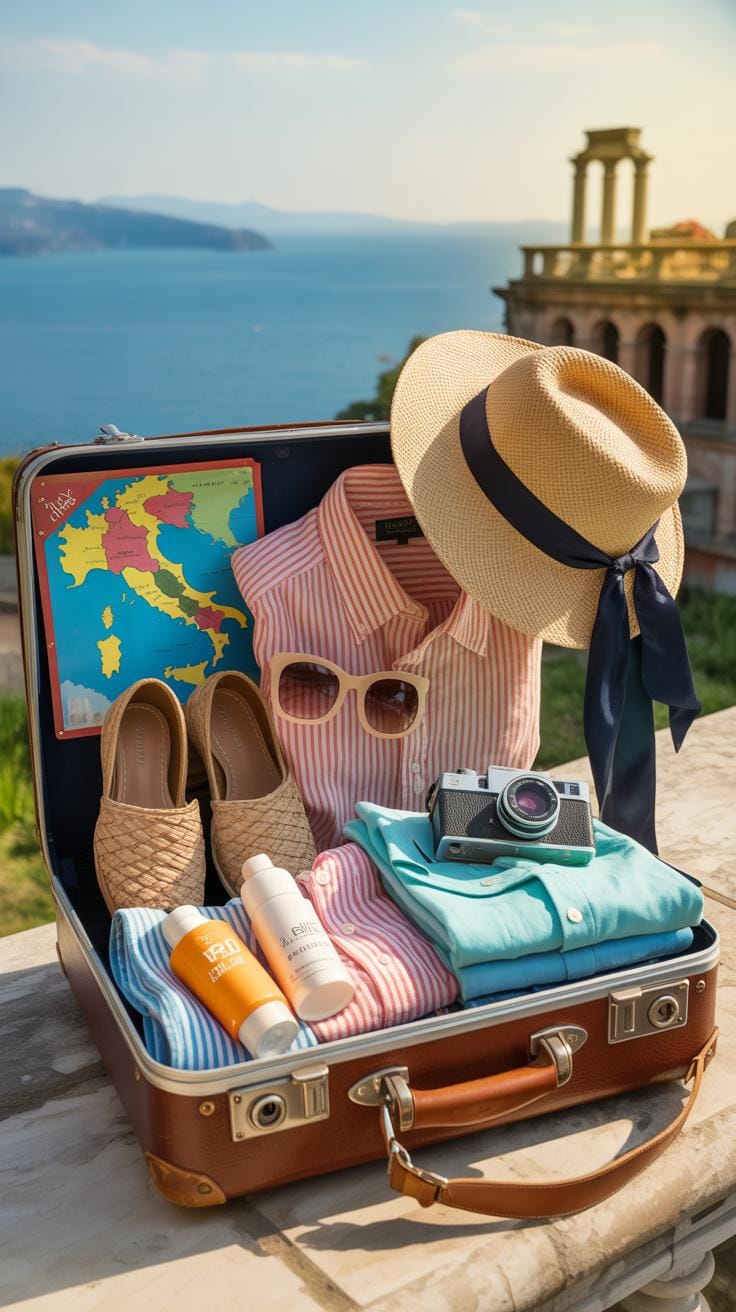
When packing for an Italian summer, think light but prepared. The heat can be intense, especially in cities like Rome or Florence, but evenings might be cooler, so layering a bit makes sense. You’ll want clothes that breathe and dry quickly—cotton and linen are your friends, though silk feels nicer for dinners out. Avoid heavy fabrics; they just weigh you down and trap heat.
For footwear, bring sandals for daytime wandering, but also a pair of sturdy sneakers for cobblestone streets or hikes. Italians tend to dress up a bit, so a pair of loafers or simple flats can be handy if you’re heading to a nicer restaurant or event. Broken-in shoes help avoid blisters—you don’t want that while exploring.
Health essentials are often overlooked but crucial. Pack sunscreen with high SPF, as the sun stays strong for hours. A small first aid kit with plasters, pain relievers, and any personal meds is smart. If you’re prone to allergies, bring antihistamines. Also consider insect repellent—some coastal areas have mosquitoes, especially near dusk.
Travel gear that eases your journey can’t be underestimated. A reusable water bottle, preferably with a filter, keeps you hydrated without always buying plastic. Sunglasses and a wide-brim hat or cap help protect your eyes and face. Don’t forget a lightweight day bag for your essentials—something comfortable but not bulky.
What about tech? A phone charger and international adapter are obvious but easy to forget. If you rely on maps or guides, offline apps can save you from losing signal in narrow alleys or rural spots. And maybe a portable power bank—because running out of battery mid-trip is a pain.
Packing for an Italian summer requires a balance—being ready for heat and sun, but also for occasional cooler nights or sudden rain. Planning what to bring carefully can make a noticeable difference in comfort and convenience during your trip.
Examples Of Italian Summer Festivals
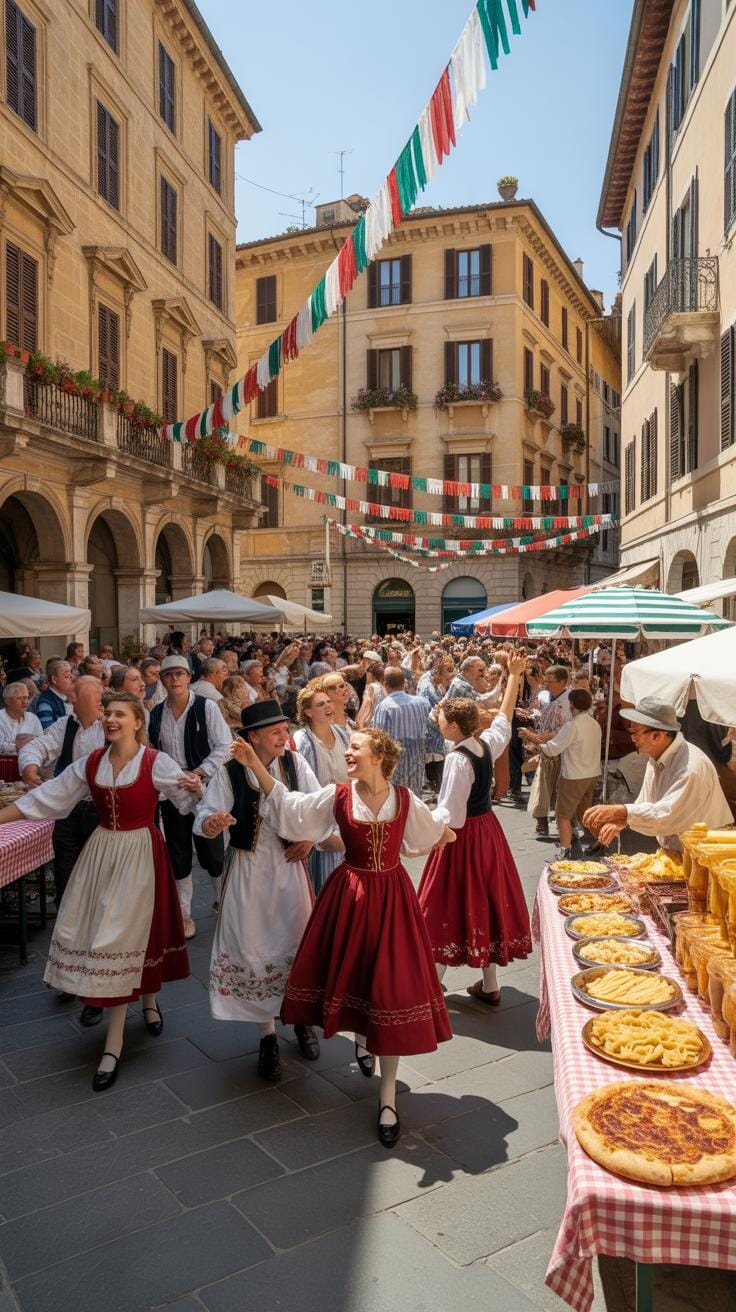
Italian summers are marked by lively festivals that bring together culture, food, and music in unique ways. Take the Palio di Siena, for example, held every July 2 and August 16. This medieval horse race transforms the entire city, with colorful parades, historic costumes, and an intense competition that draws visitors from all over.
Then there’s the Festa della Madonna Bruna in Matera on July 2. It’s a mix of religious devotion and spectacular fireworks, followed by a street party where you can taste southern Italian treats. The atmosphere is hard to describe until you’ve experienced it—equal parts solemn and festive.
People come for the tradition, sure, but also for the communal feeling and the chance to really see Italy’s diverse regional identities on full display. You might find yourself caught up in the crowd, tasting local specialties while the music floats through the night air.
Food And Wine Festivals To Experience
Summer food festivals in Italy often highlight regional flavors that might surprise even seasoned travelers. Consider the Alba White Truffle Festival in Piedmont, which happens from late September through early November, edging into the tail end of summer. It’s a pilgrimage spot for truffle lovers who want to sample delicate truffle-infused dishes and rare wines from nearby vineyards.
Or the Sagra del Pesce in Camogli, a small fishing village near Genoa. This event celebrates fresh seafood with giant communal pans cooking fish over open fires. It takes place in early July and offers a down-to-earth experience where you meet locals and enjoy simple, fresh meals outdoors.
What’s always interesting is how these festivals connect food and place so tightly. The wines you taste are not random but reflect centuries-old winemaking traditions. It’s as close as you get to tasting Italy’s history and geography together.
Music And Cultural Events In Summer
Italian summers pulse with music from open-air opera to folk festivals. The Ravenna Festival, mostly from June to July, offers classical music alongside dance and theater performances in stunning historical settings. Attending feels like stepping back in time, with a modern twist.
On the other hand, the Umbria Jazz Festival in July draws a different crowd, with jazz legends and younger artists filling piazzas. It’s a chance to hear world-class music without the usual concert hall barriers—people sit on steps or bring picnic blankets. You can feel a relaxed yet intense admiration for music all around you.
These events aren’t just shows; they’re embedded in local life. They reflect how, in Italy, culture isn’t separate from daily summer living but continues to unfold in public spaces. You may find yourself humming a tune heard at a tiny village square, long after the night ends.
How To Find Authentic Italian Summer Food
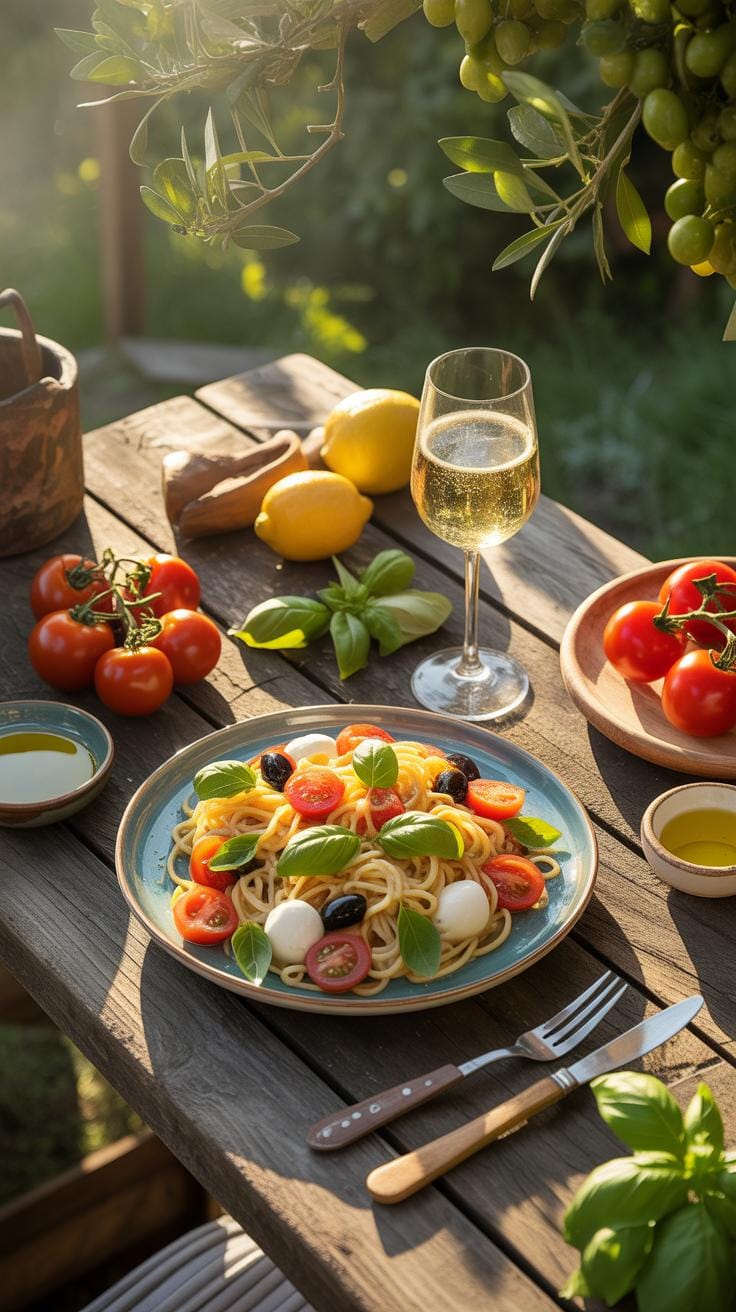
Finding real Italian summer food isn’t always straightforward. You might walk into a place that looks charming and touristy but serves a watered-down version of what locals actually eat. It helps to look beyond the obvious tourist spots. Small trattorias, family-run osterias, or even the stands at local markets often offer better chances at authentic summer dishes.
At markets, focus on stalls busy with locals—that’s usually a good sign. And don’t hesitate to ask vendors where the produce or fish comes from. You want to look for seasonal items like ripe tomatoes or fresh basil, but also keep an eye out for regional specialties that locals swear by during summer.
When choosing street food venues, go where you see a line or fast turnover. Food that’s been sitting around isn’t what Italians would eat at the height of summer freshness. Simple dishes like panzerotti or gelato made nearby often speak volumes about authentic local tastes.
Spotting Quality Local Ingredients
Summer ingredients in Italy often stand out for their color and smell. That bright red tomato isn’t just beautiful; it should feel slightly soft and smell fragrant. Fresh basil leaves need to be vivid green with no dark spots or wilting.
At markets, you might notice certain vegetables, fruits, and herbs that locals eagerly pick up—fennel, zucchini blossoms, and fresh figs appear around summer. If things feel limp or lack aroma, chances are they’re not fresh or locally sourced.
Menus listing simple ingredients often mean a reliance on fresh, quality produce rather than complex sauces hiding mediocre components. Don’t be shy about asking if the vegetables come from local farms or if the fish was caught that morning. Freshness is key to good summer food.
Questions To Ask To Ensure Authenticity
When in doubt, asking questions can reveal whether your meal is genuinely Italian and summer-appropriate. Try these:
- “Is this dish a local summer specialty?”
- “Where do you get your ingredients from?”
- “Was the fish caught recently?”
- “Are these vegetables from a nearby farm?”
- “Is this recipe traditional here or a modern twist?”
These questions often prompt genuine answers, and you might even get recommendations for dishes or places that don’t show up on typical tourist guides. Sometimes, it feels like locals appreciate the curiosity, but other times they might shrug or give vague replies. That itself can tell you a lot.
Simple Italian Summer Recipes To Try At Home
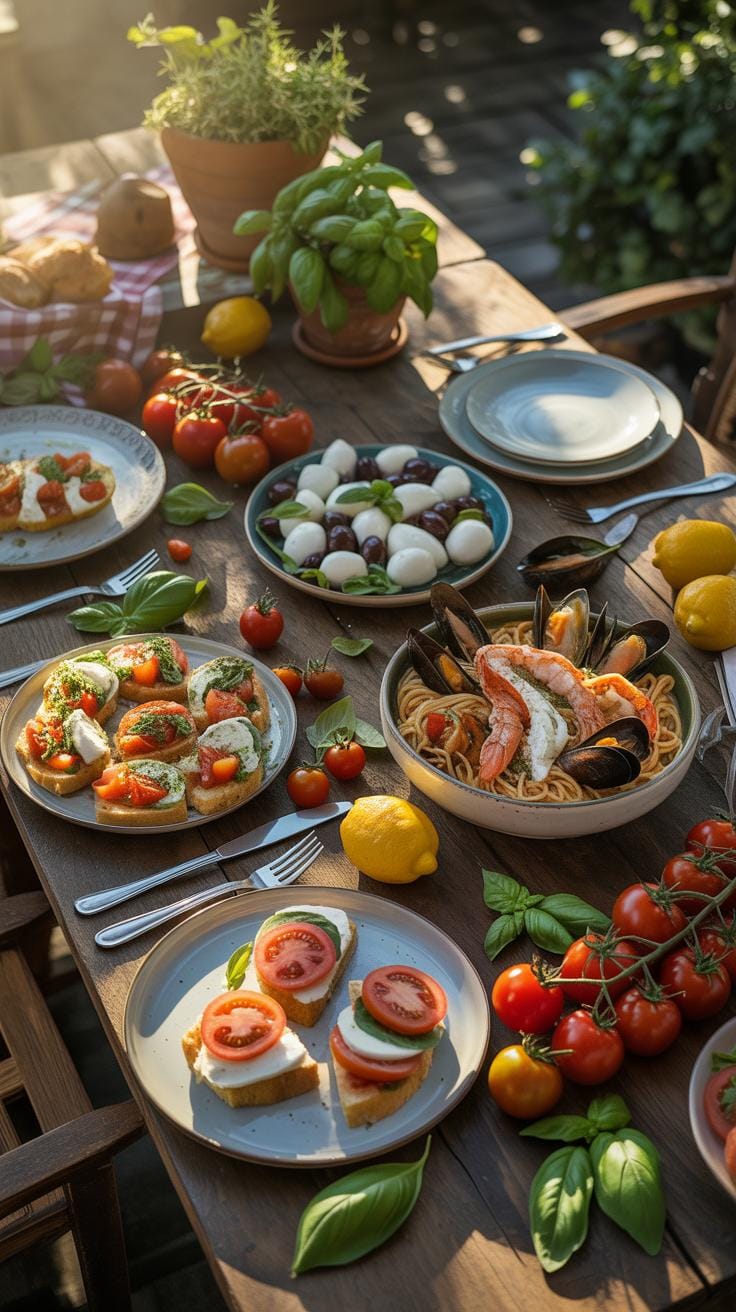
When you think of Italian summer, the flavors are light, fresh, and uncomplicated. Cooking at home with staples like ripe tomatoes, fragrant basil, fresh mozzarella, and a drizzle of good olive oil can turn any meal into something memorable.
Fresh Summer Salads And Starters
A classic Caprese salad is hard to beat. Slice fresh tomatoes and mozzarella, layer them with basil leaves, then sprinkle with salt and pepper. Finish with a splash of extra virgin olive oil and maybe a few drops of balsamic vinegar if you have it. It’s minimal effort, but oddly satisfying. Sometimes I wonder why I don’t make this more often. Another easy starter is bruschetta: toast some crusty bread, rub it with garlic, top with diced tomatoes, basil, olive oil, and a little salt. Simple, fresh, and always reliable when the weather’s warm.
Light Main Courses And Desserts
Cooking pasta during summer can feel too heavy unless you keep it light. Try pasta al pomodoro: boil your pasta, toss it with fresh tomato sauce made from crushed tomatoes, garlic, and basil, and finish with a scatter of parmesan. Another favorite is linguine with clams, which feels a bit fancy yet only takes minutes. It’s great to have seafood that doesn’t weigh you down on hot days.
For dessert, gelato or a fruit-based treat like a simple bowl of peaches marinated in lemon juice and honey hits the spot. Sometimes I make a granita from watermelon or lemon. Blending fruit, freezing, and scraping it into icy crystals is straightforward, and it feels like a refreshing break from heavier desserts. Why not try one of these recipes? They bring summer of Italy right into your kitchen, without fuss.
Conclusions
Italian summer presents a perfect blend of travel, food, drink, and health that can enrich your senses and well-being. Its seasonal offerings like fresh Mediterranean ingredients and local beverages make it a delightful time to explore regional cuisines and traditions. Following a simple plan for your summer trip can help you maximize enjoyment without stress.
By embracing the essentials of Italian summer, you can savor every moment, from beach visits to wine tasting. The warmth of the sun, local culinary delights, and healthy activities create memories to cherish. Plan carefully, eat well, and enjoy your Italian summer fully.