

The Myth Of The “Hot Weather Hiking Outfit”: Why More Layers Equals More Misery

What The Gear Industry Refuses To Admit
You want permission to wear less and still look like you know what you’re doing. The real problem: most hiking advice treats humidity like a volume dial you can just turn down with fabric technology. It can’t. Conventional layering wisdom assumes you’re managing temperature. In humid conditions, you’re actually managing moisture saturation. The layer system fails because it was built for dry climates where sweat evaporates fast enough to cool you. Humidity breaks that entire assumption.
Your body stops cooling when sweat can’t evaporate. Adding moisture-wicking layers doesn’t solve this. It just moves the problem around. A fitted tank top and lightweight shorts beat a technical three-piece outfit every time because they get out of your body’s way. The mechanism is thermodynamics, not apparel innovation.
How Sweat Actually Works Against You

Your skin releases moisture constantly, not just when you’re hot. In humid air, that moisture has nowhere to go. It pools on your skin and in fabric fibers instead of evaporating. More fabric means more surface area for moisture to collect and sit. Sweat doesn’t cool you in humidity. Only evaporation cools you. Humidity stops evaporation dead.
The technical fabrics everyone recommends still trap moisture when the air is already saturated. Polyester, nylon, merino wool: none of them change the physics of an environment where the air can’t accept more water vapor. Your priority shifts from “moisture-wicking fabric” to “minimum fabric surface.” Wear the smallest coverage that protects you from sun and brush. Let air move directly across skin. That’s where the cooling actually happens.

The Evaporation Protocol: Maximize Sweat Efficiency For Trail Outfits

Fabrics That Move Moisture, Not Trap It
You want to look like you weren’t actually sweating on that trail. That’s the real reason this matters. Here’s what people get wrong: “moisture-wicking” has become a meaningless marketing term. Most fabrics labeled this way simply absorb sweat and dry slowly. True wicking is physics. The fabric must transport moisture away from skin through capillary action, moving it outward and upward where air can reach it. Polyester and nylon accomplish this. Merino wool does too, through a completely different mechanism involving the scale structure of the fiber.
Cotton absorbs moisture but holds it against your skin, which defeats the entire purpose on a humid trail. The material stays damp, traps heat, and creates a cooling void that your body compensates for by sweating more. Synthetic blends with a polyester base (typically 80 percent or higher) move moisture fastest. Merino, if budget allows, handles temperature regulation simultaneously while wicking. The choice determines whether you dry within thirty minutes of stopping or spend hours damp and uncomfortable.
Seams And Vents That Actually Work
Ventilation doesn’t mean a few mesh panels sewn on for appearance. It means designing the garment so air moves through it, not just around it. Most hiking shirts have vents only in the back or armpits, which helps but follows a reactive logic. Strategic venting requires understanding where your body generates the most heat during continuous movement: the back, armpits, and sides of the torso. Raglan sleeves or dropped armholes increase airflow compared to traditional cut-and-sew construction. Underarm gussets prevent the fabric from sealing against your body during arm movement.
Seam placement matters more than most brands acknowledge. Flat-lock seams or covered seams reduce chafing, but they also trap moisture if they’re positioned where sweat pools. Side seams that run slightly forward (not perfectly vertical) prevent the shirt from clinging to your ribs when saturated. Hem length should hit mid-hip, not lower, to prevent the fabric from bunching and creating dead air zones. Test airflow by wearing the shirt during twenty minutes of brisk movement before committing to a multi-hour trail. Your sweat pattern during that test run will show you exactly where the garment fails.
Beyond “Cute Hiking Outfit”: Function Over Fashion In Extreme Humidity

The Instagram Problem With Tropical Gear
You want to look good on the trail because it matters socially, and that instinct will sabotage you in humidity. Tropical climates punish aesthetic choices instantly. Cotton looks fine in a photo but traps sweat against your skin for hours. Layering strategies that work in temperate zones become heat engines. The mechanism is basic physics: humidity blocks evaporative cooling, your body’s primary thermoregulation tool. Tight clothes, heavy materials, and fashion-first silhouettes don’t dry. They stay wet.
Most women hiking in humid climates wear what worked in Colorado or the Pacific Northwest. That’s the gap between theory and reality. A fitted tank top with a cute pattern looks sharp for five minutes, then becomes a second skin that won’t release moisture. Denim adjacent hiking pants retain water. Even “breathable” synthetics fail if they’re too dense or too fitted. The rule is counterintuitive: looser, lighter garments move air faster across your body surface, which is what actually matters in humidity.
Material Selection Beats Design Trends
Thermodynamics doesn’t care about what’s trending on outdoor apparel Instagram. Hydrophobic synthetic fabrics—nylon, polyester with DWR coatings, merino wool—shed moisture instead of absorbing it. Cotton absorbs water and holds it against skin, which causes chafing and heat loss through evaporative cooling you don’t want during intense effort. Merino wool works in humidity because it wicks moisture away while regulating temperature. Nylon and polyester dry fast enough that sweat doesn’t pool. Choose materials based on how they move water, not how they look folded in a drawer.
The second principle is fit. Loose is not sloppy. A relaxed fit allows air circulation around your core and limbs without trapping heat. Seams should sit on your body without pressure. Your shirt should move when you move, not cling. Pick nylon shorts with a relaxed cut and sealed seams. Wear moisture-wicking underwear designed for athletic use, not fashion underwear. The fit of your gear determines whether sweat evaporates or pools. Test your outfit on a short humid hike first, not on your planned summit day.
The Dehydration Trap: Footwear And Accessories For Warm Weather Hiking Outfit
Shoes That Drain Instead Of Trap
You want footwear that looks intentional, not like you’re wading through a swamp. Here’s the mechanism: closed-toe shoes create a pressure seal that traps moisture against skin, while open-air designs let evaporation happen where it matters most. In humid conditions, your feet sweat aggressively. Trapped moisture breeds blisters, fungal growth, and heat buildup that accelerates overall dehydration. Water management in footwear operates on the same principle as drainage systems in construction: you must route liquid away from the foundation, not seal it in.
Open designs like sandal-style hiking shoes or trail runners with mesh uppers outperform closed-toe boots in sustained humidity. The trade-off isn’t protection; it’s traction and ankle support. Choose open-toe only on well-maintained trails where debris hazard is low. Pair them with merino wool or synthetic blend socks that dry fast, not cotton. Your feet dry between breaks, your core temperature stays lower, and you conserve the fluid your body needs for thermoregulation. Test any new shoe on a short hike before committing to a full day.
Headwear That Cools Rather Than Insulates
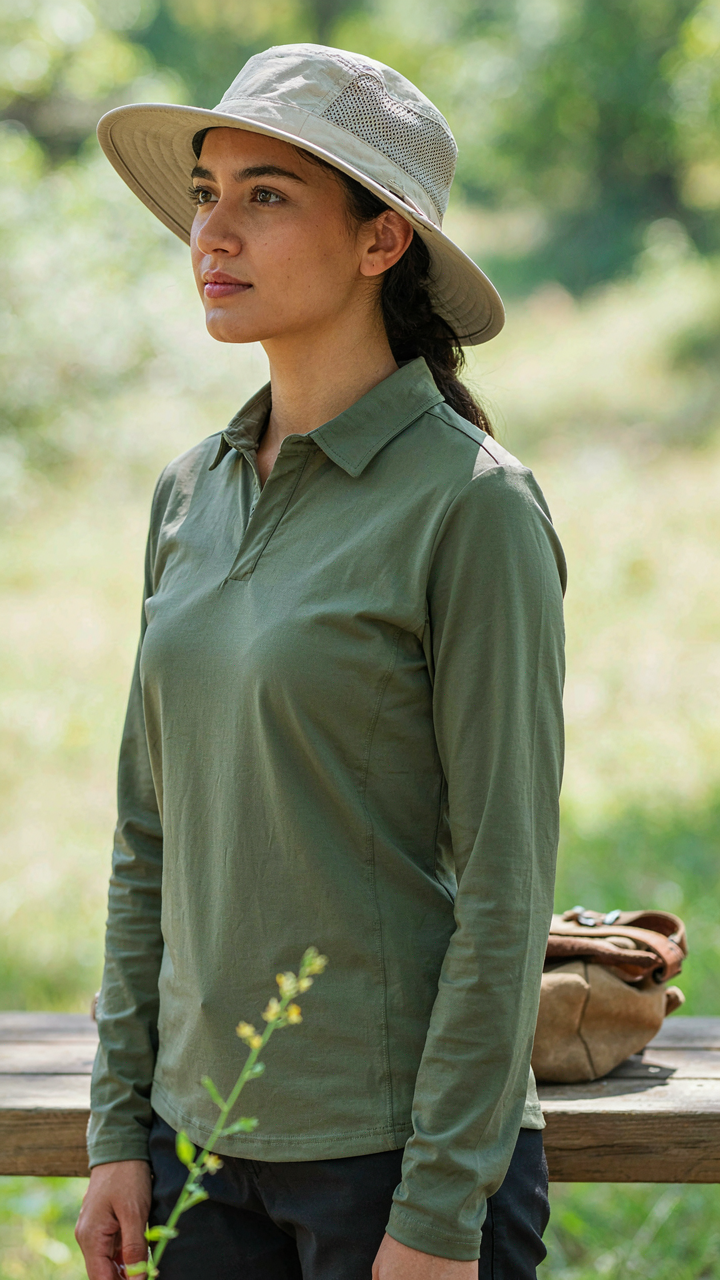
Most hiking headwear guidance misses the point entirely. A hat traps heat unless it’s engineered to shed both sun and sweat simultaneously. Wide-brimmed designs with ventilation channels and light colors reflect solar radiation instead of absorbing it. The goal is blocking UV while allowing air movement across your scalp and face. Baseball caps fail here because the bill blocks sun but the crown creates a heat dome.
Choose wide-brimmed hats with mesh panels or vented crowns, or bucket styles with moisture-wicking bands. Pair this with sunglasses that don’t fog and a neck gaiter in breathable synthetic material. Your head and face account for significant heat loss when unobstructed. Wet the neck gaiter at stream crossings and let evaporative cooling work on your carotid arteries, which sit close to skin. This direct cooling mechanism drops core temperature faster than any body-wide sweat response, preserving hydration reserves for the rest of your hike.
The Microclimate Method: Engineering Your Personal Comfort Zone

How Heat Actually Leaves Your Body
You want to stay cool on the trail without looking incompetent. Here’s what matters: physics doesn’t care about your outfit’s aesthetic. Heat leaves your body through four mechanisms—conduction, convection, radiation, and evaporation. In humid conditions, evaporation fails you. Sweat sits on skin instead of converting to vapor. This is the core problem everyone dances around. You’re not fighting heat; you’re fighting your body’s broken cooling system.
The trail doesn’t care which mechanism dominates at any moment. Convection moves heat from skin to air when air flows across you. Radiation dumps heat into space when you’re shaded. Conduction transfers warmth to cooler surfaces you touch. In humidity above 70 percent, convection slows and radiation weakens because the air itself holds moisture and blocks radiant loss. You must engineer the conditions where the remaining mechanisms actually work.
Strategic Fabric Placement For Active Heat Shedding
Most advice about “breathable” fabrics misses the real mechanism. Breathability is marketing jargon for one thing: how quickly air moves through the weave. But air movement means nothing if that air is already saturated with moisture. What you need is fabric placement that maximizes conduction and maintains any remaining convection. Wear lightweight synthetic or merino wool in high-sweat zones—armpits, center back, inner thighs. These areas generate the most metabolic heat and benefit most from direct contact with moving air.
Place less breathable, faster-drying fabrics in low-sweat zones where conduction to surrounding air matters more than vapor transmission. A lightweight tank or sports bra allows direct skin exposure in the core torso, where convection from movement helps most. Pair this with fitted shorts rather than loose pants that trap heat in fabric folds. The mechanism here is simple: reduce the distance between skin and the air that’s supposed to cool you down. Tighter fit against the body eliminates dead air pockets where heat accumulates uselessly.
Lightweight Logistics: Packing Less For A Better Summer Hike
The Minimalist Calculus
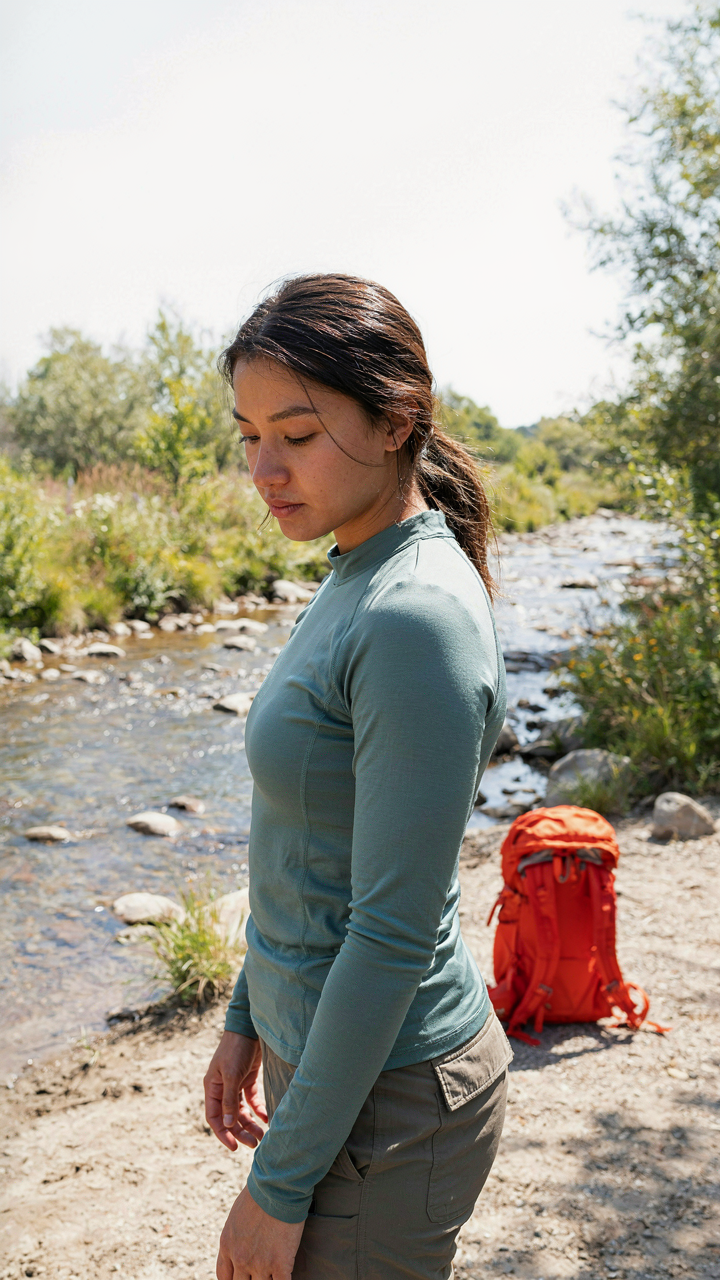
You want to feel like you’re prepared without actually carrying the weight that kills your knees by mile four. Here’s the mechanism: in humid conditions, every ounce you carry becomes thermal liability. Physics calls this “heat load”—your body generates metabolic heat, then struggles to shed it because sweat won’t evaporate efficiently in dense air. Add unnecessary gear and you’re forcing your thermoregulation system to work harder, which accelerates dehydration and exhaustion. Strip the pack and you lower your core temperature baseline before you even start.
The minimalist approach isn’t about suffering or looking tough. It’s about removing the friction between your body and the environment. Most women’s hiking packs carry redundant layers, “just in case” items, and backup solutions for problems that won’t happen. In humid heat, that logic fails. You’ll either need something or you won’t, and the need reveals itself in the first hour. Everything else is insurance you’re paying for with your legs.
Essentials Only, Everything Else Cut
You’ll find articles claiming you need base layers, a rain jacket, a fleece, and a wind shell for summer hiking. That’s incomplete advice built for variable terrain and altitude change, not consistent humid conditions. In genuine tropical or subtropical humidity, layering strategy collapses because you can’t cool down by shedding clothes if the air won’t accept your sweat. Base yourself on this list instead:
- Moisture-wicking top: One lightweight synthetic or merino blend shirt, worn the entire hike. Skip the backup.
- Shorts or capris: Choose one based on bug pressure and sun exposure, not redundancy. Don’t pack both.
- Hat with ventilation: A brimmed hat that channels air, not a closed beanie. One hat, one strategy.
- Minimal footwear: Trail shoes with drainage ports, not boots. Boots trap moisture and heat in humid air.
- Sun and skin protection: Sunscreen, lip balm, and insect repellent in small containers. Prioritize based on your specific trail environment.
The decision framework is simple: if an item doesn’t solve a problem specific to humid conditions, it doesn’t go in the pack. Water and electrolytes take priority over extra clothing. A lightweight backpack (under 15 pounds total for a day hike) keeps your body from generating unnecessary heat through the effort of carrying dead weight. Pack your essentials, weigh them, then cut 10 percent by removing one “safety” item you rarely use.
The Skin Barrier Strategy: Protecting Against Chafing And Irritation
Seamless Construction Over Seam Placement
You care about this because chafing stops hikes early and ruins gear investments. The real mechanism is friction. In biomechanics, friction forces increase when moisture trapped between skin and fabric creates adhesion rather than lubrication. Humid conditions reverse this logic. Seams become pressure points because sweat saturates the thread channels, causing localized rubbing that escalates fast. Seamless designs eliminate the seam itself, replacing it with continuous fabric that distributes pressure evenly across the surface.
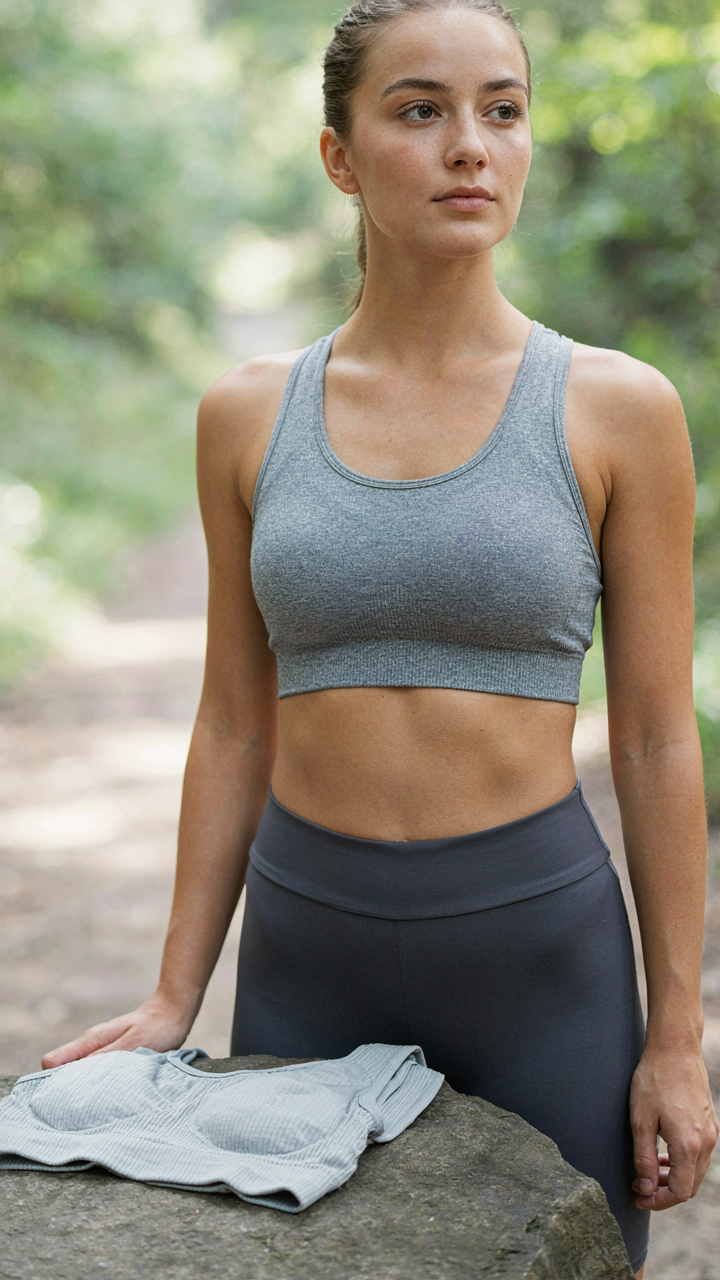
Standard hiking clothes treat seams as inevitable. They’re not. Seamless leggings, sports bras, and base layers shift the work from thread junctions to fabric weave. The fabric itself becomes the load path instead of concentrating stress at one line. This matters most at inner thighs, underarms, and torso where humidity lingers longest. Test garments before longer hikes by wearing them for two to three hours in warm conditions and checking for red marks or irritation patterns.
Managing Moisture Before It Damages Skin
Prevention beats treatment here because skin damage compounds over the hike’s duration. Your skin barrier deteriorates when moisture remains trapped for extended periods, especially in high-friction zones. Start with antiperspirant applied to areas prone to chafing the night before hiking, not morning-of. Antiperspirant needs time to form a plug in sweat ducts and works far better than deodorant, which masks odor but leaves moisture intact.
Layer a thin application of friction-reducing product on vulnerable zones before the hike begins. Body Glide, Squirrel’s Nut Butter, and similar products create a temporary hydrophobic barrier that resists sweat penetration. Reapply only if you stop for extended rest, not midstride. Moisture-wicking base layers work with this strategy by pulling sweat away from skin into the fabric’s outer surface where it evaporates or transfers to the next layer. The combination of antiperspirant, friction barrier, and wicking fabric creates a three-stage defense that prevents skin breakdown before humidity turns chafing into blisters.
Beyond Cotton: Why “Natural” Isn’t Always Better For Humid Weather Hiking

The Comfort Lie Cotton Sells
You believe cotton is safer because it feels virtuous, but comfort is a mechanism, not a moral position. In thermodynamics, saturation point is the moment a material holds maximum moisture without releasing it. Cotton hits saturation fast in humid air, then stays there. The fabric absorbs sweat but doesn’t wick it away, so you’re wearing a damp insulator that cools you through evaporation that never completes. You end up colder, heavier, and prone to chafing where seams press against skin.
The marketing around cotton persists because the sensation of moisture absorption feels like the fabric is “doing something.” It isn’t. Cotton can hold up to 27 percent of its dry weight in water before feeling wet to the touch, which means you’re already soaked before you notice. On a humid trail where your body produces sweat constantly and the air can’t take it, cotton becomes a liability masquerading as tradition.
Synthetics And Blends That Actually Move Water
Polyester and nylon don’t absorb moisture, they repel it, which is the actual requirement for humid conditions. These fibers have low absorbency rates by design. When you sweat, the moisture sits on the surface where air can access it and evaporate it away from your skin. This is the core mechanism: continuous evaporation beats water storage every time. Blended fabrics like nylon-spandex or polyester-elastane add stretch without sacrificing drying speed, and they handle the compression of a pack strap without bunching.
Merino wool is the exception that proves the rule. It wicks moisture while maintaining its insulating properties, and it resists bacterial growth that causes odor. However, merino performs this function through structure, not saturation. The fiber has a complex outer layer that moves moisture up and away from skin while the core stays dry. For humid hiking, skip pure cotton entirely. Choose 100 percent polyester, nylon blends, or merino wool, then test the garment by soaking it and checking how quickly it dries compared to your backup option.
The Post Hike Recovery Reset: Optimizing For Your Next Adventure Style
Strip Wet Gear Before It Sets
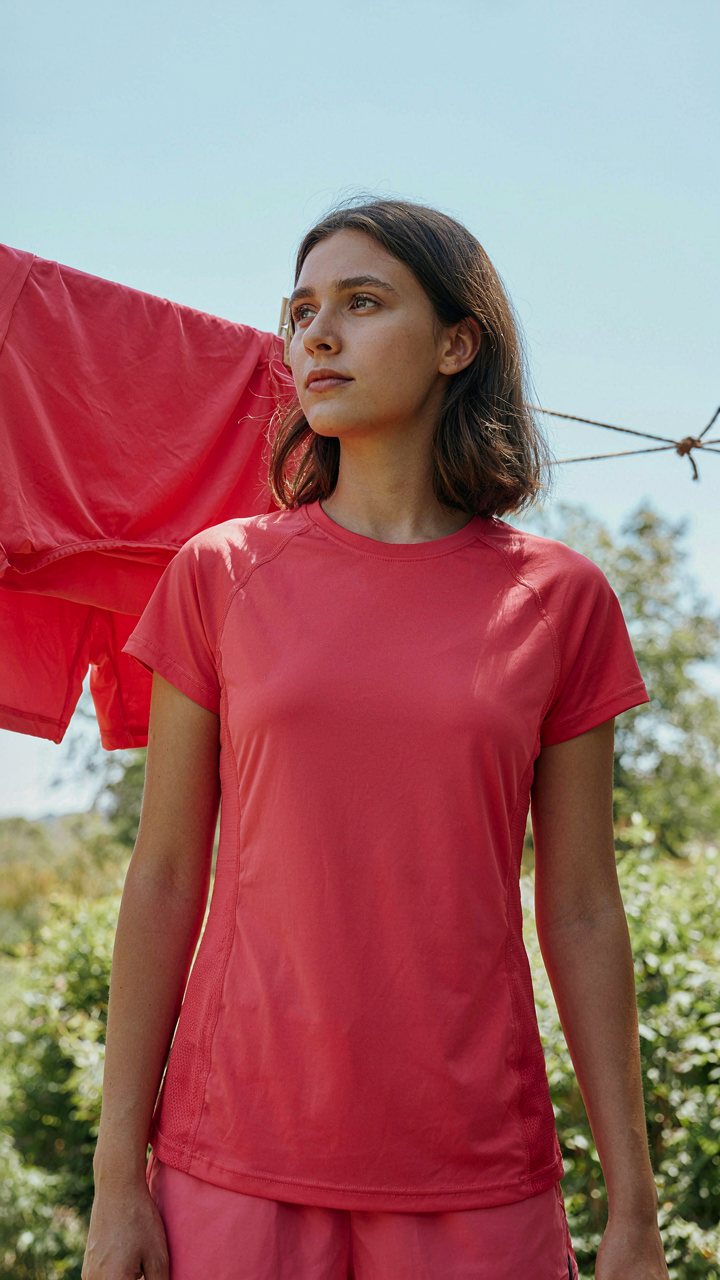
You want to avoid the reputation of being someone who “destroys” her gear. Here’s the real mechanism: moisture that sits in synthetic fabrics doesn’t just dry—it locks in salt, bacteria, and mineral deposits that break down material integrity. This is basic material science. Change out of damp clothing within 30 minutes of finishing your hike. Synthetic base layers and shorts trap sweat differently than cotton, and leaving them on accelerates degradation of the elastic and moisture-wicking treatment manufacturers apply to the fabric.
Start with your base layer, then your outer shell, then your socks. Hang everything separately in airflow, not bunched in a gear bag. The goal isn’t comfort in that moment—it’s preventing permanent damage to the fibers. Your next hike depends on this discipline now.
Rinse, Dry, Store On Schedule
The common advice is to “just wash your stuff.” That’s incomplete. You need to separate rinse cycles from actual washing. After a humid hike, rinse your outer shell and base layers in cool water without detergent to remove salt and sweat before those compounds set into the material. This extends the lifespan of water-repellent coatings and prevents premature fabric breakdown that detergent alone can’t fix.
Wash technical fabrics on a gentle cycle with minimal detergent every three to four uses, not after every outing. Air dry everything flat or hung—never in a dryer. Heat destroys the elastic in waistbands and permanently collapses the loft structure in any insulating layers you own. Store gear in a breathable bag in a cool, dry space away from direct sunlight once it’s completely dry.
Why Your Current Hiking Outfit Women Gear Is Holding You Back
The Gear You Own Isn’t Built For Sweat Management
You want to believe your existing hiking clothes work fine in humidity because replacing them feels like admitting you wasted money. The real problem: most women’s outdoor gear uses the same fabric logic as dry-climate hiking, which is backwards in humid environments. Humidity doesn’t evaporate sweat efficiently. Cotton traps moisture against skin. Even “breathable” synthetics fail when air saturation hits 80 percent. You need fabrics engineered for active moisture transport, not passive drying.
Polyester mesh and nylon blends work because they shed water and move sweat away from skin through capillary action, a principle borrowed from textile engineering. Cotton holds 27 percent of its weight in absorbed water before feeling wet. Merino wool actually performs in humidity because it wicks moisture while maintaining thermal regulation, but most women’s hiking kits skip it due to cost and outdated assumptions about wool being heavy or itchy. Your current outfit defaults to generic moisture-wicking language without addressing the core mechanism: you need active fabric movement, not passive breathability.
Tactical Upgrades That Actually Shift Performance
The generic advice says buy “moisture-wicking” gear and call it done. That’s incomplete. You need a layering system that manages sweat velocity, not just absorption. Start with a synthetic base layer designed for high-output activity, then add a mesh or grid-patterned mid-layer that creates air channels between fabric and skin.
- Synthetic base layers with flat seams: Polartec Power Dry or equivalent polyester blends channel sweat outward faster than standard constructions. Flat seams prevent chafing during extended sweat exposure.
- Mesh or ventilated mid-layers: Gridded fabrics create capillary channels that accelerate moisture movement. Look for open-weave designs rather than solid fabric layers.
- Lightweight, loose-fitting tops: Compression traps heat in humidity. Looser fits allow air circulation and faster evaporation rates. Fit matters more than fabric alone in sweat management.
- Nylon shorts with gusseted crotches: Standard cotton shorts bind and create dead zones where sweat pools. Gusseted construction spreads fabric tension and improves airflow in high-friction zones.
- Quick-dry socks in synthetic blends: Merino wool or nylon-polyester mixes shed moisture better than cotton or even pure merino in extreme humidity. Moisture retention in socks accelerates blister formation on humid trails.
The upgrade process isn’t about buying more. It’s about replacing the three core pieces that touch your skin longest: base layer, shorts, and socks. Test each piece on a short humid hike before committing to a full kit. Swap out one item at a time so you isolate what actually improves your output instead of chasing gear marketing.
The Real Obstacle: Overcoming The Fear Of Not Looking The Part, Even On A Sweaty Trail

You’re not actually afraid of sweat. You’re afraid of being seen as unprepared. Stop waiting for the perfect outfit to exist. Go buy one moisture-wicking shirt today, wear it on a trail this weekend, and realize nobody cares how you look while breathing hard. The women who own the trail aren’t the ones overthinking fabric choices in their living room. They’re the ones who accepted that sweating proves you showed up.