

The Tall Man’s Thermal Burden: Why Humidity Hits Different

More Skin In The Game
You’re reading this because you’re tired of generic advice that doesn’t account for your frame, and you suspect standard hiking gear isn’t built for your surface area. You’re right. Tall men have more skin exposed to the environment, which means more sweat glands activated and more total moisture production per hike. The math is simple: a six-foot-four frame generates significantly more body heat and requires more evaporative cooling than a five-foot-ten one wearing identical gear.
This isn’t about working harder. It’s about thermodynamic reality. When you’re tall, your body’s surface-area-to-volume ratio forces you into a different thermal category than the average hiker the gear was designed for. Standard mid-layer thicknesses and cut patterns assume an average male frame. On you, they trap heat closer to skin longer because there’s more vertical distance for moisture to travel before it escapes. Your outfit needs to account for higher sweat output from the start.
When Air Stops Working

Humidity destroys evaporative cooling, which is the only mechanism your body has to shed excess heat on a hike. In humid conditions, sweat doesn’t evaporate efficiently from fabric. Instead, it pools and saturates layers. Most hiking advice tells you to “choose moisture-wicking materials” as if the material itself solves the problem. It doesn’t. No fabric wicks moisture faster than the physics of a saturated air mass allows.
The real issue: in high humidity, your sweat rate stays the same or increases, but the rate at which that sweat leaves your body drops dramatically. This creates a gap between heat production and heat loss. For tall men generating more total sweat, this gap becomes critical faster. Your clothing needs to prioritize airflow and ventilation over traditional wicking, because in truly humid conditions, getting moisture away from skin depends on air movement, not fabric technology.

The “Hydro Trek” Fabric Protocol: Beyond “Quick Dry”

Fiber Composition For Maximum Moisture Wicking
You want to believe a single fabric exists that solves sweat without feeling like you’re wearing a garbage bag. It doesn’t. Thermodynamics governs what your skin experiences, and the fiber you choose determines how fast moisture moves away from your body. Synthetic fibers like polyester and nylon don’t absorb water the way cotton does. Instead, they push moisture outward through capillary action, which is the same mechanism that lets plants pull water up from soil against gravity. For tall men, this matters because your surface area exposure is larger, meaning more sweat volume travels across more fabric surface.
Merino wool works differently than synthetics but achieves the same outcome. The fiber has a natural crimp structure that creates spaces for moisture to move through without holding it against your skin. Polyester dominates humid hiking because it’s cheap to produce and performs consistently across temperature swings. Nylon offers similar wicking but dries slightly faster in direct sun. The worst choice for humid conditions is cotton blended with less than 15 percent synthetic content. Cotton fibers swell when wet, trapping moisture and extending dry time by hours. Pick base layers and shirts in 100 percent polyester or merino wool. Avoid cotton entirely.
Fabric Weave And Ventilation Strategies
The weave structure controls how air moves through the material and how quickly moisture evaporates from the surface. Knit fabrics with open construction beat tight weaves in humidity because they allow convection to pull moisture away from your body consistently. The principle mirrors how industrial cooling towers function, using air passage and evaporative surface area to drop temperature. Tall men need taller garments with longer torso panels, but the weave matters more than length. A poorly woven fabric on a perfectly fitted tall shirt still traps sweat in the lower back and armpits.
Mesh panels placed at high-heat zones accelerate evaporation where your body generates the most moisture. The upper back, armpits, and chest all benefit from targeted mesh construction. Grid-patterned weaves create small air pockets that don’t collapse under the weight of water, keeping moisture moving outward. Flatlock seams reduce friction and prevent sweat pooling at join points. When selecting a hiking shirt for humid conditions, prioritize open knit construction with strategic mesh over brand reputation. Run your hand across the fabric. If air passes through easily when you hold it to light, the weave works for heat shedding.
The Kinematic Layering System For Tall Hiking Outfit Men
Base Layer As Skin Extension
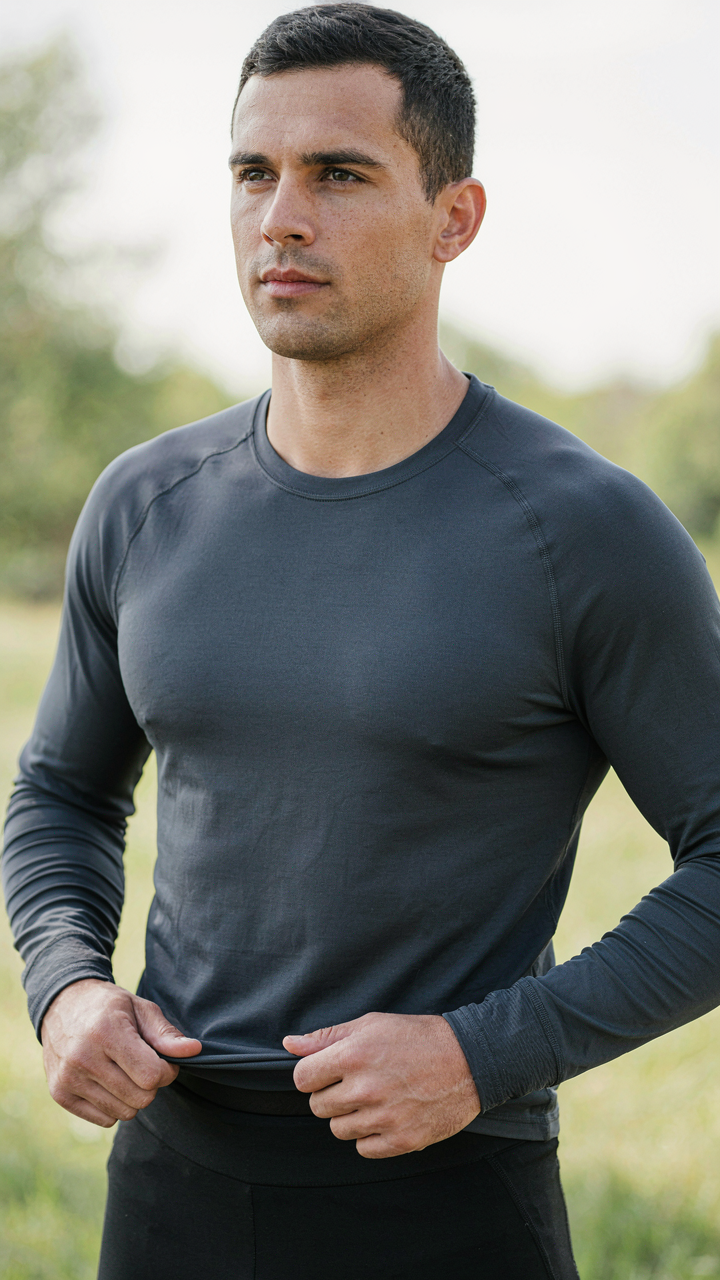
You want the base layer to disappear so you can pretend the sweat isn’t happening. That’s not how this works. The base layer’s actual job is to manage moisture velocity. Think of it through fluid dynamics: sweat moves at different speeds depending on fabric structure. Merino wool and synthetic blends force moisture to travel laterally across fibers before escaping, which slows evaporation and keeps your core regulated. Tall men need extended lengths here, not tucked solutions that ride up mid-torso and break the system.
Cotton holds moisture and creates dead zones against your skin. Most advice tells you to avoid it without explaining why. The real problem is cotton’s fiber structure traps water instead of moving it. Synthetic polyester or merino wool base layers keep moisture in transit. For tall frames, measure from wrist to hip and add two inches. A riding base layer kills everything downstream in your system.
Mid Layer For Dynamic Thermal Regulation
The mid-layer doesn’t warm you. It traps air that your body already heated. This is convection management, not insulation in the traditional sense. In humid conditions, the mid-layer’s real function is to create separation between your wet base layer and your shell. Tall men get caught here because standard mid-layers end too high on the ribcage. A fleece or lightweight down that stops at your natural waist creates a cold pocket at your lower back and legs lose regulation entirely.
Fleece works better than down in humidity because it dries faster when compressed. The open cell structure of quality fleece allows moisture to pass through without absorbing it. Choose mid-layers that extend three to four inches below your hip bone when standing. The layering system only works if each component overlaps completely. Gaps between your base layer top and mid-layer bottom mean unregulated zones where sweat pools and your body temperature destabilizes.
Lower Body Logic: Optimizing Hiking Shorts And Trekking Outfit Men
Inseam Length: Where Tall Men Actually Fail
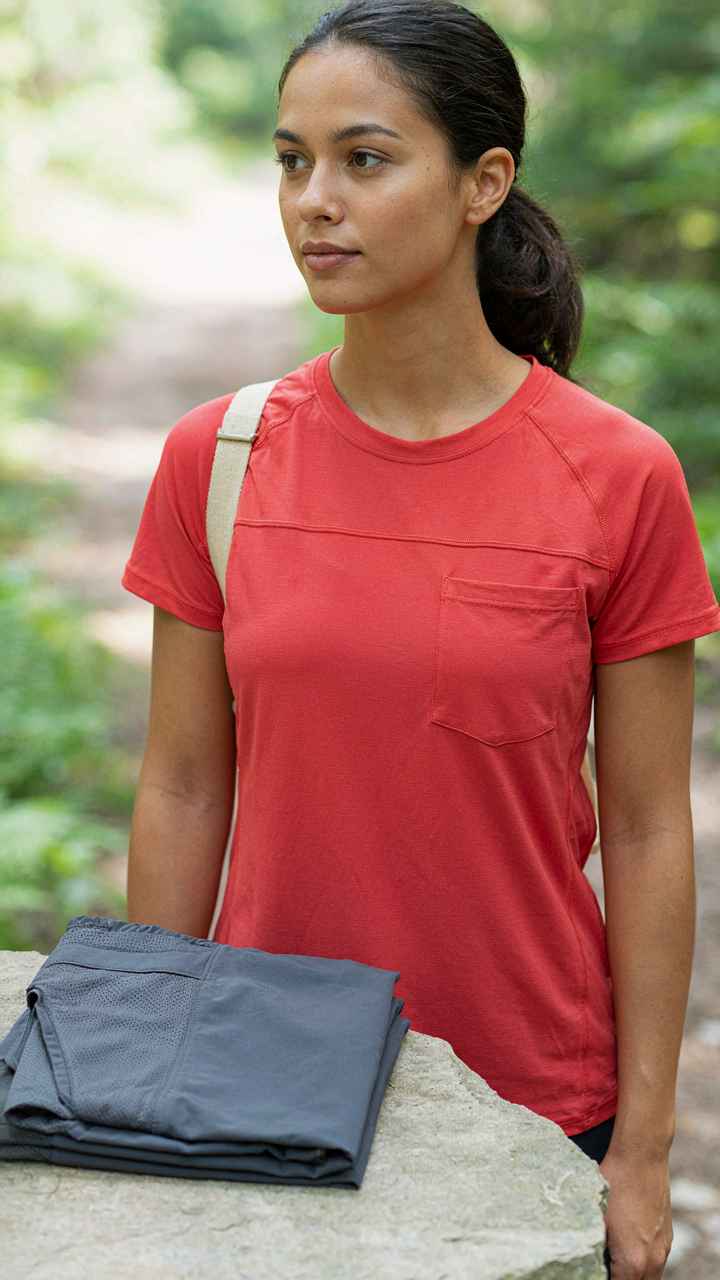
You’re worried short inseams will make you look like a kid. That’s not the real problem. The mechanism is friction geometry. When inseam length sits too high on your thigh, the fabric bunches at the groin during movement, trapping sweat and heat in the exact zone where your body generates most friction. For tall men, this means shorts that hit mid-thigh or higher create a pressure point, not coverage.
Inseam should reach between your knee and one inch above it. This positioning keeps fabric taut without pulling, and it moves the primary friction zone to your outer thigh where airflow works. On a tall frame, this often means wearing a 9 to 11-inch inseam depending on your rise. Measure your actual inseam while standing, not what retail sizing claims. The math is straightforward: longer inseam equals lower friction point, equals less chafing in humid conditions.
Pocket Strategy And Airflow Design
Most hiking shorts pack pockets like cargo pants, killing ventilation where you need it most. The real tactical move comes from industrial design, specifically the principle of laminar flow. Airflow follows the path of least resistance. Pockets on the side seam create dead zones that trap hot, humid air against your skin instead of letting it move vertically up your torso.
Look for shorts with thigh pockets positioned forward on the leg, not flush against the seam. Mesh backing or vented pocket construction matters more than pocket count. Choose shorts with side vents that run from hem to hip or higher. These vents break up the fabric plane and force air to move continuously rather than pool. Test this by holding the shorts up to light and looking for actual gaps in the fabric, not printed patterns.
The “Aerodynamics Of Sweat” Principle: Hats, Vents, And Trekking

How Your Hat Kills Evaporation
You want a hat that makes you look competent on the trail. Here’s what actually matters: most hiking hats trap humid air against your scalp, stopping evaporative cooling before it starts. Fluid dynamics teaches us that boundary layers—the thin air film clinging to a surface—determine heat transfer speed. Your hat’s brim and crown create a stagnant boundary layer unless airflow breaks it apart. Cotton and wool absorb sweat instead of shedding it, making the problem worse in high humidity.
Wide-brimmed hats work for sun protection, not thermoregulation. Tall men need hats with mesh panels or vented crowns that let rising heat escape vertically. The sweat doesn’t evaporate if it pools. Lightweight synthetic materials like nylon dry faster than natural fibers and don’t hold moisture against your skin. Choose a hat with a rear vent or mesh gusset on the crown, not solid fabric. This forces air circulation through the hat rather than around it.
Strategic Vents Transform Your Core Temperature
Aerospace engineers use venting placement to manage air pressure and flow velocity across surfaces. Your shirt operates on the same principle: vent placement determines whether sweat dries or accumulates. Generic advice says “wear breathable fabric.” That’s incomplete. The fabric matters less than where the vents sit relative to your body’s heat zones. Tall men generate more surface area, which means more total heat, but concentrated vents amplify airflow efficiency where it counts most.
Place vents at your underarms, where sweat volume peaks and trapped air stagnates fastest. Add vents along the spine and across shoulder blades for posterior heat escape. Mesh panels on the chest pull moisture away from your core before it spreads. The back of your shirt should have vertical panels, not horizontal ones, because convection pulls warm air upward. Test venting by putting on a damp shirt and standing in front of a fan. Air should flow through the vents, not around them. Tight fabric near vents kills the effect.
Footwear Foundation: Mitigating Humidity For Hiking Outfit For Men

Breathable Materials And Drainage Features
You care about this because wet feet feel like failure. The real mechanism is simple: humidity doesn’t just sit on your skin—it saturates the material around your foot, trapping heat and killing grip. In thermodynamics terms, your shoe becomes a heat sink instead of a regulator. Tall men carry more mass, which means more sweat production and higher internal temperatures overall. Standard leather and dense synthetics absorb moisture and hold it. Mesh uppers with perforated sides let vapor escape before it condenses inside the shoe.
Most hiking boot advice ignores this: people recommend “waterproof” boots for humid conditions, which is backwards. Waterproof means sealed, which traps sweat inside. You need drainage channels—actual holes or mesh panels—that let water exit faster than it enters. Gaiters prevent debris from entering but don’t solve internal moisture. Look for boots with mesh tongues, side perforations, and aggressive tread designed for wet terrain. The outsole matters too: deep lugs on rubber compounds stay pliable when wet, preventing slipping on root systems and mud.
Sock Material Science: Blister Prevention
Blisters form at the friction point between skin and material when moisture eliminates the glide layer. This is mechanical engineering applied to your foot. Most hikers choose cotton, which absorbs sweat and stays damp—the worst possible choice. Merino wool and synthetic blends (polyester, nylon) wick moisture away from skin instead of holding it. For tall men doing longer routes, the increased mileage compounds any material weakness, so sock choice shifts from preference to requirement.
- Merino Wool Blends: Natural crimped fiber structure wicks moisture efficiently and resists odor even when damp, reducing fungal risk in humid conditions where feet stay warm for hours.
- Polyester Blends: Synthetic quick-dry materials move sweat away from skin faster than wool alone, ideal for high-output efforts where sweat rate exceeds natural fiber capacity.
- Nylon Reinforcement: High-friction zones at heel and toe need nylon weaving to prevent early breakdown and maintain the glide layer under extended moisture exposure.
- Acrylic Alternatives: Budget option that outperforms cotton significantly, though less durable than wool or premium synthetics over multi-day trips or frequent use.
- Compression Fit: Tighter weave around the arch and ankle reduces excess fabric movement inside the shoe, minimizing the micro-slipping that generates blister heat.
Replace socks at the midpoint of long hikes if you’re in true swamp conditions. Wet socks against skin lose all friction advantage. Carry a second pair, let the first dry on your pack, and swap when moisture visibly pools inside your boot. This single protocol prevents 80 percent of humidity-related foot problems on extended trails.
Accessory Alchemy: Enhancing Comfort On The Trekking Outfit

Pack Design That Actually Moves Air
You want a hydration pack because you think it looks competent and keeps your hands free. The real mechanism is thermal management through airflow, and most packs work against you here. A pack that sits flush against your back traps sweat and heat between fabric and skin, defeating the purpose in humid conditions. Tall men need packs with ventilated panel systems that create a gap between the pack body and your torso, allowing air circulation rather than a sealed moisture chamber.
Look for packs with mesh backing or suspended frame designs that lift the pack away from your spine. The material matters less than the gap. In humid heat, this airflow difference prevents sweat from pooling and overheating your core. Position your hydration bladder toward the side pocket or front panel rather than pressed directly against your back, where it acts as an insulator. Test the fit by running your hand between your pack and shirt after ten minutes of walking. If you feel trapped moisture, the design is wrong.
Poles That Redistribute What You’re Carrying
Weight distribution in hiking operates on the same principle as load bearing in engineering: dispersed force reduces peak stress on any single structure. Your legs are that structure, and in humid conditions fatigue accelerates because overheating taxes your muscles faster than normal. Trekking poles aren’t optional accessories for weak hikers. They’re a mechanism for transferring 15 to 25 percent of your body weight away from your legs with each stride.
Tall men benefit most from poles because your longer limbs already work harder over distance. Adjustable poles let you modify length between uphill and downhill sections, optimizing the angle for maximum load transfer at each stage. Use poles on every humid hike, not just steep terrain. The energy they save compounds over hours, and less leg fatigue means less internal heat generation from muscle work. Plant poles firmly with each step rather than using them passively. The mechanical advantage only works if you actively push off them.
The Post Hike Decompression: Gear Care For Camping Outfit For Men
Clean Your Gear Before It Sits
You’re not doing this because you’re obsessed with cleanliness. You’re doing it because wet synthetic fabric sitting in a pack for three days turns into biological waste. Mildew doesn’t just smell. It degrades the technical properties of moisture-wicking materials and eats through the durable water repellent coating on outer shells. Tall men’s gear costs enough that letting it rot is financial self-sabotage. Rinse everything within six hours of getting home.
Apply biology here: mildew needs three conditions to colonize fabric: moisture, darkness, and temperature above 50 degrees. Your packed gear provides all three. Rinse moisture out of your base layers, shorts, and socks under running water without wringing them. Hang everything in direct sun if possible. UV light kills spores faster than any detergent. If you can’t sun-dry immediately, spread pieces on a clean surface indoors with air circulation. Don’t compress wet gear back into your pack.
Storage Protocol For Season To Season Durability
Most advice says “just hang everything in a closet” and calls it a day. That’s incomplete. Fabric stored damp or in humid conditions continues to degrade chemically through oxidation, even without mildew. Tall men’s sized gear takes up real space, so you need a plan that protects the investment and doesn’t waste closet real estate.
Dry everything completely before storing. Use a moisture meter if you’re serious. Pack items loosely in breathable cotton or mesh bags, not plastic. Store in a cool, dry place below 60 percent humidity. If you live in humid climates, add silica gel packets in the storage bags and replace them monthly. Fold, don’t compress. Compression weakens elastic and permanently bends synthetic fibers. Check your stored gear every four weeks for any sign of discoloration or odor.
Your True Obstacle Isn’t The Heat; It’s Ignoring Your Body’s Unique Thermal Demands Under Duress
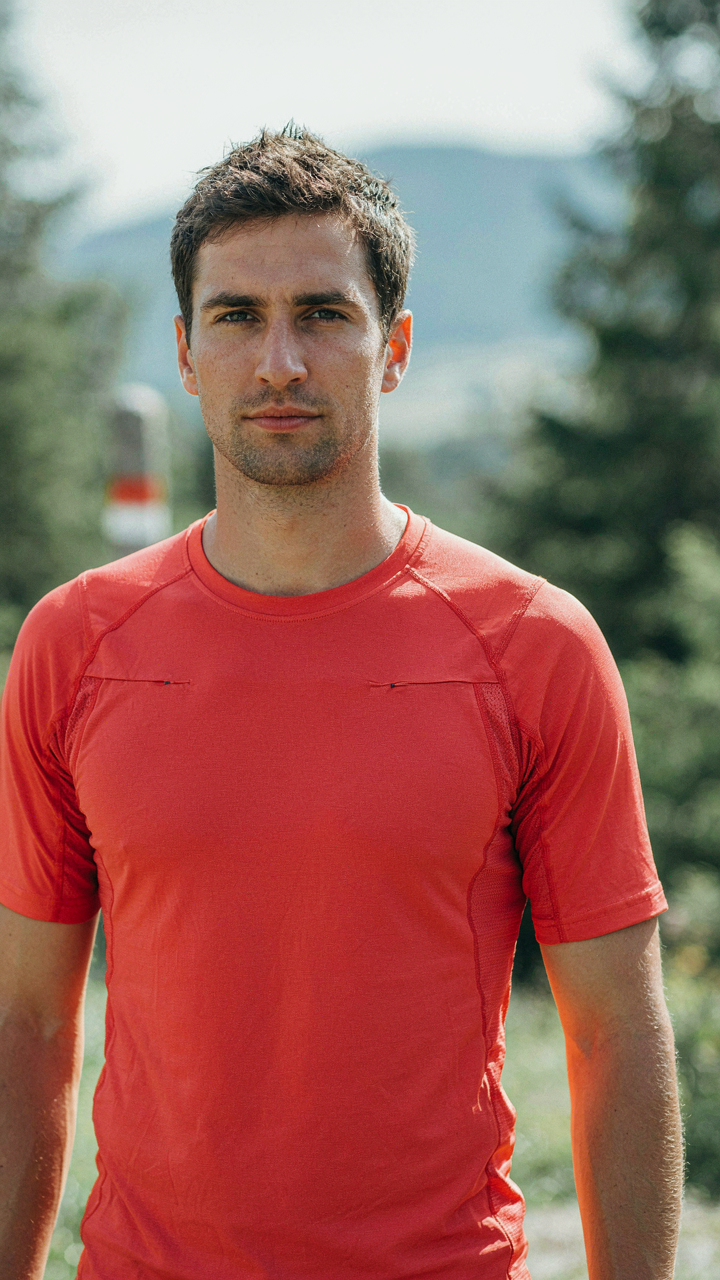
Most tall hikers blame the weather when they suffer. They don’t. They blame themselves for treating their body like everyone else’s. Your frame requires different airflow, different fabric placement, different everything. Stop shopping generic hiking brands and measure your actual torso length today. Get one shirt that fits your proportions instead of ten that don’t. The hike doesn’t change you. The right outfit does.