

The Deceptive Comfort Of Cotton: Why It Betrays You

When Sweat Stops Evaporating
You want cotton because it feels soft on skin and reminds you of reliable gear, but comfort is the trap that kills your hike. Cotton operates on a physics principle called capillary action—it draws moisture inward and holds it against your body instead of releasing it. In humid conditions, this mechanism becomes your enemy because the air already holds maximum moisture, so evaporation stalls completely. Your sweat saturates the fabric and stays there, cooling your core temperature and creating the conditions for chafing, blisters, and heat stress.
The real problem isn’t sweat production—it’s saturation time. Cotton can absorb up to 27 percent of its weight in water before feeling wet, which sounds like a feature until you realize it means the fabric clings to your skin for hours. In humid heat, the evaporation cycle never completes, so that moisture becomes deadweight. Synthetic fabrics like polyester and nylon interrupt capillary action by design. They shed water instead of absorbing it, which is the only mechanism that matters when the air won’t cooperate.
Friction Points That Build Over Miles

Cotton’s loose weave creates drag against skin, and drag multiplies over eight to twelve hours of hiking. The problem compounds because wet cotton clings tighter than dry cotton, compressing against your body at pressure points: under pack straps, between thighs, under arms, along the sports bra line. These aren’t random chafe zones—they’re engineered by the combination of friction, moisture, and salt residue from sweat. Merino wool and performance synthetics use tighter, smoother weaves that reduce surface friction by 40 to 60 percent compared to standard cotton.
The practical step is material selection at the purchase phase, not post-hike treatment. Examine the fabric tag for fiber content and weave density. Look for polyester blends or merino wool on the collar, underarm, and torso sections where your pack sits. Cotton should never touch your skin during a humid hike—it should be reserved for the car ride home. Replace it with technical fabrics designed to shed moisture, and friction becomes a non-issue before it ever starts.

The “Strategic Layering” Fallacy: Less Is More In Humidity

Why Layering Fails In Wet Heat
You believe layering protects you. It doesn’t in humidity. Your body needs to shed heat faster than your clothes can trap and release it. Physics governs this exchange: thermal resistance works against you when moisture saturates the air. Every added layer, no matter how breathable, creates dead space where sweat pools instead of evaporating. That trapped moisture conducts heat into your core. Layering assumes you’ll move between temperature zones. Humid hiking doesn’t work that way. You stay in one thermal environment the entire time.
Heat stroke isn’t a distant risk. It’s the mechanism that kills solo hikers before dehydration does. Your body produces roughly one calorie of heat per mile of hiking. In 85-degree air with 75 percent humidity, evaporative cooling stops working at around mile three. Add a third insulating layer and you’ve accelerated the timeline. The standard advice to “layer for adaptability” ignores the core problem: in humidity, adaptation means shedding mass, not adding it.
Airflow Design Beats Material Innovation
Ventilation pathways matter more than fabric technology. A garment with passive venting channels moves air across your skin whether you’re moving or stopped. This isn’t about mesh panels or marketing claims around moisture wicking. Moisture wicking moves sweat away from skin into the fabric itself, which then carries that wet weight against your body. Open construction—cutouts, mesh underarms, raglan sleeves—lets moisture evaporate directly without intermediate steps. Your skin stays dry longer and your core temperature stays lower.
Look for garments engineered for active ventilation, not passive water transfer. Tank tops or sleeveless options over high-neck base layers create vertical airflow channels without full exposure. Shorts with side seams cut away rather than taped reduce friction points where sweat pools. When you stop moving, these designs let convection pull heat away from your body. On trail, this difference compounds every hundred yards. Test your outfit at sixty percent of trail intensity before committing to it on a solo hike where backup doesn’t exist.
The Microclimate Management Protocol For Hot Weather Hike Outfit

Capillary Action Beats Breathability Marketing
You want to feel dry because wet skin drops core temperature and ruins performance. What actually matters is capillary action, the physics principle that pulls liquid away from your body through fabric. Cotton fails here because it absorbs moisture instead of moving it. Synthetic fibers like polyester and nylon create a gradient that transports sweat from skin outward, keeping the microclimate around your body stable. This isn’t about comfort talk. This is about preventing the heat loss that soaked fabric causes in humid air.
Most hiking advice says “breathable fabric” without explaining the mechanism. Breathability means air passes through the weave, but that’s separate from moisture transport. A fabric can breathe and still hold sweat against your skin. Merino wool actually manages both because its protein structure naturally wicks moisture while maintaining thermal regulation, but synthetic blends dominate hiking because they dry faster and cost less. Pick polyester base layers or nylon shorts for humid conditions. Test them by splashing water on the fabric and watching how fast the wet spot spreads versus staying in place.
Permeability Determines Real Breathability
Physics borrows the term permeability to describe how easily molecules pass through a material. For hiking outfits in humidity, permeability controls whether water vapor escapes your microclimate or condenses back onto your skin. Tight weaves trap vapor. Loose weaves let it escape. The real metric is measured in MVTR, moisture vapor transmission rate, which counts grams of moisture moving through one square meter of fabric per 24 hours. Higher MVTR means your sweat-saturated air exits faster than new humidity enters.
Most brands never publish MVTR because it varies with humidity levels and activity intensity. You measure it yourself by checking how a garment performs during the first 15 minutes of hiking. If condensation forms on the inside of your shirt around 10 minutes in, the permeability is too low. Switch to garments with open weaves or ventilation panels. Mesh-backed sports bras and shorts with side vents aren’t just comfort features, they’re permeability tools that lower your internal vapor pressure and stop the feedback loop that makes you feel cold and clammy despite the heat.
Color Psychology & Visibility: Beyond Aesthetic For Hiking Fashion
Signal Intent To Animals
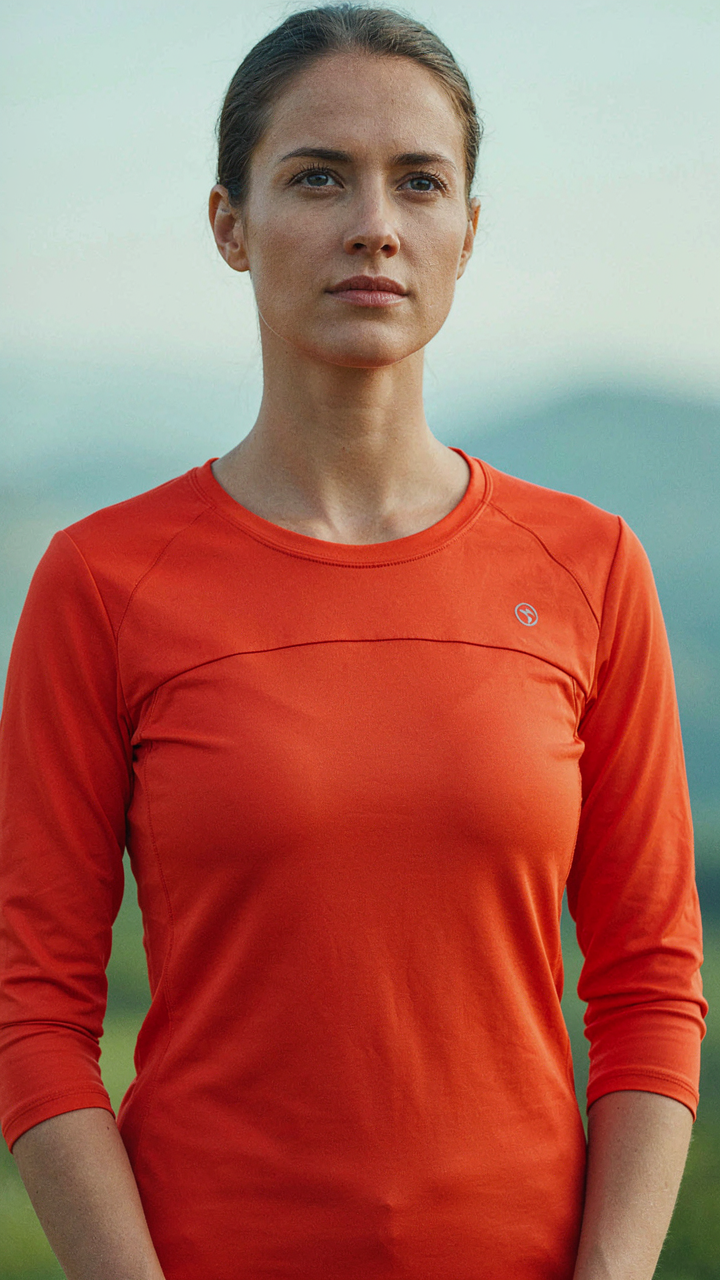
You want to feel brave on the trail, so you assume bright colors make you invisible. They don’t. This is animal behavior, not fashion. Predators read contrast, movement, and silhouette first. A solo female hiker in neon orange doesn’t signal weakness to bears or large cats, which is what actually matters out there.
Bright, high-contrast clothing works because it breaks the outline predators expect. When a bear or mountain lion sees a blunt color block that doesn’t fit the forest canopy, it registers as “not prey.” Dull earth tones let you blend into the background, which triggers predatory curiosity. Wear colors that announce you’re not part of the landscape: bright orange, hot pink, electric yellow. The goal isn’t looking good, it’s looking intentional and unfamiliar.
Contrast Creates Detection
Search and rescue teams locate missing hikers through the physics of contrast detection. A stationary object against a uniform background becomes visible at a distance only when its brightness or hue differs sharply from surroundings. Your outfit is a search problem waiting to be solved.
Humid environments—dense foliage, thick fog, wet vegetation—collapse visibility fast. Standard hiking khaki or gray disappears into this backdrop within fifty meters. Bright synthetic fabrics with UV reflectivity stay detectable because they don’t absorb the available light, they return it. Wear at least one garment in international orange or hot pink as your top or outerwear layer. If rescue teams search for you, that one color choice cuts response time and search radius significantly.
The Adaptive Garment System For Warm Weather Hiking Outfit
Build Layers That Actually Work
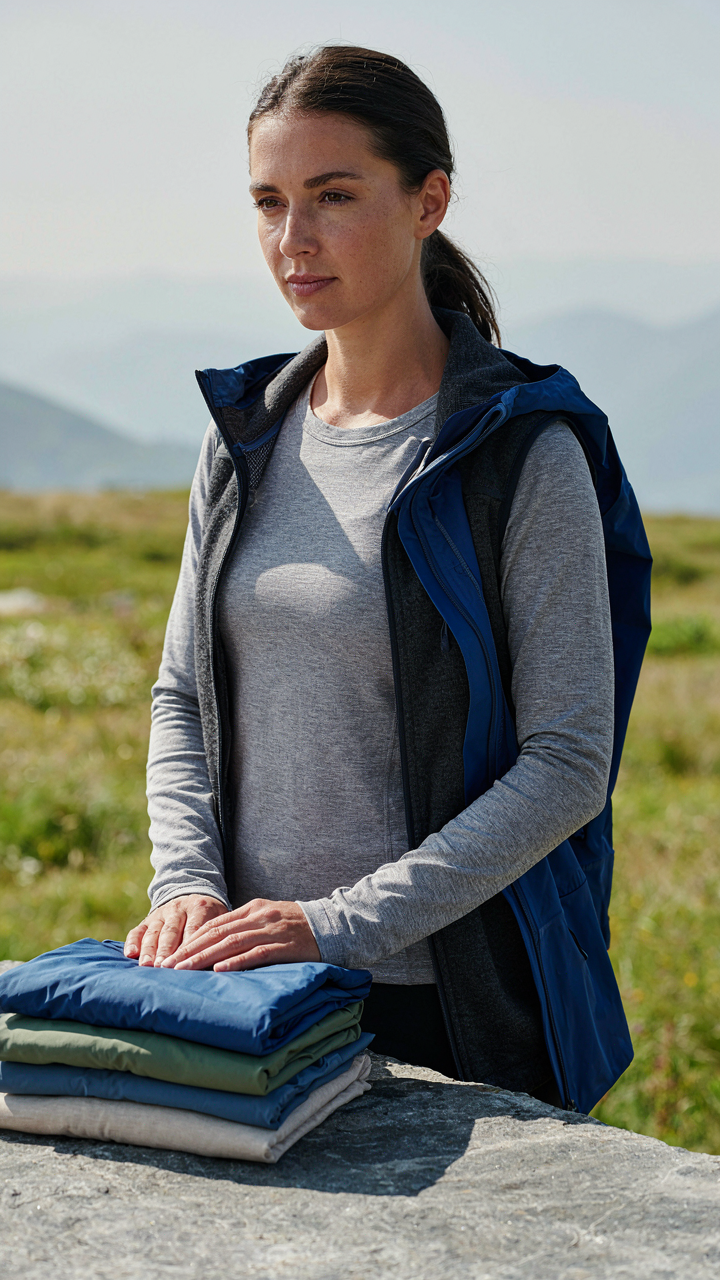
You want a system that makes you look intentional, like you figured something out most people haven’t. Here’s what actually happens: humidity destroys insulation by trapping moisture against your skin, so static layers fail. Physics calls this phase change—the transition between states of matter. In humid hiking, your outfit must transition between wet and dry states without leaving you cold or overheating. Most advice says “just wear moisture-wicking,” which is incomplete. The real mechanism is creating garment stacks where each layer manages a specific moisture condition.
Start with a base that moves sweat away from skin, then add a mid-layer that handles active humidity without adding bulk, then cap it with something that sheds rain and allows vapor escape simultaneously. Merino wool base layers outperform synthetics in humid conditions because the fiber actively regulates moisture without feeling clammy when saturated. Your mid-layer should be minimal—often just a lightweight fleece or grid-pattern fabric that creates air channels rather than trapping heat. The outer shell matters less for warmth and more for wind and rain management. This isn’t about collecting gear. It’s about understanding that humidity demands garments that work in wet conditions, not just prevent water entry.
Rapid Adjustment Features Built In
Military strategy emphasizes rapid repositioning to match changing conditions—the same principle applies to your outfit design. Adaptability doesn’t mean carrying options; it means building choice into each garment. Real adaptation looks like vents you can open and close, sleeves you can roll or remove, and layers you can shed without stopping. A hiking shirt with pit zips isn’t fancy—it’s a pressure release valve for core temperature. Rolling sleeves past your elbows changes how much skin evaporates sweat and adjusts solar load without removing clothing.
Design your system so you can modify coverage in under thirty seconds while moving. Avoid fitted garments that require full removal to adjust. Choose shorts with a high waistband so you can roll them if you need leg coverage, or zip-off panels that convert between configurations. Gaiters over your shoes prevent debris while staying removable. Your pack’s hip belt and shoulder straps should adjust without unpacking. The goal: one motion changes your thermal and moisture profile. Build your outfit so nothing requires undressing to adapt.
Footwear: Your Unseen Foundation For Humid Conditions

Where Blisters Actually Come From
You care about this because a blister ends your hike. Period. The physics of blister formation is straightforward: friction plus moisture plus heat creates shear force that separates skin layers. In humid conditions, sweat doesn’t evaporate. Your foot stays wet inside the shoe. Wet skin loses its structural integrity and slides against the sock with every step. That sliding is what builds the blister, not the shoe itself.
Most hikers blame the shoe. They buy the expensive brand and still get destroyed. The real problem is they’re treating the symptom, not the mechanism. A blister forms when moisture keeps skin pliable enough to shear under friction. Stop the moisture, stop the blister. Your sock choice matters more than your shoe choice in humid weather. A quality merino wool or synthetic blend sock wicks sweat faster than cotton ever will. The shoe just needs to not trap water against your skin.
Drainage Systems Beat Sealed Waterproofing
Waterproof shoes are a trap in humidity. They lock sweat inside with your foot. Your skin stays damp for hours. Gore-Tex and similar membranes slow water egress but don’t prevent vapor accumulation. In humid air, your foot sweats faster than any membrane can push moisture out. You end up with a soggy foot in an expensive prison.
Real drainage means shoes with mesh uppers that dry fast and weep holes or drainage channels that let water exit the sole. Salomon and Merrell make models with explicit drain holes. Your foot gets wet from external humidity or stream crossings, but water leaves the shoe within minutes instead of hours. The priority is speed of drying, not preventing water entry. Choose ventilation over waterproofing when you’re solo in humid terrain.
Accessories: The Unsung Heroes Of Hot Weather Hiking Outfit Women
Your Head Is Where You Lose The Trail
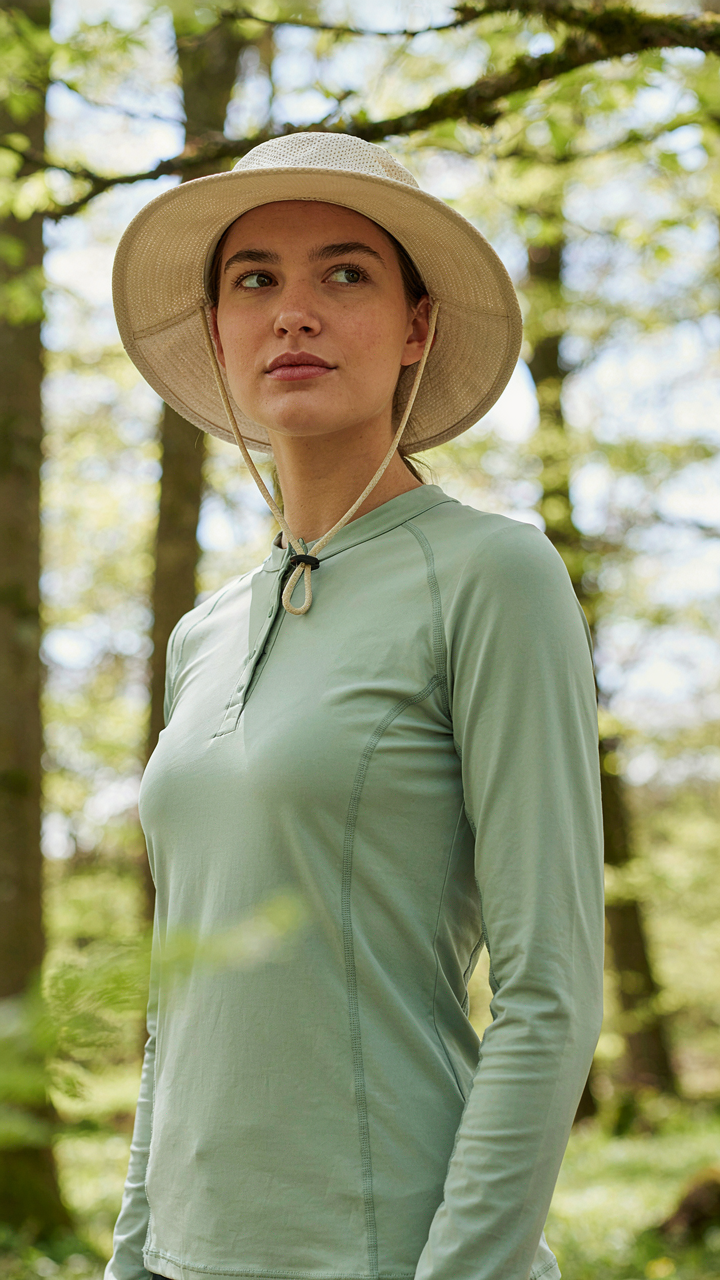
You think a hat is optional because you’ve survived without one before. It’s not. Your head regulates core temperature, and in humidity, sweat pools on your scalp instead of evaporating—the mechanism that keeps you cool fails. Sun exposure compounds this by forcing your body to work harder to cool itself. A hat isn’t style. It’s thermodynamic efficiency.
- Wide-brimmed hat (3+ inches): Blocks direct sun from face, neck, and shoulders. Material should be ventilated mesh or lightweight nylon that dries quickly when soaked with sweat.
- Moisture-wicking cap with back flap: Covers the crown and rear scalp where sweat accumulates fastest. The flap protects your neck from UV and keeps heat off your upper back.
- Bandana or neck gaiter: Absorbs sweat before it drips into eyes and doubles as a sun barrier. Synthetic materials outperform cotton because they dry faster and don’t retain moisture against skin.
- Ventilated helmet (if rock scrambling): Some hikes demand head protection. Modern hiking helmets use perforated shells and foam that maintains airflow better than older designs.
- Baseball cap with UPF rating: Lighter than wide-brimmed options for minimal-load purists. UPF 50+ blocks 98% of UV rays without adding weight or bulk.
Sweat management separates comfort from misery on humid trails. Your hat absorbs and directs moisture away from your face, maintaining vision and preventing chafe around your eyes. Test any headwear on a short walk first—a poor fit causes neck strain and negates the cooling benefit. Bring a backup cap in your pack; the primary hat will saturate mid-hike.
Pack Your Water Where Physics Works For You
The hydration pack isn’t just a container—it’s load distribution. From biomechanics, “load positioning” determines how much energy your body expends carrying weight. A hydration pack places fluid at your center of mass, closer to your spine, requiring less muscular compensation than a side-slung bottle. In humidity, this matters because your heart already works overtime regulating temperature. Why add unnecessary metabolic stress?
A proper hydration pack keeps the reservoir positioned high and centered on your back. The tube routes over your shoulder and sits within arm’s reach—you drink without stopping or removing the pack. In hot weather, this small friction reduction compounds over hours. Insulated sleeves minimize temperature rise in the reservoir, keeping water closer to mouth temperature rather than ambient heat. Position the pack so straps don’t trap sweat against your back; airflow underneath is non-negotiable. The pack body should sit an inch or two away from your skin, not flush against it.
The Illusion Of Cute Hiking Outfit: Prioritizing Function Over Form
What Your Outfit Actually Signals
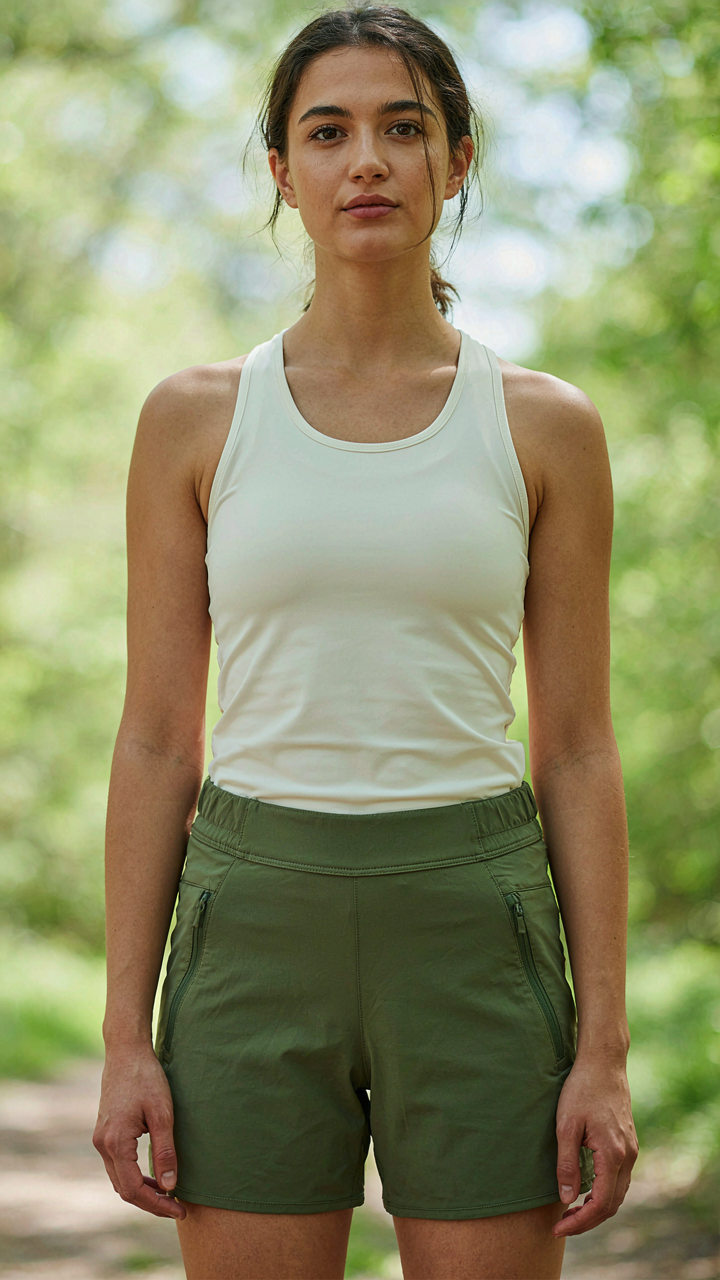
You want validation that you look good on the trail. That’s the real driver here, and it’s costing you comfort and safety in humid conditions. The mechanism is simple: social signaling hijacks your gear selection, and you prioritize visibility over performance. Humid weather demands specific material responses—moisture wicking, fast drying, strategic ventilation. None of these properties improve because an outfit photographs well. You’re competing against an environment, not an audience.
Cotton kills in humidity because it absorbs sweat and holds it against your skin, tanking temperature regulation. Synthetic fabrics and merino wool move moisture away from your body. That’s not aesthetic. That’s physics. Choose gear that performs in saturation, not gear that performs in your Instagram feed. The solo female hiker advantage is independence from group consensus about what looks right. Use it.
Wear Tear Ratings Over Trend Cycles
Durability metrics come from materials science, not fashion cycles. Nylon fabrics rated for tear strength of 40+ pounds per inch outperform cotton in every hostile environment. Your humid jungle hike tears soft cotton. Reinforced seams and gusseted construction—those underarm panels that reduce ripping—matter more than hem details. Brands publishing actual tear test data aren’t hiding it. If they won’t state garment durability specs, the outfit wasn’t engineered for real conditions.
Buy pieces rated for trail abuse: high-denier synthetics, flat-lock seams, articulated panels. Humidity accelerates fabric degradation through moisture retention and mold colonization. Quality construction extends garment life under these stressors. A thirty-dollar nylon shirt lasting three seasons beats a forty-dollar trendy piece lasting one. Inspect seams under magnification before purchase. Tight, flat stitching survives humidity better than loose, raised stitching. That’s where you validate construction before committing money.
Post Hike Recovery: Extending Your Outfit’s Lifespan

Kill The Smell Before It Sets
You’re worried people will judge you for stinking, so you’re hoping some magic product fixes it without effort. That’s not how biology works. Sweat itself has no odor. Bacteria colonize wet fabric and produce the smell as a metabolic byproduct. Once bacteria establish, they multiply exponentially in humid conditions. Antimicrobial treatments like silver ions or copper compounds interrupt this process by disrupting bacterial cell membranes, but they only work on fabric that gets washed soon after use, not as a preventative spray you apply before hiking.
The real mechanism: treat your hiking clothes as medical-grade gear, not casual wear. Rinse base layers and socks in cold water within two hours of finishing your hike. Cold water stops bacteria from accelerating their reproduction cycle. Soak them in diluted white vinegar or baking soda solution for thirty minutes before washing. This creates an acidic or alkaline environment hostile to odor-causing bacteria. Wash in hot water with regular detergent afterward. Antimicrobial treatments embedded during manufacturing work best on synthetic fabrics like polyester and nylon, but they degrade with every wash, so treat them as temporary advantages, not permanent fixes.
Wash, Dry, Repeat Without Destroying The Fabric
Everyone says machine wash your gear, but machines damage moisture-wicking coatings and elastic fibers faster than hand washing does. Synthetic hiking fabrics deteriorate from agitation and heat. Your expensive base layer loses performance after ten to fifteen cycles in a standard machine if you use high heat. Hand washing takes fifteen minutes and extends lifespan by half.
Fill a sink or bucket with lukewarm water and add mild detergent made for technical fabrics. Submerge your base layers, shorts, and sports bra for five minutes. Agitate gently by hand. Rinse three times in clean water until soap residue vanishes. Never wring or twist fabric. Squeeze excess water out gently. Lay everything flat on a clean towel to air dry away from direct sunlight and heat sources. Direct sun degrades synthetic dyes and elastic. Humidity means your gear takes longer to dry, so use a fan or hang items in a well-ventilated space. Fully dry before storing to prevent mildew growth. Check seams and zippers for salt deposits from dried sweat and wipe them clean with a damp cloth during the dry phase.
Your Biggest Obstacle Isn’t The Humidity; It’s Your Desire To Conform. Break Free Of Prescribed Style And Master The Terrain
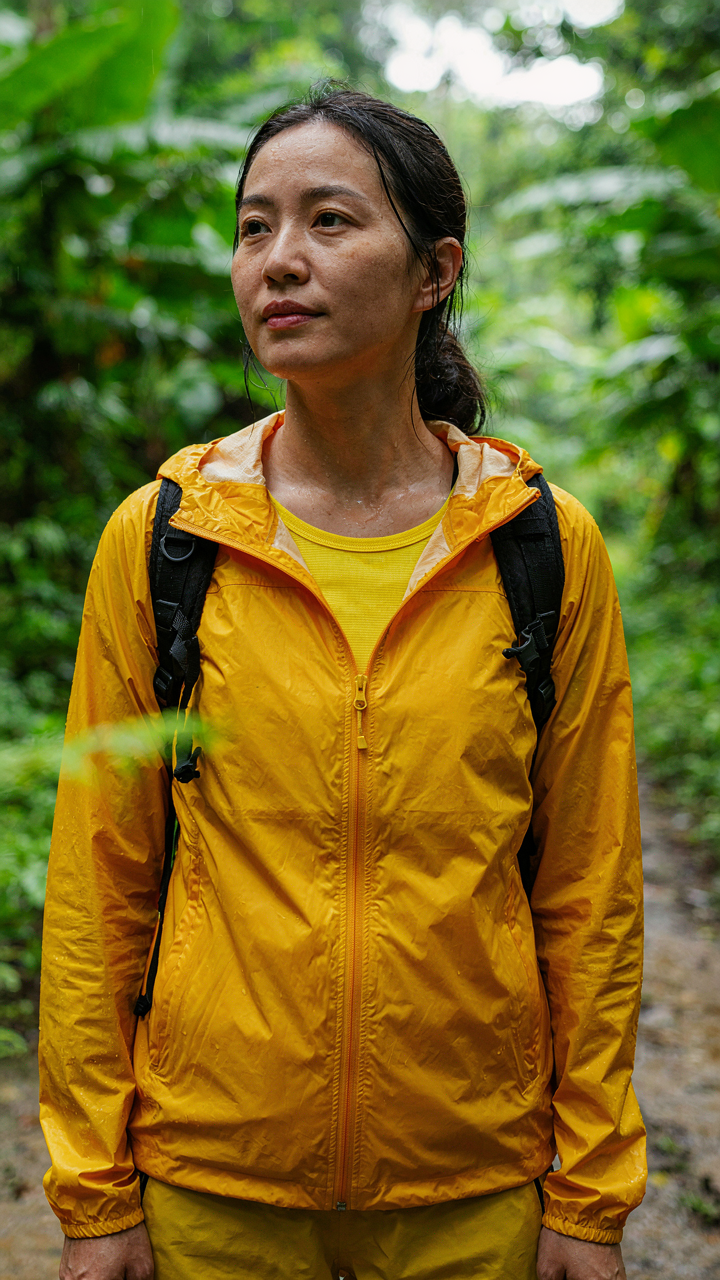
Most female hikers fail because they dress for Instagram, not for the mountain. You wear what you think you should wear instead of what actually works. Stop copying other people’s gear lists. Go on one solo hike this week in whatever outfit feels right to your body, not your ego. Pay attention to what moves, what breathes, what lasts. That data matters more than any article. The trail doesn’t care about your aesthetic. Only you do.