
The Sweat Trapping Fallacy: Why Your “Breathable” Gear Fails

What Breathable Actually Means
You buy the expensive technical fabric because you believe the marketing. The real problem: breathability is measured in a lab with zero humidity, and your kid is hiking in the opposite condition. Breathability describes how fast water vapor moves through fabric, but in humid air, vapor has nowhere to go. The gradient that drives evaporation collapses. Your child’s sweat doesn’t evaporate into thin air—it pools between skin and fabric because the outside air is already saturated with moisture.
Most parents chase the wrong metric. They read “breathable” and assume dryness. What they actually need is fabric that resists clinging to wet skin and dries fast once water is already there. Cotton holds moisture and cools through evaporation only when air is dry enough to pull water away. Polyester and nylon release water faster, but “faster” still means slow in 85-degree humidity with 70-percent moisture. The real play isn’t finding a magical material—it’s accepting that no fabric keeps a kid dry in a swamp, then choosing one that doesn’t trap heat while staying wet.
Evaporative Cooling Stops Working When Air Is Saturated

Physics tells us evaporation requires a vapor pressure gradient—drier air pulling moisture from wetter surfaces. In humid conditions, that gradient disappears. Your kid’s sweat can’t evaporate because the air outside the shirt is already holding as much water vapor as it can. The fabric becomes a barrier that traps body heat and moisture instead of releasing it. Synthetic blends marketed as moisture-wicking actually move sweat outward and hold it at the fabric surface where it clings longest.
Natural fibers like merino wool manage humid heat better than synthetics, but not because they’re magic. Merino absorbs moisture into the fiber itself, moving it away from skin contact and spreading it across more surface area. This delays the wet-clinging sensation and lets what little evaporation occurs happen across a larger zone. The mechanism that matters: choose fabric that separates sweat from skin contact fast, even if total evaporation takes longer. Loose weaves and lighter weights beat tight knits in humidity because air can move through them, replacing hot saturated air with slightly less saturated air.

The Hydrophobic Revolution: Fabrics That Actively Repel Moisture
Synthetic Fibers Designed For Rapid Wicking
You want your kid to stay dry because wet kids quit hiking, complain the whole way back, and ruin your weekend plans. Here’s what actually works: polyester and nylon move moisture away from skin faster than cotton ever will. The mechanism is simple physics. Cotton absorbs sweat like a sponge, holding it against your kid’s body. Synthetics don’t absorb. They repel water and move it outward through capillary action, letting it evaporate from the fabric surface instead of the skin.
Merino wool sits in a middle category. It wicks moisture while retaining thermal regulation, but it’s expensive and overkill for humid hiking with kids. Polyester dominates the market because manufacturers perfected the weave patterns decades ago. When you see “moisture-wicking” on a tag, you’re buying a fabric engineered to create a moisture gradient that pushes sweat away from the body. Buy the synthetic base layer. Skip the marketing language. Look at fiber content and move on.
Material Science Accelerates Sweat Transfer
Material science identifies capillary action as the core mechanism moving liquid through a porous structure, and humid weather hiking with kids operates on the same principle: speed of moisture departure determines comfort. The fibers in wicking fabrics are engineered with specific denier counts and weave densities that create pathways. Smaller fibers increase surface area. Tighter weaves force sweat to move laterally before it can pool. Looser weaves in outer layers allow faster evaporation from the fabric surface.
Most parents buy wicking shirts and assume the job is done. That’s incomplete thinking. A wicking base layer only solves half the problem if the outer layer traps moisture. Your kid needs a two-layer system: synthetic base layer that moves sweat outward, then a breathable outer shell that lets vapor escape. Test this yourself. Wear cotton under a rain jacket for two hours in humidity. Then wear polyester under a mesh or ventilated jacket. The difference is measurable. Your kid will hike longer without complaining if moisture leaves the system instead of accumulating at the skin.
The “Thermal Bridge” Protocol: Minimizing Contact, Maximizing Airflow

How Fabric Conducts Heat Away From Skin
You want your kid to stay cool without looking like they’re dressed for a different season. The real issue isn’t temperature—it’s conductivity. Physics calls it thermal bridging: when material touches skin directly, it transfers heat efficiently, trapping moisture against the body. Cotton does this aggressively. Synthetic blends with loose weaves break the contact chain, forcing air to move between fabric layers instead of letting sweat conduct straight into the cloth. This is why fit matters more than fiber choice alone.
Most advice says “wear moisture-wicking fabric” and stops there, which is incomplete. Wicking only works if air can move through the weave. A tight synthetic shirt plastered to wet skin conducts heat just as badly as cotton. The mechanism is simple: create micro-gaps between fabric and body by choosing loose construction and strategic separation, not just material. Your kid’s shirt should skim the body, not follow its contours. Looser weaves in humid conditions outperform tight athletic cuts every time.
Spacing Layers To Force Air Circulation
Layering in humidity requires counterintuitive logic. Standard advice stacks damp-wicking base layer, insulating mid-layer, protective outer shell. Wrong structure for humid hiking. Tight layering traps heat between pieces. Instead, build your system around air pockets, not coverage density. A loose base layer (merino or synthetic mesh), a thin spacer shirt with ventilation ports, and an unstructured outer piece create pathways for convection to move moisture upward and outward. The gaps matter more than the layers themselves.
Start with a merino or nylon mesh base that fits two sizes up from normal. This prevents the fabric from ever making full contact with sweat. Add a thin synthetic mid-layer with actual airflow designed in—think trail running shirts with mesh panels, not dense fleece. The outer layer stays unzipped or partially open during the hike unless weather forces closure. When you layer for airflow instead of insulation, humidity stops being the enemy because moisture doesn’t accumulate against the skin in the first place.
UV Protection Without Suffocation: The Shade Vs. Heat Equation

UPF Ratings And Fabric Density
You want your kid protected from sun damage without looking like they’re wrapped in a hazmat suit. The real mechanism is this: UPF works through fiber density and pigment density, not magic. Higher UPF numbers (50+) require tighter weaves or chemical treatments that slow air movement. Most parents don’t realize the tradeoff is immediate. A UPF 50 shirt blocks more UV but also traps more heat against the skin in humid conditions.
The fabric that matters most is the weave type, not the brand. Tightly woven nylon and polyester stop UV rays effectively, but they also stop evaporative cooling. Looser weaves in merino wool or certain cotton blends allow sweat to move off the skin faster, though they block less UV. You need to know your specific conditions. If humidity is above 70% and temps above 75°F, a tight UPF weave becomes a heat liability. Test the fabric by holding it up to light. If you can’t see through it easily, it’s dense enough for UV protection but dense enough to cause heat stress.
Cooling Trumps Safety When The Choice Gets Forced
Conventional outdoor advice says max out the UPF and accept the heat. That’s incomplete thinking. Physics tells us that thermal load always wins in humid conditions because the body can’t shed sweat when the air is already saturated. A kid wearing a dense UPF 50 shirt in 85°F humidity will overheat faster than a kid in a loose UPF 30 shirt who can actually cool. The mechanism is simple: evaporative cooling only works when humidity allows it.
The real protocol is this. Start with a base UPF of 30 to 40, not 50. Then layer in behavioral protection: schedule hikes for early morning or late afternoon, use wide-brimmed hats, and take frequent breaks in shade. Reapply sunscreen to exposed skin rather than relying entirely on dense fabric. This keeps your kid safe from UV without forcing them into heat stress. The combination beats any single piece of clothing.
The “Sweat Economy” Of Kids Hiking Outfit: Hydration As A Performance Multiplier

How Kids Lose Electrolytes Faster Than Adults
You care about this because you’re afraid your kid will bonk on the trail and you’ll look unprepared. Here’s what actually happens: humidity blocks evaporative cooling, so kids sweat more to shed the same heat. Borrowing from exercise physiology, a kid’s sweat rate represents their metabolic “currency” in humid conditions. They burn through sodium and potassium faster than in dry climates because the sweat stays on skin instead of evaporating efficiently. This isn’t just dehydration—it’s electrolyte depletion that sabotages muscle function and mental clarity.
Most advice says “just drink water,” which is incomplete and will fail you. Pure water without electrolytes dilutes blood sodium levels, triggering cramping and fatigue. Kids hiking in humidity need sodium replacement starting before thirst signals arrive. A simple protocol: mix a pinch of salt into their water bottle or pack a sports drink powder with sodium and carbs. Start intake at mile one, not when they complain. This prevents the deficit instead of chasing it.
Water Carrying Strategy Vs. Pack Weight Reality
The trade-off is real: more water means heavier pack, which increases sweat rate, which demands more water. This creates a vicious loop most parents don’t see. A child’s pack should stay under 15 percent of body weight to avoid fatigue that triggers poor decision-making on trail. Two liters of water weighs 4.4 pounds—a massive chunk of that budget.
The solution isn’t more water in the pack. It’s planned refill points. Scout water sources along your route before hiking: streams, trailhead fountains, ranger stations. Carry one liter max and refill every 45 minutes to an hour in humid conditions. Treat or filter water if the source isn’t verified safe. This keeps pack weight low while maintaining hydration frequency. A lightweight water filter or purification tablets add ounces, not pounds, and solve the equation.
Footwear: The Forgotten Thermostat For Outdoor Kids

Venting Architecture In Modern Hiking Shoes
You care about this because wet feet kill a hike faster than anything else, and you’re hoping shoes alone will solve it. They won’t. Thermodynamics teaches us about heat transfer, and in humid environments, your kid’s foot becomes a closed system—sweat evaporates slower, temperature stays high, blisters form. Modern hiking shoes address this through venting, but most parents buy the wrong ones.
Summer 2023 hiking shoes trend toward mesh uppers and drainage ports, which looks smart but misses the core mechanism. The real work happens at the collar and toe box. Shoes with gusseted tongues trap humidity. Unstructured collars with perforated panels let air move through the foot cavity itself. Salomon and Merrell released models with deliberate channel systems that funnel water out rather than letting it pool. This isn’t marketing—it’s engineering. Check the product specs for “drainage ports” and “ventilated collar,” not just “breathable mesh.”
Fiber Selection And Blister Prevention
The sock myth is persistent and wrong: cotton doesn’t cause all blisters, but it fails spectacularly in humid conditions because it absorbs moisture and loses structure. Merino wool and synthetic blends (nylon, polyester) stay dimensionally stable when wet. The friction point that creates a blister is sustained movement between foot and fabric. Wool maintains a microstructure that resists compression. Synthetics dry faster.
For kids in humid weather, a 70/30 merino-nylon blend outperforms pure synthetics because it regulates temperature and manages moisture without adding bulk. Thickness matters too: midweight hiking socks (about 1.5mm) provide cushioning without creating excess fabric that bunches inside the shoe. Buy socks slightly larger than street sizes to account for swelling in heat. Have your kid wear them on a short test hike before committing to a full day, then rotate two pairs so each dries fully between outings.
The “Boundary Layer” Effect: Why Accessories Matter For Kids Camping Outfit
Hats And Neck Protection
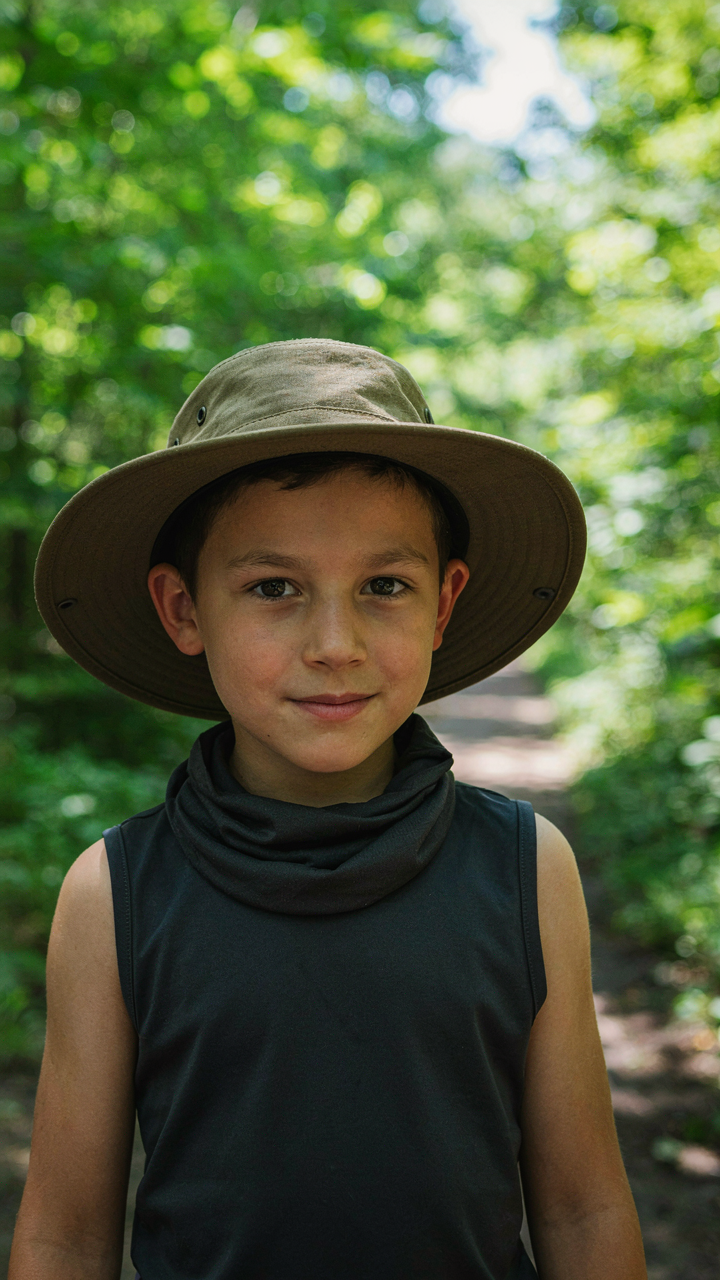
You want your kid to look capable on the trail because you think it means they’ll actually be safe. The real mechanism is physics: a hat and neck gaiter create a boundary layer between skin and ambient humidity, reducing the rate at which moisture saturates the microclimate your child exists in. In humid conditions, sweat doesn’t evaporate efficiently. A wide-brimmed hat channels that moisture away from the face and neck, preventing the pooling effect that leads to heat stress and chafing.
Neck gaiters serve a specific function beyond aesthetics. They block direct sun exposure on the throat and upper chest, where blood vessels sit close to the surface. By keeping that zone dry and shaded, you reduce the core temperature burden your kid’s body has to manage. On a six-mile hike in 85-degree humidity, this difference compounds. Choose a hat with ventilation holes and a gaiter made from moisture-wicking synthetic material, not cotton. The gaiter should pull up to cover the base of the skull where sweat accumulates fastest.
Layering To Control Moisture Trapping
Common advice tells you to layer. What it doesn’t say: most parents layer wrong and create moisture traps that accelerate heat stress in humidity. The gap between a base layer and an insulating layer is where condensation pools when a kid stops moving. Moisture accumulates, temperature drops, and the kid gets cold while sweating. The fix is counterintuitive—use fewer layers in humid conditions, and make sure each one breathes aggressively.
Your top layer should be a single piece of lightweight synthetic fabric with a loose weave. This allows air circulation and prevents moisture from collecting against the skin. Avoid tight fits between layers. Loose synthetic materials dry faster than fitted merino or cotton. Before a hike, wet-test your kid’s outfit in a humid bathroom. If the fabric doesn’t dry visibly within fifteen minutes under moving air, swap it out. The protocol is simple: one breathable base, one breathable top, and exposed skin where possible.
Beyond The Outfit: The “Environmental Control” Mental Model For Kids Hiking Gear

Borrowing From Engineering: The Microclimate Principle
You want to believe one outfit solves humid hiking. It doesn’t, and pretending it does wastes money and ruins trips. HVAC engineers don’t design one temperature for an entire building—they create zones. Your kid’s body is the same. The goal isn’t dressing for the average trail temperature. It’s creating multiple controllable microclimates around high-heat zones: armpits, lower back, neck, groin. Humidity defeats generic layering because sweat doesn’t evaporate evenly across fabric types.
The mechanism is simple: different body zones generate and shed heat at different rates. Your kid’s core stays warmer longer than extremities. Their back sweats faster than their chest in humid conditions. Standard outfit advice ignores this. Instead of one shirt, you’re managing vapor pressure and air exchange at specific points. Mesh panels under armpits, breathable waistbands, and neck vents aren’t aesthetic choices—they’re active load-bearing components of a system, just like a return air duct in a house.
Active Cooling Strategies That Actually Work
The common advice—”just wear moisture-wicking fabric”—is incomplete because fabric alone can’t handle sustained humidity. Moisture-wicking only works if sweat actually leaves the skin. On a humid trail, the air itself is already saturated, so evaporative cooling stalls. You need forced air movement and strategic water management.
- Vented high-traffic zones: Cut or buy shirts with mesh panels directly over the back and armpits. This lets moving air hit wet skin, not trapped fabric. Brands like Patagonia and Arc’teryx use this on kids’ gear specifically because engineers know the math.
- Pre-cooling before ascent: Have your kid wet their shirt or spray water on their back five minutes before the steepest part of the hike. The initial evaporation buys 15-20 minutes of lower core temperature before saturation kicks in again.
- Neck and head airflow management: Use a lightweight bandana or neck gaiter that sits loose, not tight. Humidity traps heat at the neck. Loose fabric allows convection to pull warm air up and away from the head.
- Waistband design over fit: Loose waistbands with breathable panels prevent sweat pooling at the hip and lower back. Tight elastic traps moisture against skin. Look for shorts with gusseted crotches and moisture channels built into the fabric.
- Pace control as cooling strategy: Slow descent and frequent stops (even five minutes) let sweat evaporate passively and allow core temperature to drop. This isn’t rest—it’s active thermoregulation. Stop before your kid is drenched, not after.
The protocol: dress your kid in base layers with mesh ventilation, start the hike with a slightly damp outer layer, adjust pace to prevent core overheating, and stop before saturation hits maximum. Measure success not by how dry they stay but by how much time elapses before their breathing gets labored.
The Humid Truth About Post Hike Recovery For Kids
Why Wet Clothes Never Dry On Their Own
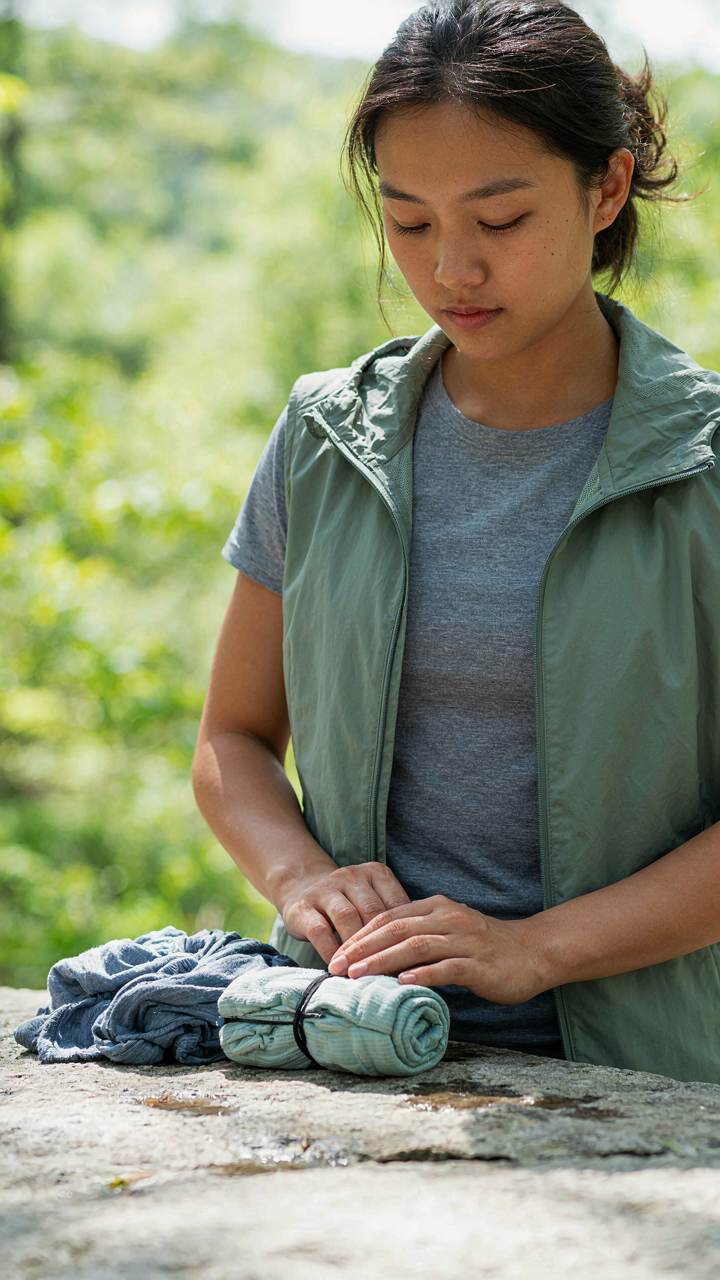
You’re worried your kid will catch cold sitting in damp fabric for hours. That’s not the real problem. The real mechanism is evaporative cooling: when sweat-soaked fabric clings to skin in humid air, there’s nowhere for moisture to go, so your kid’s core temperature drops even though they’re overheated. Synthetic base layers dry faster than cotton because they shed water instead of absorbing it. This isn’t preference, it’s physics.
The window for action is tight. Within thirty minutes of finishing the hike, wet clothes become a liability. Merino wool and polyester blends actually wick moisture away from skin while drying in place. Cotton holds water like a sponge and keeps skin damp for hours, creating conditions for chafing and heat loss. Strip wet layers immediately and replace them with dry ones. Don’t wait for the car ride home.
Friction Stops When Skin Stays Dry
Common advice says “use body glide or anti chafe products.” That’s treating the symptom, not the cause. Chafing happens because wet skin rubs against fabric or itself with zero resistance. Biomechanics tells us friction increases when moisture reduces the natural oil barrier on skin. A dry layer eliminates the friction entirely before you need to patch it with cream.
Pack a separate dry set in a waterproof bag before the hike starts. Change your kid out of wet clothes the moment the hike ends, not when you feel like it later. This single step prevents most chafing without needing topical products at all. Let their skin air dry for a few minutes in shade before putting on the dry layer. The dry fabric acts as a barrier, not a problem.
The Real Obstacle Isn’t The Humidity; It’s Your Unconscious Impulse To Over-prepare For Imagined Discomfort
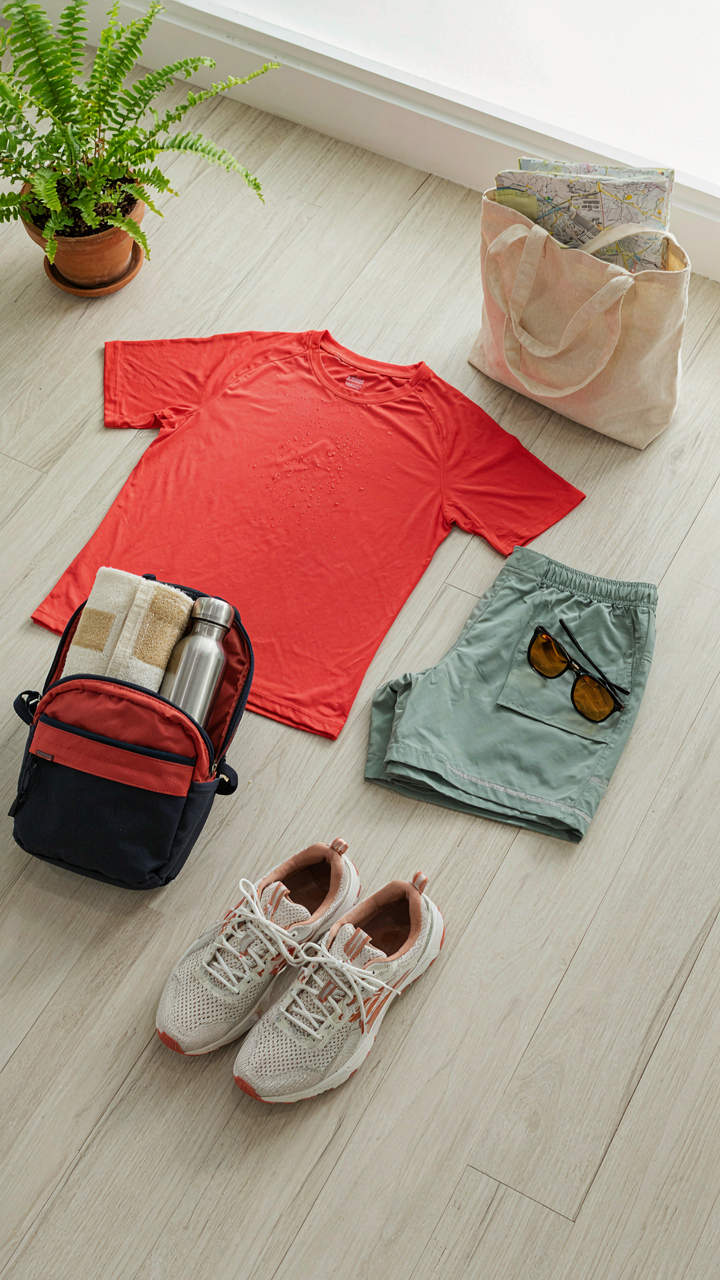
Parents kill hikes before they start by loading kids with gear for worst-case scenarios that never happen. Your child doesn’t need five backup shirts. They need one good one, water, and your permission to get uncomfortable for thirty minutes. The discomfort isn’t the enemy. Boredom is. Pick one hike this week and take your kid in exactly what they’d wear on a regular day. Nothing fancy. Nothing extra. Watch what actually matters and what you invented.