
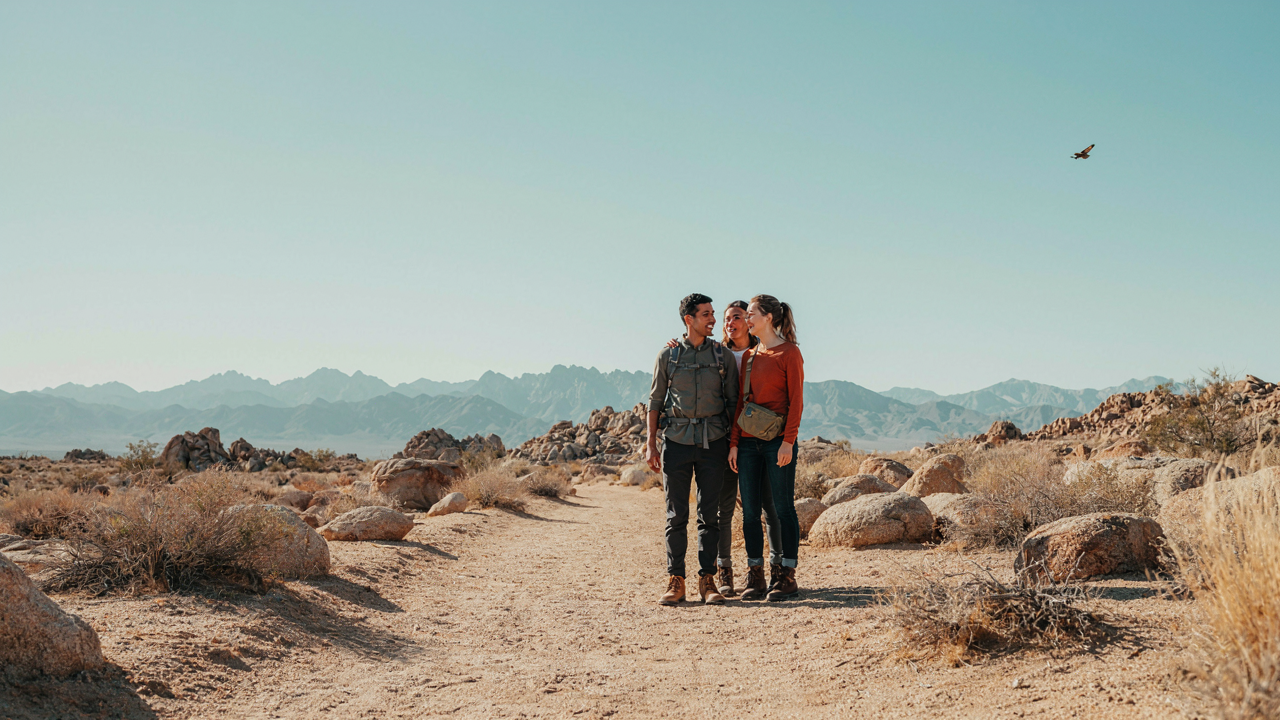
The Evaporation Protocol: Your Body’s HVAC System

Why Sweat Isn’t The Problem
You think sweat means you’re failing at staying cool. You’re not. Sweat is the mechanism itself—your body’s only real tool for dumping heat in high temperatures. Without it, core temperature climbs until performance collapses. The wetness you feel isn’t waste. It’s your body’s active cooling system running exactly as designed. When sweat evaporates, it pulls thermal energy off your skin. That phase change from liquid to vapor is what matters, not the moisture sitting on fabric.
Most advice treats sweat as something to prevent or “wick away.” That’s incomplete thinking. You can’t prevent sweat on a hot hike. What you control is how efficiently it evaporates. A fabric that traps moisture against skin actually slows cooling. A fabric that releases moisture into air accelerates it. The goal isn’t dryness. The goal is continuous evaporation.
Fabric Selection Is About Air Exchange

Synthetic materials don’t absorb moisture the way cotton does, but that’s not why they work better in heat. The real advantage is speed of evaporation. Nylon, polyester, and polypropylene fabrics release water vapor into the air quickly because they don’t hold moisture in their fiber structure. Air moves through the weave and carries vapor away from your skin surface. Cotton absorbs water and holds it, creating a wet layer that sits on skin and blocks airflow. Saturation kills cooling power.
Lightweight, loosely woven synthetics create the highest evaporation rate because they maximize air exposure to moisture. Mesh panels, vents, and open weaves aren’t luxuries—they’re functional requirements. Dense fabrics, even if synthetic, trap vapor close to skin. The fabric itself doesn’t cool you. Air circulation across a damp surface does. Choose materials that refuse to absorb moisture and weaves that let air move through them freely.

Sun As An Energy Source: The Albedo Effect For Warm Weather Hiking Outfit

Light Colors Absorb Less Heat Than Dark Ones
You want to believe wearing black looks better on the trail. Here’s what actually happens: physics doesn’t care about aesthetics. Albedo is the measure of how much solar radiation a surface reflects back into space instead of absorbing it. Light colors have high albedo. Dark colors have low albedo. On your skin and clothing, this difference translates directly into core temperature rise.
White and pale fabrics reflect 60 to 90 percent of incoming solar radiation. Black fabrics absorb 85 to 95 percent. In direct sun at 90 degrees Fahrenheit, this gap compounds fast. A woman wearing black converts more of that energy into body heat. A woman wearing white stays cooler without working harder. The mechanism is simple: fewer photons stick to the material, fewer convert to thermal energy, less heat transfers to your body.
How Fabric Construction Changes Heat Absorption
Material density and weave pattern matter more than most hikers realize. A tight, compact weave traps more air and creates insulation even when you want cooling. Loose weaves let air move through, which accelerates evaporation and heat dissipation. The fiber itself also plays a role. Polyester and nylon absorb less moisture than cotton, which means sweat sits on your skin instead of wicking away, creating a cooling effect through evaporation rather than storage.
Mesh fabrics designed for ventilation have open structures that increase airflow across your skin. They won’t protect you from UV damage as effectively, so you still need UPF-rated options even in loose weaves. The real play is combining both: a light-colored, UPF-rated fabric with an open weave structure. This gives you solar reflection, UV blocking, and active air circulation. Check the fabric tag for weave type and thread count before you buy.
The Microclimate Method: Building Your Personal Cool Zone For Hot Weather Hiking Outfit Women

Why Loose Fit Actually Works
You want to look put-together while not dying on the trail. That’s the tension nobody names. Here’s the mechanism: loose fit creates a dead air layer between fabric and skin. Physics calls this an insulating boundary, but in reverse. Trapped air doesn’t move, so your sweat can’t evaporate efficiently when fabric clings. Loose silhouettes allow air circulation around your body, letting moisture escape consistently instead of pooling.
Most hiking advice just says “wear loose clothing” and stops. That’s incomplete. The fit matters at specific points. Your shoulders, chest, and thighs generate the most heat during exertion. Loose fabric there prevents sweat from saturating the material and creating a wet second skin that conducts heat away from your body instead of letting it dissipate. Women’s hiking cuts typically taper at the waist and hips, trapping heat exactly where you don’t want it. Choose cuts with straight or slightly tapered sides from armpit to hem, not fitted silhouettes marketed as “flattering.”
Strategic Vents And Access Points
Ventilation works like a chimney effect, not a myth. Hot air rises from your core. Give it an exit route. Back panels, underarm gussets, and side splits create pressure differentials that push heat away from your body actively, not passively. Women’s hiking shirts with mesh back panels or ventilated side panels use this principle. The mesh creates a lower-resistance path for air compared to solid fabric.
Real ventilation points aren’t decorative. A mesh panel only cools if warm air actually moves through it. This requires two conditions: an entry point (sleeves, neckline, front panels) and an exit point (back or sides). Zip-off sleeves turn long sleeves into short sleeves mid-hike, creating new airflow channels when temperature or exertion increases. Position matters more than quantity. One strategically placed back vent outperforms three random mesh panels across the chest.
Beyond Cotton: Engineered Fabrics For Summer Hike
Synthetics Versus Merino In Heat And Humidity
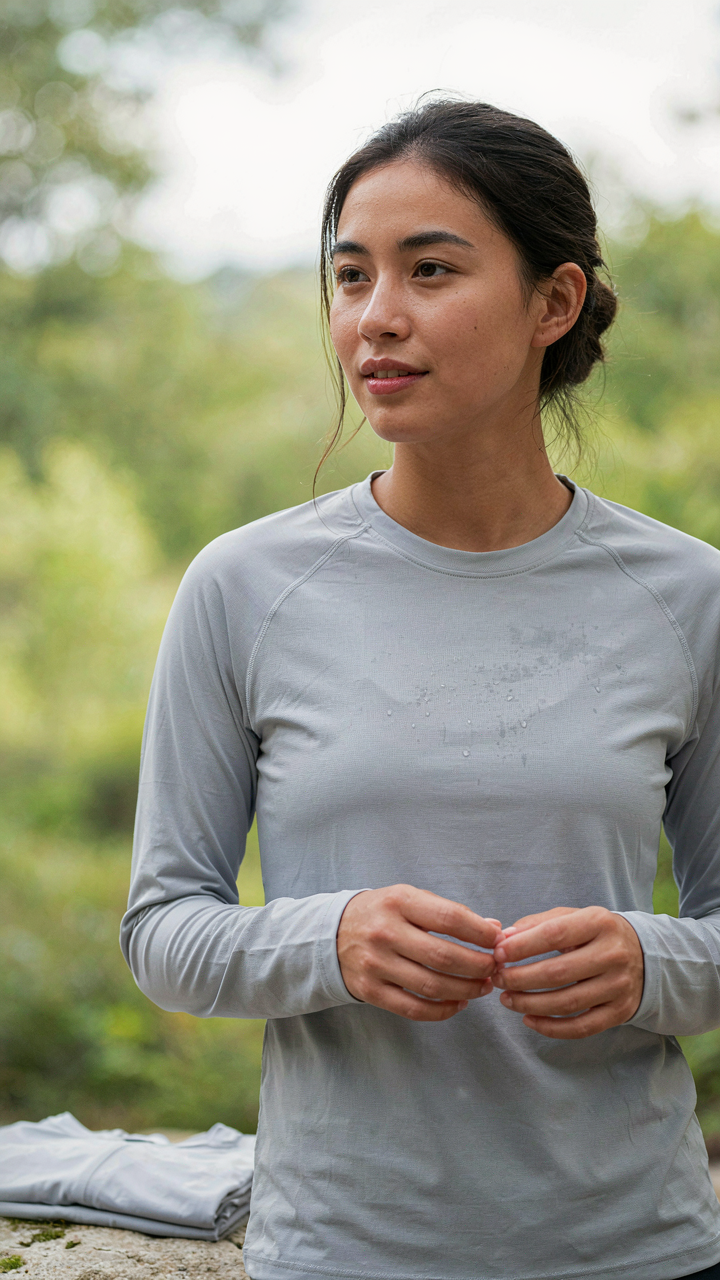
You want to believe merino wool works everywhere because it sounds premium and natural. It doesn’t. In hot, humid conditions, fabric performance is a physics problem: how fast does material move moisture away from skin and allow it to evaporate. Merino excels in cool temps and moderate moisture. Synthetics like polyester and nylon dominate in heat because they have lower moisture regain, meaning they absorb less sweat and dry faster. Merino actually holds moisture longer in humid air, which keeps you clammy.
The mechanism matters more than the material’s reputation. Polyester moves sweat to the fabric surface through capillary action, then releases it into the air before your body reabsorbs it. In 80-plus-degree heat with high humidity, this speed difference is tactile. Choose synthetic base layers and shirts for hot weather. Merino becomes the backup for cooler elevations or evening descents, not your primary play in summer heat.
How Moisture Wicking Actually Works
Most advice calls wicking “breathable” and stops there. That’s incomplete. Wicking is a capillary transport system, not magic air movement. The fibers in synthetic fabrics have a structure that creates tiny channels. Sweat enters these channels through hydrophilic (water-loving) zones on the fiber surface, travels along the fabric, and exits through hydrophobic (water-repelling) outer zones. This separation of moisture entry and exit is the entire mechanism. The fabric pulls sweat off your skin faster than gravity alone, then releases it outward where air circulation evaporates it.
Humidity breaks this system if you don’t account for airflow. In stagnant air, even wicking fabrics saturate because the air can’t absorb more moisture. You need ventilation: loose fit, mesh panels, or open-front designs that create air movement across the fabric surface. Check a shirt’s construction before buying. If it’s fitted with no vents, wicking speed won’t save you. The best synthetic hiking shirts have pit zips, side panels, or cut for actual airflow, not just performance fiber claims.
Cover Up To Cool Down: The Desert Dweller’s Lesson For Hot Weather Hike Outfit
Long Sleeves And Pants Beat Bare Skin
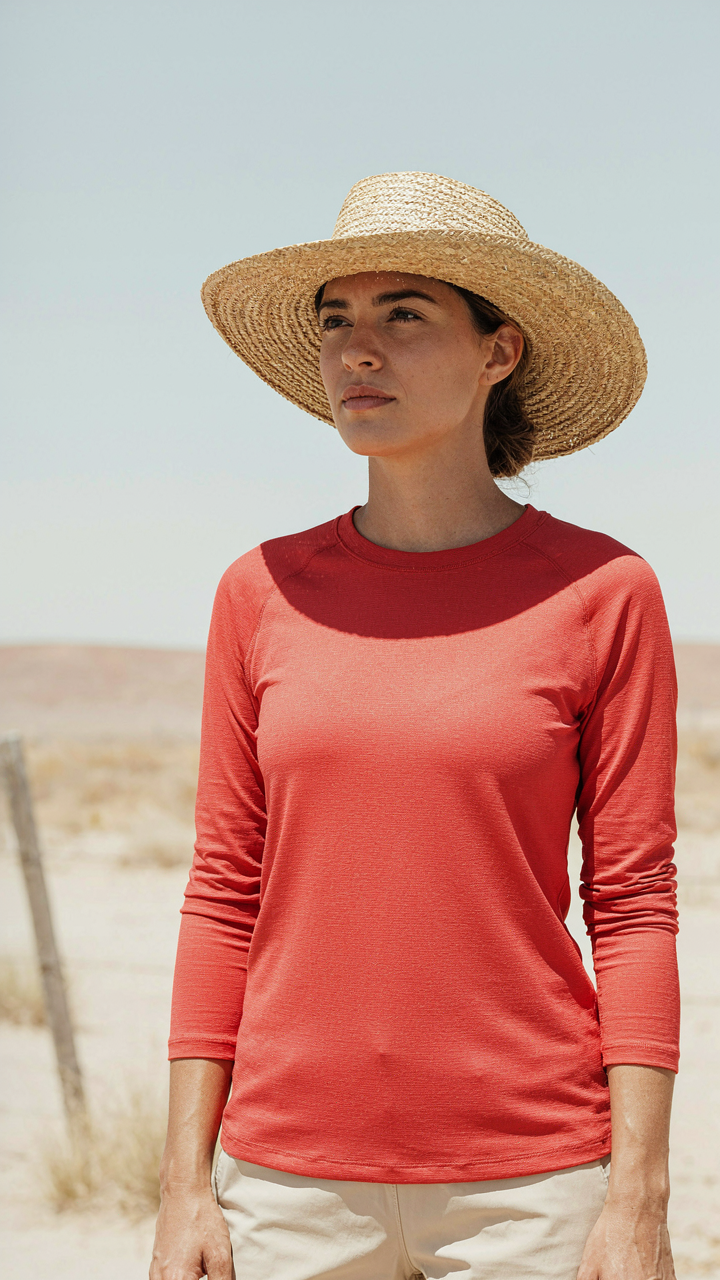
You want to wear less because you believe less fabric means cooler. That’s backwards. The real mechanism is evaporative cooling, borrowed from thermodynamics: fabric creates a boundary layer that slows water loss and lets sweat do its job instead of burning off your skin instantly. Borrow from desert cultures who’ve solved this for centuries. Bedouins wear head-to-toe layers in 120-degree heat because the fabric shields skin from direct radiation while trapping a thin layer of humid air that your body actually uses to cool itself. Bare skin radiates heat away faster than your sweat can evaporate, leaving you dehydrated and burnt.
Long sleeves and full-length pants aren’t about modesty or fashion. They’re about physics. Unprotected skin exposed to direct sun absorbs radiant energy. Fabric interrupts that transfer. Cotton and linen blow moisture off too fast, which is why you want a synthetic blend or merino wool that moderates evaporation. The fabric layer also prevents immediate water loss through radiation, meaning your sweat stays on your skin long enough to actually cool you. Wear lightweight, loose-fitting long sleeves and pants on hot weather hikes, not shorts and a tank top.
UPF Ratings Tell You What Actually Works
Most people grab “sun protective” gear without checking the number. UPF ratings aren’t marketing; they’re a quantified measurement of how much ultraviolet radiation reaches your skin through the fabric. UPF 50 blocks about 98% of UV rays. UPF 25 blocks about 96%. The difference matters over a full day in direct sun. You’re not paying for a label, you’re buying measurable protection that prevents cumulative damage and the inflammation that accelerates dehydration.
Check the tag before buying. Look for UPF 50+ on shirts and pants you plan to wear on longer hikes in open terrain. Wet fabric loses UPF effectiveness, so reapply sunscreen to exposed areas after water crossings or heavy sweating. Don’t assume dark colors automatically mean higher UPF either. Tight weaves matter more than color. Test your existing gear by holding it up to light. If light passes through easily, UV passes through too. When selecting hot weather hiking outfits, prioritize UPF 50+ rated materials over style.
The Unseen Threat: Chafing Prevention Protocol For Hiking Outfit Women
Fabric Construction That Actually Works
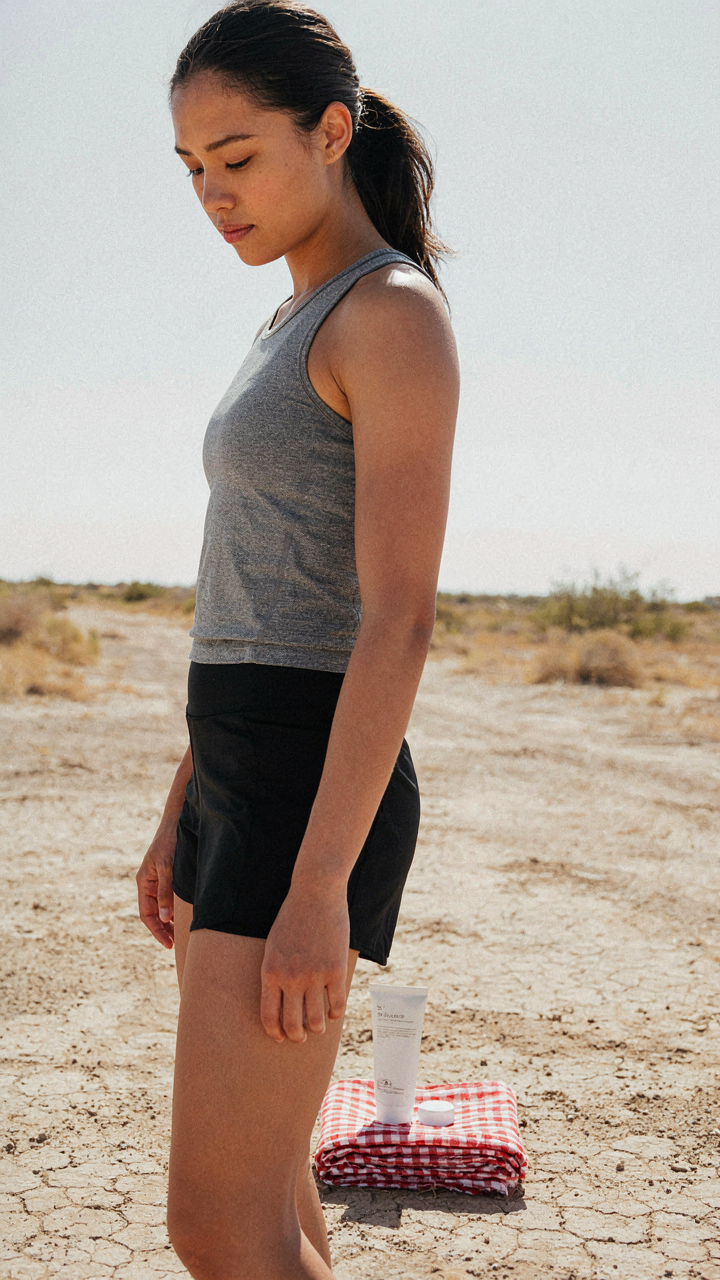
You care about this because chafing kills momentum and exposes you to infection during hours away from help. Here’s the mechanism: friction compounds over time. The longer a garment moves against skin under heat and moisture, the faster damage accelerates. Seamless construction removes the primary friction source. Traditional stitched seams create hard edges that catch and dig. Seamless panels eliminate that edge entirely. Brands like Patagonia and Arc’teryx engineered their women’s hiking lines with flat seams positioned away from high-friction zones: inner thighs, underarms, back of knees.
Strategic stitching matters because placement determines where friction concentrates. A seam running parallel to movement direction causes less damage than one perpendicular to it. High-end hiking wear uses gusseted crotch panels and taped inseams specifically because these spots generate the most heat and moisture. The fabric itself matters less than the construction. Cotton chafes worse than synthetic, but a poorly constructed synthetic shorts still fails. Choose garments with minimal seaming across movement zones and test fit before committing to miles.
Application Protocol And Timing
The common advice to apply anti-chafing balm before your hike stops working after two hours of sweating. Moisture washes most products off. Reapplication is the actual system. Apply before you leave: full coverage on inner thighs, between toes, underarms, anywhere skin meets skin or fabric. Pack a second application for hour three or four depending on distance and temperature. Certain products handle moisture better than others. Squirrel’s Nut Butter and Body Glide stay put longer than basic petroleum jelly because their formulations bond to skin rather than sweat off.
- Body Glide Original: Water-resistant formula designed for athletes. Stays effective through moderate sweating for approximately three to four hours. Reapply if you exceed this window or notice friction returning.
- Squirrel’s Nut Butter: Plant-based balm with stronger adhesion. Performs better in extreme heat and moisture. Lasts longer between applications but requires full removal after hiking with soap.
- Bag Balm: Veterinary-grade product that creates lasting barrier. Thicker consistency means less frequent reapplication. Not designed for skin but works effectively on friction points.
- Vaseline: Budget option with zero staying power in heat. Useful only for pre-hike application on low-friction days. Inadequate for serious distance or aggressive terrain.
- Nipple balm or runner’s balm: Formulated specifically for movement friction. Better than generic moisturizers because they contain lanolin or similar binding agents that resist sweat.
Reapplication strategy determines whether you finish comfortable or damaged. At the three-hour mark, stop for five minutes. Pull down the affected area slightly, wipe away sweat with a bandana, and apply fresh product. Most hikers skip this step. That’s why they suffer. The balm works only if it’s still there.
Accessory Advantage: Head To Toe Trail Outfits For Adventure Style
Wide Brim Hats Beat Baseball Caps
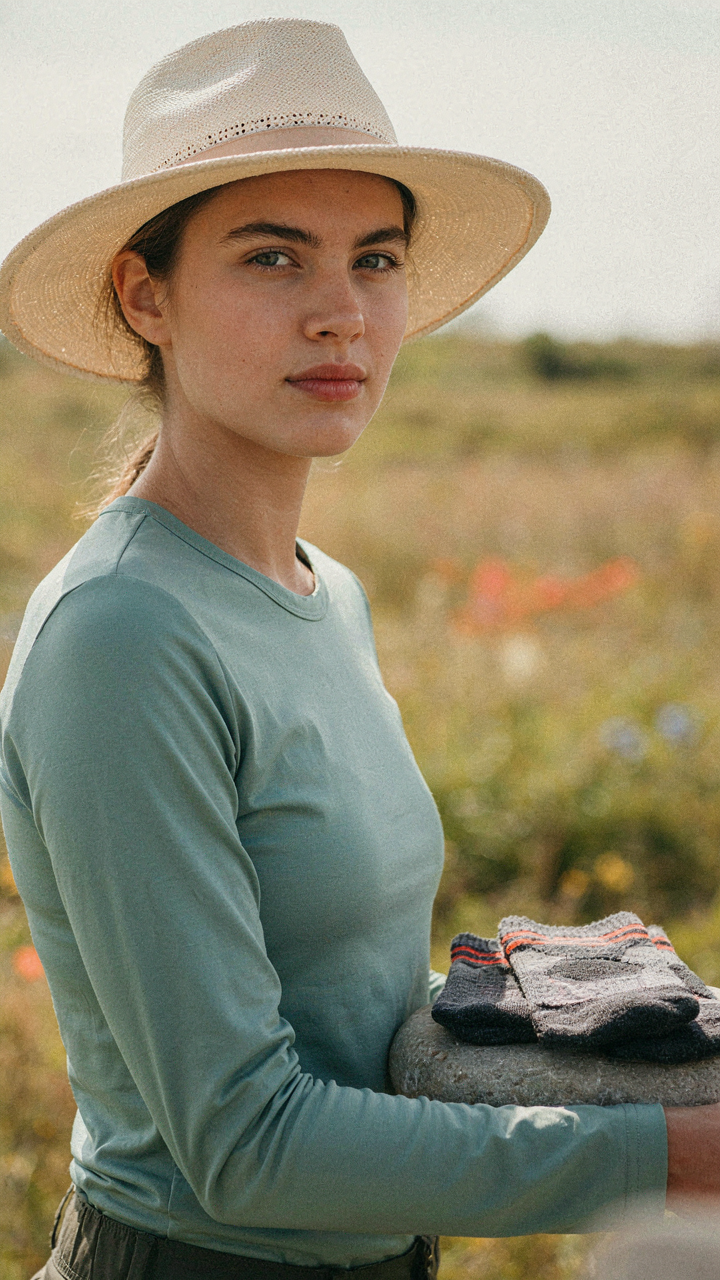
You want to look put-together on the trail without admitting you’re scared of sun damage and premature aging. Here’s the mechanism: shade coverage is a physics problem. A baseball cap protects roughly the front quadrant of your head and face. A wide-brim hat (three inches minimum) creates an unbroken shadow arc that covers your ears, neck, and the sides of your face where UV exposure compounds fastest during midday hiking. That’s where melanoma rates spike.
Most hiking advice treats hats as interchangeable. They’re not. The brim width determines protection surface area. A five-inch brim on a women’s hat spreads UVA and UVB deflection across exposed skin that a cap leaves defenseless. Choose a hat with ventilation holes or mesh panels to prevent heat trapping under the brim. Cotton blends or synthetic materials dry faster than pure cotton when sweat accumulates. The hat should sit stable without constant adjustment, which means a chinstrap or internal sizing band that doesn’t slip during elevation gain.
Lightweight Socks Prevent Blister Mechanics
Blisters aren’t random friction injuries. They’re the result of moisture, heat, and repeated shearing force meeting skin that’s already compromised. Merino wool socks or synthetic moisture-wicking blends solve this through capillary action, a process where fiber structure pulls sweat away from skin faster than cotton fibers can absorb it. Cotton holds moisture against your foot, raising blister risk significantly in hot conditions.
The sock thickness matters less than fiber composition and fit. Women often make the mistake of buying generic hiking socks that bunch or shift inside boots, creating the exact friction pattern that causes hot spots. Get socks with arch support and a snug heel cup that keeps your foot stable. Bring two pairs on anything over four miles. Change into dry socks at the halfway point if your first pair feels damp. This single protocol swap cuts blister incidence more effectively than any blister tape applied after damage starts.
Footwear As Foundation: The Gait Cycle’s Impact

How Shoe Design Controls Temperature
You want to believe your feet don’t matter because they’re “just the base,” but they’re actually your heat regulation system’s bottleneck. Biomechanics—the study of how bodies move—reveals a critical mechanism: shoes control blood flow proximity to skin surface. A shoe that compresses the foot or traps moisture prevents sweat evaporation and locks heat against the skin. Conversely, shoes with open mesh uppers and flexible soles allow air circulation across the plantar surface where sweat dissipates fastest.
The reason most hiking shoes fail in heat is they prioritize ankle support over airflow. That rigid collar and padded collar trap warm air in a pocket directly against your skin. Trail runners designed for hot terrain use minimal upper material, strategic mesh panels, and lower profiles to expose more foot surface to moving air. The gait cycle itself—the repetitive strike and push-off—creates micro-ventilation when shoes don’t block it. Your foot generates its own cooling opportunity; most shoes just waste it.
Arch Support Without The Bulk
Standard hiking boot advice is wrong here: maximum support does not equal maximum performance in heat. Heavy insoles and dense midsoles absorb and retain radiant heat from the ground. Women need a different approach: choose shoes with structured arch that uses thin, responsive materials instead of thick cushioning. Vibram soles in minimalist designs work better than gel-padded midsoles because they conduct heat away instead of trapping it.
Long-haul hot weather hiking demands shoes that stabilize your arch through geometry, not mass. Look for shoes with a reinforced shank and defined heel cup but zero excess foam. Your foot naturally wants to strike efficiently when it has structural guidance but freedom to breathe. Test this on a short trail first: notice where your feet feel cooler. That’s where ventilation and minimal stack height intersect. Match that sensation when selecting your primary hiking shoe.
Adaptation, Not Assumption: Building Your Hiking Date Outfit
Read The Conditions First
You want to look put-together without looking like you tried too hard. That’s the real tension here, and it dissolves the moment you stop treating the hike as a static event and start treating it as a variable system. Meteorology teaches us that weather operates on layers and gradients, not flat surfaces. Your outfit follows the same logic: elevation changes temperature by roughly 3.5 degrees Fahrenheit per 1,000 feet gained. A trail starting at 2,000 feet in 85-degree heat can demand a completely different layering strategy by mile four.
Most advice skips this step entirely and jumps straight to fabric recommendations. That’s why people pack wrong and either overheat or get caught exposed. Before you choose anything, identify three hard facts: the trailhead temperature, the peak elevation, and the trail’s sun exposure. A ridge walk in full sun behaves differently than a forest trail with 80 percent canopy cover. Wind changes the math entirely. Read the actual topographic map, not just the elevation gain number.
Layers That Move Faster Than The Weather
Conventional wisdom says “dress in layers.” That’s incomplete guidance. Tactical layering means each piece comes off or goes on in under ten seconds without stopping your hike. Your base layer wicks moisture; your mid layer traps air when needed; your outer layer blocks wind and UV. But the real mechanism is redundancy with removal speed: you need to adjust without fumbling or losing momentum.
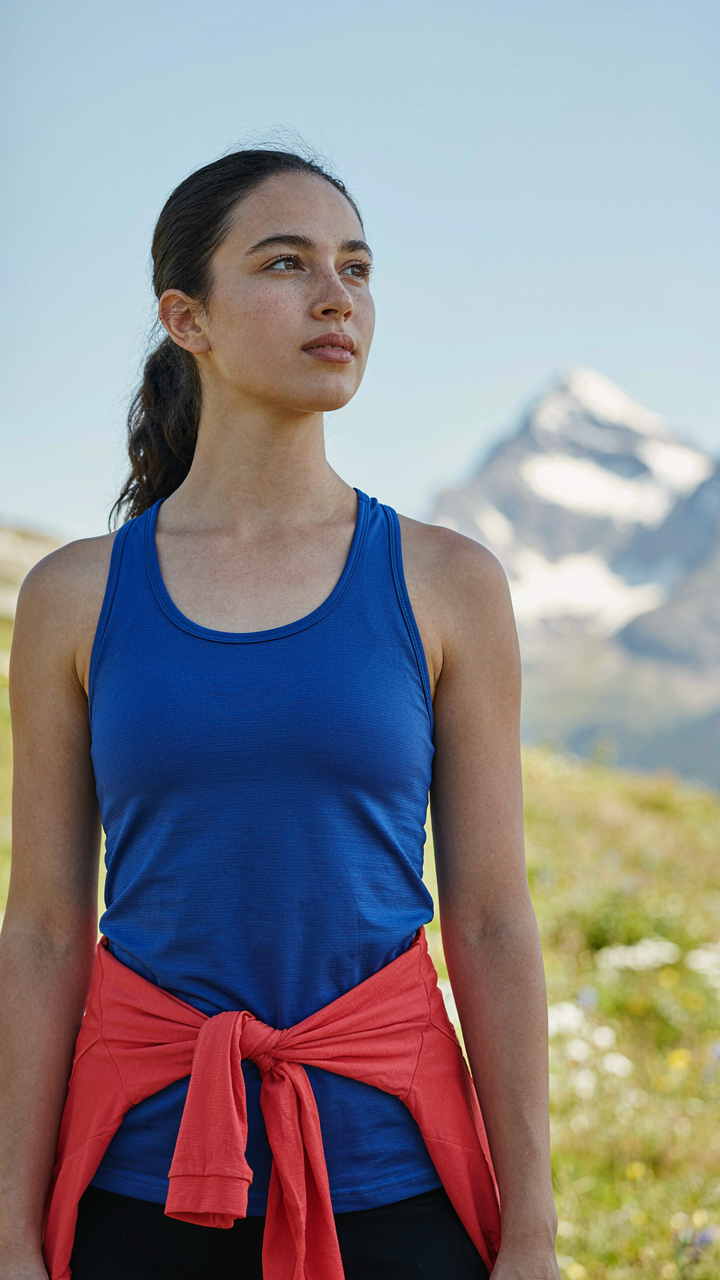
Wear a moisture-wicking tank or racerback top as your base, not cotton. Add a lightweight long-sleeve shirt you can tie around your waist instantly, not a bulky jacket. Carry a compact windbreaker that packs smaller than your water bottle. This structure means you respond to temperature swings in real time instead of spending the next two miles overheated or underprepared. Adjust your layers every 30 minutes if conditions shift, not once at the summit.
The Essential Carry: Beyond The Outfit
Hydration And Filtration Strategy
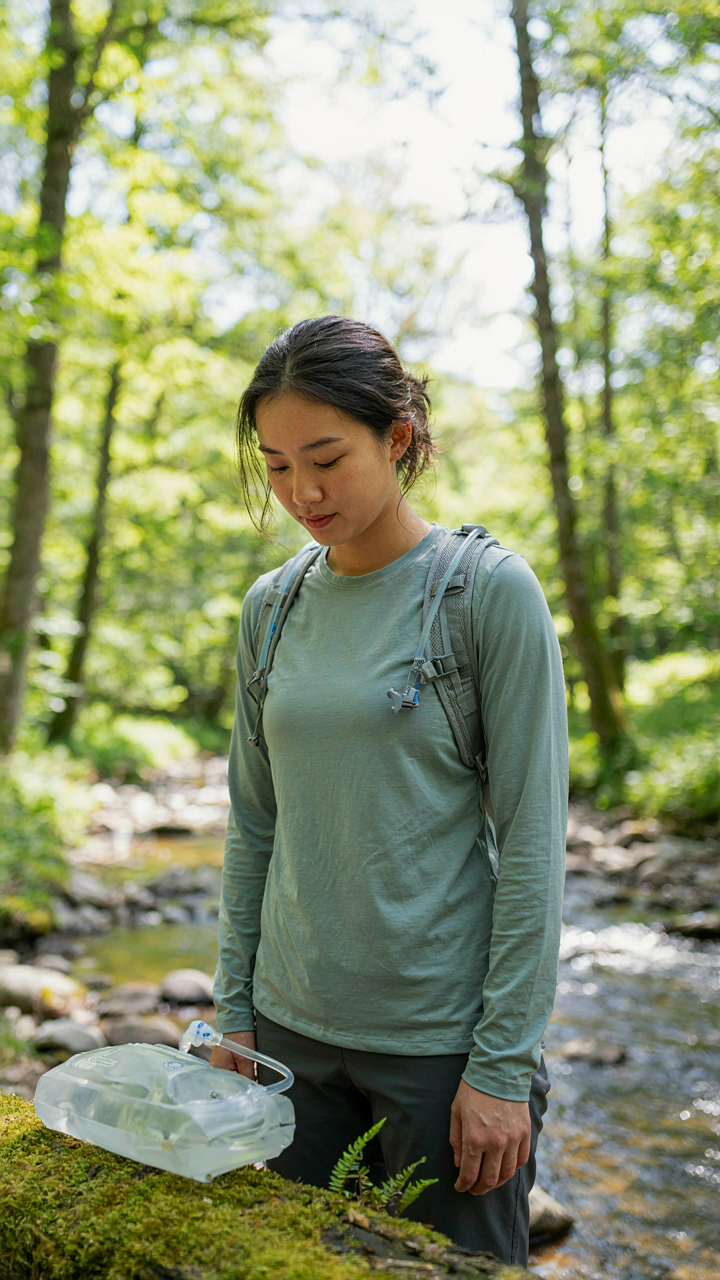
You want to believe a cute water bottle proves you’re prepared, but dehydration in heat doesn’t care about aesthetics. The real mechanism is simple: sweat depletes your plasma volume faster than you can feel thirsty, and by the time thirst signals, you’re already compromised. A hydration pack keeps water accessible without stopping, forcing you to drink on schedule rather than waiting for a signal your body may not send correctly in heat.
Filtration systems shift the equation from carrying every drop to accessing water sources en route. A lightweight squeeze filter or straw system weighs ounces and eliminates the weight penalty of over-carrying. On a hot day hike longer than two hours, this capacity difference determines whether you move efficiently or burn energy hauling dead weight. Start with a two-liter pack capacity and a proven filter rated for bacteria and protozoa removal in your region’s water sources.
Injury Response And Emergency Protocols
Most first-aid kits are theater, stuffed with items you’ll never use while missing what actually stops a crisis in heat. Blisters, heat exhaustion indicators, and minor cuts matter more than elaborate wound care on a day hike. Your real emergency isn’t a deep cut, it’s recognizing heat sickness early enough to descend before it becomes a rescue situation.
Blunt tape for foot hot spots, electrolyte packets, a headlamp for unexpected delays, and a basic communication device form your actual protocol. Check the specific hazards of your route: rocky terrain means blister prevention, high elevation means sun damage mitigation, and isolated trails mean a way to call for help. Assemble your kit around the specific failure modes of your hike, not around generic completeness.
The Real Obstacle Isn’t The Heat; It’s Your Adherence To Outdated, Counterproductive Norms

Most women hike in the wrong outfit because they’re following rules designed by people who never actually sweat on a trail. You’ve internalized the idea that hiking requires suffering or looking a certain way. It doesn’t. Stop buying “cute” gear that compromises function. Go to your closet right now and pull out the lightest, most breathable shirt you own. Wear it tomorrow on a short hike. Notice how differently your body performs when you stop apologizing for needing comfort. That’s the real trail.