
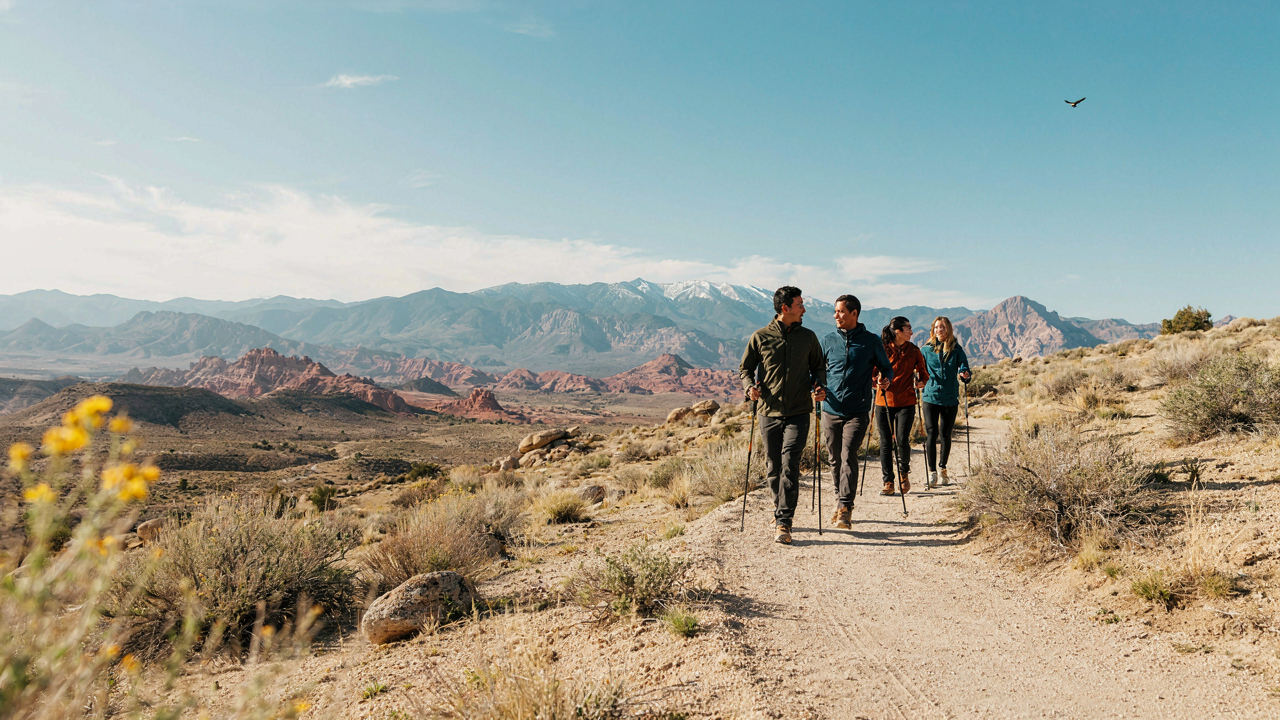
The Thermal Column Principle: Why “Just Longer” Fails Tall Men’s Hiking Outfit
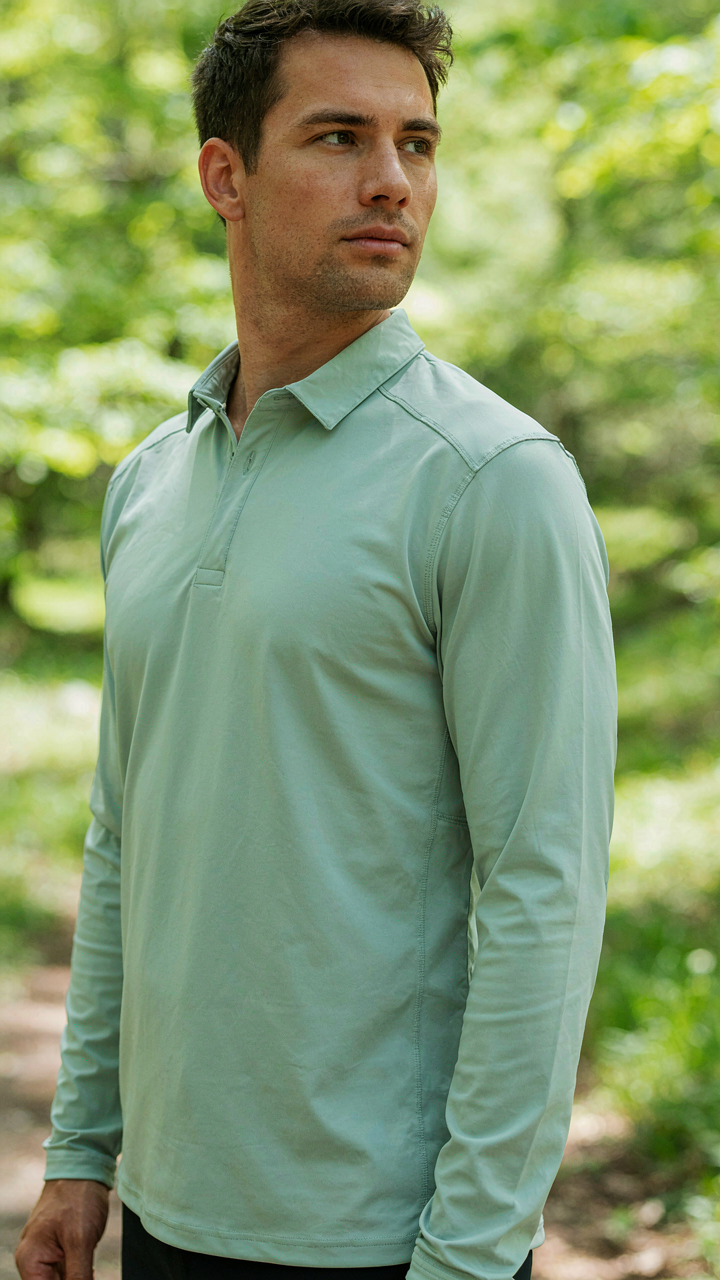
More Skin Means More Heat Debt
You’re hoping longer inseams and sleeves automatically solve your overheating problem. They don’t. Physics doesn’t care about proportions. In thermodynamics, surface area is the variable that drives heat absorption and loss. A tall man has roughly 15 to 20 percent more skin exposed to direct sun than an average man, even when fully clothed. That’s not a style problem. That’s a heat load problem. The common fix of simply buying bigger sizes creates slack fabric that pools heat against your body instead of allowing air movement. More material in the wrong configuration amplifies the problem.
The real mechanism: tall men accumulate thermal debt faster because their larger surface area absorbs solar radiation across a longer vertical plane. Standard hiking shirts designed for average frames create dead zones on a taller torso, where fabric bunches at the waist or rides up to expose your lower back. These gaps and pressure points disrupt the thin air layer that actually protects you. You need fabric engineered to stay positioned on an elongated frame, not just fabric that’s bigger everywhere.
Convection Failure In Vertical Bodies

Convection moves heat away from skin through air circulation. It’s the reason wind cools you down. A tall frame disrupts this natural airflow because standard hiking garments sit wrong on elongated torsos. The fabric doesn’t track your body’s actual dimensions, so air channels that should flow vertically get blocked or redirected inefficiently. Most hiking guides ignore this. They tell you to wear breathable fabric and call it solved. That’s incomplete.
Radiation loss happens when your body sheds heat as infrared energy. Tall men lose this advantage because their greater surface area means more skin is exposed at angles where sun rays hit directly. A shirt that fits an average frame leaves your tall frame partially exposed at the shoulders, chest, and upper back where UV penetration is highest. The solution isn’t more fabric. It’s fabric cut to maintain consistent coverage across your full height while maintaining the air gaps that convection requires.

Material Science, Not Just Fabric: Your First Line Of Defense For Men’s Hiking Outfit
Synthetics Win The Sweat Battle
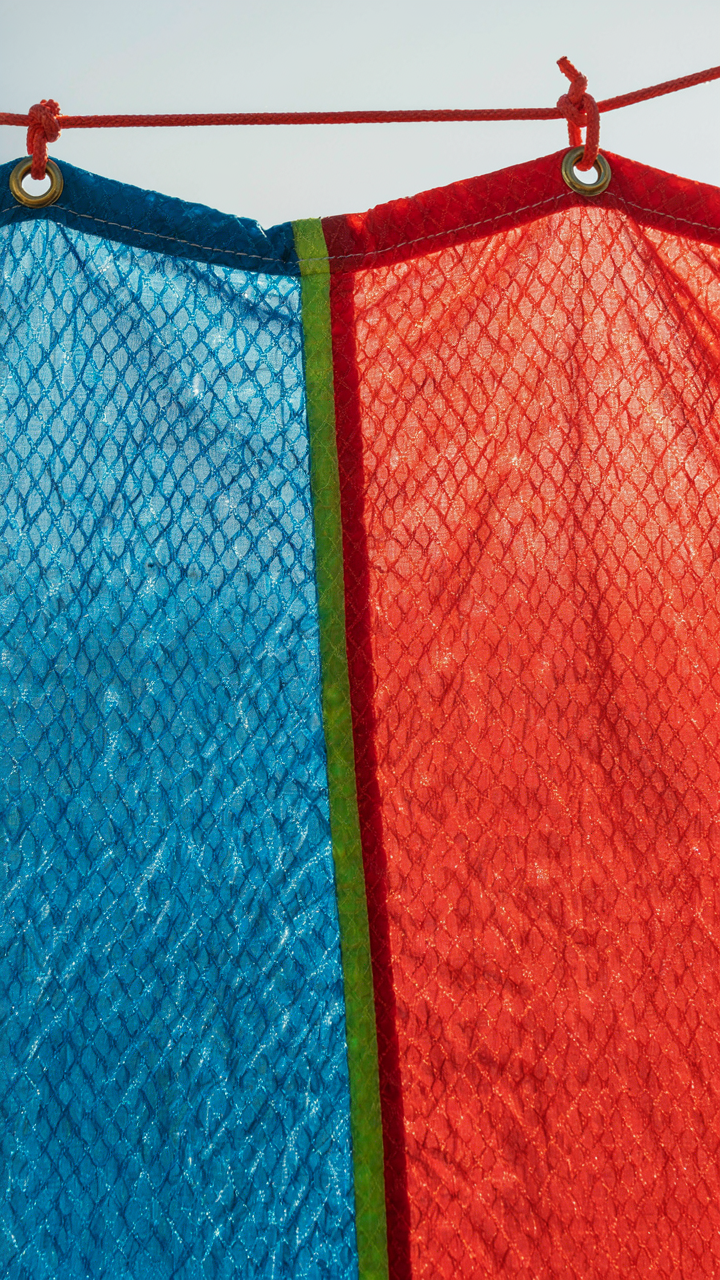
You want to believe natural fibers work because they feel premium and sound better at dinner. Here’s the mechanism: synthetic fibers like polyester and nylon have hydrophobic polymer chains that actively repel water molecules away from your skin. Cotton absorbs moisture and holds it, trapping heat against your body. For tall men in heat, this matters because your surface area means more total sweat production and longer distances for evaporation to travel.
Merino wool is the only natural fiber worth debating because lanolin in the fiber naturally wicks and regulates temperature. But even Merino wool’s moisture transport is slower than polyester’s capillary action. Most hiking brands blend synthetics as the base layer for a reason: speed of moisture movement away from skin directly correlates to core temperature regulation. When you’re tall and hiking in heat, your body generates significant thermal load. Pick polyester-nylon blends over cotton or pure Merino every time.
The Protection Ratings That Actually Matter
UV protection gets branded as UPF numbers, but the physics of protection cuts deeper. UPF measures ultraviolet light absorption, and fabric density determines how many photons reach your skin. A UPF 50 shirt blocks roughly 98 percent of UVB rays, but tight weaves matter more than the rating itself. Breathability ratings like MVTR (moisture vapor transmission rate) measure grams of moisture transmitted per square meter per 24 hours. Higher MVTR means faster evaporative cooling, which tall men need because heat distributes across larger body mass.
Look for synthetic base layers with MVTR above 10,000. Real breathability happens at the yarn level, not the marketing claim. Tightly woven polyester blocks UV but traps heat if the weave is too dense. You need open-weave synthetics that balance UPF 50 coverage with MVTR performance above 8,000. The mechanism is simple: choose materials engineered for water vapor speed, not just UV stopping power. Test a fabric’s breathability by holding it to light and seeing how much space exists between yarns.
The “Armored Skeleton” Strategy For Upper Body Trek Outfits Men
Where Air Actually Moves On Your Shirt
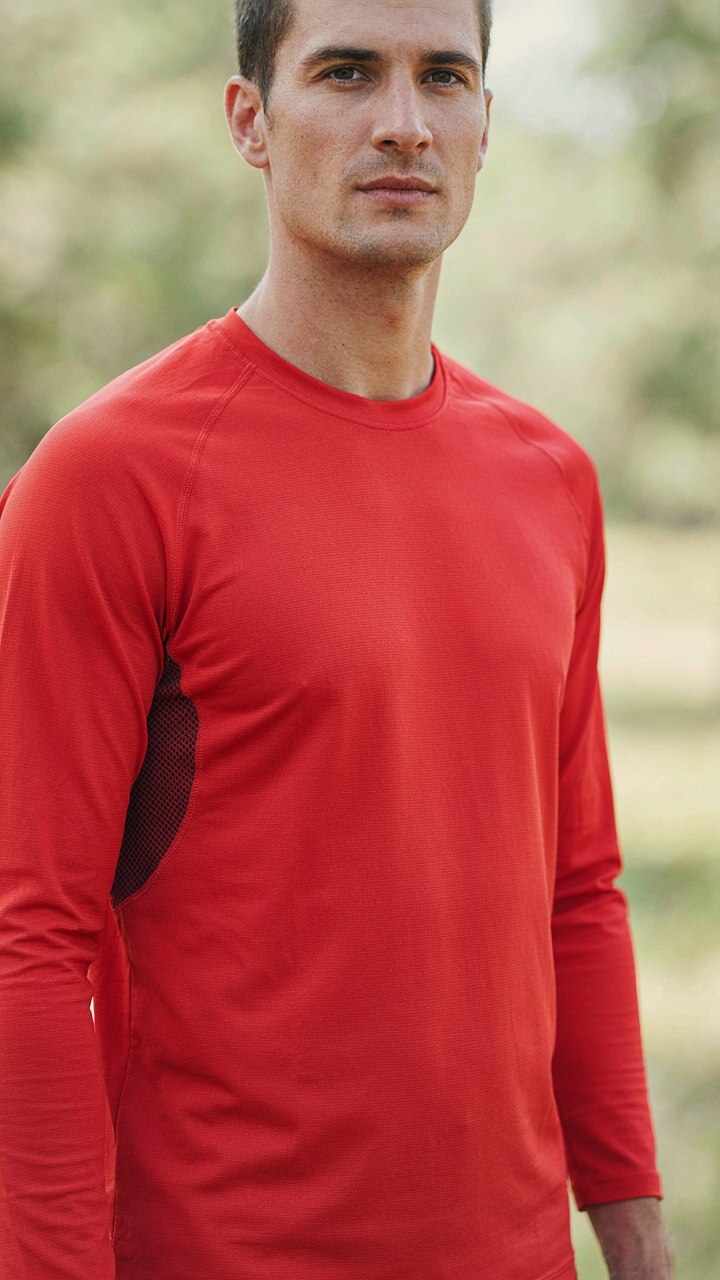
You want people to think you chose long sleeves for sun protection. The real reason you care is that short sleeves make tall men look proportionally thinner and expose too much arm real estate to UV damage. The mechanism here borrows from fluid dynamics: air doesn’t move uniformly across fabric. It accelerates through gaps and slows in dense areas. Strategic ventilation punches holes in high-heat zones, forcing faster airflow exactly where your body dumps the most sweat and generates the most friction against the pack.
Most outdoor brands sell “ventilated” long sleeves with token mesh panels that do nothing. Functional ventilation requires openings on the side torso where your ribs sit, under the armpit, and along the back shoulder blade area. These zones contact pack straps and generate trapped heat pockets that regular fabric can’t escape. Look for construction where mesh inserts run from armpit to hip, not scattered across the chest like decoration. This creates an actual air channel that works whether you’re moving or stopped.
Neckline Design That Blocks Sun And Moves Air
The collar serves two jobs that most hikers treat as one. A low or open neckline cools faster but exposes your neck and collarbones to direct UV. A high collar protects skin but traps heat around the throat and shoulders. The answer isn’t compromise; it’s staged protection. The neckline should sit just below your collarbone with a cut wide enough that it doesn’t press against your neck when you move your head forward into a hiking posture.
Fabric weight matters more than shape here. A thin, tight collar restricts airflow completely. A loose collar with breathable mesh backing lets air circulate while the fabric’s interior face blocks UV reflection. Look for shirts where the collar itself is constructed from a different material than the body, specifically a blend that dries fast and feels lightweight when wet. This prevents the collar from becoming a wet band around your neck on long climbs where sweat peaks.
Lower Body Leverage: Redefining Hiking Shorts And Mens Bottom

Inseam Length And Stride Geometry
You want shorts that don’t ride up because you’re tired of looking like you’re perpetually wading through water. The mechanism is simple: stride length scales with leg length, and standard shorts don’t account for this. A tall man’s natural hiking gait requires inseam length that clears the back of the knee by one to two inches when standing. Anything shorter creates friction at the hamstring and forces compensation through the hip, burning energy you need for elevation gain.
Chafing prevention isn’t about baggy fabric. It’s about proper stride alignment. When inseam is too short, your leg extends beyond the fabric’s coverage zone on each step. Moisture collects in dead space between skin and shorts. Choose inseam lengths between 7 to 9 inches for most tall frames, then test one full hike before committing to a brand. The shorts should move with your leg, not against it.
Pocket Strategy Without Dead Weight
The cargo short industry markets function through visual noise, not through actual utility. Real pocket placement follows load-bearing mechanics. Front pockets sit too low for frequent access on steep terrain and create bunching at the quad. Side thigh pockets work only if positioned above mid-thigh, where they don’t interfere with your stride or catch fabric when you’re moving through brush.
Most tall men need exactly three functional pockets: two front for keys and phone, one rear for emergency items. Cargo pockets on the leg add weight where it matters most for balance and tire your legs faster over distance. Look for shorts with reinforced side access points instead of dangling utility fabric. Test pocket depth before buying, since shallow pockets spill contents on descents.
The “Hydraulic System” Of Footwear And Socks For Hiking
Impact Absorption Starts With Foot Strike
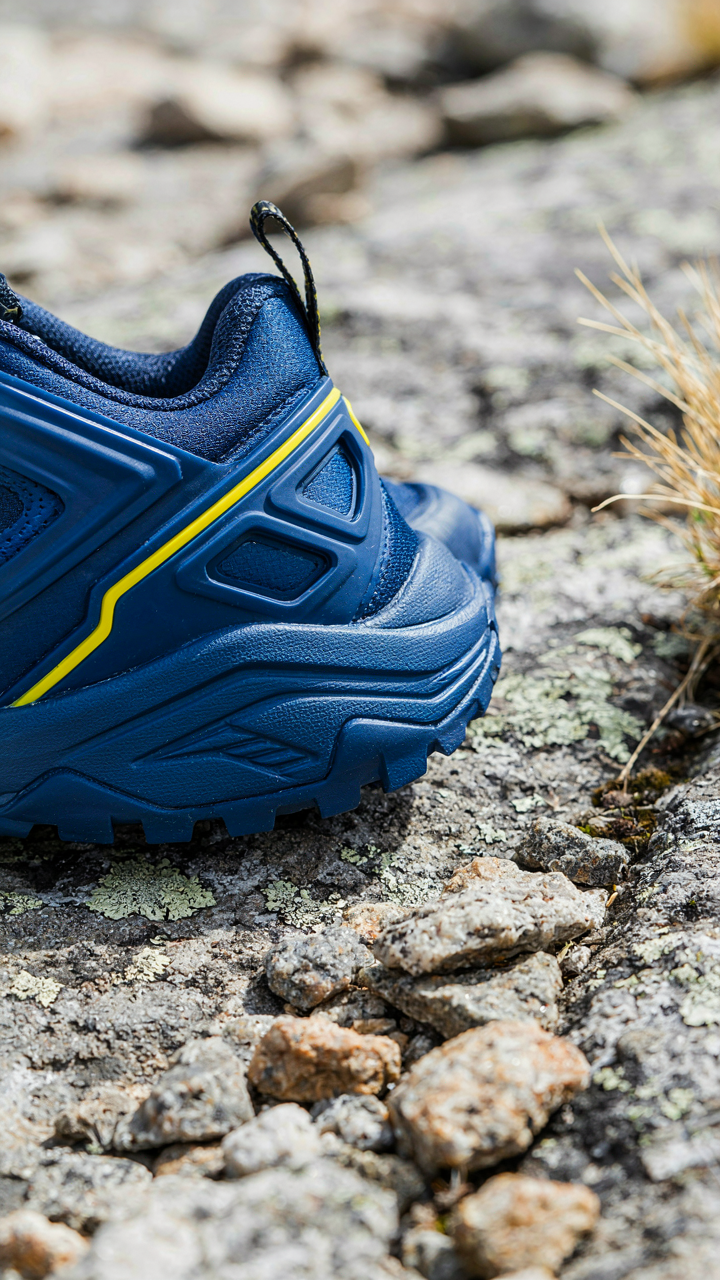
You’re worried about blisters and joint pain killing your hike halfway through because you think better shoes solve it, but they don’t. Biomechanics reveals the real lever: ground reaction force travels up your leg in milliseconds, and tall men absorb more of it due to longer limb length and higher center of gravity. A standard hiking boot won’t fix poor load distribution. You need a midsole that decelerates impact gradually rather than one that compresses instantly then releases all force at once. The difference is material density and cushioning placement, not brand marketing.
Gait efficiency for tall hikers requires specific midsole architecture. Stiffer midsoles under the arch reduce the work your foot’s intrinsic muscles perform on uneven terrain. This matters on hot days because overworked muscles generate excess heat and fatigue. Choose boots with medial posts or reinforced arch support if you weigh over 185 pounds. On descents, a firmer heel cup prevents your foot from sliding forward into the toebox, which causes friction and blister initiation before sweat even becomes a factor.
Sweat Creates The Blister Mechanism
Blister prevention isn’t about keeping feet dry—that’s impossible in heat. Fluid dynamics explains the real problem: when sweat accumulates between sock and skin, it reduces friction coefficient, allowing micro-movements that shear the epidermis. Your sock material determines how quickly moisture wicks away from the skin surface. Merino wool and synthetic blends move sweat outward and upward into the boot’s interior, where air circulation can evaporate it. Cotton absorbs moisture and holds it against your skin like a compress.
Select socks with high nylon or polyester content paired with moisture-wicking bases. Tall men hiking in heat need sock thickness of 1.5 to 2 millimeters—enough to cushion without trapping moisture in dense fibers. Double-layer construction works: a thin synthetic liner against skin, a thicker wool or blend outer layer. This protocol moves sweat away before pressure points break down, not after.
The “Shadow Caster” Protocol: Headwear And Eyewear For Hiking Outfit For Men
Wide Brimmed Hats Maximize Shade Footprint
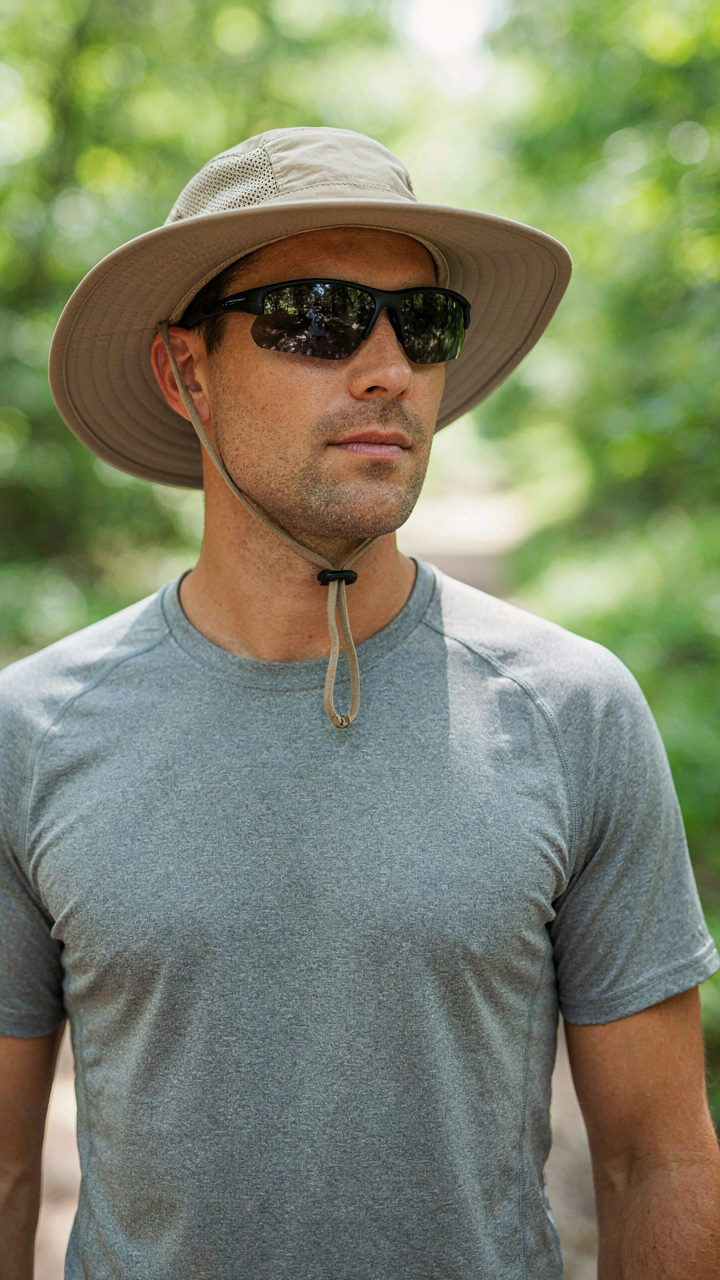
You want the hat to do the work so your face doesn’t have to earn a sunburn. The mechanism here borrows from solar geometry: the shadow you cast depends on brim diameter and angle relative to the sun’s position. A standard baseball cap creates a shadow zone roughly six inches forward. A wide-brimmed hat (three to four inches all around) extends that shadow to your ears, neck, and shoulders simultaneously. Tall men often skip this because proportions feel off, but a seven-foot frame actually justifies larger hat dimensions without looking costume-like.
The material matters less than the coverage math. Cotton, nylon, or wool blend hats all block UV equally well. What changes is weight and moisture handling. A ventilated crown keeps your head from becoming a heat sink during long climbs. The brim should be stiff enough to hold shape in wind but flexible enough to pack without permanent creasing. Wear the hat forward during morning climbs when the sun is low and anterior, then rotate it backward during midday when overhead exposure dominates.
Polarized Lenses Cut Glare And Eye Strain
Glare off rock and water isn’t an aesthetic problem, it’s a performance drain that compounds fatigue. Optics terminology here: polarized lenses filter light waves vibrating on a single plane, which is how glare behaves when it bounces off flat reflective surfaces. A tall man hiking in bright conditions experiences this intensified because his eye line often angles upward toward peaks and sky, capturing more reflected light than shorter hikers at ground level would see.
Non-polarized sunglasses reduce brightness uniformly. Polarized lenses specifically target the reflection component, meaning your eyes work less hard to process visual information on high-altitude terrain. This isn’t comfort, it’s efficiency. Your eyes fatigue less, which means your nervous system doesn’t drain parasympathetic reserves maintaining pupil adjustments over eight hours. Choose a frame wrap that covers the orbital ridge, not just the front view. This blocks side-angle reflection that sneaks past standard rectangular frames during steep lateral traverses.
The Minimalist Carry: Backpacks And Accessories For Camping Outfit For Men

Weight Distribution For Tall Frames
You want to believe a bigger pack works fine on a bigger body. It doesn’t. The physics of load bearing shows us that torso length, not height, determines pack fit, and most tall men have disproportionately long legs. A pack sized for average frames sits too low on your spine, forcing your hips to absorb weight meant for your shoulders. This turns a day hike into a lower back punishment session.
Pack torso length matters more than capacity. Measure from the base of your skull to the top of your hip bones while standing, then match that number to pack specs, not your shoe size. Tall men typically need 20-22 inch torsos instead of the standard 18-20. Undersized packs waste energy and leave you sore.
Hydration System Setup And On Trail Access
- Bladder Positioning: Mount hydration behind the pack panel against your back, not hanging loose inside. This keeps weight centered and prevents the bladder from shifting during climbs or rock scrambles.
- Tube Length and Routing: Run the tube along the shoulder strap on your dominant side so your arm doesn’t have to reach backward. Tall men with longer arms need extended tubing, around 40-50 inches, to avoid constant reaching.
- Quick Release Placement: Position the bite valve at mid-chest level when wearing your pack. Test this before the hike by walking in your loaded pack and grabbing the valve without looking down.
- Insulated Sleeves: Use a neoprene sleeve on the bladder itself in hot weather. This slows ice melt and keeps water temperature lower during full-sun exposure on exposed trails.
- Bladder Capacity for Heat: Carry 3-4 liters minimum on hot weather hikes. Standard 2-liter bladders force you to resupply too often, which breaks rhythm and increases dehydration risk during critical midday hours.
Integration beats convenience every time. Most hikers clip water bottles to pack exteriors where sun exposure warms them fast and weight distribution goes wrong. A properly secured bladder against your back stays cooler, distributes evenly, and stays accessible without removing your pack. Before you hike, load water, wear your pack for ten minutes around your neighborhood, and practice reaching the valve while moving.
Post Hike Recovery: Extending The System’s Efficiency

Shift Into Lower Core Temperature Immediately
You’re worried the hike will ruin your physique or that you’ll look like you just survived something. Here’s what actually happens: your core temperature stays elevated for hours after you stop moving, which accelerates dehydration and muscle breakdown. This is thermoregulation—the biological system that controls heat dissipation. For tall men, surface area works against you; you overheat faster and cool slower because your body has more perimeter to manage relative to core mass.
Stop moving into shade the moment the hike ends. Strip the damp outer layer immediately. Switch into a loose, dry, light-colored shirt made from cotton or linen—materials that wick residual sweat without trapping heat. Tall men need longer garments to avoid waistband gaps, so prioritize fit over fashion. This isn’t about comfort; it’s about stopping the thermal damage cycle before it compounds into inflammation and extended recovery.
Electrolytes Override Plain Water
The consensus says drink water. That’s incomplete. Your body loses sodium, potassium, and magnesium during prolonged exertion in heat, and water alone dilutes blood sodium further, triggering cramping and reduced plasma volume. Tall men hiking in hot weather lose more total electrolytes because they generate more sweat volume—the deficit scales with body mass.
Consume an electrolyte solution within 15 minutes of finishing the hike. Target 300-500mg of sodium, 100-200mg of potassium, and carbohydrates to restore glycogen. This is non-negotiable if you hiked longer than 90 minutes or in temperatures above 85 degrees. Skip the energy drink marketing and read the label for actual sodium content. Replenish electrolytes before thirst signals spike, which means you’re already behind on fluid status.
Your Comfort Isn’t A Sizing Problem; It’s A Design Flaw. Recognize The System, Master The Elements
The apparel industry built sizing around average bodies, then charged you the same price while pretending your frame doesn’t exist. Stop waiting for brands to fix this. Grab one item today—a tall-specific base layer, shorts that actually clear your knees, or socks engineered for distance—and feel the difference. That single upgrade rewires how you think about gear. Your height isn’t the problem you’re solving; it’s the advantage the right outfit finally lets you keep.