

The Sweat Wicking Imperative: Beyond Cotton Casualties
Synthetic Versus Merino: Trade Offs That Matter
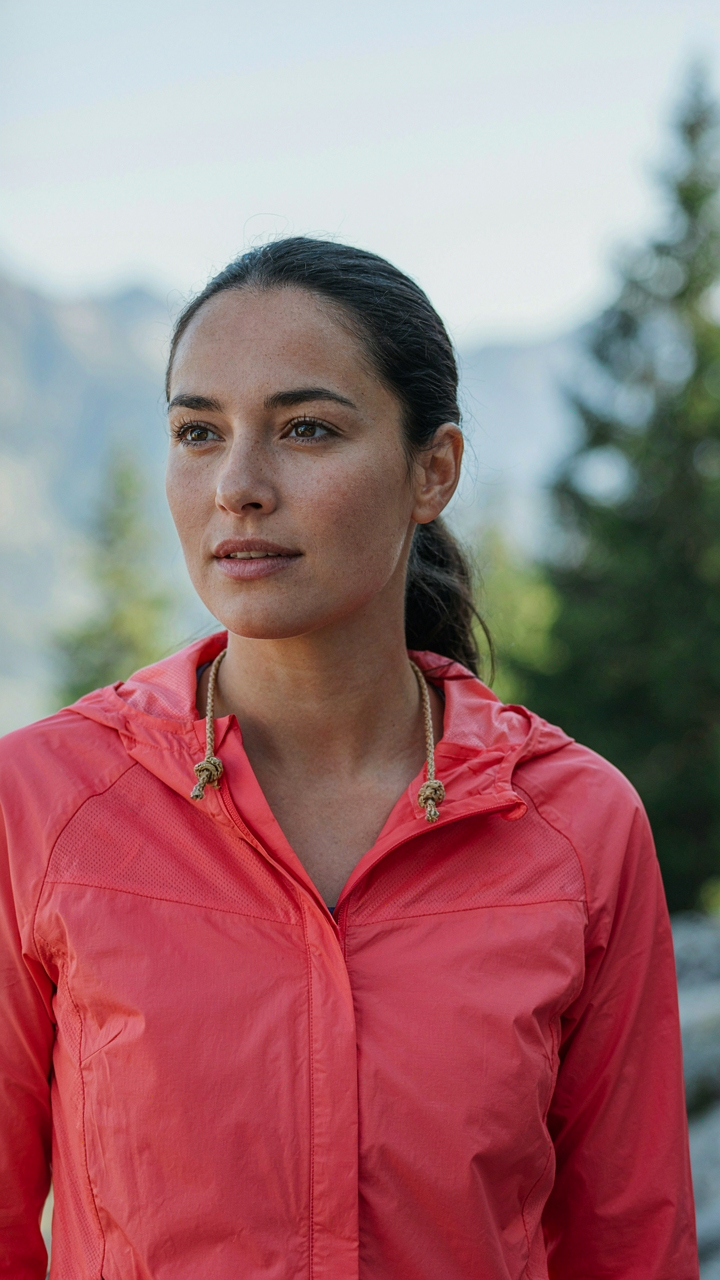
You want the “right” fabric so you can stop thinking about what you’re wearing and focus on the trail. That’s not how this works. Cotton kills because it holds moisture against your skin and dries slowly. Synthetics like polyester and nylon shed sweat fast and dry in hours. Merino wool regulates temperature and resists odor but costs more and requires specific care. Each fails differently in heat. Pick based on your actual conditions, not comfort theater.
Synthetics excel at evacuation speed but trap heat if you stop moving. Merino breathes better during rest but takes longer to dry completely when soaked. Neither is objectively superior. A solo female hiker in desert heat needs fast evaporation during movement. A trail in humid forest demands temperature modulation during static breaks. The mechanism: fabric structure determines how quickly moisture leaves your skin. Faster evaporation equals lower core temperature. Test your specific choice for at least two hours before committing to a multiday hike.
How Fabric Actually Cools Your Body

Physics governs this, not marketing. Evaporative cooling removes heat through the phase change of water from liquid to vapor. Your sweat doesn’t cool you by sitting on your skin. It cools you by leaving your skin. Fabric determines the rate of departure. Tight weaves slow evaporation. Loose weaves accelerate it. Dense synthetic materials channel sweat outward and away faster than absorbent fibers that hold moisture in their structure.
Merino wool moves sweat away from skin but retains it within the fiber itself, creating a thermal buffer that works during temperature swings. Synthetics reject moisture entirely, which accelerates evaporation but offers no insulation if conditions drop. The real decision: do you need a moisture barrier that also insulates, or do you need pure evaporative speed? Hot weather demands the latter. Choose a synthetic weave loose enough to allow vapor to escape but tight enough to prevent chafing. Test the fabric by wetting it under running water and observing how quickly it releases the water without pooling.

The Sun’s Betrayal: UPF Ratings As Your Armor

Understanding UV Protection Factor
You want the sun protection number to mean something because the alternative—admitting UV damage happens invisibly and you can’t feel it—is uncomfortable. Here’s the mechanism: UPF (Ultraviolet Protection Factor) measures how much UV radiation a fabric blocks before it reaches your skin. UPF 50 means the fabric allows 1/50th of UV rays through. UPF 50+ allows 1/50th or less. The rating assumes specific fabric weight, weave density, and wet conditions. A wet UPF 50 shirt performs worse than a dry one. Most hiking brands test dry fabric only, which is why you’ll notice sun exposure accelerates on sweaty, damp skin.
The common advice stops at “wear UPF clothing.” That’s incomplete. Not all UPF ratings hold after washing. Synthetic blends (polyester, nylon) retain UPF longer than natural fibers. Darker colors block more UV than lighter ones, but light colors reflect heat better—forcing a trade-off you have to make deliberately. Cotton provides almost no UPF protection, even when thick. For solo female hikers covering long distances in direct sun, synthetic UPF fabric is non-negotiable, not optional.
Strategic Coverage For Exposed Skin
This section borrows from ballistic protection logic: coverage density determines outcome. A single exposed patch defeats the entire system. On exposed skin during hot weather hiking, you face three vulnerable zones: face and ears, the back of your neck, and the V-zone on your chest and upper back where pack straps gap. These areas experience direct, unfiltered sun for hours and suffer the fastest cumulative damage.
UPF sleeves (even lightweight, breathable ones) reduce arm exposure dramatically. Long sleeves keep forearm skin intact, which matters because forearm damage accelerates visible aging. Neck gaiters or lightweight buffs rated for UPF provide dual function: sun blocking and sweat management. Hats with a full back panel protect the neck line where hat brims end. The final step: apply sunscreen only to the gaps UPF clothing doesn’t cover—face, ears, hands, tops of feet. This focused approach prevents the contradiction of wearing protective clothing while neglecting the zones that actually burn.
The Layering Fallacy: Optimizing For Heat Management
Minimal Layers Beat Gear Stacking
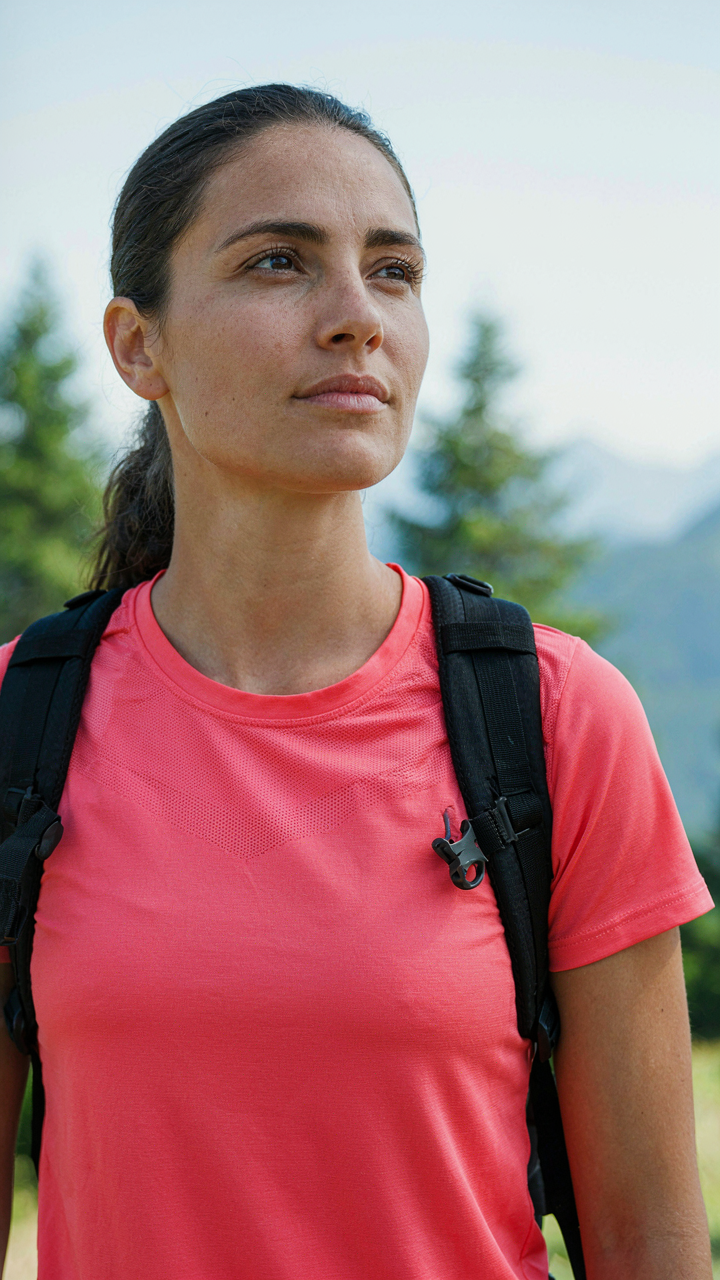
You want to believe layering solves everything because it makes you feel prepared. It doesn’t. Thermodynamics doesn’t care about your peace of mind. In heat, your job is shedding capacity, not building it. The standard advice of base layer plus insulation plus shell wastes body heat and adds dead weight. Solo female hikers need to move fast. You strip down to one lightweight, moisture-wicking layer and carry one wind barrier you can tie at your waist. That’s it. Temperature swings on trail happen gradually enough that your body adapts faster than you can change clothes anyway.
The real mechanism is evaporative cooling. Sweat on skin does nothing without airflow. Stacking layers traps moisture against your body and kills the cooling effect entirely. Your core temperature climbs. Fatigue sets in early. Instead, wear a single fitted base layer in merino wool or synthetic that actively moves sweat off your skin. When air temperature drops five to ten degrees, your body’s own heat production during hiking covers the gap. You only deploy your wind layer if you stop moving or if precipitation actually arrives, not preemptively.
Ventilation Zones Over Coverage
Airflow isn’t a design detail, it’s your primary defense mechanism against overheating. Strategic gaps in your outfit let heat escape from high-output zones. Your back generates most metabolic heat during climbing. Your armpits and inner thighs create friction zones where moisture pools. Cover the exposed areas that catch sun exposure directly. Leave the heat-generating zones open or use fabrics with mesh panels that maintain UV protection without trapping air. This approach requires deliberately choosing pieces with ventilation architecture, not just buying “breathable” stuff and hoping.
Your shorts need an inseam that lets your thighs separate from fabric. Your top should have mesh or cutouts along the sides and back, or you should size up one size so fabric sits away from your skin. Ventilation works only when air actually moves through the gap. Tight fitted shirts suffocate you in heat. The protocol: pick a base layer, verify it has mesh panels on the back or pit area, then pair it with high-inseam shorts that let your legs breathe independently during the entire hike.
The Footwear Formula: Preventing Blister Warfare On Summer Hike
Boot And Shoe Material Selection For Heat
You’re worried about your feet because blisters end hikes, and ending a hike alone means dealing with pain solo. The mechanism here is thermal transfer: materials that trap heat accelerate moisture accumulation, which breaks down skin integrity faster. This is basic thermodynamics applied to your foot environment.
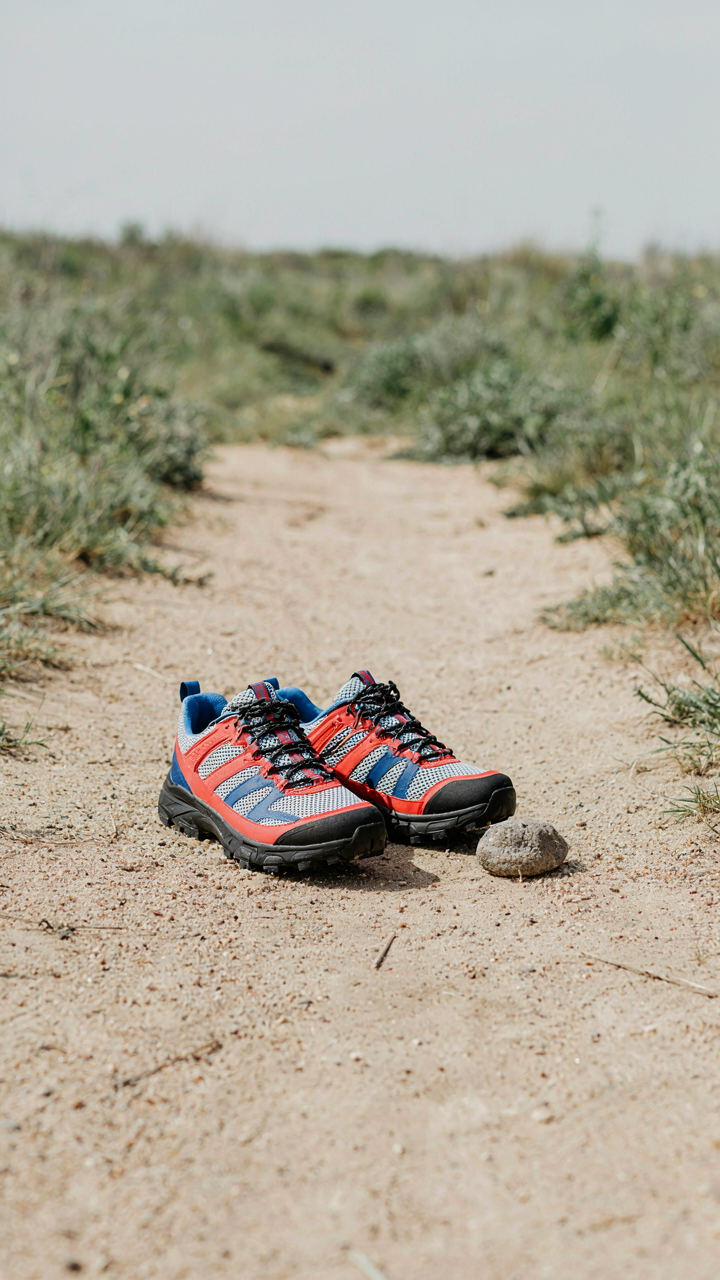
Synthetic uppers and mesh dominate hot weather hiking boots for one reason: they allow airflow that cotton and leather cannot match. Mesh breathes. It moves heat away from skin rather than holding it like a greenhouse. Leather stays fashionable in marketing but fails in summer. Gore-Tex and similar membranes create a paradox—they block water while claiming to breathe, yet they still trap some heat that builds over six hours on trail. For solo female hikers in sustained heat above 85 degrees, unlined mesh with minimal synthetic overlay outperforms every “premium” option. The insole matters equally. EVA foam in midsoles compresses under heat, losing support structure. Firmer foam resists this degradation. Test your boot by pressing the heel firmly—if it bottoms out easily, heat and time will flatten it further, shifting your weight distribution and creating friction zones where blisters form.
Sock Strategy: Moisture Wins The Battle
Stop believing that thicker socks prevent blisters. Thickness is irrelevant. Moisture management is everything, and moisture is a physics problem. Wool and synthetic blends outperform cotton because they wick moisture away from skin contact, moving it to the sock’s surface where evaporation occurs. This is the core mechanism: blisters form where skin stays wet, not where socks are thick.
Merino wool or acrylic-nylon blends keep your skin drier than any other option. Merino specifically regulates temperature and resists bacterial growth, which matters on long days. Sock weight should be ultralight or midweight, never heavy. Heavy socks trap more moisture against skin. The fit matters more than material: socks that bunch, wrinkle, or bunch at the heel create pressure points where friction accelerates blister formation. Replace your socks every eight to ten miles on sustained heat hikes, especially on solo trips where you control the pace. Carry two pairs minimum. One pair goes on your feet; the other dries in your pack. This rotation keeps moisture low and prevents the exact friction pattern that turns your heel into a open wound at mile fifteen.
The Hydration Harness: Gear Integration For Hot Weather
Vest And Pack Systems For Accessible Hydration
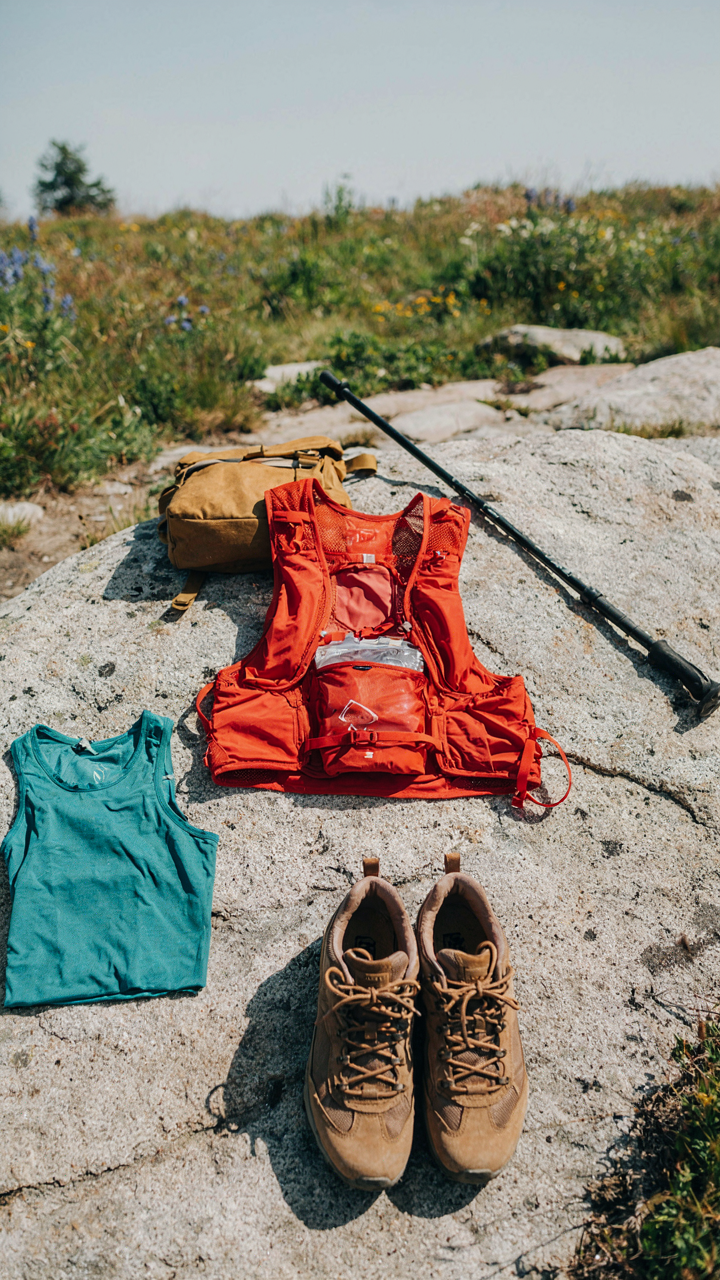
You want a system that doesn’t require you to stop, dig through your pack, and lose momentum. That’s the real driver here. Hydration vests distribute weight across your torso and chest instead of hanging it all on your shoulders, which matters in heat because your core temperature rises faster when pack straps cut circulation to your shoulders and back. A vest with a 1.5 to 2-liter bladder keeps water accessible without the bulk of a full backpack.
Hip belt packs work differently. They sit low and forward, letting air reach your back, which aids cooling through evaporation. The tradeoff is capacity. Choose a vest for longer routes where you need more water storage. Choose a hip pack for shorter routes under two hours where weight matters more than total volume. The mechanism is simple: accessible hydration beats optimal hydration when you actually drink because you don’t drink what requires effort to access.
Electrolyte Balance And Performance Stability
This is where most advice fails. People say “drink water,” which is incomplete. Physiology from endurance sports tells us that plain water dilutes blood sodium levels during sustained exertion in heat, triggering hyponatremia—a condition that kills performance and causes confusion and nausea. Your body cannot sustain effort when electrolytes drop below the threshold your muscles need to contract.
Sodium retention matters on hot hikes. Your sweat rate in heat climbs to 1 to 2 liters per hour depending on effort and humidity. Without electrolytes, you replace fluid volume but not the minerals your muscles burned. Pack an electrolyte mix with sodium, potassium, and carbohydrates. Consume it on a schedule, not thirst. Most solo female hikers skip this and wonder why they bonk at mile six instead of mile twelve.
The “Trail Outfits” System: Aesthetics As A Secondary Trait
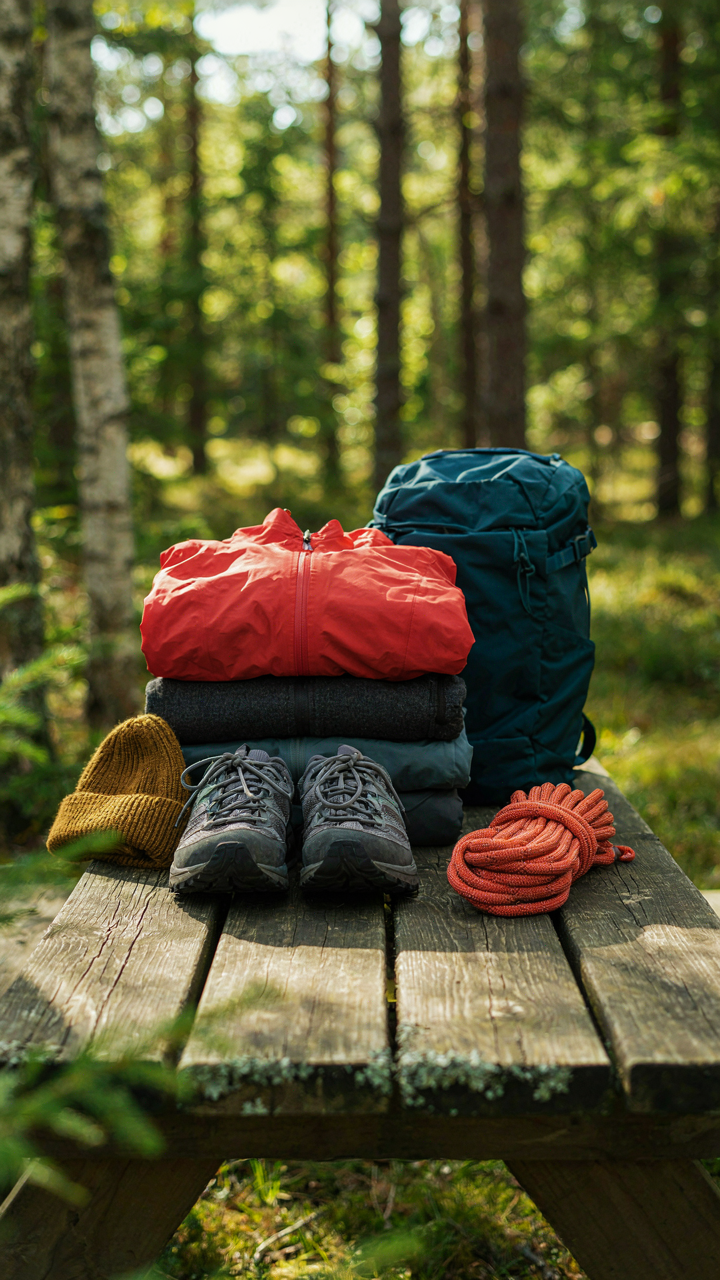
Function Over Trend Aesthetic
You want your outfit to look intentional on the trail because you’re worried about appearing incompetent or unprepared. Here’s the mechanism: gear serves a physical purpose first, and the moment you optimize for how it looks instead of how it performs, you’ve introduced failure points into a system where failure costs energy or safety.
The common advice flips this backward. Most hiking content targets women by leading with color coordination and “cute” layering combinations. This is wrong. Your outfit solves problems: UV exposure, sweat management, temperature regulation, visibility in emergency situations. These functions demand specific fabric properties, fit specifications, and material choices. Aesthetics emerge as a natural byproduct of solving these problems correctly, not the other way around.
Material Durability Over Replacement Cycles
Durability in textile engineering means resistance to repeated stress and environmental degradation. Solo female hikers face a specific durability demand: your gear must survive frequent use without degradation because you’re replacing your own equipment with your own money, alone. There’s no group split.
Cheap synthetics pill after 8 to 12 hikes. Mid-range merino and nylon blends survive 40 to 60 hikes before noticeable wear. High-grade technical fabrics used in mountaineering apparel last 100+ hikes before functional failure. The math is simple: buy once, hike hard, replace when it actually fails. This eliminates the false economy of rotating multiple cheap pieces through constant replacement cycles. Invest in two to three core pieces that handle heat, moisture, and sun exposure. Wear them until they’re unusable. Then buy replacements.
The Unseen Threats: Insect & Abrasion Resistance
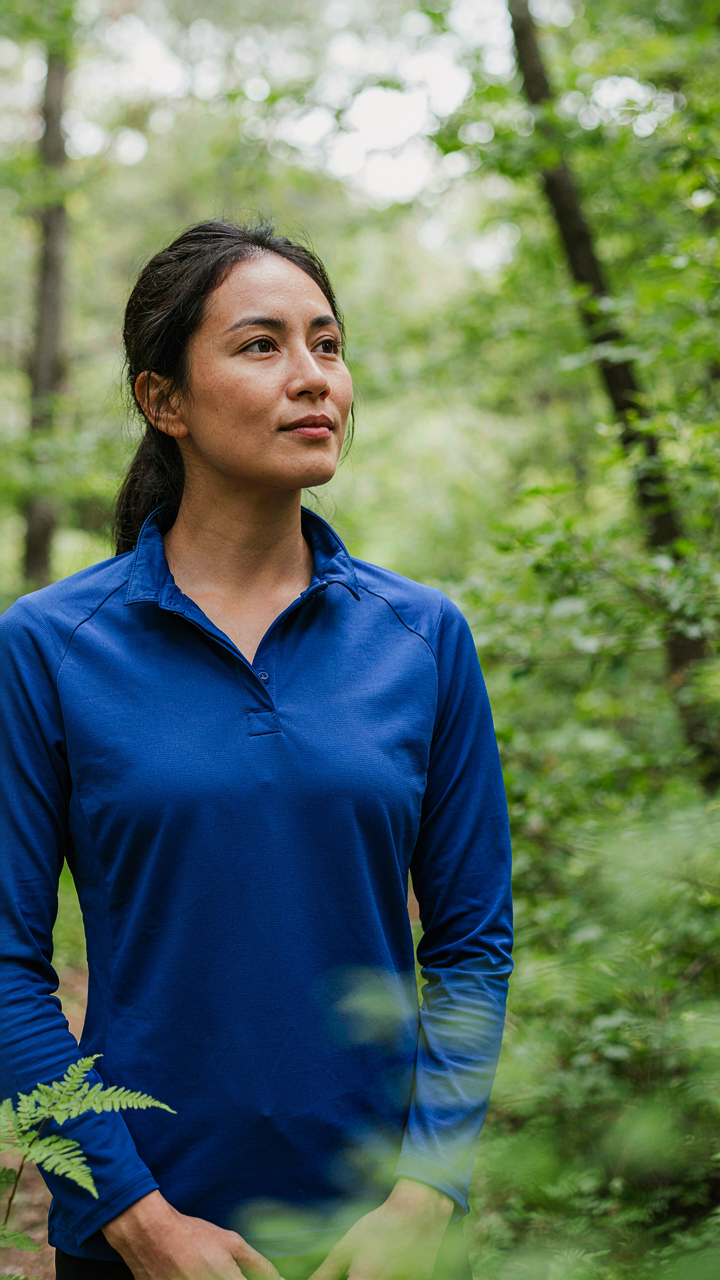
When Permethrin Becomes Your Perimeter
You want this section because you’re afraid of getting bitten or sick on a solo trip where nobody checks on you for hours. That’s the real motive. Here’s the mechanism: permethrin works like a chemical perimeter you establish before threats arrive, not a reactive treatment after. In biology, we call this prophylaxis—disease prevention rather than disease management. Permethrin treatment on fabric establishes a hostile zone insects won’t cross. Solo female hikers benefit most because you can’t rely on a partner to spot a tick or remove it properly.
Permethrin binds to fabric fibers and breaks the nervous system of ticks, mosquitoes, and mites on contact. Apply it to clothing, not skin. Pre-treat your base layers, socks, and hat before the hike. One application lasts through multiple washes. The compound degrades when exposed to sunlight, so retreat every 4-6 weeks if you hike frequently in peak season. This isn’t optional for tick-heavy regions—it’s infrastructure.
Weave Density And Thorns
The common advice about “wear long sleeves” misses the actual variable: fabric construction defeats thorns, not fabric length. A loose cotton weave tears easily. A tight synthetic weave with high thread count creates barrier geometry that thorns can’t penetrate. Nylon ripstop and densely woven polyester function like armor at the fiber level. Solo hikers need this because you make every decision about your route, your pace, and which overgrown trail you push through without group negotiation.
Tightly woven synthetics also dry faster than natural fibers, which matters when you’re wet from sweat or stream crossings in hot weather. Examine the fabric before buying—squeeze it and look for visible gaps. If light passes through easily, thorns will too. Pair high-density weave on outer layers with breathable mesh panels on the torso so airflow still reaches your skin. This balance prevents overheating while protecting your legs and arms where contact with brush happens most.
The Solo Female Advantage: Confidence Through Preparation
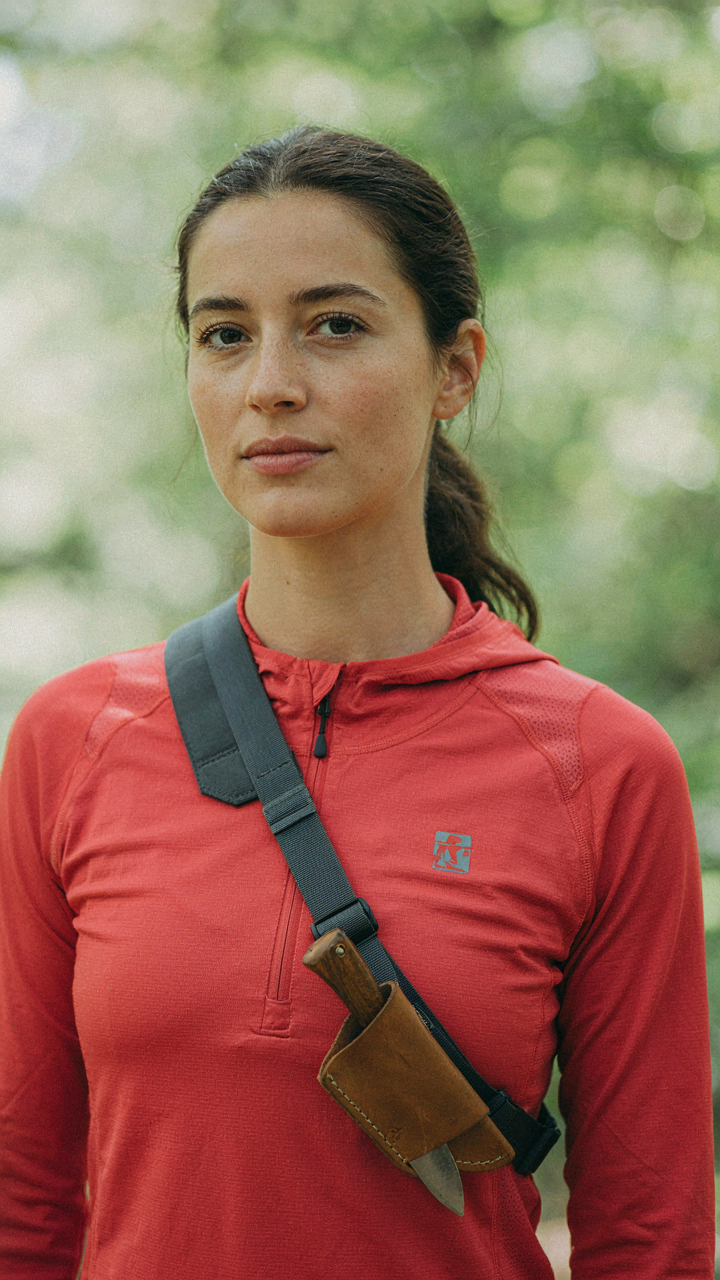
Build Safety Into Your Gear Choices
You want reassurance that you won’t be helpless if something goes wrong. The real mechanism is this: emergency items sewn into your outfit reduce decision fatigue in a crisis. You’re not scrambling through a pack while panicked. The gear is already on you.
- Chest Pocket Knife: A fixed blade in a chest harness stays accessible without reaching your pack. Size it small enough to not throw off balance but large enough to cut through rope or fabric.
- Whistle On Collar Loop: Attach directly to your shirt collar or shoulder strap. Three sharp blasts carry farther than your voice and don’t require breath control when fatigued.
- First Aid Patches In Arm Pocket: Pre-wrapped blister treatment and elastic bandages fit inside cargo pants or shorts arm pockets. Heat causes blisters faster than cold, making these essential rather than optional.
- ID Card In Collar Tag Pocket: Sewn-in pockets on technical shirts hold identification without bulk. If you collapse or go missing, rescuers find your name immediately.
- Emergency Contact On Sleeve: A waterproof label stitched to your sleeve lists your emergency contact. Sweat won’t fade it, and it’s visible to first responders before they dig through gear.
The outfit becomes your first line of defense, not your pack. You move through terrain with your hands free, your mind unburdened by “where is my knife,” and your body positioned to react. This isn’t paranoia. It’s the difference between a minor incident and a major one.
Move Freely, See Everything
Unobstructed movement isn’t comfort. It’s surveillance. From military strategy, we know that restricted range of motion narrows both your field of vision and your decision-making speed. Tight clothing forces your eyes down. Loose fabric catches terrain.
High-waisted, wide-cut shorts with thigh pockets let you see below your waist while hiking steep descents. You spot loose rock before your foot lands. You catch obstacles in your peripheral vision instead of discovering them through impact. Sleeveless or racerback tops eliminate fabric bunching at your shoulders, which means your arms rotate freely for balance on loose surfaces and your eyes track the path without your head compensating for restricted shoulder movement.
Confidence comes from knowing you can move in any direction without hesitation. The moment your leg can’t step sideways without your shorts binding, you’ve compromised your ability to escape uneven ground. The second your arm can’t swing freely to catch your fall, you’re operating one layer of function below optimal. Solo means you catch yourself or you don’t. Build your outfit for the movement your body needs, not the silhouette you think you need.
Beyond The Gear: Mental Fortitude For Hot Weather Hike Outfit

Your Brain On Heat
You want this section because you’re afraid your outfit won’t matter if your mind breaks first. Smart instinct. Heat stress operates like a feedback loop in thermodynamics: your core temperature rises, your cognitive function degrades, which causes worse decision-making, which leads to worse outcomes. Solo female hikers face an additional layer: you’re managing risk assessment while your brain is literally cooking. Most advice stops at “drink water” because that’s easy to say. The real mechanism is this: heat doesn’t just make you tired. It hijacks your prefrontal cortex first, the part that keeps you rational. You lose judgment before you lose energy.
Your outfit controls heat retention, but your mindset controls your response to discomfort. Accept that heat will feel worse than it is. Expect irritability, doubt, and the impulse to bail. This isn’t weakness—it’s your nervous system working correctly under stress. The mental shift that matters: treat discomfort as data, not a threat signal. When your legs burn or your chest tightens, you’re gathering information about pace, hydration, and remaining capacity. You’re not in danger yet. You’re collecting feedback. Solo hikers can’t defer this to a group consensus, so the assessment has to be precise and yours alone.
What Heat Exhaustion Actually Signals
Early heat exhaustion sneaks past most hikers because they’re watching for the dramatic signs. Dizziness and nausea are late-stage indicators. What matters is catching the threshold before your body shifts into crisis response. Self-assessment means knowing the progression and checking yourself against it every 30 minutes in extreme heat. Heavy sweating that suddenly stops is the real red flag. Nausea without obvious cause. Headache that ibuprofen doesn’t touch. Cold skin despite high external temperature. Confusion about simple decisions like which direction to turn. These are your body downgrading nonessential functions to preserve core temperature.
The protocol is straightforward: stop moving, find shade, measure your symptoms against the list above, then decide whether to continue or descend. Don’t negotiate with yourself about this part. Drink electrolyte solution or water with salt if you have it. Wet your core clothing or splash your neck and wrists where arteries run close to skin. Wait 10 minutes and reassess. If symptoms persist, descend. Solo hiking means you’re responsible for calling the turn that a group would make for you. Your outfit gets you partway there, but your assessment protocol gets you home intact.
Your True Obstacle Isn’t The Heat, It’s The Illusion That Safety And Performance Are External, Not Engineered From Within

You don’t need better gear. You need to stop treating your body like a passenger. The outfit works only if you commit to movement, hydration, and reading your own signals before the trail reads them for you. Pick one hike this week. Wear what makes sense. Pay attention to how your body responds. That feedback loop is your real teacher. Everything else is just cloth and delusion.