

The Thermoregulation Protocol: Not Your Grandma’s Summer Hike
Sweat Evaporation Maximization Strategies
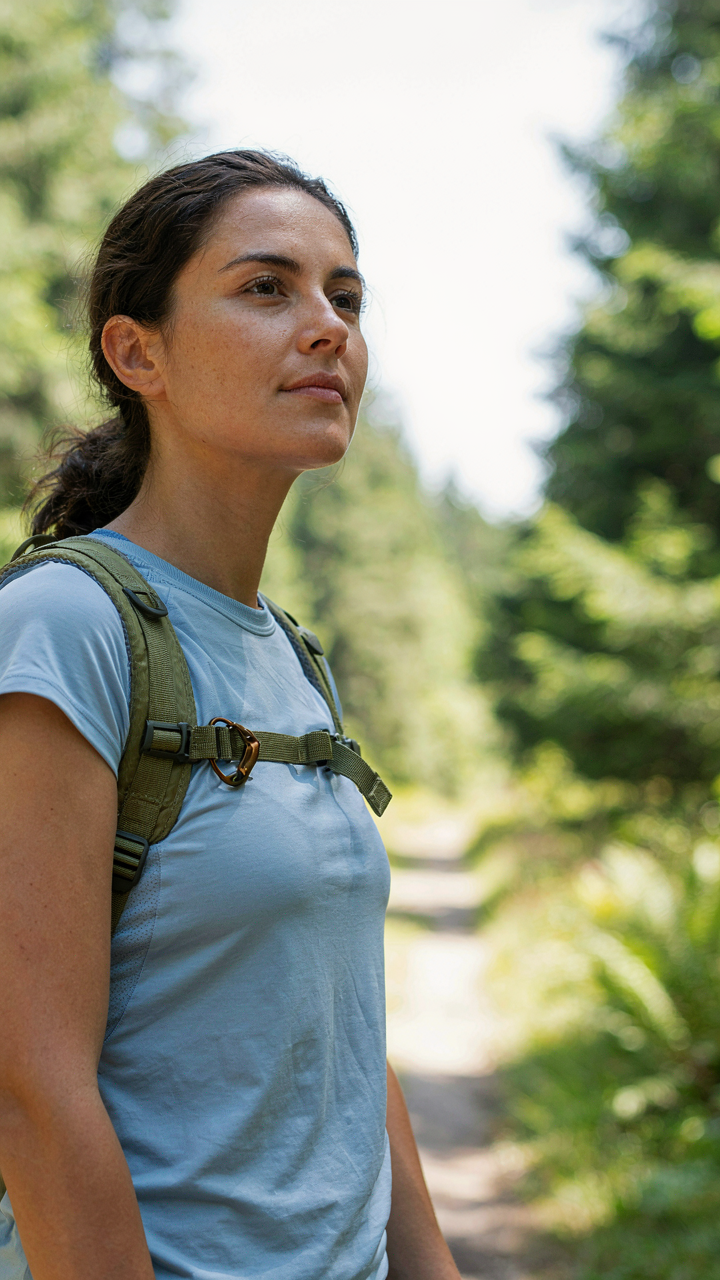
You’re reading this because you’re tired of overheating on trails while watching men in cotton t-shirts somehow function fine, and you want the technical answer nobody gives you. The mechanism is simple: evaporative cooling only works when sweat leaves your skin. Petite frames have less surface area to dissipate heat, which means your body reaches critical temperature faster than taller hikers on the same trail. You need fabric and fit designed for maximum airflow across your skin, not trapping moisture against it.
Most hiking guides tell you to “wear moisture-wicking fabric” and call it done. That’s incomplete. Moisture-wicking alone doesn’t cool you if the fabric clings to your body. You need loose construction that allows air to circulate while the fabric pulls sweat away from skin. On a petite frame, this means tailored fits designed for smaller dimensions, not men’s mediums scaled down. The fit must create micro-channels of air movement across your torso and limbs while staying secured enough that fabric doesn’t flap uselessly.
Fabric Choice And Capillary Action

Capillary action is the physics principle where liquids move through narrow spaces against gravity. In textile terms, it’s the fibers’ ability to pull moisture away from your skin and transport it to the fabric’s outer surface for evaporation. Petite women benefit most from synthetic blends with high capillary performance because smaller body volume means less thermal mass to cool down. Choose polyester blends or polypropylene over merino wool on extreme heat days because synthetics move moisture faster than wool can absorb it.
The common recommendation to pick “breathable” fabric misses the real requirement: you need high-velocity evaporation, not just air passage. A tight synthetic blend outperforms a loose cotton weave because the fibers actively move sweat outward. For petite frames hiking in temperatures above 85 degrees, prioritize 100% polyester or polyester-nylon blends rated for moisture transport speed, not general “breathability.” Check the fabric’s denier weight and weave pattern before buying, not after.

The Kinematic Efficiency Imperative For Petite Trail Outfits
Minimizing Friction Points, Maximizing Stride
You’re reading this because you suspect standard hiking fits waste your energy, and you’re right. Petite frames operate under different biomechanical constraints than average bodies, which is physics applied to clothing. Excess fabric bunches at joints, pooling energy instead of channeling it. Straps slip. Hems drag. Every redundant inch forces your legs to work harder on the same trail.
The real mechanism is simple: friction multiplies effort. A petite woman generates fewer absolute watts than a taller counterpart on identical terrain. She cannot afford loose architecture. Fitted shoulders, tapered sleeves, and strategic tapering at the torso eliminate the dead zones where fabric moves independent of your body. Seams should sit at your actual joint lines, not above or below them. This alignment reduces compensation patterns in your stride.
Unrestricted Movement, Heat Escape Channels
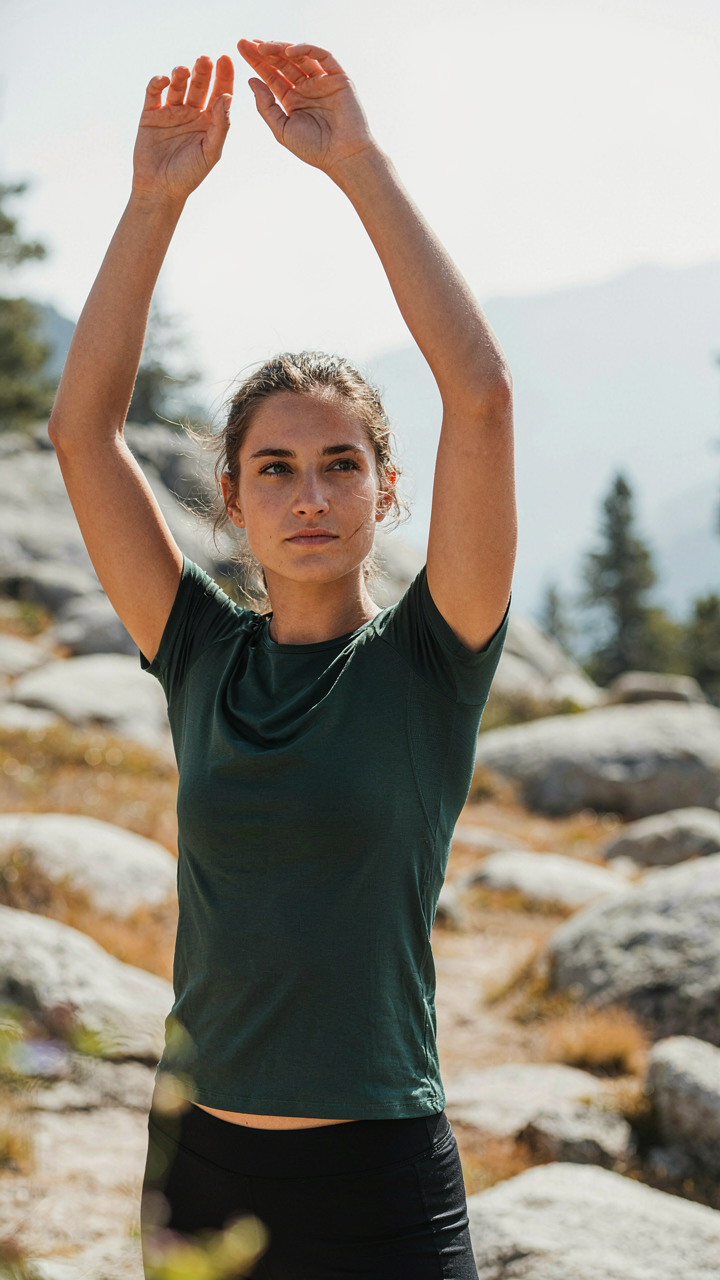
Most hiking outfit advice treats heat management and mobility as separate problems. They are not. Your shoulders and armpits generate the majority of metabolic heat, and standard fits bury those zones under fabric. Petite cuts that taper at the waist while staying loose through the shoulder and underarm create what biomechanists call “kinetic windows” – zones where air circulates without fabric binding.
Look for raglan or dropped-sleeve construction in lightweight materials. These designs pull the sleeve seam back and down, away from your shoulder joint, eliminating the compression point where most petite women experience restriction. The underarm should have unobstructed airflow. Your core stays cooler, your shoulders stay mobile, and your stride stays efficient. Test this by raising your arms overhead in the fitting room and taking three deep breaths. If fabric tension increases your breathing load, the cut is wrong for your frame.
Debunking The “Cute Hiking Outfit” Myth For Summer Hike

Performance Over Aesthetics Functional Reality
You want to look intentional on the trail because looking competent signals you belong there. Here’s the mechanism: thermal regulation on a petite frame operates on a surface-area-to-mass ratio disadvantage. Smaller bodies lose heat faster and gain it faster. This is basic thermodynamics. Your outfit either manages this physical reality or it fails. Aesthetics are noise.
Cotton breathes poorly and holds sweat against skin. Synthetic and merino wool move moisture away from your body, which is the only job that matters in heat. A fitted tank or sports bra with UPF matters because petite women have less fabric real estate to work with. Coverage gaps expose skin directly. Fit determines function on a smaller frame where standard cuts don’t account for your proportions.
Consequences Of Vanity On The Trail
Most advice tells you “wear what makes you feel good.” That’s incomplete. Vanity on the trail costs energy you need for actual hiking. Every poorly fitted strap that slips costs focus. Every cute but non-technical fabric that clings wet to your skin costs thermoregulation. Every hem that’s too long and drags costs stride efficiency. You’re burning calories fixing problems your outfit created.
Petite women hit a specific wall: brands size down but don’t redesign. A medium tank sized small still has armholes cut for standard shoulders. Straps gap. Hems bunch. You’re wearing clothes engineered for a different body type, which means you’re constantly micro-adjusting instead of moving efficiently. The trail doesn’t care about the aesthetic. It only cares about what your body can sustain. Start there, not with the photo.
The Weight To Benefit Ratio Of Gear: A Military Strategy

Every Ounce Counts On The Trail
You want to believe you’ll be fine carrying extra gear because you don’t want to admit that your body’s smaller frame means you feel the load first. Military logistics uses a concept called “load bearing capacity”—the maximum weight a soldier carries before performance degrades. For petite women, that threshold arrives faster and steeper than for larger frames. A 15-pound pack on a 5’2″ frame distributes differently than on someone 5’10”. The physics doesn’t care about fairness.
Stop accepting generic advice about “just bring what you need.” Most hiking recommendations assume average-height bodies. For you, every item either multiplies efficiency or becomes dead weight that compounds with heat and distance. The mechanism is simple: smaller body surface area means faster core temperature rise under load. You’re not being dramatic. You’re operating under different biomechanical constraints. Strip your load ruthlessly or accept that you’ll overheat, fatigue early, and quit the trail before your fitness would normally demand it.
Critical Gear Ranked By Necessity
Heat management is non-negotiable in hot weather. The items you carry must earn their place by solving the actual threats: dehydration, UV damage, overheating, and foot failure on unforgiving terrain.
- Water capacity and electrolytes: Petite frames dehydrate faster relative to body mass. Carry 2-3 liters minimum, even on shorter trails. Plan refill points. Electrolytes matter more than people admit because water alone doesn’t prevent hyponatremia on extended exposure.
- Lightweight sun protection: A wide-brimmed hat (under 3 ounces) and SPF layer beat sunscreen reapplication every hour. Neck and ears burn faster on smaller bodies with less thermal mass to dissipate heat.
- Fitted moisture-wicking base: Ill-fitting clothes pool sweat instead of wicking it. Petite-specific cuts prevent bunching that traps heat and creates chafe zones. Nylon blends dry 40 percent faster than cotton hybrids.
- Minimal foot protection: Lightweight trail shoes matter more than extra socks. Blister prevention beats blister treatment. Merino wool socks (one pair) compress smaller than cotton and regulate temperature better.
- Navigation tools: Lightweight GPS device or laminated map eliminates detours that waste water and energy. Wrong turns kill petite hikers faster on hot days because recovery windows shrink.
Ruthless prioritization means understanding that shelter, extra clothing, and cooking gear stay home on day hikes. Your pack weight target should be eight to ten percent of body weight maximum in heat conditions. Calculate your baseline, then remove everything that doesn’t directly combat heat, dehydration, or trail hazards specific to your route.
Hydration And Sun Protection: Beyond The Obvious For Hiking Outfit Women
Drink On Schedule, Not On Thirst
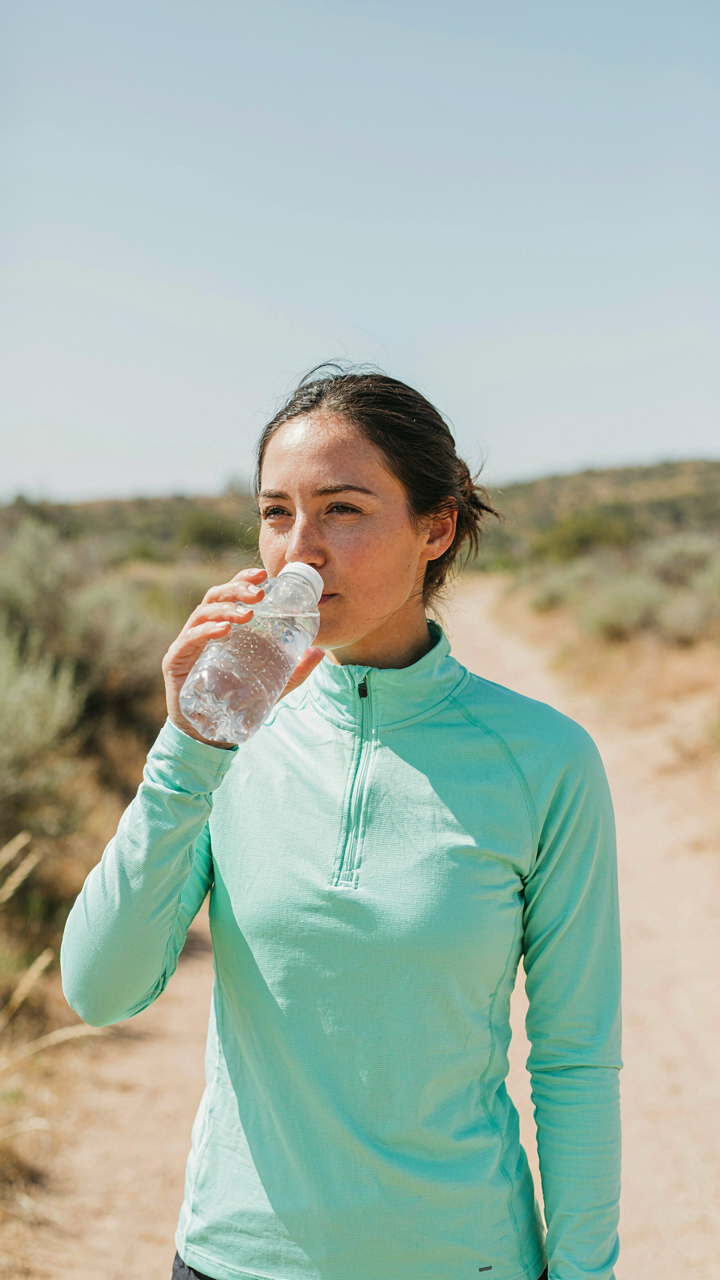
You think hydration is about carrying enough water. It’s not. You’re afraid of bonking on the trail, so you’ve convinced yourself that drinking when thirsty is fine. It isn’t, especially for petite women whose smaller body mass means dehydration compounds faster. The mechanism is simple: thirst signals you’re already behind. By then, your core temperature has started climbing, your sweat rate has already dropped, and your cognitive function has degraded without you noticing.
Strategic timing means drinking on a fixed schedule before thirst arrives. Most petite hikers function well on 150 to 200 milliliters every 15 to 20 minutes in true heat. Adjust for your exertion level and sun exposure, not your feelings. The goal is maintaining plasma volume so your body can regulate temperature through consistent sweat production. Start hydrating before the hike begins, not at the trailhead. A small amount 30 minutes before you leave ensures your baseline isn’t already depleted when you take that first step uphill.
UPF Fabric Blocks Before It Burns
UPF clothing works like a physical barrier, not a chemical one. Unlike sunscreen, which absorbs UV rays and converts them to heat, UPF-rated fabric reflects and scatters radiation before it penetrates. For petite women, this matters because your smaller surface area heats faster, making fabric selection a core temperature management tool, not an afterthought. Most hikers think sun protection is optional if they reapply sunscreen. That’s incomplete reasoning.
Tightly woven synthetics with UPF 50 ratings (typically polyester or nylon blends) stop 98 percent of UVA and UVB radiation. Cotton stops almost none. Your outfit should prioritize long sleeves and high-neck cuts in breathable fabrics that wick sweat away from skin. This creates a microclimate that keeps you cooler while eliminating the need for constant sunscreen reapplication on covered areas. Buy fitted UPF tops in petite sizing rather than scaling down regular sizes, which bunch at shoulders and create dead zones where sweat pools instead of evaporating.
Footwear Philosophy For Hot Weather: Adventure Style Demands

Where Your Foot Actually Breathes
You want your feet to stay cool because blisters end hikes and blisters start from heat, friction, and moisture colliding. The mechanism is simple: ventilation reduces the internal temperature of the shoe, which slows blister formation and keeps swelling down on longer miles. For petite women, this matters more because a smaller foot volume means heat concentrates faster in a smaller space.
Mesh uppers dominate hot weather hiking for one reason: they allow air to move through the shoe rather than trap it. Look for shoes with mesh panels on the vamp and sides, not just token perforations. The real test is whether you can see light through the material. Petite feet fit standard hiking shoes poorly, so prioritize brands that cut shoes smaller and still use full mesh construction across their sizing range.
Friction Points Before They Become Craters
The common advice about blisters is to “wear good socks and break in your shoes.” That’s incomplete. Blister prevention uses a friction model: reduce either pressure, heat, or moisture and you stop the cascade. Heat and moisture you’re managing through ventilation. Pressure is where petite feet get caught.
A smaller foot volume means standard shoe proportions create hot spots at the heel counter and instep where material bunches. Custom insoles with metatarsal pads redistribute pressure away from problem areas and cost less than replacing shoes. Pair this with merino wool socks in a petite size and apply a friction-reduction product like body glide to high-risk zones before the hike starts. Do this every time, not when blisters appear.
The Layering Fallacy: Less Is More For Outdoor Fashion

Single Layer Heat Dumping
You want layering advice because it feels like control. It sounds smart. It makes you feel prepared. The truth: layering in hot weather is how you trap heat against your body and sweat without cooling. Think of thermodynamics here. Heat transfer happens through conduction, convection, and evaporation. In heat, evaporation is your only real tool. Multiple layers block airflow and trap moisture, killing evaporation efficiency. Petite frames amplify this problem because you have less surface area relative to body mass, so overheating compounds faster.
One breathable base layer works. Cotton fails because it holds moisture. Synthetic blends or merino wool wick sweat away from skin and dry fast. The fabric moves air through itself instead of trapping it between layers. Pick nylon or polyester constructions with open weaves. The single layer stays against your skin, lets sweat evaporate, and lets air move freely across your body. That’s the mechanism. Nothing else needed on top until elevation or shade changes the equation.
When The Rule Actually Breaks
The rule breaks when temperature swings exist in a single day. High elevation hikes in heat shift fast. You summit at forty degrees when the trailhead was seventy. A second layer is insurance, but it must pack small and stay off until needed. This isn’t layering for heat management. This is layering for survival margin.
Carry a lightweight wind shell that compresses into your pack pocket. Merino wool or fleece adds fifteen minutes of wear time when air temperature drops. The timing matters. You put it on before you get cold, not after. For petite women, weight distribution changes everything. A heavy pack pulls differently on smaller frames. A compressed layer adds ounces, not pounds. That ounce difference is the difference between comfortable and exhausted on mile eight.
Accessory Selection: Tools, Not Trinkets For Women Lifestyle
Headwear For Maximum Solar Reflection
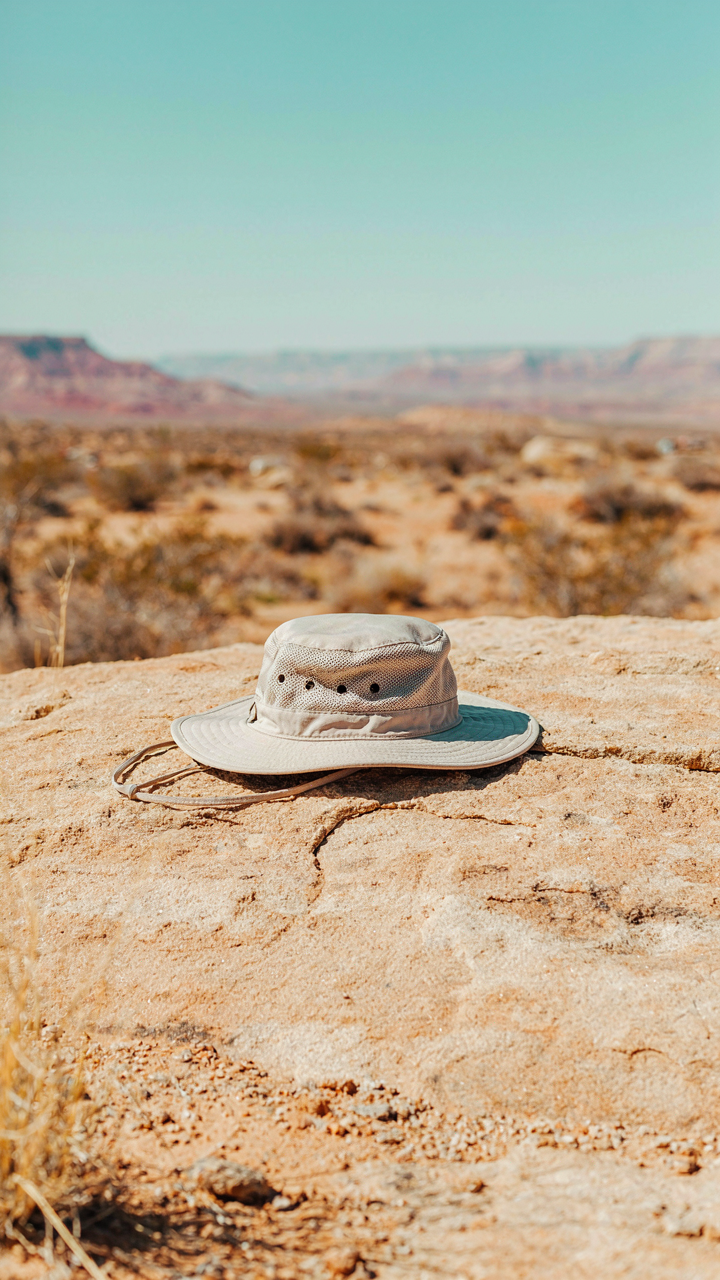
You want the right hat because you think it makes you look competent on the trail. The real mechanism is thermodynamic: your head absorbs and radiates heat faster than your body can compensate, so a hat that reflects rather than absorbs becomes your primary cooling tool. Most hikers grab whatever’s in the closet. Wrong move. Light color alone doesn’t cut it—you need material with actual reflective properties, not just pale fabric that still conducts heat into your scalp.
Petite women benefit from structured hats with brims wider than standard (3 to 3.5 inches minimum) because your smaller frame means less thermal mass to distribute sweat evaporation. Lightweight mesh crowns beat solid fabric because they allow convection, letting hot air escape rather than trapping it against your head. Ventilation holes matter more than fashion. A wide brim keeps direct sun off your face and neck, reducing radiant heat load on skin that burns faster when exposed to sustained UV. Choose light-colored, breathable material with a sweatband that wicks moisture away from your scalp.
Gloves: Grip, Protection, And Ventilation
Gloves seem optional in heat. They’re not, and dismissing them wastes a tactical advantage. Your petite hands cool faster than larger hands because surface area to volume ratio works against you—heat radiates away quicker relative to your palm size. Gloves prevent that accelerated cooling from sapping your core temperature through your hands and also protect skin from direct sun exposure, which speeds dehydration.
Fingerless or open-palm designs beat full gloves in hot weather because they preserve grip texture while letting airflow reach your skin. Look for materials with UPF protection and moisture-wicking properties. Silicone palm patches give you secure handholds on rock and steep terrain without the bulk of full leather. Lightweight synthetic blends (polyester or nylon) dry faster than cotton and won’t retain sweat. Put gloves on before you need them, not after your hands burn—the protection compounds over hours of exposure.
The Post Hike Recovery Gear For Camping Outfits

Immediate Cooling Garments Physiological Benefits
You want this section because you’re afraid of looking uncomfortable in front of others after the hike ends. Here’s what actually matters: thermoregulation is a core survival mechanism. Your body sheds heat through evaporation and radiation. Petite women have less surface area, so they retain heat faster and need active cooling sooner. Damp, clingy fabric traps warmth against skin. You need garments that break that contact immediately after exertion stops.
Lightweight merino wool or moisture-wicking synthetics pull sweat away from your body and dry within minutes. A loose sleeveless layer or a mesh tank top worn over your sports bra creates air gaps that force convection. Change out of your hiking shirt entirely if you’re staying at camp. Sitting in damp fabric for hours compounds dehydration and muscle recovery suffers. The cooling happens fastest when wet fabric leaves your skin.
Layering For Sustained Comfort Throughout Evening
- Breathable base layer: A thin merino blend or synthetic shirt that moves moisture outward without trapping body heat, worn loose enough to allow airflow underneath.
- Lightweight cover layer: An unlined linen or cotton button up that you can open or remove as temperature shifts, providing UV protection without insulation.
- Compression shorts or bike shorts: Keeps chafing out of the equation during cooling phases and prevents sweat from pooling in sensitive areas after exertion.
- Minimal footwear: Sandals with arch support or lightweight slip ons replace hiking boots immediately, reducing foot temperature and allowing sweat evaporation from your lower legs.
- Wide brimmed hat or visor: Keeps direct sun off your head and neck while allowing air circulation, critical for petite frames that lose head cooling capacity faster than larger bodies.
Petite women cool down faster than taller counterparts because less body mass means less thermal mass to shed. Dress in removable layers rather than one commitment piece. Start with minimal coverage and add only what the evening temperature demands. Most post hike discomfort comes from layering too heavy too early, trapping residual body heat. Remove each piece as your core temperature drops naturally.
Durability Vs. Weight: An Economic Trade Off

Cost Per Wear Calculus For Hiking Gear
You want permission to spend money without feeling wasteful. Here’s the mechanism: cost-per-wear is an economics principle that forces you to measure actual value instead of sticker price alone. A petite woman who buys a $120 merino wool shirt and wears it 50 times across three years pays $2.40 per wear. A $30 synthetic that shreds after 15 hikes costs $2 per wear but fails when you need it most.
The math exposes the real trade-off. Lightweight materials (nylon, polyester blends) shed durability faster in high-heat conditions because thin fabrics degrade under UV exposure and repeated washing. Heavier, quality fabrics (merino wool, dense nylon) resist this degradation but add ounces. For petite frames, those ounces compound across layers. The calculation isn’t “cheap or expensive”—it’s which failure mode you can afford: replacing gear constantly or carrying slightly more weight per hike.
Investment In Function Not Fleeting Trends
Common advice says “buy what fits your budget.” That’s incomplete. The real question: does the gear serve the hike’s actual demands, or does it serve your Instagram aesthetic? A petite woman in a trendy, lightweight tank designed for casual wear will overheat and sunburn on exposed ridge trails. A functional racerback in technical fabric with UPF50 costs more but prevents the hike-ending problems.
Function outlasts trends by years. Merino wool bases don’t fade from fashion; they fade from actual use. Shorts with internal compression don’t become “outdated”; they either support your legs or they don’t. Track what your last five hikes actually required: temperature swings, UV exposure time, sweat volume, movement range. Buy gear that matches those conditions, not gear that matches current gear reviews. Your hiking outfit should feel invisible because it works, not because it looks current.
The Real Obstacle Isn’t Your Height; It’s Your Adherence To Conventional, Ineffective Wisdom

You’ve been taught that petite women need to shrink their problems. Buy kids sizes. Settle for less. That’s backwards. The mechanism that changes everything is refusing to optimize for other people’s standard sizes and instead building your outfit around your actual body. Stop browsing generic hiking gear. Go to your closet today and identify one piece that fits you perfectly, then build around that anchor. Everything else follows. The hike doesn’t care about your height. Only you do.