
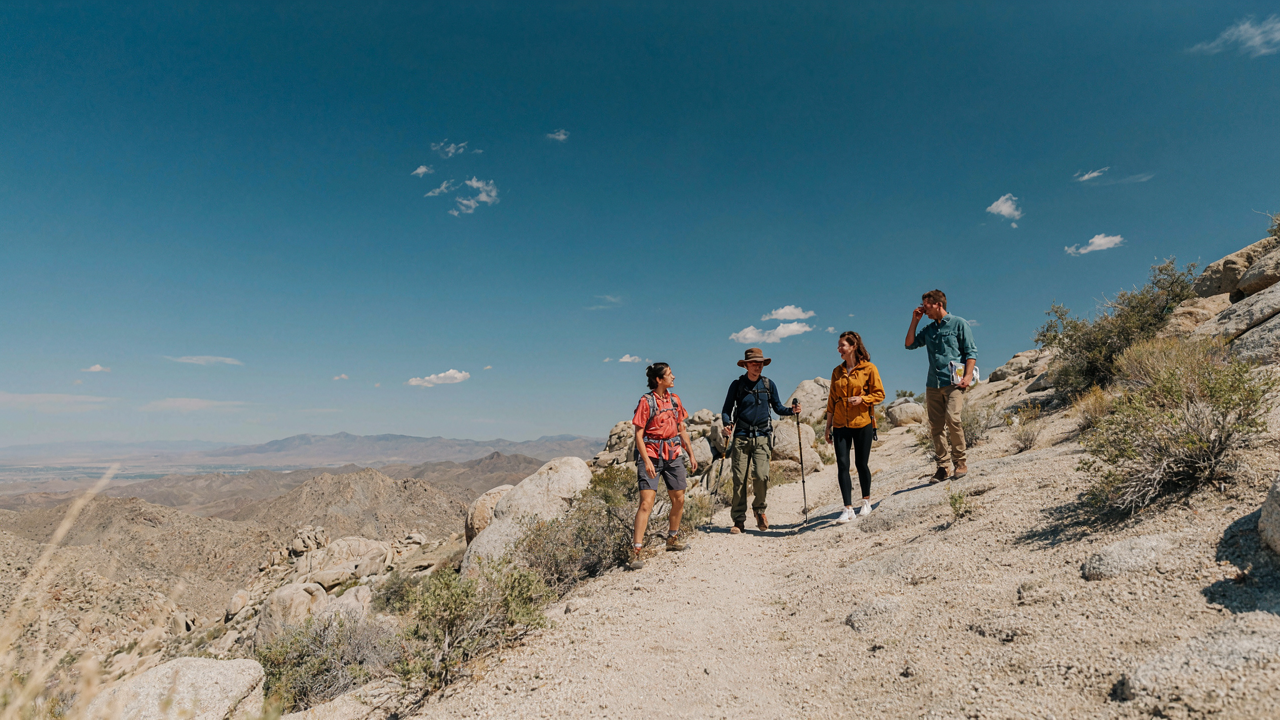
The Evaporation Equation: Why Your Cotton Kills In Hot Weather
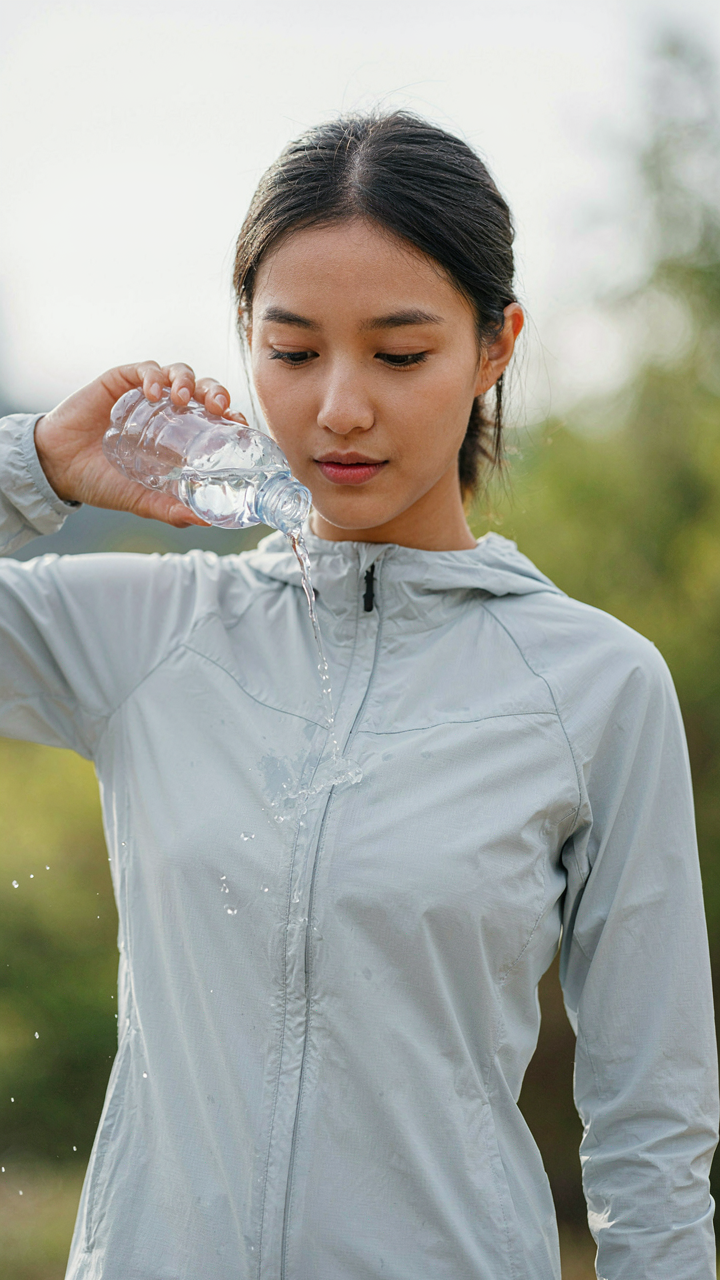
Wicking Versus Absorption Breaks The Sweat Problem
You care about this because wearing the wrong fabric makes you feel incompetent on a trail, not because you’re chasing performance stats. Here’s the mechanism: moisture wicking and moisture absorption are opposites in thermodynamics. Wicking moves sweat away from skin to the fabric’s outer surface where air evaporates it fast. Absorption soaks sweat into the material itself, trapping heat against your body. Cotton absorbs. Synthetics wick. On a hot hike, absorption becomes a liability that stalls your core temperature regulation.
The common advice says “just use technical fabrics.” That’s incomplete. You need to understand the velocity of moisture transfer. A fabric that wicks slowly still fails you in direct sun above 85 degrees. Fast wicking moves sweat off skin in minutes, not hours. Your job is matching fabric choice to humidity and sun exposure, not just grabbing whatever says “performance” on the tag. Test any shirt by pouring water on it and timing how long until the outer surface dries while the inner stays cool.
Synthetics Versus Merino Wool Changes Everything

Synthetics dominate beginner recommendations because they wick reliably and cost less than merino. Polyester, nylon, and polypropylene all move sweat outward aggressively. They dry fast in direct sun. Merino wool wicks equally well but adds odor resistance and temperature regulation that synthetics can’t replicate. Merino adapts: it keeps you cooler in extreme heat and warmer when temperature drops at elevation. Synthetics stay static. For hot weather beginners, synthetics are the right choice because heat doesn’t require wool’s insulation.
Merino’s real edge appears on longer trips where you wear the same shirt for multiple days. Merino stops bacterial growth that causes odor, so you can layer longer without washing. Synthetics don’t. But that feature doesn’t matter for a four-hour day hike in summer heat. You want polyester or nylon that dries completely between washes, costs thirty dollars instead of eighty, and proves the principle before you invest in premium gear. Start with synthetic. Move to merino only after you’ve logged fifty miles and confirmed you need the upgrade.

Solar Radiation Shields: The Unseen Armor For Warm Weather Hiking Outfit
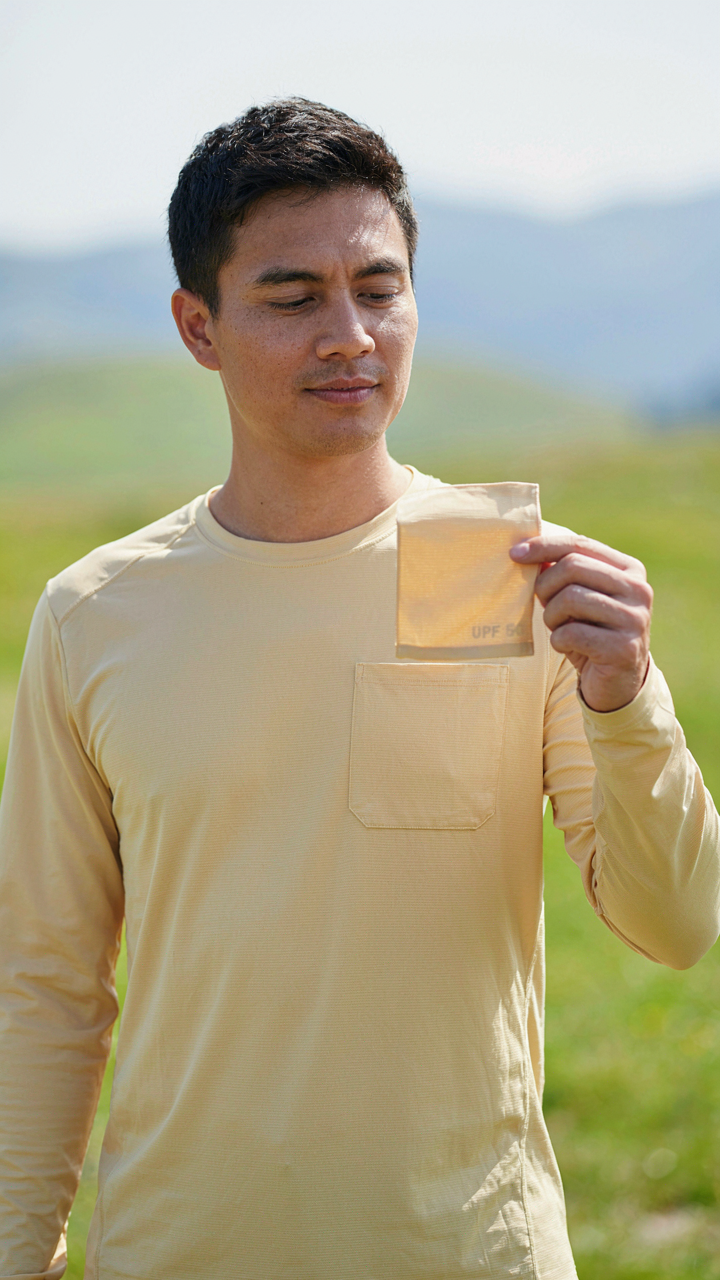
What UPF Actually Measures
You want to buy the right shirt so you don’t look stupid in front of other hikers. Here’s what matters: UPF is a physics term borrowed from material science that measures how much ultraviolet radiation a fabric blocks, expressed as a ratio. A UPF 50 shirt blocks 98% of UV rays. A UPF 25 blocks 96%. The difference is small on paper but compounds over hours in direct sun, which is why the number matters on the trail.
Most beginners buy based on the label alone and ignore weave density, which controls actual protection. A loose cotton weave with a UPF tag performs worse than a tight synthetic blend rated lower. Wet fabric loses UPF effectiveness entirely because water fills the gaps UV light travels through. Buy UPF-rated synthetics with tight knits, not cotton. Test by holding the fabric to light—if you see through it easily, sun gets through it easily.
Color Strategy For Heat Deflection
The common advice says wear white to stay cool. That’s incomplete. White reflects visible light but absorbs some infrared radiation, which is where actual heat lives. Light gray and pale blue reflect both visible and infrared wavelengths more effectively than pure white while maintaining durability better than ultra-light fabrics prone to tearing.
Dark colors absorb heat aggressively, which kills two mechanisms at once: higher skin temperature and faster water loss through sweat. Avoid them entirely on hot hikes. Pale neutrals with tight weaves outperform bright white on extended exposure. Pick light gray or pale tan in tight synthetic fabrics, not loose cotton whites that tear and lose shape after one season.
The Convection Protocol: Maximizing Airflow, Minimizing Sweat
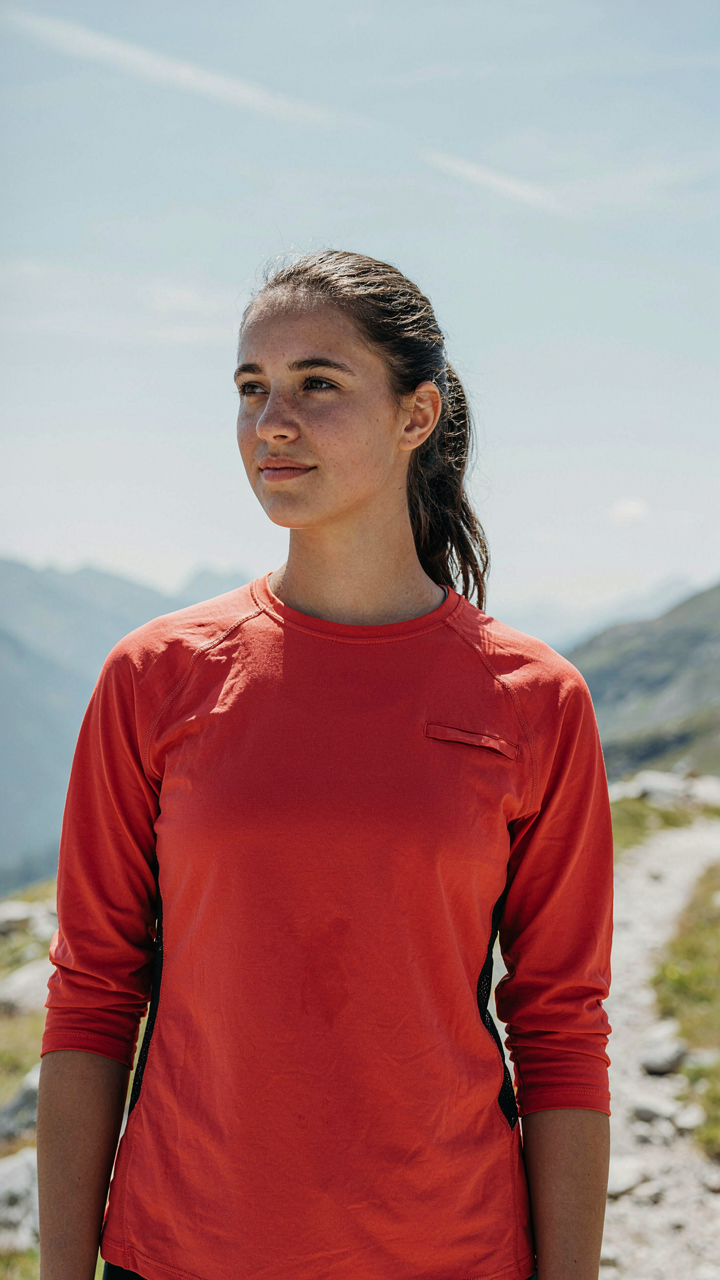
Ventilation Design In Trail Outfits
You want to look like you know what you’re doing out there. But here’s the actual mechanism: convection removes heat from your skin by moving air across it. Fabric with deliberate gaps, mesh panels, and loose weaves create pathways for moving air. A shirt with solid fabric front and back but mesh side panels forces air to travel across your torso. This beats a fully solid shirt every time because you’re engineering the airflow, not hoping it happens randomly.
Most beginners buy compression gear thinking it wicks moisture faster. That’s incomplete. Compression traps heat and reduces convective cooling. You need ventilation zones, not compression zones. Look for split-back designs, underarm vents, or mesh panels specifically placed where your body generates the most heat: armpits, lower back, and chest. These aren’t cosmetic. They’re functional channels that keep air moving against your skin continuously.
Loose Fit Versus Tight Compression For Airflow
The fitness industry sold compression as universal. It works for muscle support during intense exercise, not for heat dissipation in the desert. Loose fit wins in hot weather because it creates an air gap between fabric and skin. That gap allows convective cooling to work. Tight compression eliminates the gap entirely, which means you’re relying only on fabric moisture-wicking to manage sweat. One mechanism is physics. The other is material chemistry. Physics scales better.
Pick shirts with a half-inch to one-inch gap from your body when you stand still. Wear them over a thin base layer if you need coverage for sun protection. The layers should separate slightly, not nest against each other. Your shorts should sit at your waist without squeezing your thighs or hips. When you move, fabric should shift independently of your body. This creates the air circulation that keeps core temperature down and sweat from pooling on your skin.
Thermal Regulation: A Biological Systems Approach To Hot Weather Hike Outfit
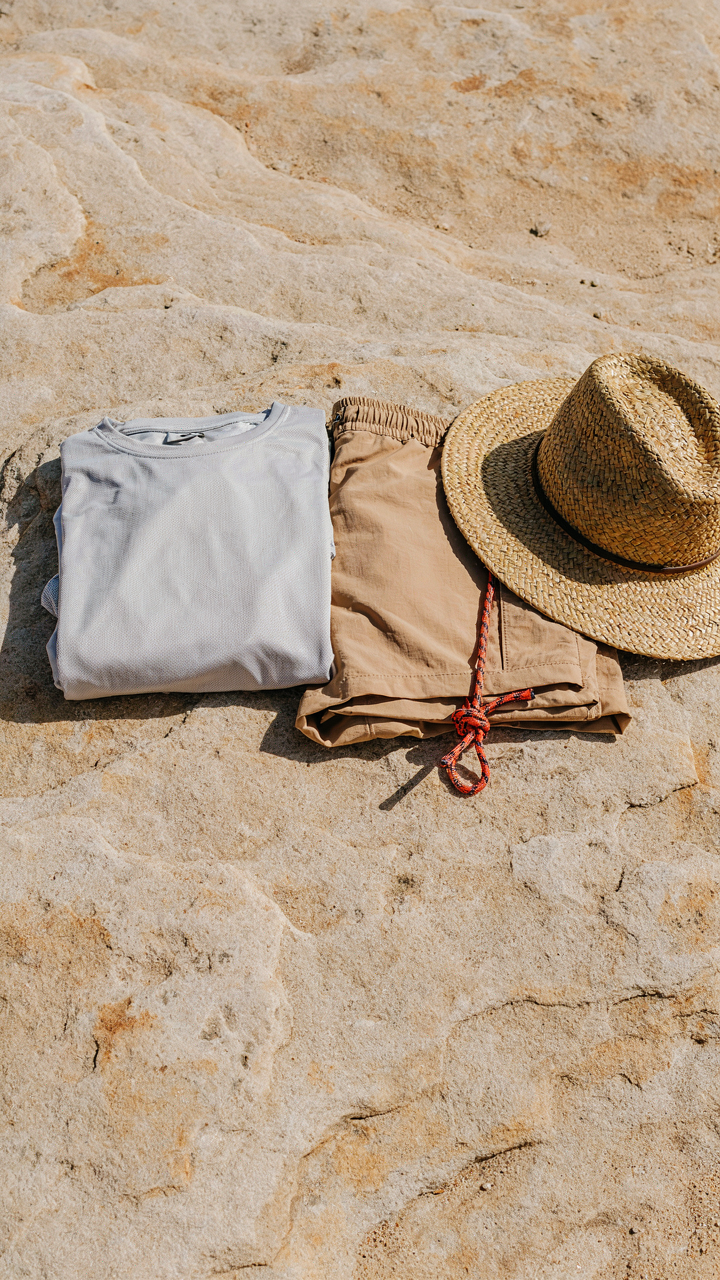
How Your Body Actually Fails In Heat
You’re hoping the right outfit makes you look prepared and confident on the trail. It doesn’t work that way. Your body operates on a thermostat, and heat stress follows predictable biology. When core temperature rises past 37.5 degrees Celsius, your systems begin to fail in sequence: cognitive function drops first, then coordination, then heat dissipation itself breaks down. Most beginners dress for how they want to feel, not how their body actually sheds heat.
The mechanism is straightforward. Sweat evaporates from skin and removes thermal energy, but only if air can reach wet fabric. Tight or dark materials trap heat and moisture against your body, forcing your core temperature higher. Cotton absorbs sweat and holds it there, creating a wet insulator. Light-colored, loose synthetics or blends allow air circulation and evaporative cooling to function. Your outfit is either helping convection happen or actively preventing it.
Desert Animals Don’t Wear Cotton
Biological adaptation teaches a hard lesson: predators and prey in extreme heat minimize skin exposure and maximize air gaps. A coyote’s light fur isn’t for insulation, it’s for reflection and ventilation. That’s the difference between survival strategy and consensus gear advice. Most beginners buy tight athletic wear because it looks sleek and feels secure. It guarantees you’ll overheat faster than loose clothing in the same conditions.
Loose, breathable fabrics create an air layer between cloth and skin, allowing sweat to evaporate before it pools. Wide sleeves, relaxed fits, and mesh panels aren’t about comfort, they’re about thermodynamic efficiency. Light coloring reflects solar radiation instead of absorbing it as heat energy. A wide-brimmed hat doesn’t just shade your face, it breaks the direct radiation path to your scalp and neck where major blood vessels near the surface. When you hike in 90-plus degree heat, wear your outfit like a desert animal wears its hide: loose enough to breathe, light enough to reflect, structured enough to stay off your skin.
Footwear Foundation: The Unsung Hero Of Summer Hike

Breathable Materials And Drainage Systems
You want your feet to look competent on the trail, but what you actually need is your feet to stay functional for eight hours without turning into a blister factory. The mechanism here is simple thermodynamics: your foot generates heat, sweat accumulates, friction increases, skin breaks down. Stop it at the source.
Most hiking shoes marketed to beginners claim breathability but deliver mesh that clogs with dust and traps moisture against your skin. Real breathability requires two things working together: materials that let air move through (mesh, perforated uppers), and drainage channels that move water out before it pools. Shoes with drain holes near the sole and vents along the sides outperform closed designs in hot conditions. Your foot temperature drops 3 to 5 degrees Fahrenheit when sweat evaporates instead of sitting trapped under your arch.
Sock Material Science For Blister Prevention
Friction is the enemy, and the wrong sock material guarantees your feet pay the price before mile three. Cotton socks absorb moisture, stay wet, and create the exact environment where blisters thrive. Merino wool and synthetic blends (polyester, nylon) wick moisture away from skin and reduce friction coefficients that cause blisters in the first place.
The sock material you choose matters more than the shoe brand. Merino wool regulates temperature better in extreme heat, but quality synthetic blends work just as well and cost half the price. Thickness matters too: thin socks (lightweight or ultralight) reduce bulk in your shoe and prevent your foot from shifting inside the shoe, which creates friction and hotspots. Buy socks specifically designed for hiking, wear them on your hike, and replace them when the elastic fails, not when they develop holes.
Headwear & Handwear: Precision Control For Hot Weather
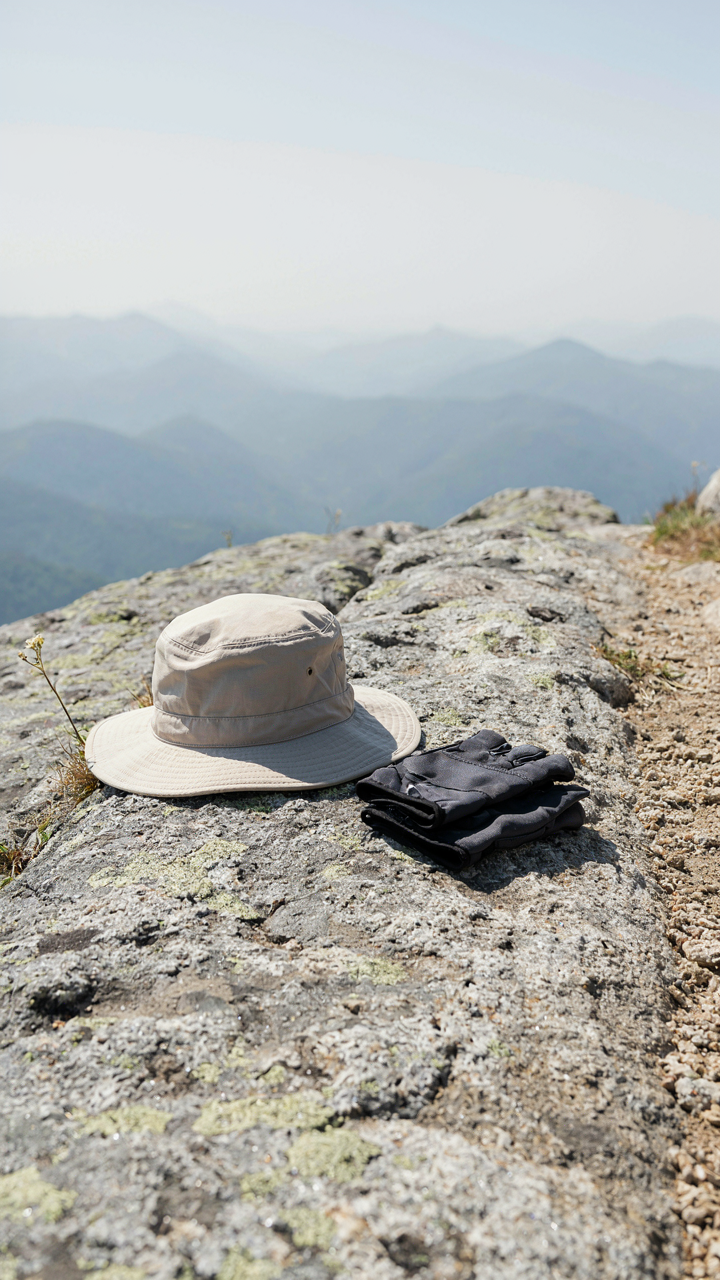
Wide Brim Hats Vs. Caps: Strategic Shade
You want the hat that looks least dorky. That’s not the real problem. The real problem is controlling where your shadow falls and managing the radiant heat bouncing off the ground. This is basic optics: wide-brim hats create shade over your face, neck, and shoulders, blocking direct sun from above. Caps only shield your forehead and eyes. On a trail with exposed rock or sand, ground reflection becomes your second heat source, and a narrow brim leaves your neck cooking.
Wide-brim hats outperform caps in sustained heat because they reduce the surface area receiving direct radiation. The trade-off is ventilation. A cap lets air move freely around your head while a wide brim traps warm air underneath. Choose based on trail exposure: open desert or alpine meadow means wide brim. Shaded forest means cap. Pick materials that breathe, like mesh-backed designs or cotton blends, not dense felt that acts as insulation.
Gloves: Grip, Sun Protection, And Cooling
Most beginners skip gloves entirely in hot weather, thinking they add heat. They’re wrong. Gloves are a thermoregulation tool, not a burden. Sun-exposed skin on your hands radiates heat faster than covered skin, but the real mechanic is grip security. Sweaty palms lose friction on trekking poles and scramble rocks. Damp hands also accelerate heat loss through evaporation, which drains core energy you need for climbing.
Lightweight gloves in breathable synthetic or merino wool solve two problems at once. They keep your palms dry enough for grip while protecting the back of your hands from UV damage. Your hands have thin skin and high sun exposure, making them prone to burning during long hikes. Use fingerless or half-finger designs in heat to maintain dexterity and airflow. Wear them whenever you’re on exposed terrain, not just at the summit.
The “Adventure Style” Fallacy: Prioritizing Function Over Form
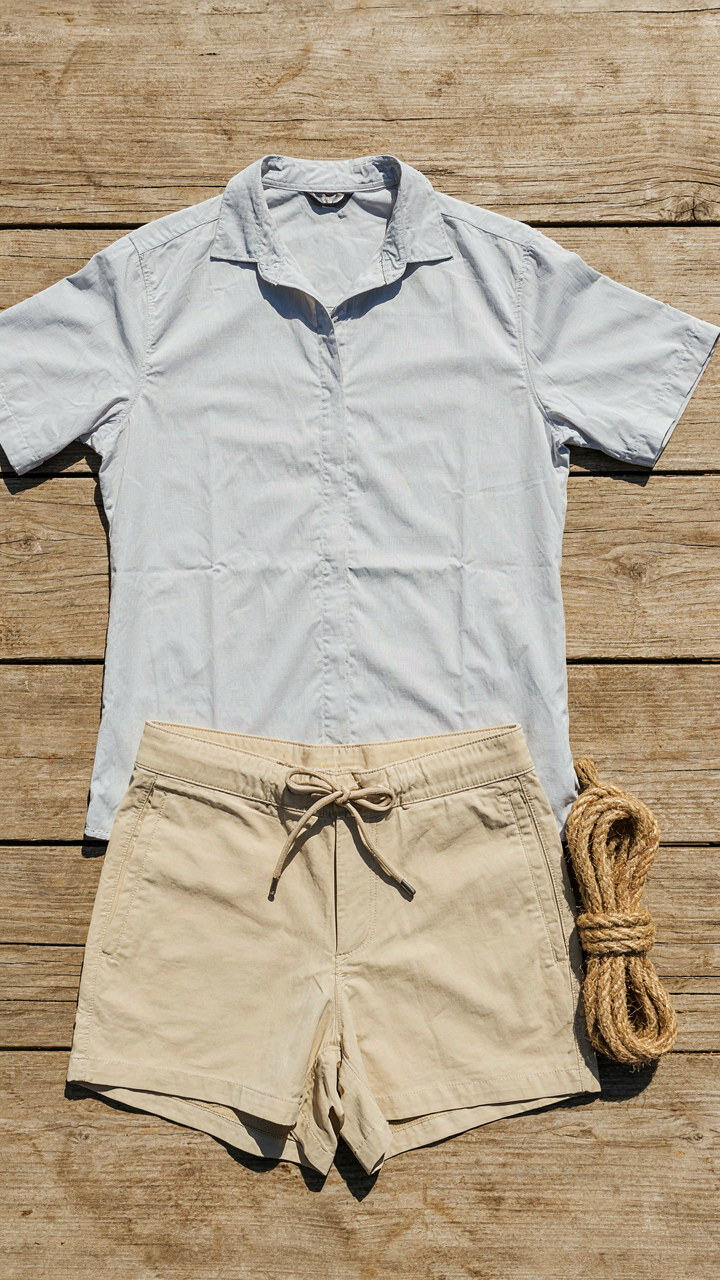
Cute Hiking Outfit Culture Doesn’t Prepare You
You want to look intentional on the trail because it signals you belong there. The mechanism is status anxiety dressed as aesthetics. Social media has trained beginners to treat hiking outfits like Instagram content first and protective gear second. You see coordinated color palettes and matching gear setups. None of that matters when you’re dehydrated at mile four in direct sun.
The real cost of prioritizing appearance is that you choose fabric for look instead of performance. Cotton shirts breathe poorly and hold sweat against skin. Pastel shorts look cohesive but don’t have enough UPF protection. You end up sunburned, overheated, and blaming the heat instead of blaming the outfit choice you made for engagement potential. Strip the aesthetic layer away. Start with what your body actually needs to survive.
Performance Data Beats Personal Preference
Textiles have measurable properties. Fabric weight, fiber composition, and weave density determine heat dissipation and UV blocking. This is physics applied to clothing. Use UPF ratings as your primary filter, not color. A shirt with UPF 50 blocks ninety-eight percent of UV rays. Cotton ranks around UPF 5 to 10 even when new. Synthetic blends and merino wool consistently outperform cotton in hot conditions because they wick moisture and dry faster.
The gap between what feels comfortable standing still and what works at elevation with pack weight is where most beginners fail. Test gear on short hikes first, measure how wet your shirt gets after thirty minutes of climbing, check if your shorts chafe when damp. Real data beats assumptions. Your outfit only works if you actually collect wear data under load before committing to a longer route.
Layering For Warm Weather Hiking Outfit: Counter Intuitive Tactics
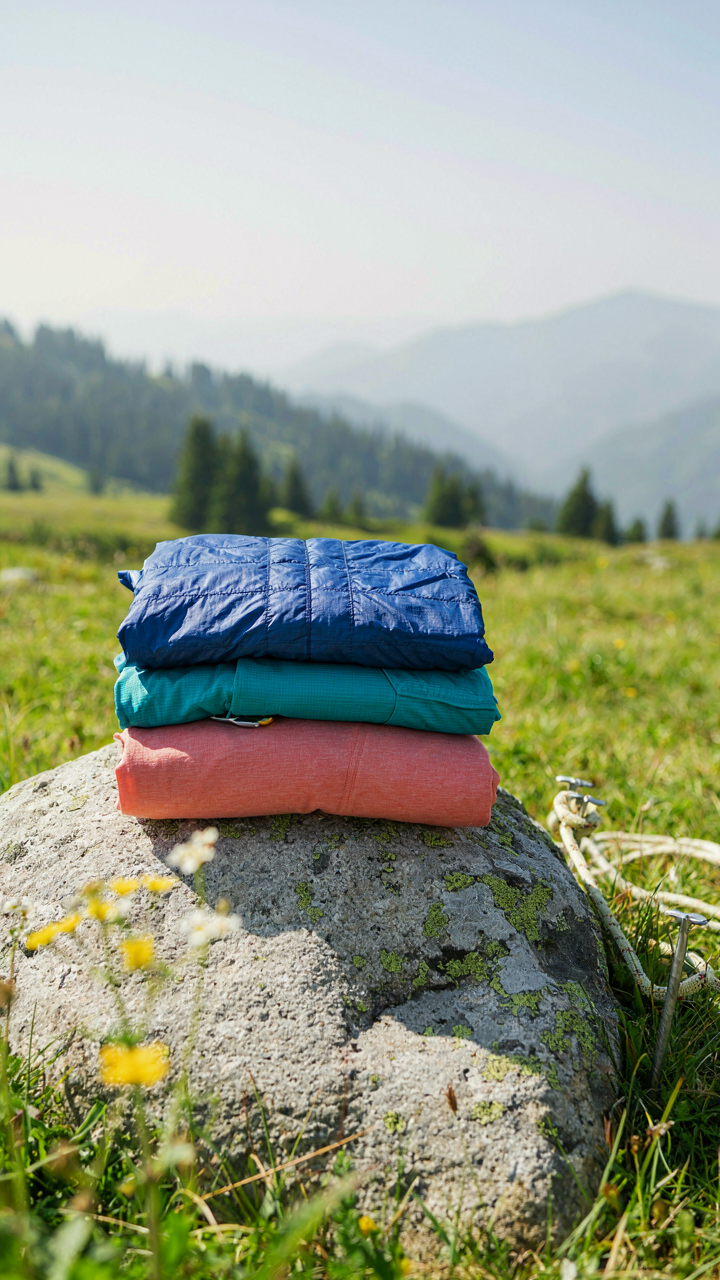
Thin Layers For Adaptable Microclimates
You want to believe one shirt solves everything because shopping and decision-making drain you. Here’s the mechanism: elevation and shade create temperature swings of 15 to 20 degrees on a single trail. Thin layers exploit this. A lightweight base layer under a breathable shirt under a packable shell gives you three independent temperature states instead of one binary choice. You’re not adding bulk. You’re adding optionality at zero weight cost.
The key is material choice, not thickness. Merino wool or synthetic base layers wick moisture without trapping heat. A short-sleeve shirt in nylon or polyester moves air. The packable shell compresses to the size of a water bottle. Each piece works alone or stacked. Most beginners buy one heavy item and suffer. Buy three light items and adapt in minutes as you climb or enter tree cover.
Strategic Removal And Addition Of Garments
This isn’t about fashion layering borrowed from mountaineering theory, where you add insulation as temperature drops. Warm weather hiking reverses the mechanism: you remove layers as effort increases and exertion heat climbs. The protocol is simple: start the hike over-dressed by one layer, then shed it within the first 20 minutes once your body warms up. Most beginners start too hot or too cold because they set their outfit for the trailhead, not mile two.
- Assess Before Leaving: Check temperature, elevation gain, and tree coverage. Start with your packable shell on, even if it seems unnecessary.
- Remove At Sustained Effort: Once your pace steadies and breathing deepens, take off the outer layer. Pack it immediately so you don’t abandon it.
- Add Before Stops: When you halt for water or photos, put a layer back on within 30 seconds. Sweat cools fast in wind and evaporation chills you.
- Adjust For Shade Transitions: Entering dense forest or exiting to ridge line means thermal change. Remove or add accordingly without waiting to feel cold.
- Keep Shell Accessible: Never bury it in your pack. Use hip belt pockets or clip it to the outside so you grab it in under 10 seconds.
The mechanical truth: your body generates heat during exertion and loses it during rest. Layer removal prevents overheating and sweat buildup, which kills performance faster than cold ever does. Timing the removal matters more than the fabric choice.
The Pack’s Role: Carrying Capacity & Weight Distribution For Hiking Outfit Women

Pack Ventilation And Heat Transfer
You want your pack to disappear from your mind so you can focus on the hike, but the real issue is that most beginner packs trap body heat like an insulator instead of shedding it. Think of thermal resistance from physics: every material between your back and air creates a barrier that stops sweat evaporation. A pack with mesh backing and frame channels allows airflow to reach your skin instead of creating a dead zone of stagnant, humid air against your spine. This matters more than the weight itself because heat buildup forces your body to work harder to cool down, draining energy and hydration faster than the actual load does.
Standard fabric-backed packs marketed as “breathable” still hold moisture because the backing sits flat against your body. Look for packs with suspended mesh that creates air gaps between the back panel and your skin, or rigid frames that angle the pack away from your torso. Test this before buying: put the loaded pack on and place your hand between the pack and your back. If you feel trapped heat or moisture pooling, the ventilation design is failing. In hot weather, pack ventilation ranks higher than total weight capacity because a well-ventilated 25-pound pack feels lighter than a poorly designed 18-pound pack.
Contact Points And Sweat Reduction
Minimizing contact points is the inverse of adding fabric to your skin, and it works by the same principle: less touching means more evaporation space. Most packs touch you across the entire back panel, both shoulder straps, and the hip belt, creating four separate zones where sweat can’t escape. Straps cut off circulation in the shoulders, and hip belts compress against your waist exactly where you need ventilation most. The real move is to shift the weight distribution away from your torso entirely by choosing a pack that transfers load primarily through hip contact instead of spreading it across your whole body.
Adjust your hip belt to carry 60 to 70 percent of the pack’s weight rather than defaulting to even distribution. This keeps the shoulder straps loose enough to let air circulate under them while your hips handle the load. Loosen shoulder straps so they sit without digging in, using them only to stabilize the pack, not to carry it. Women’s-specific packs compress the hip belt higher and narrower to match your center of gravity, reducing unnecessary contact. When you load your pack, check that you can fit a finger under each strap and belt without resistance, then test the pack walking uphill for five minutes before committing to the day’s route.
Beyond The Outfit: Hydration & Electrolyte Management
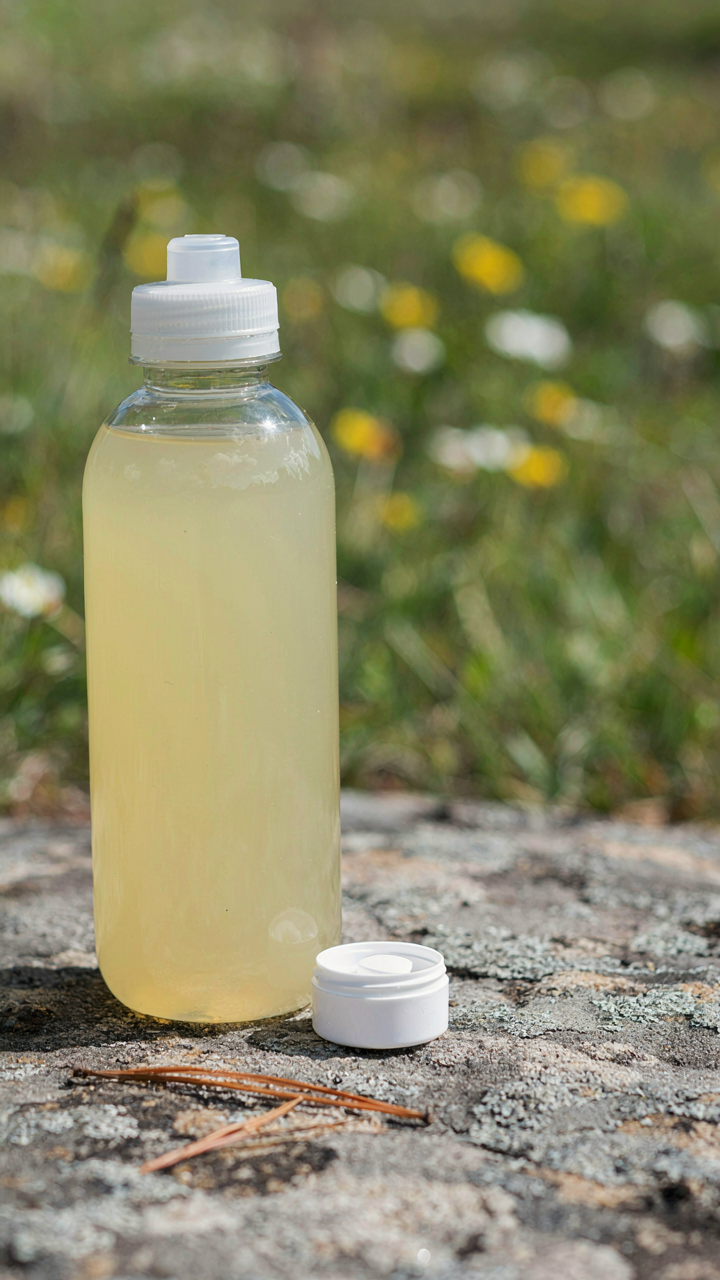
Water Vs Electrolytes: Precision Intake
You think hydration is just about drinking water. It’s not. You’re worried you’ll collapse on the trail, so you’re looking for the simple answer that lets you feel prepared without actually understanding the system. The mechanism is osmotic pressure. Your blood sodium concentration controls how fast your cells absorb water. Drink only plain water in volume and your blood dilutes, your cells pull water in, swelling happens, and your performance tanks before you realize what’s wrong.
Electrolytes (sodium, potassium, magnesium) are the load-bearing wall. On hot hikes over two hours, aim for 300-600 milligrams of sodium per hour through sports drinks, electrolyte tabs, or salted snacks. Plain water alone works for efforts under ninety minutes. Your urine color should be pale yellow, not clear (which signals over-hydration) and not dark (which signals under-hydration). Drink to thirst, but add salt to the equation—your body’s thirst mechanism lags in heat.
Signs Of Dehydration And Heat Exhaustion
These are not the same thing, and confusing them costs hikers real time in the field. Dehydration is a fluid deficit. Heat exhaustion is your thermoregulation system failing under load. You can be dehydrated without heat exhaustion, and you can have heat exhaustion while adequately hydrated but dressed wrong or moving too hard. Early dehydration shows as cottonmouth, reduced urination, and slight dizziness. Heat exhaustion escalates to heavy sweating, weakness, headache, nausea, and pale or clammy skin.
The action step: if you feel nauseous or notice your sweat suddenly stops (paradoxical drying), you’re past early warning. Stop moving immediately. Get to shade. Drink fluids with sodium. Cool your core by wetting your shirt and using evaporation. If symptoms don’t improve in fifteen minutes, descend or call for help. Don’t wait for clarity.
Your Biggest Obstacle Isn’t The Heat; It’s Relying On Generic Advice Instead Of First Principles
Most beginners buy what REI tells them to buy instead of asking why. Stop. Before your next hike, pick one piece of gear you own and trace it back to a real problem it solves. Does that moisture-wicking shirt actually keep you cooler or just feel technical? Test it. The gap between what marketing promises and what works is where better decisions live. You don’t need more information. You need to think like an engineer, not a consumer. Your outfit won’t fail because you got the fabric wrong. It fails because you trusted someone else’s framework instead of building your own.