
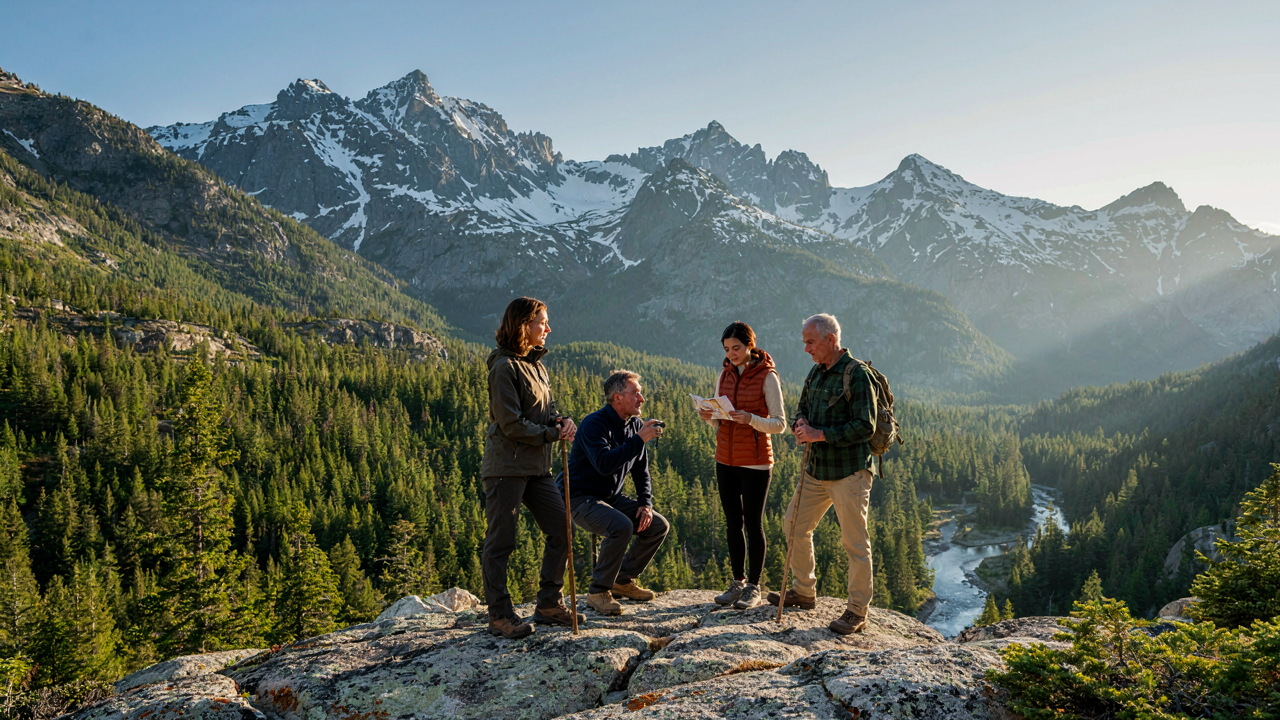
The Illusion Of Abundance: Why Permits Exist

Scarcity As A Design Feature
You want to believe permits don’t matter because they feel like bureaucratic friction, but they exist because land has a breaking point. Economics calls this carrying capacity—the maximum load a system absorbs before it degrades. A trail is identical. The National Park Service uses permits as the lever to control that threshold before erosion, trampling, and infrastructure collapse make a route unusable.
Without permits, popular hikes absorb unlimited traffic until the resource dies. The Mist Trail at Yosemite and Angels Landing at Zion taught the NPS a hard lesson: free access creates permanent damage. Permits aren’t punishment. They’re the mechanism that keeps a trail from becoming a denuded scar. The parks that implemented daily limits stopped the degradation cold.
The Hidden Costs Of Overtourism

Overtourism costs money nobody sees until the problem accelerates past repair. Maintenance budgets shrink when trails hemorrhage visitors because infrastructure fails faster than agencies can patch it. The real cost lands on future hikers who either wait years for restoration or find the route closed entirely. The parks know this math, which is why permits spread demand across time instead of concentrating it.
When you secure a permit, you’re buying access to a maintained route that won’t collapse next season. Parks with permit systems maintain trail quality because they control volume. Parks without them degrade visibly year over year. Check a park’s permit availability first, then cross-reference it against the condition reports from recent trip reports—that correlation is exact.

The Unwritten Rules Of The Permit Lottery

When The Release Date Becomes Your Enemy
You think submitting exactly when permits drop gives you an edge. It doesn’t. The real mechanism at work here is scarcity psychology—parks engineered the timing window to create false urgency, and you’re playing their game by showing up when everyone else does. The permit system uses time as a filter, not a fair allocation tool.
The common advice says “set your alarm, be ready at midnight.” This is incomplete. Yes, you need to be in the system when applications open. But the actual bottleneck isn’t your speed—it’s server capacity and the lottery algorithm that runs after the submission window closes. Most parks don’t award permits to the fastest clicker. They run a random draw from all qualified applicants who submitted during the open window. You gain nothing by refreshing at T-minus-five-minutes instead of T-plus-two-hours.
The Seasonal Mirage And Real Access Patterns
Off-peak seasons exist as a category, but the definition varies by region and park. Spring shoulder season looks empty on the map because fewer people write about it, not because permits actually sit unclaimed. Parks know this. They’ve already adjusted permit caps to match actual demand. The illusion is that lower perceived demand means easier access—it doesn’t.
Your real leverage point is understanding which seasons parks themselves under-market. Mid-week dates in November or early April often have genuine availability because the permit office designed caps for summer weekends. Check historical rejection rates by season on the park’s website, not Reddit. Then apply for dates that fell to lottery in previous years. The mechanism is simple: apply for what other people overlooked, not what marketing made famous.
The “Thru Hiking” Mindset For Weekend Warriors

Plan Like You Have Six Months, Execute Like You Have Three Days
You want to feel like you’re doing the serious thing without actually committing to serious prep. That’s the real pull here. The mechanism is borrowed from military logistics: a thru hiker plans with maximum lead time but stays tactically flexible on execution. Weekend warriors skip the first part and wonder why permits get locked out or trail conditions blindside them.
Start your permit application research the moment you decide on a destination, even if your trip is months away. Many parks require applications three to six months prior. This lead time lets you identify which permit system you’re dealing with, understand quota windows, and catch early releases that vanish within hours. You’re buying information and options, not committing to dates yet.
Rigid Plans Kill Permit Flexibility
The common advice says lock in your dates and stick to them. That’s wrong. You need your permit dates flexible until the moment you submit. Build your itinerary with alternate entry dates, alternative trails with their own quotas, and backup trailheads in case your first choice gets full. Parks like Moab or Grand Canyon have multiple entry points and different seasonal quotas for each.
Keep a spreadsheet of your top three route options with their corresponding permit deadlines and quota sizes. When you’re ready to actually apply, you submit for whichever option has the best availability window. This isn’t indecision. It’s optionality. The permit system rewards people who submit applications across multiple windows rather than those frozen waiting for one outcome.
The Dark Art Of The Backup Plan Protocol

Permits Beyond Your First Choice
You’re here because you want to look like someone who plans ahead, but what you really fear is showing up empty-handed. Evolutionary theory calls this the “adjacent possible”—the set of moves available from your current position that you haven’t explored yet. In permit strategy, this means identifying which trailheads and dates sit one decision away from your primary target, not three months in the backup file.
Most hikers treat backup permits as afterthoughts: same park, different trail, maybe a week later. That’s static thinking. The real adjacent possible includes different parks in the same region, shoulder season dates with identical conditions, and alternative entry points that feed the same destination. A permit denial doesn’t mean failure. It means you activate a predetermined branch that was always viable.
Recalibrate Based On Real Conditions
The consensus advice says “book your backups early and stick to them.” This is wrong. Early booking locks you into guesses made months before conditions exist. Dynamic recalibration means you monitor permit availability week-to-week, track weather patterns, watch for cancellations, and shift your backup sequence based on what’s actually happening—not what you predicted would happen.
Parks post permits in waves. Some release cancellations. Water levels change. Ranger updates flag closures nobody predicted. Instead of praying your predetermined backup works, you stay alert to the system’s actual behavior and move your secondary choice up in priority when conditions align. This isn’t reactive panic—it’s systematic observation that lets you upgrade your odds the week before you leave.
Beyond The Permit: Real Preparation For Outdoor Adventure

What Most Hikers Actually Forget
You want the checklist because you’re afraid of looking unprepared, but the real problem is that standard checklists are built by people who pack their car in a parking lot, not people who live in the backcountry. The mechanism is simple: generic lists optimize for comfort and redundancy, not for the specific terrain and duration your permit covers. Your permit dictates elevation gain, water sources, and weather exposure. Your checklist should reflect those constraints, not REI’s inventory.
- Navigation tools beyond your phone: Maps, compass, and a GPS unit function independently when batteries die or signal vanishes. Your permit paperwork specifies trailhead coordinates and waypoints, so verify these before departure.
- Water treatment matching your route: Filters clog. Chemical treatments fail. Carry two methods instead of one, selected based on water source reliability noted in permit conditions.
- Emergency communication specific to your zone: Satellite messengers work differently in valleys versus ridges. Check permit regulations on which devices are allowed in your park.
- Repair items for expected conditions: Desert permits need different fixes than alpine permits. Research what breaks on your specific route, then pack targeted repair materials.
- Food quantities tied to actual mileage: Most hikers pack generic daily calories. Calculate real daily burn based on elevation gain and pack density, not assumptions.
Pack what the terrain demands, not what makes you feel secure. Hikers who ignore this distinction either turn back early or create rescue situations. Build your list by working backward from your permit’s environmental data, not forward from a template.
Competence Before Equipment
Most hiking advice treats skills as optional and gear as mandatory—backwards. Military strategy calls this “supply dependence,” and it’s how hikers become liabilities instead of assets. A person with map reading and pacing skills survives a broken stove. A person with a $1,200 tent and no weather literacy doesn’t survive a unexpected storm front. Skills are load-bearing structures. Gear is insulation.
The permit process forces you into objective self-assessment: your allowed elevation, your time window, your water availability. This is where you discover your actual weaknesses. If the permit elevation hits 11,000 feet and you’ve never hiked above 8,000, altitude acclimatization becomes non-negotiable. If the park permits only dawn-to-dusk travel, your navigation speed determines success or failure. Train the skill gap before departure. Gear compensates for nothing.
Exploiting The System: Last Minute Permit Hacks

The Cancellation Arbitrage Opportunity
You want this section because you’re hoping to skip the line everyone else waits in. Here’s the mechanism: permits operate on pure scarcity, and scarcity creates inefficiency. Economics calls this “arbitrage”—buying low and selling high by exploiting timing gaps. In permit systems, cancellations are the low point. Someone books a slot six months out, life changes, they cancel. That slot vanishes from the system for 24 to 48 hours before parks recycle it into availability. Most hikers never check during this window because they assume permits are gone forever.
The real play is monitoring the exact moment parks release canceled permits back into circulation. Most parks post cancellations the same day or the next morning. Set a calendar alert for 8 AM on weekdays—the administrative staff processes cancellations overnight and pushes them live early. Create a spreadsheet tracking which trailheads you’ll accept and check the permit portal every single day for two weeks before your target date. Don’t rely on email alerts; they’re too slow. Parks don’t notify you of fresh inventory, so you move first and claim the slot manually.
Physical Walk Ins As A Strategic Gambit
Walk-in permits exist in most major park systems, and almost nobody exploits them because they require showing up in person. That’s the entire edge. You’re competing against digital permit hunters, not against people willing to drive to a ranger station at dawn. On high-demand trails, parks reserve a small percentage of daily permits for same-day walk-in allocation. These slots fill in the first hour the ranger station opens, which means you need to arrive before opening and be first in line.
The protocol is direct: call the specific ranger district three days before your hike and confirm whether walk-in permits are available for your chosen trail. Drive to the ranger station the morning of or the day before your hike. Get there 30 minutes before opening. Bring cash, a valid ID, and your exact itinerary written down. The ranger will assign you a permit on the spot if slots remain. This works because most people treat walk-in permits as a last resort rather than a primary strategy.
The “Hiking Guide” Trap: Why DIY Dominates

Outsourcing Kills The Decision Authority You Need
You want someone else to own this so you can blame them if it goes wrong. That’s the real reason guides seem attractive. But here’s the mechanism: permits aren’t just logistics. They’re decision points. Every permit system requires you to commit to dates, trailhead choices, camping zones, and group size. A guide fills out forms on your behalf, but they’re optimizing for their business model, not your trip. You lose the authority to negotiate changes when conditions shift.
When you own the permit process yourself, you’re forced to learn the actual constraints. National parks publish rules for a reason: they manage use, protect ecosystems, and prevent overcrowding. Guides skip this education. They hand you a permit and a itinerary. You show up without understanding why certain campsites book out in minutes or why some trails have lottery systems. Ignorance compounds downstream. You can’t troubleshoot permit denials. You can’t spot when a guide submits conflicting information. You become dependent on their next availability.
The Real Cost Of Convenience Stacks Backward
Guides charge between 15 and 40 percent of your trip budget for permit work that takes them ninety minutes. You’re paying premium fees to avoid the uncomfortable truth: permit applications are not hard. They’re tedious. Tedium is not the same as complexity. The convenience tax exists because people confuse the two.
Here’s what actually happens when you hire out: guide fees go up annually. Park demand goes up annually. Permits get harder to secure annually. You’re now paying more to get less certainty, and you’ve trained yourself not to understand the system. When you hit a denial or a date clash, you’re back to square one without the knowledge to fix it. Handle permits yourself once. The time investment now saves you money, frustration, and control for every future trip.
Crafting Your Hiking Aesthetic: Beyond Instagram

The Experience You Actually Remember
You care about this because you want proof that you did something hard, and you want others to see it. Here’s what actually matters: the permit system forces a constraint that filters out casual tourists. That constraint is your real advantage. When you commit to a specific date, route, and weather window through the permit application, you’re not just following rules—you’re making a decision that separates preparation from fantasy. Most people never hit submit. Those who do show up differently.
The internal mechanism here mirrors commitment devices in behavioral economics. You’ve created a sunk cost before you even lace your boots. The permit sits in your email as proof of intent. This shifts your mindset from “I might hike this trail someday” to “I’m hiking this trail on October 15th, and I’ve already reserved my spot.” The aesthetic emerges from that shift, not from the hike itself. Authenticity isn’t about the image you capture—it’s about the decision you locked in months prior.
The Payoff Of Real Difficulty
The common advice says challenge yourself to get a better story. That’s incomplete. The real payoff is physiological, not narrative. Your body adapts to the specific demands of the trail you permitted for. A permit forces specificity: elevation gain, mileage, water sources, terrain type. You train for that exact demand, not some generic idea of “fitness.” When you summit or reach the destination, the accomplishment registers because your body knows it overcame a precise obstacle, not a vague one.
The permit guide maps your preparation to concrete variables. You don’t train for “a hard hike.” You train for 4,000 feet of elevation gain over 12 miles at 9,000 feet starting altitude. That specificity rewires the experience. The internal reward bypasses the camera entirely because it’s anchored in muscular adaptation, cardiovascular demand, and real-time problem-solving on terrain you studied. You remember the hike because your nervous system encoded it as a specific challenge met, not a generic exertion endured.
Why “Types Of Hiking” Don’t Matter As Much As Strategy

Fit Your Plan To The Terrain, Not The Label
You want to know what category your hike falls into because it feels like it simplifies the permit process. It doesn’t. The permit system doesn’t care whether you call it day hiking, backpacking, or mountaineering. What matters is what the specific trail, park, and agency actually require from you on that exact date.
Most hikers reverse-engineer their strategy after picking a route name. They find a permit form, check a box for “backpacking,” and assume they’ve solved it. Wrong move. The terrain dictates your constraints. A high-altitude alpine crossing might need rescue protocols. A water-dependent desert route needs seasonal approval windows. A heavily trafficked valley trail has quota limits. Read the specific trail conditions, elevation gain, water sources, and accessibility first. Then match your permit request to those realities, not to what the hike is called.
The Rules That Never Change Across Any Wilderness Access
Scarcity drives allocation. This is basic economics applied to hiking: the park service uses permits to ration access to limited capacity. Your hiking type is irrelevant here. A four-day backpacking trip and a day hike compete for the same resource: ranger time, trail maintenance budget, and environmental impact threshold.
Your actual leverage comes from understanding how each park allocates that scarcity. Some parks use lottery systems. Some use first-come-first-served with waitlists. Some cap groups by size. Some require specific entry and exit points. Some mandate check-in protocols. Learn which mechanism your park uses, then file your permit application within that mechanism’s rules. The mechanism determines your timeline, your odds of approval, and whether you need a backup plan. Your hiking classification has zero effect on any of this.
The Permit Itself Is Not The Obstacle; Your Naive Approach To Scarcity Is

Most hikers lose the permit lottery because they treat it like everyone else does: wait until the last moment, hope for luck, repeat the next year. You beat this by moving first. Open your calendar today. Pick three hikes you actually want to do. Research their permit windows. Set phone reminders for when applications drop. The scarcity you’re fighting isn’t real—it’s manufactured by your procrastination. Move before the crowd thinks to move, and the park opens itself to you.