

Beyond The Basic Hiking Trip Checklist: The “Why” Over The “What”

Risk Assessment Beats Generic Packing Lists
You want the checklist because you’re afraid of looking unprepared. Here’s what nobody says: most first-timers pack the same items regardless of whether they’re hiking a groomed trail at 2,000 feet or tackling alpine terrain in winter. That’s backwards. Borrowed from risk assessment in project management, you need to identify your actual failure modes first. A twisted ankle matters less on a flat loop than it does three miles from the trailhead with no cell service. The terrain, elevation gain, weather window, and distance from help aren’t variables you optimize around after you pack. They’re the inputs that determine what you actually need.
Your hiking trip checklist should shrink or expand based on what can actually kill or disable you on that specific trail, not based on what you saw in someone else’s Instagram post. Cold exposure kills faster than dehydration at altitude. Blisters end trips on flat ground faster than on steep terrain where you stop every thirty minutes anyway. Distance from a road changes everything about injury severity. Run this audit first: What’s the weather risk? How far are you from help? What’s the single failure point that ends your hike? Build your checklist backward from those three answers.
Essential Functions, Not Item Proliferation

The common advice here is broken. Everyone tells you to bring the Ten Essentials, which is fine as a starting point, but it treats them as interchangeable checkboxes rather than solutions to specific problems. You don’t need ten items. You need to solve five core functions: warmth, hydration, navigation, injury response, and visibility. Each function has a minimum viable solution that depends on your specific conditions. A lightweight fleece handles warmth on a sixty-degree day hike. The same fleece does nothing for a forty-degree overnight. One water bottle works for a three-mile loop. It fails on an eight-mile ridge crossing.
Map out your functions first, then select the items that solve them given your trail’s specific demands. A headlamp isn’t essential if you finish two hours before sunset. A whistle matters more than a mirror if you’re hiking alone and the weather could turn. Cotton clothing kills on cold, wet trips and doesn’t matter on dry day hikes. The mechanism: Stop asking “What items should I bring?” Start asking “What needs to happen for me to return safely, and what’s the lightest tool that ensures it happens on this trail?”

The Adaptive Hiker’s Loadout: Military Strategy For Mountain Readiness
Know The Terrain Before You Move
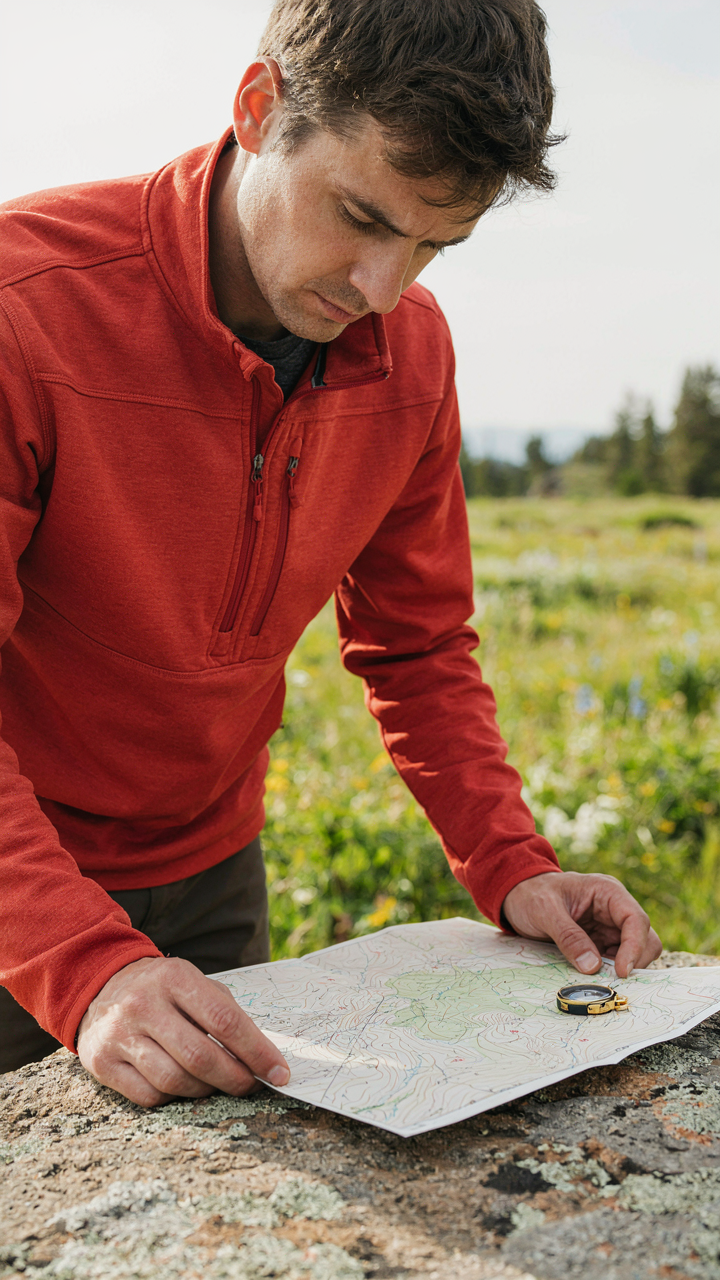
You want to feel prepared so you don’t look unprepared. The mechanism is simple: terrain dictates what kills you, and weather accelerates the timeline. Military planners call this “reconnaissance.” On a hike, it means you gather specific data about elevation gain, trail surface, water sources, and weather patterns before you pack a single item. A trail app showing three miles of hiking tells you nothing. Elevation gain, trail condition reports from the past week, and hourly weather forecasts tell you everything.
Most hikers skip this step and pack the same gear for every trip. That’s how people carry rope they’ll never use and forget water they absolutely need. Check the specific trail’s elevation profile, recent trip reports, and the forecast for your exact hiking window. Ground conditions change fast. A dry trail becomes a mud trap after rain. A sunny morning turns into afternoon thunderstorms at altitude. You’re not gathering information to feel informed. You’re gathering it to make one decision: what gear prevents failure on this specific hike.
Match Your Gear To Real Threats
Resource allocation in combat means deploying units where they stop enemy advances. On a hike, it means your pack contents answer specific threats your reconnaissance uncovered, not generic “what ifs.” If the forecast shows clear skies and sixty-degree temps, a heavy rain jacket doesn’t earn its weight. If the trail is a well-marked loop with water stations, a GPS device and water filter tablets stay home. If elevation gain exceeds three thousand feet, caloric density of your food matters more than variety.
The real problem with most checklists is they’re static. They list items as if every hike is the same hike. Your loadout shifts based on three variables: distance, elevation, and weather. A five-mile flat trail in sunshine needs different gear than a ten-mile alpine climb in variable conditions. Build your base pack first. Then add or subtract based on what your reconnaissance revealed. Your pack weight should reflect the actual threat profile, not worst-case paranoia. Check the forecast one more time the morning of your hike and adjust accordingly. That’s the protocol.
Deconstructing The “Hiking Essentials List”: Ditch The Excess
Single Purpose Gear You’re Carrying For No Reason
You want to feel prepared. That’s the real reason you’re reading this. The mechanism is simple: your brain mistakes quantity for competence. You pack a dedicated item for each scenario because it feels like you’ve solved the problem. You haven’t. You’ve just added weight. A headlamp, a flashlight, and your phone’s light are the same tool. A full knife, a multi-tool, and scissors do overlapping jobs. Cut the duplicates. Every single-purpose item on your pack needs to earn its place by doing something nothing else does.
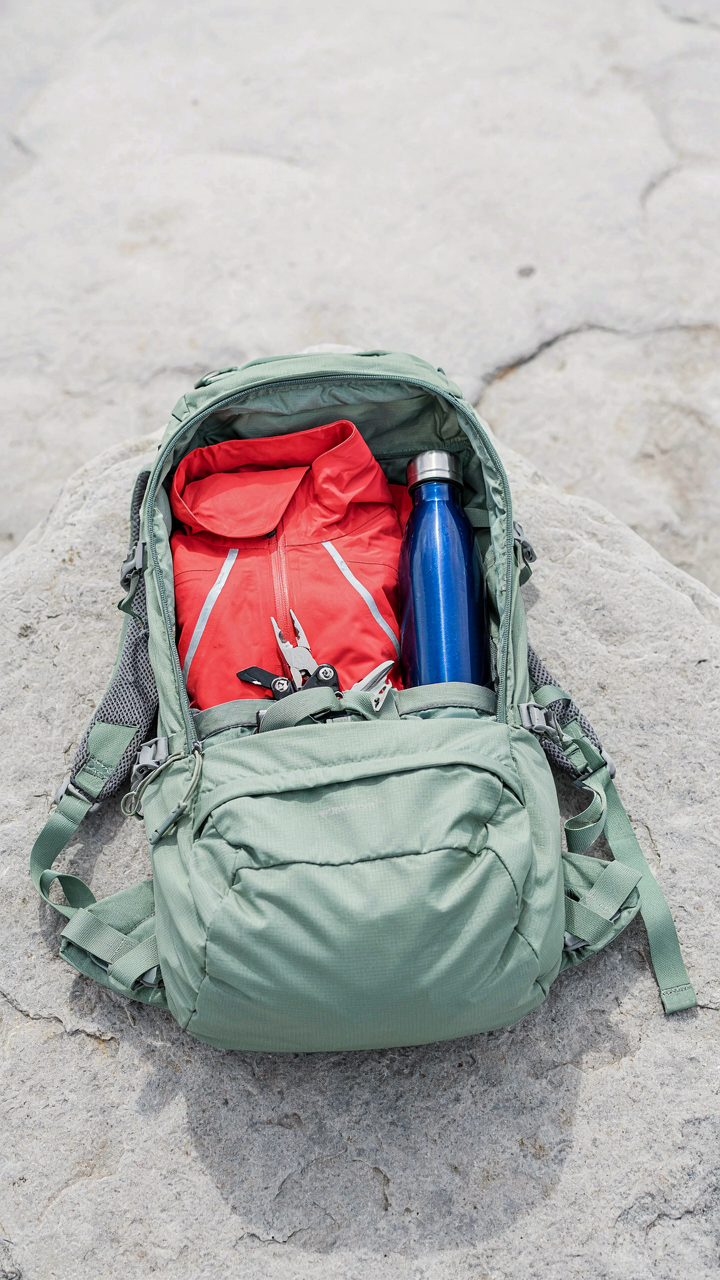
The gap between what you think you need and what actually works on the trail is where most first-timers fail. A dedicated repair kit, a separate first aid pouch, a standalone emergency whistle, a fire-starting kit. Remove them. Replace them with one compact multi-tool, one small first aid wrap, one lighter in your jacket pocket. The rule: if another item already handles 80% of that tool’s function, it stays home. Your pack weight drops. Your mobility increases. You actually move faster and safer because you’re not exhausted before mile two.
Actual Gear That Handles Multiple Demands
Efficiency in logistics means eliminating redundancy. Military supply chains learned this decades ago: one item that serves five functions beats five items that serve one each. Your hiking kit should follow the same model. A quality backpack with compression straps holds your layers tight and becomes a pillow when stuffed with a jacket. Trekking poles stabilize your descent, create a tent frame in emergencies, and probe snow ahead. A bandana works as a headband, a sweat rag, a makeshift filter, and a signal cloth. These items don’t compromise on their primary job. They simply do more.
The real advantage isn’t space. It’s psychological. You stop second-guessing your pack halfway up the trail. You know every item pulls weight. This confidence matters more than people admit because doubt drains you faster than elevation does. A lightweight rain jacket doubles as wind protection and an emergency tarp. A sturdy water bottle becomes a cooking vessel at camp. Pick gear that stacks functions without trade-offs. Before you zip your pack, ask: what else does this do? If the answer is nothing, either swap it or leave it behind.
Training Your Trekking Mind: More Crucial Than Any Hiking Checklist

The Breaking Point Between Plans And Reality
You want the checklist because you think it guarantees control. It doesn’t. The real mechanism at work here is cognitive load under stress. When your body gets tired and conditions shift, your working memory collapses. Your prefrontal cortex goes offline. A checklist won’t save you then. What saves you is mental rehearsal built before the hike, not during it.
Mental resilience isn’t about positive thinking. It’s about problem decomposition under fatigue. On the trail, you won’t solve novel problems by willpower. You solve them by having already solved similar problems in your head. Run through failure scenarios before you leave. What if a stream crossing floods? What if your group moves slower than planned? What if weather turns mid-route? Don’t imagine happy endings. Imagine specific obstacles and your exact response to each one.
Seeing Before You Look
Situational awareness isn’t pathfinding. Pathfinding is linear: follow the trail markers, read the map, don’t get lost. Situational awareness is the constant feed of data you’re processing but not consciously noticing. It’s the shift in wind direction, the smell of rain coming, the texture change in the ground under your feet that signals a switchback is loose, the sound of your hiking partner’s breathing changing.
The difference is immediate tactical value. You’re not collecting data for later. You’re collecting data to adjust in real time. Watch for how your body responds to exertion at different elevations before you hit the real climb. Notice which group members slow at specific terrain types. Observe how weather patterns move across ridgelines on your hike. This loop of observation and micro-adjustment keeps you ahead of problems, not reacting to them after they’ve already cost you time or safety.
Summer Hiking Essentials: Climate Control Over Comfort

Water And Core Temperature Regulation
You want to feel comfortable on the trail. That’s not the real issue. The real issue is that your body has one job on a hike: move forward. Everything else, including comfort, is noise. Thermoregulation is pure biology. Your core temperature needs to stay between 97 and 99 degrees Fahrenheit. Dehydration destabilizes this system faster than anything else because sweat is your only cooling mechanism above 95 degrees ambient temperature.
Most hikers treat water as optional. They pack a bottle and call it done. Wrong. You need to drink before you feel thirsty because thirst is a late indicator. Start with half a liter per hour in mild conditions, then adjust for heat, elevation, and effort. Your sweat rate determines everything. Strip layers before you overheat, not after. Once core temperature rises past 101 degrees, your cognition breaks down and decisions get worse.
Heat Illness Recognition And Response
Heat exhaustion and heat stroke are not the same problem, and treating them like twins will kill someone. Heat exhaustion is recoverable in the field. Heat stroke is a medical emergency that requires immediate descent and cooling. The distinction matters because the mechanism is different: exhaustion means your thermoregulation is failing but your brain is still working. Stroke means your brain is cooking.
- Excessive Sweating With Nausea: Body is dumping fluids trying to cool down but losing electrolytes faster than water. Move to shade, drink electrolyte solution, reduce pace immediately.
- Confusion Or Slurred Speech: Brain temperature has crossed the threshold into organ damage territory. This is heat stroke. Descend now. Remove layers. Pour water on skin and core body areas.
- Dizziness With Normal Skin Temperature: Dehydration has dropped blood volume. Sit down, drink water and sodium together, wait 10 minutes before moving. Salt without water pulls fluid out of cells.
- Muscle Cramps In Legs Or Abdomen: Electrolyte imbalance from sweat loss, not just water loss. Stretching helps temporarily, but you need sodium. Electrolyte tabs or salty snacks stop the cycle.
- Cessation Of Sweating In High Heat: Dangerous sign. Body has depleted fluid reserves. This accelerates heat stroke. Descend immediately while core temperature is still manageable.
The mechanism is simple: dehydration narrows your safety margin. A hiker with full fluid reserves can absorb a temperature spike and recover. A dehydrated hiker cannot. Drink electrolyte solution, not just water, when you’re sweating hard for over an hour.
Beyond Packing List For Hiking: Understanding Survival Priorities

The Real Survival Ladder
You want this section because you’re afraid of looking unprepared, and afraid matters less than physics. Survival follows a hierarchy borrowed from military triage: address what kills you fastest first. On a hike, that’s shelter, then water, then fire, then signal. Most checklists bury this logic under gear brand names and redundant items. The hierarchy inverts typical packing order because your body fails in predictable stages. Hypothermia arrives in hours. Dehydration in a day. Starvation in weeks.
Shelter stops heat loss. Your core temperature drops three degrees and cognitive function collapses. Water keeps your blood volume stable so your organs function. Fire provides warmth and psychological stability. Signal gets rescue to you. A first-timer packs a tent but skips water treatment, or loads gadgets but forgets a rain jacket. The checklist works backward from what actually matters. Prioritize based on survival timeline, not on what fits neatly into a backpack.
What You Can Actually Build On The Trail
The common advice is to “bring everything you need.” That’s incomplete and expensive. You improvise because the terrain offers resources most checklists ignore. Shelter doesn’t mean your tent failed. It means finding a fallen tree or rock overhang that blocks wind. You layer leaves or evergreen boughs for insulation. Water doesn’t require your filter if you boil it. Collect from moving sources away from animal paths. Fire builds from dead standing wood, not packed kindling. Signal works with stones arranged in an X, smoke during day, flashlight at night.
Your job before the hike is learning to spot these resources so you recognize them under stress. Study the terrain type you’re entering. Alpine zones have exposed rock for shelter. Forests have dense deadfall for fuel. Valleys have water flow. A working checklist includes one page of “natural resources by terrain” that you actually read. When you deviate from planned routes or camp longer than expected, these skills matter more than your backup battery pack.
The Minimalist’s Hiking Essential: Skills Trump Stuff

Reading Terrain Without A Device
You want the gear list to feel complete because owning the right equipment makes you feel prepared. It doesn’t. The real skill is navigation, borrowed from military cartography: terrain association. You read the land itself, not the GPS screen. Map and compass work because they force you to match contours, ridgelines, and valley patterns to the physical world in front of you. This builds spatial reasoning that keeps you oriented even when technology fails or batteries die.
- Contour Lines: Represent elevation changes. Tight clusters mean steep terrain; spaced lines mean gentle slopes. Learning to visualize 3D terrain from these lines is non-negotiable.
- Orienting The Map: Align map north with magnetic north using your compass. This simple step eliminates most navigation errors before they start.
- Triangulation: Identify two known landmarks on the map, align your compass to each, and cross the bearing lines to find your location. Works when trails disappear.
- Declination Adjustment: The difference between magnetic north and true north varies by location. Ignore this and your bearings drift miles off course over distance.
- Handrail Features: Follow natural or human-made lines like ridges, streams, or power lines. These keep you on track without constant map checking.
Most people buy a GPS and think navigation is solved. It isn’t. Devices fail, charge depletes, and signal vanishes in canyons. Map and compass literacy means you navigate by reading the actual terrain, not battery life. Practice on day hikes near home until identifying ridgelines and saddle points becomes automatic, not something you think about.
Stopping Bleeding Before It Stops You
Emergency first aid isn’t about dramatic rescues or tourniquets. Most hiking injuries are minor and become serious only through neglect or panic. You need to know how to stop bleeding, stabilize sprains, and prevent infection because these three problems account for almost every real trail incident that ends badly. The mechanism is simple: small problems stay small if you act fast and correctly.
Your first aid responsibility on trail is wound management and preventing shock. For bleeding, direct pressure with clean fabric for ten to fifteen minutes typically controls it. Elevation helps gravity. For sprains, immobilize the joint immediately, apply ice if available, and compress with tape or wrap. Infection prevention matters more than pain relief, so clean the wound thoroughly and keep it dry. Know your limits. You treat what stays treatable out there. Anything requiring surgery or IV fluids means immediate descent and professional help, no exceptions.
The Post Hike Debrief: Your Ultimate Hiking Tips Feedback Loop

What Your Gear Actually Told You
You want to believe your pre-hike research was bulletproof. It wasn’t. Gear performs under real conditions, not in theory, and most hikers never extract the data sitting right in front of them. Think of your hike as a controlled experiment where variables like terrain, weather, and your actual fitness level test every piece of equipment against its intended purpose.
Write down three things the moment you finish: what failed, what surprised you, and what you didn’t use. Boot fit matters only after miles. A pack that felt balanced at the trailhead might ride wrong on descents. Water capacity that seemed excessive becomes obvious when you’re dry at mile four. Compare what you predicted versus what happened. This gap is where your next checklist gets built.
How You Actually Move Through A Hike
Most advice says “practice your system.” That’s incomplete. Systems fail under fatigue and real conditions reveal what actually works for your body and decision-making. Start your next hike knowing exactly which breaks you took, how you fueled, and when your pace dropped. Track mile markers or time intervals, not just distance.
The debrief mechanism is simple: create a one-page form with columns for time, location, physical state, decisions made, and what worked. Fill it during the hike if possible, immediately after if not. Review it before your next trip. Your body has a rhythm. Find it, document it, and stop guessing about pacing and nutrition.
Your Biggest Obstacle Isn’t The Mountain; It’s Your Mind’s Addiction To External Validation

Most people never hike because they’re waiting for permission. Permission from Instagram followers, from friends who validate the choice, from the perfect weather forecast. You don’t need a hiking trip checklist to matter. You need to move. Pack your gear today, pick a trail within driving distance, and go alone. The mountain doesn’t care about your credentials. Neither should you.