
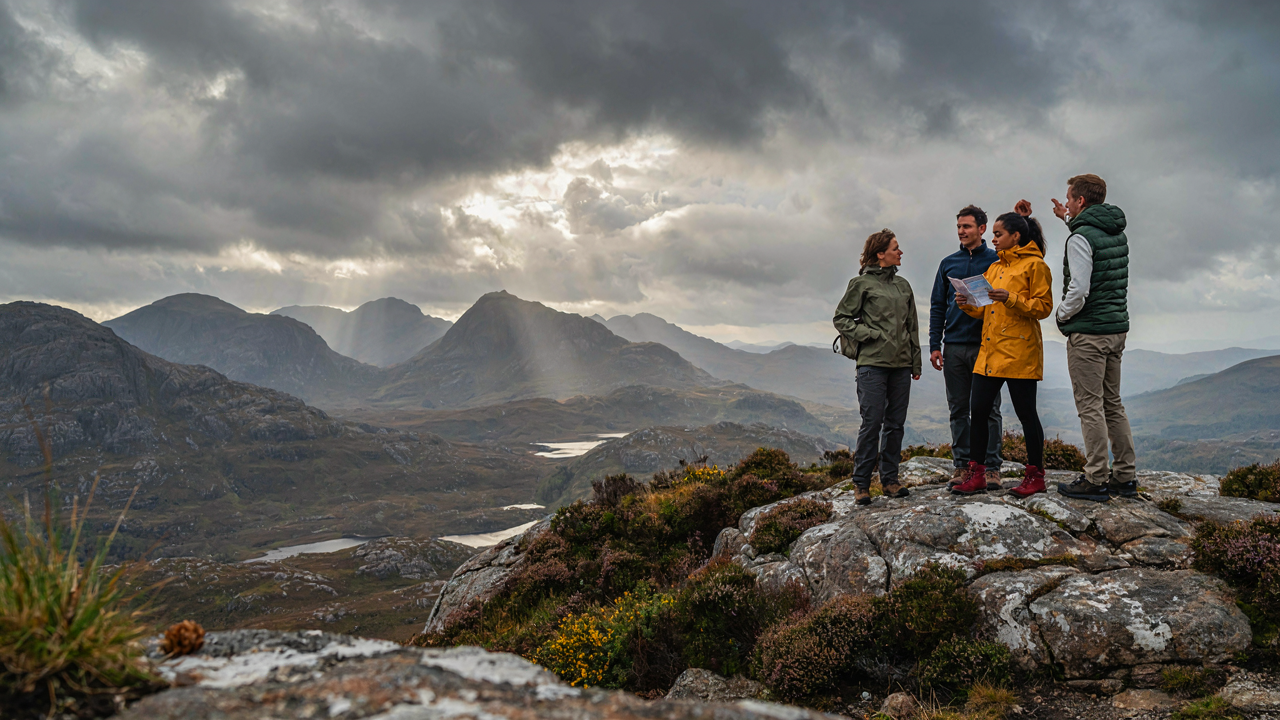
The Myth Of The ‘Easy’ Scotland Hike

What Marketing Calls Accessible Terrain
You want to believe Scotland’s hills are forgiving because it softens the gap between your fitness level and reality. Here’s what actually happens: guidebooks rate difficulty by distance and elevation gain alone, ignoring the terrain’s hostility coefficient. A 12-mile walk with 2,000 feet of ascent sounds manageable. The Highlands don’t care about your math. Bog, exposed ridgelines, and weather systems that shift in hours turn moderate hikes into survival exercises.
The Scottish mountain environment operates like a leverage system in physics. Small input changes produce outsized output consequences. A 10-degree temperature drop plus 20-knot wind plus wet ground doesn’t make a hike 10 percent harder. It compounds. Most hikers only account for the static variables (distance, elevation) and ignore the dynamic multipliers (conditions, exposure, ground composition). This gap between perceived and actual difficulty kills preparation.
What The Ground Actually Demands

Common hiking advice gets this wrong: it treats the Highlands like they’re managed trails with predictable surfaces. They’re not. You navigate peat bog, scree fields, and heather that hides ankle-breaking holes. The ground actively resists forward motion. Bog alone can reduce your pace by 40 to 60 percent compared to firm ground. A trail marked as three hours becomes five. Your legs burn differently on uneven terrain than on switchbacks. Cardiovascular fitness means almost nothing when your foot sinks six inches into spongy ground every third step.
Weather exposure compounds ground difficulty. Scotland’s ridge walks sit at elevations where conditions change without warning. Cairngorms and Ben Nevis experience freezing rain and visibility drops to 50 feet in summer. A hike rated “moderate” becomes genuinely dangerous when you can’t see the path and wind tries to push you off an edge. The ground demands specific footwear, pacing discipline, and the ability to turn back without ego interference. Most hikers arrive underprepared for navigation in white-out conditions.

Beyond The Postcard: Real Scotland Highlands Photography

Capturing Rugged Authenticity
You want proof that you were there. That’s the real reason you care about the shot. Most hiking photography advice tells you to find the “golden hour” and compose symmetrically. That’s wrong. The Highlands don’t reward composition theory—they reward documentation of actual conditions. Weather, isolation, and terrain are the story. Your camera should capture them as they exist, not as Instagram demands them to be.
The mechanism is simple: contrast sells authenticity. Dark storm clouds over exposed rock. A single hiker dwarfed by ridge. Mud on boots. Mist erasing the distant peaks. These elements register as true because they match what the body experiences while hiking—exposure, scale, uncertainty. Stop waiting for the light to be perfect. Shoot what’s actually in front of you. The real image will always outperform the composed one.
Light And Shadow For Dramatic Effect
Physics calls this contrast ratio—the relationship between the brightest and darkest values in a frame. In the Highlands, you’re managing extreme ratios because the terrain moves through full sun to deep shadow within meters. Most photographers overexpose to save the dark areas. Wrong move. Preserve the shadows. They’re what make the landscape read as three-dimensional and severe.
Early morning and late afternoon don’t work here because the angle is too shallow. Midday overhead light, which most advice dismisses, actually cuts through cloud cover and creates definition on ridges and stone. Overcast skies flatten depth—use them for texture detail instead. Shoot after rain when rock surfaces hold moisture and reflect light unpredictably. Your exposure meter will fight you. Bracket exposures, then choose the frame where shadows hold detail but don’t crush to black. This single decision separates photos that look like postcards from ones that look like evidence.
The Highland Gear Imperative: No Room For Amateurs
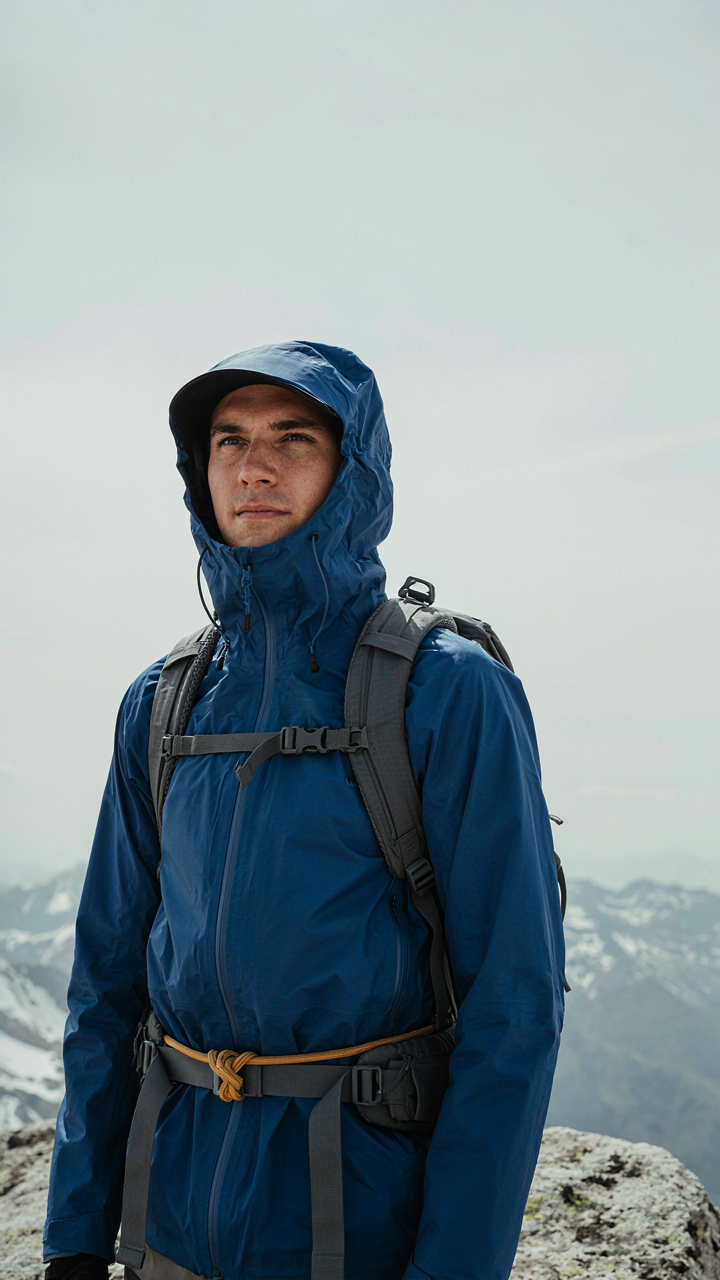
What Actually Belongs In Your Pack
You want gear that signals competence without the price tag proving desperation. Here’s the real mechanism: the Highlands kills through exposure and navigation failure, not through missing a fancy gadget. Apply the military principle of load discipline—every item must solve a specific failure mode or it’s dead weight. The gap between novice and experienced hikers isn’t expensive equipment; it’s ruthless elimination of anything that doesn’t prevent injury or death.
- Waterproof shell jacket: Non-negotiable. Rain comes horizontal in the Highlands. Breathable Gore-Tex or equivalent prevents both soaking and overheating during exertion.
- Map and compass: Not backup to your phone. Primary navigation tool. Batteries die. Signal vanishes. These don’t.
- Insulation layer: Fleece or down. Not for comfort during the hike—for survival if weather forces an unplanned stop or descent delay.
- Sturdy boots with ankle support: Bog, rock, and uneven terrain punish poor footwear. Quality matters here more than anywhere else in your kit.
- Headtorch with spare batteries: You’ll misjudge daylight. Darkness comes fast in winter. This prevents panic and dangerous navigation errors.
Everything else is negotiable. Merino base layer, hydration bladder, trekking poles—these optimize the experience but don’t determine outcome. Most hikers overpack because they confuse preparedness with possession. Strip your bag to its actual function: keep you alive and help you navigate. Everything that doesn’t do that leaves the pack.
The Layering System That Actually Works
Forget the generic “three layers” advice sold in outdoor blogs. The Highlands demands an active system where you adjust every 30 to 45 minutes based on exertion and wind exposure. This is thermodynamics applied to your body: you generate heat during steep climbs, then lose it rapidly during descents or windswept plateaus. Static layering kills people.
Your base layer traps moisture away from skin or sheds it fast—wool does both, synthetics less reliably. Your mid layer insulates even when damp, which is why down fails here and fleece or synthetic insulation stays functional. Your shell stops wind and rain without trapping sweat. The mechanism isn’t the layers themselves; it’s your willingness to shed the mid-layer on the climb, then pull it back before the descent. Most hikers either stay cold or get soaked because they treat layering as setup-and-forget. It’s not. You manage it actively or you manage hypothermia risk.
Navigating The Unseen: The Psychological Terrain
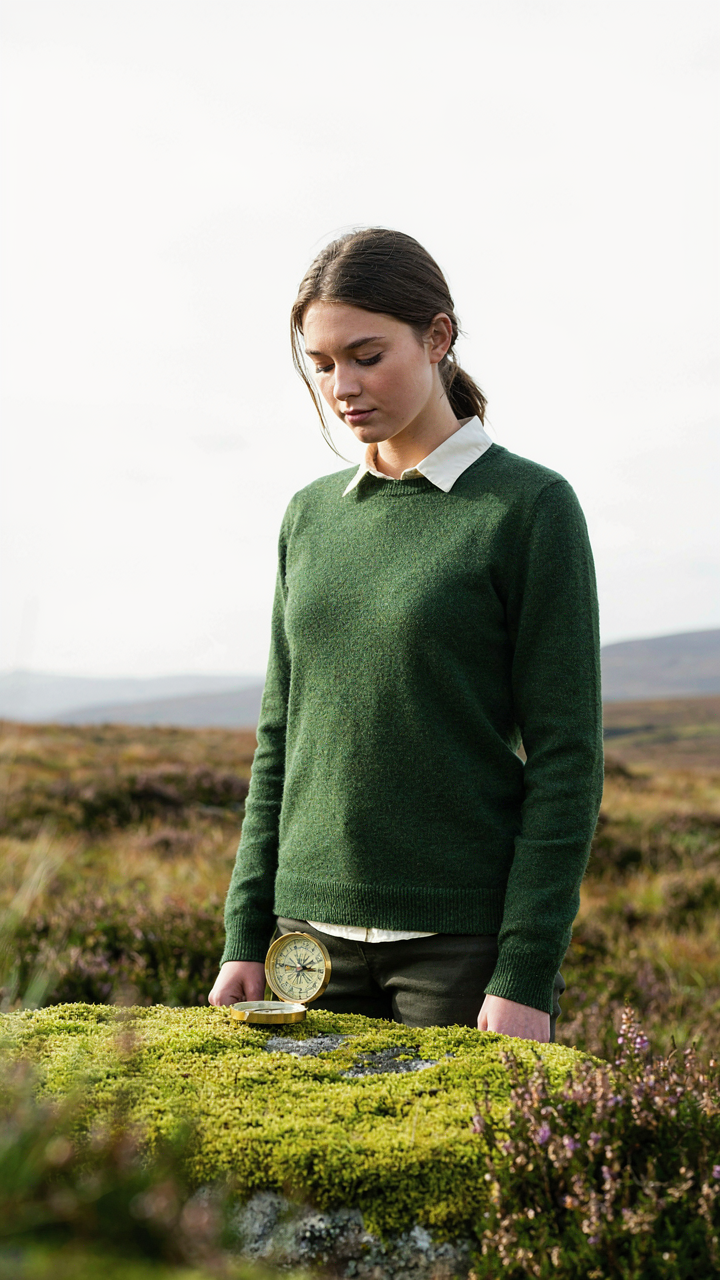
Stoicism Of The Lone Hiker
You want this section because you’re afraid you’ll panic out there and look weak to yourself. The real mechanism is this: Scottish Highland hiking forces you into extended periods where external stimuli drop away, and your brain fills the void with catastrophic narratives. Stoicism, borrowed from military strategy, teaches negative visualization as a control tool. The hiker who pre-imagines a blizzard at 800 meters on Ben Nevis doesn’t collapse when conditions turn. He recognizes the scenario. He’s already decided how to respond.
Most hikers misread this as emotional suppression. Wrong. Stoicism isn’t about not feeling fear. It’s about separating the fear from the decision. On a ten-hour ridge walk in the Cairngorms, your nervous system will spike multiple times. Weather changes fast. Legs fail. Visibility vanishes. The stoic hiker accepts these events as neutral data, not personal threats. He moves through them because he’s pre-decided that discomfort is the cost of entry, not a signal to quit.
Mental Fortitude For Isolation
Isolation in the Highlands doesn’t mean loneliness. It means operating without external validation or rescue options for six to eight hours. Your brain notices this immediately and manufactures urgency where none exists. Boredom becomes panic. Fatigue becomes crisis. The mechanism is simple: without other people present, your internal monologue becomes the only feedback loop. If that loop runs on doubt, you’re finished before you start.
Mental fortitude here is built through repetition on shorter routes first. Ben Lomond or Schiehallion trains the nervous system to tolerate isolation without spiraling. You log hours in silence. Your brain learns that quiet doesn’t mean danger. Then you extend. Five hours solo becomes eight. Single peak becomes ridge traverse. Each iteration rewires your threshold for discomfort. The protocol is this: never jump to multi-day expeditions. Build tolerance methodically, or your mind will sabotage you when it matters.
The “Rewilding Your Route” Protocol For Best Hikes In Scotland
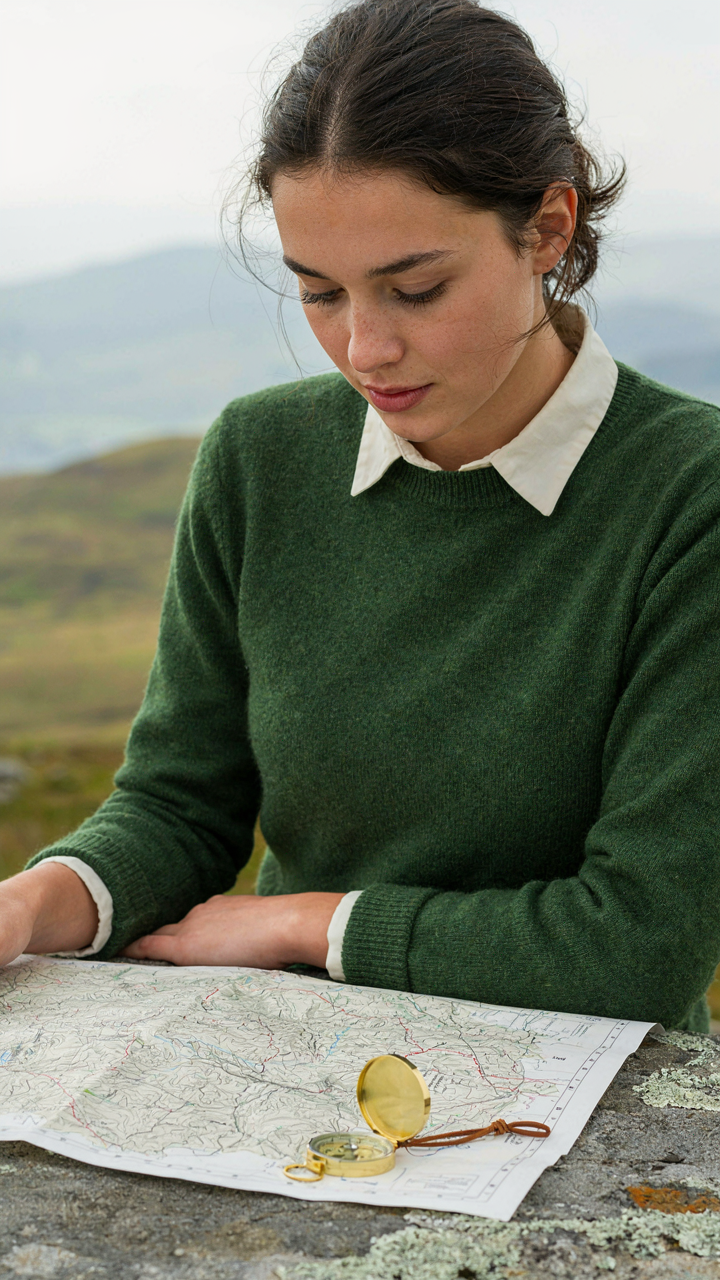
Navigating Beyond The Marked Path
You want to believe you’re an explorer. You’re not. You’re following a line someone else drew. The mechanism here is that marked trails compress the Highlands into a tourist product, and your brain interprets constraints as safety. Off-grid exploration works like navigation in military strategy: you’re trading the security of a known route for information density. Unmarked terrain forces decision-making at every step. You process the land instead of consuming it.
The Highlands have no legal requirement to stay on paths. Hikers mistake guidebook trails for the only option. Reality: the most interesting terrain sits between marked routes, where people rarely go. You need a 1:50,000 Ordnance Survey map, a compass, and the ability to read contour lines. Start with low-risk terrain near established paths. Move incrementally into deeper country as your terrain reading improves. The shift from following to navigating changes how you move through the landscape entirely.
Reading Terrain Like A Map
Cartography teaches a specific skill: translating three-dimensional space into two-dimensional symbols. Apply this backward. A contour line isn’t decorative. It tells you the angle of ascent, where water flows, where wind accelerates, and where ground becomes unstable. Most hikers look at elevation gain as a number. They should read it as a story about rock type, vegetation change, and exposure. The Highlands’ geology shifts constantly. Granite behaves differently than schist underfoot. Knowing which you’re crossing changes your footing strategy before you slip.
Develop contour literacy through deliberate practice, not osmosis. Pick a 2-kilometer section. Study the map for five minutes. Predict where streams run, where ridgelines flatten, where valleys pinch. Walk it. Compare prediction to reality. Repeat monthly in different terrain. This builds an internalized map that works faster than consulting paper mid-hike. The mechanism is simple: terrain reading stops being abstract once you’ve felt the ground confirm the map three times. Your decision speed increases. Route options multiply. You stop being dependent on marked paths.
Weather Warfare: Conquering The Scottish Elements
The Weather App Trap
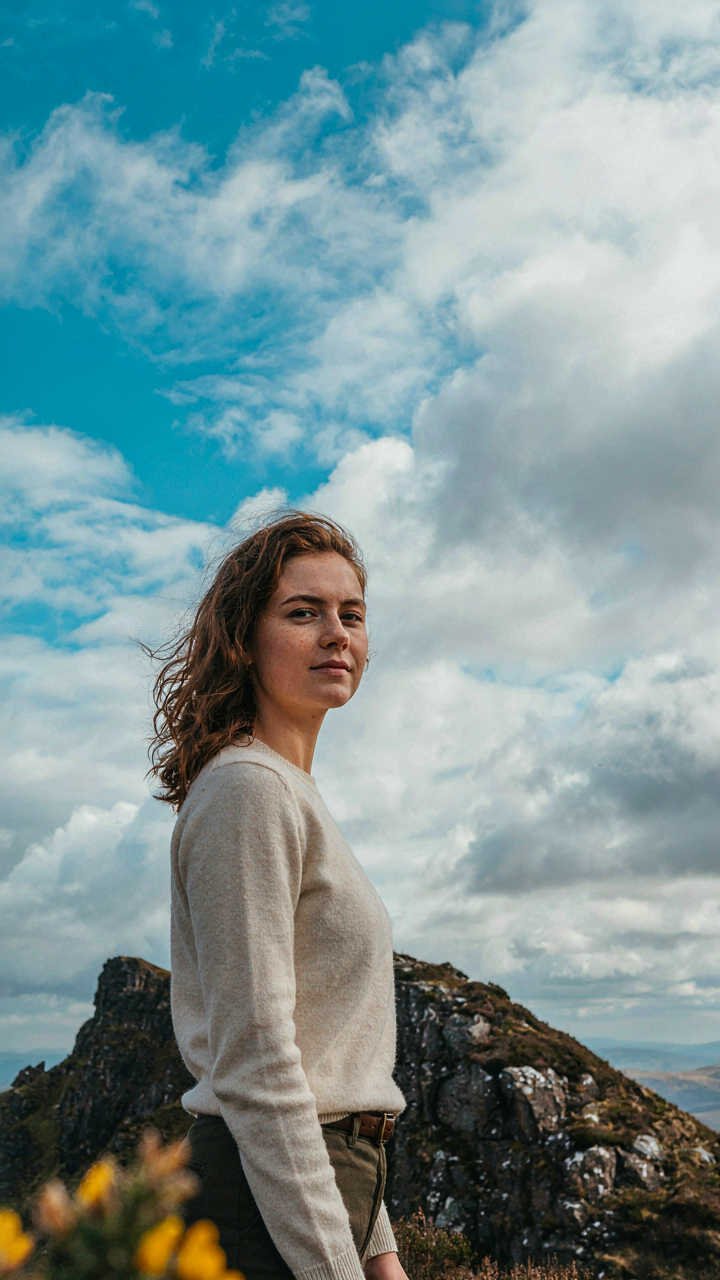
You check the forecast to feel in control, but the Scottish Highlands operate on a different system than the meteorological model predicts. The issue is lag: weather apps aggregate data from stations miles away, often at lower elevations, and update on cycles that miss the real-time mechanics of mountain weather. The Highlands generate their own pressure systems through terrain interaction. A ridge face facing west catches Atlantic moisture differently than a valley 500 meters away. No app captures this.
The mechanism is simple: warm, moist air hits cold terrain and has nowhere to go but up. As it rises, pressure drops, temperature falls, and water condenses into cloud or rain. This happens in minutes, not the hourly updates your phone shows. Learn to read the sky instead. Watch cloud behavior on approach. If clouds move upslope faster than your pace, precipitation arrives soon. If the cloud base sits above the ridgeline, you have time.
Terrain Creates Its Own Weather
Microclimate mechanics come from thermodynamics: the same principle explains why a car heats in sunlight and why a valley fills with cold air at night. In the Highlands, aspect determines everything. A north-facing corrie stays frozen weeks longer than an adjacent south-facing slope because direct solar radiation intensity varies by angle. Wind funnels through passes at speeds 40 percent higher than surrounding terrain. Altitude drops temperature roughly 1 degree Celsius per 100 meters gained.
Rapid shifts happen because the Highlands compress multiple climate zones into vertical space. You start in temperate conditions at 300 meters and enter subarctic conditions by 900 meters. A storm that misses one glen hits the adjacent one because wind direction changes across ridgelines. The real protocol: check conditions at the trailhead, then expect a full weather change at the halfway point. Carry layers for all seasons regardless of the forecast. This isn’t paranoia; it’s reading the terrain.
The Unspoken Rules Of Scotland Hiking Trails
Leave No Trace Isn’t About Virtue
You want people to think you’re the type of person who respects wild places. That’s the real reason you’re reading this. Here’s what actually matters: Leave No Trace is a systems framework borrowed from ecology and resource management. Think of the Scottish Highlands like a finite ecosystem with carrying capacity. Exceed it through careless behavior, and the land degrades permanently. Access gets restricted. Trails close. You lose the thing you came for.
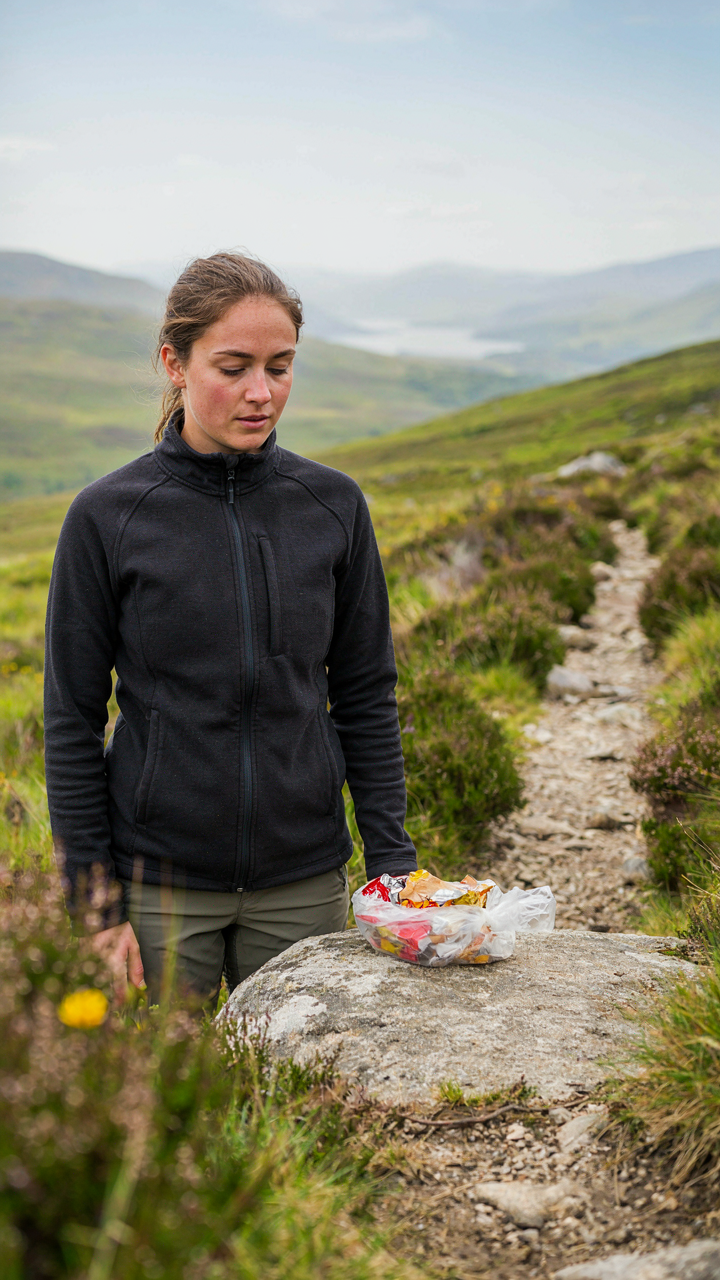
The mechanism is simple. Every footfall compacts soil, kills vegetation, and accelerates erosion. Multiply that by thousands of hikers per season, and you’ve engineered trail widening, mudslide zones, and destroyed riparian buffers. The Highlands aren’t wilderness anymore in most popular areas, they’re managed land. Your job is to move through them without accelerating that management need. Pack out everything you pack in. Stay on marked paths. Camp only where permitted. Don’t urinate or defecate within 30 meters of water sources. These aren’t suggestions.
Walking With Intent, Not Around It
Respecting local culture and wildlife doesn’t mean philosophizing about connection. It means knowing the actual rules, the actual animals, and the actual people whose living depends on the land. Red deer populations are actively managed through culling each autumn and winter. If you hike during this season, you’re in an active harvest zone. Estates post signs. Read them. Golden eagles nest on cliff faces between February and August. Stay back 500 meters from known nesting sites or you disrupt breeding cycles. Highland communities maintain estates through deer stalking and fishing as primary income. Treating this as your personal playground costs them money and access.
Scottish access rights grant you the right to wild camp in dispersed areas, but not on cultivated land or near buildings without permission. Not everywhere is open. The Scottish Outdoor Access Code defines this. Know it before you go. Local stalkers and keepers will confront you if you’re in restricted zones during active seasons. That confrontation isn’t tradition or drama, it’s their job. The mechanism: respect these boundaries because trespassing during sensitive seasons costs local operators income and pushes them toward excluding all hikers permanently.
Strategic Endurance: An Economic Approach To Highland Hikes

Fuel Your Body Like An Investment Portfolio
You want to believe you can push harder and longer than you actually can. That’s what this section is really about—denial dressed up as motivation. But here’s the mechanism: your body is a closed energy system. Biology calls this homeostasis. In hiking terms, it means every calorie you burn in the Scottish Highlands must come from somewhere, and once it’s gone, performance collapses. Most hikers treat fuel as an afterthought. They eat when they’re starving. By then, glycogen stores are depleted and decision-making fails.
The real play is frontloading calories before the deficit becomes obvious. Eat predictably on a schedule, not by hunger cues. Early morning should include complex carbohydrates and fat before you leave the trailhead. At mile two, you’re not hungry yet, but your body has already begun metabolizing stored energy. Consume 200-300 calories every 90 minutes on longer routes. This prevents the bonk—the sudden collapse where your legs stop responding and your mind goes foggy. Blood sugar stability keeps the Highland terrain manageable instead of turning it into a survival situation.
Strategic Allocation Beats Willpower
The typical advice says pace yourself evenly. That’s incomplete. You’re not distributing effort equally across terrain—you’re allocating your finite energy reserves to the sections that demand the most of you. Steep ascents in the Cairngorms burn exponentially more fuel than flat ground. A 1,200-meter climb over three miles demands precise resource management. Most hikers waste energy on climbs they could traverse slower, then hit the descent empty.
Map your route and identify where your reserves matter most. If descent is technical and exposed, preserve leg strength for that section rather than emptying yourself on the climb. Use uphill momentum strategically on moderate grades, but drop to a sustainable pace on steep sections where speed offers no advantage. Rationing isn’t about moving slower overall—it’s about spending energy where it actually gets you forward. On the final stretch back to the car, you should have just enough left, not zero. That margin is what prevents injury and poor decisions.
The Real Obstacle Isn’t The Terrain; It’s Your Romanticized Projection
You don’t need better gear or more training. You need to stop treating the Highlands like a Instagram filter and start treating them like what they are: a place that demands respect through honest effort. The mountains won’t care about your intentions. They care about your preparation. Pick one peak this month. Not someday. This month. Book it. The gap between dreamers and hikers isn’t ability. It’s the willingness to show up when the weather is shit.