
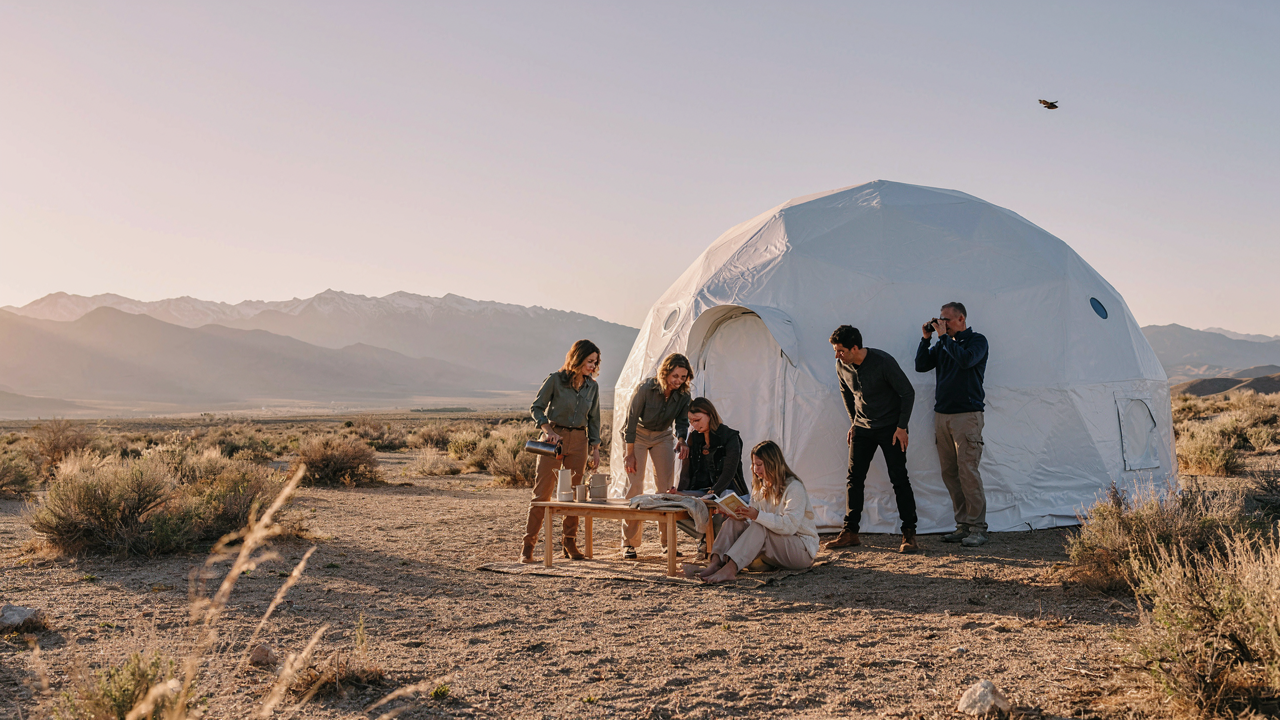
The Geodesic Dome Fallacy: Beyond Instagram Aesthetics

The Math That Makes It Real
You want the dome because it looks striking in photos. But the actual reason domes work comes from geometry, specifically from how structures distribute force. In engineering terms, domes operate under compression—stress travels along curved surfaces toward the foundation rather than concentrating at single points like rectangular frames do. This is why a geodesic dome can span large spaces with minimal internal support walls, and why they don’t collapse under snow or wind pressure the way flat-roofed structures do.
The geodesic pattern Buckminster Fuller popularized uses triangles because triangles are the only rigid polygon. Each triangle transfers load to its neighbors, creating redundancy. If one connection fails, the structure doesn’t cascade into failure. This matters practically: you can build a dome with thinner materials and fewer posts than a traditional A-frame cabin covering the same square footage. The trade-off is precision during construction—sloppy assembly negates the mathematical advantage.
Why Domes Actually Outperform Rectangles
The conventional wisdom says domes are just aesthetic choices. They’re not. A rectangular box requires perimeter walls and a roof system to manage wind and snow loads independently. Domes integrate those forces into a single load path. The hemispherical or dome shape means exterior pressure pushes inward and downward simultaneously, which the curved walls handle as pure compression. Rectangular structures must resist both bending and shear, requiring thicker walls or additional bracing.
This structural efficiency translates to three concrete advantages: reduced material costs, faster assembly in challenging terrain, and lower heating requirements due to minimized surface area relative to enclosed volume. The dome shape means 20 percent less exterior wall and roof surface than a rectangular building of equivalent interior space. When you’re glamping at elevation or in high-wind zones, this isn’t theoretical—it’s the difference between a structure that holds and one that requires engineering overrides to remain stable.
Deconstructing The Glamping Dome Experience

What Luxury Actually Means In Isolation
You want to feel like you’re roughing it without actually suffering. That’s the real transaction happening here, and glamping domes nail it because they solve a specific problem: conventional hotels strip away nature, and camping strips away comfort. Domes occupy the gap where both exist. The mechanism is friction reduction. You remove obstacles between desire and experience, which is why people pay premium rates. It’s not about thread count or marble countertops. It’s about sleeping under stars while your back doesn’t hurt.
The dome shape itself drives this efficiency. Traditional structures force you to compromise: close yourself in with walls or leave yourself exposed. A dome’s geometry creates enclosure without blockade. You see the sky through transparent or semi-transparent panels while walls protect you from weather and insects. This isn’t luxury theater. It’s a design solution that lets you access nature on your terms. The cost reflects engineering, not branding.
How Your Brain Responds To Immersive Environments
Neuroscience calls it biophilia, but here’s what actually happens: your nervous system categorizes environments as either threat or resource based on pattern recognition. Glamping domes trigger the resource response because they combine safety signals with natural stimuli simultaneously. Your brain detects walls and shelter, then detects sky and vegetation, and doesn’t have to choose between them. The contradiction doesn’t register as conflict because the dome resolves it structurally.
This immersion effect compounds over time inside the dome. Your cortisol baseline drops faster than it would in a hotel room because the environment doesn’t contradict itself every second. No hum of HVAC systems announcing human interference. No artificial lighting that conflicts with circadian cues. The sensory coherence lets your parasympathetic nervous system activate more completely. To lock this in during your stay, spend the first two hours after arrival doing nothing but observing from inside the dome. Your body’s recalibration happens in that window. Don’t fill it with activity or devices.
The Environmental Control Protocol

How Dome Shape Controls Temperature
You care about this section because a poorly insulated dome means you’re paying for heat or cooling that escapes immediately, turning your investment into a money pit. Thermodynamics gives us the principle of thermal resistance, or R-value, which measures how well a material blocks heat transfer. A dome’s geometry works against you here: the curved surface has more area than a rectangular box of equal volume, and that extra surface means more perimeter where heat bleeds out.
The real control mechanism is material selection paired with strategic layering. Double-wall polycarbonate or glass domes trap dead air space between layers, creating insulation without adding bulk. Fabric dome structures need insulation panels fitted into the frame itself, or a secondary thermal layer hung inside. Ventilation contradicts insulation, so the protocol is simple: seal the dome tight, then cut precise ventilation ports only where they serve a function, not scattered randomly. Each port becomes a calculated thermal leak that you’re choosing instead of suffering.
Capturing Light Without Losing Control
The tension here is real: you want maximum transparency for views and natural light, but glass and clear polycarbonate transmit heat directly into the space. Architectural glazing solved this decades ago with coatings and film treatments. Low-emissivity coatings on clear panels reflect infrared radiation while transmitting visible light, letting you keep the view without baking the interior in summer or hemorrhaging heat in winter.
Position matters more than most builders admit. South-facing panels catch the most solar load in temperate climates, so those demand the heat-rejecting treatment first. East and west exposures heat the space during morning and evening peaks. North-facing panels rarely need solar control but benefit from clarity for aesthetic reasons. Install operable shading systems inside the dome, not outside where weather degrades them. The mechanism that works: motorized roller shades or cellular blinds mounted on the interior perimeter, deployed on a timer or manual override, giving occupants real-time thermal control without renovation.
Geodesic Dome Tent Buying Guide: Investment, Not Expense

What Actually Breaks First
You’re scanning durability specs because you’re afraid of wasting money on something that collapses in three seasons. Here’s the mechanism: geodesic domes fail not from the structure itself, but from the connection points where panels meet the frame. The geometry distributes load evenly across surfaces, but fasteners, seals, and fabric attachment methods bear concentrated stress at nodes. This is structural engineering applied directly to your purchase decision.
Most domes outlast their fabric covering by years. The aluminum or steel frame handles weather cycles with minimal degradation. Your real problem is UV breakdown of the outer material and micromovement at joints causing fasteners to loosen. Inspect these failure points during site visits before buying. Test how the manufacturer secures panels to the frame. Poor engineering at connection points is how a structurally sound dome becomes unreliable.
Fabrics That Actually Resist Weather
Everyone says “look for UV protection” as if that’s actionable advice. It’s not. The real variable is fabric weight and weave density combined with coating chemistry. Heavier fabrics resist puncture and abrasion from wind-driven particles and ground contact. PVC coatings on polyester hold up longer than PU coatings in direct sunlight, but PU offers better flexibility in cold climates. The tradeoff is maintenance burden versus material cost.
Ask manufacturers for fabric weight in grams per square meter and UV stabilizer type. Coatings rated for 500+ hours of ASTM G154 UV exposure testing indicate real durability, not marketing claims. Check whether the fabric has hydrophobic backing to prevent condensation pooling inside. Single-layer fabrics fail faster than laminated construction. Confirm warranty coverage on fabric degradation, not just structural failure. Your buying decision hinges on matching climate stress to fabric specification, not brand reputation.
Optimizing Your Glamping Dome Vacation Spot

Where To Place Your Dome
You want your dome in the perfect spot because you’re betting your entire guest experience on it. Most people treat location as an afterthought, but it’s actually a supply chain problem. You’re sourcing three things simultaneously: natural protection, guest access, and operational efficiency. Get the site wrong and you hemorrhage money on infrastructure or lose bookings to competitors with better views.
Terrain slope determines your dome’s lifespan and your labor costs. A five to ten percent grade prevents water pooling while keeping foundation work manageable. Check soil drainage before committing to a location. Clay soil requires drainage systems; sand requires reinforcement. Survey the site in heavy rain to watch how water moves. Sites near tree lines offer wind protection, but trees drop debris that damages dome membranes and clog gutters. Position domes at least thirty feet from large trees. South facing placement maximizes winter solar gain; north facing provides summer shade in hot climates. The mechanism is simple: thermal load determines guest comfort without mechanical intervention.
Reducing Your Environmental Footprint
The common advice here is generic greenwashing. Recycled materials and solar panels don’t fix the core problem: a glamping dome on raw land still disrupts the existing ecosystem. Real environmental optimization means density and reversibility. The ecology principle of carrying capacity applies directly to glamping sites: the number of domes your land can support depends on how many you can service without degrading soil, water, and vegetation. More domes packed efficiently create lower per-unit environmental cost than sprawled domes requiring more roads and utilities.
Minimize ground disturbance during installation. Use helical anchors instead of concrete footings whenever soil conditions allow. Helical anchors compress soil rather than displace it, and you remove them completely when the dome comes down. Install composting toilets that process waste on-site instead of requiring septic systems. Direct all greywater through constructed wetlands or filtration systems before it enters groundwater. Rainwater harvesting reduces municipal water demand and cuts your operational expenses. Document these systems before your first guest arrives so you can quantify the environmental metrics you’re actually delivering, not just claiming.
Glamping Dome Ideas: The “Second Skin” Design

How To Control Temperature Without Breaking Capacity
You want your dome to feel luxurious without your guests sweating through sheets at 3 AM, which is why most operators ignore the actual mechanism: a dome’s shape creates dead zones where air doesn’t circulate. Thermodynamics teaches us about convection currents, and a dome is basically a sphere that traps heat at the apex while cold pools at ground level. That imbalance kills the guest experience faster than any booking platform can recover from bad reviews.
The real solution isn’t adding more AC units. It’s positioning air return vents at the dome’s highest point and intake vents near the floor, creating a circulation loop that fights the dome’s natural geometry. Install a smart thermostat that runs fans on low speed during shoulder hours, not just when temperature swings. Add thermal mass—concrete or stone elements inside the dome—to absorb daytime heat and release it slowly at night, reducing mechanical load by 30 to 40 percent. Most operators skip this and wonder why their energy bills spike.
- Apex return vent placement: Position exhaust outlets at the dome’s peak to pull rising hot air out before it stagnates. This prevents the “hot zone” guests feel directly under skylights.
- Ground-level intake zones: Low vents near the floor pull cooler air upward, creating controlled convection instead of fighting the dome’s natural stratification.
- Radiant floor heating: Hydronic tubing embedded in concrete slabs heats from below, reducing reliance on ceiling heaters and creating even temperature distribution.
- Thermal mass materials: Concrete pads, stone accents, or water features absorb solar gain during day and release it at night, stabilizing swings.
- Smart fan staging: Multiple low-speed fans run continuously rather than one high-speed unit cycling on and off, cutting temperature variance by half.
The mechanic here is simple: stop fighting the dome’s physics and work inside it. Set your HVAC to run baseline circulation constantly on low speed rather than reactive high-speed bursts. This produces guest comfort and reduces energy waste simultaneously.
Where Furniture Actually Goes In A Circular Space
Most glamping dome layouts fail because operators treat them like rectangles and shove furniture against curved walls, creating awkward gaps and making the space feel cramped instead of expansive. The actual principle is zoning, borrowed from retail design: divide the circular footprint into functional areas based on sight lines and traffic flow, not wall placement.
Start with the bed in the center-back position, elevated slightly so guests see out when lying down. Place seating in the front third as a distinct zone separated by a low console or plant divider, not furniture pushed to walls. This psychological separation makes a 400-square-foot space feel like multiple rooms. The dome’s curvature becomes an asset when you use it as a natural boundary between zones rather than fighting it. One walkway, clear and direct from entrance to bed, prevents the claustrophobic feeling most guests report in poorly laid-out domes. Keep the center of the floor clear, anchoring furniture to perimeter zones only.
Scaling Impact: Glamping Resorts Vs. Personal Retreats

The Unit Economics Problem
You want to know which path makes money faster. Here’s the mechanism: resort operations and personal retreats operate on fundamentally different cost structures borrowed from hospitality economics, where fixed costs determine your breakeven point. A resort has fixed costs that don’t scale down. A personal retreat does.
Resort domes require permanent staff, utility infrastructure, insurance premiums, and marketing budgets that exist whether you’re at 30% or 90% occupancy. A single dome on private land has minimal overhead. You’re not competing on volume. You’re competing on margin per guest. The resort model demands density to distribute those fixed costs across enough revenue days. The personal retreat model lets you be selective about when you operate.
Ownership Structure And Real Constraints
The difference isn’t philosophical. It’s operational. A resort dome is capital equipment in a commercial enterprise. A personal retreat dome is a private structure on your land. One requires investors, regulatory compliance, and documented profit targets. The other requires you to want guests there.
Most glamping resort operators fail because they underestimate how much staffing costs to run multiple domes at hospitality standards. You can’t have a dome sit empty while you handle bookings elsewhere. Personal retreat operators win by being hands-on or hiring one part-time manager instead of a full hospitality team. The choice determines whether you’re running a business or monetizing an asset you already use.
The Untapped Potential Of Camping Domes

What Tents Never Solved
You want to believe a tent can deliver comfort. It can’t. Tents are compromises masquerading as solutions, and the mechanism is simple: fabric stretched over poles creates zero thermal mass, zero structural rigidity, and zero protection from ground moisture. Domes solve this through load distribution. In engineering terms, a dome is a compression structure—forces flow downward and outward along curved surfaces instead of collecting at stress points like tent poles do. This isn’t theoretical. A dome’s shape means wind loads disperse rather than concentrate, interior temperature stabilizes faster, and the floor sits higher off damp ground.
The camping industry peddles the myth that tent design has plateaued. False. Glamping domes represent a category shift, not an upgrade. They introduce passive environmental control through geometry alone. Modern dome structures use high-grade materials like HDPE and PVC that handle UV exposure and temperature swings traditional tent fabrics fail at. When you occupy a dome, you’re not fighting physics anymore. You’re working with it.
The Comfort Economy Is Real
Minimalism sold people on deprivation. The real trend emerging is comfort without excess, which is different. Glamping domes capture this because they deliver tangible benefits without requiring constant maintenance or sacrifice. A dome interior stays warmer in cold months because the curved ceiling minimizes convection loss. Summer cooling works better too since air circulation improves with the open overhead space. Neither requires equipment beyond what you’d bring anyway.
The future of high-comfort camping depends on eliminating friction between shelter and inhabitant. Domes do this by removing the cognitive load of setup, teardown, and environmental worry. You arrive, the structure already performs. This isn’t luxury—it’s efficiency wearing a comfortable coat. Operators who understand this mechanism will capture market share from traditional glamping setups that still rely on rigid structures, poor insulation, and manual temperature control as selling points.
The Only Obstacle: Your Inability To Define The Experience You Crave

Most people browse glamping domes like they browse Netflix. They scroll, they compare prices, they never commit. The real question isn’t which dome to book. It’s what you’re actually running toward, not away from. Write down one specific moment you want to feel under that dome. One conversation. One sunrise. One thing that makes you actually alive. Then find the dome that makes that possible. Everything else is just tourism with better marketing.