
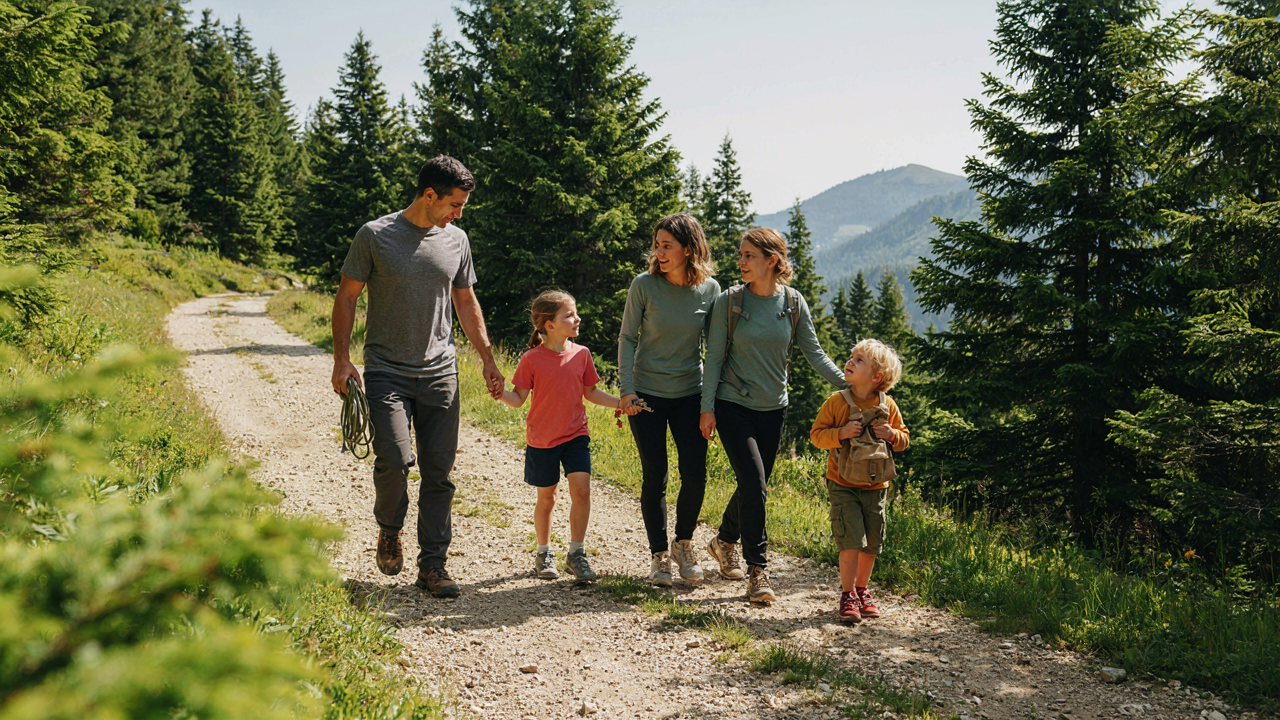
The Unspoken Truth About Family Adventure

Why Most Family Trips Fail
You’re planning this trip because you need proof that your family still functions as a unit. Most family hikes fail because parents confuse logistics with leadership. They plan the route, pack the gear, book the parking, then act shocked when everyone falls apart mile two. The mechanism is simple: you optimized for comfort and scenery instead of managing the gap between each person’s actual fitness, attention span, and willingness to be there.
The real failure point isn’t the weather or the trail difficulty. It’s that nobody discussed why they’re going or what happens when someone gets tired. Parents assume kids will naturally enjoy nature. Kids assume they’re being forced into punishment. That gap kills every trip. You need alignment before you leave the driveway, not damage control at the trailhead.
Redefining Success Beyond Instagram

Success on a family hike isn’t a summit photo or a miles-covered count. It’s whether people voluntarily sign up for the next one. The metric that matters is repeat participation, not highlight reel material. Most families optimize for the wrong outcome, then wonder why kids dread future trips. You’re measuring the wrong thing entirely.
Real success is this: everyone reaches a stopping point before they’re miserable, then quits while they still have energy left. That sounds counterintuitive because hiking culture celebrates endurance and achievement. Ignore that noise. When kids finish a hike feeling capable instead of exhausted, they internalize hiking as something they choose. When you stop before the breaking point, you control the narrative. That’s the protocol: cut the trip short by 20 to 30 minutes before anyone asks to leave.

Pre Hike Reconnaissance: Beyond The Brochure

What Trail Reviews Actually Tell You
You want to believe the five-star ratings because planning feels easier when someone else confirms the hike is “amazing.” Here’s what you’re missing: online reviews measure entertainment value, not logistics. A trail can be stunning and still destroy your family because the trailhead parking fills by 8 AM, the elevation gain isn’t where reviewers claim it is, or the “easy” descriptor comes from someone training for marathons.
The real reconnaissance step is inverting the review. Ignore the narrative. Extract three facts: trailhead access patterns (when does it fill, what’s the actual lot size), water and shade distribution (not whether it’s “scenic”), and failure points from negative reviews. Negative reviews almost always reveal logistical breakdowns, not opinion. A reviewer complaining about crowds at mile one is telling you something concrete. A reviewer saying “underwhelming views” is not.
Elevation Gain Requires Physics, Not Poetry
Elevation gain is physics applied to your family’s cardiovascular capacity, not a marketing metric. Think of it like load in engineering: the total vertical distance matters less than the grade distribution. A trail with 2,000 feet spread over eight miles plays differently than 2,000 feet compressed into three miles, even though the elevation is identical.
Start by reading the elevation profile, not the elevation summary. Most mapping tools show this. Look for where the grade steepens. If your kids handle 10 percent grade comfortably, a trail with a half-mile of 18 percent grade in the final stretch will break the trip’s momentum, regardless of average difficulty. Cross-reference the trail’s listed difficulty with actual elevation data from sources like CalTopo or the USGS. Then match it to your family’s proven performance on a similar terrain you’ve hiked before, not to someone else’s family.
The Minimalist Hiking Gear Imperative

Strip Down To Function
You want permission to buy less gear because buying more feels like control. Here’s the mechanism: every item you pack trades weight and bulk for a function you could already perform with something else. Think of it like load capacity in logistics. You have a fixed carrying budget. Exceed it and the system fails, not dramatically, but through accumulated friction that exhausts your family before mile two.
The common advice says “bring the Ten Essentials.” That’s incomplete. The Ten Essentials exist for emergency situations, not routine hiking. For a family day hike, you need a smaller stack: water container, food, a basic first aid item, sun protection, a jacket, a map or GPS device, and a headlamp. Everything else is negotiation between weight saved and comfort lost.
- Water container: A collapsible bottle or hydration pack holds 2-3 liters without adding rigid bulk when empty. Refill at natural sources to avoid carrying the full load the entire hike.
- Food: Pack calorie-dense items like nuts, nut butter packets, or energy bars. They compress into minimal space and deliver sustained energy without the water weight of fresh fruit.
- First aid: A small adhesive bandage, blister treatment, and pain reliever in a ziplock bag weigh ounces and cover 95% of field incidents on family hikes.
- Sun protection: Lightweight long sleeves and a hat prevent burn and heat exhaustion more effectively than sunscreen alone and don’t require reapplication.
- Jacket: A packable synthetic or down layer compresses to fist-size and regulates temperature. Bring one even on warm days. Weather changes without warning in mountains.
Strip the rest. No camp stove for a day hike. No tent. No sleeping bag. No water purification tablets if you’re not drinking from stagnant sources. The moment you add items “just in case” for hypothetical scenarios, you’ve abandoned minimalism and built in the exact friction that stops kids from wanting to hike again.
Gear That Earns Its Weight
Multi-use design is borrowed from industrial engineering: one object performs the minimum acceptable version of multiple functions, eliminating redundancy without sacrificing safety. A lightweight rain jacket doubles as a windbreaker and emergency blanket. A bandana works as a sweatband, sun shield, and blister padding. A trekking pole becomes a walking aid and a makeshift tent pole if you ever need a quick shelter.
Don’t confuse multi-use with compromise. These items don’t sacrifice core function. A rain jacket still sheds water effectively. The bandana still absorbs sweat. The trekking pole still reduces joint stress. They’re not watered-down versions of specialized gear. They’re just designed without unnecessary features. A rain jacket doesn’t need ventilation zippers if you’re hiking four hours. Trekking poles don’t need shock absorption if you’re on groomed trails. Strip the engineering, keep the job it was designed to do, and the weight advantage becomes real.
The “Adapt & Overcome” Protocol For Mountain Trails

Build Redundancy Into Your Route
You want to feel in control. That’s the real reason you’re reading this. Military logistics teaches us about supply lines and buffer capacity, and family hiking works the same way. You don’t plan one route and execute it. You plan a primary route, a shortened version, and a bailout point. Each one serves a different reality your family might face.
The shortened version isn’t failure. It’s your actual plan. You design the hike knowing someone will get tired, blisters will form, or motivation will crater at mile three. Build the short version first as your expected outcome, then extend it only if conditions allow. This flips the psychology: everyone finishes the real hike, and going further becomes a bonus, not a desperate scramble.
When Weather Turns, Morale Follows
Bad weather advice tells you to “check the forecast and plan accordingly.” That’s incomplete. Weather shifts happen, and the real problem isn’t rain or wind. It’s what happens to a child’s willingness to keep moving when they get wet or cold. You need a specific morale protocol, not just a rain jacket.
Establish a turn-around time before you leave the trailhead. Not a distance. A time. If you reach that time and the weather has worsened, you turn back. No negotiation. Kids need certainty, and adults need permission to quit without guilt. Pack high-calorie snacks specifically for mood stabilization, not just energy. A kid eating something they like shifts their emotional state faster than any motivation speech.
Fueling The Tribe: Trail Life Nutrition

Pack Calories, Not Volume
You want to avoid the embarrassment of your kid bonking halfway up the ridge. Here’s what nobody tells you: calorie density is a physics problem, and your pack is a constraint on total mass. Higher density fuel means more energy per pound carried, which means you don’t hit the weight ceiling before you hit the calorie requirement.
Most families pack sandwiches and fruit. Both are mostly water. A peanut butter and chocolate bar combination delivers 150 calories per ounce. A turkey sandwich delivers 30 calories per ounce. The math crushes the conventional choice. Build your trail menu around nuts, nut butter packets, chocolate, dried fruit, and jerky. These aren’t treats—they’re engineering decisions.
Hydration Locked To Body Weight
Kids dehydrate faster than adults because they regulate temperature poorly and don’t self-report thirst reliably until they’re already depleted. Forget the generic “drink water” advice. Tie hydration to actual physiology: a child needs roughly 6-8 ounces of water per pound of body weight per day at rest, then add 15-20 percent more for moderate trail exertion. A 60-pound child needs a minimum of 30 ounces on a three-hour hike in mild conditions.
The mechanism most families miss is that thirst lags behind fluid loss. Your child feels thirsty after dehydration starts. Set a drinking schedule instead: water at mile markers or every 20 minutes, whether anyone asks for it or not. Carry electrolyte packets—sodium triggers thirst and helps retention—and enforce the protocol as you would a safety rule. No negotiation.
Mastering The Day Hike: More Than Just A Walk
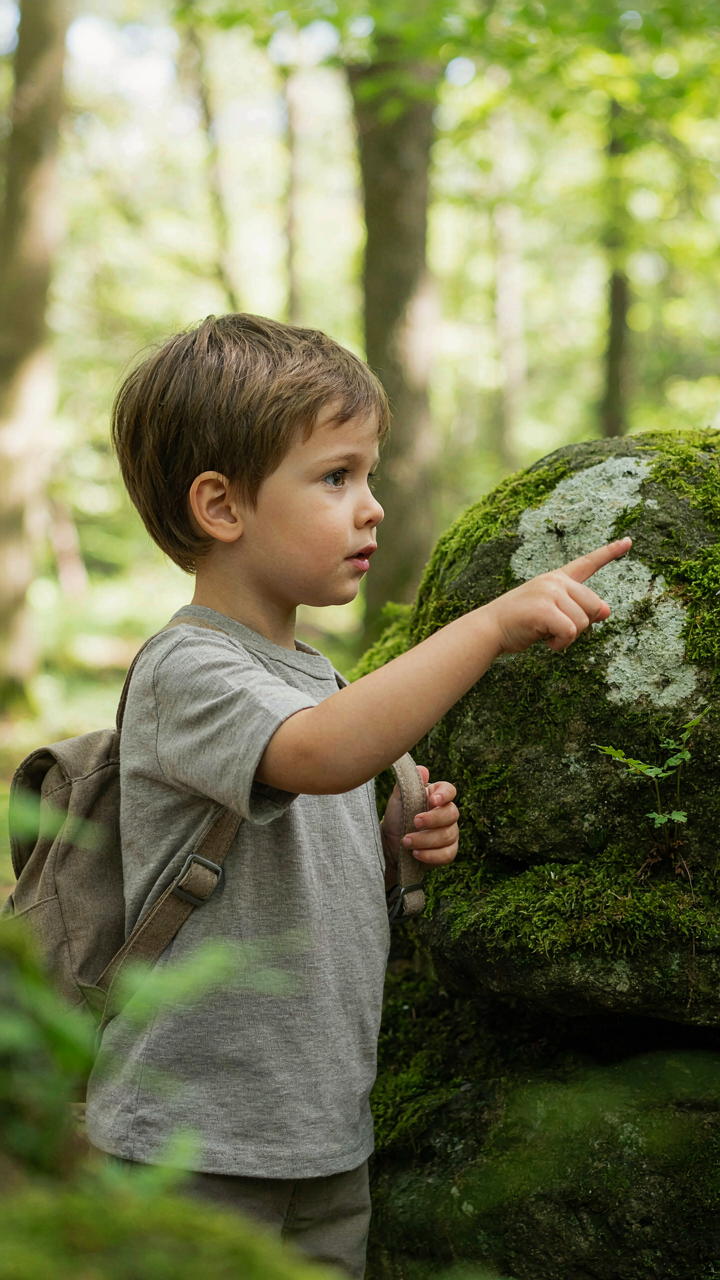
The Pace That Keeps Everyone Moving
You want your family to think hiking is fun so they’ll do it again, but the real issue is that most parents crater the pace and blame the kids. The mechanism is simple: use energy systems from exercise physiology. Your body burns glycogen in short bursts and fat for sustained effort. Kids hit a wall faster than adults because their glycogen depletes quicker on unfamiliar terrain. A hike fails when you move too fast early, drain reserves, then grind through dead miles.
Set the pace so the slowest person breathes hard but talks in full sentences. This is your sustainable rate. Take a ten-minute break every ninety minutes, not when someone complains. Stop before fatigue becomes misery. Early breaks reset glycogen availability and prevent the psychological collapse that happens when a kid realizes they’re exhausted with miles left. Build these pauses into your route plan before you start.
Engagement Without Manufactured Distraction
The common advice here is wrong: don’t rely on games, snacks, or entertainment to glue kids to the trail. That strategy fails the moment the novelty dies. What actually works is structured observation. Give each kid a specific task: one tracks water sounds, one counts tree types, one marks animal signs. This hijacks their attention through purpose, not distraction.
The mechanism is cognitive load. A bored mind fixates on discomfort and distance. A task-focused mind measures progress through observation. Rotate the assignments every thirty minutes so attention stays active. Engagement built on function outlasts engagement built on treats because function creates mastery, and kids repeat activities where they feel competent. By mile three, they own the hike instead of just enduring it.
Unconventional Hiking Destinations: Beyond The Obvious
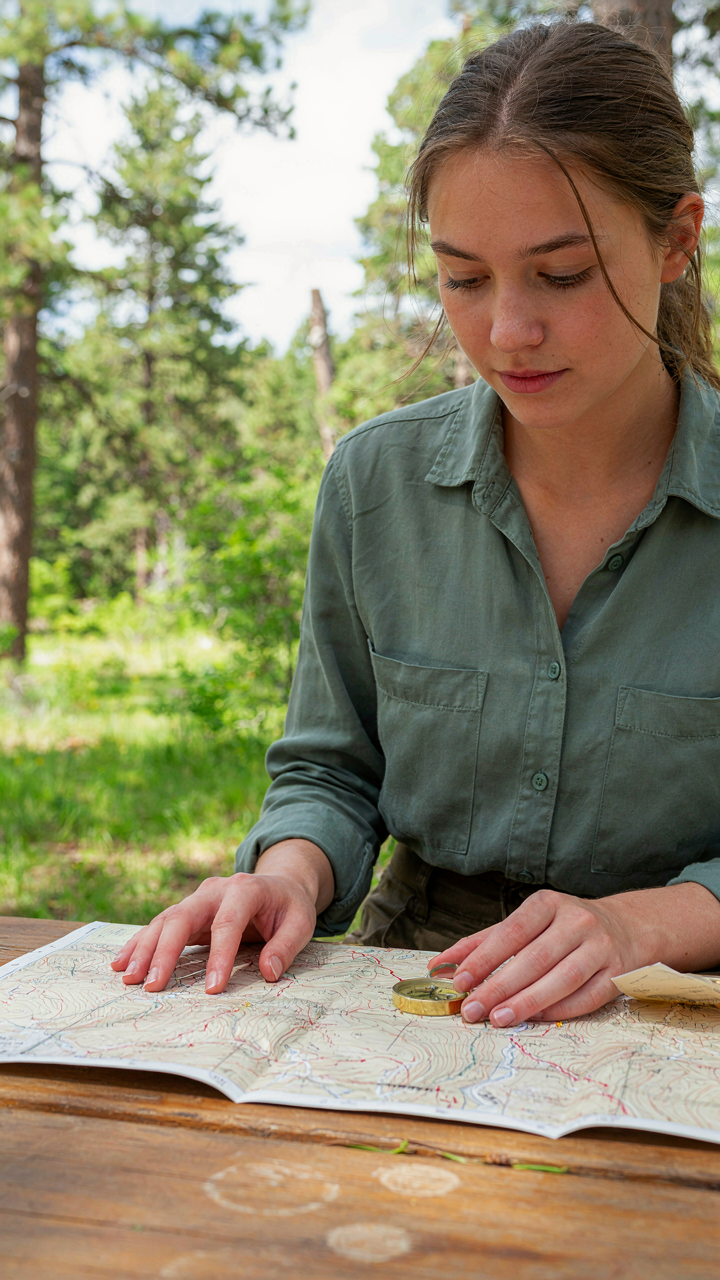
Where The Crowds Aren’t Looking
You want to feel like you discovered something. That’s the real driver here. The mechanism is simple: popular trails sell the same experience to thousands of families monthly, so the perceived value drops fast. Overlooked spots exist because they lack marketing, not because they lack merit. State forests, county parks, and lesser-known sections of major trail systems still offer solid elevation gain, water features, and shade without the parking lot traffic. Research using USGS topographic maps, county GIS databases, and local hiking clubs instead of Reddit threads. These sources reveal trails that exist on paper but stay quiet in practice.
The advantage compounds when you plan off-season. A trail crowded in July runs nearly empty in May or September. Check local weather patterns and school calendars to time your trip against the surge. Contact park rangers directly. They know which trails drain fastest after rain, which loops stay shaded during heat, and which routes work best for your family’s fitness level. This intel never reaches blog posts. Write down the answers. You now have a playbook that stays good for years.
What Makes A Local Gem Actually Work
Local gems succeed because they solve a specific problem for one community, not because they’re secretly perfect. Economics explains this: low barrier to entry for locals means high barrier to discovery for outsiders. A trail ten miles from a small town gets used hard by residents but stays unknown to travelers. Your job is finding what locals already chose, not hoping to uncover a hidden masterpiece. Ask at local outfitters, coffee shops, and family-run restaurants. People who live there hike there on weekends. They’ll name three trails without thinking.
Verify fitness requirements before committing. A local favorite might be a stroller-friendly loop or a technical scramble depending on the area’s demographic. Check current trail reports. Erosion, blow-downs, and water crossings change seasonally. Call the managing agency or check their website from the trailhead itself. Build a spreadsheet with trail name, distance, elevation gain, water sources, and the person you talked to. This becomes your reference for future trips. Next time you plan, you skip the research phase entirely and execute faster.
Post Hike Debrief: Extracting The Real Value

What Actually Happened Out There
You want proof the trip mattered. You want to justify the planning time and the expense and the risk of failure in front of your family. But that’s not why you debrief. You debrief because experience without examination turns into wasted repetition.
The mechanism is simple: your brain records what happened, but it doesn’t automatically extract the lesson. A kid complains about blisters. A partner suggests a different route. Someone gets cold at sunset. These moments pass as events unless you deliberately convert them into data. Write down three specific things that didn’t go as planned. Write down three that exceeded expectation. Don’t photograph the moment. Photograph the gap between what you predicted and what occurred.
Patterns Become Your Trail Map
Military strategy borrows a term from engineering called the After Action Review. The family hiking trip has the same structure: plan, execute, observe, adapt. Most families skip the observe step entirely and jump straight back to planning the next trip with the same mistakes baked in.
Ask each person one question: what would you do differently next time? Not what was wrong. What would you change. A ten year old might say the backpack hurt because we didn’t adjust the straps right. A partner might notice the snack breaks came too late. These aren’t complaints. They’re calibrations. Write them down separately for each family member. The differences matter. Implement one change per person into your next trip. Track whether it worked. This closes the loop between experience and improvement, which is the only mechanism that converts hiking trips from entertainment into actual competence building.
Your Biggest Obstacle Isn’t The Trail; It’s Your Addiction To External Validation

You’re scrolling Instagram at midnight, comparing your family’s potential hike to someone else’s perfect summit photo. Stop. Your kids don’t care about the view count. They care about you being present. Pick one trail this week, commit to it, and silence your phone before you arrive. The hike that matters most is the one you actually take, not the one that looks best online.