

The Layering Protocol: Beyond Basic Comfort
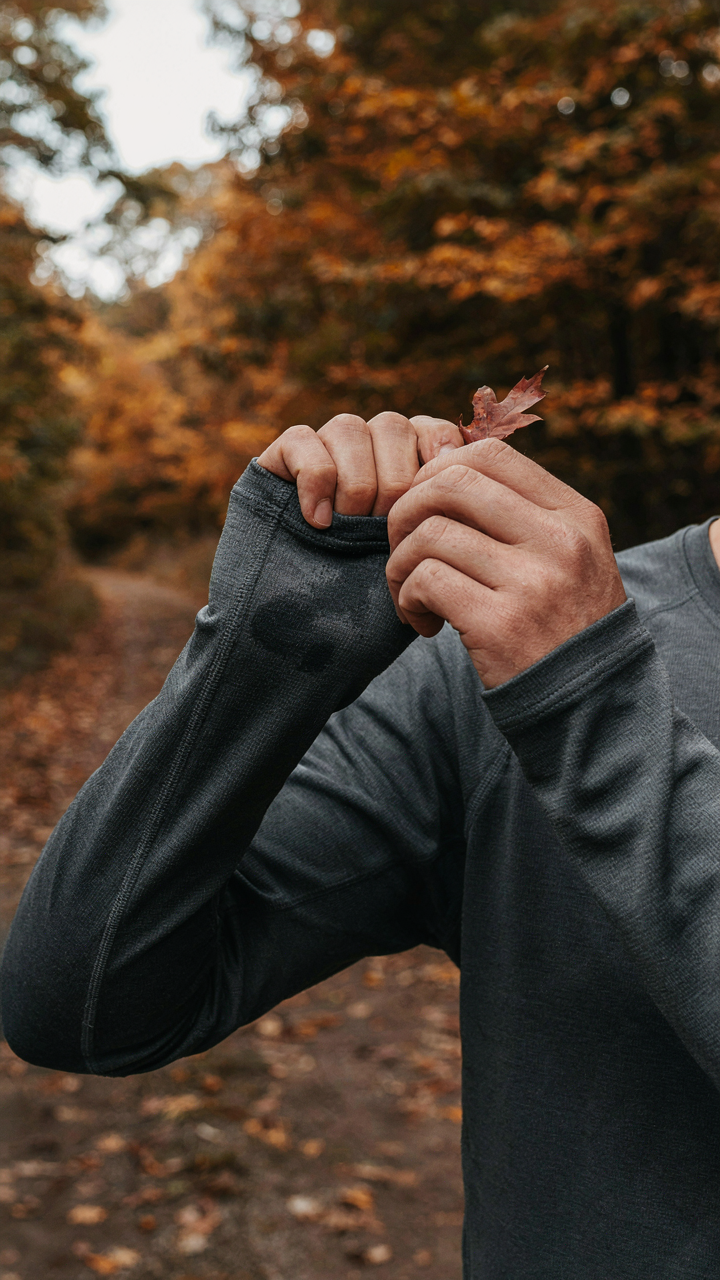
Start With Synthetic Or Merino, Not Cotton
You want to look prepared without actually being cold. That’s the real reason this matters. Here’s the mechanism: cotton absorbs sweat and holds it against your skin. When temperature drops or wind hits, that moisture becomes a heat sink. Synthetic fibers like polyester or nylon move moisture away from skin. Merino wool does the same while regulating temperature across a wider range. Both work. Cotton doesn’t.
The base layer job is simple: transport sweat outward, not trap it. Teens often inherit cotton undershirts from their closet and wonder why they’re miserable two hours in. Synthetic base layers cost twelve to twenty dollars. Merino costs more but handles odor better on multi-day trips. Pick synthetic if budget matters. Pick merino if the hike stretches beyond one day. Either choice beats the slow cold creep cotton delivers.
Insulation That Doesn’t Suffocate Movement

Mid-layers use the physics principle of dead air space. Trapped air holds heat without adding weight or restriction. Fleece accomplishes this through loose synthetic fibers. Down accomplishes it through compressed clusters of feathers. Synthetic insulation mimics down’s structure but keeps working when wet. None of these materials should feel tight against your arms or torso.
Teens typically overestimate how much insulation they need, then strip it off within thirty minutes because movement generates heat. A mid-layer should feel loose enough to raise your arms overhead without tension. Fleece works best for variable fall weather because you can shed it fast. Down works for sustained cold but needs a windproof shell to function. Synthetic insulation splits the difference. Wear only what you’ll keep on during the hike.

Unpacking The “Trekking” Fallacy: Gear For Real Trails
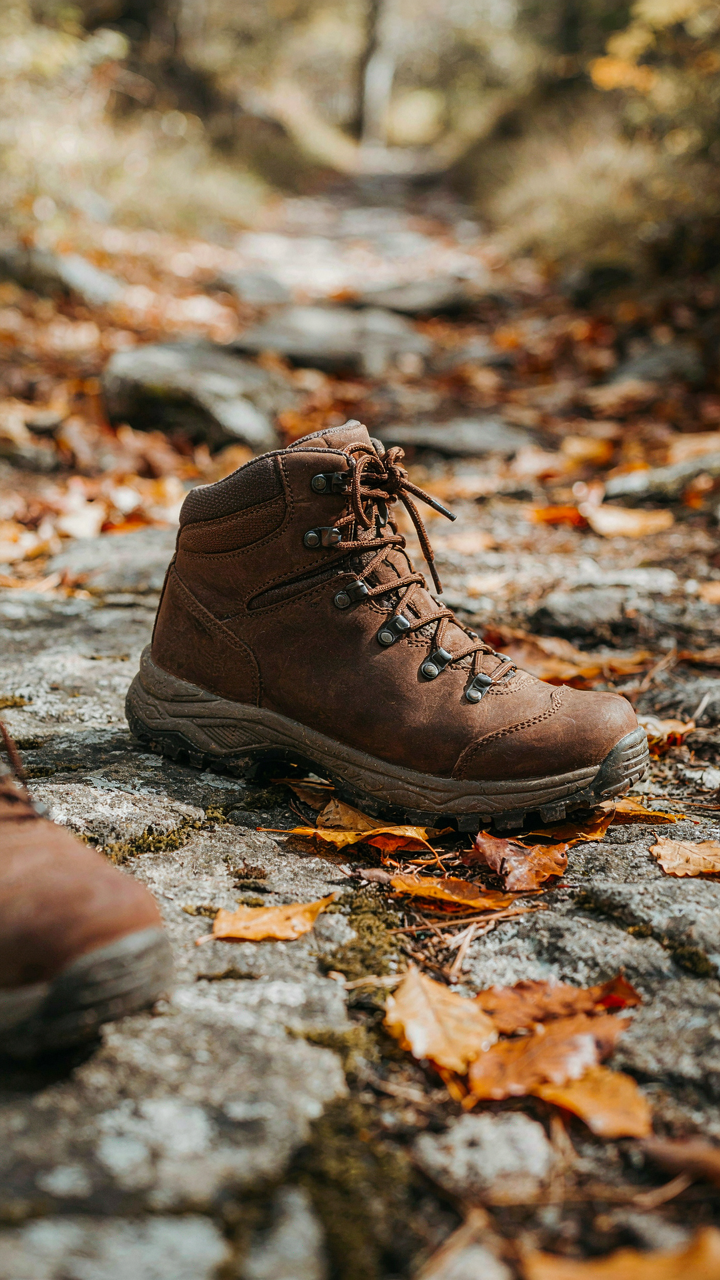
Boots That Actually Support Your Ankle
You want the gear to make the hike easier so you don’t look like you’re struggling. Here’s the mechanism: ankle support doesn’t come from height alone. It comes from a rigid midsole that prevents your foot from rolling inward under load, plus a collar that stabilizes your tibia. Fall terrain—wet leaves, loose rocks, uneven ground—creates the exact conditions where your ankle wants to collapse. A waterproof membrane like Gore-Tex keeps moisture out without trapping sweat if the boot has ventilation zones. Most teen hikers buy boots that look right but have soft midsoles. They fail immediately.
The standard advice says “get high-top boots for ankle support.” That’s incomplete. A low-top hiking shoe with a stiff midsole outperforms a tall boot with a soft sole. What matters is the structural response of the sole to lateral force, not the height of the collar. Test the midsole by twisting it—it should resist, not flex like a running shoe. For fall conditions, ensure the waterproof layer covers the toe box and doesn’t end at the arch where water enters during stream crossings or muddy descents.
Carry Capacity That Covers Your Mistakes
A backpack’s job isn’t to hold what you planned to bring. It’s to hold what you’ll actually need when something goes wrong. Most teens pack for a three-hour hike with a twelve-liter pack because it looks minimal. Then a hike takes twice as long. Weather shifts. Someone turns an ankle. You need layers, extra food, a headlamp, a first aid kit, and a rain shell that all fit without crushing you. A twenty-to-twenty-five-liter pack distributes weight across your hips and shoulders instead of hanging from your neck. The capacity difference isn’t comfort. It’s the difference between a manageable situation and a crisis.
The mechanism is load distribution. In physics terms, you’re managing “load path”—the route weight takes through your body. A pack too small forces you to hang items externally or stuff the main compartment so tight nothing compresses. Both create pressure points and fatigue your shoulders fast. A properly sized pack has a hip belt that sits on your iliac crest, transferring sixty to seventy percent of weight to your legs. Check this by loading the pack and lifting it by the shoulder straps alone. If it feels heavy, the hip belt isn’t set right or the pack is undersized for the load you actually carry.
The Microclimate Method: Adapting To Rapid Shifts
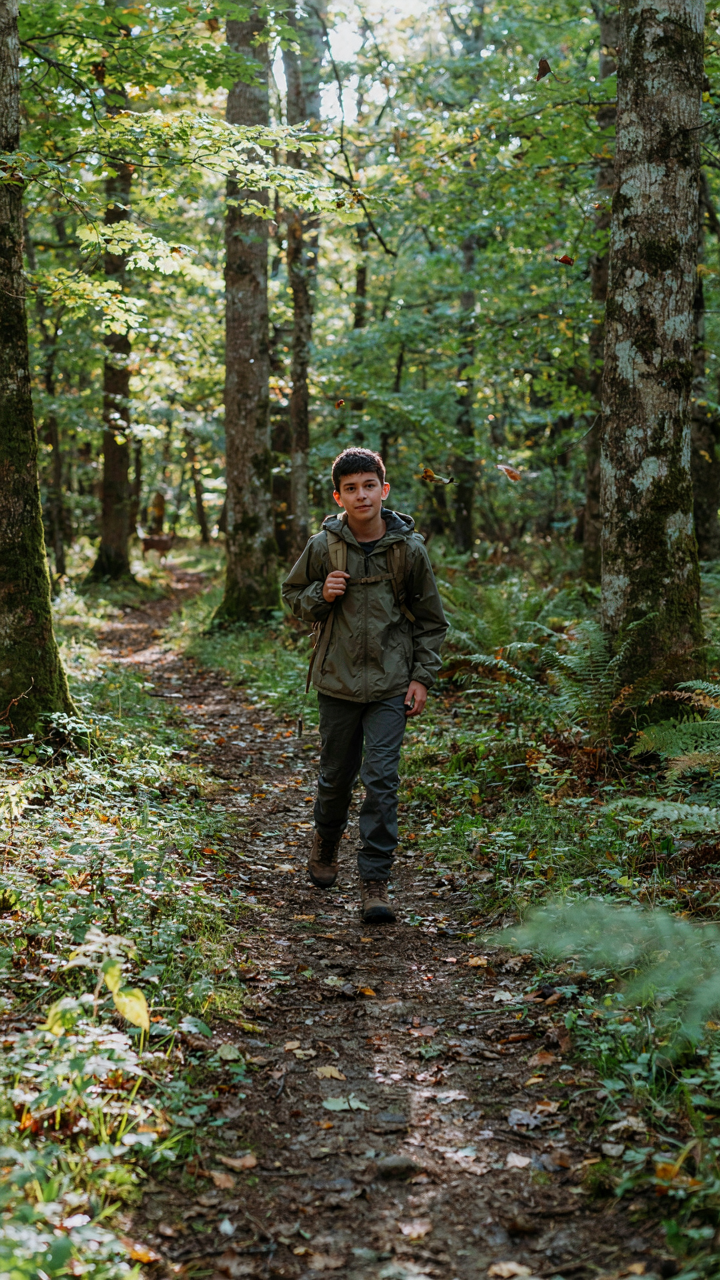
Shell First, Layers Second
You’re worried you’ll look unprepared if you get caught in weather. The real mechanism is this: fall hiking creates microclimates because elevation and tree cover shift temperature and wind exposure every few hundred feet. Your outer shell acts as your control variable. A windproof, water-resistant jacket stops the environment from destabilizing your core temperature. Without it, every layer underneath becomes reactive instead of strategic. Cotton fails here because it absorbs moisture and holds it. Synthetic or merino wool mid-layers work, but they need the shell to function as intended.
The shell doesn’t need to be heavy. A lightweight hardshell or softshell with DWR coating handles most fall conditions. Teens overpack here, thinking “winter gear” applies to September and October hiking. It doesn’t. A shell rated for moderate rain and wind—not expedition conditions—stays packable and doesn’t create overheating situations when you’re moving uphill. Pack it even if the forecast shows clear skies. Conditions change faster than weather apps update.
Zips, Vents, And Staged Adjustments
Temperature regulation isn’t about having more layers; it’s about controlling airflow and heat dissipation in response to exertion and elevation. Think of thermodynamics applied to hiking: your body generates heat during climbs, loses it during descents and rest stops. Generic advice says “dress in layers,” which is incomplete. What matters is access. Half-zip tops let you vent heat without removing your jacket. Pit zips on shells dump humidity without exposing your core. Convertible pants with zip-off legs eliminate the choice paralysis of wrong bottoms.
The protocol is simple: adjust before you feel the temperature change, not after. Unzip your shell on the climb, zip it closed within five minutes of stopping. Remove a mid-layer before sweat starts, not when you’re soaked. Teens often wait until discomfort hits, then overcorrect. This creates chilling during rest breaks and energy waste on the descent. Your outer shell’s accessibility matters more than its weight. Pockets should be reachable without stopping. Zips should work with gloves if the day turns cold.
Dispelling The “Hiking Outfit Women” Myth: Gender Neutral Performance
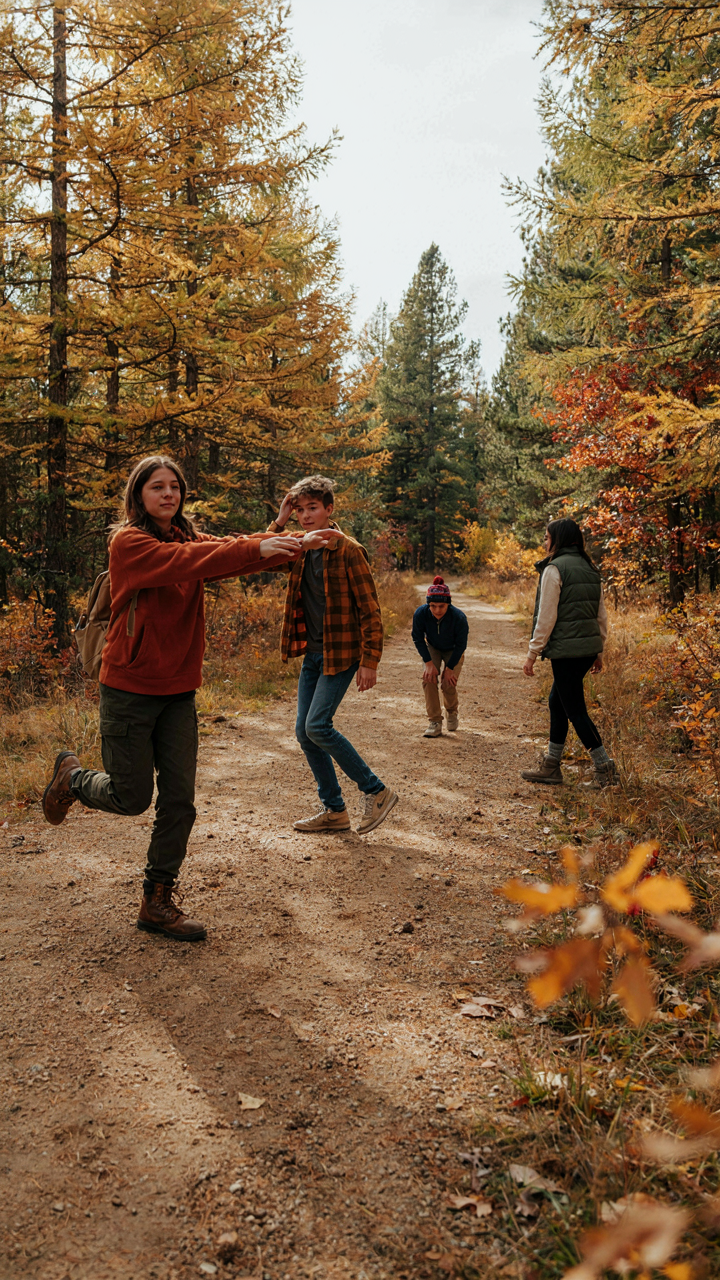
Fit For Function Avoiding Restrictive Clothing
You’re worried that wearing the “wrong” fit means you don’t belong on the trail. Here’s what actually matters: fit is a biomechanics problem, not an identity statement. Your body needs range of motion to move efficiently uphill. Tight sleeves, tapered legs, or chest compression waste energy that should go toward elevation gain. Teens often buy clothes sized down for appearance. That’s the mechanism that kills performance.
The real rule is simple: raise your arms overhead and squat deeply. If fabric restricts either movement, it fails the trail. Men’s and women’s cuts exist because average torso proportions differ, not because one gender hikes better than another. A teen girl in properly fitted men’s technical pants outperforms a teen boy in restrictive women’s leggings every time. Pick the cut that matches your actual proportions, then test it under load before committing to a full day hike.
Strategic Fabric Choices Durability Vs Weight
Material science determines how long your clothes survive actual use, not marketing claims. This is basic systems thinking from material engineering: density and fiber type create trade offs. Polyester and nylon both shed water and dry fast, but nylon costs more and adds minimal performance gain for fall hiking. Polyester offers 90 percent of the durability at 70 percent of the price. Cotton absorbs moisture and dries slowly, which means it’s wrong for fall weather where temperature swings are sharp.
Quality of weave matters more than brand names. A 200-weight polyester holds up through brush contact and repeated compression better than a 150-weight, even if it weighs slightly more. Fall hiking demands that your layers survive catching on branches and absorb sweat without becoming heavy. Test fabric durability by checking if it pills after washing or tears when snagged on something sharp during a short hike. That outcome predicts what happens at mile eight.
The “Outdoor Education Outfits” Fallacy: Learning From Necessity
Redundancy Beats Perfection
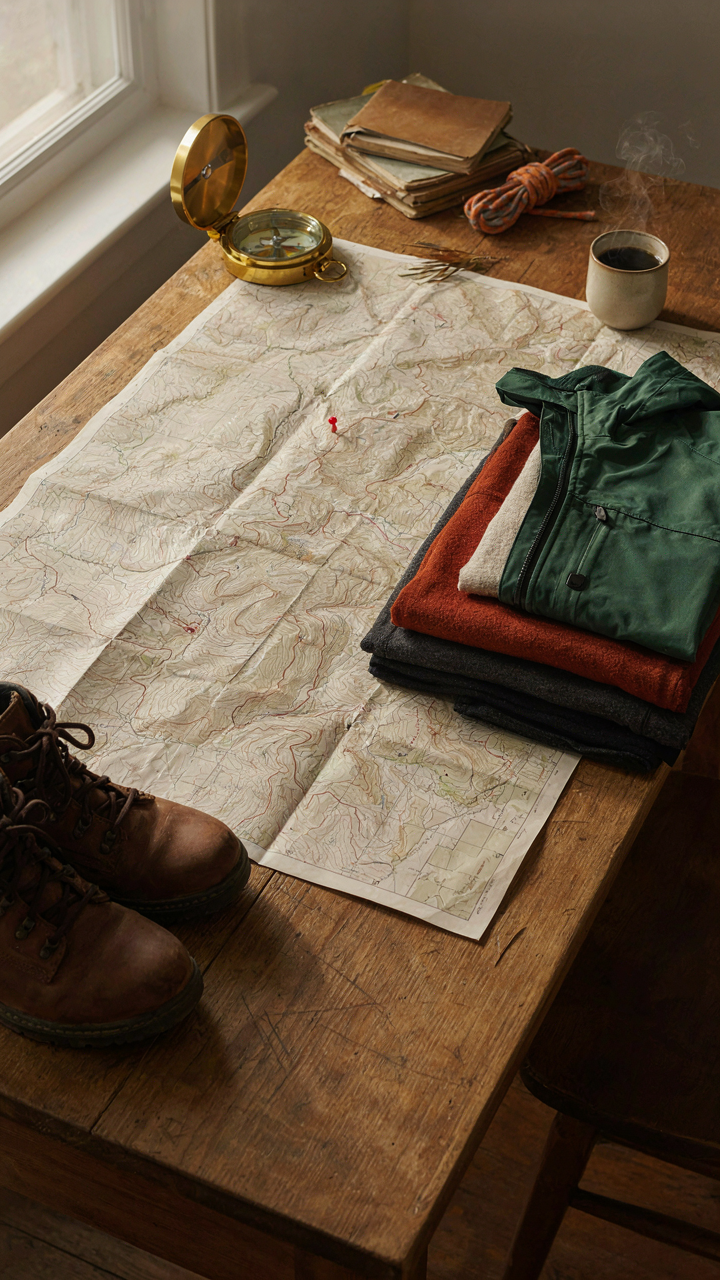
You want to look knowledgeable without admitting you’re scared of being cold and unprepared. Here’s what actually works: military strategists call it redundancy, and it means you don’t own one perfect jacket. You own overlapping layers that each do their job independently so failure in one doesn’t cascade into hypothermia.
A teen on a fall hike needs base layer, mid layer, and shell layer as separate pieces, not one “technical” outfit. If the mid layer fails, the base and shell still function. If you own only a single insulated jacket and it tears at mile three, you’re committed to suffering. Redundancy is cheap insurance that turns amateur mistakes into minor inconveniences.
How Heat Actually Leaves Your Body
Physics gives us three mechanisms: conduction steals heat when skin touches cold objects, convection strips it away through moving air, and radiation releases it directly into colder surroundings. Most fall hiking advice ignores this and just says “wear layers.” That’s incomplete.
Fall air doesn’t kill teens through any single mechanism. A windproof shell blocks convection. A moisture-wicking base layer prevents conduction by keeping skin dry. An insulating mid layer of fleece or wool traps still air to fight radiation. Each layer fights a different enemy. A teen in cotton defeats the base layer job, so conduction wins through sweat. Choose materials by mechanism, not by brand name or how the outfit photographs on social media.
Why Your “Early 2000s Grunge Outfits” Won’t Cut It For Fall Hiking Outfits
Cotton Holds Water Like A Sponge
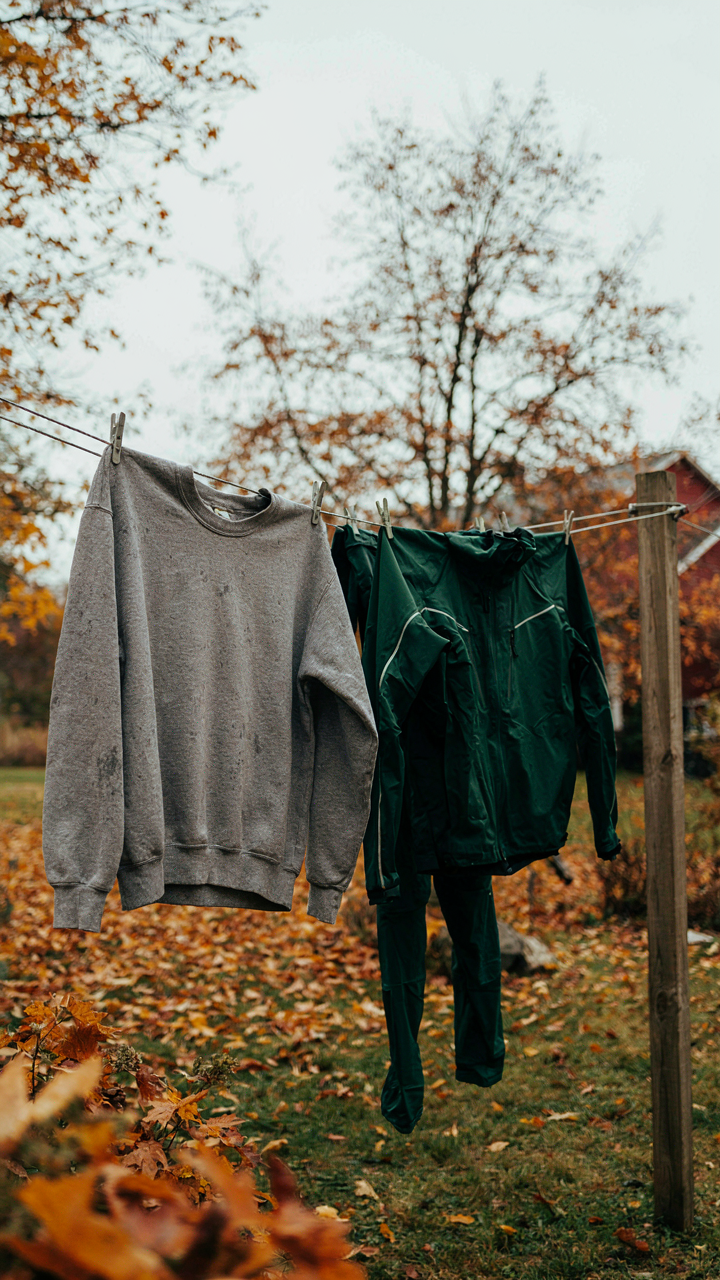
You want to look like you stepped out of a vintage catalog without admitting that comfort matters more than the image. Here’s what actually happens: cotton absorbs moisture and then refuses to release it. This is basic physics. A wet cotton shirt against your skin in 45-degree fall weather becomes a heat sink. Your body loses warmth rapidly. Synthetics like polyester or merino wool move moisture away from skin to the outer layer where it can evaporate. Cotton traps it. Early 2000s grunge relied on heavy cotton and denim because the aesthetic mattered more than function. On a trail, function keeps you from hypothermia.
The mechanism is simple: water conducts heat away from your body 25 times faster than air does. Cotton hiking outfits for teens fail because they saturate quickly during exertion or light rain. By the time you realize you’re cold, your core temperature has already dropped. Synthetic base layers and mid-layers dry in 2-4 hours. Cotton takes 8-12 hours or longer. When you’re five miles into a fall hike, that difference is not academic. Switch your base layer to a synthetic blend or merino wool and your hike becomes manageable instead of miserable.
Build Clothes Around Terrain Impact
Durability on a trail is not about looking fresh. It’s about your outfit surviving the specific demands of the landscape you’re hiking. Rocks, branches, and brush snag fabric constantly. Early 2000s grunge aesthetic favored oversized, loose fits that catch on everything. Fitted or semi-fitted synthetic gear reduces snag points and resists tears better than cotton or denim when contact does happen.
- Nylon or polyester blends: Resist punctures and tears from sharp vegetation better than cotton. They’re engineered for abrasion, not just style.
- Reinforced seams: Stitching on hiking-specific gear uses double or triple-pass patterns. Standard apparel uses single-pass seams that fail under stress.
- Tighter cuts around joints: Loose fabric at elbows, knees, and shoulders gets caught on rocks and branches. Fitted designs keep fabric away from hazards.
- Ripstop weaves: Woven with reinforcing thread in a grid pattern. Tears don’t spread across the fabric the way they do in standard weaves.
- Tapered legs and sleeves: Prevent cuffs from snagging underbrush. Excess fabric pools at your wrists and ankles, creating catch points during scrambling.
A single tear in your jacket mid-hike means cold air reaches your core for the rest of the day. Fall temperatures in most regions drop into the 40s or lower by sunset. Your backup layer won’t compensate for a compromised outer shell. Test your fall hiking outfit on shorter trails first. If seams split or fabric tears within the first three hikes, replace those pieces before tackling longer terrain.
Winter Hiking Prep: Leveraging Fall For Cold Weather Readiness
When Insulated Layers Actually Matter
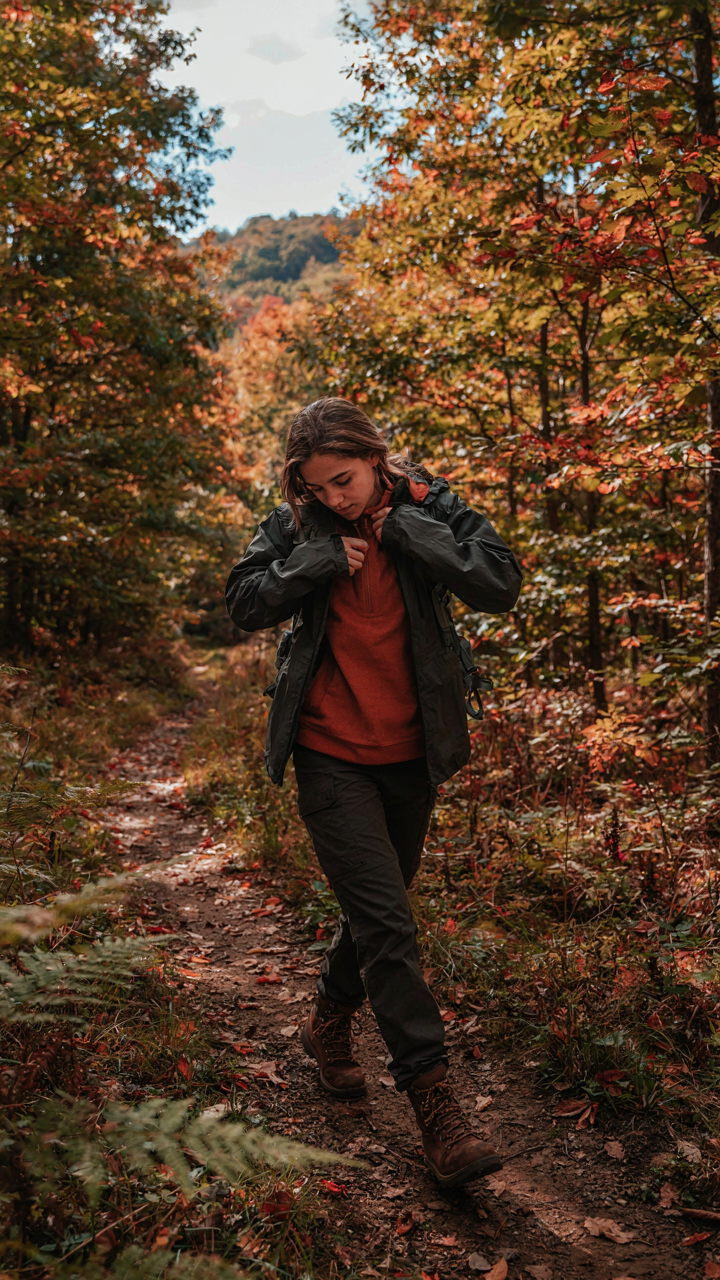
You’re buying insulation now because you want permission to skip real training later. Here’s the mechanism: insulation only works when you layer it correctly, and fall hiking teaches you what “correct” means before winter punishes you for guessing. Most teens grab one thick jacket and call it done. That fails because a single insulated layer traps sweat against your skin, then lets you freeze when you stop moving. Fall teaches the real skill: using fall’s 40 to 55 degree range to practice the switching protocol you’ll need when temperatures drop.
The upgrade happens when your current setup leaves you either sweating mid-hike or shivering at rest. Synthetic insulation (polyester-based) works better than down for teens in fall because it retains warmth when damp and dries faster. Merino wool mid-layers handle moisture without the performance drop. By November, you’ll know exactly which layer combination your body needs. Test it now so January doesn’t catch you scrambling. The goal isn’t to own more gear. The goal is to own the knowledge of what your specific body needs.
Preventing Heat Loss Through Extremities
Heat escapes fastest where blood vessels sit close to skin, and your head and hands are heat-loss highways that most teens ignore completely.
- Knit caps with ear coverage: Ears lose heat rapidly because they have thin skin and high surface area. A cap that covers ears fully keeps core temperature stable longer than any torso layer can.
- Glove liners under outer gloves: Thin synthetic or merino liners wick moisture away from your skin while outer gloves provide wind protection. Switching between layers as temperatures change prevents overheating and refreezing.
- Mittens for static cold, gloves for active movement: Mittens keep fingers grouped for shared warmth during stops. Gloves let you grip trekking poles and manage pack straps during climbs. Fall teaches you when to switch.
- Hand pockets with liners: Windproof outer pockets with fleece interiors let you warm hands without removing gloves. This prevents the cycle of glove removal, hand cooling, and regearing.
- Moisture-wicking base layers on extremities: Cotton absorbs sweat and holds it; synthetics dry faster. Damp skin loses heat thirty times faster than dry skin, so material choice matters more than thickness.
Your hands and head aren’t accessories to outfit planning. They’re the mechanism that determines whether you stay warm or start shivering uncontrollably. Fall hiking gives you the temperature window to test which combination actually works for your body and your hiking pace without the stakes of a winter whiteout. Document what you use each outing and replicate it exactly when winter arrives.
Beyond “Climbing Outfits”: The Unseen Advantages Of Specific Gear

Why Your Shoulders Aren’t Free
You want gear that looks good because you’re hiking with friends, not because comfort matters. Here’s the actual mechanism: mobility comes from physics, specifically the concept of degrees of freedom. In biomechanics, this means the number of independent directions your joints can move. Tight sleeves, restrictive chest panels, and oversized layers kill shoulder rotation before you even notice the problem. Your arms need full extension overhead to stabilize on steep terrain, grab branches, and adjust your balance mid-step.
Fall hiking gear for teens fails when it prioritizes fit over articulation. Synthetic materials with stretch panels in the shoulders and underarms aren’t luxuries—they’re load-bearing. Test this: raise your arms overhead in your hiking shirt. If fabric pulls at the armpits or biceps, the garment is stealing movement you need. Cotton offers zero stretch and locks your shoulder joint at awkward angles during scrambles. Merino wool and synthetic blends allow 15 to 20 degrees more rotation. Choose base layers and mid-layers with gusseted underarms, and your body does what it’s designed to do without fighting the fabric.
Pack Architecture And Your Spine
Weight distribution isn’t about feeling lighter—it’s structural integrity for your skeleton. Every pound sits against your back through suspension geometry, the same principles engineers use in bridge design. Most teen hikers wear packs like backpacks, centering load on the shoulders and spine. This is wrong. A pack with a properly engineered hip belt transfers 60 to 70 percent of weight to your pelvis, which is built to carry it. Your spine is not.
Fall hiking packs for teens need a curved frame that cradles your back without compressing the lumbar spine, and a hip belt that wraps above your hip bones, not across your stomach. The load should sit tight against your body, not hanging away from it. Straps on the sides anchor the pack so weight doesn’t swing when you move downhill. Load your heaviest items closest to the pack’s center and high enough that the center of gravity sits between your shoulder blades. Do this correctly and a 25-pound pack feels like 18.
The Real Obstacle Isn’t The Weather; It’s Your Naive Belief In Single-solution Gear
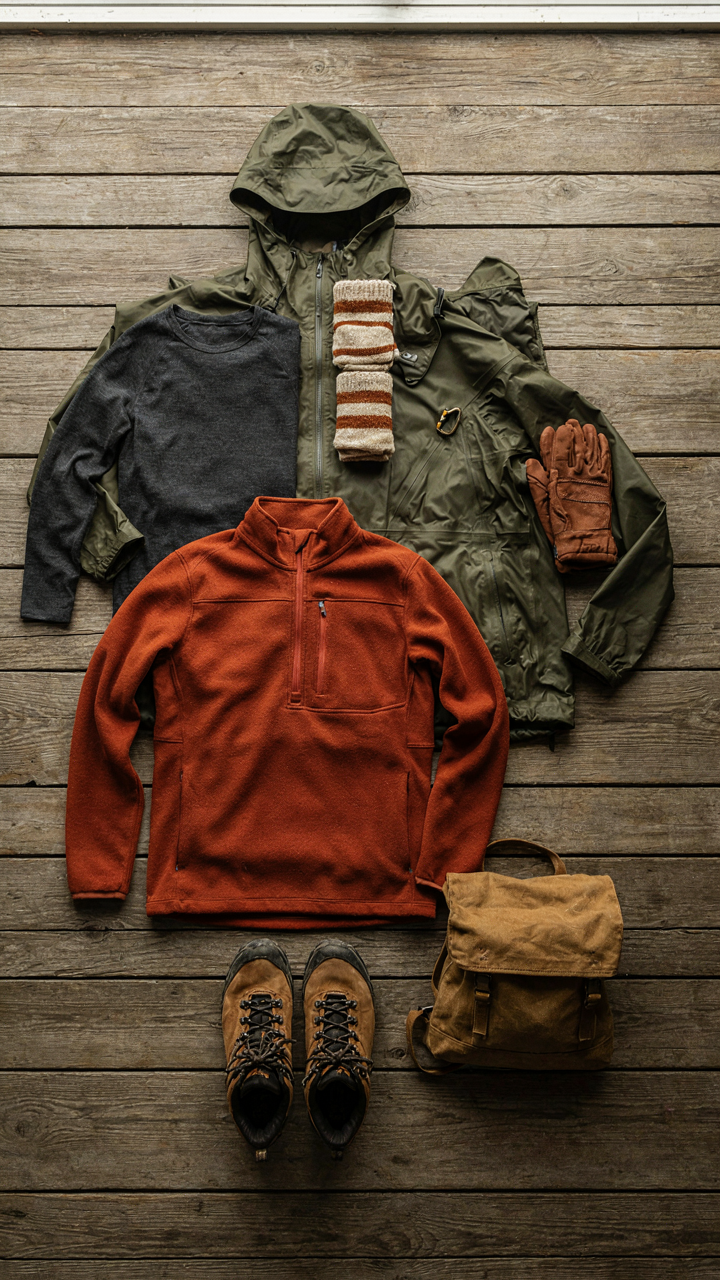
Most teens think one jacket solves fall hiking. It doesn’t. You need to stop buying gear like a consumer and start thinking like a strategist. Your layers work together or they fail together. Today, go outside for thirty minutes in what you think is your “perfect” fall outfit. Notice where you sweat. Notice where you freeze. That discomfort is real data. Build your system around what your body actually does, not what marketing tells you it needs. The teenager who experiments beats the one who just buys.