

The Layering Fallacy: Why More Isn’t Better For Tall Men
The Extra Long Trap
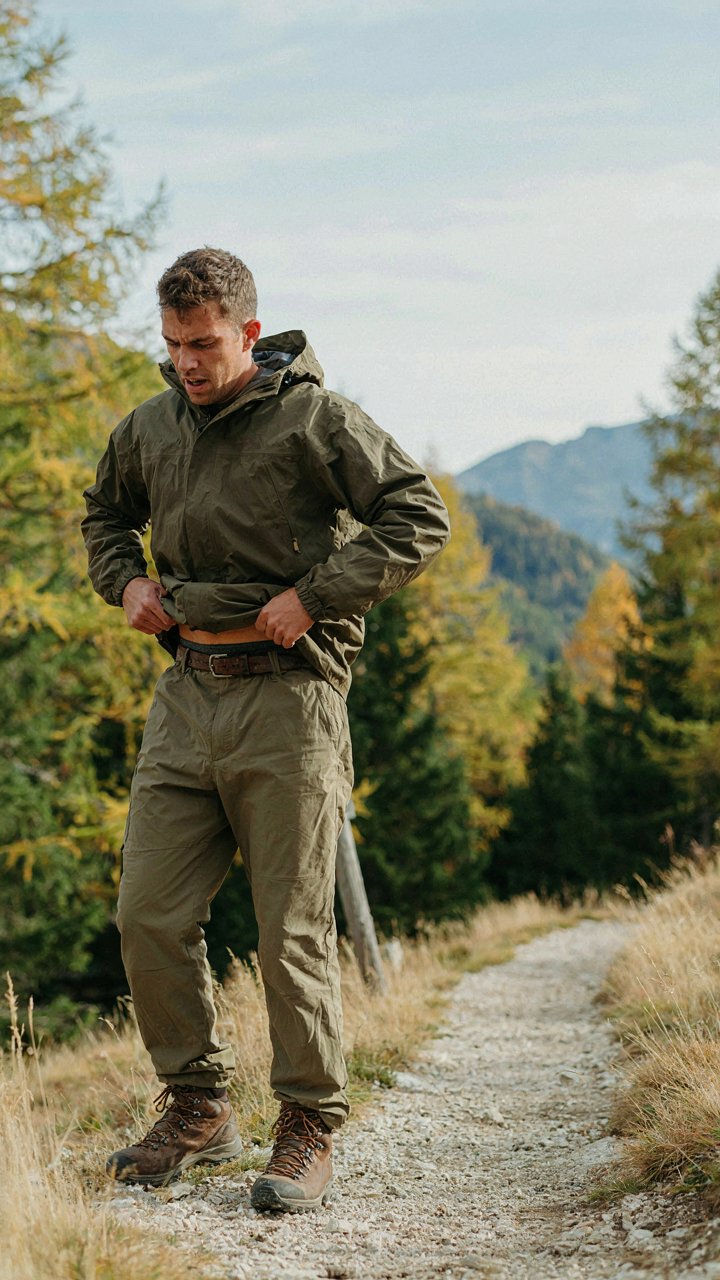
You want to believe a product made “for tall guys” exists so you stop thinking about fit. Here’s what actually happens: brands slap “extra long” on standard designs and charge more, banking on the fact that you’ll assume longer equals solved. The mechanism is simple. A tall man in an oversized base layer doesn’t gain warmth, he gains dead air space that traps moisture against his skin. That’s the opposite of what you need on a fall hike where temperature swings fast and humidity builds in your core.
Standard sizing exists for a reason. The sleeve length matters less than the torso length, the fit at the shoulders, and how the fabric sits on your forearms when your arms bend. Most tall men buy too much fabric because they confuse length with correctness. What you actually need is proportional fit: a base layer that hugs your core and stays put when you move, not something that balloons past your wrist. The industry sells anxiety about being undersized; smart dressing means testing fit against your actual dimensions, not your insecurity.
Warmth Per Ounce, Not Bulk Per Foot

This is a physics problem. Thermal resistance measures how much heat a material traps per unit of thickness. Your goal is maximizing that resistance while minimizing weight, especially over distance. Adding a third layer because you’re tall doesn’t follow this logic, yet most fall hiking guides assume you need more clothing because you have more body to cover.
The real constraint isn’t coverage, it’s pack weight and mobility. A tall man carrying three base layers, two mid layers, and a shell weighs more and moves worse than a tall man carrying one quality synthetic base layer, one fleece rated for active insulation, and a fitted shell. You’re not getting warmer, you’re just overloaded. Test your layering system on a short hike first. Strip layers as you warm up. If you’re still cold at the top, your base layer isn’t wicking or your outer shell is trapping too much moisture. That’s your feedback loop, not your clothing size.

Base Layers: The Unseen Foundation Of Comfort For Hiking Outfit Men

Merino Wool Vs Synthetics For Tall Men
You’re reading this because you want to avoid the rookie mistake of showing up cold and miserable on the trail. Here’s what actually matters: base layers function as a thermal regulation system, and in thermodynamic terms, you need materials that manage vapor transfer, not just insulation. Merino wool excels at this. It absorbs moisture vapor before it becomes liquid sweat, then releases it into the air. Synthetic fabrics like polyester and nylon move liquid water away from skin faster, but they don’t handle vapor as intelligently. For tall men, this distinction gets sharper because your longer torso means more surface area generating heat and sweat. Merino keeps you dry longer in stop-and-start hiking. Synthetics dry faster once they’re already wet. Pick based on your pace and climate, not on what some gear blogger said was “best.”
Merino wool base layers for tall men face one real constraint: cost. A quality merino set runs 60 to 100 dollars versus 20 to 40 for synthetics. But merino lasts longer, resists odor naturally, and doesn’t degrade as fast in the wash. For fall hiking where temperatures swing between effort and rest, merino’s vapor management prevents the clamminess that kills motivation. Synthetics work fine if you’re aggressive on the trail and dry out fast anyway. The mechanism is simple: choose merino if you hike moderate pace and stop often. Choose synthetics if you maintain steady effort and temperatures stay cool enough that speed-drying matters more than vapor control.
Fit For Freedom Of Movement, Not Compression
The standard advice here is wrong. Most base layer sizing guides tell tall men to “size up for comfort.” That logic ignores how fabric behaves during activity. Loose base layers bunch under mid-layers, create dead air pockets that trap sweat, and reduce your ability to regulate temperature. Compression sounds negative but it’s just contact. Fitted base layers stay against your skin, move with your body, and maintain consistent heat transfer. For tall men, the real problem is length, not width. Your arms need to stay covered when you reach overhead. Your torso needs to stay tucked when you bend forward. Fit these dimensions first, then worry about tightness. Compression base layers designed for hiking actually work. Generic “loose comfort” sizing doesn’t.
When you shop, check arm length against your torso length, not just your height. A 6’2″ guy might need extra-long arms but regular-length torso, or vice versa. Most brands don’t break this down. Some outdoor brands like Icebreaker and Patagonia offer tall-specific cuts. Try on with a mid-layer to see how everything stacks. The fit should let you raise your arms fully without the base layer riding up. When you bend at the waist, nothing should pull away from your lower back. Test this in the dressing room before you buy, then wear the layers on your next hike to verify the system works under real exertion.
Mid Layers: The “Thermodynamic Engine” Of Your Outdoor Outfit Men

Fleece Types: Balancing Insulation And Breathability
You want to look like you know what you’re doing outdoors without actually having to think about it. The real mechanism here is that fleece doesn’t work like down or synthetics. Fleece traps air in polyester fibers, which means it insulates even when damp and dries fast, but it compresses under pressure, reducing effectiveness. Tall men need midweight fleece (200-300 gsm) rather than heavyweight because layering matters more than bulk. Thinner fleece under a shell works better than a single thick layer that won’t fit under jackets properly.
Grid-pattern fleece performs better than smooth fleece for fall hiking because the texture creates more dead air space and resists pilling. For tall frames, avoid oversized fleece that bunches at the waist or rides up during movement. Fit matters more than material name. A properly fitted midweight fleece from any reputable brand outperforms an oversized premium alternative because it stays in contact with your skin and doesn’t create compression gaps that kill insulation.
How Air Pockets Trap Heat
Physics calls this principle “convection resistance”—dead air stopped from moving equals heat retention. Your midlayer’s job is creating a stationary air column between skin and shell. Most hiking advice skips this part and just says “wear fleece,” which leaves tall men guessing about layering ratios. The mechanism works like this: still air has an R-value; moving air has none. Fleece holds air static through fiber density. When you add a windproof shell over fleece, you create a sealed system that works even in active weather because the shell prevents wind from stripping away that trapped air.
Tall men often overtighten midlayers thinking compression means warmth. It doesn’t. Compression destroys the air pockets that generate insulation. Test fit your midlayer under your shell jacket before heading out. There should be room to pinch fabric at your torso without excessive slack. Check arm length on the fleece specifically—it should cover your wrists when arms are raised, not ride up two inches. This single protocol eliminates the guesswork and prevents the cold-arm problem tall hikers face constantly.
Outer Shells: The “Microclimate Shield” For Men’s Hiking Outfit

Waterproof Vs. Water Resistant Strategic Choices
You want the shell that handles weather without making you look overdressed on a mild day. Here’s the mechanism: waterproof and water-resistant are not better-or-worse versions of the same thing, they’re different solutions to different problems. Waterproof fabrics use sealed seams and coatings that stop water entry completely, but trap more moisture from your body. Water-resistant fabrics shed light rain and allow vapor transmission, so you stay drier from sweat, but fail in heavy downpour.
Fall in most regions means variable conditions, not sustained rain. Water-resistant shells dominate here because you’re moving, generating heat, and the unpredictability of weather matters more than total protection. Waterproof shells work for static situations or confirmed storm timing, which fall rarely gives you. For tall men, fit matters more than feature stacking. A properly fitted water-resistant shell in your actual size beats a waterproof shell that bunches at the shoulders or rides up past your wrists.
Ventilation And Temperature Regulation
This is physics: your body creates a pressure differential between your core and the environment, and that pressure drives moisture outward or inward depending on the barrier you place between them. Call it vapor pressure gradient, borrowed from thermodynamics, and your shell either works with it or against it. Fall’s temperature swings demand shells that dump heat fast when you’re climbing, then seal in warmth when you stop. Most hikers buy one shell and wonder why they’re either damp or cold. The answer is they chose wrong for the mechanism.
Pit zips and back vents aren’t luxury features, they’re functional valves that let you modulate your microclimate without stripping down completely. Look for shells with mesh-backed pit zips that open fully, not token holes. Side zips from armpit to hip let you vent your core without removing the layer entirely. For tall men, confirm the back vent sits at actual waist level when you raise your arms, not riding up to your shoulder blades. Test the shell in store by moving through a hike’s range of motion: arms overhead, bent forward, side-to-side. Your shell needs to move with you, not against you.
Pants & Trousers: The Legroom Deception For Trekking Outfit
Articulated Knees And Stretch Fabrics
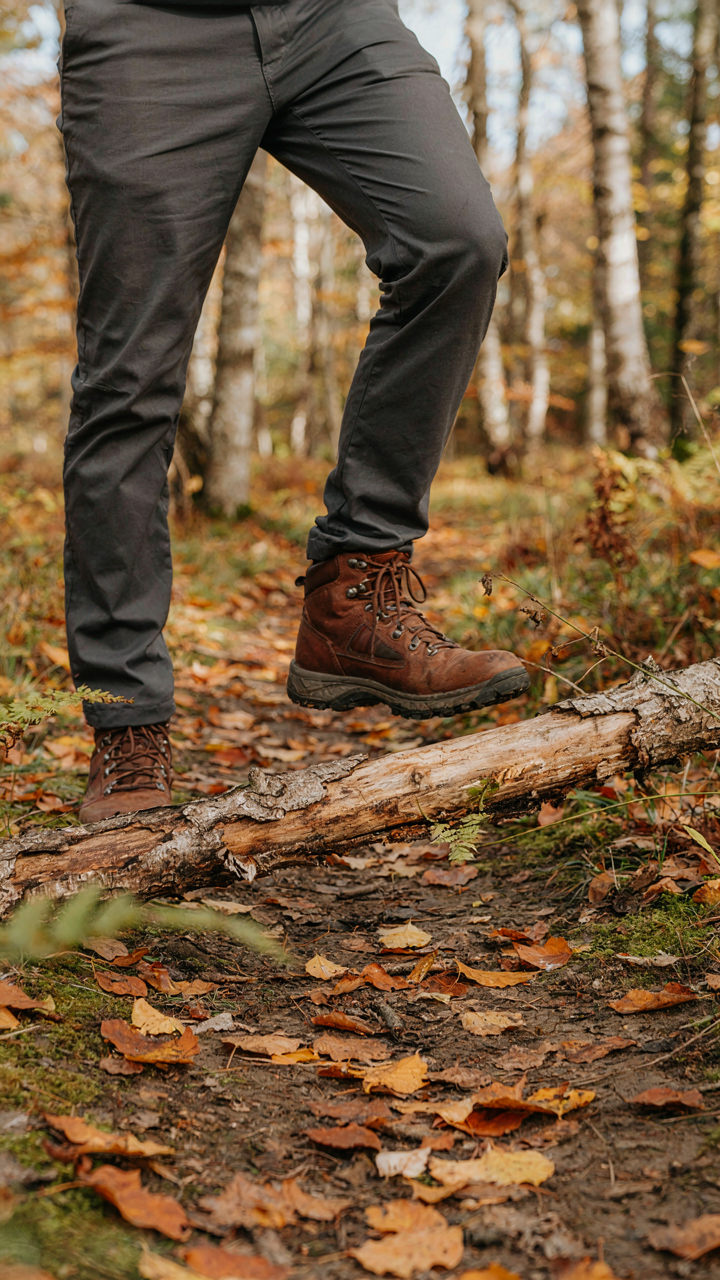
You’re buying hiking pants because you think longer inseams solve the problem. They don’t. The real issue is that standard pants are engineered for static standing, not the repetitive knee bend that hiking demands. At 6’2″ or taller, you need fabric that moves with your leg, not against it.
Articulated knees use gusseted construction, where fabric panels sit behind the knee to prevent binding during the hiking stride. Stretch fabrics alone miss this—they just let tight fabric compress. Look for nylon blends with at least 8 percent spandex and actual seam placement that runs vertically down the back of the calf rather than straight down the center of your leg. This positioning matters because it matches how your leg actually bends during elevation gain.
Gaiters And Ankle Protection
Gaiters seem optional until you’re tall and your stride launches debris higher than the ankle opening of standard hiking pants. The mechanism here is simple: debris and water don’t respect pant cuffs. Gaiters seal the gap between your boot and pant leg, keeping scree and moisture out entirely.
For tall men, gaiters serve double duty. They protect your ankles during rocky descents when your longer legs create steeper shin angles on uneven ground. Use full-length gaiters with waterproof fabric and ensure they fasten tight enough that nothing enters from above. Pair them with hiking boots that have a gusseted tongue so water can’t pour in from the sides. This combination works because it eliminates the seal-breaking that happens when your height creates larger gaps at the boot line.
Footwear & Socks: The Unsung Heroes Of Hiking Gear For Men
Boot Height And Ankle Support
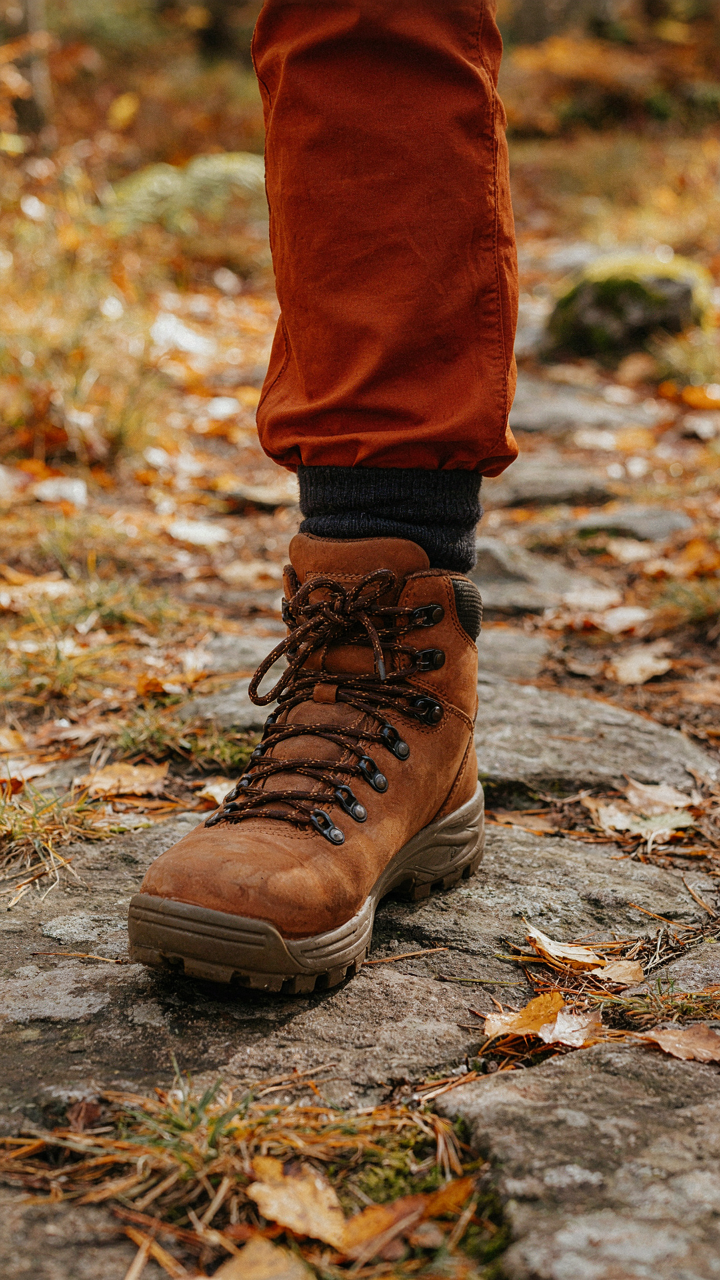
You care about this because you’re tall and your center of gravity is higher, which means ankle rolls cost you more than they cost shorter hikers. Biomechanics borrowed from sports injury research shows that ankle stability isn’t about the boot cradling your foot—it’s about reducing inversion torque, the rotational force that twists your ankle on uneven ground. A tall man on a rocky trail experiences greater leverage on the ankle joint simply because his leg is longer. This isn’t opinion. It’s geometry.
Full-height boots beat mid-cut alternatives for fall hiking because they constrain the ankle’s range of motion before it can fail. The collar sits above your malleolus, the bony protrusion on the inside of your ankle, which prevents the foot from rolling inward. Your height makes you a worse faller—you have more mass to arrest, and more distance to your head. Commit to 6-inch or higher boots on technical terrain. On established trails with minimal obstacles, a 4-inch hiking shoe works if you’ve logged ankle stability work elsewhere. Choose once, test on short hikes, then stop second-guessing.
Sock Material And Blister Prevention
Blister formation is a mechanical problem, not a comfort problem—your foot moves inside the boot, friction generates heat, and skin separates in layers. The right sock material doesn’t prevent movement; it reduces the coefficient of friction between your skin and the boot interior.
- Merino wool blends: Naturally wicks moisture while maintaining grip against boot fabric. Temperature-regulating, so your foot stays dry in temperature swings fall brings.
- Synthetic performance fibers: Polypropylene and acrylic dry faster than wool but generate more heat. Choose this if your feet sweat heavily or you’re in wet conditions.
- Nylon reinforcement: Look for socks with nylon panels on the heel and ball of foot. These high-friction zones need extra durability to prevent shearing.
- Wool percentage: Aim for 60% merino or higher. Below 50%, you lose the moisture-wicking advantage and get mostly synthetic behavior.
- Sock thickness: Midweight socks (category 2 or 3) cushion impact without creating excess volume inside the boot. Oversized socks shift inside the boot, increasing friction and blisters.
Fit your boots with the exact socks you’ll hike in. Tall men often have larger feet, which means more surface area for friction to act on during descent. Your toes jam into the boot toe box on downhill sections, which multiplies the blister risk on long fall hikes. Buy socks one size up if your foot length exceeds size 12, then break them in on a 3-mile test hike before committing to an all-day route. Monitor hotspots during mile two, apply friction-reducing tape or a second sock layer immediately, and don’t wait for pain to confirm a blister is forming.
Accessories: The Marginal Gains Protocol For Wander Outfit
Where Heat Actually Leaves Your Body
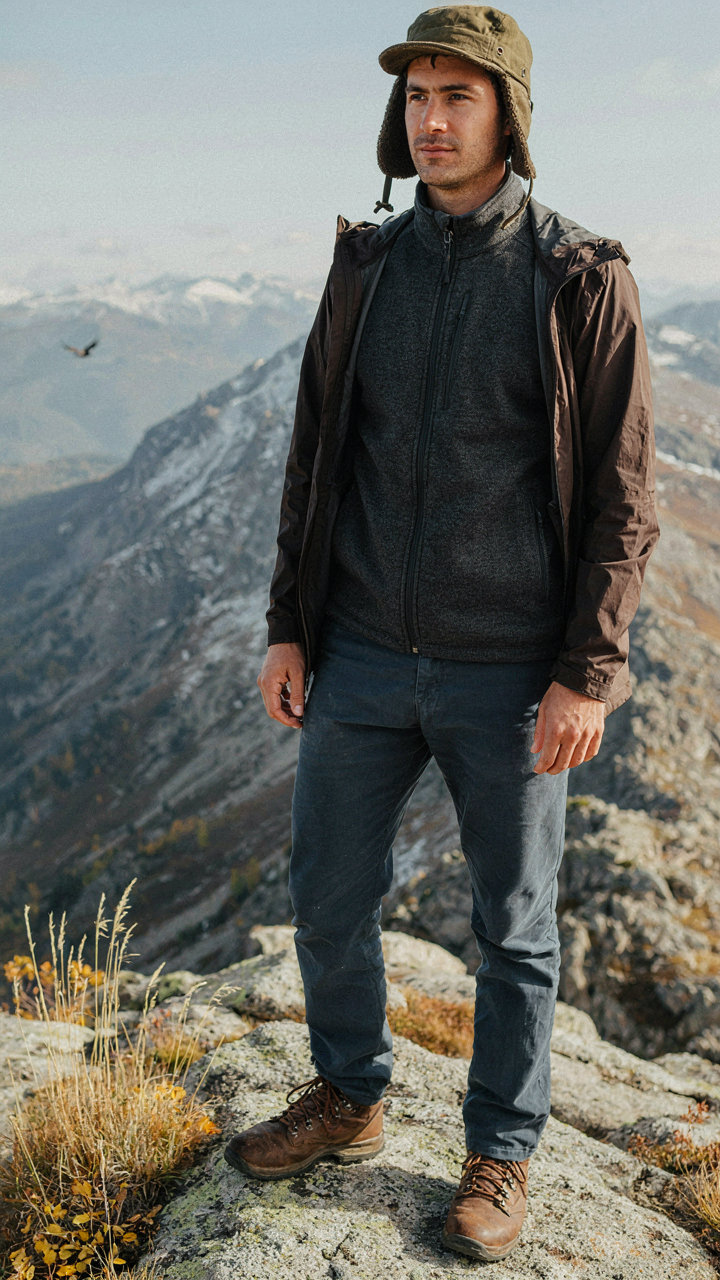
You care about this section because you think a good hat is cosmetic. It isn’t. Thermoregulation works on the physics principle of convective heat loss—your body dumps warmth through exposed surfaces, and your head is the first casualty. Tall men lose this advantage faster because more surface area sits exposed to wind at elevation. A hat that fits your proportions isn’t optional; it’s load management for your core temperature.
Fall hiking demands a hat that covers your ears and doesn’t ride up your oversized skull. Merino wool beanies or structured baseball caps with ear flaps work because they trap still air rather than insulate with bulk. Your gloves matter equally—wind strips heat from exposed hands within minutes. For tall men, regular glove lengths leave gaps at your wrist. Buy mountaineering or snowsports gloves sized for larger hands; the extra cuff material keeps wind from reaching skin.
Load Distribution Wins The Day
Backpack fit determines whether a hike ends in comfort or joint damage. Standard packs ride too high on tall frames, pulling weight forward and straining your lower back. The load should sit directly over your hips—not your shoulders. Measure your torso length from the base of your neck to your hip crest; most tall men need a pack with a 22 to 26 inch frame height, not the default medium.
Weight distribution cuts fatigue by half. Pack heaviest items close to your spine and centered between shoulders and hips. Lighter gear goes to the top and sides. Compress everything tightly so nothing shifts during movement. Test your loaded pack on flat ground before heading uphill, then adjust straps so the hip belt carries 70 percent of total weight. Your shoulders are just anchors.
The “Lumberjack Style” Myth: Function Over Fashion For Hiking Outfit For Men
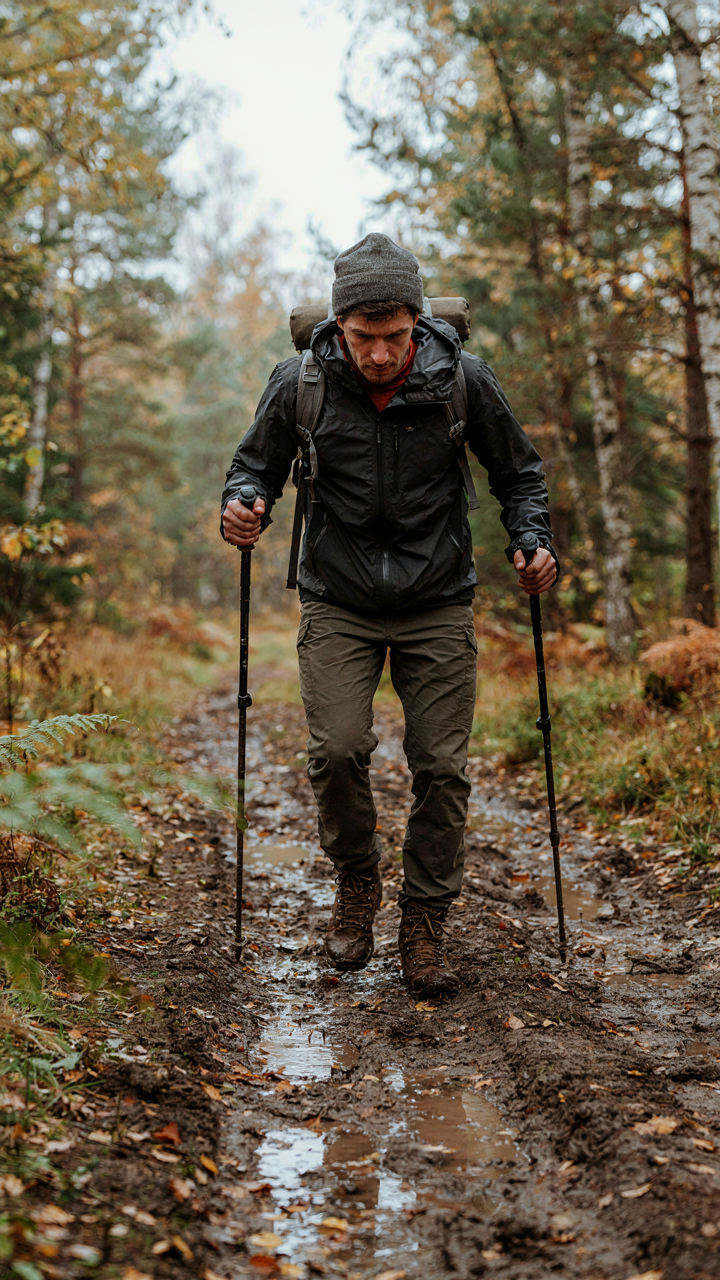
Style Logic Doesn’t Work On Trails
You want to look competent on the trail because you’re afraid people will judge you as unprepared. That’s the real motive. Here’s the mechanism: fashion is a signaling game played in static social contexts. Hiking is a performance test in a dynamic environment. A flannel shirt looks rugged in a parking lot. It absorbs sweat, takes three hours to dry, and restricts shoulder mobility on a steep scramble. You’re dressing for an audience that isn’t there while ignoring the physics of your own body moving uphill.
Tall men compound this problem by assuming that heritage outdoor wear scales to their frame. It doesn’t. Heritage pieces were designed for average builds in lower-intensity use. When you’re 6’3″ and moving at pace, seams fail differently, fabric rides up differently, and oversized cuts create dead fabric space that pools moisture. The lumberjack aesthetic is borrowed from work that happens at three miles per hour with breaks. Your hike isn’t that. Treat outfit selection like load optimization, not like creating an image.
Materials That Actually Perform Under Load
Common advice says “layer with cotton, then add wool.” That’s backwards and causes preventable discomfort. Cotton holds moisture against skin and insulates when wet, which kills your core temperature regulation on descents. Synthetic base layers and mid-layers wick sweat away from skin in real time. Merino wool works as a top insulator only after moisture is already gone.
Tall men need fabrics that dry fast because you generate more surface area and sweat volume on sustained climbs. Polyester-nylon blends dry in two to three hours when wrung out. Cotton takes six to eight hours minimum. Ripstop nylon with DWR coating handles brush and branch contact without tearing, and the coating sheds light rain without waterlogging. Check fiber content on every piece before buying. The brand name means nothing. The material science does the work.
Stop Blaming Your Height; Start Mastering Your Layers. Your Real Obstacle Isn’t Your Genetics, It’s Your Ignorance Of Intelligent Layering Systems
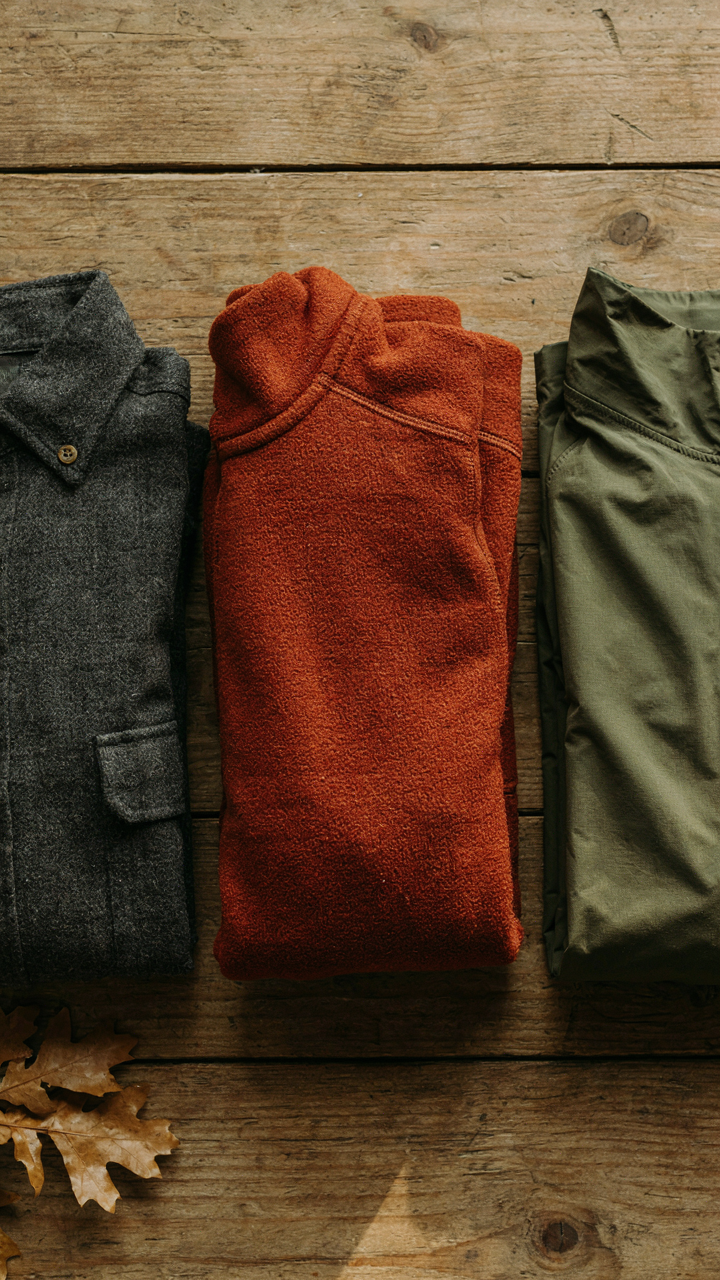
The tall man problem isn’t a tall man problem. It’s a layering problem. You keep buying clothes designed for average bodies, then wondering why you overheat on the trail or freeze at the summit. Buy your base layer two sizes up from your shirt size today. Test it this weekend. Watch how everything changes when your clothes actually fit your frame instead of fighting it. Stop dressing tall. Start dressing smart.