

The Performance Imperative: Why Fabric Trumps Fit Pics
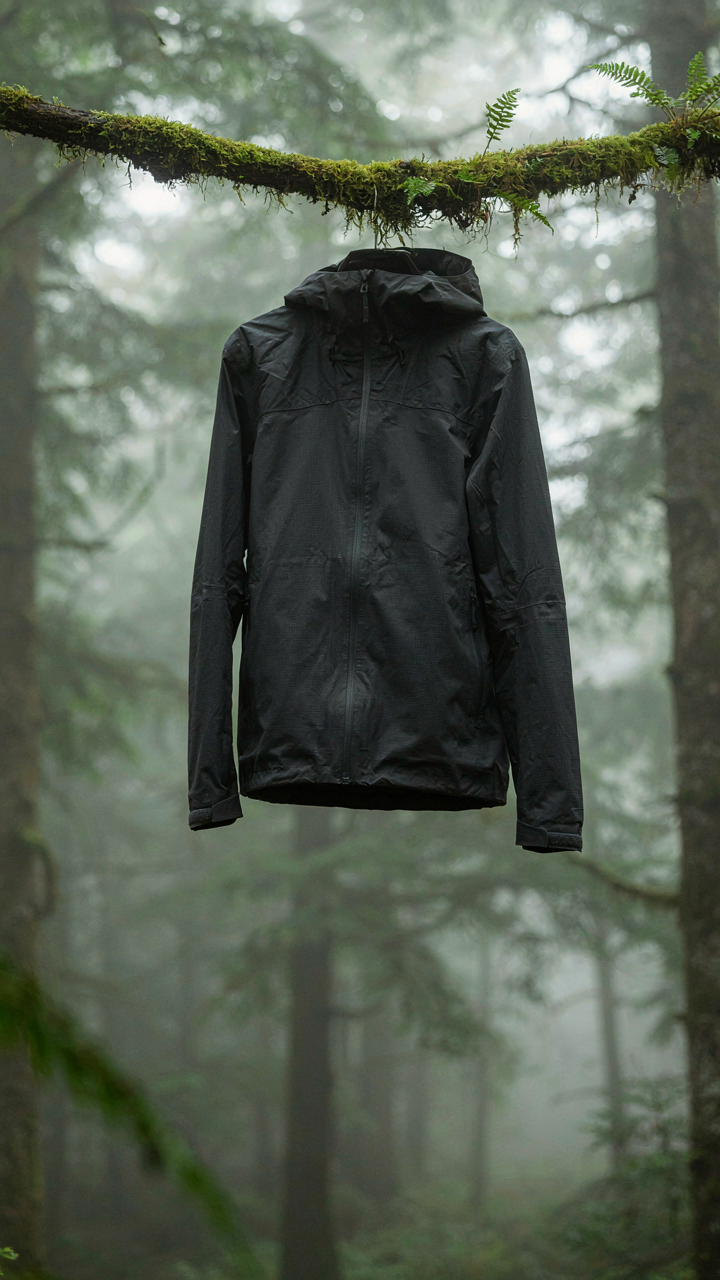
Technical Fabrics Over Visual Approval
You want to look good on the trail because you think that’s what hiking is about. It’s not. Hiking is about staying alive, and your outfit is a system designed to manage heat, moisture, and temperature swings. The mechanism is simple: cotton absorbs sweat and holds it against your skin, dropping your core temperature fast enough to trigger hypothermia even in mild fall weather. Synthetic blends and merino wool wick moisture away from your body instead of trapping it. This isn’t preference. This is physics applied to your survival.
The common advice tells you to “find what works for you” or “wear what makes you feel confident.” That’s incomplete. What makes you feel confident in a fitting room has zero correlation with what keeps you functional at 8,000 feet when the weather turns. Polyester, nylon, and merino base layers aren’t pretty. They’re not meant to be. They’re designed to move sweat away from skin faster than your body produces it. That’s the only metric that matters. Start by identifying the base layer fabric first. Everything else follows from that choice.
Sweat Wicking Prevents Silent Failure

Sweat-wicking becomes a survival tool the moment temperature drops below 50 degrees. Once you stop moving, evaporative cooling accelerates heat loss from your core. Layering with non-wicking materials means your own sweat becomes an insulator working against you, not for you. The insulation layer traps cold moisture instead of trapping warmth. This progression happens fast enough that you won’t feel it until you’re already shivering.
Merino wool regulates temperature in ways synthetic fabrics cannot, which makes it worth the cost on fall hikes where conditions shift between sun and wind throughout the day. A moisture-managing base layer plus an insulation layer plus a windproof outer shell creates the only system that works reliably. Test this order before you hike: wear your base layer and one insulation piece, move hard for ten minutes, then stop. If you feel cold instead of cooling down, your moisture management isn’t working. Fix it before you’re on the trail.

Layering Logic: The Thermal Regulation Protocol

Start With Sweat, Not Warmth
You want to stay warm without thinking about it, but that’s not actually the problem you’re solving. The real issue is sweat trapped against your skin during exertion, then evaporative cooling once you stop moving. This is a thermoregulation problem, borrowing from physics: you need a gradient system where each layer handles one specific job in the energy transfer chain. Base layers sit closest to your body and manage moisture first, not insulation.
Synthetic or merino wool base layers pull sweat away from skin faster than cotton does. Cotton holds moisture and chills you on the trail. Merino regulates temperature across a wider range and resists odor, making it practical for a full day hike without a change of clothes. Synthetic polyester blends work too and cost less. The fit matters more than most people admit: base layers should compress against your skin without bunching under a bra or rolling at your waist, which is where plus size cuts either nail it or fail completely. Brands like Icebreaker, Smartwool, and Patagonia make base layers in full size runs with proper torso length.
Trap Air, Then Seal It
The mid layer holds still air, which is where actual insulation happens. Your outer layer stops wind and precipitation from stripping that trapped air away. Most advice says “wear fleece” and calls it done, but that misses the mechanism. You’re not just adding warmth—you’re building a barrier system against convection and evaporation.
Fleece or lightweight down jackets work as mid layers because they compress small enough to pack in a day pack and expand to trap significant air volume. For plus size bodies, consider fit around shoulders and length through the torso before buying. Your outer shell should be water-resistant and windproof without trapping sweat inside. Patagonia, Arc’teryx, and REI Co-op all make technical shells that fit larger frames. The protocol: base layer touches skin, mid layer traps air over that, shell protects the system from external loss. Check each layer before you hike to confirm nothing bunches or restricts movement at your shoulders, ribs, or hips.
Bottoms That Build Confidence: Plus Size Hiking Pant Selection
Stretch And Durability Where It Counts
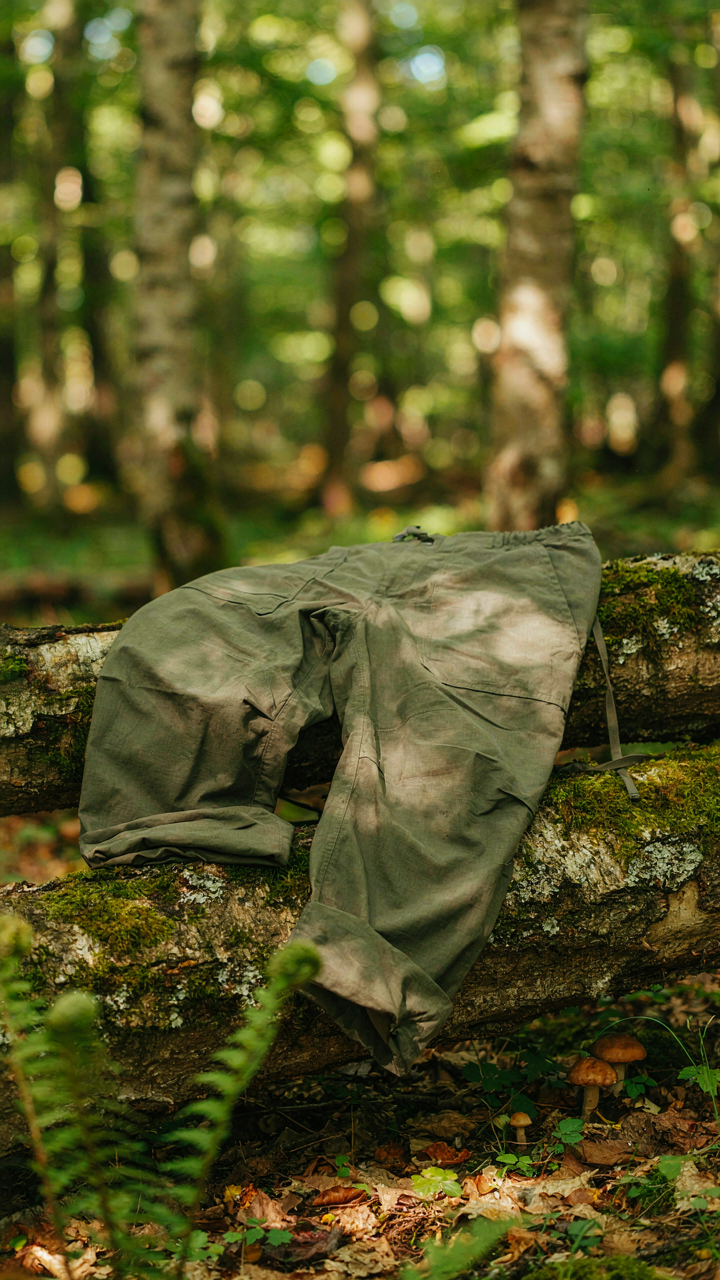
You’re worried these pants will rip or fail you mid-hike, and that fear makes sense because most mainstream hiking pants treat plus size as an afterthought. The mechanism is simple: fabric engineering determines whether movement stays free or gets restricted. Nylon blends with elastane (spandex) give you the recovery you need. Four-way stretch means the fabric moves with you in every direction, not just forward and back. Reinforced thighs and seat panels matter because those areas take the most friction during climbing and scrambling.
Real durability isn’t about weight or thickness. It’s about thread count and seam construction. Flat-felled seams or double-stitched hems hold through repeated movement and washing. Gusseted crotches prevent tearing where your legs meet. When you bend, squat, or step over rocks, the fabric shouldn’t feel locked. Test the stretch by doing a deep squat in the fitting room. If the waistband digs or the fabric pulls tight across your thighs, keep looking.
Pockets That Actually Function
Most hiking pants marketed to plus size women have pockets that exist in name only, which defeats the entire purpose of wearing technical gear. Pocket placement isn’t decoration. It’s load distribution. A phone in a back pocket throws off your balance on uneven terrain. A snack in a front pocket with reinforced stitching keeps your hands free and your energy stable during the hike.
Deep pockets with zippers prevent gear from shifting mid-climb and keep things accessible without stopping. Look for cargo pockets on the thighs that sit high enough to reach without taking your pack off. Hand pockets that fit your full hand matter for warmth and quick access to essentials. When you try on pants, actually put items in the pockets. If the fit feels compromised or the pocket opening twists away from your body, the design failed.
Footwear Foundation: Avoiding The Blister Betrayal

The Ankle Question That Actually Matters
You’re worried about rolling an ankle and looking incompetent on the trail. Here’s the real mechanism: ankle support exists on a spectrum that directly trades off with your foot’s proprioceptive feedback. Hiking boots lock your ankle in place, which prevents certain injuries but also dulls your body’s ability to sense terrain changes. Trail runners give you that feedback but offer less protection against lateral shifts on uneven ground. Plus size women often carry more load, which increases the consequences of a misstep. The answer isn’t “get maximum support.” It’s matching your shoe’s constraint level to your actual trail difficulty and your ankle’s current strength. A day hike on a maintained path requires different footwear than a steep, rocky descent.
The standard advice says “always wear boots.” That’s incomplete. Your shoe choice should reflect the specific terrain you’re covering and your ankle’s honest capacity. On well-marked trails with moderate elevation change, midcut hiking shoes or even quality trail runners work fine and keep your foot responsive to balance corrections. If you’re tackling technical terrain with significant scrambling, a stiffer boot makes sense. Test your choice on easy terrain first. A twisted ankle happens not because your shoe was too flexible, but because you didn’t match your footwear to the actual demands of the trail you chose.
Friction Science Beats Blister Myths
Biomechanics teaches us that blisters form through repeated shear force between skin and a foreign surface. Merino wool socks interrupt that friction pattern at the molecular level, which is why they outperform cotton in almost every condition. Cotton absorbs moisture and stays wet against your skin, creating a perfect friction engine. Merino wicks moisture away and maintains lower friction even when damp. Synthetic blends work too, but they’re often made from polyester or acrylic that doesn’t handle moisture as effectively over long hours. Your sock choice matters more than your shoe choice for blister prevention. Thickness also factors in, not for cushioning but for reducing direct contact pressure between your heel and the shoe’s interior.
The real protocol here is deliberate: buy Merino wool socks in a weight that matches your shoe’s interior fit. Don’t just buy thick socks thinking extra cushioning prevents blisters. A sock that’s too thick compresses your foot inside the shoe, increasing friction. A sock that’s too thin leaves your skin vulnerable to direct contact with seams and ridges. Start with midweight Merino. Wear them on a short trail before committing to a longer hike. If hot spots develop on any part of your foot, that’s your signal to size up your shoe or swap to a different sock weight on your next outing.
The “Curvy Camping Outfits” Fallacy: Gear Is Universal
Where The Pack Sits On Your Frame
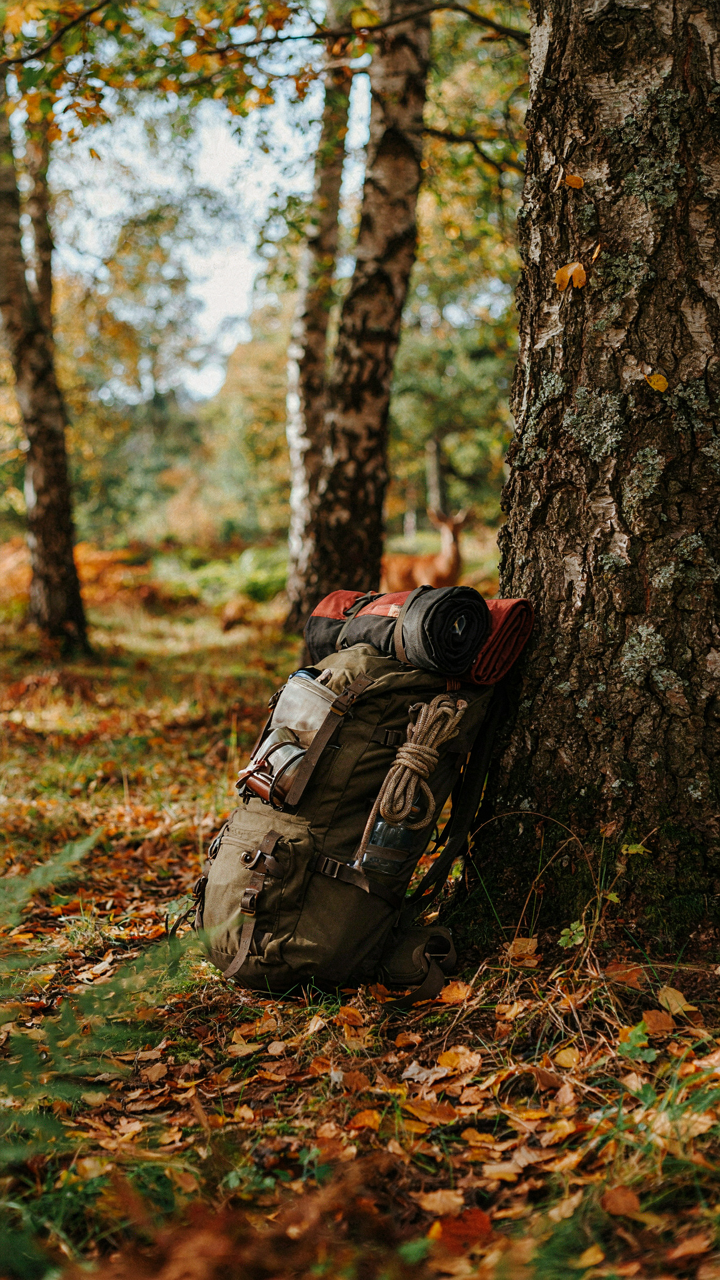
You’re looking for “plus size hiking gear” because you believe the industry made something different for you. It didn’t. Physics doesn’t care about dress size. Load distribution works the same on every body: weight transfers through the hip belt, not the shoulders. The real mechanism is fit, not fabrication. A 50-pound pack compresses your lumbar spine identically whether you wear a size 6 or size 24.
The trap is thinking you need specialty packs. You don’t. Standard backpack sizing uses torso length and hip circumference as independent variables. Measure your torso from the base of your neck to your hip bone. Measure your hip circumference at the widest point. Most reputable brands offer multiple frame sizes within standard models. An XL or XXL pack from companies like Osprey, Gregory, or Deuter has the same suspension system as smaller sizes. The difference is the distance between your shoulders and hips, not the capacity of the pack to hold load properly.
Navigation, Water, And The Stuff That Keeps You Alive
- GPS device or smartphone with offline maps: Pre-load trail maps before you leave cell service. Your phone’s weight is negligible and the redundancy prevents navigation failure. Garmin or AllTrails apps work on any device size.
- Water system scaled to your route: A 2-liter hydration bladder or bottle works for everyone. Calculate your needs by distance and season, not by body size. Fall trails dry out; carry more than you think necessary.
- First aid kit tailored to your personal needs: Size doesn’t matter here, but pre-existing conditions do. Include any medications, blister treatments, and pain relief specific to you. A standard kit weighs 8 ounces.
- Headlamp with extra batteries: Fall days shorten fast. Bring a light even on morning hikes. Weight is under 4 ounces and it’s the difference between safe and stranded.
- Emergency whistle and reflective gear: A whistle costs nothing and takes no space. Add reflective tape to your pack in October when light fades by 5pm. Visibility saves your life, not gear marketing.
These items have nothing to do with your size and everything to do with staying functional on the trail. The weight of a GPS, water, and safety gear remains constant across all body types. You carry them the same way: on your pack, not on your body. The protocol is simple: check your gear against the objective conditions of your hike, not against fashion industry categories.
Weather Warfare: Adapting To Fall’s Unpredictability

Rain Gear: The Ultimate Defense
You’re worried rain will ruin the hike and expose you in front of others. That fear is misplaced. In military logistics, rain protection is called “force multiplier” because it lets your unit operate regardless of conditions. For plus size women, rain gear is identical: it doesn’t stop the weather, it stops the weather from stopping you.
Most rain jackets fail because they’re either too small or designed with chest-only coverage. You need a jacket with a long torso cut and pit zips for venting. Pair it with water-resistant pants, not jeans. Wet denim stays cold and heavy. A pack rain cover prevents water from soaking your layers and supplies. Test your gear on a short walk before committing to a full hike.
Temperature Swings: Adjust On The Fly
The common advice here is wrong. Layering isn’t about having more clothes. It’s about controlling when air traps heat against your skin. Fall temperatures swing thirty degrees in six hours. You need a system you can strip or add without stopping the hike.
Start with a moisture-wicking base that pulls sweat away from skin. Add an insulating mid layer you can remove in thirty seconds. Top it with a windproof shell. Your pack should have accessible straps so you pull off the jacket without dumping everything. When you feel warm during the climb, remove the mid layer before you sweat. When you stop moving, add it back immediately. Temperature control beats temperature tolerance every time.
Movement Economy: The Physics Of Efficient Hiking

How Your Body Actually Works On Incline
You want to believe that hiking fitness is about willpower and endurance. It’s not. It’s about physics. Biomechanics is the study of how forces move through biological systems, and on a trail, your body functions as a lever system. Plus size women carry distributed mass across a wider center, which changes where force loads concentrate during climbing. Most hiking advice ignores this entirely, treating all bodies like they climb the same way.
The kinetic chain is the connected sequence of joints and muscles that transfer power from your legs through your torso to your arms. On uphill terrain, your ankles, knees, hips, and spine must stay aligned to distribute effort efficiently. A fitted hiking outfit with strategic compression at the core and thighs prevents energy leak. Loose or shifting fabric breaks that chain. Your outfit isn’t decoration. It’s infrastructure for force transfer.
Poles Transform Your Leverage Equation
Trekking poles aren’t optional gear for weak hikers. They’re force multipliers, a mechanical principle where a small input creates disproportionate output. Your legs move you forward. Poles move you forward using your upper body too. For plus size women on steep terrain, this means offloading 15 to 25 percent of your body weight onto your arms and shoulders on uphill sections.
Most people hold poles wrong, gripping too tightly and yanking instead of pressing. The real mechanism: push your poles into the ground with a controlled rhythm that matches your steps. Wrist straps do the work, not your hands. Poles with cork or foam grips stay dry in fall moisture and reduce hand fatigue. A proper fit means the pole reaches your wrist when your arm hangs at your side with a 90-degree elbow bend. Adjust accordingly before you start.
Post Hike Protocol: Maintaining Your Plus Size Outdoor Outfits
Cleaning Technical Fabrics Without Breaking Them Down
You want your gear to last because replacing it costs money and time you’d rather spend hiking. Here’s what most advice gets wrong: technical fabrics degrade from heat and harsh chemicals, not from normal washing. Think of it like material science—polymers break down when exposed to aggressive solvents and high temperatures. Your merino wool, nylon shells, and synthetic insulation have engineered coatings that dissolve under conditions most people use.
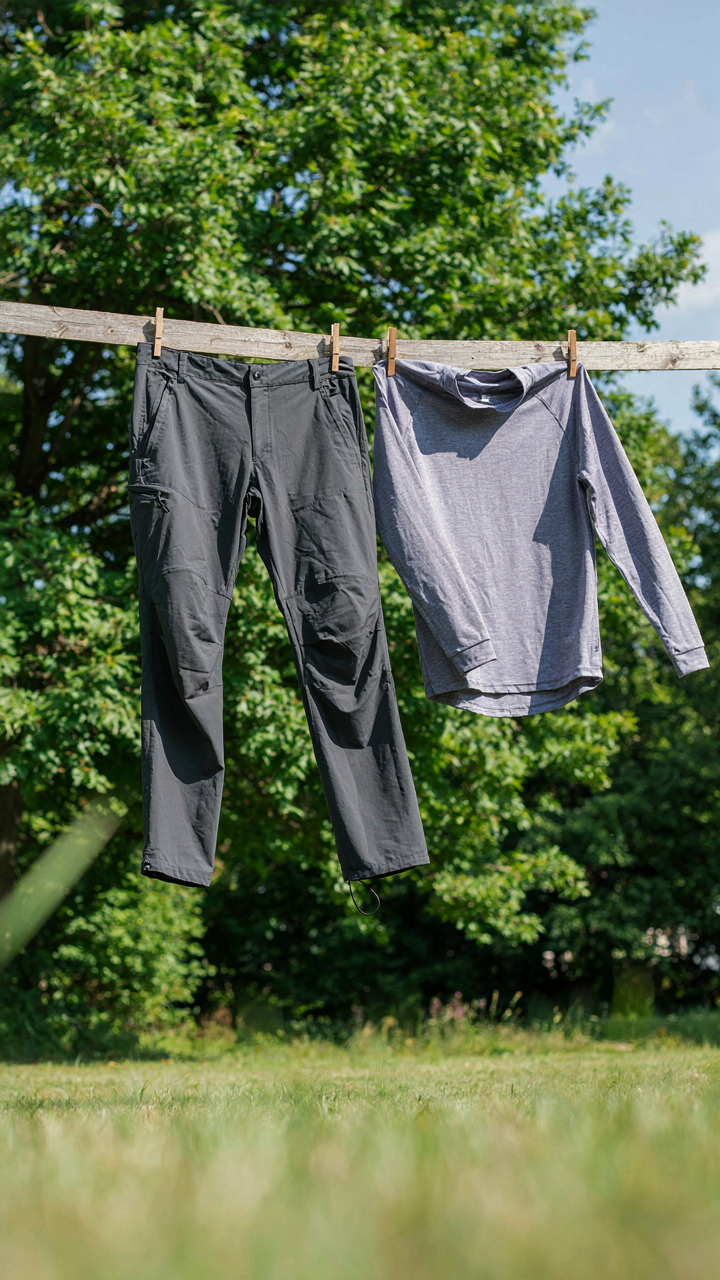
Wash technical pieces in cold water with mild detergent designed for technical fabrics. Machine wash on a gentle cycle or hand wash if the garment took serious abuse. Skip fabric softener entirely—it coats fibers and kills breathability. Rinse twice to remove all soap residue. Air dry completely before storing; never use a dryer on these materials. The durable water repellent coating on shells needs intact fibers underneath to work, so this isn’t optional maintenance.
Storage Solutions That Actually Extend Gear Life
Most people stuff gear into dark closets and wonder why it degrades. The real threat is moisture, heat, and compression. Store everything in a cool, dry place away from direct sunlight. Hang or fold your shells loosely so the fabric doesn’t crease permanently. Use breathable storage bags, not plastic bins that trap moisture and create mold conditions.
For items you wear frequently, a dedicated gear closet beats random drawers. Keep moisture-absorbing products near stored items during humid seasons. Check stored gear quarterly for unexpected dampness or odor. Reapply durable water repellent coating to shells annually or when water no longer beads on the surface—this is the single maintenance step that determines how long outerwear functions.
Beyond Aesthetic: The True Measure Of A Cute Hiking Outfit

When Your Gear Proves What You Can Do
You want to look good on the trail because you’re worried people will judge your body before they see your competence. Here’s the mechanism: confidence doesn’t come from how an outfit looks in a mirror. It comes from knowing your layers won’t fail at 3,000 feet when temperature drops fifteen degrees in an hour. When your base layer actually wicks sweat, your midlayer actually insulates, and your outer shell actually blocks wind, you move differently on the trail. You stop thinking about how you appear and start thinking about the next ridge. That shift is what reads as confidence. It’s not performance theater. It’s the natural result of gear that performs.
The outfit that looks best is the one that doesn’t demand your mental energy mid-hike. A plus size woman in properly fitted leggings with actual back pockets, a moisture-wicking top cut for your proportions, and a shell jacket that moves with you instead of against you will outperform any “cute” setup that forces compromise. Comfort isn’t the consolation prize after aesthetics. Comfort is the infrastructure that lets you hike harder and longer, which means better views, better fitness, better stories. When function is genuine, confidence follows automatically. Dress for the conditions first. The look handles itself.
Style Is What Survives Contact With Reality
The fashion industry sells style as personal expression, but in hiking, style is simply what works and repeats. A dark grey midlayer that hides sweat stains, synthetic fabrics that dry in two hours instead of twelve, and strategic color blocking that plays to plus size proportions these aren’t trendy choices. They’re the uniform that emerges when you eliminate what fails. You’ll wear the same outfit combination twice because it worked, not because you’re boring. That repetition is real style.
The traditional hiking aesthetic of neutral tones and technical fabrics became standard because it solves actual problems: visibility in low light, durability under friction, and ease of layering. Plus size women benefit from the same logic, with one addition: proportional fit changes how these pieces function. A well-fitted shirt in your size won’t ride up or gap at the shoulders like an oversized men’s medium. A waistband designed for curves stays put during steep climbs. Embrace what works. Wear it again.
Your Biggest Obstacle Isn’t Your Body; It’s Believing The Wrong Metrics Of Readiness

Most plus size women wait until they feel “ready” to hike in fall. They don’t. Ready is a lie you tell yourself to stay comfortable. Pick one trail this week. Not next month. Not when you lose ten pounds. This week. Buy the outfit. Walk it. Your body doesn’t need permission from some internal checklist that never actually fills up. The only metric that matters is whether you showed up.